The Quality Standards Resource Centre helps extend understanding of the strengthened Aged Care Quality Standards, which took effect from 1 November 2025. You can search for resources by using keywords, or filtering by standard, outcome and audience. Before using the Resource Centre, please read the terms of use.
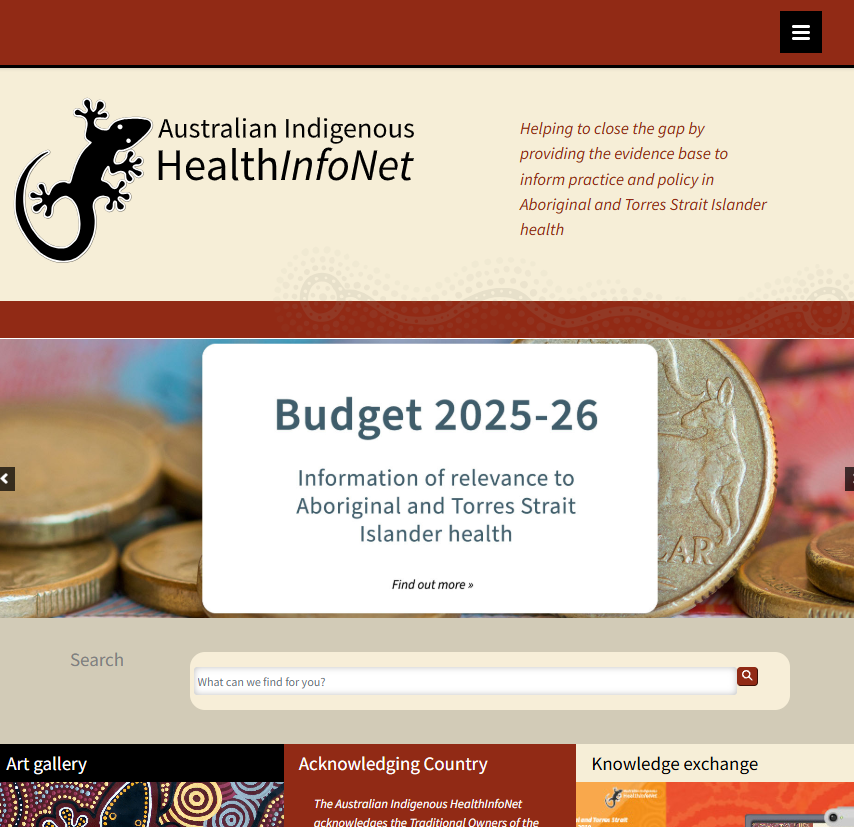
Australian Indigenous HealthInfoNet
This resource is the Australian Indigenous HealthInfoNet website. The website provides access to resources and workforce information to inform practice and policy in Aboriginal and Torres Strait Islander health. The website also provides portals to collections of information by theme, including social and emotional wellbeing, cultural safety, end-of-life care, diabetes and respiratory health.
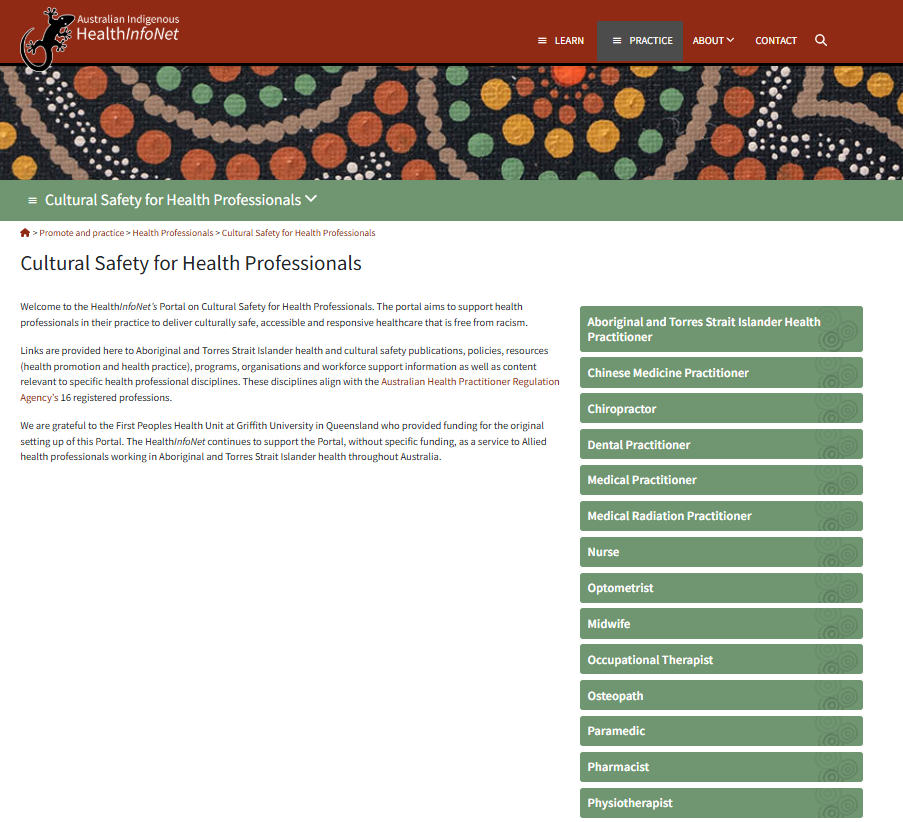
Cultural Safety for Health Professionals
This portal provides links to Aboriginal and Torres Strait Islander health and cultural safety publications, policies, resources and programs. It also providers workforce support information and content relevant to specific health professional roles. The information supports health professionals to deliver culturally safe and responsive care.
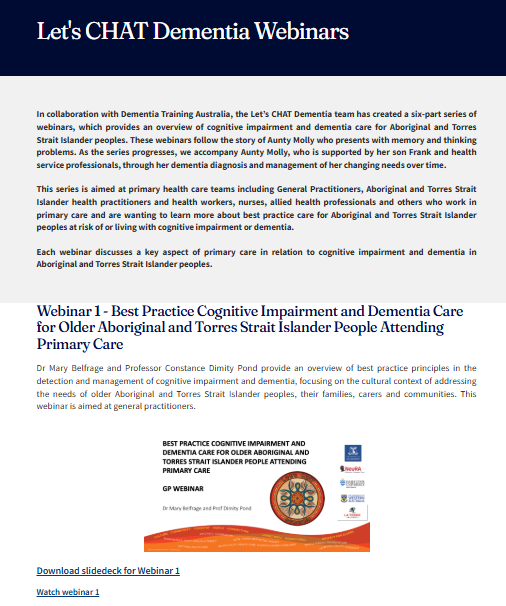
Let's CHAT Dementia Webinars - overview of cognitive impairment and dementia care for Aboriginal and Torres Strait Islander peoples
This resource offers a series of webinars on cognitive impairment and dementia care for Aboriginal and Torres Strait Islander peoples. It is designed for primary health care teams including General Practitioners, Aboriginal and Torres Strait Islander health practitioners and health workers, nurses, allied health professionals and others who work in primary care. The webinar series has been developed in collaboration with Dementia Training Australia.
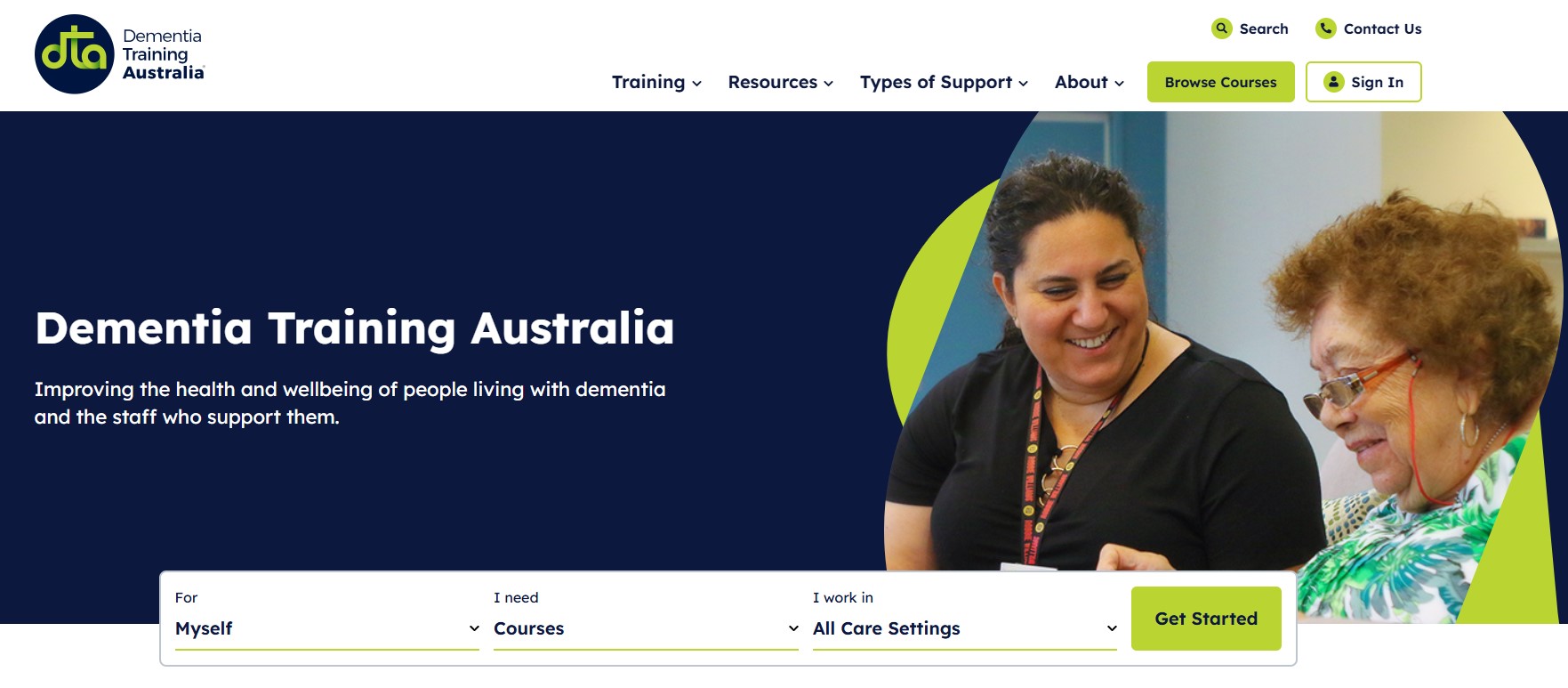
Dementia Training Australia
This resource is the Dementia Training Australia website. It contains training, practical tools and resources about caring for people living with dementia. Information on the website can be filtered by audience, resource type and care setting. Resources can also be accessed by focus areas such as changed behaviour, pain management, environments and medication management.
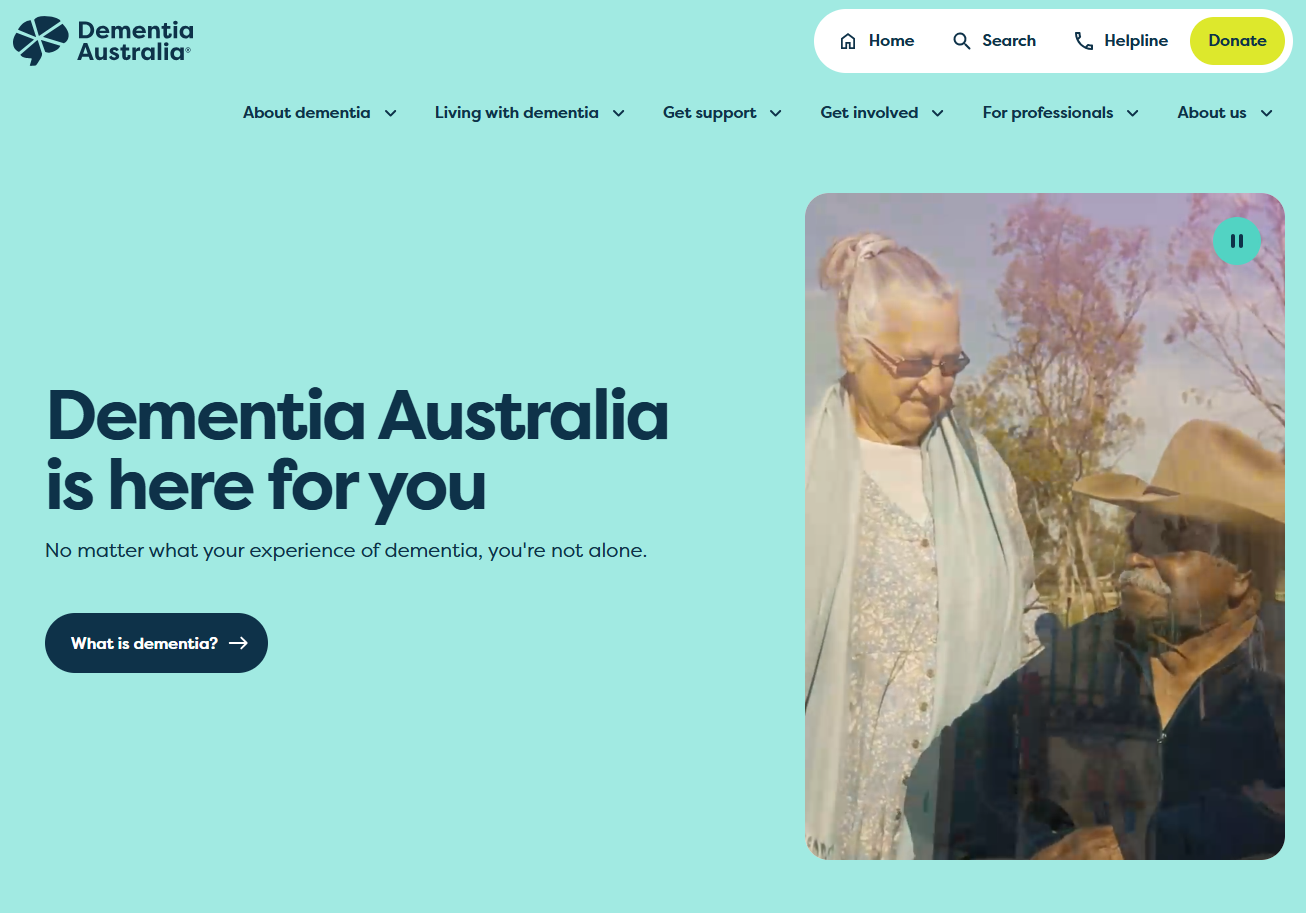
Dementia Australia
This resource is the Dementia Australia website. The website contains information about the types of dementia, testing, diagnosis, treatment and management of dementia. It includes information about living with dementia, such as behaviour changes, nutrition, staying connected and care options. It also contains information for professionals supporting people living with dementia, including research, tools and other resources.
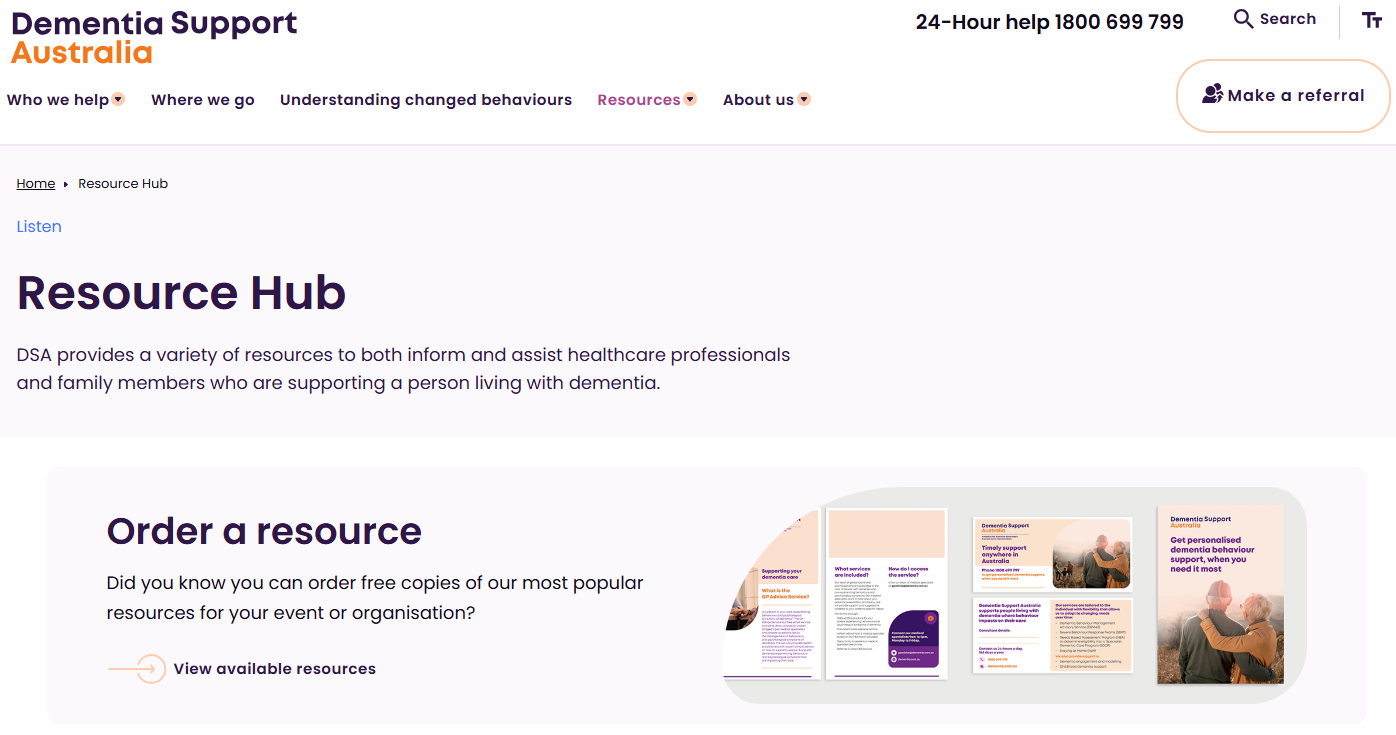
Dementia Support Australia - Resource Hub
This resource hub provides a variety of materials to support healthcare professionals and family members who are supporting a person living with dementia. It includes resources across many different topics, including behaviour, COVID-19, design, engagement and other general resources. Keywords can be used to refine search and resources can be filtered by topic and audience type.
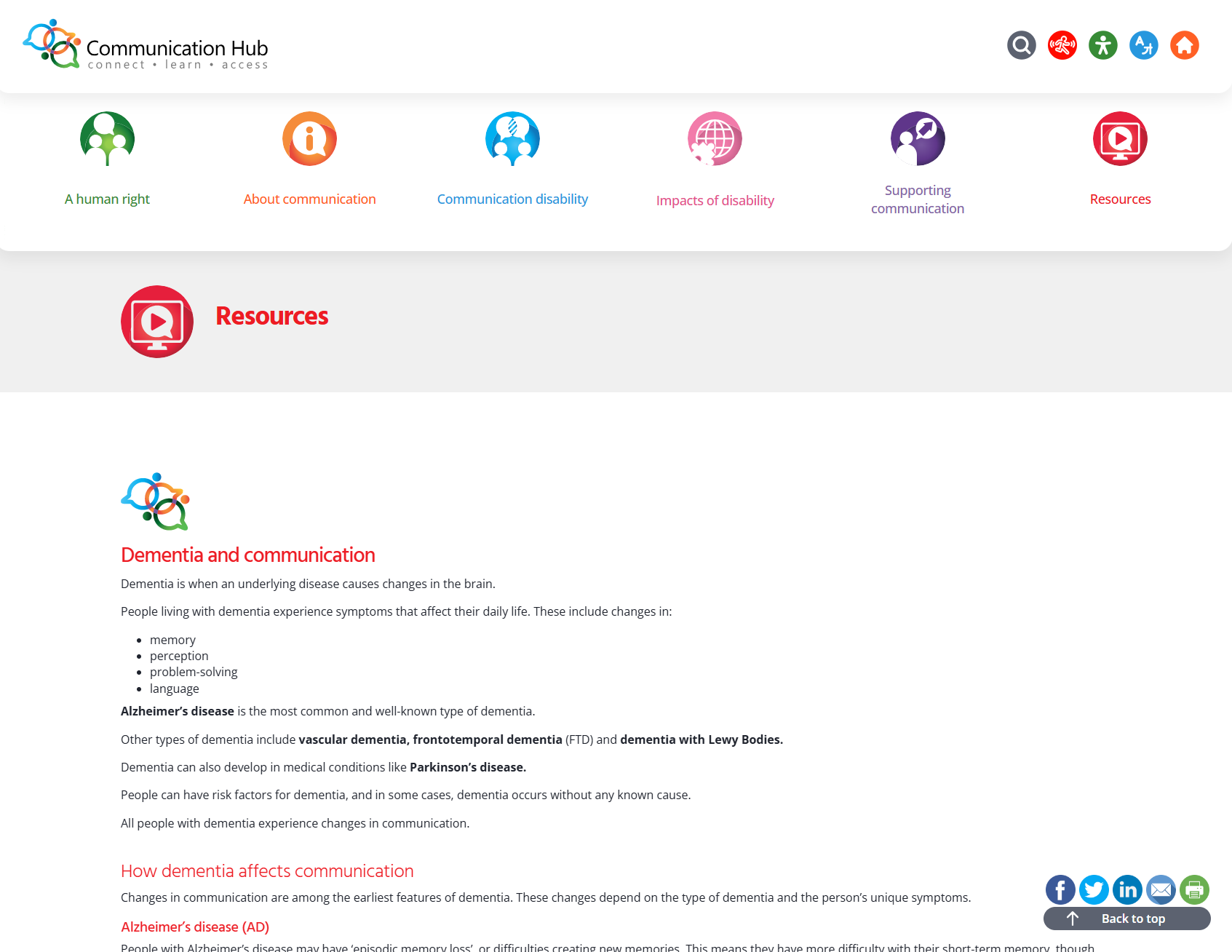
Dementia and communication - Resources
This resource discusses how dementia impacts communication abilities, including memory and language challenges. It offers practical strategies for enhancing conversations and maintaining connections, emphasising the role of speech pathologists in supporting communication. The resource provides guidance for family, friends, and caregivers to create dementia-friendly environments.
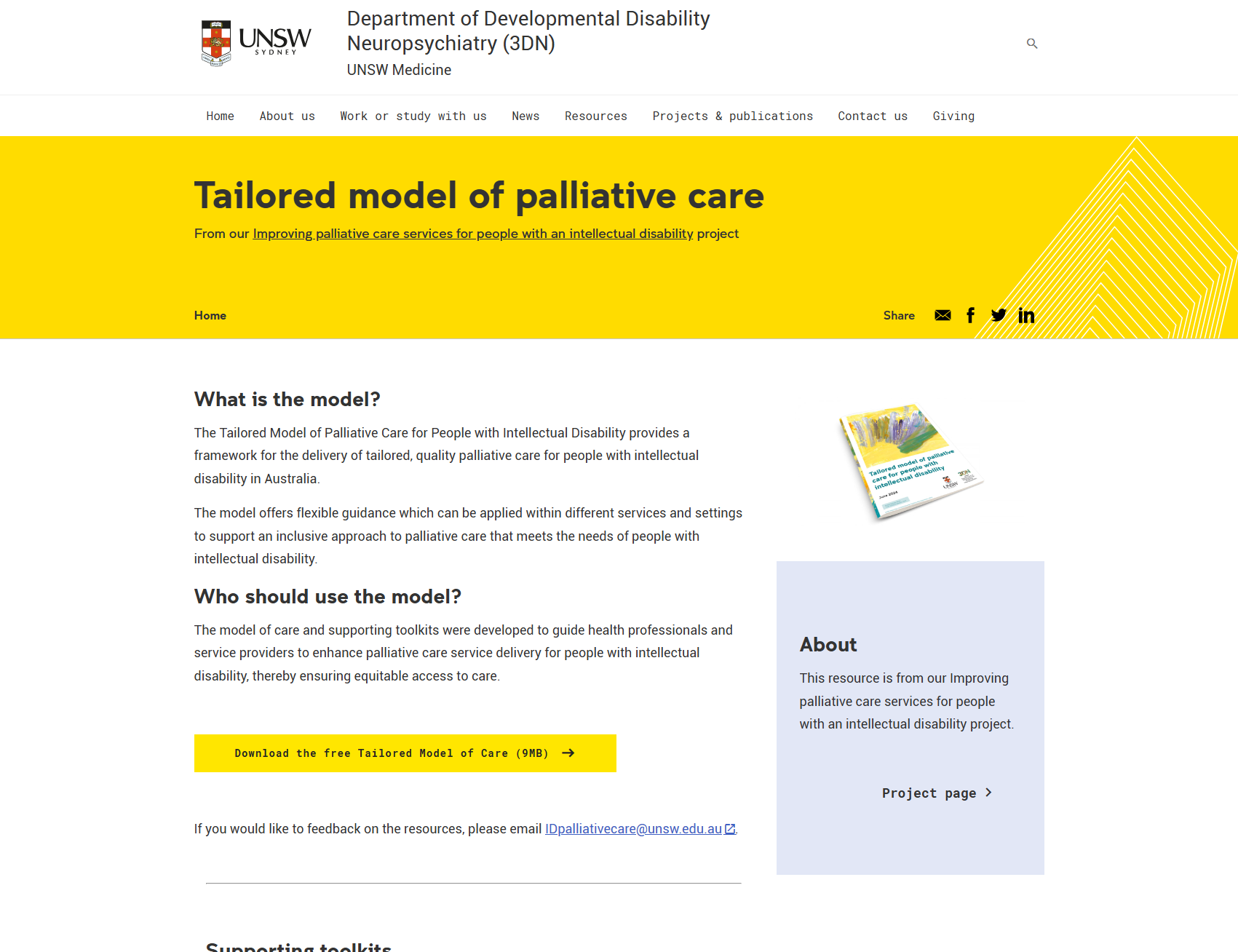
Tailored model of palliative care for people with intellectual disability
This model provides a framework for delivering tailored palliative care for people with intellectual disabilities, aiming for equitable access across various care settings. Supporting toolkits offer resources for health professionals and families to enhance communication and collaborative care.
This resource was developed by a state/territory government or organisation and therefore its applicability and usefulness may be limited.
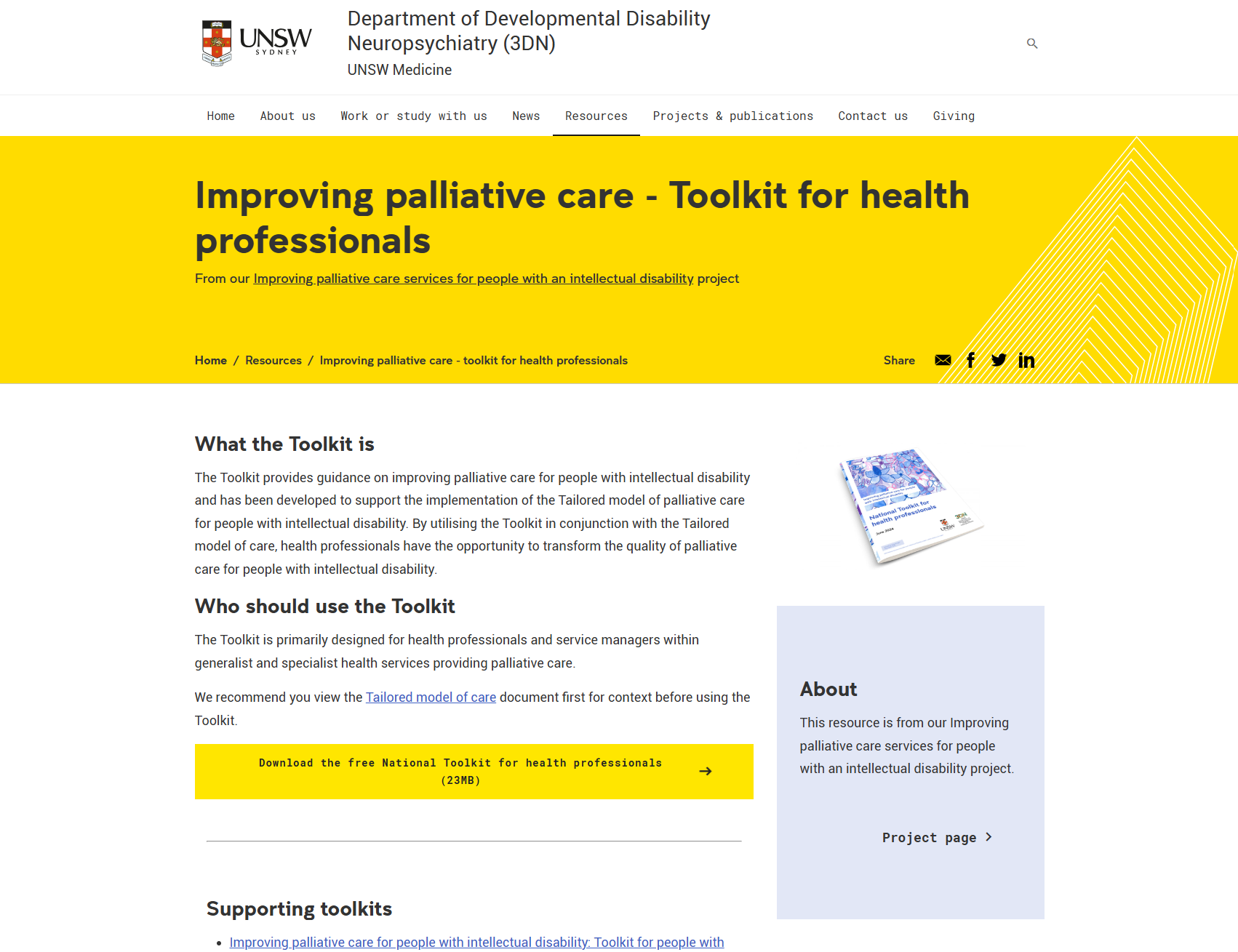
Improving palliative care - Toolkit for health professionals
This toolkit supports health professionals in delivering palliative care for people with intellectual disabilities by providing resources, guidance on communication, and tailored care strategies. It aims to enhance service quality through understanding specific needs and collaborative care planning.
This resource was developed by a state/territory government or organisation and therefore its applicability and usefulness may be limited.
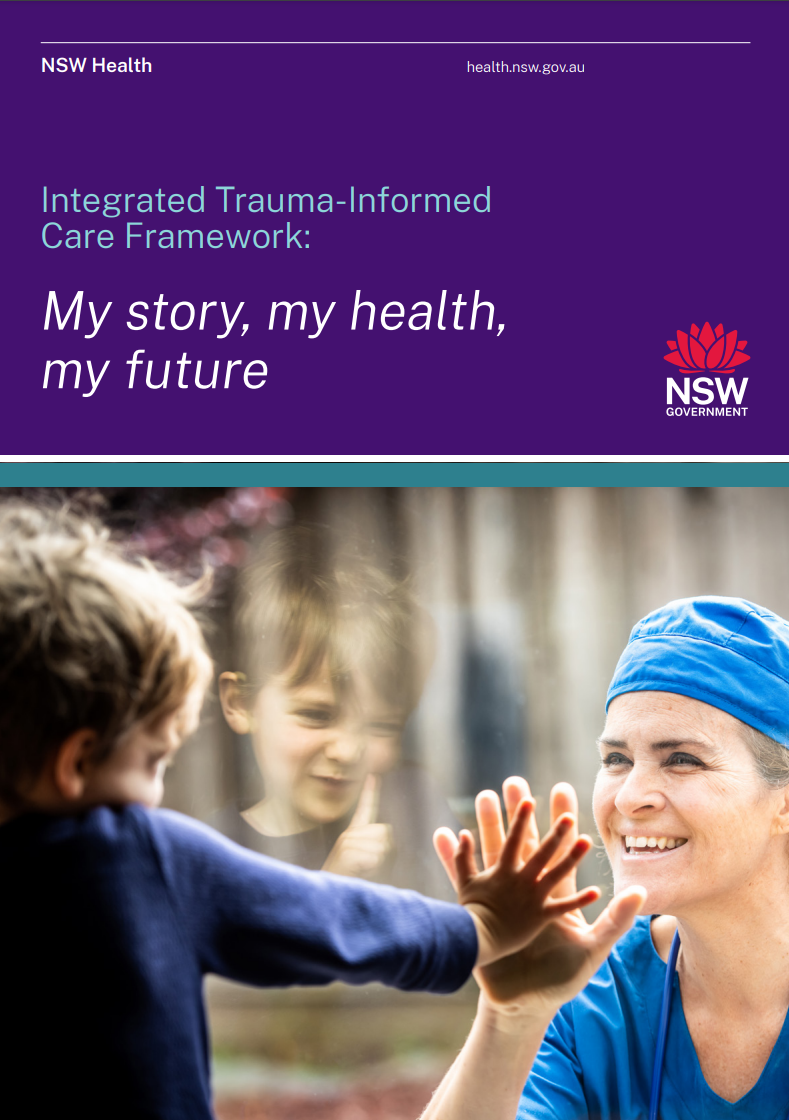
Integrated Trauma-Informed Care Framework: My story, my health, my future
This framework integrates trauma-informed care across NSW Health services, enhancing support for clients, families, and carers by guiding staff in trauma-sensitive practices and systemic change. It focuses on preventing re-traumatisation and fostering healing, especially for vulnerable populations.
This resource was developed by a state/territory government or organisation and therefore its applicability and usefulness may be limited.
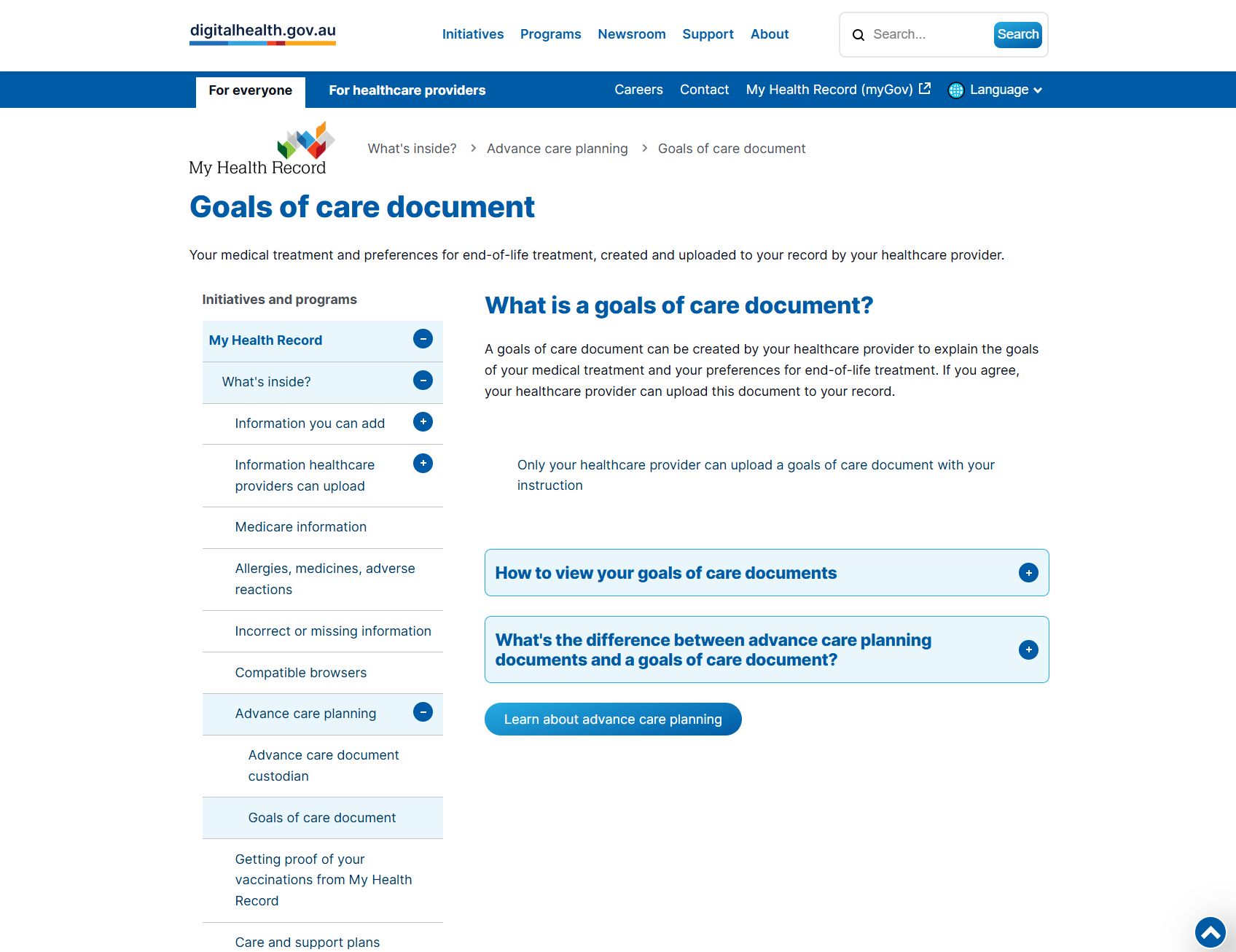
Goals of care document
This resource explains the purpose of a goals of care document, which outlines a person’s medical treatment goals and end of life care preferences. It describes how healthcare providers create and upload these documents to health records, supporting informed decision-making and access to care preferences.
Trauma-informed Care and Practice Organisational Toolkit
This toolkit provides guidance for organisations on implementing trauma-informed care practices, aiming to improve safety, trust, and empowerment in care settings. It outlines strategies to adapt policies, environments, and staff approaches to better support people with trauma histories in various care environments.
Essential element 2: Identifying goals of care
This resource guides providers in identifying and setting goals of care with patients through shared decision-making. It fosters collaboration between patients, family, and healthcare teams to clarify expectations and establish personalised clinical and personal care objectives.
This resource may apply to healthcare contexts outside of aged care. Please consider the applicability of this resource to your care setting. This resource may refer to information that will be updated from 1 November 2025 to align with the new Aged Care Act and Quality Standards.
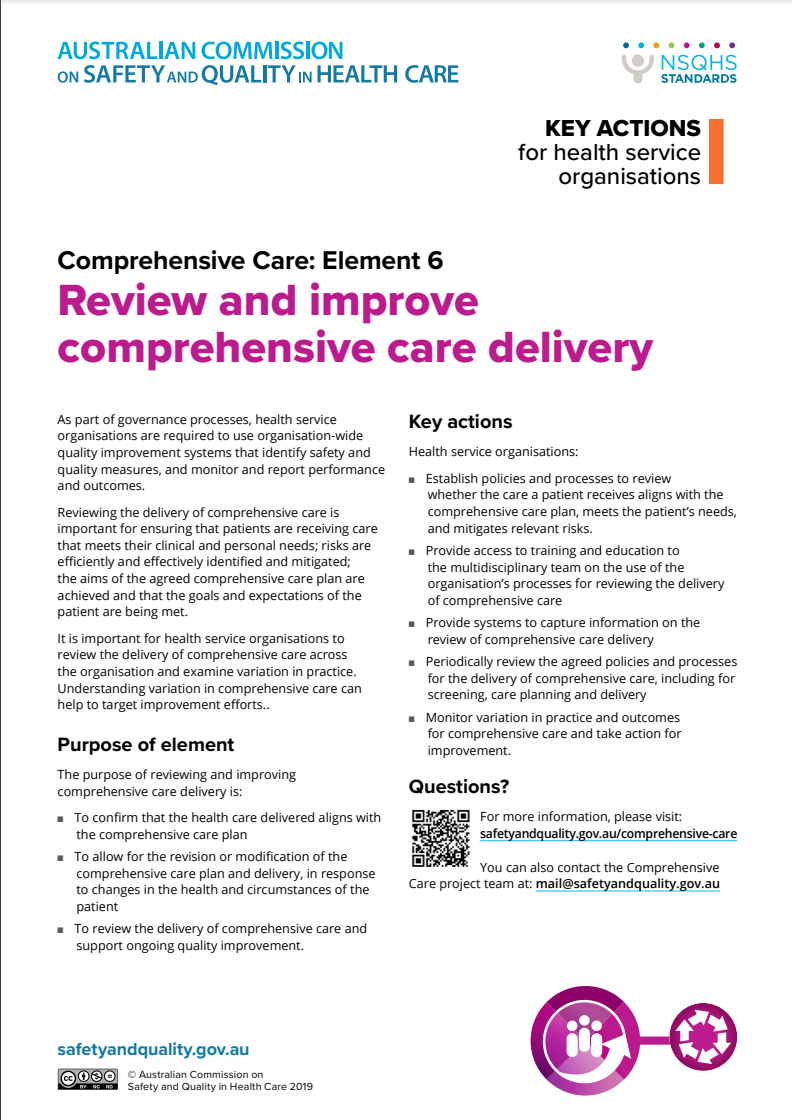
Comprehensive Care - Review and improve comprehensive care delivery - Key actions for health service organisations
This resource outlines actions for health service organisations to review and improve comprehensive care delivery, focusing on aligning care with patients' needs and care plans. It emphasises regular assessment, multidisciplinary collaboration, and quality improvement to maintain responsive, person-centred care across services.
Incident Management Systems
This resource explains Incident Management Systems (IMS) used in aged care to record, manage, and respond to incidents. It provides guidance on building a safety culture, recording and analysing incidents, and implementing steps to prevent reoccurrences, supporting continuous improvement in care delivery.
This resource may refer to information that will be updated from 1 November 2025 to align with the new Aged Care Act and Quality Standards.
QI Program Module 7 – Activities of daily living
This resource explains the importance of measuring activities of daily living (ADLs) for older people in residential aged care. It guides providers on using the Barthel Index to assess ADLs quarterly, helping identify risks of functional decline and implement strategies to maintain independence and improve quality of life. This resource may refer to information that will be updated from 1 November 2025 to align with the new Aged Care Act and Quality Standards.
Partners in Culturally Appropriate Care (PICAC)
This resource supports aged care providers in delivering culturally appropriate care for people from culturally and linguistically diverse (CALD) backgrounds. It offers free training, workshops, and resources, helping providers understand and respect diverse needs, ensuring safe, inclusive, and culturally responsive care across all settings.
This resource may refer to information that will be updated from 1 November 2025 to align with the new Aged Care Act and Quality Standards.
Case study - Safe and Appropriate use of Psychotropic Medicines - Residential Aged Care
This resource is a fictional scenario that follows an older person’s care pathway with a residential aged care provider. The resource focuses on the systems and processes to support high-quality care of older people living with cognitive impairment. It includes 4 key priority areas: person-centred care, medication management, managing changed behaviours and transitions of care.
This resource may refer to information that will be updated from 1 November 2025 to align with the new Aged Care Act and Quality Standards.
Case study - Safe and Appropriate use of Psychotropic Medicines - In-home Aged Care
This resource is a fictional scenario that follows an older person’s care pathway with an in-home aged care provider. The resource focuses on the systems and processes to support high-quality care of older people living with dementia. It includes 4 key priority areas: person-centred care, medication management, managing changed behaviours and transitions of care.
This resource may refer to information that will be updated from 1 November 2025 to align with the new Aged Care Act and Quality Standards.
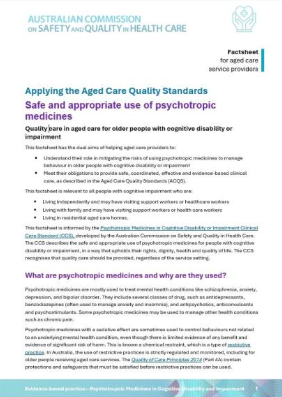
Safe and appropriate use of psychotropic medicines for aged care - Fact sheet
This fact sheet is informed by the Psychotropic Medicines in Cognitive Disability or Impairment Clinical Care Standard (CCS), developed by the Australian Commission on Safety and Quality in Health Care. The CCS describes the safe and appropriate use of psychotropic medicines for people with cognitive disability or impairment, in a way that upholds their rights, dignity, health and quality of life.
This resource may refer to information that will be updated from 1 November 2025 to align with the new Aged Care Act and Quality Standards.