The Quality Standards Resource Centre helps extend understanding of the strengthened Aged Care Quality Standards, which took effect from 1 November 2025. You can search for resources by using keywords, or filtering by standard, outcome and audience. Before using the Resource Centre, please read the terms of use.
Dementia Australia
This resource is the Dementia Australia website. The website contains information about the types of dementia, testing, diagnosis, treatment and management of dementia. It includes information about living with dementia, such as behaviour changes, nutrition, staying connected and care options. It also contains information for professionals supporting people living with dementia, including research, tools and other resources.
National Strategic Framework for Rural and Remote Health
This framework addresses health service challenges in rural and remote areas, aiming to improve access, workforce sustainability, and care models through coordinated strategies. It guides policymakers and providers on adapting health services for rural contexts, fostering collaboration, and enhancing infrastructure, with a focus on equitable and culturally relevant care.
This resource may apply to healthcare contexts outside of aged care.
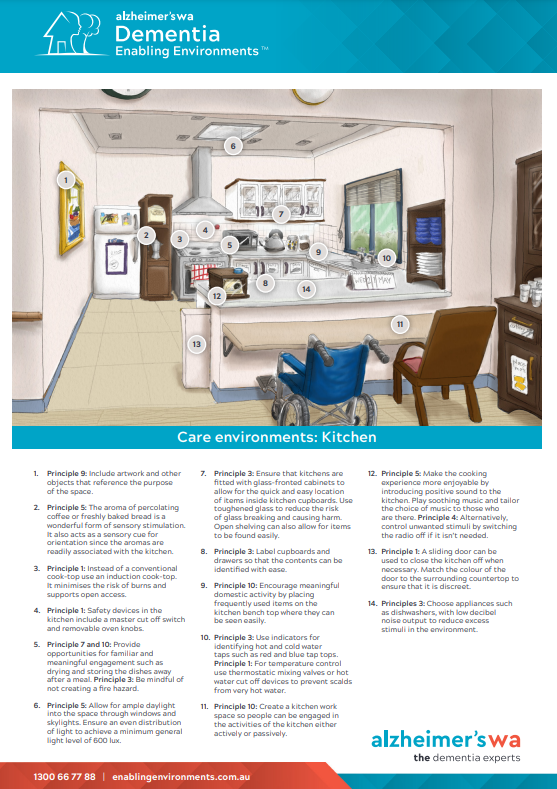
Dementia enabling environments - Care environments: Kitchen
This resource, developed by Alzheimer's WA, is a Dementia Enabling Environments illustration information sheet about kitchens in care environments. It includes principles to create enabling spaces and information about how to design the physical environment to maximise enablement and wellbeing for people living with dementia.
This resource was developed by a state/territory government or organisation and therefore its applicability and usefulness may be limited.
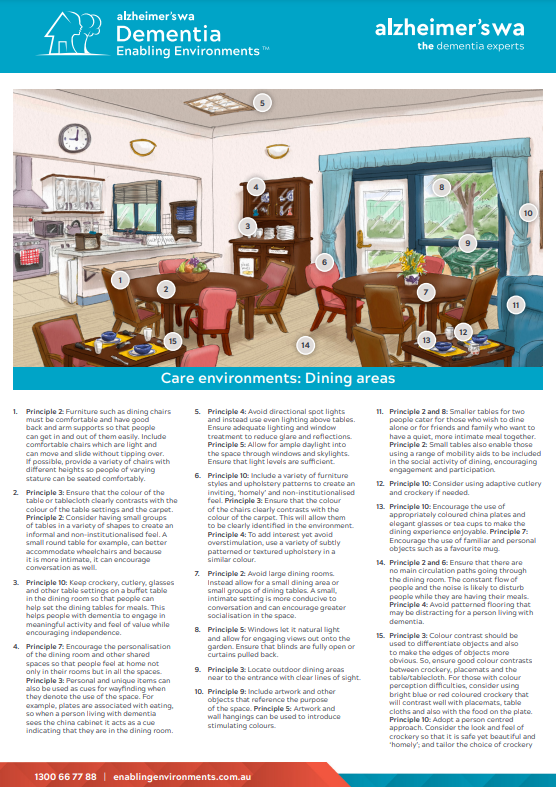
Dementia enabling environments - Care environments: Dining areas
This resource, developed by Alzheimer's WA, is a Dementia Enabling Environments illustration information sheet about dining areas in care environments. It includes principles to create enabling spaces and information about how to design the physical environment to maximise enablement and wellbeing for people living with dementia.
This resource was developed by a state/territory government or organisation and therefore its applicability and usefulness may be limited.
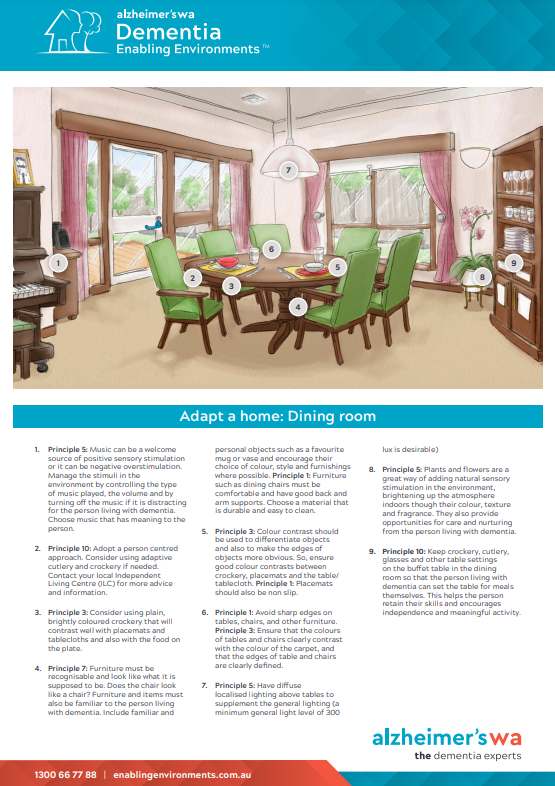
Dementia enabling environments - Adapt a home: Dining room
This resource, developed by Alzheimer's WA, is a Dementia Enabling Environments illustration information sheet about adapting a home, focusing on the dining room. It includes principles to integrate enabling design and make changes within the physical environment to maximise enablement and wellbeing for people living with dementia.
This resource was developed by a state/territory government or organisation and therefore its applicability and usefulness may be limited.
Familiar Places Webinar 2 – Bedrooms and Dining Areas
This webpage provides a video webinar focused on familiar places, such as bedrooms and dining areas, for dementia care environments. It offers insights into how these spaces can be designed to support the wellbeing of people living with dementia, with a particular emphasis on creating comfortable and familiar settings.
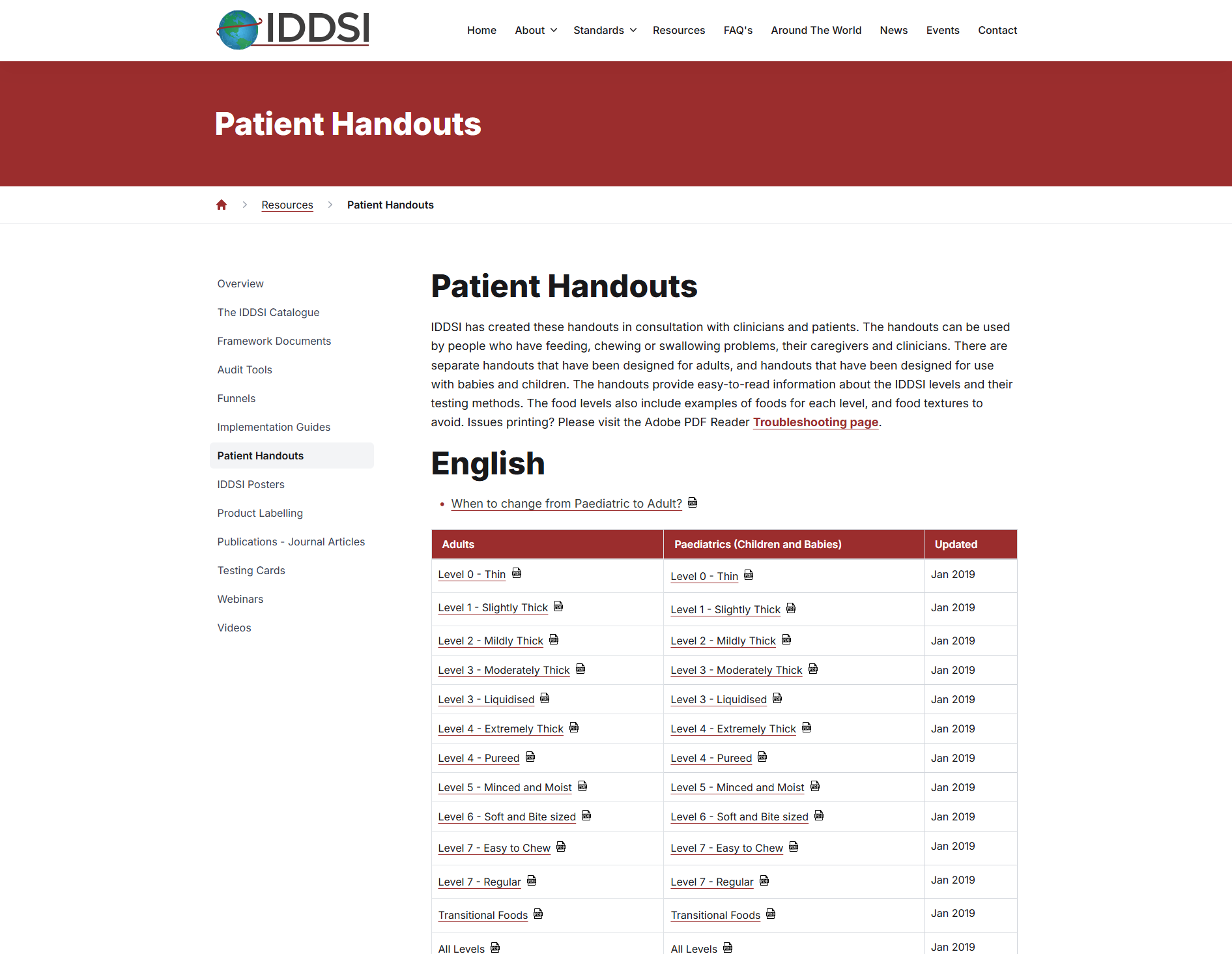
International Dysphagia Diet Initiative - Patient Handouts
This resource provides handouts tailored for people with feeding, chewing, or swallowing difficulties and their carers. It explains the IDDSI framework, describing food texture levels and appropriate testing methods. Separate versions are available for adults and children, each detailing recommended food textures to support safe swallowing practices.
This resource was developed internationally and therefore its applicability and usefulness may be limited.
International Dysphagia Diet Initiative - Framework Documents
This resource provides the IDDSI (International Dysphagia Diet Standardisation Initiative) framework, including testing methods, detailed level definitions, audit tools, and implementation guides across language regions. It supports consistent application and understanding of diet textures for people with dysphagia, aiding caregivers in managing dietary needs safely and effectively.
This resource was developed internationally and therefore its applicability and usefulness may be limited.
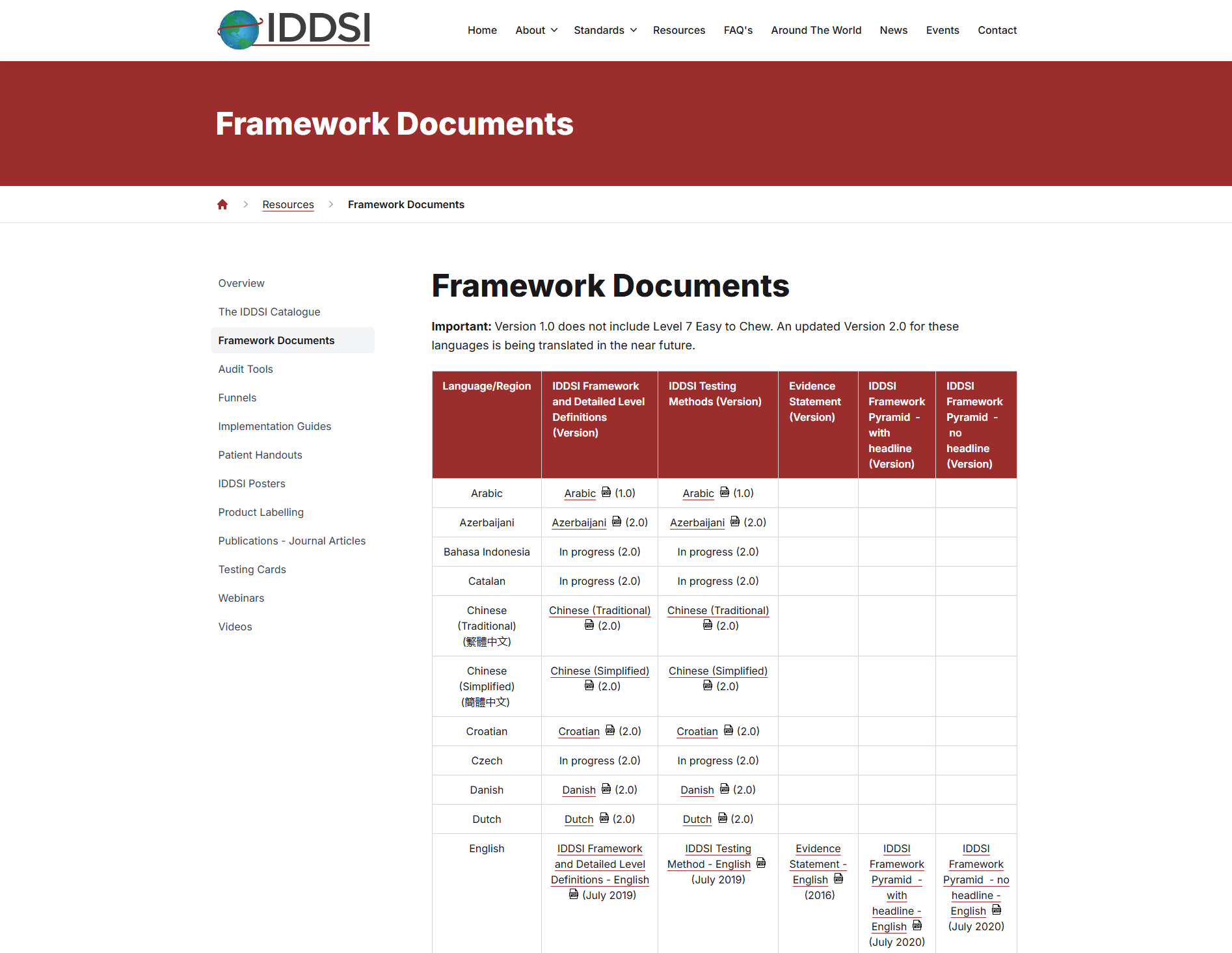
Adult diet specifications
This resource provides specifications for adult diets tailored to inpatient use in NSW hospitals, including allergy-specific and therapeutic requirements. Although intended for inpatients, it can serve as general guidance for dietitians and food service providers in creating meal plans for diverse health needs. This resource applies to healthcare contexts outside of aged care.
This resource was developed by a state/territory government or organisation and therefore its applicability and usefulness may be limited.
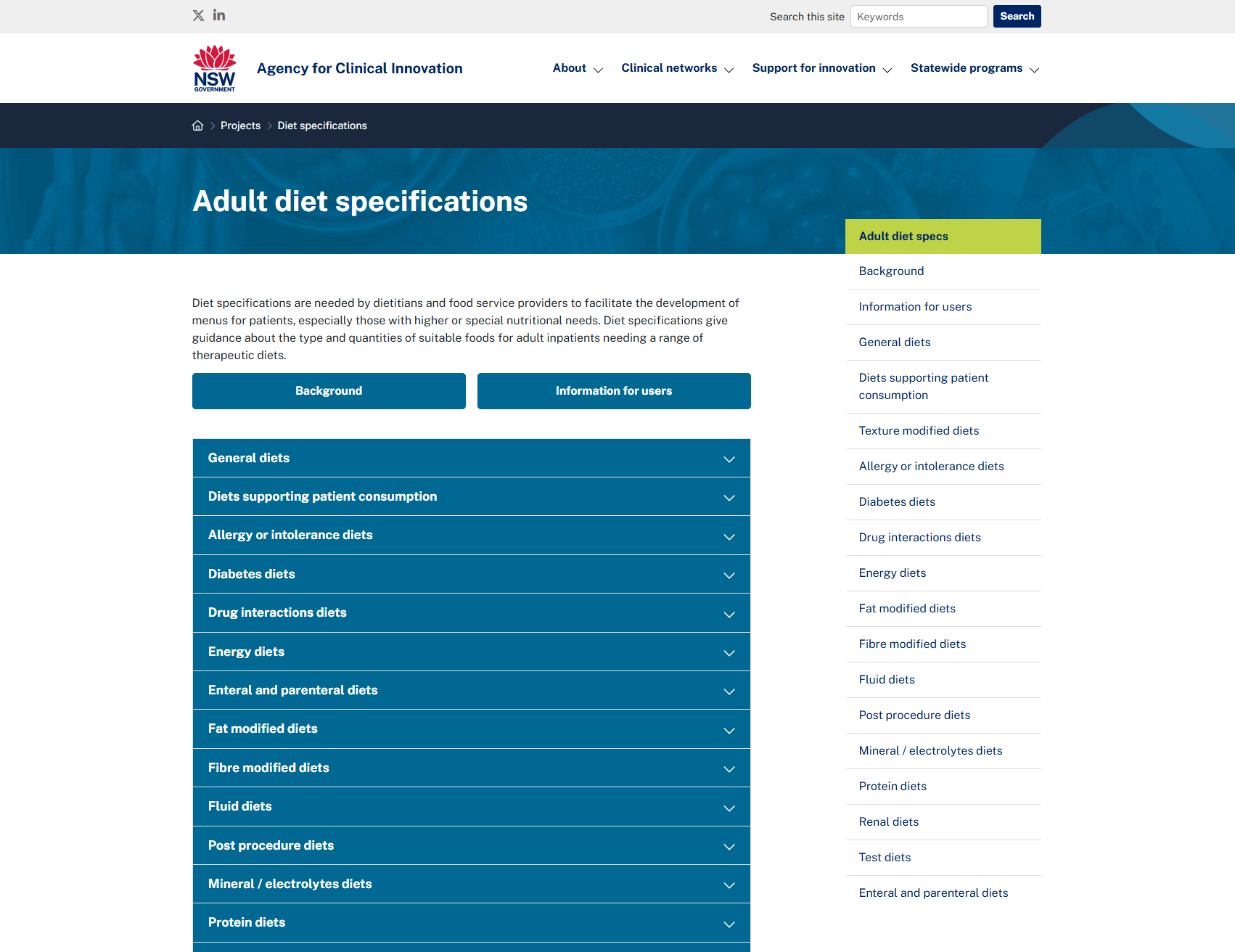
Food and Nutrition Manual for Aged Care Homes - Swallowing and food textures
This resource provides guidelines on managing swallowing difficulties in aged care by using texture-modified diets and thickened fluids. It explains various food texture levels and fluid consistencies for safe swallowing, offers practical meal preparation tips, and highlights the importance of regular reassessment by a speech pathologist
This resource was developed by a state/territory government or organisation and therefore its applicability and usefulness may be limited.

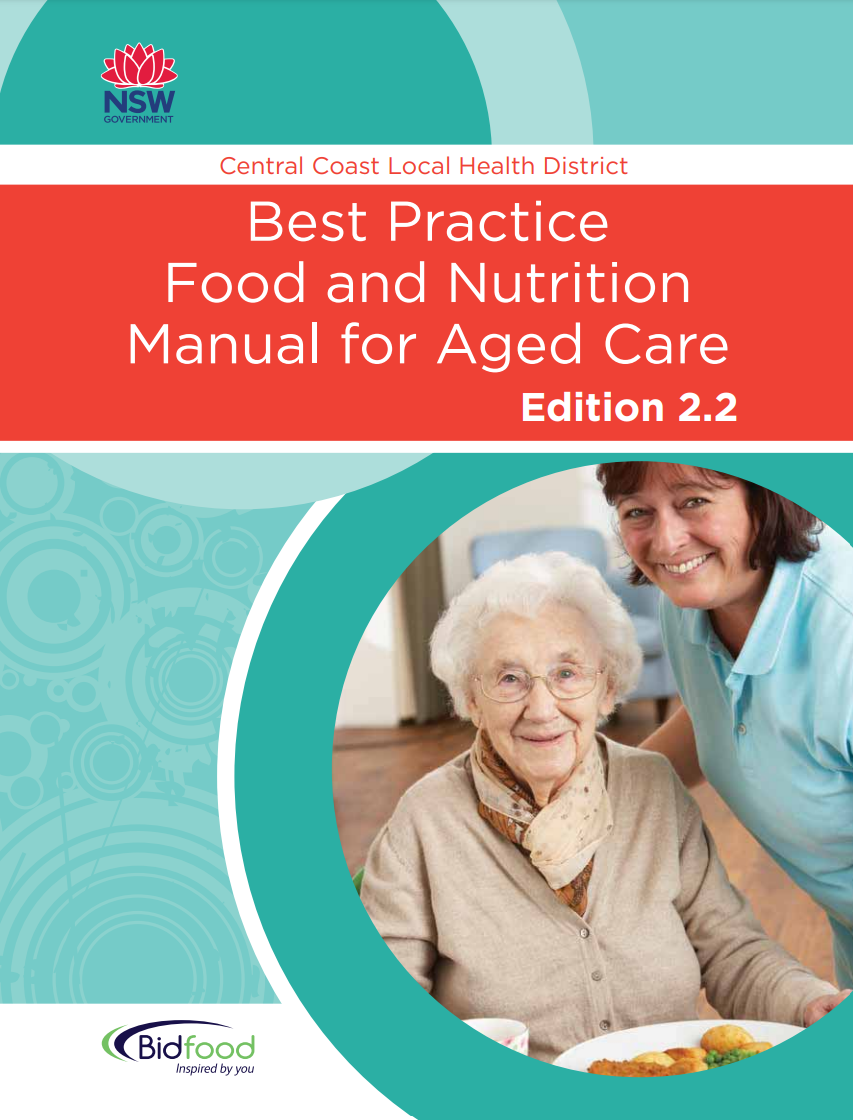
Best Practice Food and Nutrition Manual for Aged Care
This manual offers practical guidelines on food and nutrition best practices in aged care homes, covering menu planning, meal enjoyment, hydration, and malnutrition prevention. It includes checklists, screening tools, and dietary considerations tailored to the needs of older people.
This resource was developed by a state/territory government or organisation and therefore its applicability and usefulness may be limited.
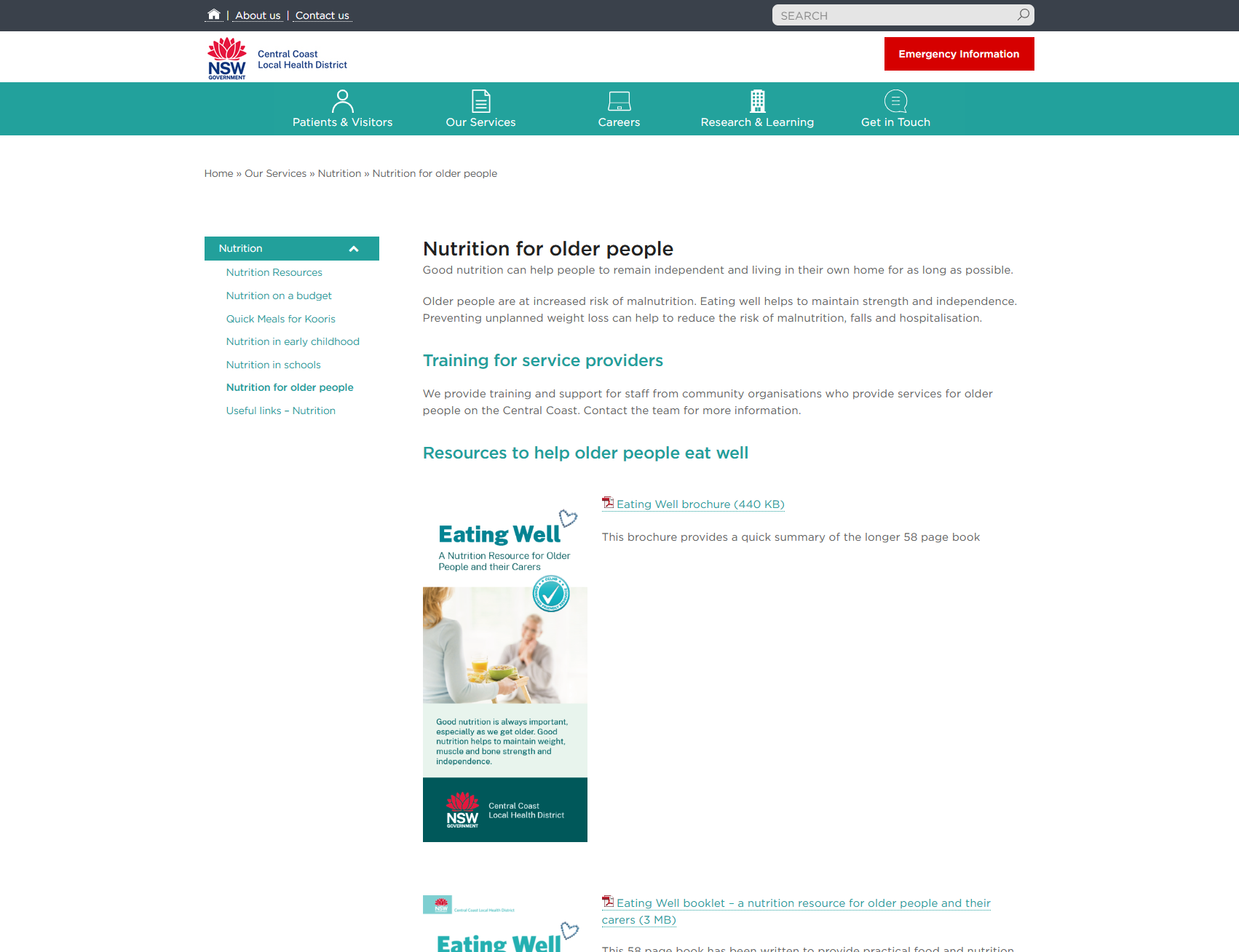
Nutrition for older people
This resource provides nutrition guidelines and support for older people to prevent malnutrition, reduce falls risk, and promote independence. It includes meal planning, dietary tips, and training for service providers, especially those supporting home care.
This resource was developed by a state/territory government or organisation and therefore its applicability and usefulness may be limited.
Standardised care processes
This resource offers evidence-based standardised care processes for aged care providers, covering high-risk clinical areas such as falls, pain, incontinence, and dehydration. It provides structured guidelines to support best practices, ensuring consistent and safe care for older people in residential settings.
This resource was developed by a state/territory government or organisation and therefore its applicability and usefulness may be limited.
Digital Health
This resource outlines how digital health technologies, including telehealth, electronic medication management, and My Health Record, can improve healthcare delivery. It focuses on enhancing communication, reducing readmissions, and providing better access to care, especially in remote areas.
Conformant clinical software products
This resource provides a register of conformant clinical software products that meet national digital health requirements, enabling functions like My Health Record access, health summary uploads, and prescription management. Organisations using the register should verify entries’ currency and accuracy as updates depend on software developers.
Why meals matter
This resource highlights the importance of meals in aged care settings, focusing on nutritional needs, dining experience, and personal preferences. It addresses issues like malnutrition, dehydration, and food choice, linking them to resident wellbeing, autonomy, and satisfaction. It also suggests strategies such as person-centred dining, meal service innovations, and improved environmental factors to enhance mealtime experiences in residential aged care.
Aged Care Data and Digital Strategy 2024–2029
The Aged Care Data and Digital Strategy 2024–2029 outlines a framework for leveraging data and digital innovation to improve aged care services. It focuses on enhancing care delivery, reducing administrative burdens, and empowering older people through better access to information and services. The strategy supports collaboration across the aged care sector and promotes continual improvement through digital transformation.
About health data in Australia
This resource explains the collection, use, and regulation of health data in Australia. It highlights the importance of health data in improving healthcare, policy-making, and research. The document details various data sources, including the National Health Data Hub, ensuring data privacy and security while maximising the benefits of health information for research and service improvement. This resource may refer to information that will be updated from 1 November 2025 to align with the new Aged Care Act and Quality Standards.
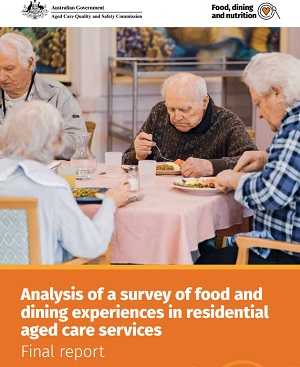
Analysis of a survey of food and dining experiences in residential aged care services - Final report
This resource provides insights into food, dining, and nutrition in residential aged care services. It is based on a survey conducted to understand residents’ dining experiences, preferences, and the quality of food and service provided. The findings highlight the importance of fresh, familiar meals, flexible mealtimes, and a homelike dining environment to enhance the quality of life for older people. This resource may refer to information that will be updated from 1 November 2025 to align with the new Aged Care Act and Quality Standards.
Residential aged care food services discussion paper
This paper presents a high-level overview of contemporary evidence regarding food services in residential aged care settings.
 Residential aged care food services discussion paper (PDF 536.47 KB)