The Quality Standards Resource Centre helps extend understanding of the strengthened Aged Care Quality Standards, which took effect from 1 November 2025. You can search for resources by using keywords, or filtering by standard, outcome and audience. Before using the Resource Centre, please read the terms of use.
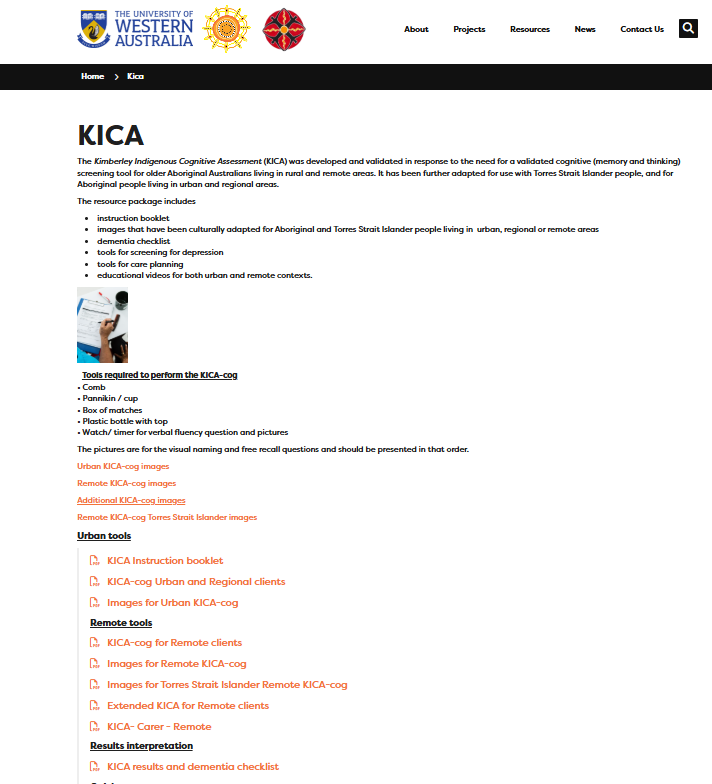
Kimberley Indigenous Cognitive Assessment (KICA)
The Kimberley Indigenous Cognitive Assessment (KICA) is a cognitive screening tool for older Aboriginal Australians living in rural and remote areas. It has been adapted for use with Torres Strait Islander people, and for Aboriginal people living in urban and regional areas.
This resource was developed by a state/territory government or organisation and therefore its applicability and usefulness may be limited.
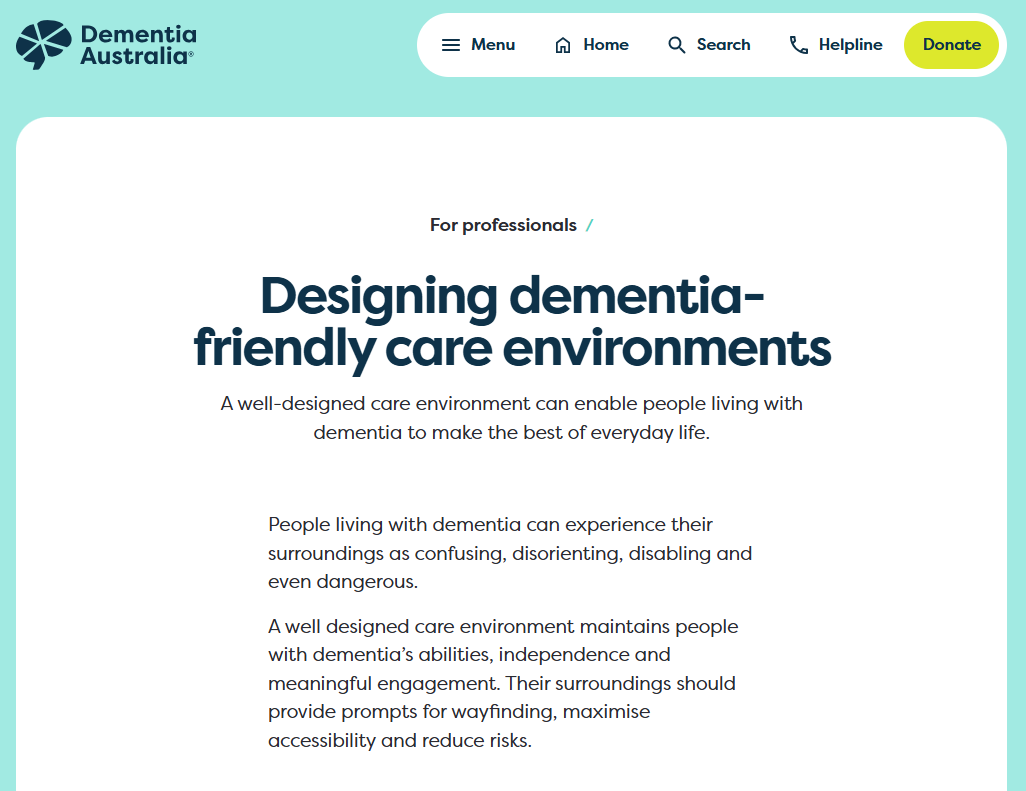
Designing dementia-friendly care environments
This resource provides guidance for professionals on designing dementia-friendly care environments to help people living with dementia to make the best of everyday life. It includes dementia enabling environment principles and an example of how to design a space using the principles. The resource also includes links to other Dementia Australia resources about developing a dementia-friendly environment.
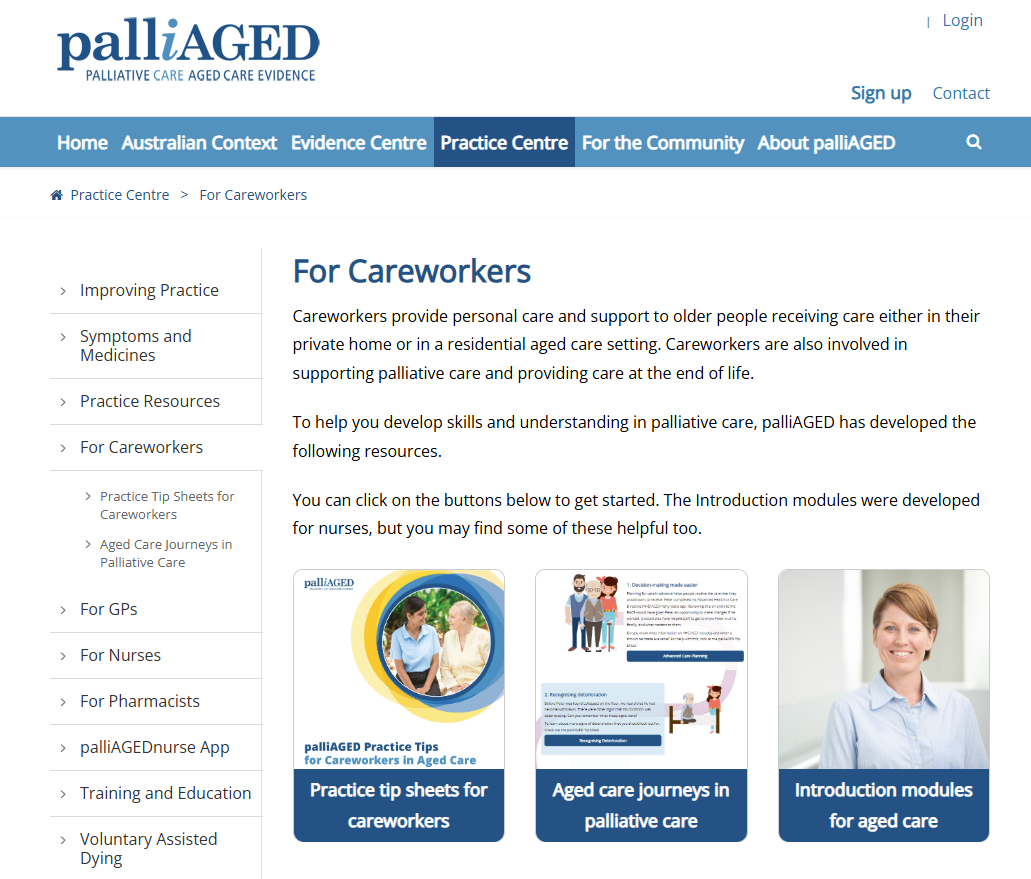
palliAGED - Practice Centre
This resource provides information for care workers about palliative care. The Practice Centre provides links to, and information about, tools and resources to use in practice and improve care and outcomes in palliative care. It includes sections on improving practice, symptoms, medicines and tipsheets.
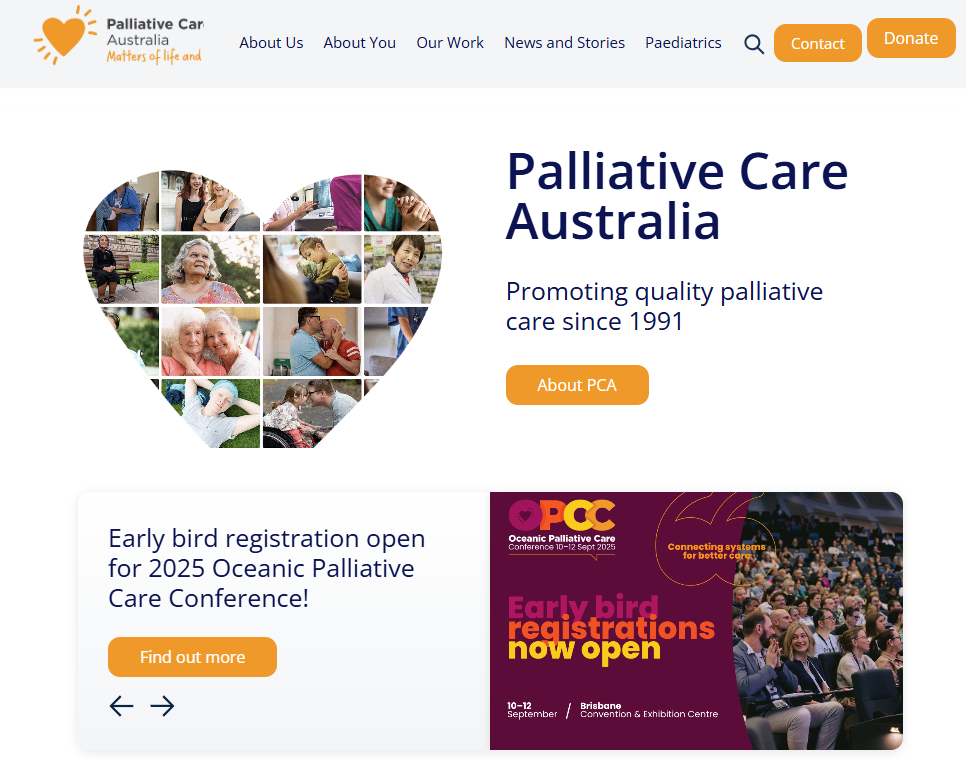
Palliative Care Australia
This resource is the Palliative Care Australia website. The website contains targeted guidance and resources for service providers and health care professionals. The resource also includes information about the National Palliative Care Standards, which provide guidance on best practice palliative care in different settings.
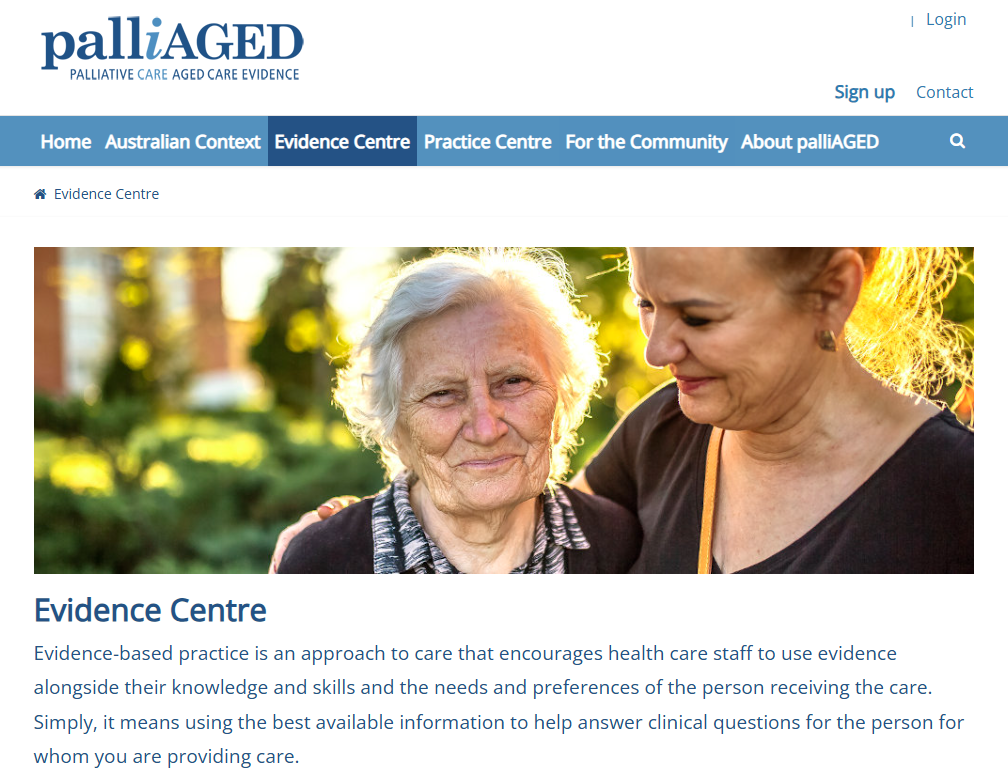
palliAGED - Evidence Centre
This resource provides evidence-based information for the healthcare sector about palliative care. It includes evidence summaries on topics related to palliative care, such as advance care planning, advocacy, care coordination, goals of care, nutrition and needs assessment.
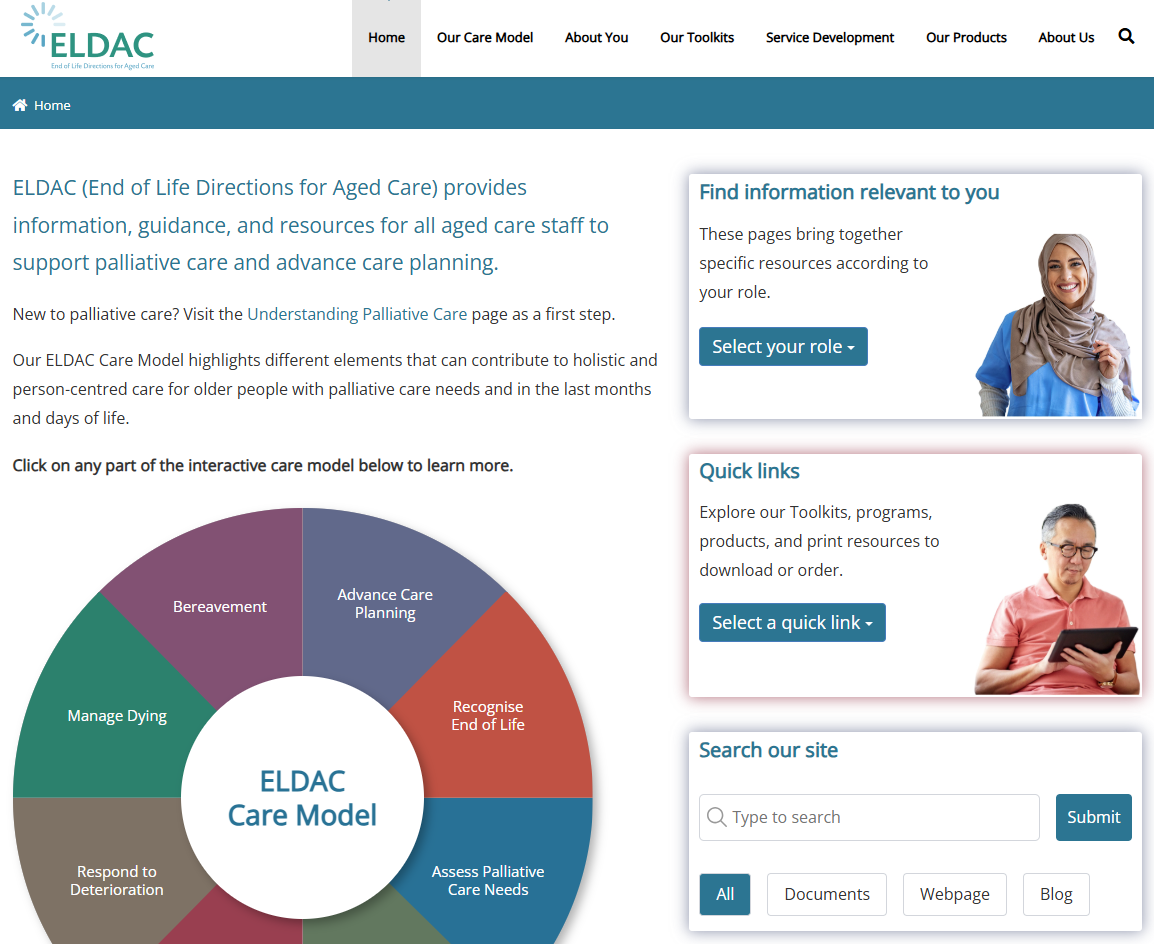
End of Life Directions for Aged Care
This resource is the ELDAC (End of Life Directions for Aged Care) website. It provides information, guidance and resources for aged care providers and staff supporting palliative care and advance care planning. Information can be accessed by selecting a topic from the ELDAC care model, for example, providing palliative care, responding to deterioration and bereavement. Information can also be filtered using search functions such as role type, quick links, resource type and keywords.
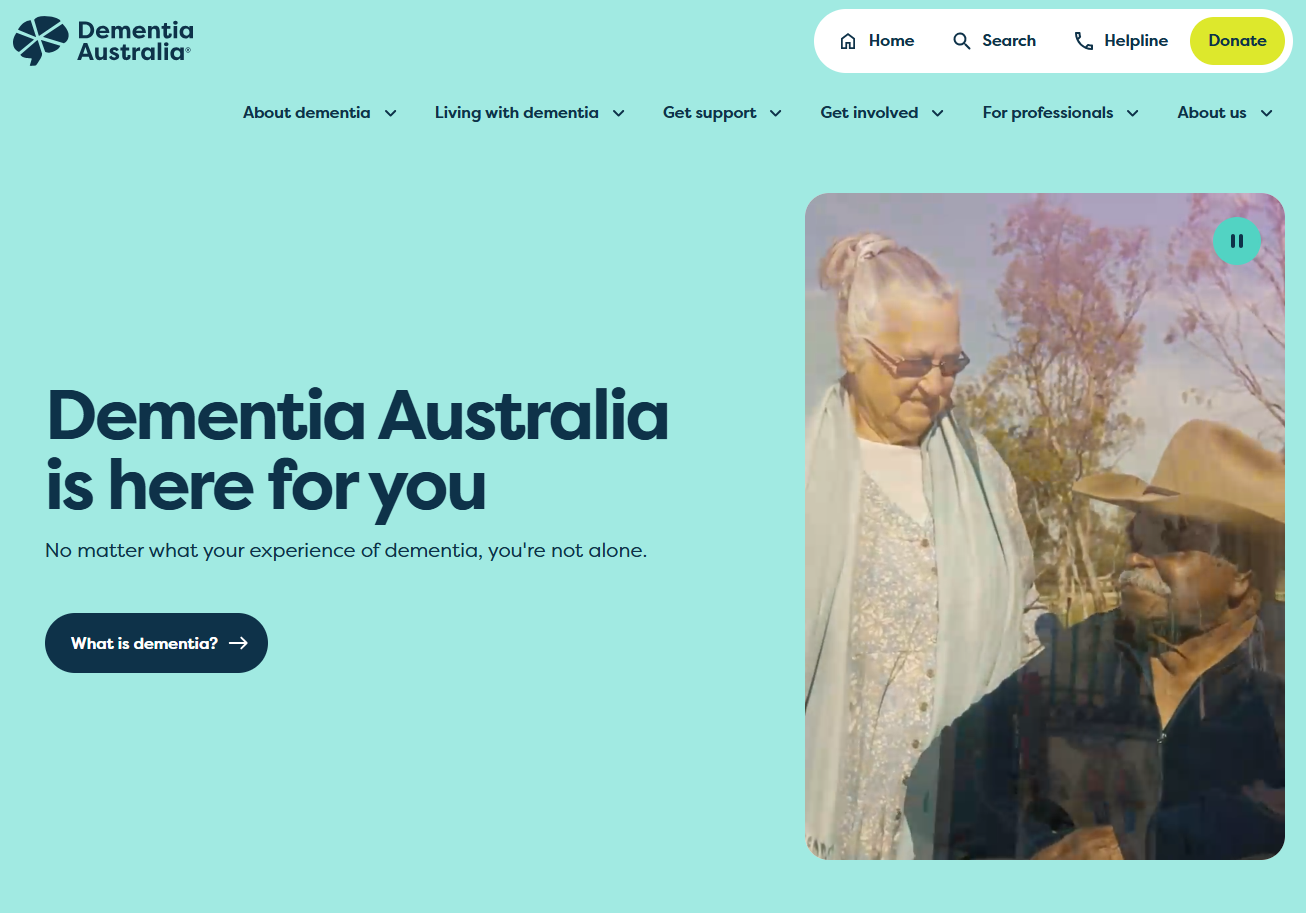
Dementia Australia
This resource is the Dementia Australia website. The website contains information about the types of dementia, testing, diagnosis, treatment and management of dementia. It includes information about living with dementia, such as behaviour changes, nutrition, staying connected and care options. It also contains information for professionals supporting people living with dementia, including research, tools and other resources.
Age-related macular degeneration
This resource provides information about age-related macular degeneration (AMD). It contains information about stages of AMD, risk factors and symptoms. It also includes information about diagnosing, monitoring and treating AMD.
Recognising Signs of Deterioration in a Person’s Mental State
This resource provides a framework for recognising signs of mental state deterioration, organised into 5 key indicators: reported change, distress, loss of reality, loss of function, and elevated risk. It supports healthcare providers in monitoring mental health changes to enable timely and effective responses across care settings. This resource may apply to healthcare contexts outside of aged care. Please consider the applicability of this resource to your care setting.
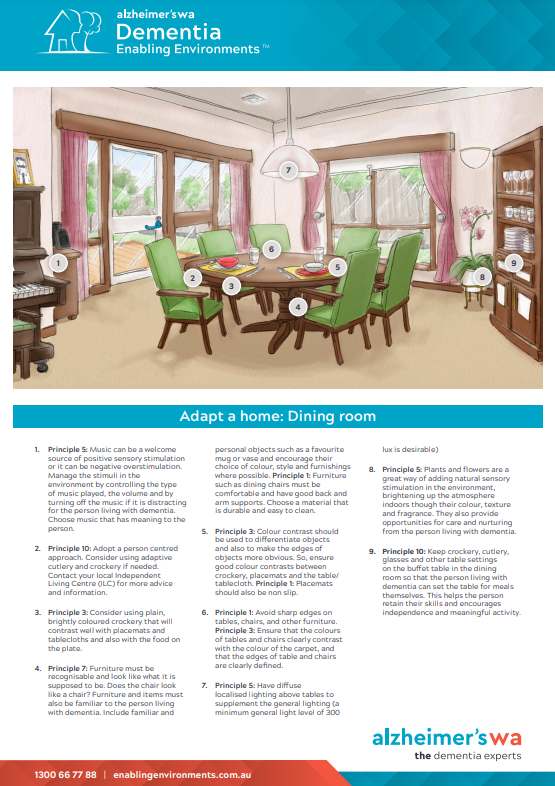
Dementia enabling environments - Adapt a home: Dining room
This resource, developed by Alzheimer's WA, is a Dementia Enabling Environments illustration information sheet about adapting a home, focusing on the dining room. It includes principles to integrate enabling design and make changes within the physical environment to maximise enablement and wellbeing for people living with dementia.
This resource was developed by a state/territory government or organisation and therefore its applicability and usefulness may be limited.
Prevention and Treatment of Pressure Ulcers/Injuries: Clinical Practice Guideline
This resource provides evidence-based recommendations and best practice statements for the prevention and treatment of pressure ulcers and injuries, including quality indicators and implementation guidance. It serves as a comprehensive clinical guideline to support health professionals in reducing pressure-related injuries. This resource may apply to healthcare contexts outside of aged care. Please consider the applicability of this resource to your care setting.
This resource was developed internationally and therefore its applicability and usefulness may be limited.
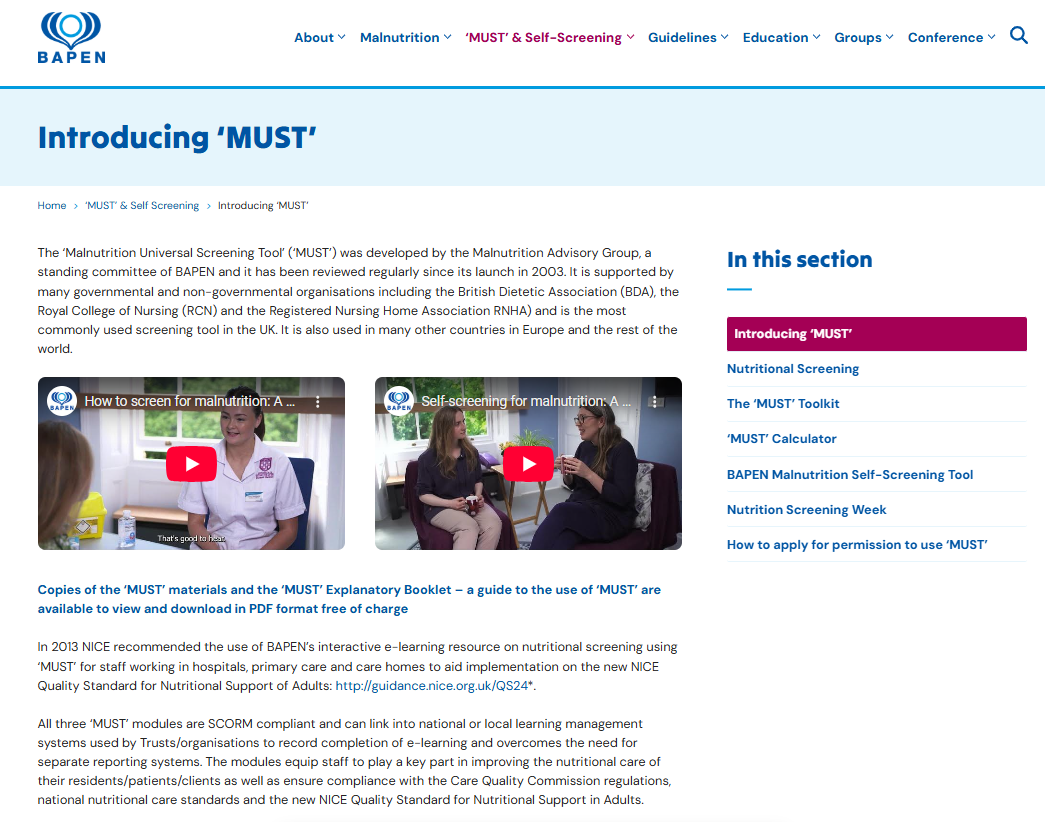
Malnutrition Universal Screening Tool
The ‘Malnutrition Universal Screening Tool’ (‘MUST’) is a widely used tool for identifying malnutrition risk in adults across various settings. It includes interactive e-learning modules with case studies and assessments, helping staff improve nutritional care and meet quality standards.
This resource was developed internationally and therefore its applicability and usefulness may be limited.
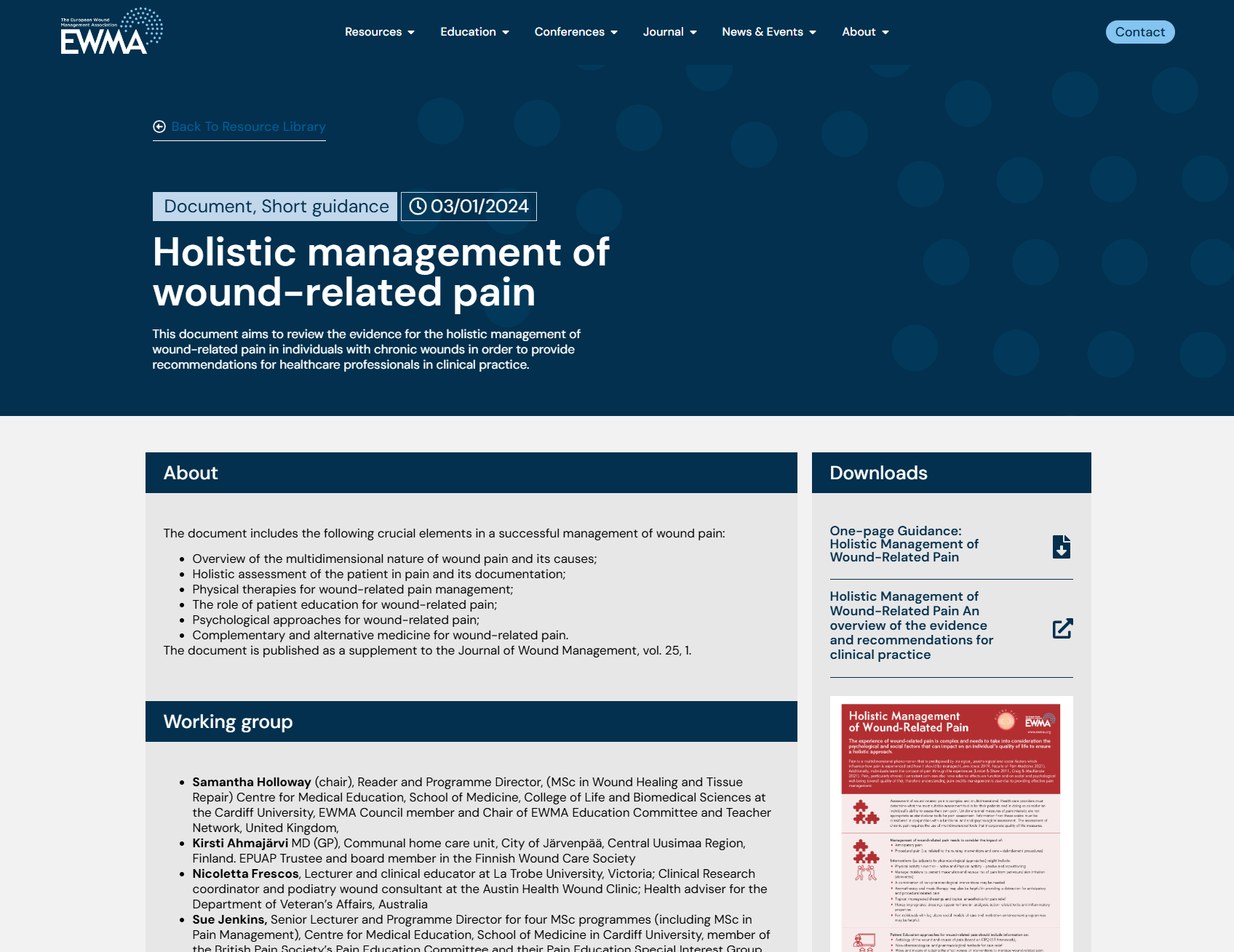
Holistic management of wound-related pain
This resource provides guidance on managing wound-related pain through a holistic approach. It covers assessing and documenting pain, physical and psychological therapies, patient education, and complementary medicine options, focusing on the multifaceted nature of wound pain to improve clinical practice. This resource may apply to healthcare contexts outside of aged care. Please consider the applicability of this resource to your care setting.
This resource was developed internationally and therefore its applicability and usefulness may be limited.
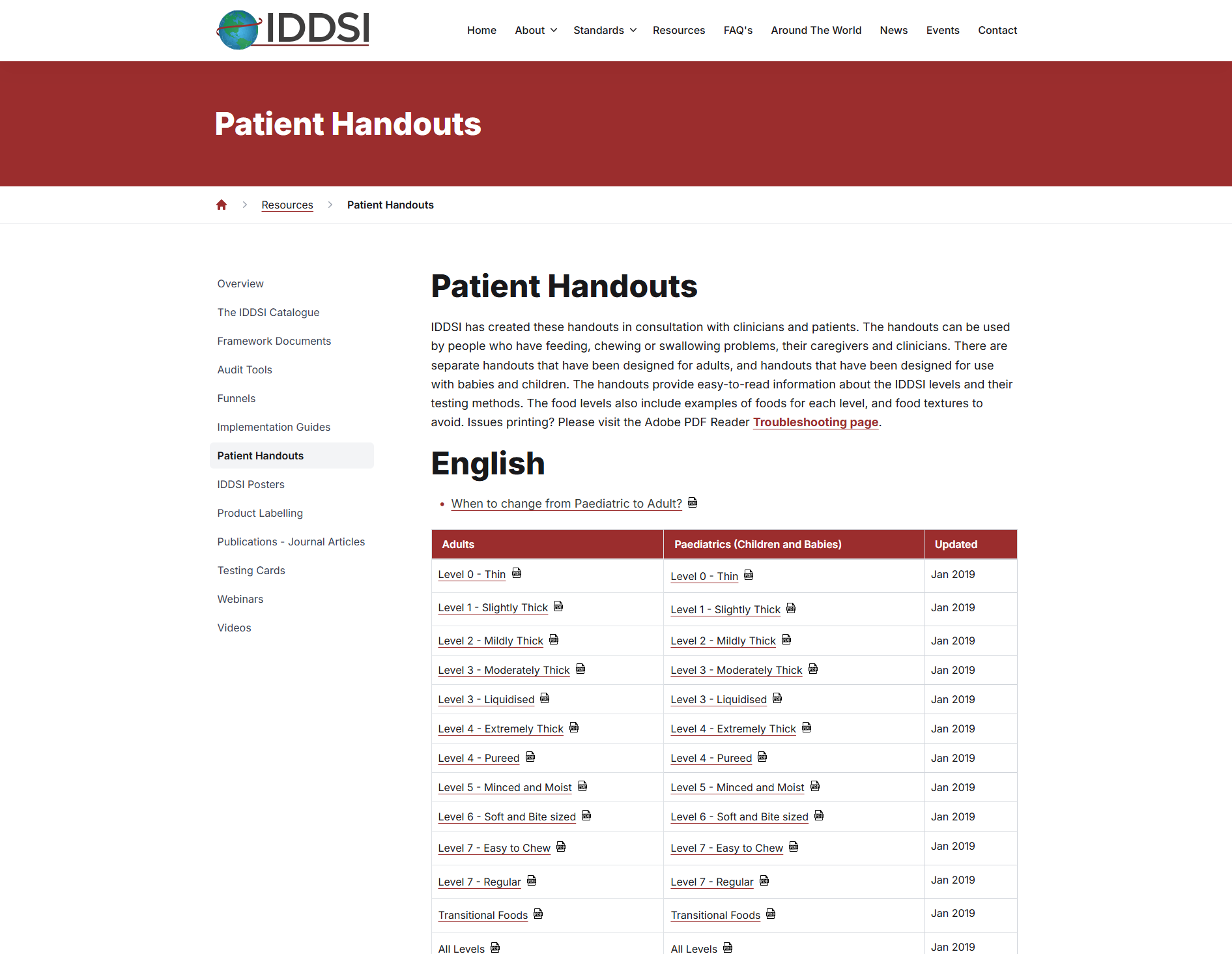
International Dysphagia Diet Initiative - Patient Handouts
This resource provides handouts tailored for people with feeding, chewing, or swallowing difficulties and their carers. It explains the IDDSI framework, describing food texture levels and appropriate testing methods. Separate versions are available for adults and children, each detailing recommended food textures to support safe swallowing practices.
This resource was developed internationally and therefore its applicability and usefulness may be limited.
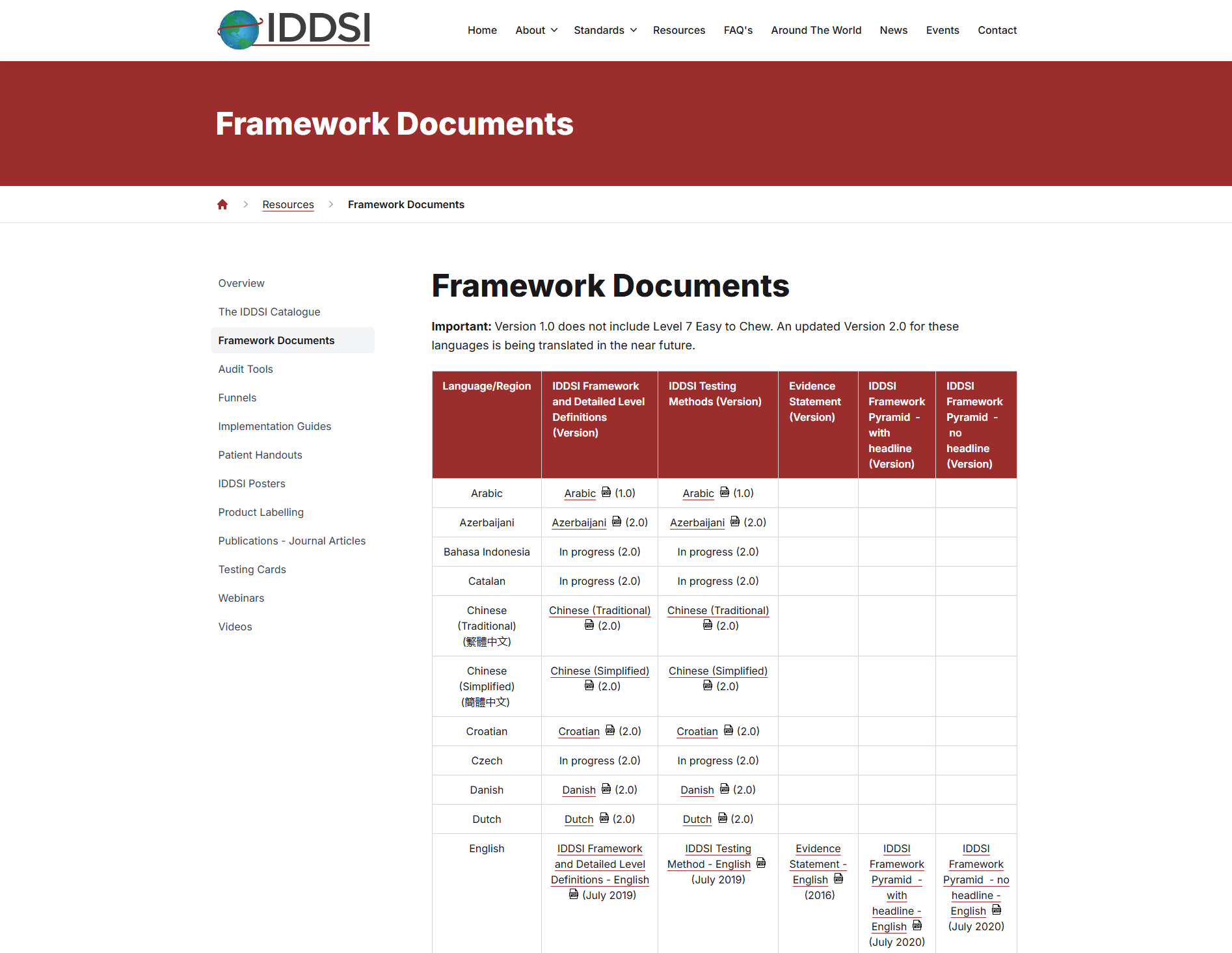
International Dysphagia Diet Initiative - Framework Documents
This resource provides the IDDSI (International Dysphagia Diet Standardisation Initiative) framework, including testing methods, detailed level definitions, audit tools, and implementation guides across language regions. It supports consistent application and understanding of diet textures for people with dysphagia, aiding caregivers in managing dietary needs safely and effectively.
This resource was developed internationally and therefore its applicability and usefulness may be limited.
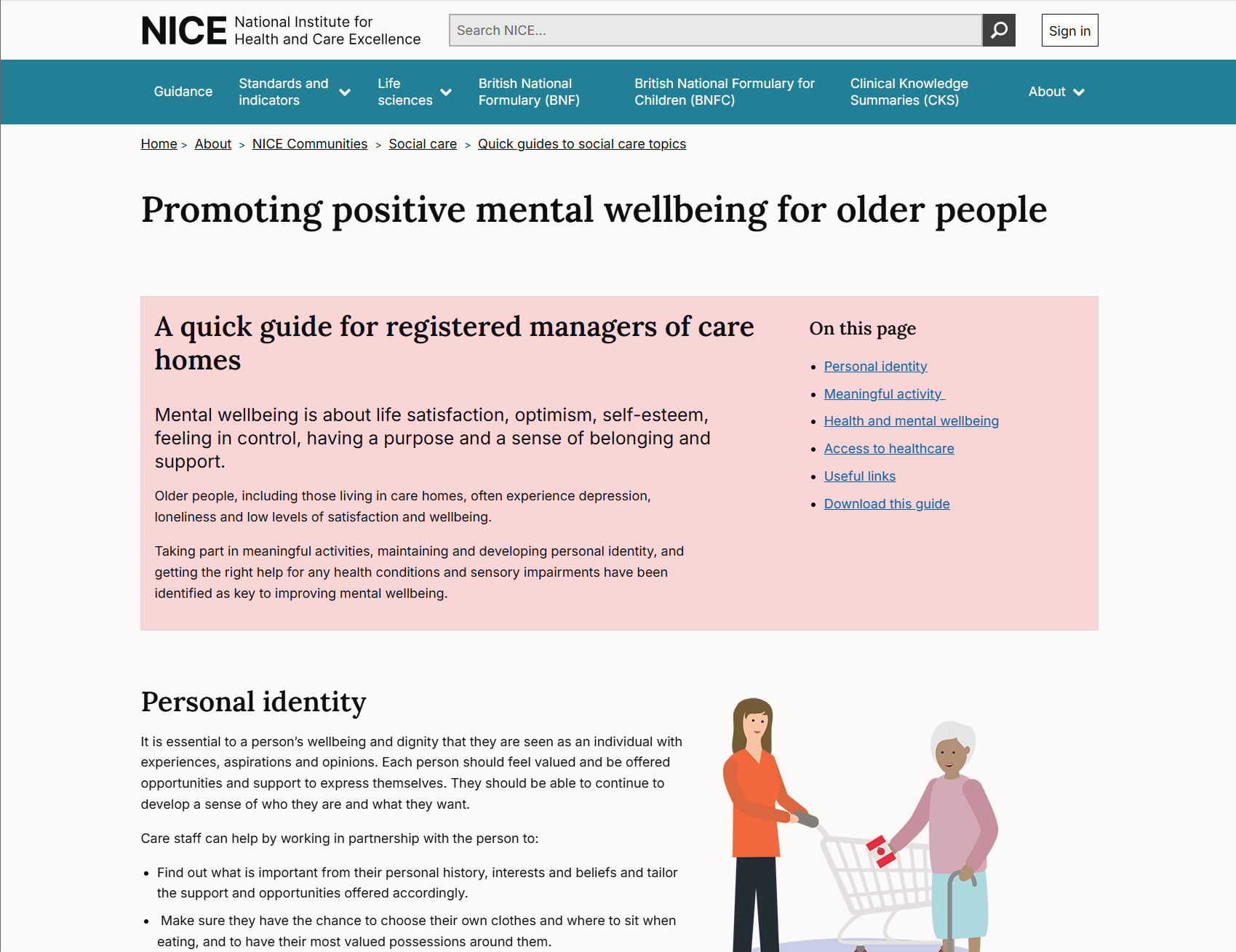
Promoting positive mental wellbeing for older people
This resource provides guidance on supporting mental wellbeing for older people in care homes, focusing on life satisfaction, meaningful activities, maintaining identity, and access to healthcare. It aims to improve mental health outcomes by enhancing personal choice and involvement in various activities and fostering a sense of belonging.
This resource was developed internationally and therefore its applicability and usefulness may be limited.
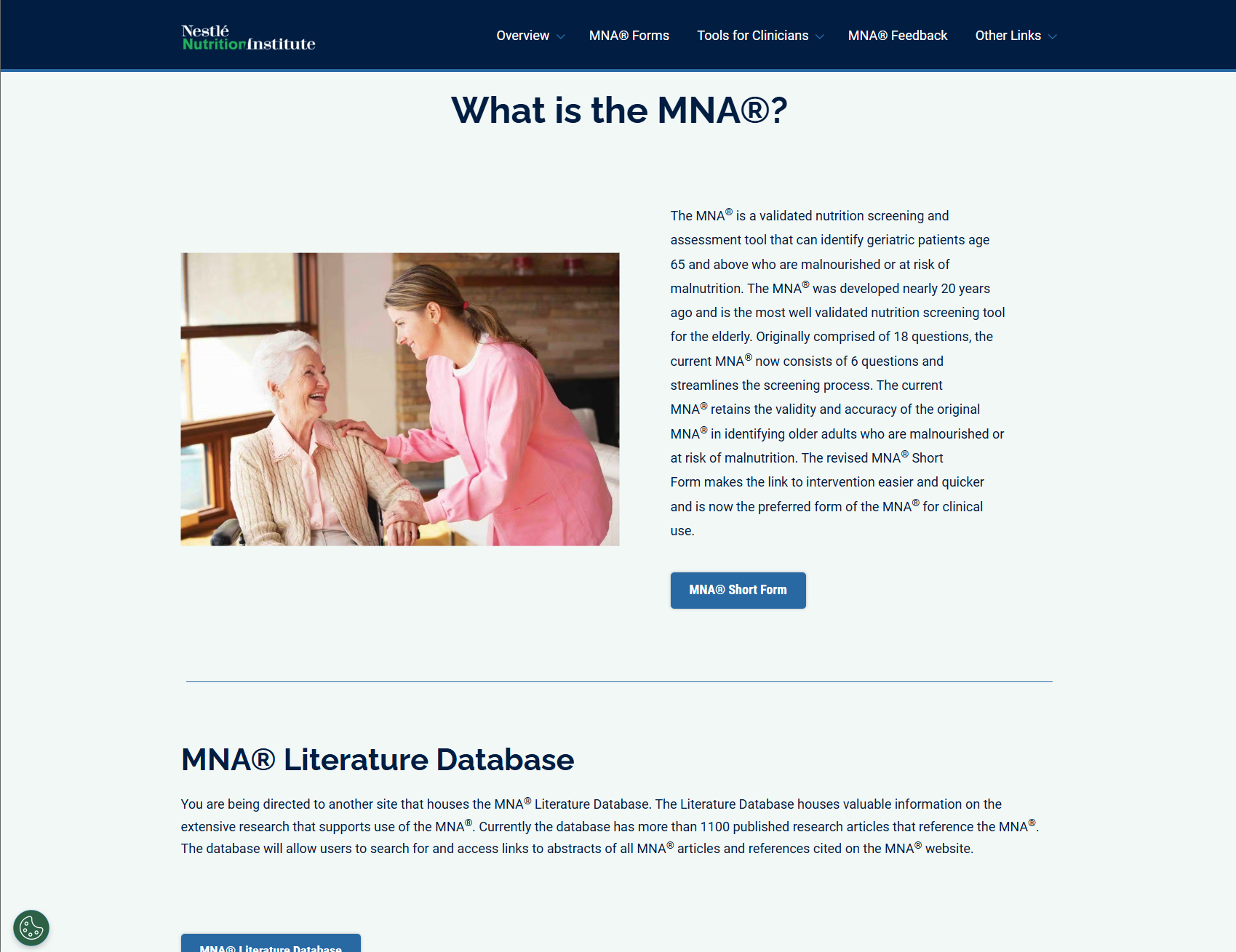
What is the Mini Nutritional Assessment (MNA)?
This resource is a validated nutrition screening and assessment tool to identify malnutrition or risk of malnutrition in people aged 65 and older. It includes an easy-to-use short form for quick identification and intervention planning.
This resource was developed internationally and therefore its applicability and usefulness may be limited.
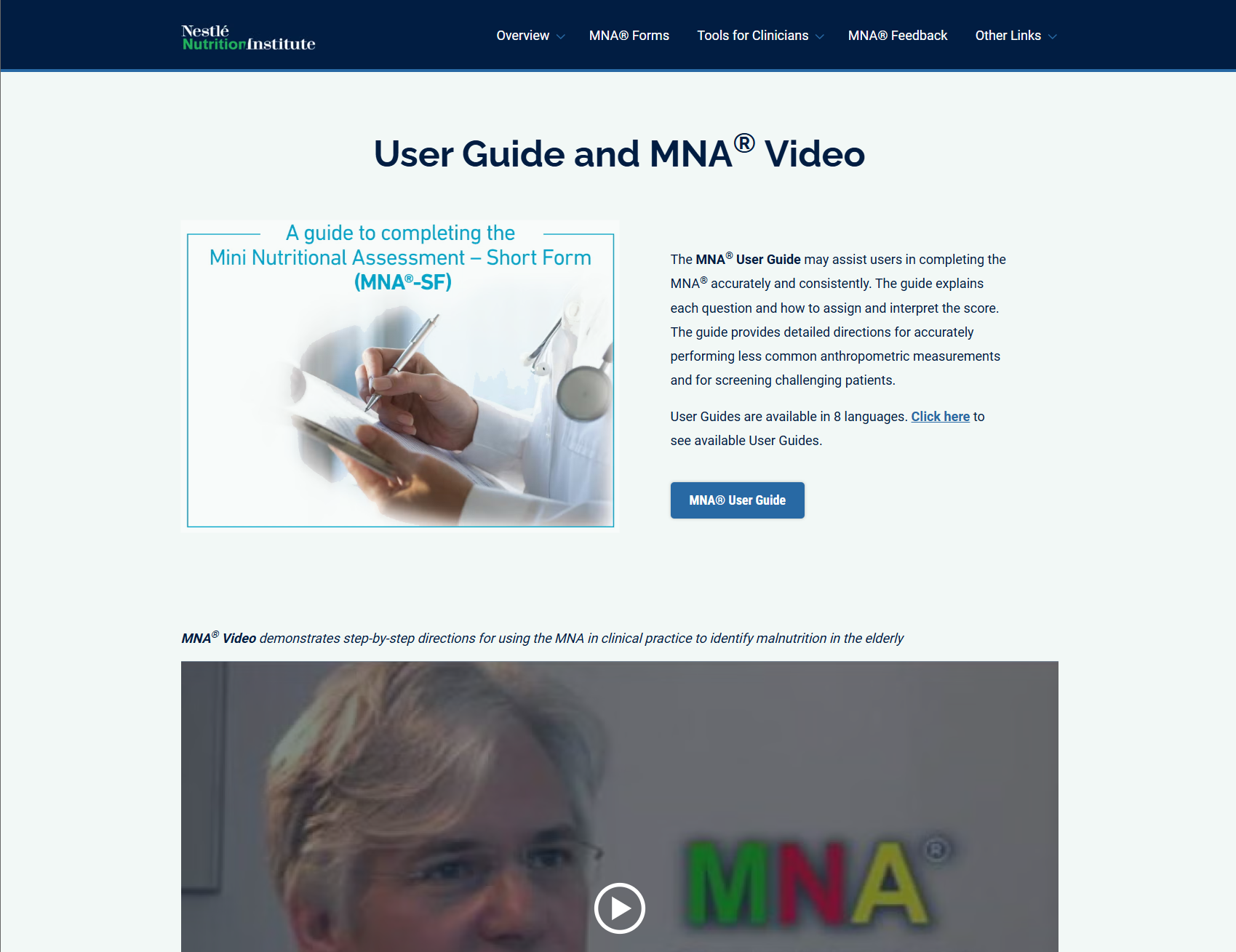
A guide to completing the Mini Nutritional Assessment – Short Form
This resource is a guide and video for using the Mini Nutritional Assessment (MNA) to identify malnutrition in older people. It explains question scoring, interpretation, and measurement procedures, with a video demonstration.
This resource was developed internationally and therefore its applicability and usefulness may be limited.
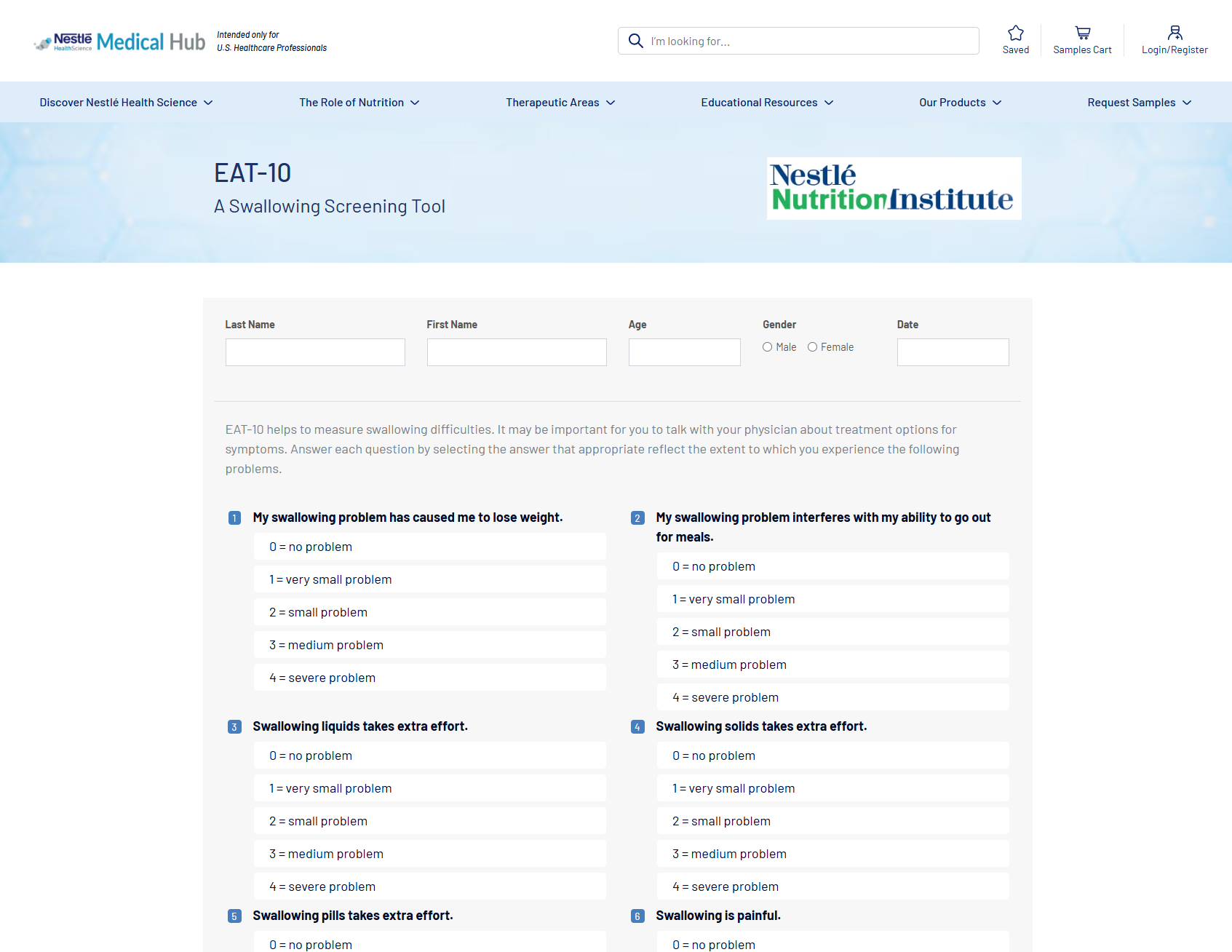
EAT-10: A Swallowing Screening Tool
This resource offers a self-assessment tool to screen for swallowing difficulties by rating various aspects of swallowing function. A score of 3 or higher suggests potential issues that may require discussion with a healthcare provider.
This resource was developed internationally and therefore its applicability and usefulness may be limited.
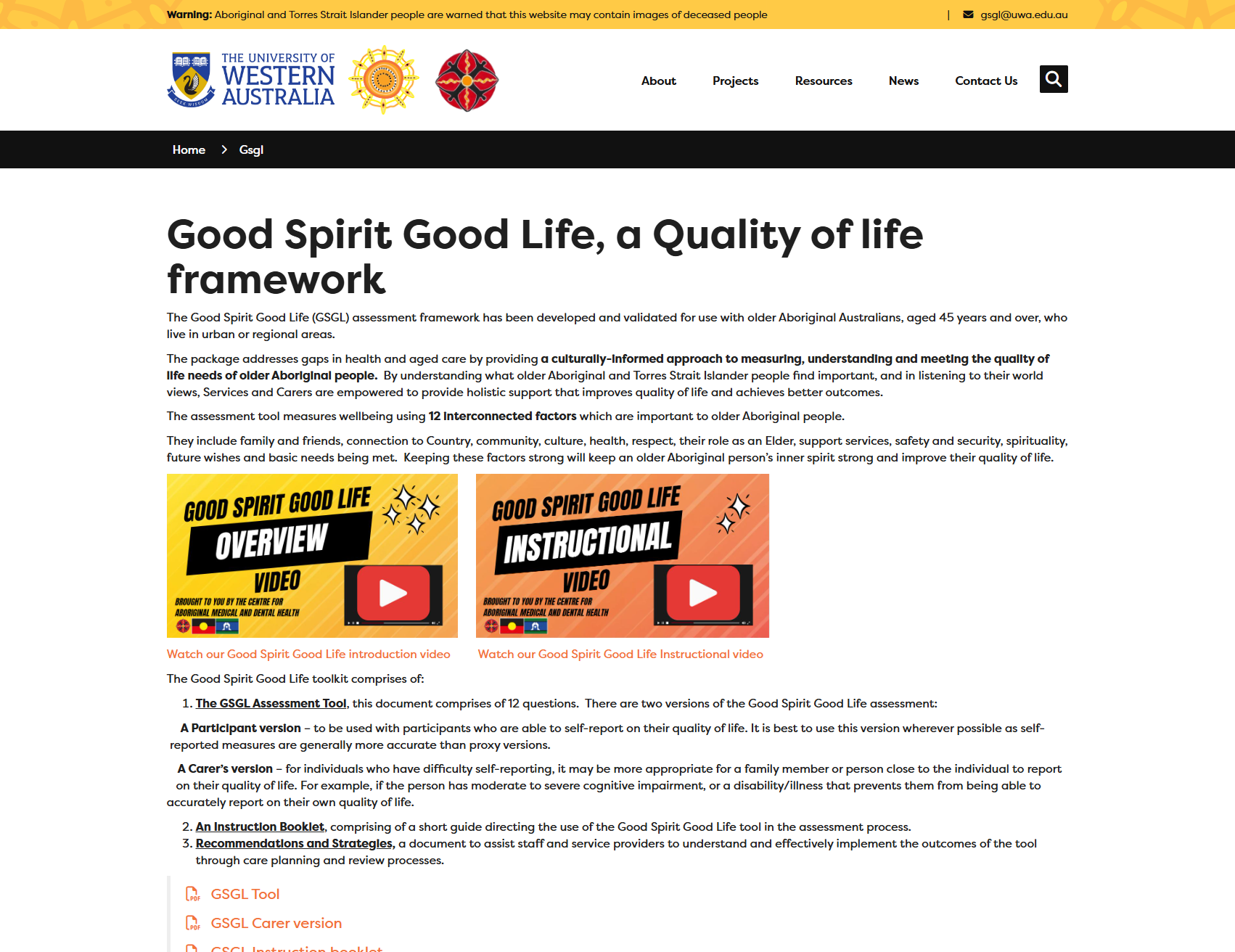
Good Spirit Good Life - a Quality of life framework
This resource describes the Good Spirit Good Life (GSGL) framework for assessing the quality of life of older Aboriginal people, focusing on culturally important factors such as connection to Country, family, and spirituality. It includes tools for both self-reporting and carer-assisted reporting.
This resource was developed by a state/territory government or organisation and therefore its applicability and usefulness may be limited.