The Quality Standards Resource Centre helps extend understanding of the strengthened Aged Care Quality Standards, which took effect from 1 November 2025. You can search for resources by using keywords, or filtering by standard, outcome and audience. Before using the Resource Centre, please read the terms of use.
Dementia Australia
This resource is the Dementia Australia website. The website contains information about the types of dementia, testing, diagnosis, treatment and management of dementia. It includes information about living with dementia, such as behaviour changes, nutrition, staying connected and care options. It also contains information for professionals supporting people living with dementia, including research, tools and other resources.
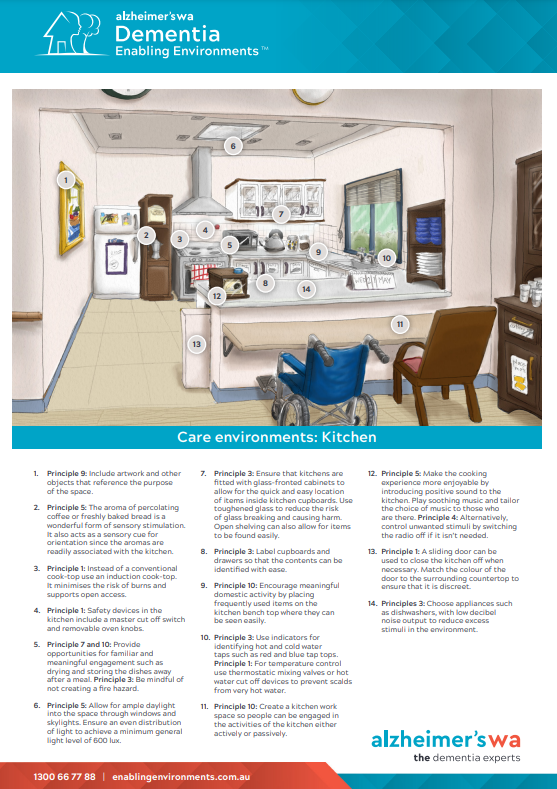
Dementia enabling environments - Care environments: Kitchen
This resource, developed by Alzheimer's WA, is a Dementia Enabling Environments illustration information sheet about kitchens in care environments. It includes principles to create enabling spaces and information about how to design the physical environment to maximise enablement and wellbeing for people living with dementia.
This resource was developed by a state/territory government or organisation and therefore its applicability and usefulness may be limited.
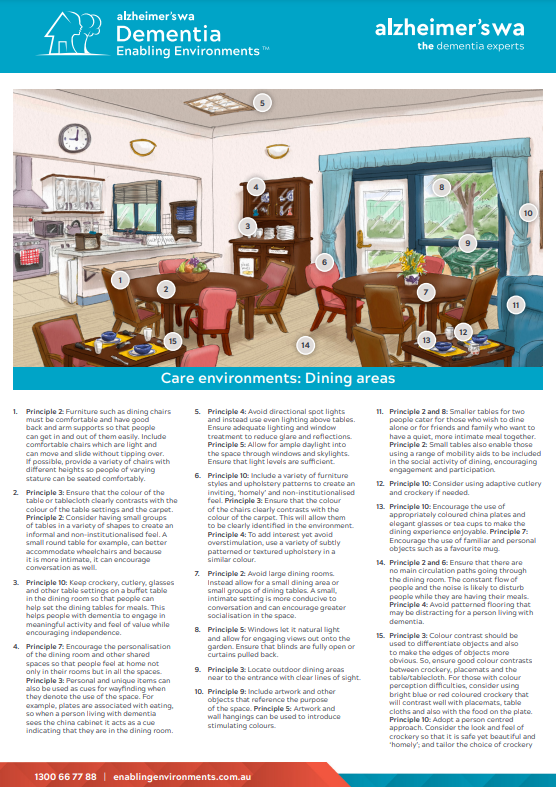
Dementia enabling environments - Care environments: Dining areas
This resource, developed by Alzheimer's WA, is a Dementia Enabling Environments illustration information sheet about dining areas in care environments. It includes principles to create enabling spaces and information about how to design the physical environment to maximise enablement and wellbeing for people living with dementia.
This resource was developed by a state/territory government or organisation and therefore its applicability and usefulness may be limited.
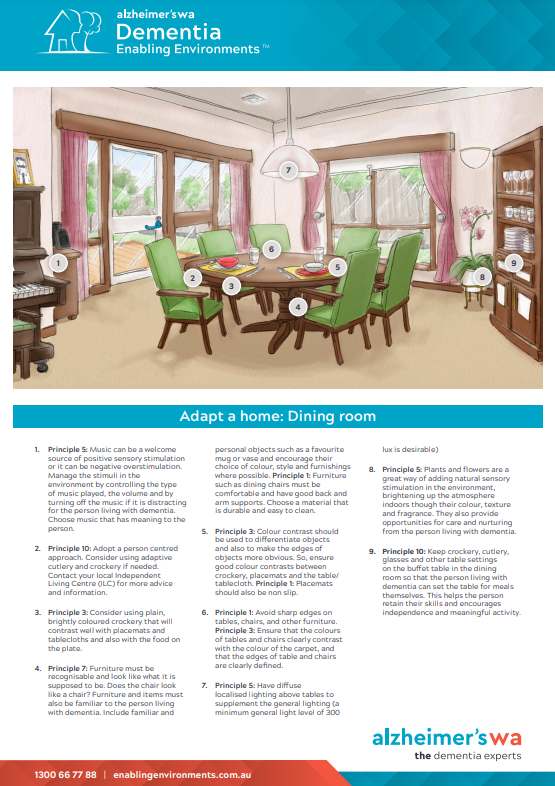
Dementia enabling environments - Adapt a home: Dining room
This resource, developed by Alzheimer's WA, is a Dementia Enabling Environments illustration information sheet about adapting a home, focusing on the dining room. It includes principles to integrate enabling design and make changes within the physical environment to maximise enablement and wellbeing for people living with dementia.
This resource was developed by a state/territory government or organisation and therefore its applicability and usefulness may be limited.
Familiar Places Webinar 2 – Bedrooms and Dining Areas
This webpage provides a video webinar focused on familiar places, such as bedrooms and dining areas, for dementia care environments. It offers insights into how these spaces can be designed to support the wellbeing of people living with dementia, with a particular emphasis on creating comfortable and familiar settings.
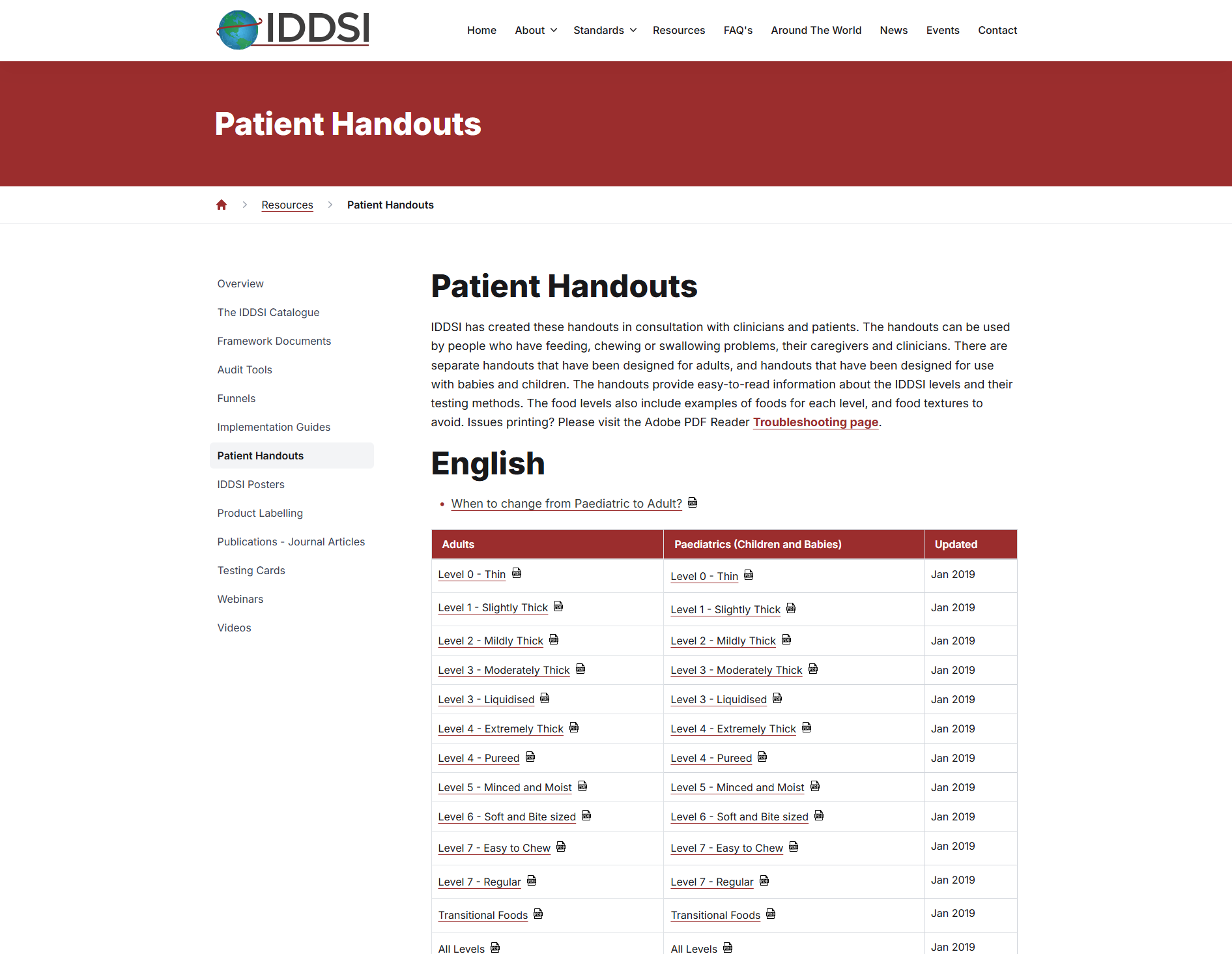
International Dysphagia Diet Initiative - Patient Handouts
This resource provides handouts tailored for people with feeding, chewing, or swallowing difficulties and their carers. It explains the IDDSI framework, describing food texture levels and appropriate testing methods. Separate versions are available for adults and children, each detailing recommended food textures to support safe swallowing practices.
This resource was developed internationally and therefore its applicability and usefulness may be limited.
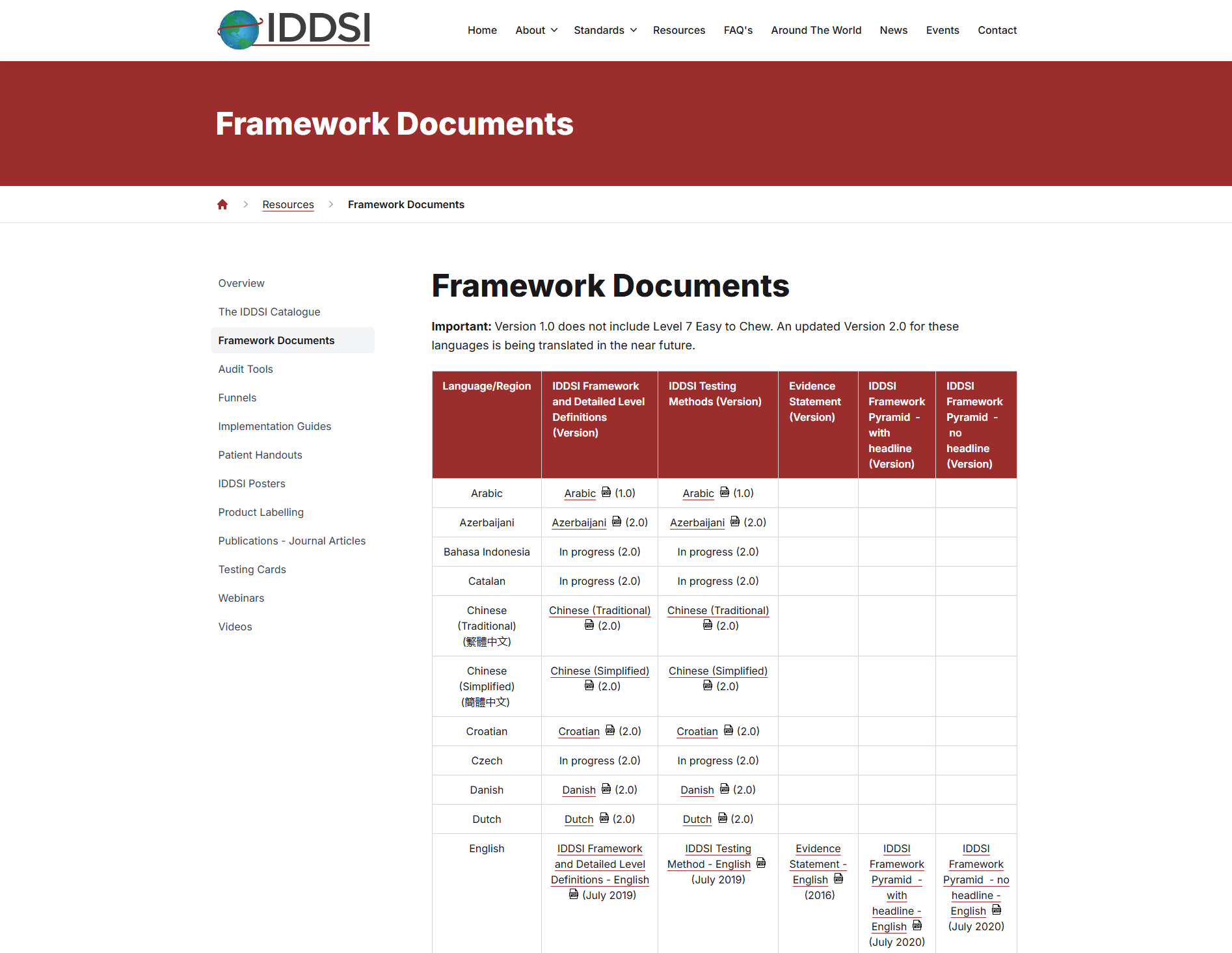
International Dysphagia Diet Initiative - Framework Documents
This resource provides the IDDSI (International Dysphagia Diet Standardisation Initiative) framework, including testing methods, detailed level definitions, audit tools, and implementation guides across language regions. It supports consistent application and understanding of diet textures for people with dysphagia, aiding caregivers in managing dietary needs safely and effectively.
This resource was developed internationally and therefore its applicability and usefulness may be limited.
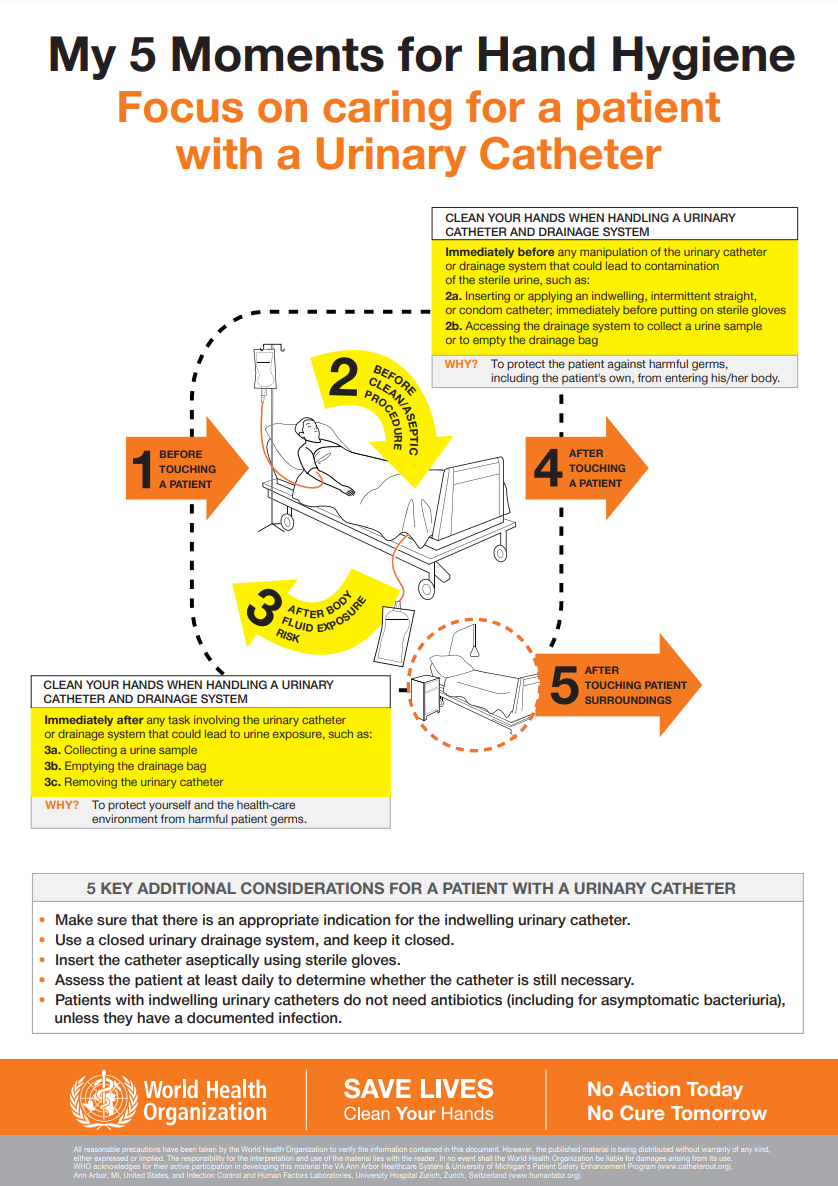
My 5 moments for hand hygiene: focus on caring for a patient with a urinary catheter
This resource outlines the ‘5 Moments for Hand Hygiene’ with specific considerations for patients with urinary catheters, aiming to minimise infection risks. It provides steps for appropriate hand hygiene before and after touching the patient, performing aseptic procedures, and handling catheter equipment.
This resource was developed internationally and therefore its applicability and usefulness may be limited.
Global strategy on infection prevention and control
This resource provides a global framework for infection prevention and control (IPC) in healthcare settings, aiming to reduce healthcare-associated infections and antimicrobial resistance. It offers strategic directions for achieving measurable improvements by 2030, supporting patient safety, healthcare worker protection, and sustainable health outcomes worldwide.
This resource was developed internationally and therefore its applicability and usefulness may be limited.
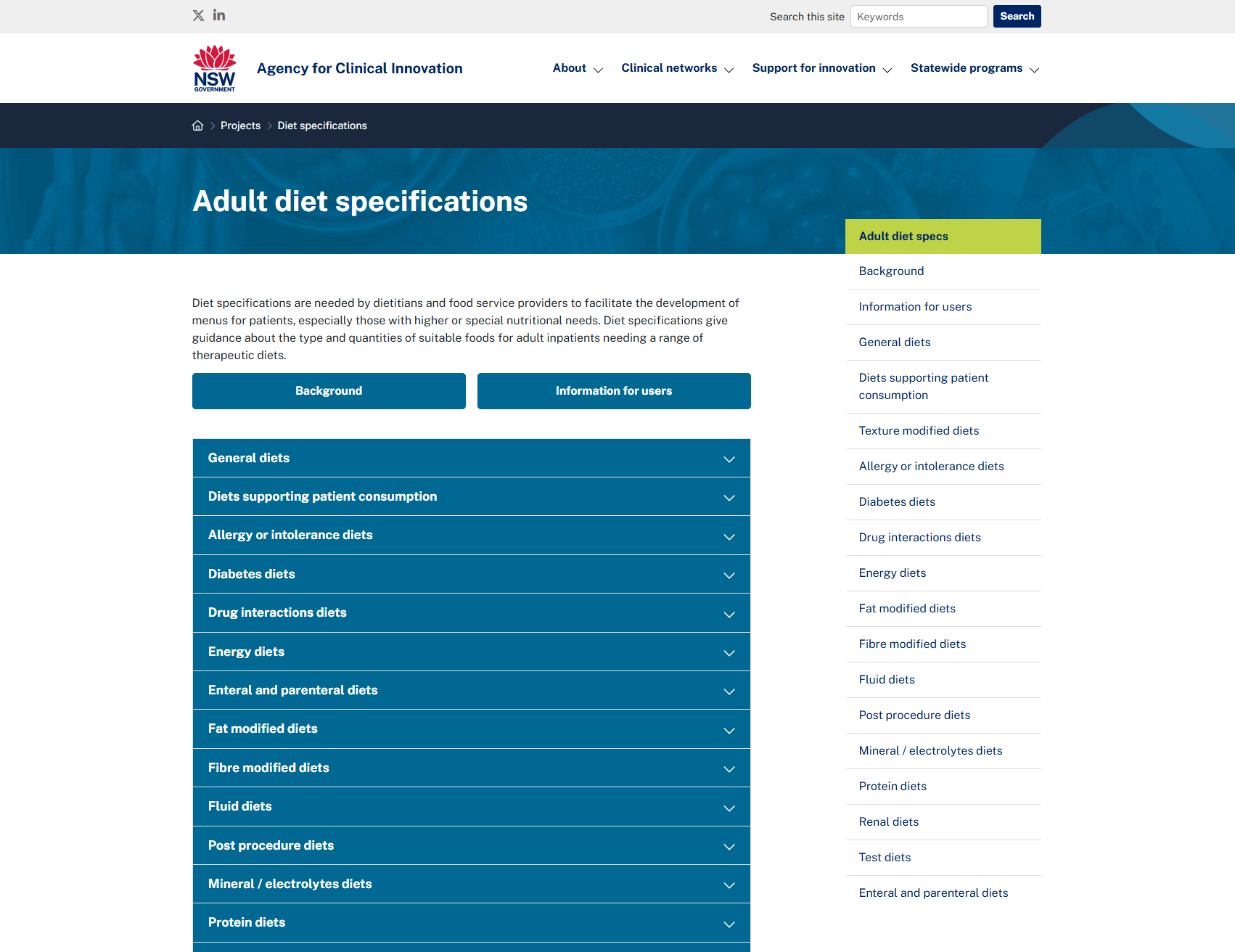
Adult diet specifications
This resource provides specifications for adult diets tailored to inpatient use in NSW hospitals, including allergy-specific and therapeutic requirements. Although intended for inpatients, it can serve as general guidance for dietitians and food service providers in creating meal plans for diverse health needs. This resource applies to healthcare contexts outside of aged care.
This resource was developed by a state/territory government or organisation and therefore its applicability and usefulness may be limited.
Food and Nutrition Manual for Aged Care Homes - Swallowing and food textures
This resource provides guidelines on managing swallowing difficulties in aged care by using texture-modified diets and thickened fluids. It explains various food texture levels and fluid consistencies for safe swallowing, offers practical meal preparation tips, and highlights the importance of regular reassessment by a speech pathologist
This resource was developed by a state/territory government or organisation and therefore its applicability and usefulness may be limited.
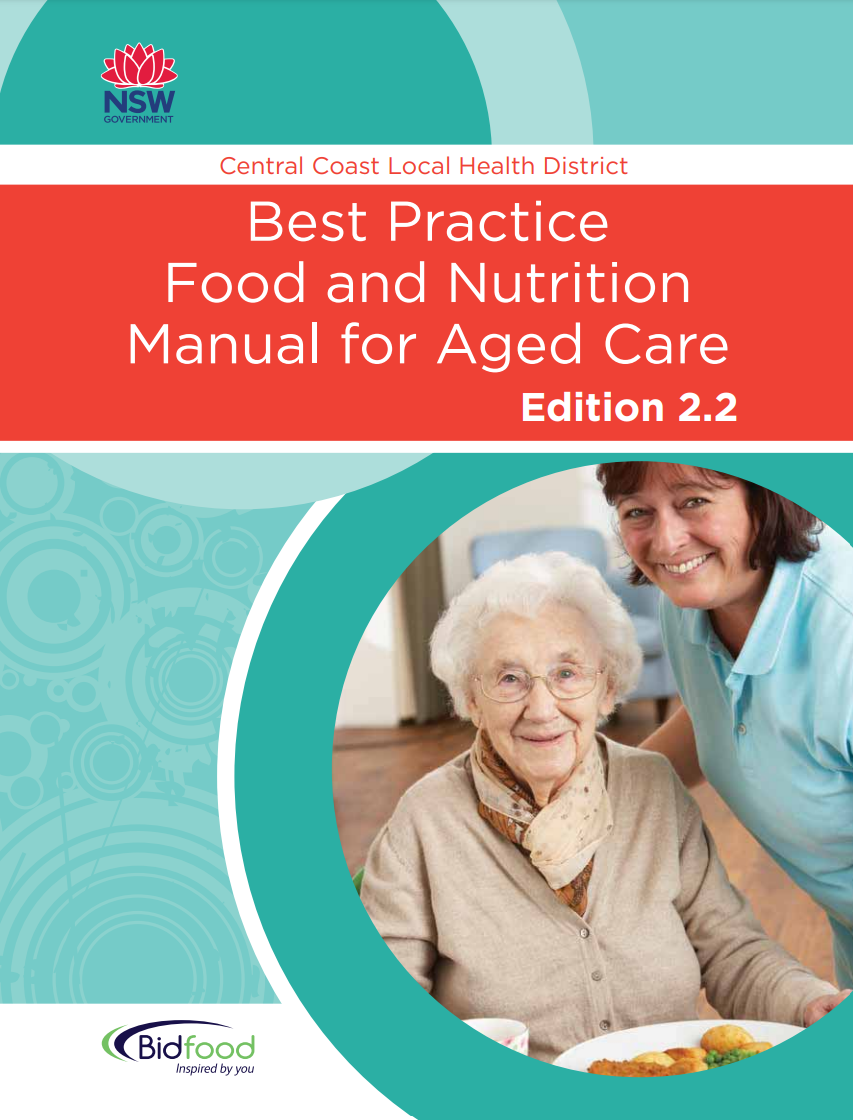
Best Practice Food and Nutrition Manual for Aged Care
This manual offers practical guidelines on food and nutrition best practices in aged care homes, covering menu planning, meal enjoyment, hydration, and malnutrition prevention. It includes checklists, screening tools, and dietary considerations tailored to the needs of older people.
This resource was developed by a state/territory government or organisation and therefore its applicability and usefulness may be limited.
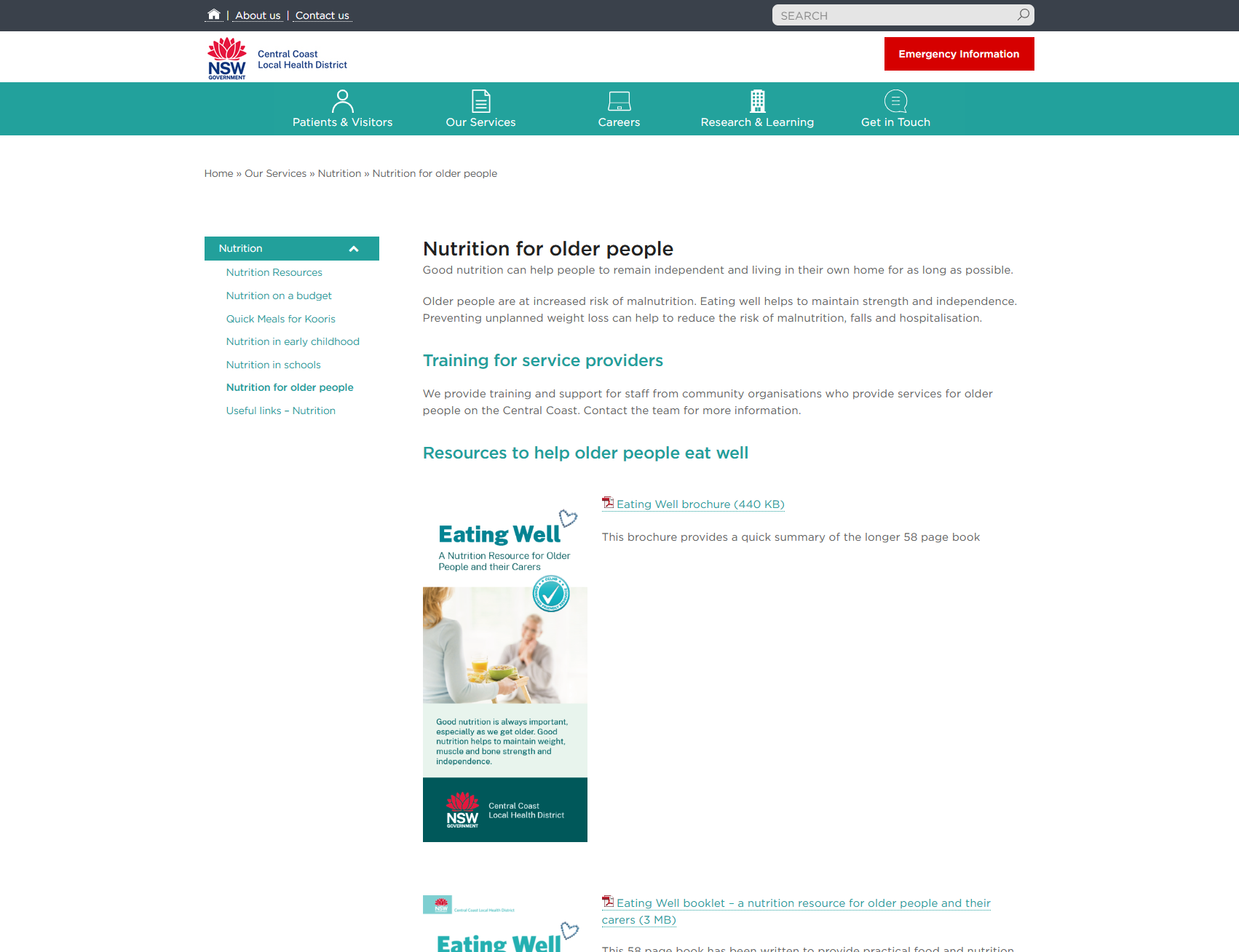
Nutrition for older people
This resource provides nutrition guidelines and support for older people to prevent malnutrition, reduce falls risk, and promote independence. It includes meal planning, dietary tips, and training for service providers, especially those supporting home care.
This resource was developed by a state/territory government or organisation and therefore its applicability and usefulness may be limited.
Infection Control Guidelines
This resource provides infection control guidelines for managing infectious diseases in care settings, covering protocols for exposure to blood and body fluids, managing respiratory and gastrointestinal illnesses, and handling high-risk infections. It includes standard precautions, waste disposal, and cleaning procedures to maintain safety and reduce transmission.
This resource was developed by a state/territory government or organisation and therefore its applicability and usefulness may be limited.
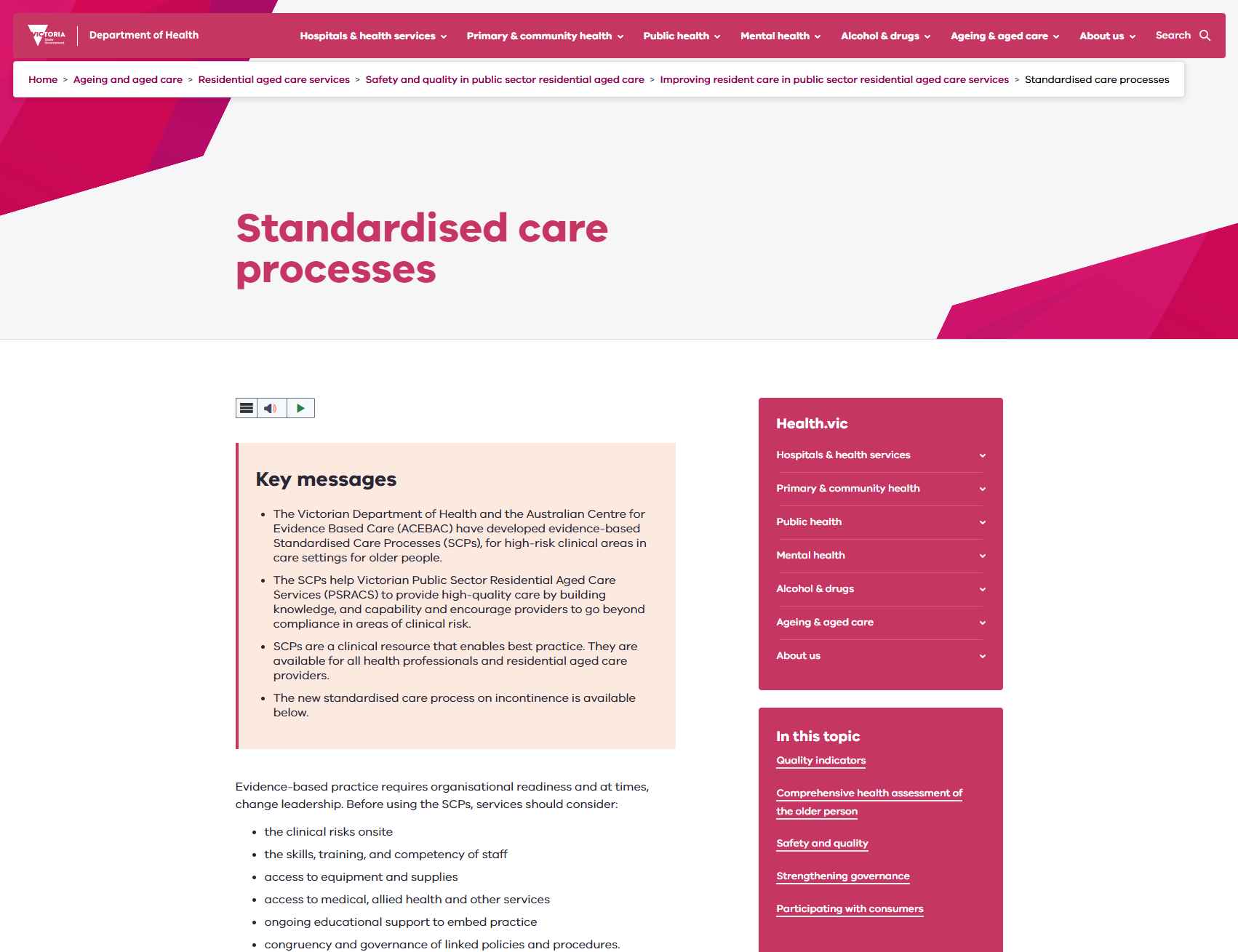
Standardised care processes
This resource offers evidence-based standardised care processes for aged care providers, covering high-risk clinical areas such as falls, pain, incontinence, and dehydration. It provides structured guidelines to support best practices, ensuring consistent and safe care for older people in residential settings.
This resource was developed by a state/territory government or organisation and therefore its applicability and usefulness may be limited.
My healthy home: home health factsheet series
This resource offers accessible health information for Aboriginal and Torres Strait Islander people on preventing illness in the home. It includes room-based fact sheets with actions to improve environmental health, available as individual sheets or a workbook. This resource includes state-specific information and therefore its applicability and usefulness may be limited.
Management of Peripheral Intravenous Catheters Clinical Care Standard
This resource is the Australian Commission on Safety and Quality in Health Care's Clinical Care Standard for the management of Peripheral Intravenous Catheters (PIVCs), aiming to reduce complications and improve care quality. It includes quality statements on PIVC assessment, insertion, maintenance, and removal, supporting best practices in all healthcare settings. The standard applies to all contexts where PIVCs are used, with the term ‘patients’ encompassing people across various healthcare settings, including hospitals, emergency services, and community care.
NSQHS Standards Implementation guide for Action 3.11 Aseptic Technique
This resource is an implementation guide designed to help health service organisations meet the requirements of Action 3.11 on aseptic technique under the NSQHS Standards. It outlines how to identify procedures requiring aseptic technique, assess workforce competence, provide relevant training, and monitor compliance. It aims to reduce healthcare-associated infections, ensuring safer care delivery, particularly relevant to aged care providers.This resource may apply to healthcare contexts outside of aged care.
COVID-19 resource kit
This resource kit provides downloadable tools for businesses, including aged care, to manage COVID-19 risks. It includes checklists, posters, and infographics covering hygiene, physical distancing, cleaning, and response actions if a worker contracts COVID-19. These materials help workplaces implement safe practices and reduce the spread of the virus.
Translated resources on sexually transmissible infections
This resource provides translated videos, fact sheets, and posters from the Beforeplay campaign to educate multicultural communities about sexually transmissible infections (STIs). It promotes STI testing, safe sex practices, and includes materials in multiple languages to improve accessibility and encourage conversations around sexual health.