The Quality Standards Resource Centre helps extend understanding of the strengthened Aged Care Quality Standards, which took effect from 1 November 2025. You can search for resources by using keywords, or filtering by standard, outcome and audience. Before using the Resource Centre, please read the terms of use.
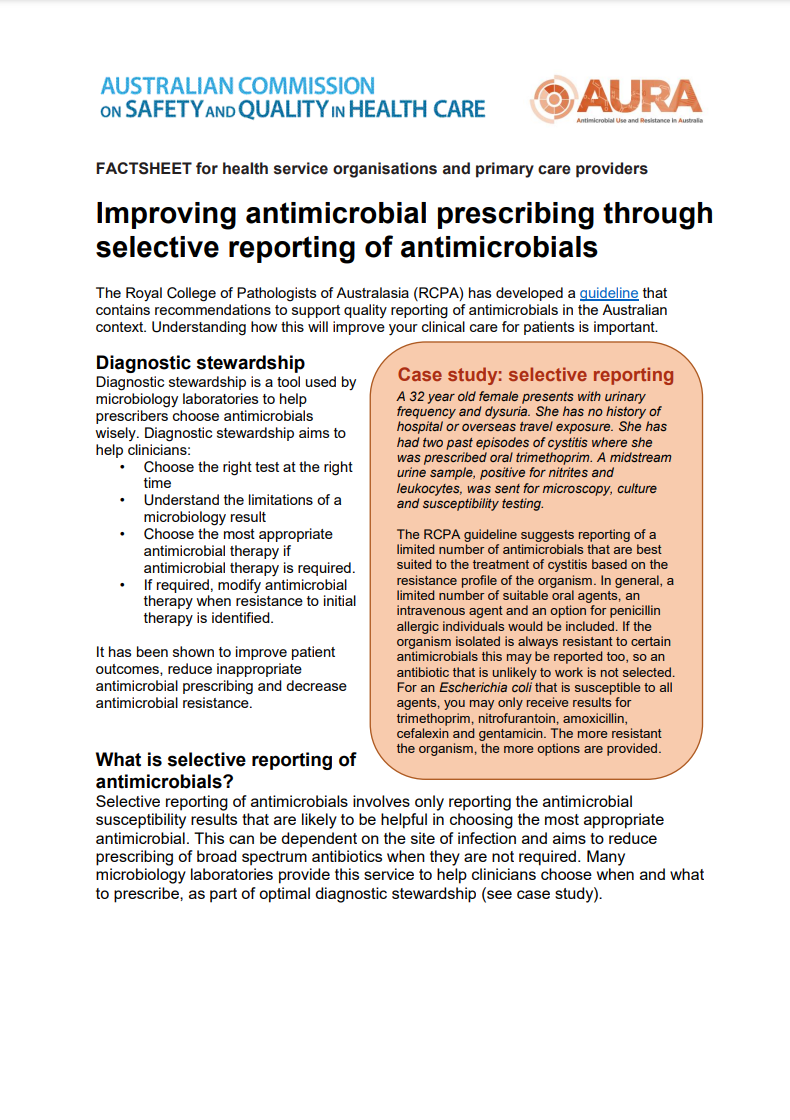
Dementia enabling environments - Care environments: Kitchen
This resource, developed by Alzheimer's WA, is a Dementia Enabling Environments illustration information sheet about kitchens in care environments. It includes principles to create enabling spaces and information about how to design the physical environment to maximise enablement and wellbeing for people living with dementia.
This resource was developed by a state/territory government or organisation and therefore its applicability and usefulness may be limited.
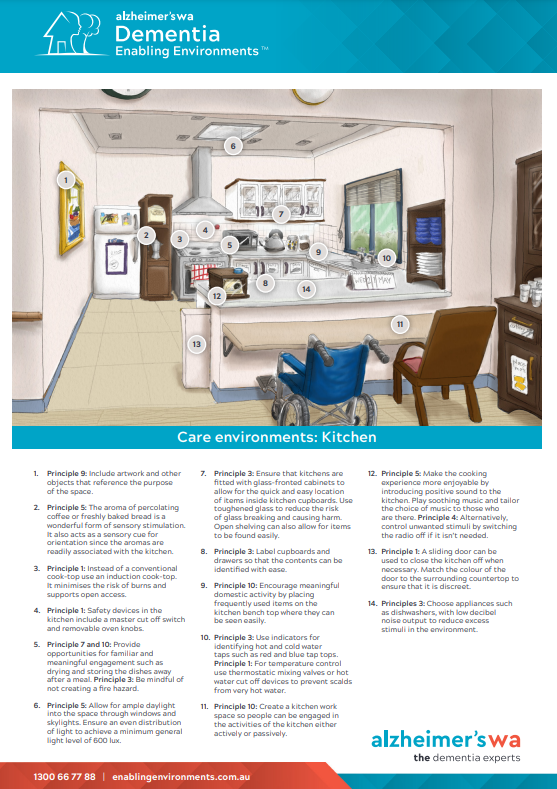
Dementia enabling environments - Care environments: Dining areas
This resource, developed by Alzheimer's WA, is a Dementia Enabling Environments illustration information sheet about dining areas in care environments. It includes principles to create enabling spaces and information about how to design the physical environment to maximise enablement and wellbeing for people living with dementia.
This resource was developed by a state/territory government or organisation and therefore its applicability and usefulness may be limited.
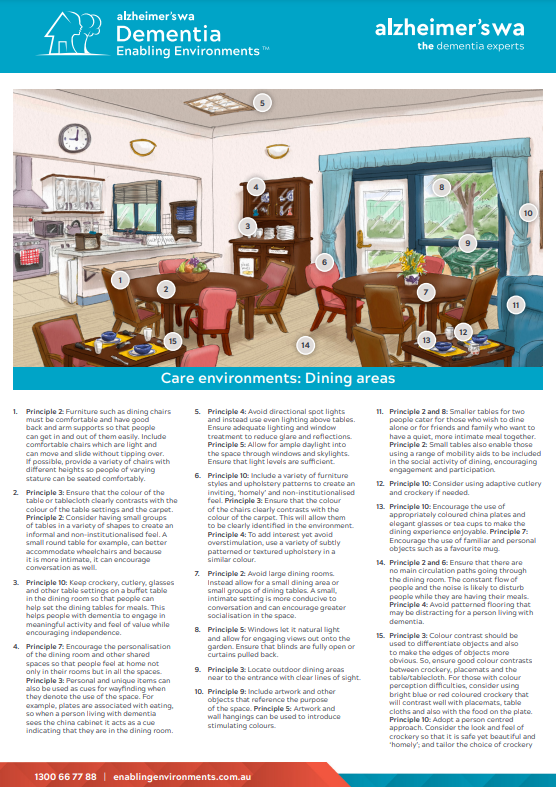
Dementia enabling environments - Adapt a home: Dining room
This resource, developed by Alzheimer's WA, is a Dementia Enabling Environments illustration information sheet about adapting a home, focusing on the dining room. It includes principles to integrate enabling design and make changes within the physical environment to maximise enablement and wellbeing for people living with dementia.
This resource was developed by a state/territory government or organisation and therefore its applicability and usefulness may be limited.
My healthy home: home health factsheet series
This resource offers accessible health information for Aboriginal and Torres Strait Islander people on preventing illness in the home. It includes room-based fact sheets with actions to improve environmental health, available as individual sheets or a workbook. This resource includes state-specific information and therefore its applicability and usefulness may be limited.
NSQHS Standards Implementation guide for Action 3.11 Aseptic Technique
This resource is an implementation guide designed to help health service organisations meet the requirements of Action 3.11 on aseptic technique under the NSQHS Standards. It outlines how to identify procedures requiring aseptic technique, assess workforce competence, provide relevant training, and monitor compliance. It aims to reduce healthcare-associated infections, ensuring safer care delivery, particularly relevant to aged care providers.This resource may apply to healthcare contexts outside of aged care.
COVID-19 resource kit
This resource kit provides downloadable tools for businesses, including aged care, to manage COVID-19 risks. It includes checklists, posters, and infographics covering hygiene, physical distancing, cleaning, and response actions if a worker contracts COVID-19. These materials help workplaces implement safe practices and reduce the spread of the virus.
Translated resources on sexually transmissible infections
This resource provides translated videos, fact sheets, and posters from the Beforeplay campaign to educate multicultural communities about sexually transmissible infections (STIs). It promotes STI testing, safe sex practices, and includes materials in multiple languages to improve accessibility and encourage conversations around sexual health.
Resources on sexually transmissible infections
This resource offers materials from the Beforeplay campaign to raise awareness about sexually transmissible infections (STIs). It provides videos, fact sheets, and posters aimed at educating people on STI prevention, testing, and protection, with tailored resources for various groups including young people, couples, and healthcare professionals.
Are you alert and ready? Safeguarding against infectious illness in aged care settings
Older Australians, particularly those that reside in residential aged care settings or in multigenerational households, are vulnerable to the ongoing risk of contracting and becoming seriously ill from COVID-19 and other highly infectious illnesses such as influenza and gastroenteritis.

AURA 2023 Highlights for Aged care
This resource summarises key findings from the AURA 2023 report, focusing on antimicrobial use and resistance in aged care. It provides priorities for action to reduce inappropriate prescriptions, promote antimicrobial stewardship, and improve infection prevention and control in aged care settings, aligning with quality standards to enhance care for older people.
This resource may refer to information that will be updated from 1 November 2025 to align with the new Aged Care Act and Quality Standards.
COVID-19 resources for health professionals, including aged care providers, pathology providers and health care managers
This resource offers COVID-19 guidance for health professionals and aged care providers. It includes information on managing outbreaks, infection control, PPE use, and telehealth services. These resources support safe and effective care delivery while ensuring compliance with guidelines during the pandemic in aged care settings.
This resource may refer to information that will be updated from 1 November 2025 to align with the new Aged Care Act and Quality Standards.
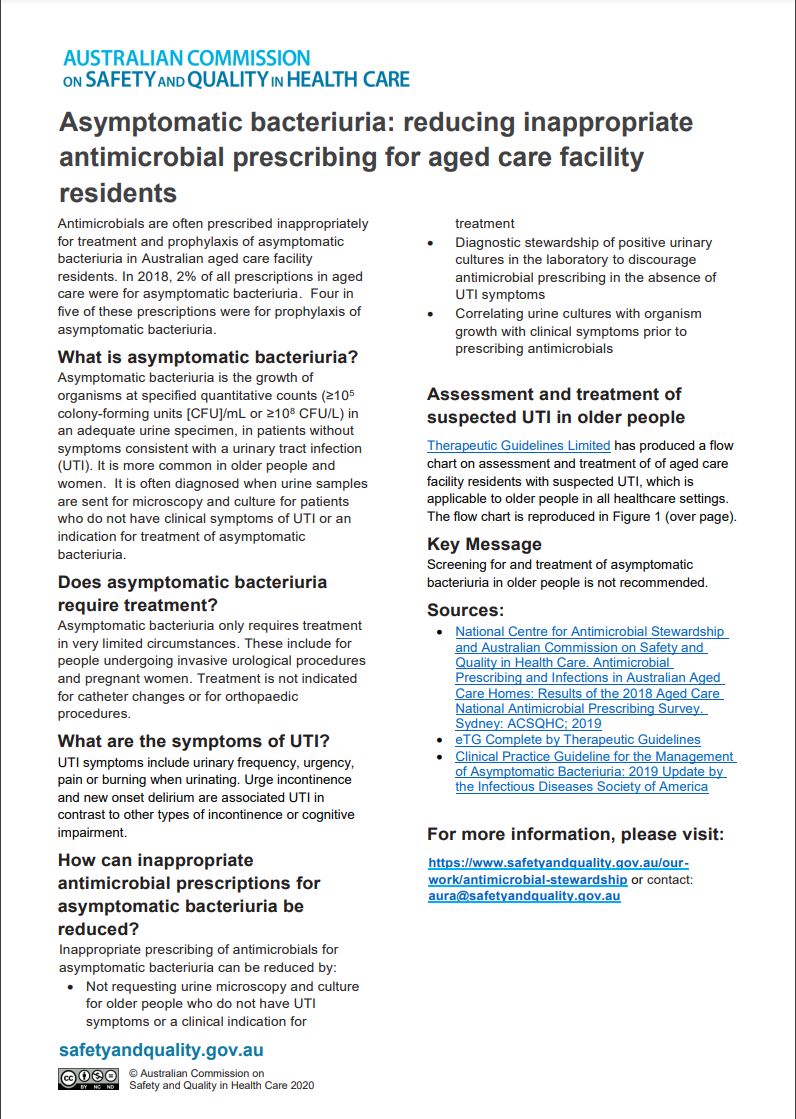
Fact sheet - Asymptomatic bacteriuria
This fact sheet offers guidance on managing asymptomatic bacteriuria and reducing inappropriate antimicrobial prescribing for residents of aged care facilities. It details symptoms, strategies to decrease unwarranted antimicrobial prescriptions for asymptomatic bacteriuria, and an assessment and treatment framework for residents suspected of urinary tract infections.
This resource may refer to information that will be updated from 1 November 2025 to align with the new Aged Care Act and Quality Standards.
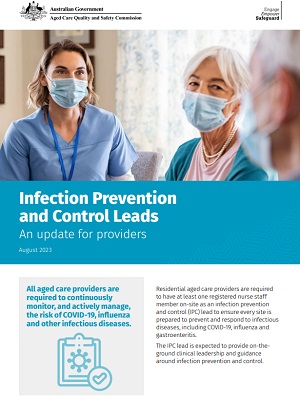
Infection Prevention and Control Leads: Updates for providers
This fact sheet provides updated information for providers of aged care on effective infection prevention and control capability. This is critical to the safe, effective delivery of personal and clinical care in aged care. This is particularly the case during the coronavirus COVID-19 pandemic.
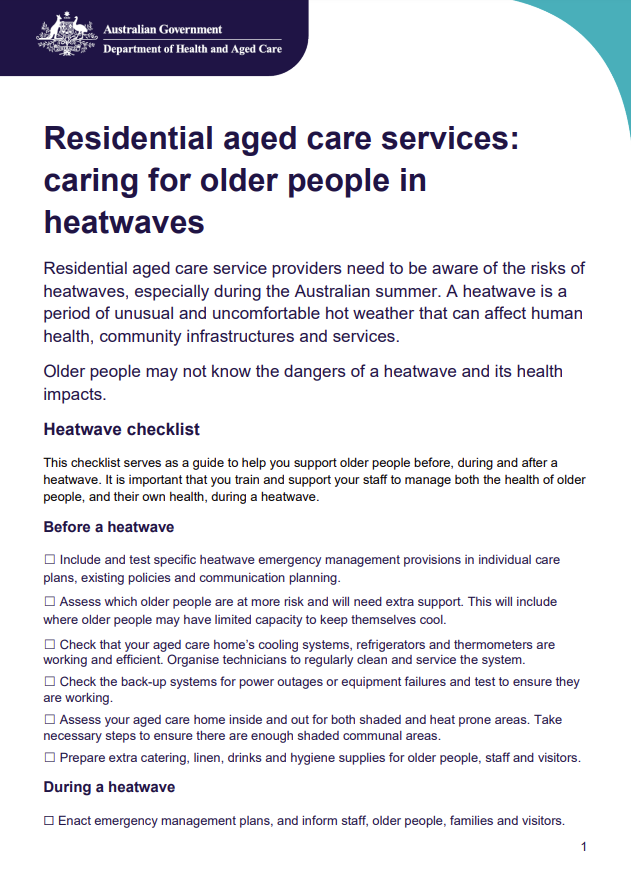
Caring for Older People in heatwaves – Residential Aged Care
This resource provides guidance to care for older people living in residential aged care services during a heatwave. The resource includes checklists to guide providers to support older people before, during and after a heatwave. It includes clinical assessment guidance and where to find more information about heatwaves.
This resource may refer to information that will be updated from 1 November 2025 to align with the new Aged Care Act and Quality Standards.
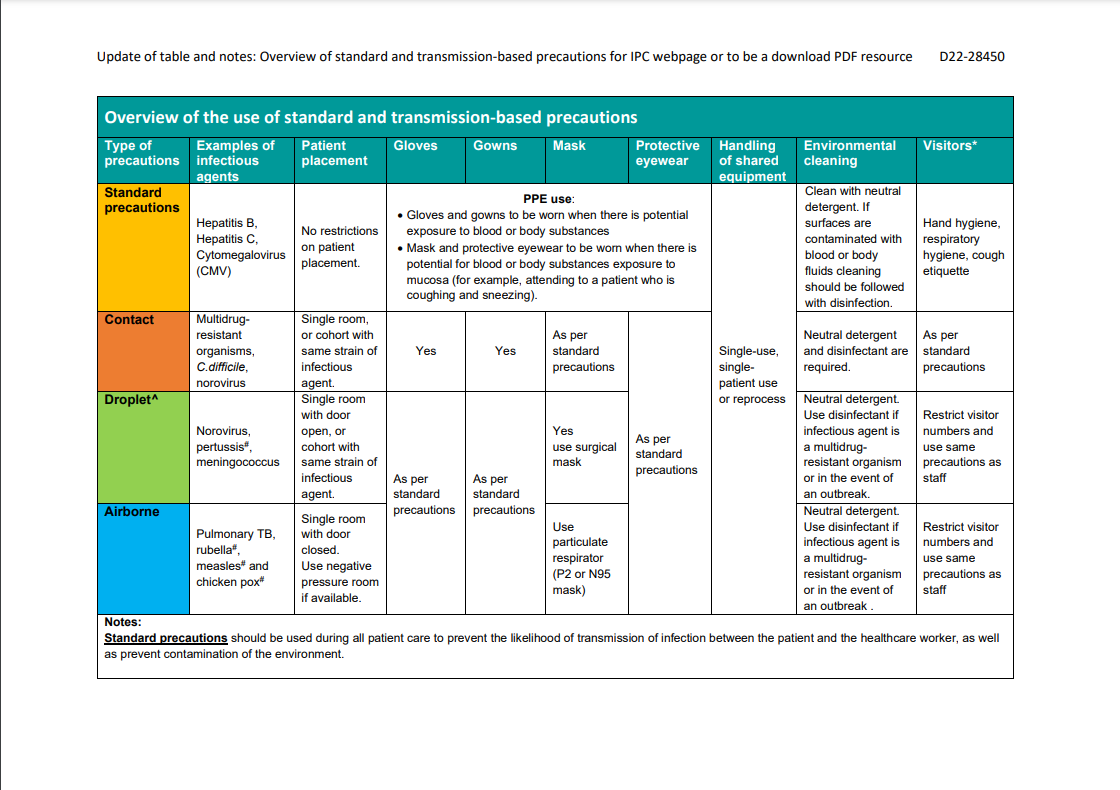
Use of standard and transmission-based precautions
This resource provides an overview of standard and transmission-based precautions, including personal protective equipment (PPE) use and patient placement requirements. It helps healthcare providers minimise infection risks by guiding appropriate PPE selection and patient placement based on local risk assessments, ensuring safe and effective infection prevention practices in aged care settings.
This resource may refer to information that will be updated from 1 November 2025 to align with the new Aged Care Act and Quality Standards.
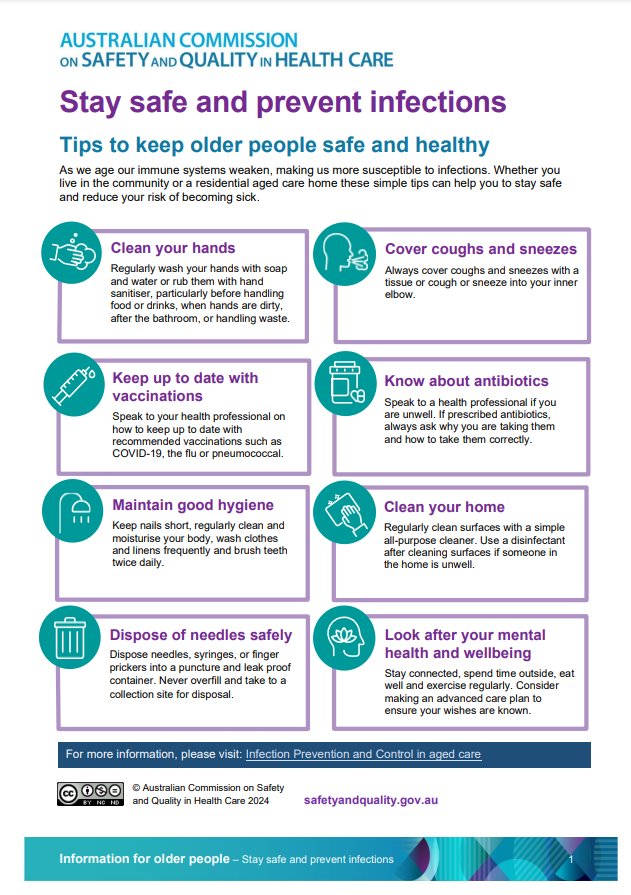
Use of the hierarchy of controls in infection prevention and control
This fact sheet provides guidance on using the hierarchy of controls with infection prevention systems to manage infection risks. It outlines strategies such as elimination, isolation, engineering controls, and personal protective equipment (PPE) to help aged care providers maintain infection control and ensure safe care environments.
This resource may refer to information that will be updated from 1 November 2025 to align with the new Aged Care Act and Quality Standards.
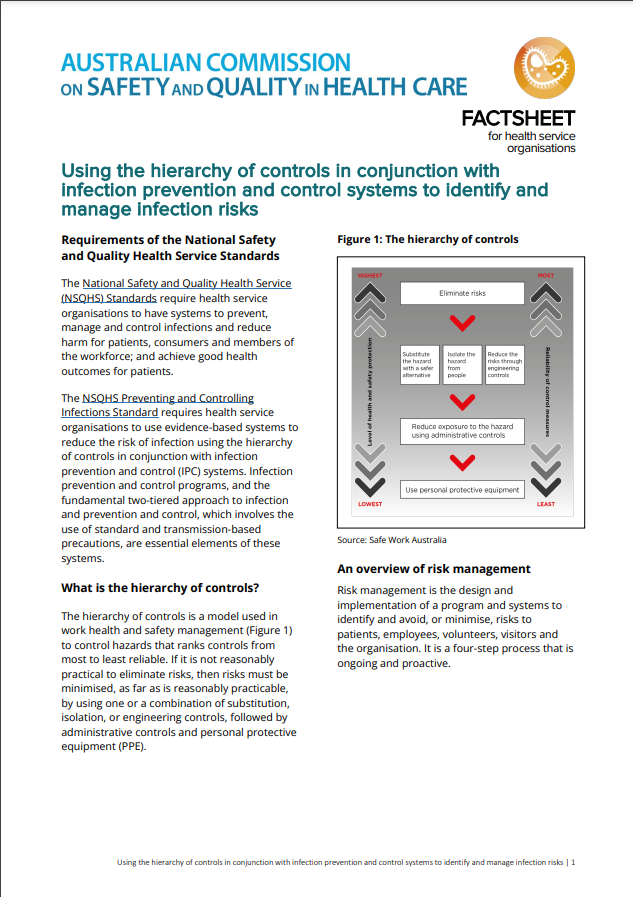
Validating infection surveillance data
This fact sheet provides guidance on validating infection surveillance data. It supports infection control teams in ensuring data accuracy and completeness, essential for effective infection control strategies. The resource outlines steps for both manual and automated validation methods and includes a checklist for common practices.
This resource may refer to information that will be updated from 1 November 2025 to align with the new Aged Care Act and Quality Standards.
Infection prevention and control resources for consumers
This resource provides fact sheets for consumers and carers on infection prevention and control, including hand hygiene and healthcare-associated infections. It covers common infections such as MRSA, CPE, and CDI, offering guidance on prevention, treatment, and risk factors to help reduce the spread of infections in aged care settings.
This resource may refer to information that will be updated from 1 November 2025 to align with the new Aged Care Act and Quality Standards.
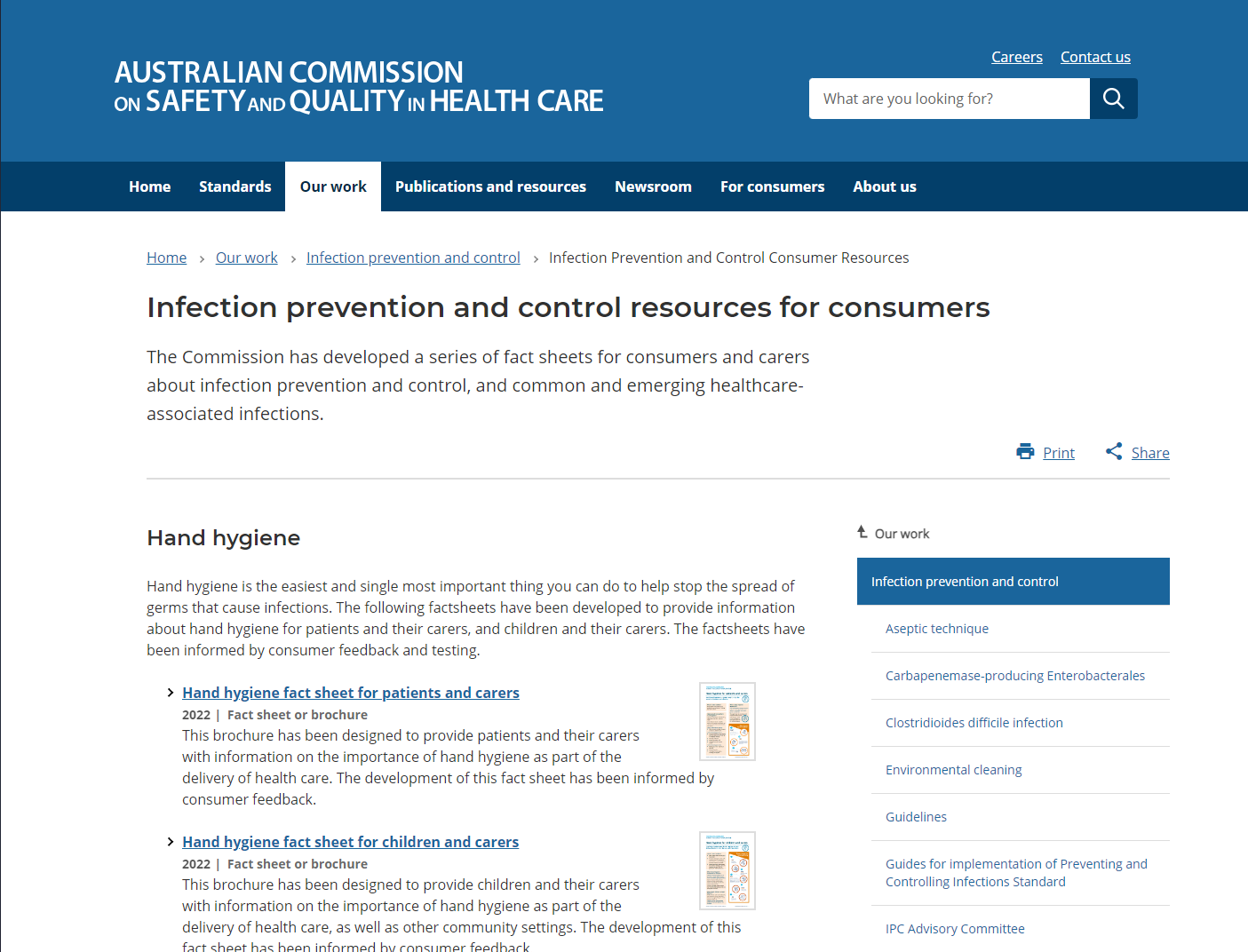
Preventing infections – aged care consumer fact sheet
This fact sheet provides essential tips for older people on how to prevent infections. It covers hand hygiene, vaccinations, home cleaning, proper disposal of needles, and mental health care. The resource is designed to support infection prevention practices in both community and aged care settings.
This resource may refer to information that will be updated from 1 November 2025 to align with the new Aged Care Act and Quality Standards.
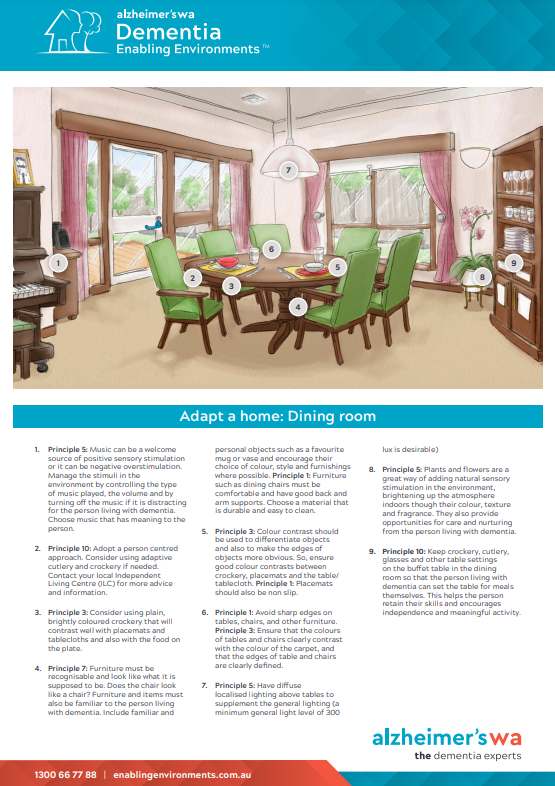
Fact sheet - Improving antimicrobial prescribing through selective reporting of antimicrobials
This fact sheet provides guidance on improving antimicrobial prescribing through selective reporting of antimicrobials for health service organisations and primary care providers. It includes information on diagnostic stewardship, definitions and the importance of selective reporting and other relevant information to support organisations and providers.
This resource may refer to information that will be updated from 1 November 2025 to align with the new Aged Care Act and Quality Standards.