This Serious Incident Response Scheme (SIRS) fact sheet covers the reporting of incidents relating to inappropriate use of restrictive practices. The fact sheet has been developed for providers of residential care and flexible care in a residential aged care setting.
This Serious Incident Response Scheme (SIRS) fact sheet covers the reporting of incidents relating to unexplained absence from care. The fact sheet has been developed for providers of residential care and flexible care in a residential aged care setting.
The Serious Incident Response Scheme (SIRS) helps stop and reduce the risk of abuse and neglect in Australian Government-funded aged care services. This fact sheet is about reporting incidents
of neglect.
 sirs_reportable_incidents_neglect_nov_2025.pdf (PDF 250.13 KB)
The spread of COVID-19 is increasing across the community and in residential aged care services. Of all the treatment measures available to services, rapid access to oral antivirals could make the biggest difference to consumers if they become infected with COVID-19.
This Serious Incident Response Scheme (SIRS) fact sheet covers the reporting of incidents relating to unlawful sexual contact or inappropriate sexual conduct. The fact sheet has been developed for providers of residential care and flexible care in a residential aged care setting.
These guidelines describe provider responsibilities in relation to the SIRS, including requirements relating to incident management and making a notification to the Commission.
This provider fact sheet helps ensure services are doing everything possible to prevent, prepare for and reduce the impact of a COVID-19 outbreak. It features links to key resources available from the Commission, the Australian Government Department of Health, Disability and Ageing and peak bodies.

This Cost Recovery Implementation Statement (CRIS) provides information on how we implemented cost recovery charging arrangements for applications for aged care approved provider status for the period 1 July to 31 October 2025.
A new Cost Recovery Implementation Statement is available and sets out the new charging arrangements under the new Aged Care Act (from 1 November 2025).
This video provides important information about sedative medications. It promotes quality and appropriate use of sedatives in residential aged care services in Australia, in particular antipsychotics and benzodiazepines. It also explains some of the impacts and side effects that should be considered when using these medications, and highlights the importance of informed consent.

Aged Care Quality and Safety Commission Statement of Intent 2022.
Commissioner Statement of Intent 7 April 2022 (PDF 193.49 KB)
The Aged Care Quality and Safety Commission Statement of Expectations 2022.
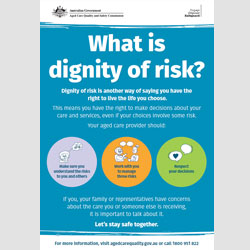
The Commission has developed a number of resources to help aged care consumers understand what dignity of risk is and what actions you should expect from your provider. The dignity of risk is another way of saying you have the right to live the life you choose.
A3 poster — What is dignity of risk? (PDF 351.01 KB)
A4 guide — What is dignity of risk? (PDF 404.72 KB)
On Friday 4 March 2022, the Aged Care Quality and Safety Commissioner, Janet Anderson, PSM, sent a letter to QLD and NSW home service providers regarding consumer care during flood events.
The Commission recognises the known physical, psychosocial and nutritional impacts on older people if they experience extended periods of social isolation. This statement outlines what our position is on provider responsibilities relating to visitor access.
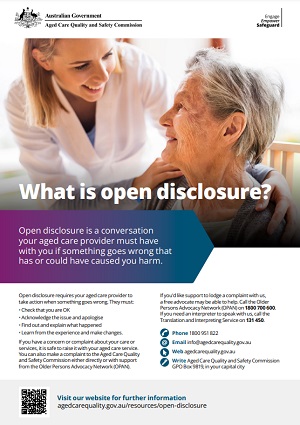
Open disclosure is an open and honest discussion your aged care provider has with you when something’s gone wrong that’s caused you, or could have caused you, harm. This poster and fact sheet explains what open disclosure is, when providers must use it, and what older people can expect.
What is open disclosure? - poster (PDF 1.31 MB)
What is open disclosure? - fact sheet (PDF 370.34 KB)
On Monday 28 February 2022, the Aged Care Quality and Safety Commissioner, Janet Anderson, PSM, sent a letter to approved providers on the COVID-19 vaccine boosters.
This example response supports the information providers need to consider when reporting stealing or financial coercion in the My Aged Care portal.
This example response supports the information providers need to consider when reporting neglect in the My Aged Care portal.
SIRS notification example response – Neglect (PDF 514.56 KB)
This example response supports the information providers need to consider when reporting inappropriate use of restrictive practices in the My Aged Care portal.
This example response supports the information providers need to consider when reporting unexplained absence from care in the My Aged Care portal.