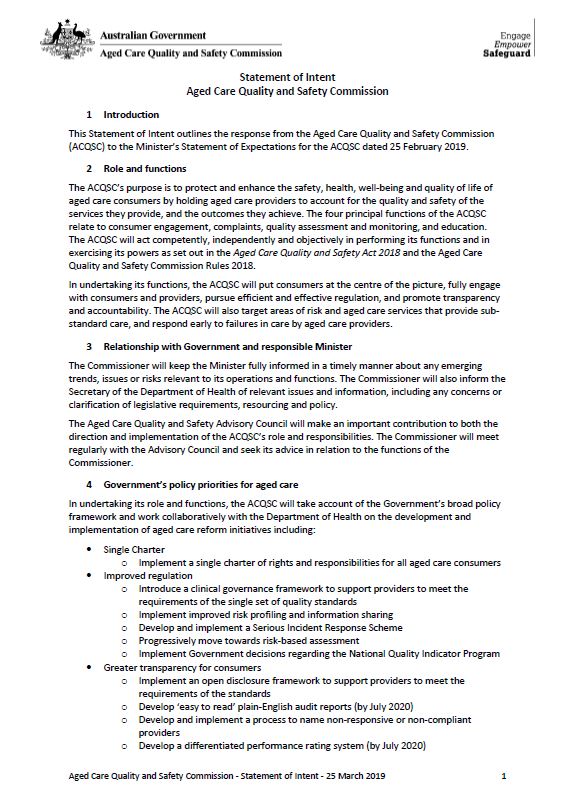
This audit tool is part of the Commission’s resource bundle to improve antibiotic use for urinary tract infections in aged care services.
 To Dip or Not to Dip audit tool (PDF 424.01 KB)
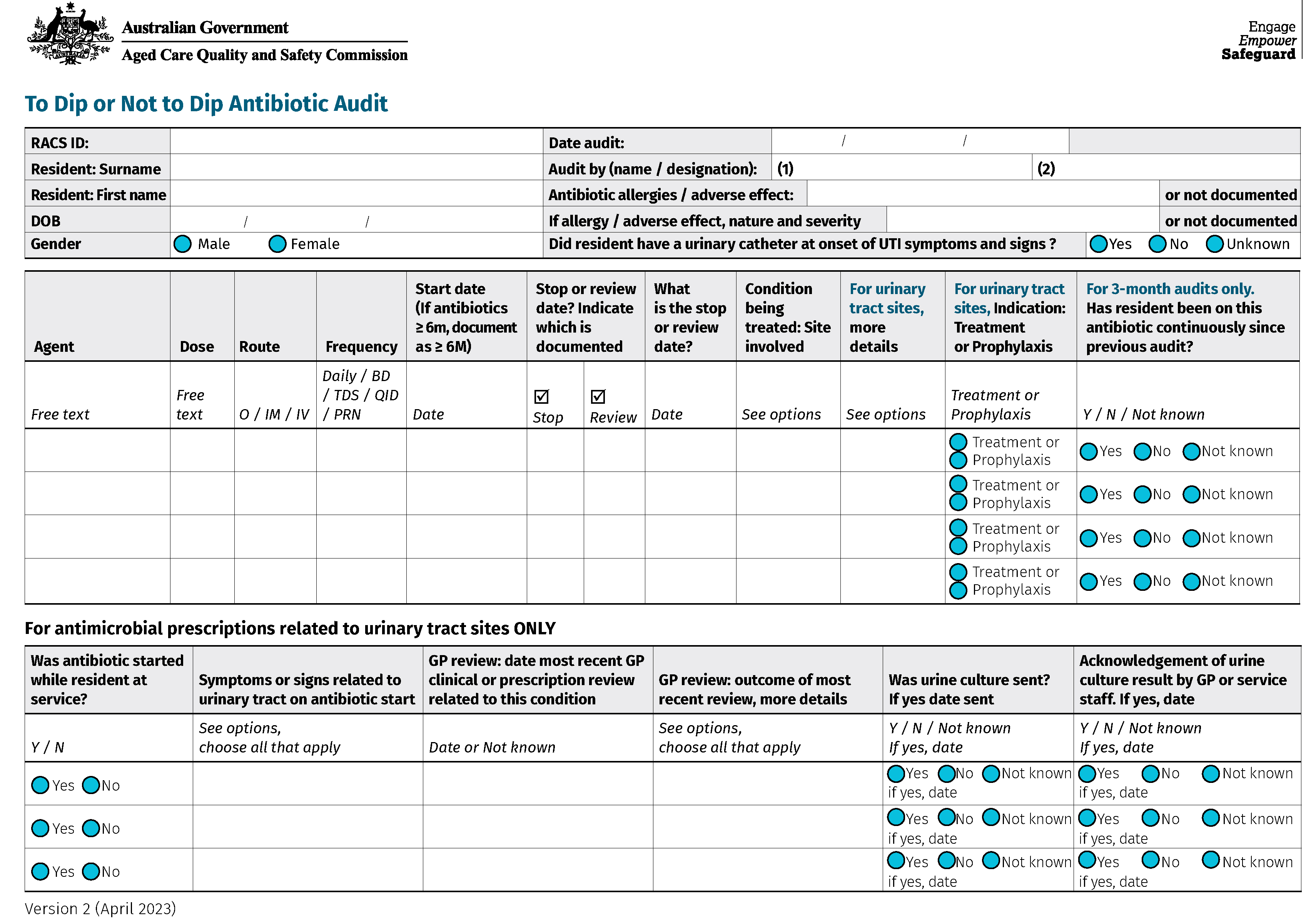
This provider poster is an educational tool is part of the Commission’s resource bundle to improve antibiotic use for urinary tract infections in aged care services.
English - Urine dipsticks not used here! poster (PDF 302.19 KB)
Arabic - أعواد فحص البول غير مستخدمة هنا! (PDF 196.18 KB)
Chinese Simplified - 这里不采用尿液试纸检测! (PDF 292.77 KB)
Chinese Traditional - 這裡不採用尿液試紙檢測! (PDF 152.53 KB)
Dinka - Wai ye lɛc yiic a liu atɛ̈n! (PDF 169.82 KB)
French - Bandelettes urinaires réactives non utilisées ici ! (PDF 159.53 KB)
Farsi - در اینجا از نوار آزمایش ادرار استفاده نمی شود! (PDF 202.38 KB)
Greek - Εδώ δεν χρησιμοποιούνταιταινίες ούρων! (PDF 148.41 KB)
Indonesian - Dipstick urin tidak digunakan di sini! (PDF 158.02 KB)
Italian - I bastoncini per urina non vengono usati qui! (PDF 167.97 KB)
Korean - 여기서는 요시험지를 사용하지 않습니다! (PDF 162.29 KB)
Khmer - Urine dipsticks not used here! (PDF 164.78 KB)
Kurdish - میلی پێوانی میز نابێت لەم شوێنانەدا بەکار ببرێت (PDF 182.76 KB)
Somali - Halkan lama isticmaalo ulaha cabirka kaadida! (PDF 190.03 KB)
Spanish - ¡Aquí no se usan tiras reactivas de orina! (PDF 158.78 KB)
Thai - ที่ ่นี่ ่ไม่่ใช้ไ้ ม้ จุ่ม ปัสสาวะ! (PDF 176.45 KB)
Turkish - İdrar seviyesi çubukları burada kullanılmaz! (PDF 147.92 KB)
Urdu - یہاں پیشاب کے ٹیسٹ کی ڈپ سٹکس استعمال نہیں کی جاتیں! (PDF 206.72 KB)
Vietnamese - Que thử nước tiểu không được sử dụng ở đây! (PDF 151.62 KB)
In this short video, we provide an overview of the benefits of effective incident management in residential aged care settings under the Serious Incident Response Scheme (SIRS), which commenced on 1 April 2021.
In this short video, we discuss incident management in residential aged care settings under the Serious Incident Response Scheme (SIRS) which commenced on 1 April 2021.
This booklet aims to give guidance on how to:
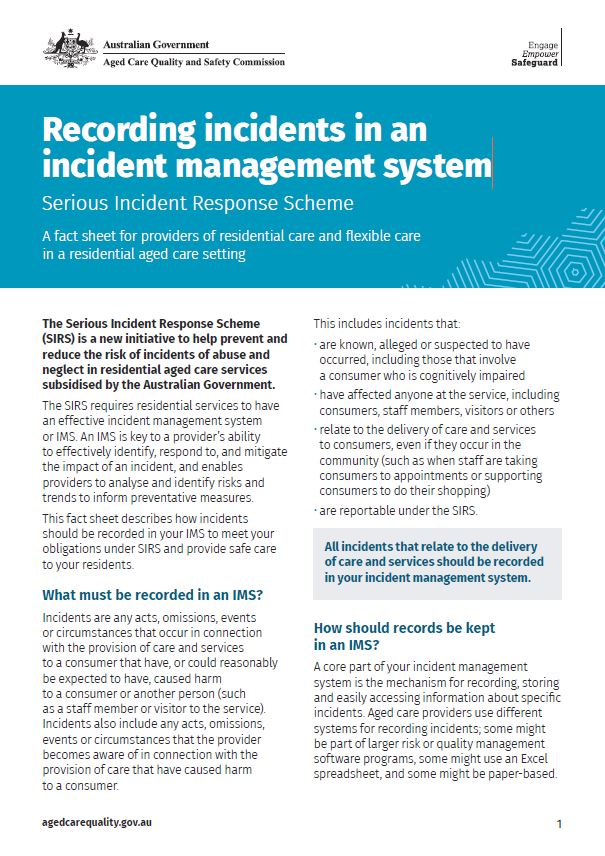
The Serious Incident Response Scheme (SIRS) is a new initiative to help prevent and reduce the risk of incidents of abuse and neglect in residential aged care services subsidised by the Australian Government. The SIRS requires residential services to have an effective incident management system or IMS.
An IMS is key to a provider’s ability to effectively identify, respond to, and mitigate the impact of an incident, and enables providers to analyse and identify risks and trends to inform preventative measures.
This fact sheet describes how incidents should be recorded in your IMS to meet your obligations under SIRS and provide safe care to your residents.
Recording incidents in an incident management system (PDF 281.12 KB)
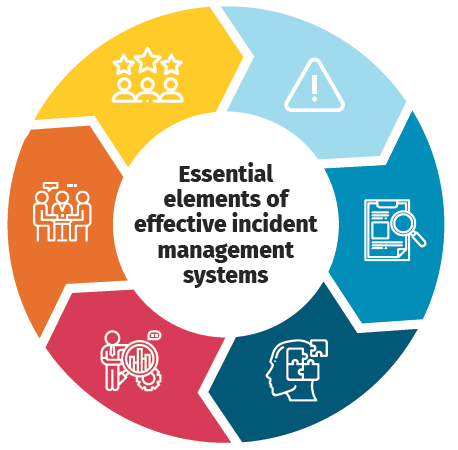
This poster outlines the 6 essential elements of effective incident management systems.
This resource is not available to order.
This guidance provides information for providers to help them to develop and embed a best practice incident management system which enables them to respond to and manage specific incidents and near misses by assessing:
This fact sheet provides guidance to providers of aged care on an effective incident management system, the Serious Incident Response Scheme (SIRS). The Serious Incident Response Scheme (SIRS) is a new initiative to help prevent and reduce the risk of incidents of abuse and neglect in residential aged care services subsidised by the Australian Government.
On Thursday 10 December 2020, the Aged Care Quality and Safety Commissioner Janet Anderson hosted a webinar on the recently released new outbreak management planning in aged care guide for aged care providers.

The Commissioner wrote to approved providers on 7 December 2020 about visitor access in a COVID-normal world

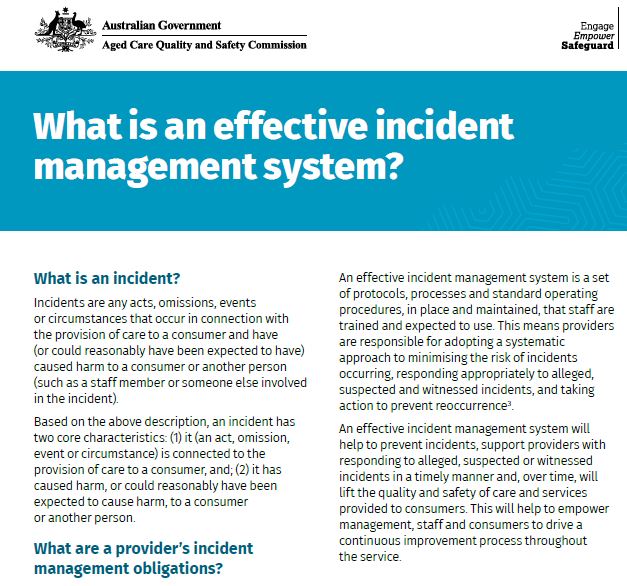
In the event of an outbreak of COVID-19 at a residential service, the service’s Outbreak Management Team and key personnel at the service will be working in close co-operation with public health authorities and other parties to ensure an effective emergency response. A key personnel template has been developed to assist providers in identifying key personnel of the service and their contact details to support this response.
 Key Personnel Template (DOCX 106.12 KB)
This discussion paper explores strategies to improve medication management in aged care, including reducing inappropriate prescriptions and promoting non-pharmacological interventions. It reviews current interventions' effectiveness, highlights the use of psychotropic medications, and identifies areas for improving practices through multifaceted and multidisciplinary approaches for better resident outcomes and healthcare quality.
This resource may refer to information that will be updated from 1 November 2025 to align with the new Aged Care Act and Quality Standards.
Six steps for safe prescribing antipsychotics and benzodiazepines in residential aged care.
If you’re thinking of prescribing these medicines to manage the behaviours and psychological symptoms of dementia, follow these 6 steps.
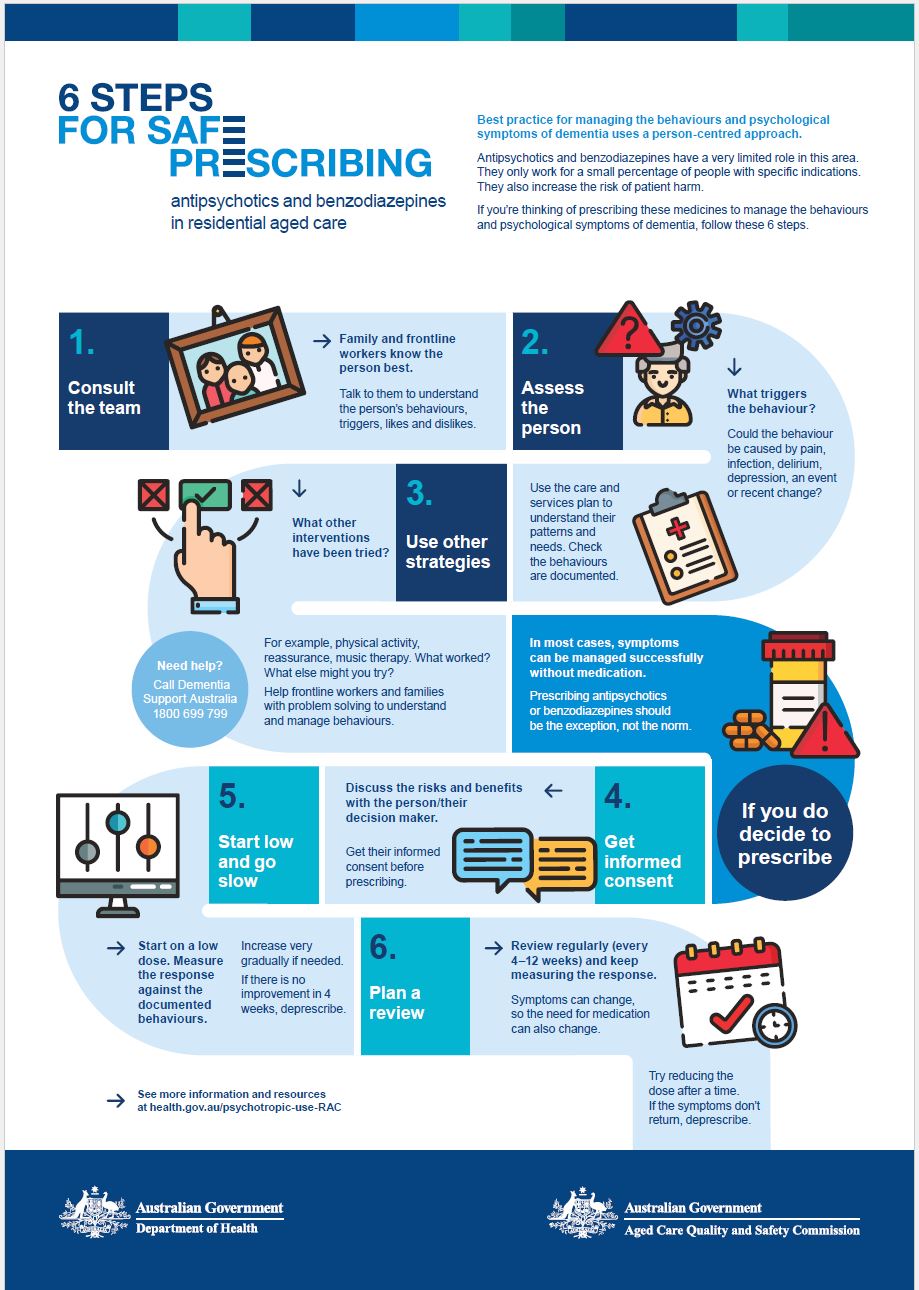
What are psychotropic medications?
Psychotropic medications are ‘any drug capable of affecting the mind, emotions and behaviour'
The three main classes of psychotropics prescribed are antidepressants, anxiolytic/hypnotics (mostly benzodiazepines to manage anxiety and insomnia) and antipsychotics. Other psychotropic classes include anticonvulsants and stimulants.

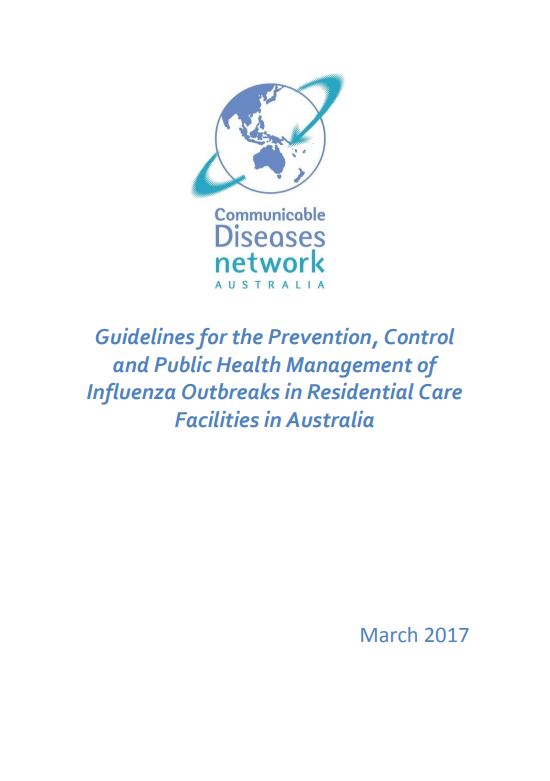
Under the Aged Care Quality Standards, the organisation’s governing body is accountable for the delivery of safe and quality care and services. This includes consideration of leadership, organisational culture, consumer engagement, organisation wide governance, risk management and clinical governance.
This webinar will help you to understand your regulatory and legislative obligations.
A practical guide developed by the Working Group on Influenza Outbreaks in Residential Care Facilities on behalf of the Communicable Diseases Network of Australia. The purpose of the document is to assist residential care services and carers by providing best practice information for the prevention and management of influenza outbreaks in residential care facilities.
rcf_guidelines.pdf (PDF 2.25 MB)
To assist aged care providers, the Commission has identified some of the very useful information and resources produced by Commonwealth and State Departments of Health.

RB 2019-04 (Rescinded)- This Regulatory Bulletin outlines how the Commission will respond to and manage non-compliance with the Aged Care Quality Standards.
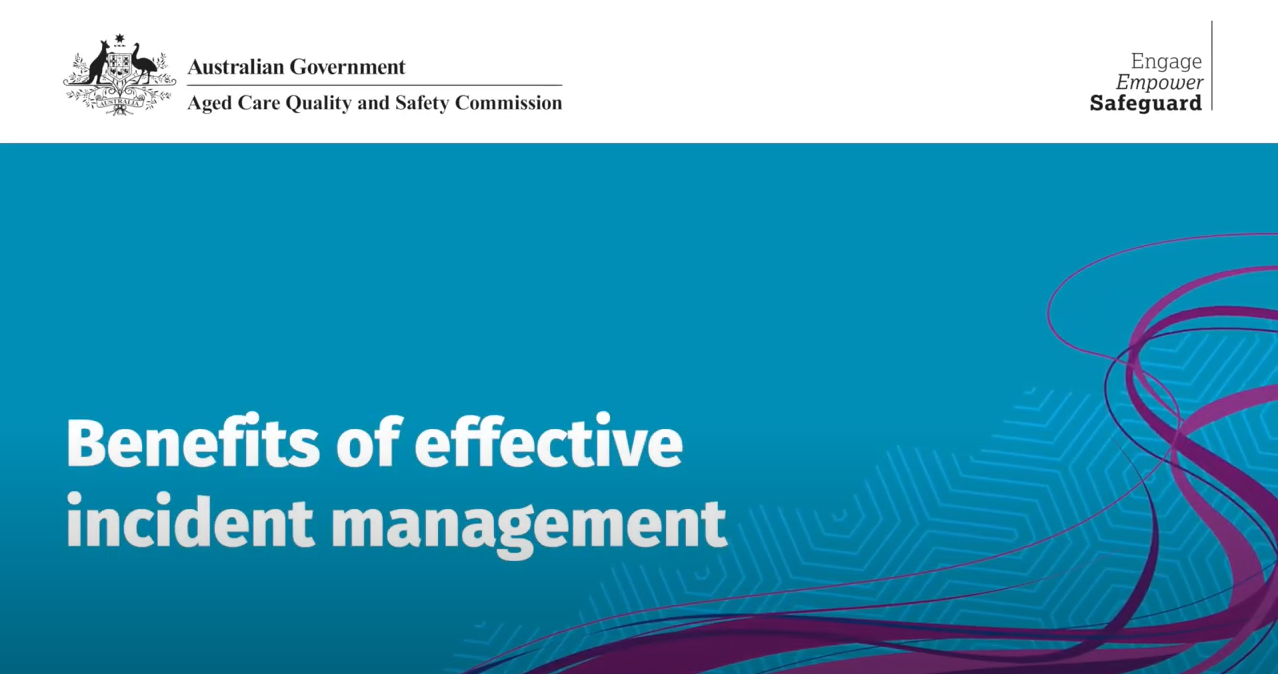
Aged Care Quality and Safety Commission Statement of Intent 2019.
Commission Statement of Intent 2019.pdf (PDF 200.47 KB)