The Quality Standards Resource Centre helps extend understanding of the strengthened Aged Care Quality Standards, which took effect from 1 November 2025. You can search for resources by using keywords, or filtering by standard, outcome and audience. Before using the Resource Centre, please read the terms of use.
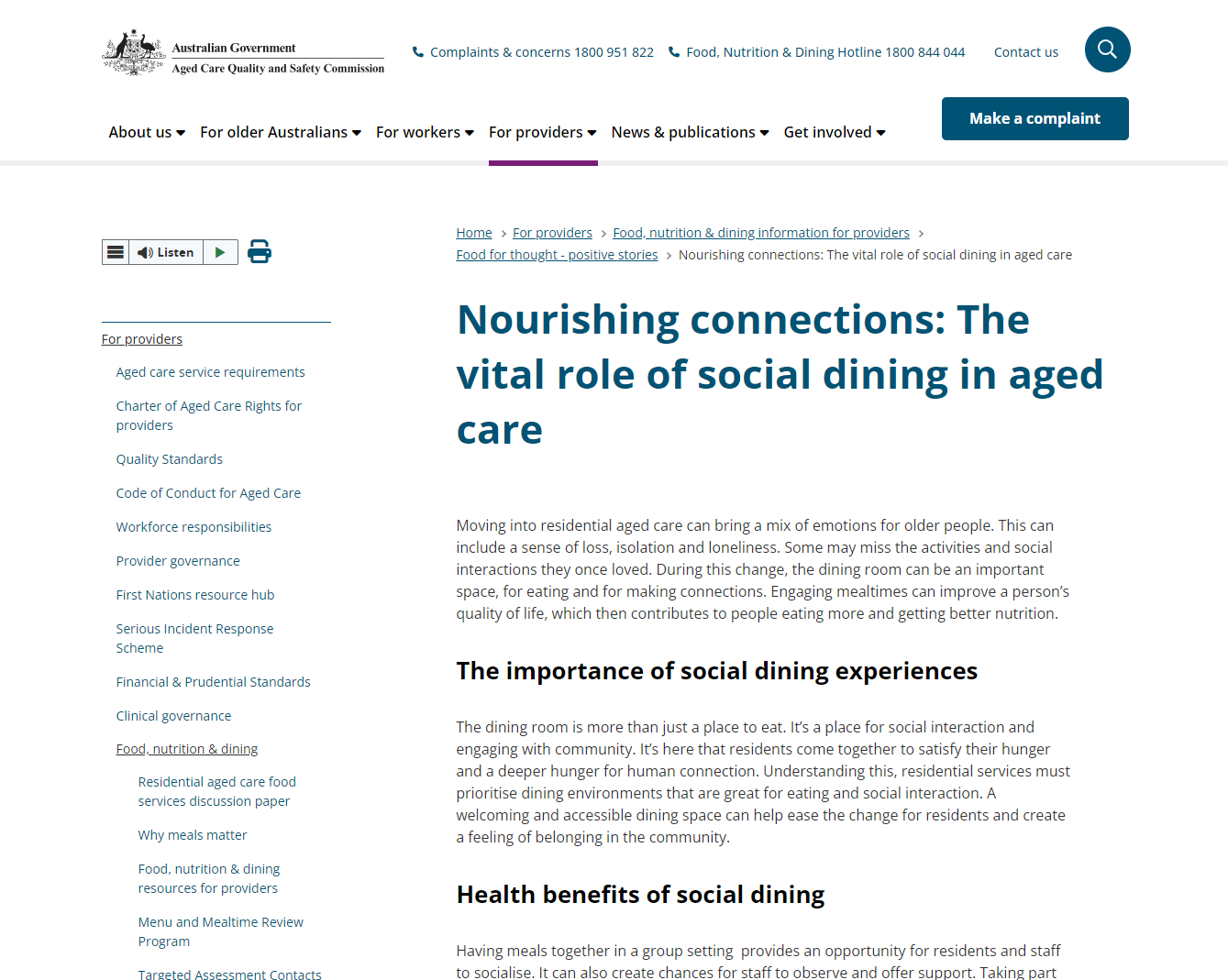
Nourishing connections: The vital role of social dining in aged care
This resource explains how social dining in aged care can enhance nutrition and wellbeing by fostering social connections. It encourages creating positive dining environments that promote engagement and respect personal preferences during mealtimes.
This resource may refer to information that will be updated from 1 November 2025 to align with the new Aged Care Act and Quality Standards.
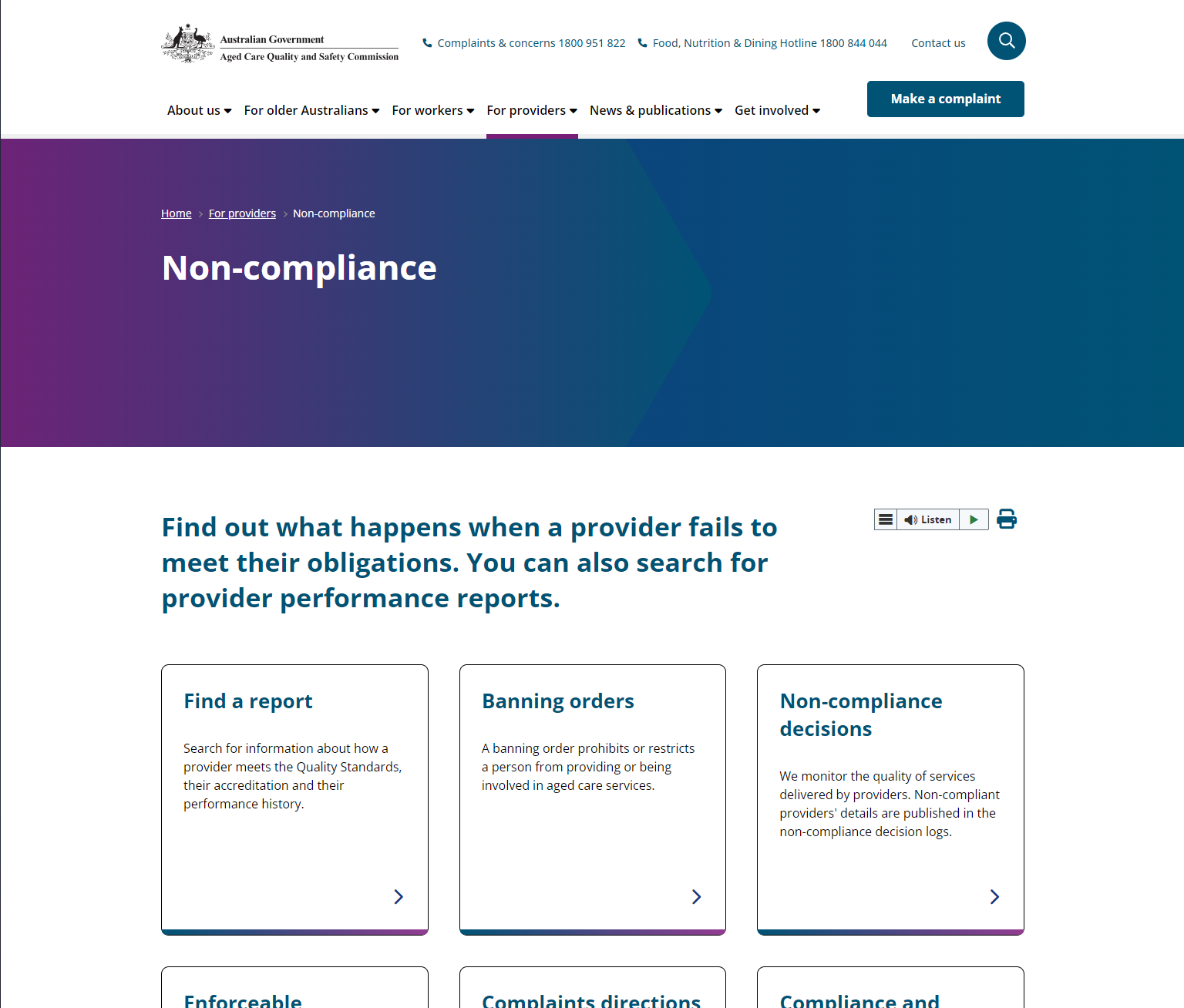
Non-compliance
This resource outlines the processes for managing non-compliance in aged care services. It includes information on banning orders, enforceable undertakings, and how the Commission addresses non-compliance through monitoring, complaints directions, and enforcement policies. Providers can also search for performance reports to track compliance.
This resource may refer to information that will be updated from 1 November 2025 to align with the new Aged Care Act and Quality Standards.
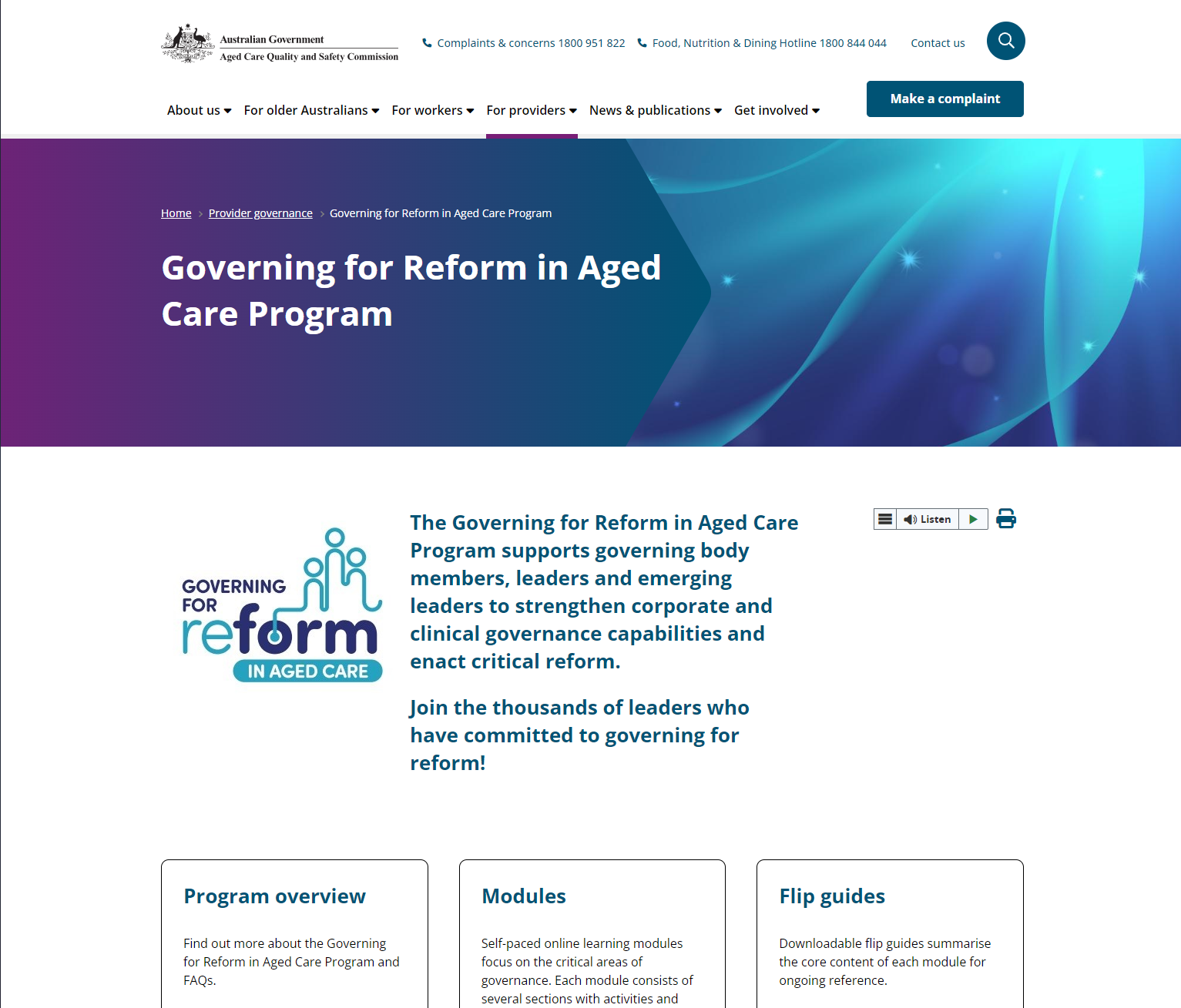
Governing for Reform in Aged Care Program
This resource outlines the Governing for Reform in Aged Care Program, designed to strengthen corporate and clinical governance capabilities for aged care leaders. It provides tools, online learning modules, webinars, and podcasts to support governance improvement and help leaders engage in reform efforts.
This resource may refer to information that will be updated from 1 November 2025 to align with the new Aged Care Act and Quality Standards.
Complaints & concerns
This resource explains how to raise complaints or concerns about aged care services. It outlines the complaints process, how to submit confidential or anonymous complaints, and the importance of good complaints handling in improving care quality. Providers are required to have systems for addressing and resolving complaints.
This resource may refer to information that will be updated from 1 November 2025 to align with the new Aged Care Act and Quality Standards.
Consumer advisory bodies
This resource explains the role of consumer advisory bodies in aged care, which provide feedback to governing bodies on care and services. It outlines the process for joining, the importance of feedback in decision-making, and the responsibility of providers to offer participation opportunities annually.
This resource may refer to information that will be updated from 1 November 2025 to align with the new Aged Care Act and Quality Standards.
Raising concerns and making an effective complaint
This resource provides guidance on how to raise concerns and make an effective complaint in aged care. It offers practical tips, a checklist, and tools to help people clearly communicate their issues with service providers. It also explains how to escalate complaints to the Aged Care Quality and Safety Commission if necessary. This resource may refer to information that will be updated from 1 November 2025 to align with the new Aged Care Act and Quality Standards.
Older Persons Advocacy Network
This resource provides information on aged care advocacy services, offering free and confidential support to older people receiving government-funded aged care. It includes resources to help people understand their rights, navigate the aged care system, and access advocacy for issues such as care quality, decision-making, and protection from harm.
This resource may refer to information that will be updated from 1 November 2025 to align with the new Aged Care Act and Quality Standards.
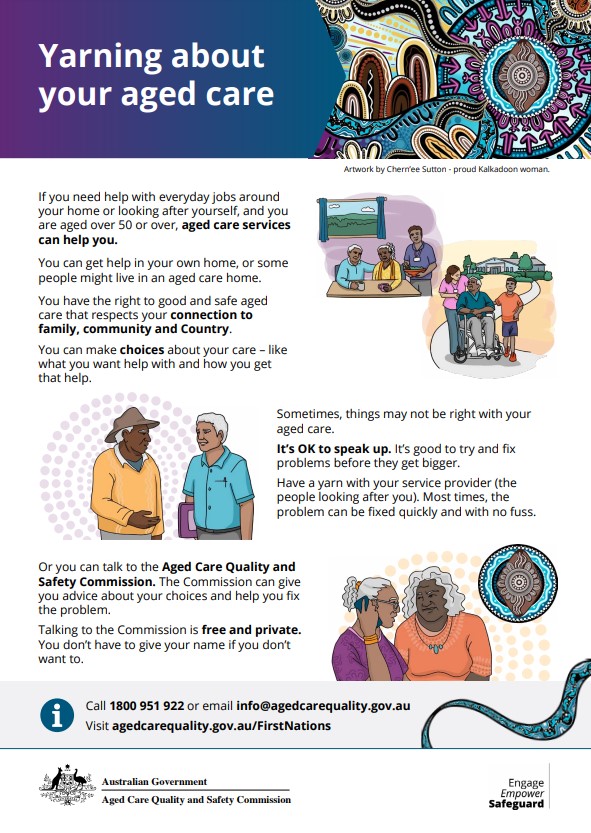
First Nations - Visual information sheet - Your rights when accessing aged care
 Yarning about your aged care (PDF 645.07 KB)
About dentists and dental practitioners
This resource outlines the roles and qualifications of dental professionals, including dentists, hygienists, and prosthetists, and their responsibilities in patient care. It emphasises the importance of registration, adherence to standards, and compliance monitoring to prevent fraud in Medicare billing and prescribing practices.

Training and guidance for aged care providers
This resource provides training and guidance for aged care providers on essential topics such as dementia care, managing infectious diseases, emergency planning, and restrictive practices. It also includes information on upskilling the workforce and using electronic medication charts. The resource is designed to help providers maintain high-quality care and meet regulatory requirements in aged care settings. This resource may refer to information that will be updated from 1 November 2025 to align with the new Aged Care Act and Quality Standards.
Support at Home program handbook
This resource outlines the design and key components of the Support at Home program, effective from 1 November 2025. It provides guidance for aged care providers on service delivery, budgeting, and assessment processes, helping older people remain independent at home. It also details regulatory requirements and transition from existing programs.
This resource may refer to information that will be updated from 1 November 2025 to align with the new Aged Care Act and Quality Standards.
5 Moments for Hand Hygiene
This resource explains the 5 Moments for Hand Hygiene, a framework designed to minimise the risk of infection transmission in healthcare. It outlines key moments when hand hygiene should be performed, including before and after patient contact or procedures, and after touching a patient’s surroundings.
This resource may refer to information that will be updated from 1 November 2025 to align with the new Aged Care Act and Quality Standards.
Managing emergency situations
This resource outlines strategies for managing emergency situations, focusing on risk mitigation, preparedness, response, and recovery. It includes guidelines on emergency planning, crisis leadership, and community engagement, emphasising coordinated efforts across various sectors to handle natural or human-caused disasters.
Guidance and requirements may differ across states and territories. Users are responsible for considering their individual circumstances and specific state-based regulations and legislation.
Provider Governance Policy
Under the new Act, registered providers will need to meet certain governance obligations.
Our Provider Governance Policy outlines our expectations of providers and guiding principles of good governance. It includes:
- definitions and principles of good governance
- provider governance obligations
- how we collect provider governance information
- how we respond to provider governance risks.
Provider Governance Policy (PDF 2.07 MB)
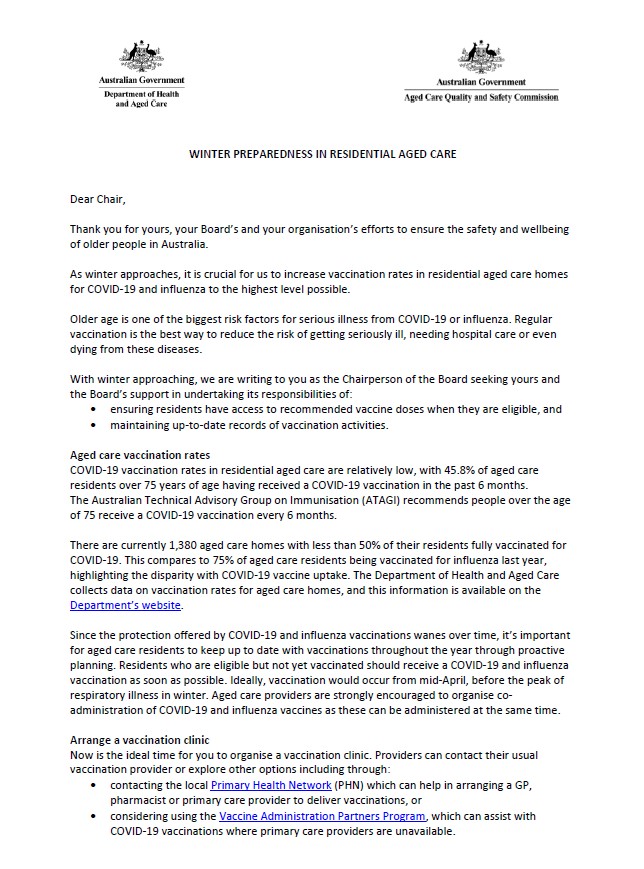
Joint letter from CMO and Commissioner to Board Chairs on winter preparedness 2025
Joint letter from the Chief Medical Officer Professor Anthony Lawler and Commissioner Liz Hefren-Webb to Board Chairs, Residential Aged Care Providers on winter preparedness in residential aged care.
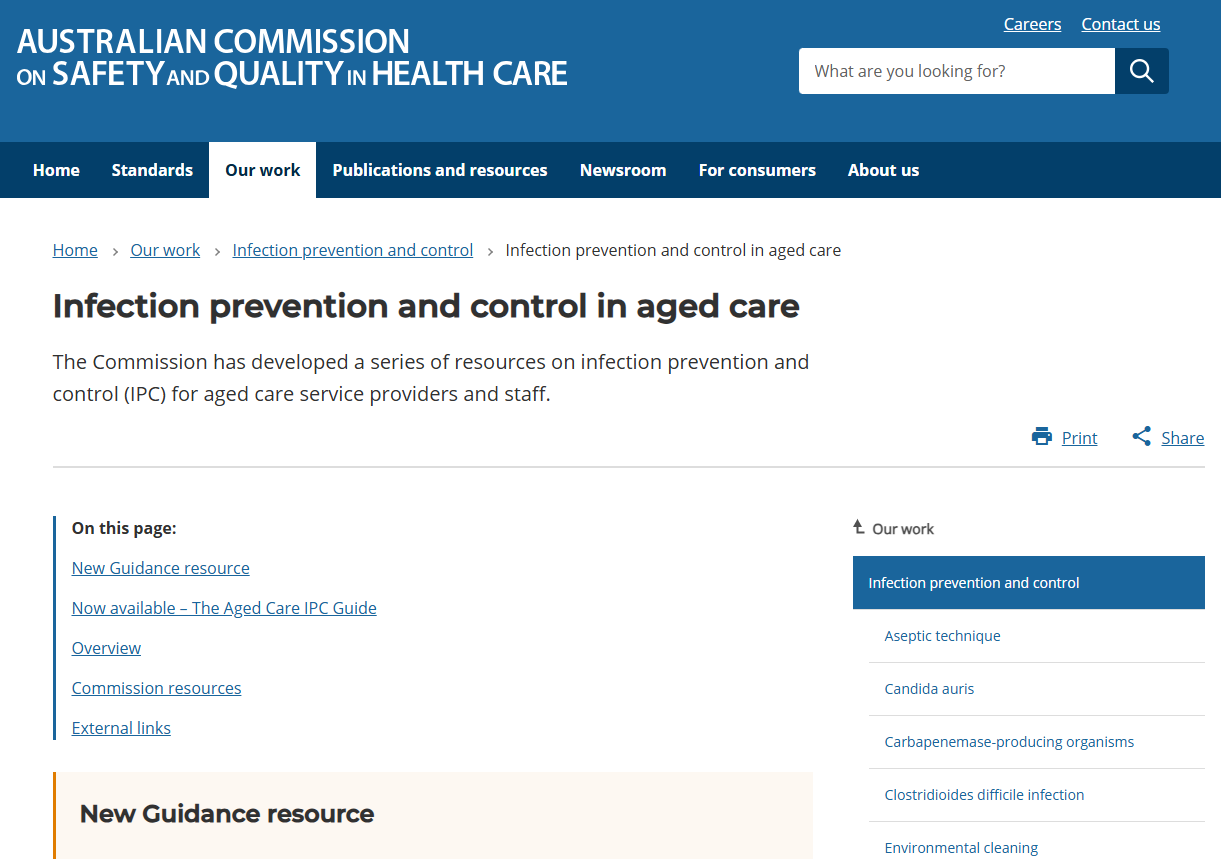
Infection prevention and control in aged care
This resource is a collection of resources on infection prevention and control (IPC) for aged care service providers and staff. It includes guidelines, IPC posters and antimicrobial stewardship (AMS) fact sheets.
This resource may refer to information that will be updated from 1 November 2025 to align with the new Aged Care Act and Quality Standards.
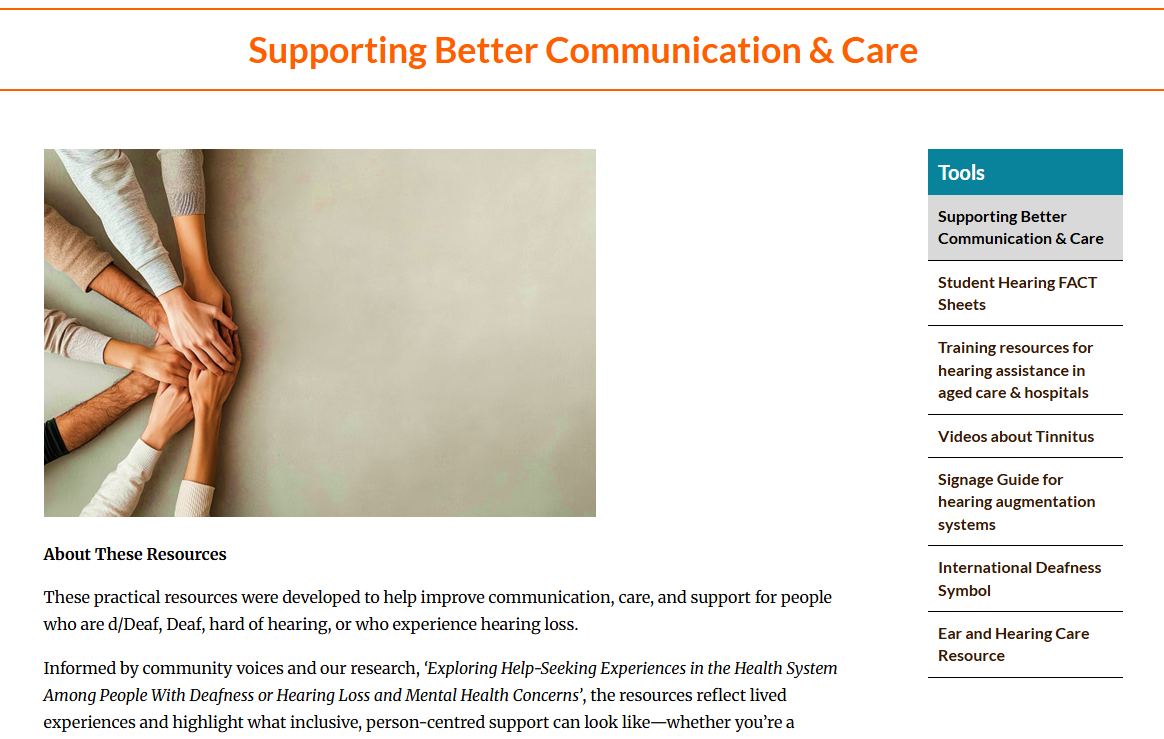
Supporting Better Communication & Care
This webpage provides resources to help improve communication, care and support for people who are deaf, Deaf, hard of hearing, or who experience hearing loss. It includes 3 tools: Everyday Communication, Inclusive Healthcare, and Building Competency. There are also links to other relevant resources.
Healthy Ageing
This resource is a collection of resources on the Tasmanian Government Department of Health webpage about healthy ageing. It includes resources about malnutrition screening, being physically active, and eating well.
This resource was developed by a state/territory government or organisation and therefore its applicability and usefulness may be limited.
Falls Guidelines for Community Care
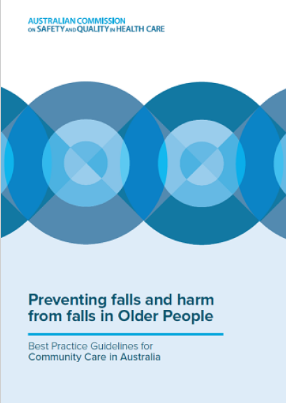
The Preventing Falls and Harm from Falls in Older People: Best Practice Guidelines for Community Care in Australia (Falls Guidelines for Community Care) has been developed for use by health professionals, primary care providers, the aged care workforce and other community care staff.
This resource may refer to information that will be updated from 1 November 2025 to align with the new Aged Care Act and Quality Standards.
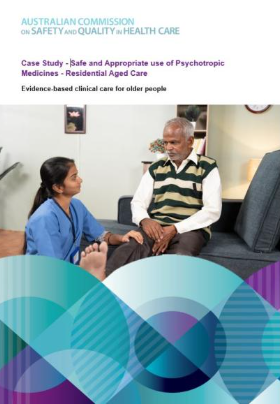
Case study - Safe and Appropriate use of Psychotropic Medicines - Residential Aged Care
This resource is a fictional scenario that follows an older person’s care pathway with a residential aged care provider. The resource focuses on the systems and processes to support high-quality care of older people living with cognitive impairment. It includes 4 key priority areas: person-centred care, medication management, managing changed behaviours and transitions of care.
This resource may refer to information that will be updated from 1 November 2025 to align with the new Aged Care Act and Quality Standards.