The Quality Standards Resource Centre helps extend understanding of the strengthened Aged Care Quality Standards, which took effect from 1 November 2025. You can search for resources by using keywords, or filtering by standard, outcome and audience. Before using the Resource Centre, please read the terms of use.
Case study - Safe and Appropriate use of Psychotropic Medicines - Residential Aged Care
This resource is a fictional scenario that follows an older person’s care pathway with a residential aged care provider. The resource focuses on the systems and processes to support high-quality care of older people living with cognitive impairment. It includes 4 key priority areas: person-centred care, medication management, managing changed behaviours and transitions of care.
This resource may refer to information that will be updated from 1 November 2025 to align with the new Aged Care Act and Quality Standards.
Case study - Safe and Appropriate use of Psychotropic Medicines - In-home Aged Care
This resource is a fictional scenario that follows an older person’s care pathway with an in-home aged care provider. The resource focuses on the systems and processes to support high-quality care of older people living with dementia. It includes 4 key priority areas: person-centred care, medication management, managing changed behaviours and transitions of care.
This resource may refer to information that will be updated from 1 November 2025 to align with the new Aged Care Act and Quality Standards.

Safe and appropriate use of psychotropic medicines for aged care - Fact sheet
This fact sheet is informed by the Psychotropic Medicines in Cognitive Disability or Impairment Clinical Care Standard (CCS), developed by the Australian Commission on Safety and Quality in Health Care. The CCS describes the safe and appropriate use of psychotropic medicines for people with cognitive disability or impairment, in a way that upholds their rights, dignity, health and quality of life.
This resource may refer to information that will be updated from 1 November 2025 to align with the new Aged Care Act and Quality Standards.
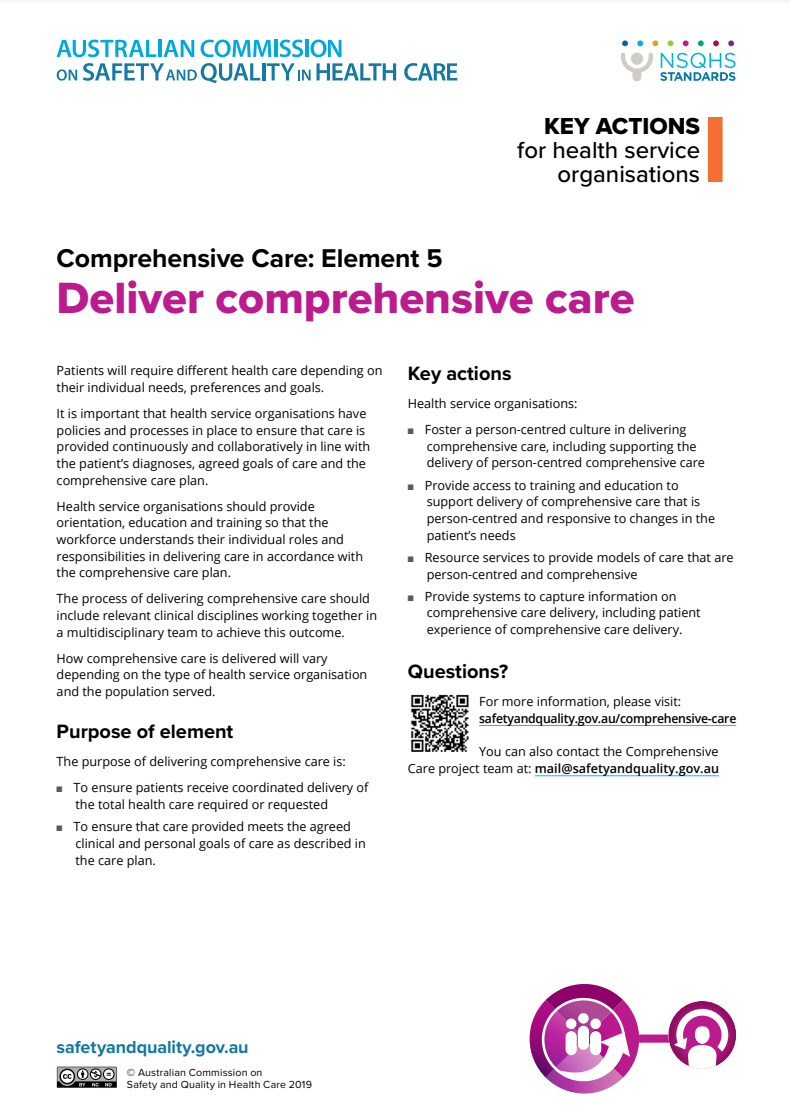
Comprehensive Care - Element 5: Deliver comprehensive care - Actions for health service organisations
This resource outlines the key actions for health service organisations to deliver comprehensive care. It ensures care is provided continuously and collaboratively, aligning with the patient’s diagnoses, goals, and care plan. It promotes a person-centred, multidisciplinary approach, with staff training to support comprehensive care delivery. Applicable to multiple settings, including aged care.
This resource may refer to information that will be updated from 1 November 2025 to align with the new Aged Care Act and Quality Standards.
Implementing the Comprehensive Care Standard - Review and improve comprehensive care delivery
This resource provides guidance for reviewing and improving comprehensive care delivery. It outlines how to assess if care meets clinical and personal needs, mitigates risks, and achieves intended outcomes. Relevant to aged care, it helps clinicians and managers implement continuous quality improvement in care delivery processes.
This resource may refer to information that will be updated from 1 November 2025 to align with the new Aged Care Act and Quality Standards.
Improving accommodation in residential aged care
This resource provides information on improving accommodation in residential aged care through the National Aged Care Design Principles and Guidelines, effective from July 2024. It covers areas such as creating dementia-friendly environments, improving access to outdoor spaces, fostering community connections, and ensuring privacy. The guidelines aim to promote independence and a home-like atmosphere.
This resource may refer to information that will be updated from 1 November 2025 to align with the new Aged Care Act and Quality Standards.
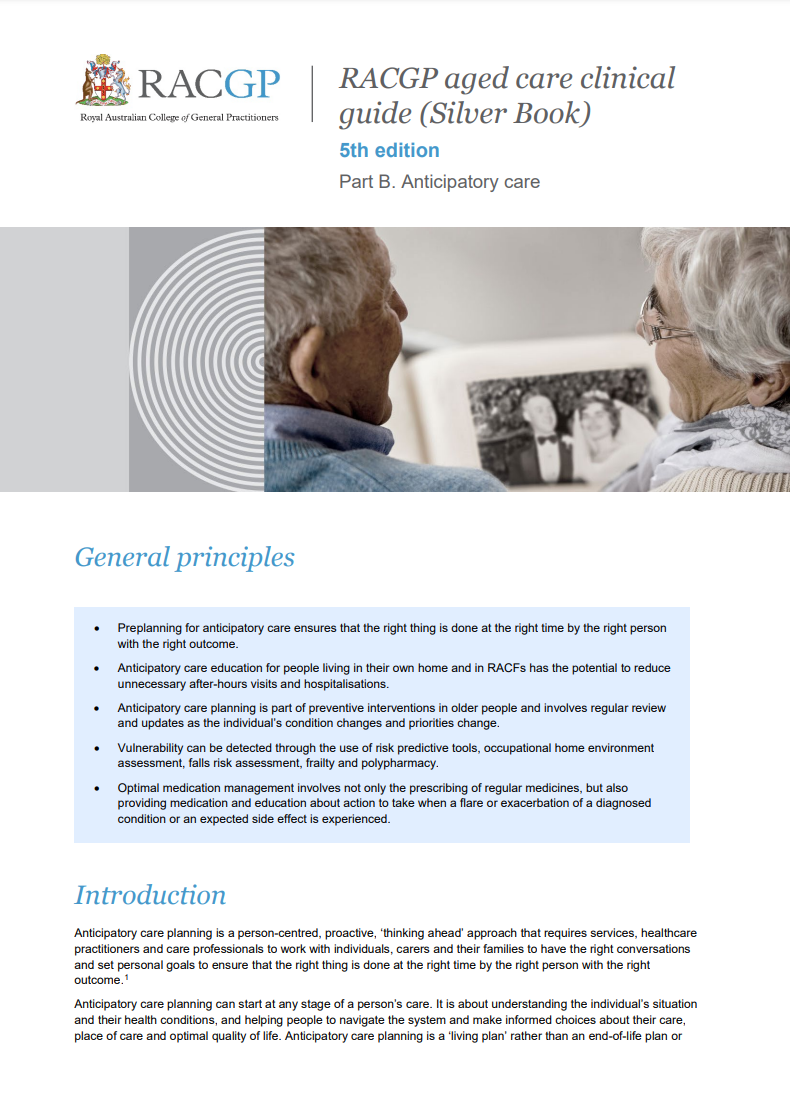
RACGP aged care clinical guide (Silver Book) - Part B - Anticipatory care
This guide outlines anticipatory care planning for older adults, focusing on proactive and person-centred approaches. It details triggers for care planning, identifying vulnerability, medication management, and the use of 'as needed' (PRN) medicines for various conditions like allergic reactions, asthma, diabetes, falls, and palliative care. It includes specific recommendations for developing individualised care plans and appropriate interventions for maintaining health and quality of life.
Aboriginal and Torres Strait Islander mental health program
This resource provides information on a mental health program for Aboriginal and Torres Strait Islander people. It includes funding for culturally appropriate mental health services, offering psychological therapies, complex care, and clinical coordination. The program integrates with other services such as drug and alcohol support and suicide prevention initiatives.
This resource may refer to information that will be updated from 1 July 2025 to align with the new Aged Care Act and Quality Standards.
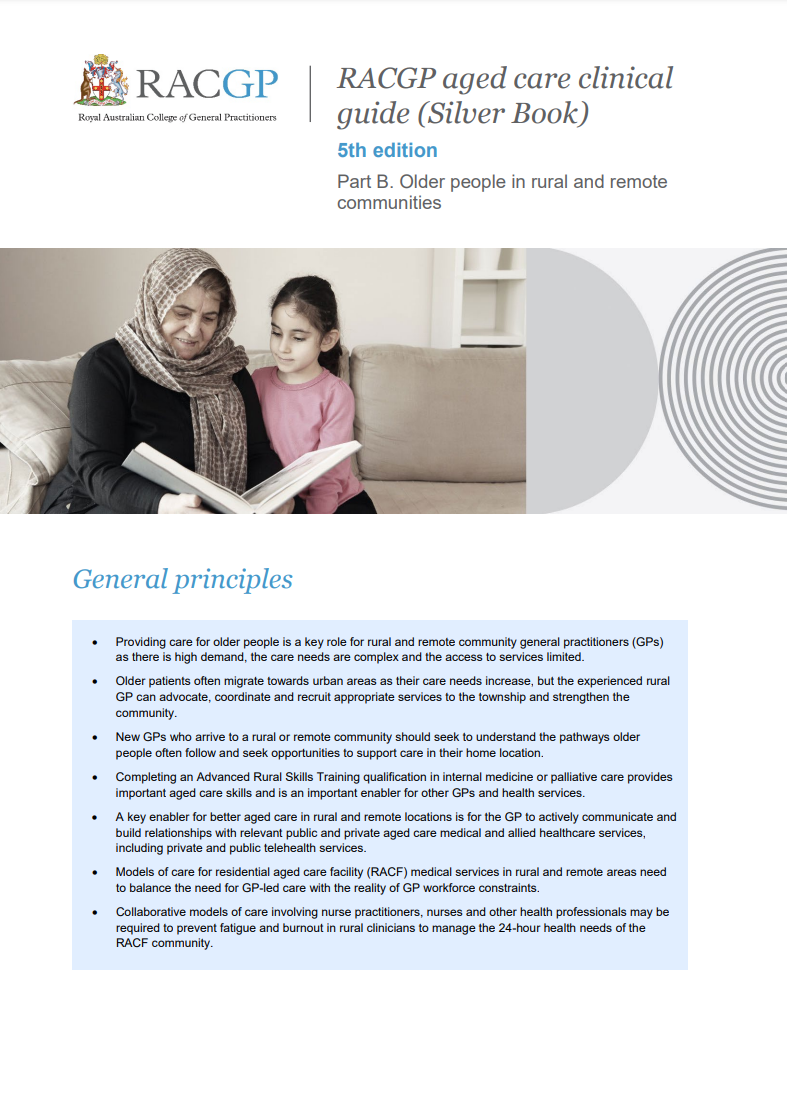
RACGP aged care clinical guide (Silver Book) - Part B - Older people in rural and remote communities
This guide discusses providing aged care in rural and remote communities, focusing on the unique needs of older residents, the role of GPs in care coordination, and overcoming challenges like limited services and workforce shortages. It covers building telehealth connections, establishing collaborative care models, and offers a checklist for newly arrived GPs to support quality care for older adults.
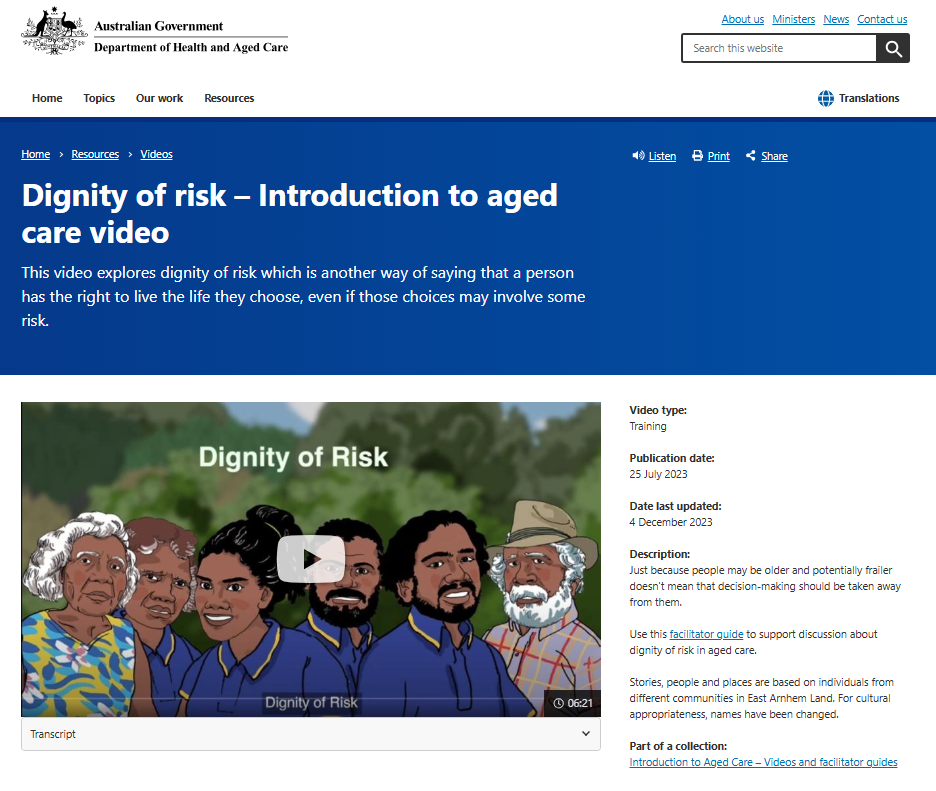
Dignity of risk – Introduction to aged care video
This video explains the concept of dignity of risk in aged care, emphasising that older people have the right to make their own choices, even when those choices involve risks. It provides examples of how care providers can support decision-making while promoting safety and respect for individual autonomy.
This resource may refer to information that will be updated from 1 November 2025 to align with the new Aged Care Act and Quality Standards.
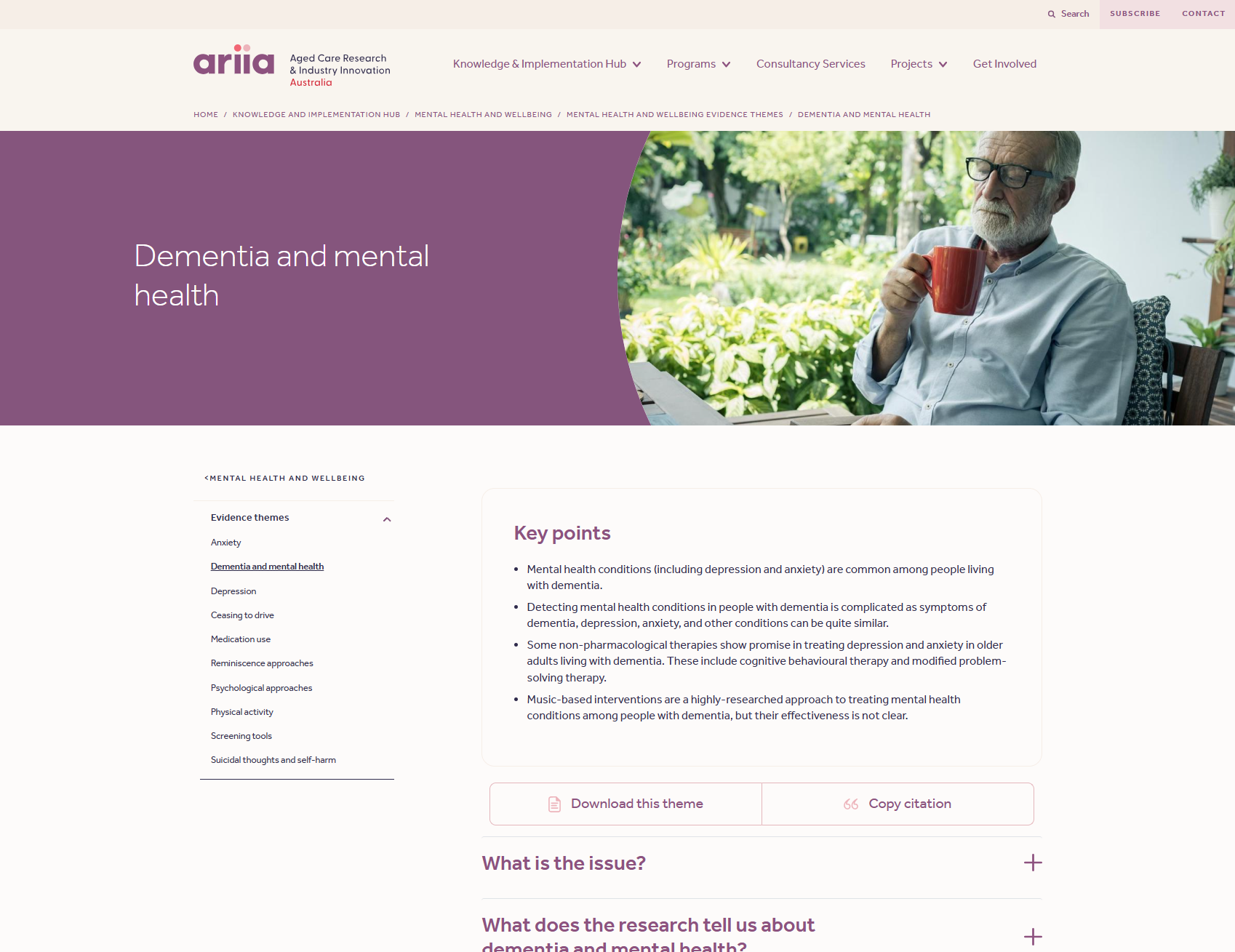
Mental health and wellbeing - Dementia and mental health
This resource examines mental health challenges in people living with dementia, covering complexities in diagnosing conditions like depression and anxiety. It provides evidence-based insights on therapeutic approaches, including music and cognitive therapies, and offers tools to aid aged care providers in supporting mental health in dementia care.
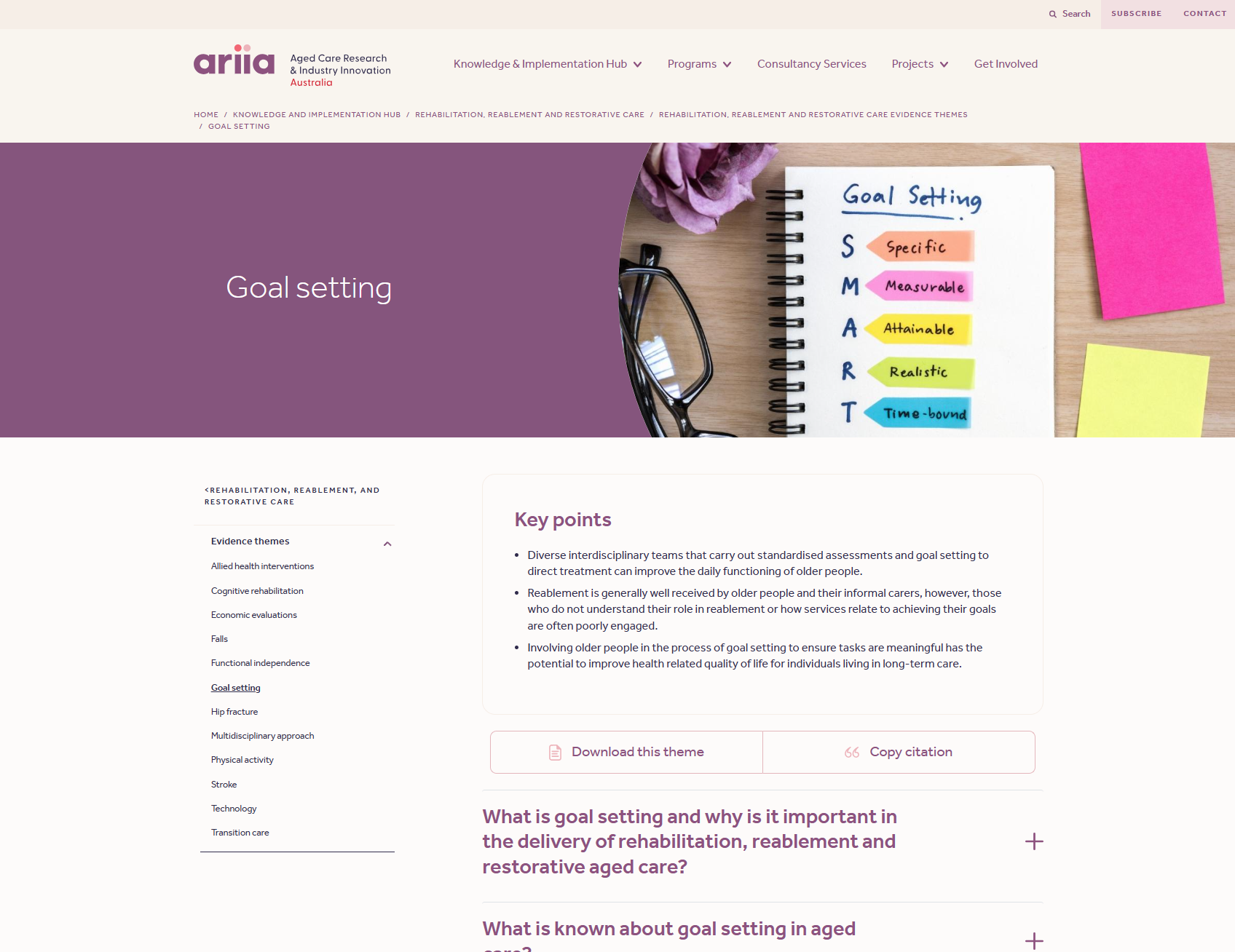
Goal setting
This resource discusses the role of goal setting in enhancing rehabilitation, reablement, and restorative care for older people. It highlights the value of involving older people in defining goals and the positive impact of goal setting on engagement, daily function, and quality of life.
First Nations - YouTube videos
This resource includes a series of YouTube videos developed by the Aged Care Quality and Safety Commission. Australian First Nations older people discuss good quality, culturally appropriate and safe aged care, including person-centred care, rights and how to speak up about care. This resource may refer to information that will be updated from 1 November 2025 to align with the new Aged Care Act and Quality Standards.

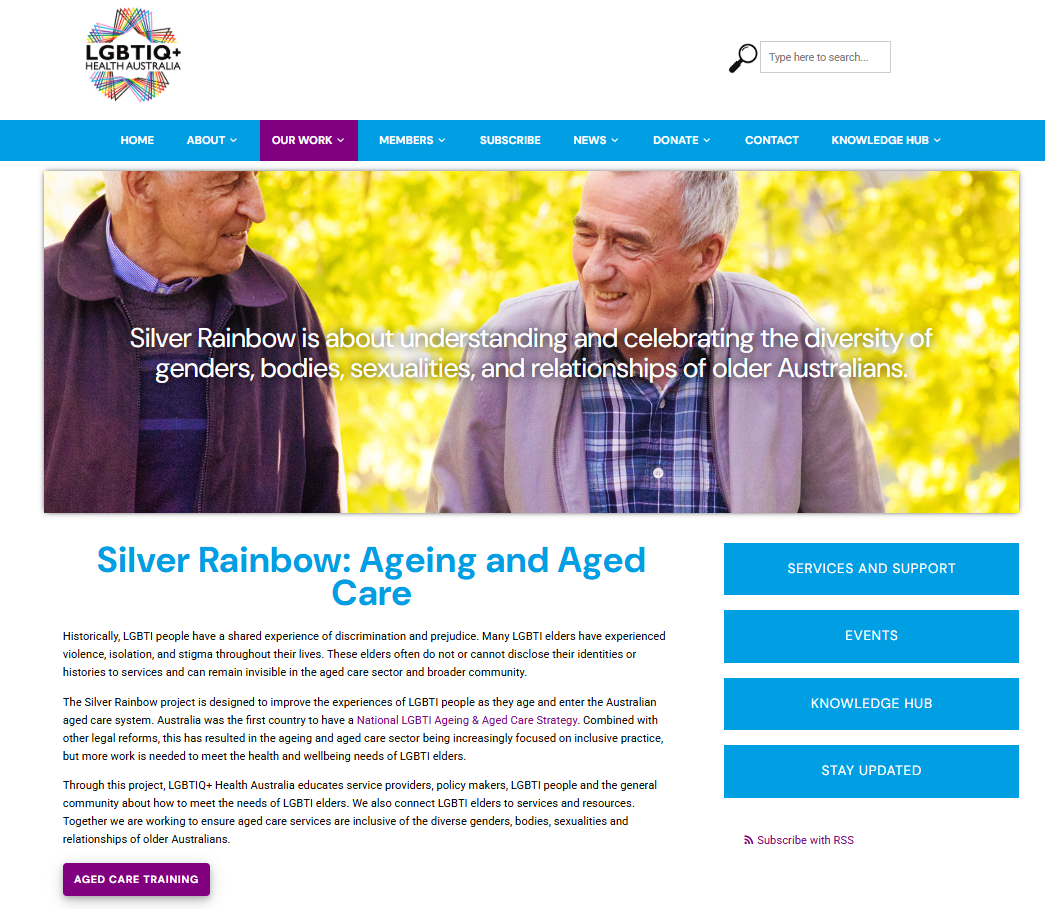
Silver Rainbow: Ageing and Aged Care
This resource is about the Silver Rainbow project to improve the experiences of LGBTI people as they age and enter aged care. The resource offers resources and training information to support the health and wellbeing of LGBTIQ+ older people. It also includes relevant reports and papers, such as government submissions.
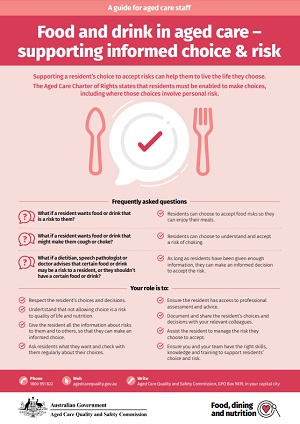
Food and drink in your aged care - supporting informed choice and risk - staff poster
This resource provides guidance for aged care staff on supporting older people's informed choices regarding food and drink, even when those choices involve personal risks. It encourages staff to respect resident autonomy, provide information on risks, document decisions, and ensure access to professional advice, promoting dignity and quality of life in care settings. This resource may refer to information that will be updated from 1 November 2025 to align with the new Aged Care Act and Quality Standards.

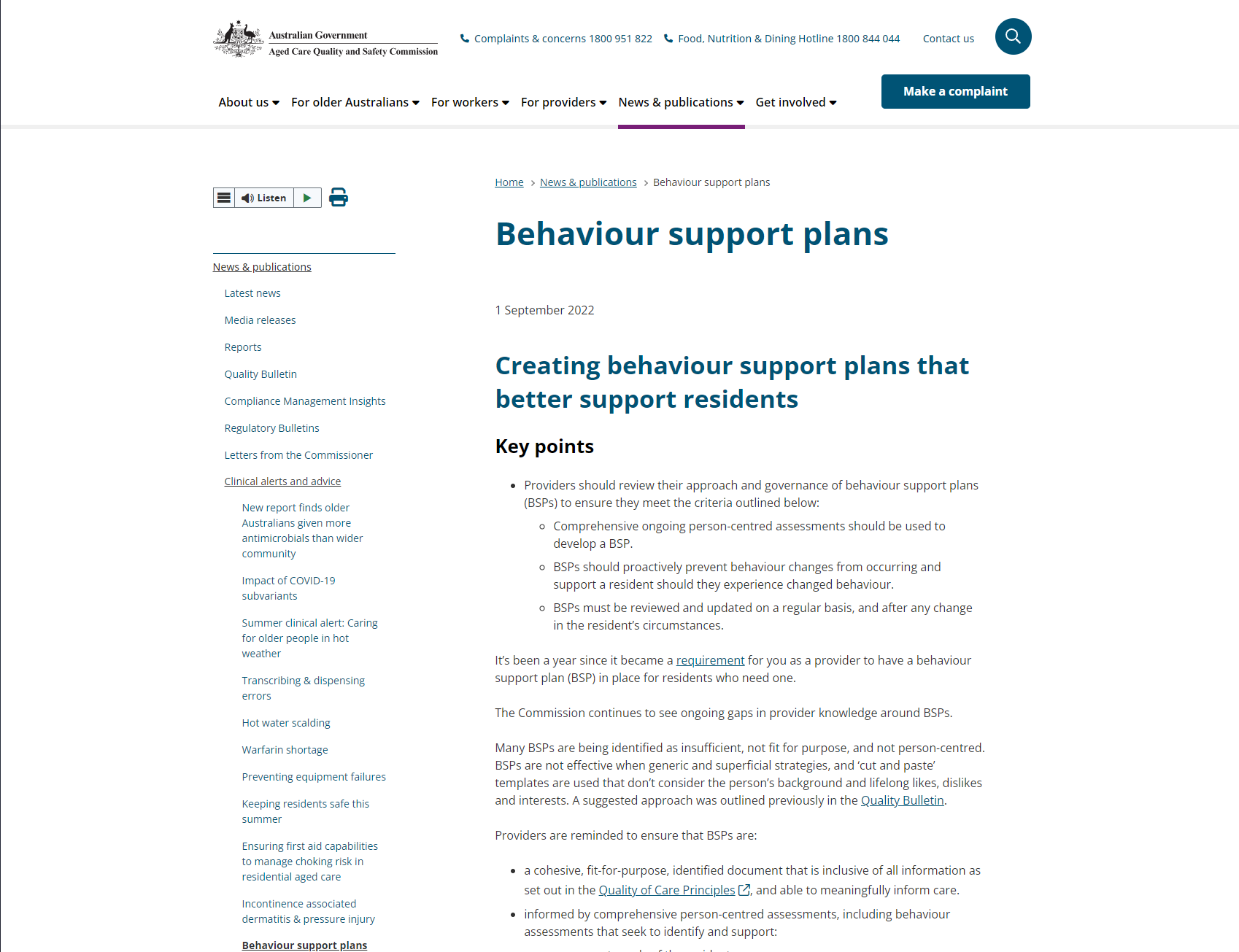
Creating behaviour support plans that better support residents
This document outlines the development of behaviour support plans (BSPs) in aged care, focusing on person-centred assessments, identification of triggers, tailored strategies, and regular reviews. It highlights the involvement of healthcare professionals and adherence to care principles to effectively manage residents’ behavioural changes and improve their quality of life.
This resource may refer to information that will be updated from 1 November 2025 to align with the new Aged Care Act and Quality Standards.
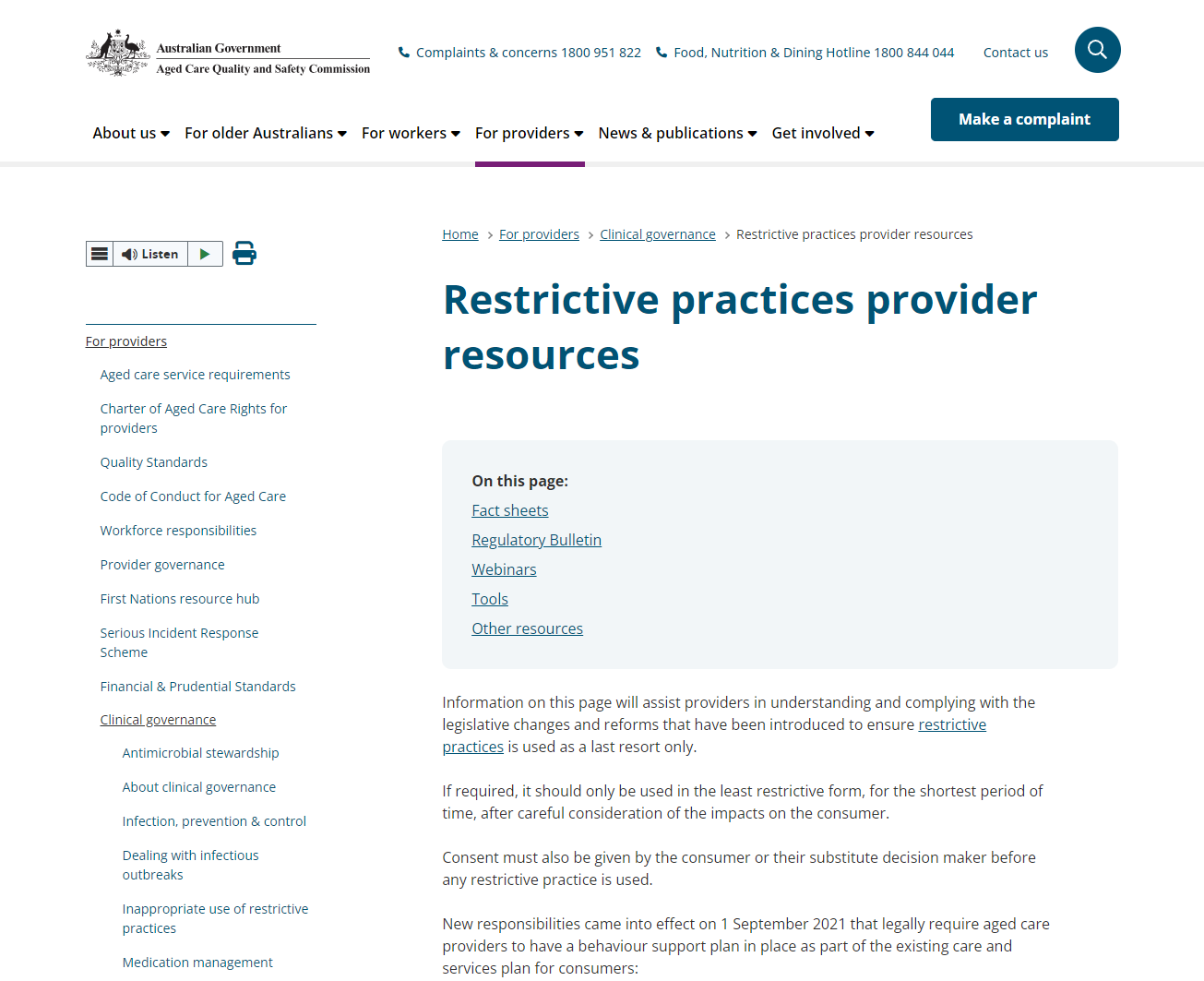
Restrictive practices provider resources
This resource offers guidance and tools for aged care providers on managing restrictive practices. It emphasises using restrictive practices as a last resort, obtaining informed consent, and developing behaviour support plans. The materials include fact sheets, regulatory updates, webinars, and decision-making tools to ensure compliance with legislation and promote person-centred care.
This resource may refer to information that will be updated from 1 November 2025 to align with the new Aged Care Act and Quality Standards.
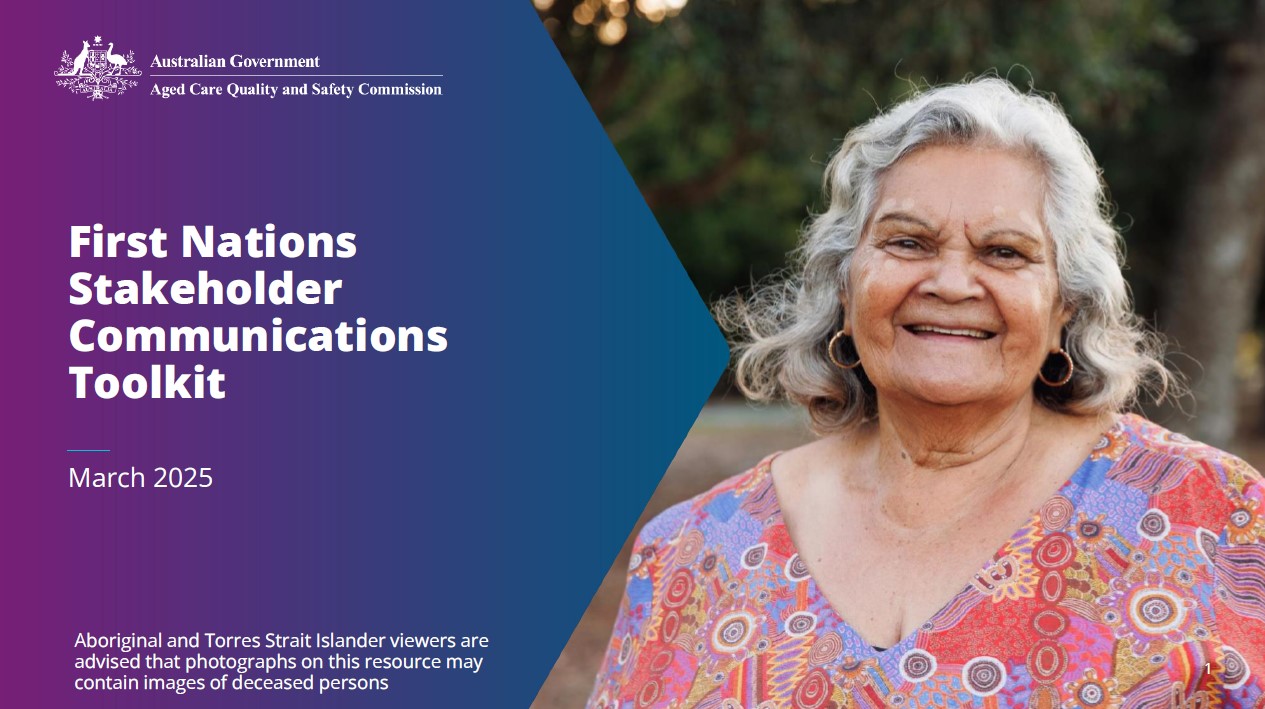
First Nations - Stakeholder Communications Toolkit
This Toolkit is designed for First Nations stakeholders including providers, workers and others involved in providing aged care services for First Nations people. We’ve developed it to make it easy for you to share relevant resources with your networks and members
Statement of Rights - Workers
This resource provides information for providers about the Statement of Rights. The Statement of Rights promote quality and safe care for older persons accessing, or seeking to access, funded aged care services. The rights help to ensure that older people and their needs are at the centre of the new aged care system.
This page includes information about what the Statement of Rights means for providers, and has links to additional resources about the rights, including videos and fact sheets.
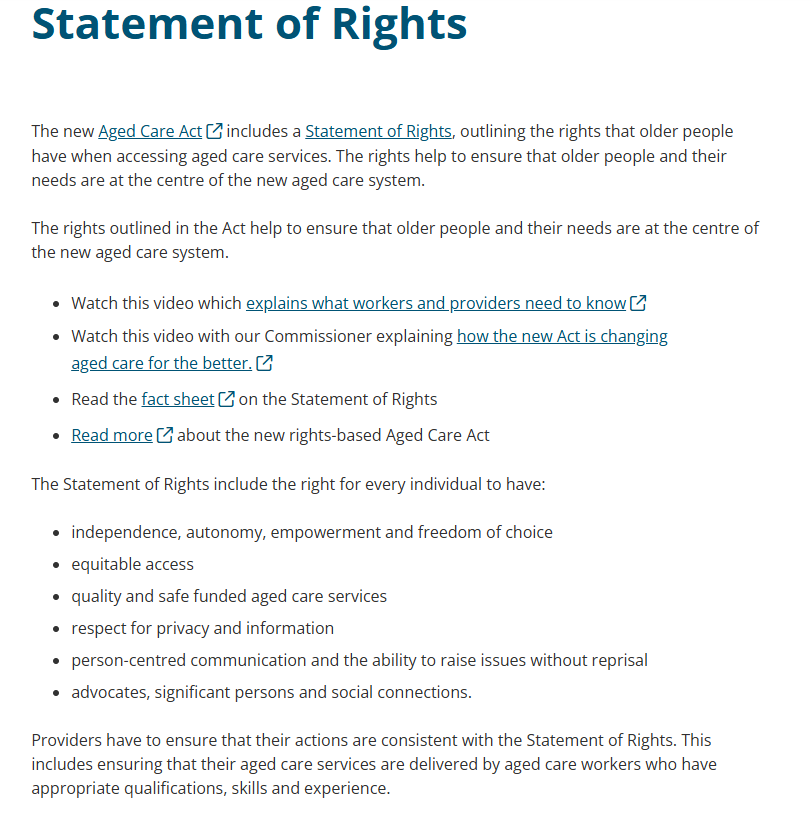
Statement of Rights - Providers
This resource provides information for providers about the Statement of Rights. The Statement of Rights promote quality and safe care for older persons accessing, or seeking to access, funded aged care services. The rights help to ensure that older people and their needs are at the centre of the new aged care system.
This page includes information about what the Statement of Rights means for providers, and has links to additional resources about the rights, including videos and fact sheets.