The Quality Standards Resource Centre helps extend understanding of the strengthened Aged Care Quality Standards, which took effect from 1 November 2025. You can search for resources by using keywords, or filtering by standard, outcome and audience. Before using the Resource Centre, please read the terms of use.
An Introduction to Activities of Daily Living (ADLs)
This resource explains Activities of Daily Living (ADLs), which are essential tasks that people must perform to care for themselves. It covers basic ADLs like mobility, dressing, and feeding, as well as instrumental ADLs such as managing finances and medication. The document highlights the clinical importance of assessing and supporting ADLs in aged care.
This resource may refer to information that will be updated from 1 November 2025 to align with the new Aged Care Act and Quality Standards.
Transitioning to Residential Aged Care: Loss and Grief
This resource explores the emotional impact of transitioning into residential aged care, focusing on loss and grief experienced by older people and their families. It highlights the common emotional challenges, such as fear, loss of independence, and guilt, and provides strategies to support emotional well-being during this difficult transition.
This resource may refer to information that will be updated from 1 November 2025 to align with the new Aged Care Act and Quality Standards.
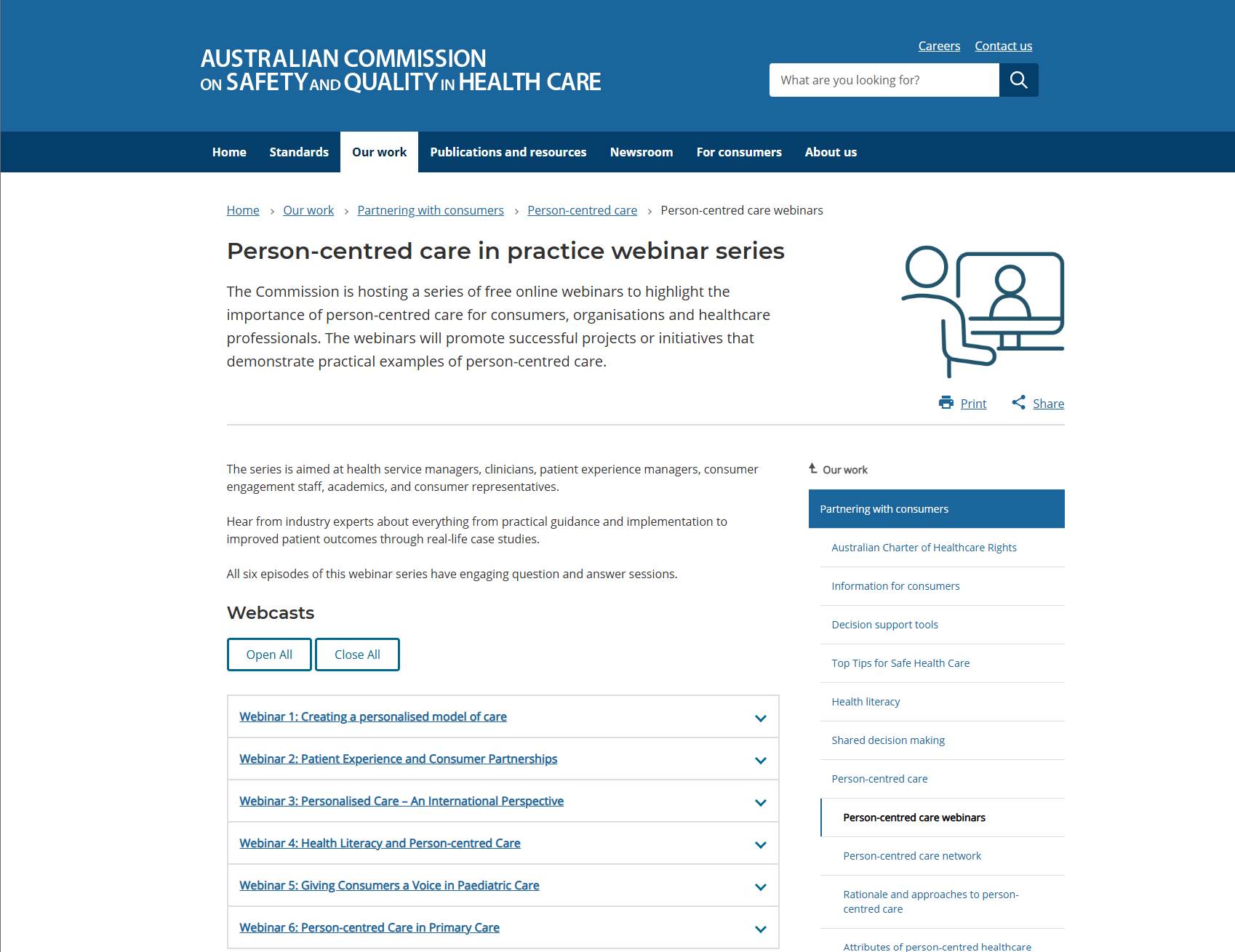
Person-centred care in practice webinar series
This resource offers a series of webinars on person-centred care, providing practical examples from Australian healthcare settings. It is designed for health service managers, clinicians, and consumer engagement staff, promoting strategies and tools to enhance person-centred practices. This resource may apply to healthcare contexts outside of aged care. Please consider the applicability of this resource to your care setting.
This resource may refer to information that will be updated from 1 November 2025 to align with the new Aged Care Act and Quality Standards.
Aged care workforce planning and support programs
This resource provides information about aged care workforce planning and support programs available to help providers. It covers initiatives such as the Business and Workforce Advisory Service and the Remote and Aboriginal and Torres Strait Islander Aged Care Service Development Assistance Panel.
This resource may refer to information that will be updated from 1 November 2025 to align with the new Aged Care Act and Quality Standards.
Familiar Places Webinar 2 – Bedrooms and Dining Areas
This webpage provides a video webinar focused on familiar places, such as bedrooms and dining areas, for dementia care environments. It offers insights into how these spaces can be designed to support the wellbeing of people living with dementia, with a particular emphasis on creating comfortable and familiar settings.
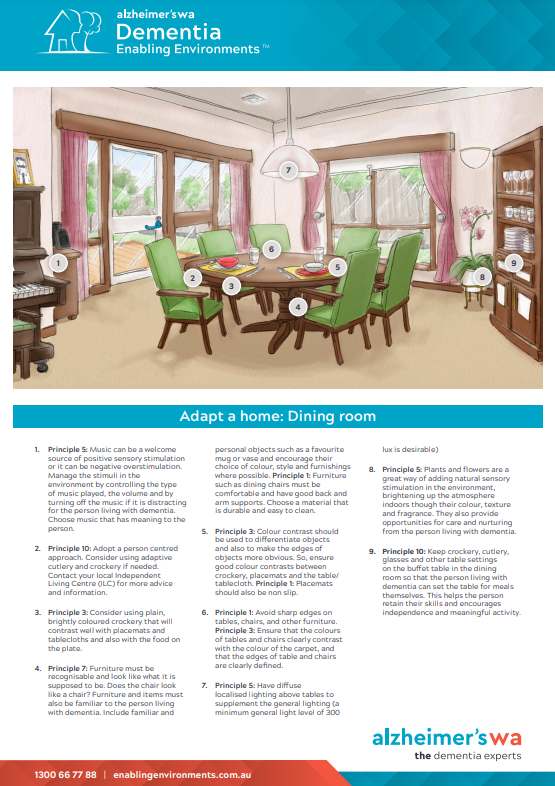
Dementia enabling environments - Adapt a home: Dining room
This resource, developed by Alzheimer's WA, is a Dementia Enabling Environments illustration information sheet about adapting a home, focusing on the dining room. It includes principles to integrate enabling design and make changes within the physical environment to maximise enablement and wellbeing for people living with dementia.
This resource was developed by a state/territory government or organisation and therefore its applicability and usefulness may be limited.
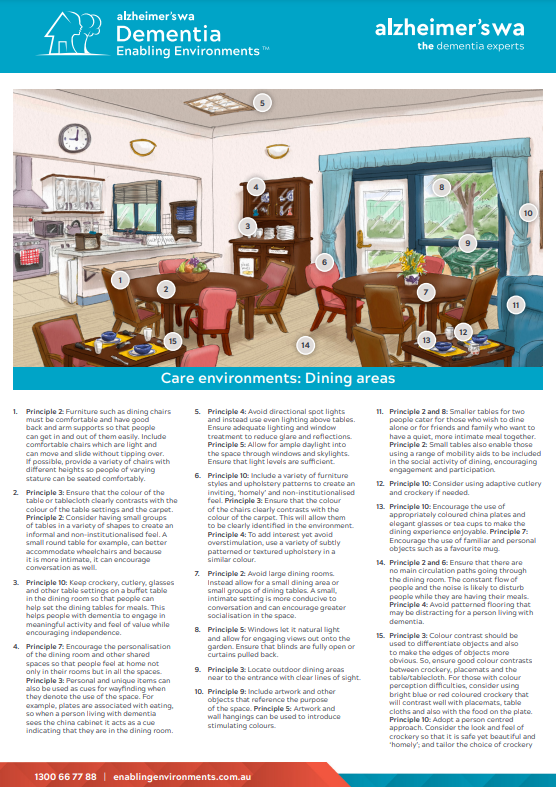
Dementia enabling environments - Care environments: Dining areas
This resource, developed by Alzheimer's WA, is a Dementia Enabling Environments illustration information sheet about dining areas in care environments. It includes principles to create enabling spaces and information about how to design the physical environment to maximise enablement and wellbeing for people living with dementia.
This resource was developed by a state/territory government or organisation and therefore its applicability and usefulness may be limited.
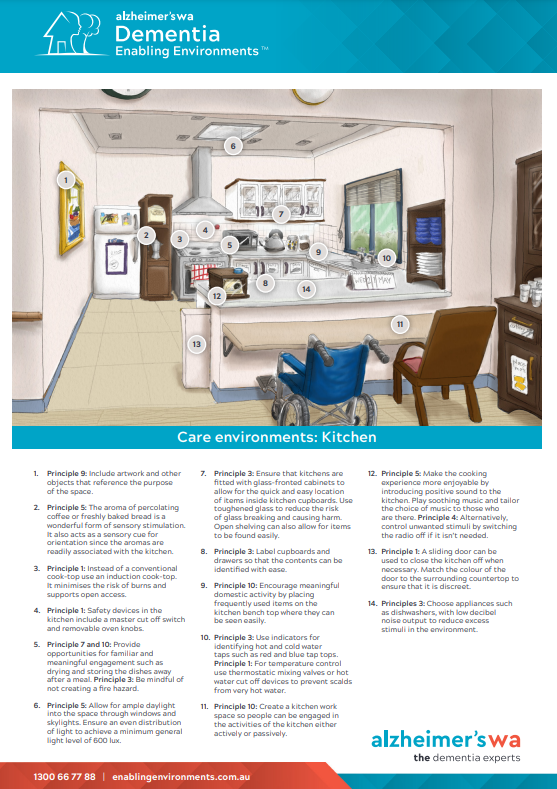
Dementia enabling environments - Care environments: Kitchen
This resource, developed by Alzheimer's WA, is a Dementia Enabling Environments illustration information sheet about kitchens in care environments. It includes principles to create enabling spaces and information about how to design the physical environment to maximise enablement and wellbeing for people living with dementia.
This resource was developed by a state/territory government or organisation and therefore its applicability and usefulness may be limited.
Dementia enabling environments
The Dementia Enabling Environments website, developed by Alzheimer's WA, provides guidance and resources to help create enabling environments for a person living with dementia. It includes design principles for different environment types, include home and residential aged care facilities.
This resource was developed by a state/territory government or organisation and therefore its applicability and usefulness may be limited.
NSQHS Standards User Guide for the Health Care of People with Intellectual Disability
This resource provides guidance for the health care of people with intellectual disability. The user guide is part of the Australian Commission on Safety and Quality in Health Care's National Safety and Quality Health Service (NSQHS) Standards. The resource was developed in response to significant evidence of poor health outcomes for people with intellectual disability in Australia’s health system.
This resource may refer to information that will be updated from 1 November 2025 to align with the new Aged Care Act and Quality Standards.
Polypharmacy Consumer Perspective - National Medicines Symposium 2024
This is a presentation on Polypharmacy Consumer Perspective. It includes details of a case example, resolution and care management, and key principles related to medicines and goal of care. This resource may refer to information that will be updated from 1 November 2025 to align with the new Aged Care Act and Quality Standards.
Guide for consumers - Psychotropic Medicines in Cognitive Disability or Impairment Clinical Care Standard
This resource is a guide for consumers about the Australian Commission on Safety and Quality in Health Care's Psychotropic Medicines in Cognitive Disability or Impairment Clinical Care Standard. The resource includes 8 quality statements about the health care consumers should receive to support the correct use of psychotropic medicines.
This resource may refer to information that will be updated from 1 November 2025 to align with the new Aged Care Act and Quality Standards.
Recognising Signs of Deterioration in a Person’s Mental State
This resource provides a framework for recognising signs of mental state deterioration, organised into 5 key indicators: reported change, distress, loss of reality, loss of function, and elevated risk. It supports healthcare providers in monitoring mental health changes to enable timely and effective responses across care settings. This resource may apply to healthcare contexts outside of aged care. Please consider the applicability of this resource to your care setting.
National Health and Climate Strategy – Resources collection
This is a collection of resources related to the National Health and Climate Strategy. The collection includes the strategy, implementation plan 2024-2028, stakeholder engagement report, governance information and publications.
This resource may refer to information that will be updated from 1 November 2025 to align with the new Aged Care Act and Quality Standards.
The Aged Care Infection Prevention and Control Guide
This resource outlines the basic principles of infection prevention and control and explains how to apply these principles using a risk-based approach. The guide supports implementation of the strengthened Aged Care Quality Standards. It is a supplementary resource for the Australian Guidelines for the Prevention and Control of Infection in Healthcare for aged care settings.
This resource may refer to information that will be updated from 1 November 2025.
Monthly Care Statements for residential aged care
This resource provides information about Monthly Care Statements, including why they are important, who can give them, and the benefits for residents and providers.
This resource may refer to information that will be updated from 1 November 2025 to align with the new Aged Care Act and Quality Standards.
National Strategic Framework for Rural and Remote Health
This framework addresses health service challenges in rural and remote areas, aiming to improve access, workforce sustainability, and care models through coordinated strategies. It guides policymakers and providers on adapting health services for rural contexts, fostering collaboration, and enhancing infrastructure, with a focus on equitable and culturally relevant care.
This resource may apply to healthcare contexts outside of aged care.
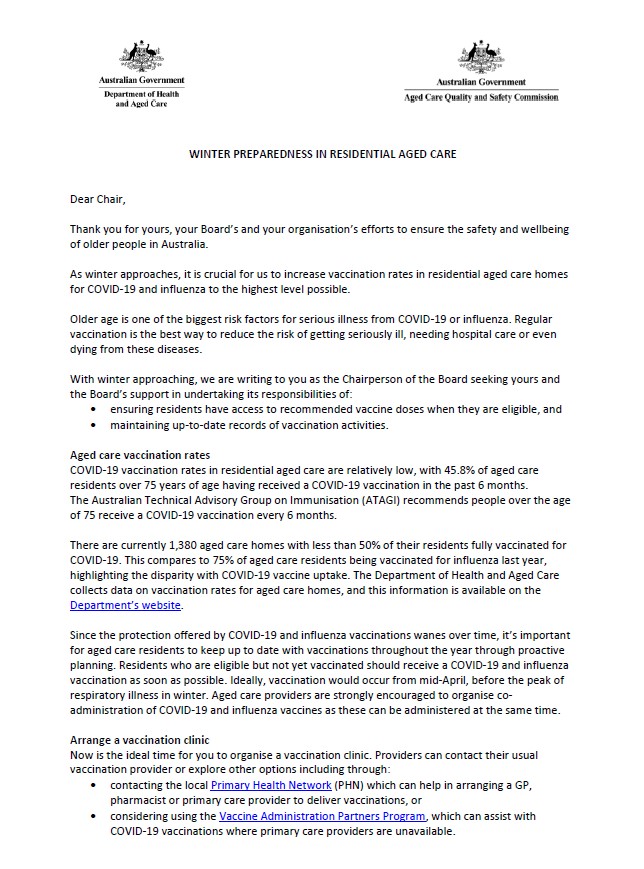
Joint letter from CMO and Commissioner to Board Chairs on winter preparedness 2025
Joint letter from the Chief Medical Officer Professor Anthony Lawler and Commissioner Liz Hefren-Webb to Board Chairs, Residential Aged Care Providers on winter preparedness in residential aged care.

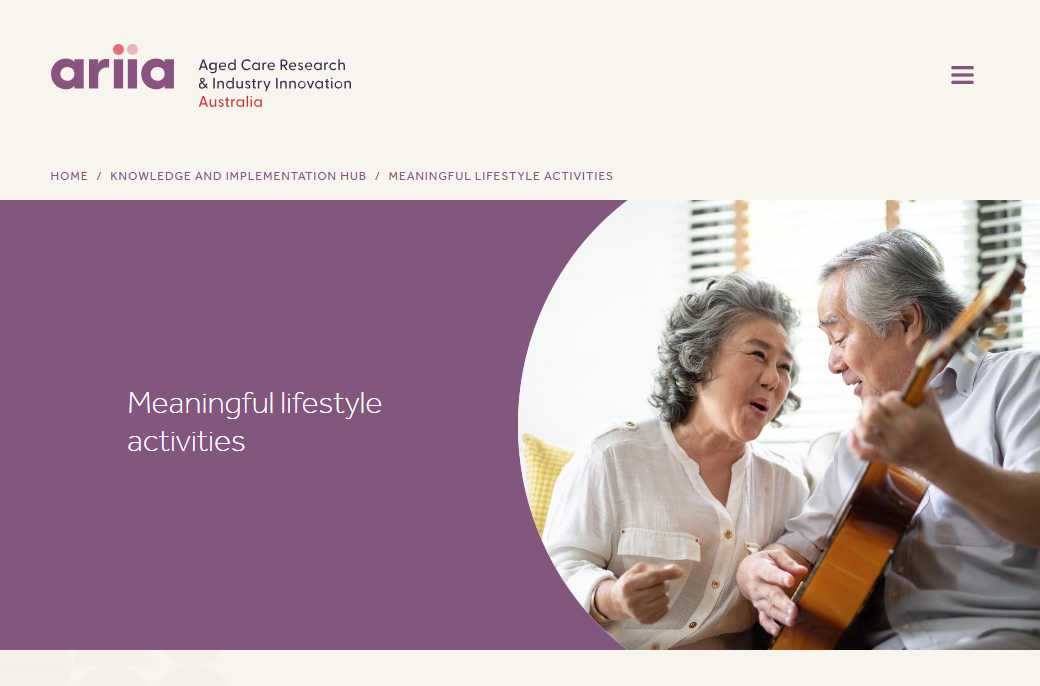
Meaningful lifestyle activities
This resource discusses the importance of engagement in meaningful lifestyle activities for people living in aged care. It includes information about understanding meaningful lifestyle activities and links to a collection of resources collated by ARIIA that are relevant to this theme.
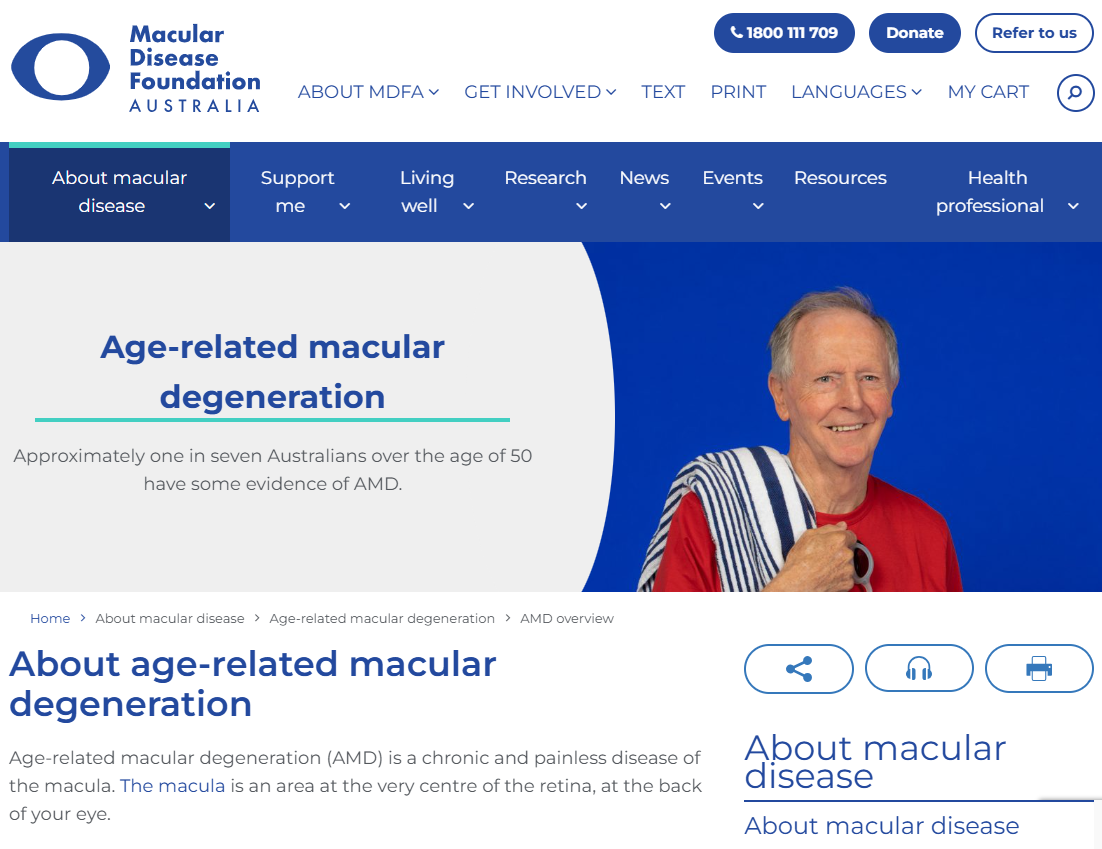
Age-related macular degeneration
This resource provides information about age-related macular degeneration (AMD). It contains information about stages of AMD, risk factors and symptoms. It also includes information about diagnosing, monitoring and treating AMD.