The Quality Standards Resource Centre helps extend understanding of the strengthened Aged Care Quality Standards, which took effect from 1 November 2025. You can search for resources by using keywords, or filtering by standard, outcome and audience. Before using the Resource Centre, please read the terms of use.
Aseptic technique
This resource provides information on aseptic techniques to support service provides adapt practices to protect patients from healthcare-associated infections and healthcare workers from contact with blood, body fluid and body tissue. It provides guides for implementation, principles of aseptic technique and safe use of chlorhexidine.
This resource may refer to information that will be updated from 1 July 2025 to align with the new Aged Care Act and Quality Standards.
AMR - Antimicrobial resistance
The AMR provides information on antimicrobial resistance and it's threats to human and animal health. It contains information on how to reduce it's spread, news, AMR resources and other resources on antimicrobial resistance.
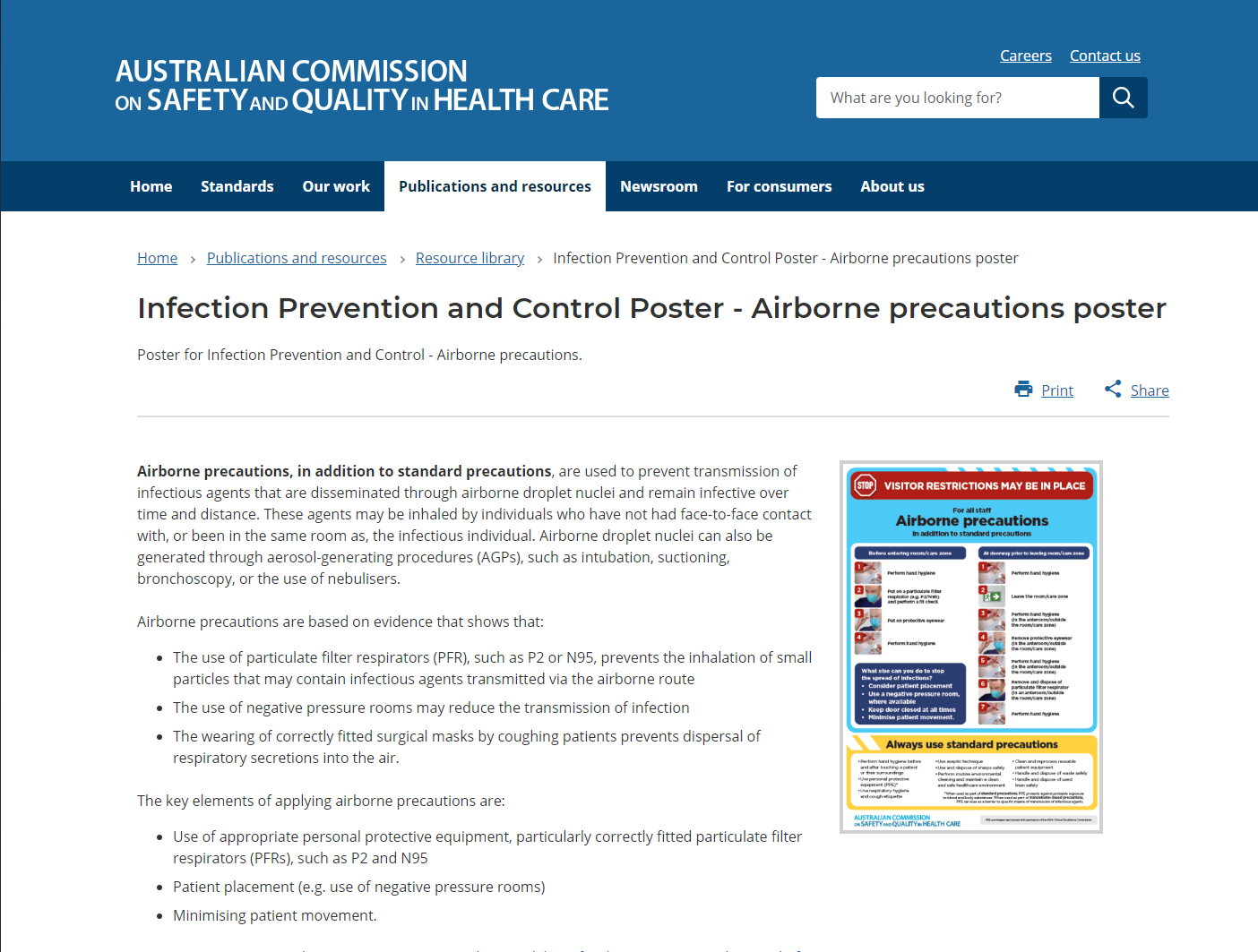
Infection Prevention and Control Poster - Airborne precautions poster
This poster outlines airborne precautions, in addition to standard precautions, for infection prevention and control. It provides guidance on preventing transmission of infectious agents through airborne droplet nuclei using personal protective equipment (PPE), negative pressure rooms, and limiting patient movement to reduce infection risks.
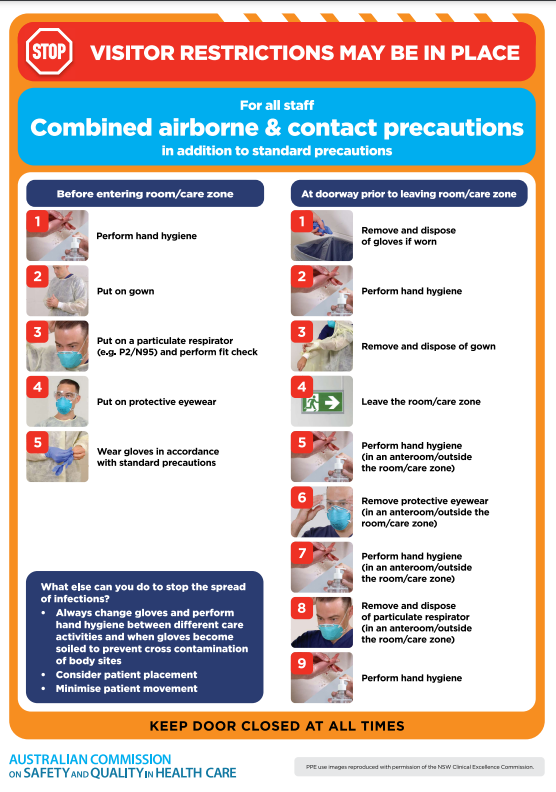
Infection Prevention and Control Poster – Combined airborne and contact precautions
This poster provides guidance on combined airborne and contact precautions for infection prevention and control. It includes information on using personal protective equipment (PPE) and other measures to minimise the spread of infectious agents transmitted through both airborne particles and direct contact.
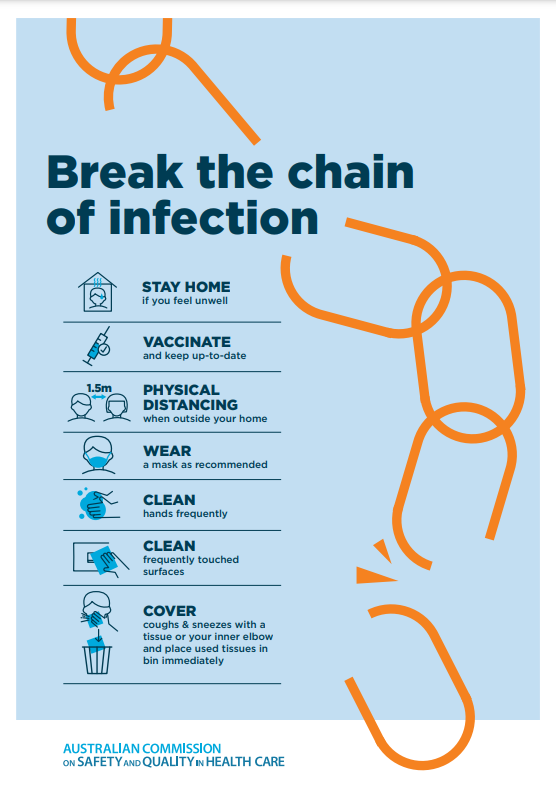
Break The Chain of Infection Poster
This poster outlines key steps to break the chain of infection, including staying home if unwell, physical distancing, frequent handwashing, cleaning surfaces, and covering coughs or sneezes. It aims to prevent the spread of respiratory infections and supports infection prevention practices in healthcare settings.
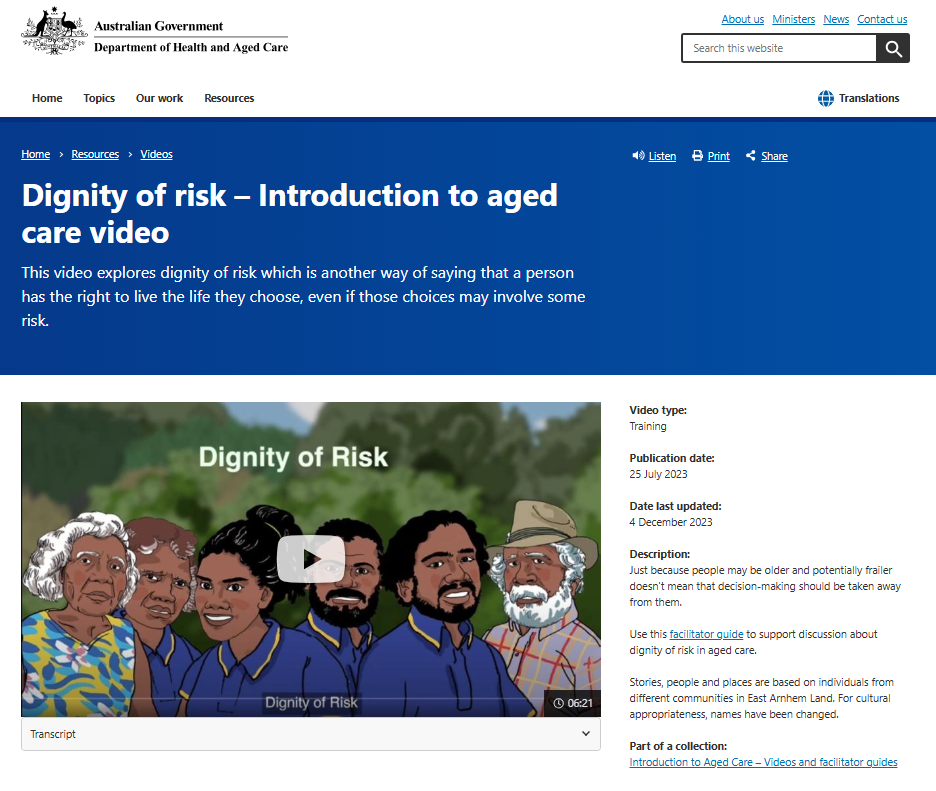
Dignity of risk – Introduction to aged care video
This video explains the concept of dignity of risk in aged care, emphasising that older people have the right to make their own choices, even when those choices involve risks. It provides examples of how care providers can support decision-making while promoting safety and respect for individual autonomy.
This resource may refer to information that will be updated from 1 November 2025 to align with the new Aged Care Act and Quality Standards.
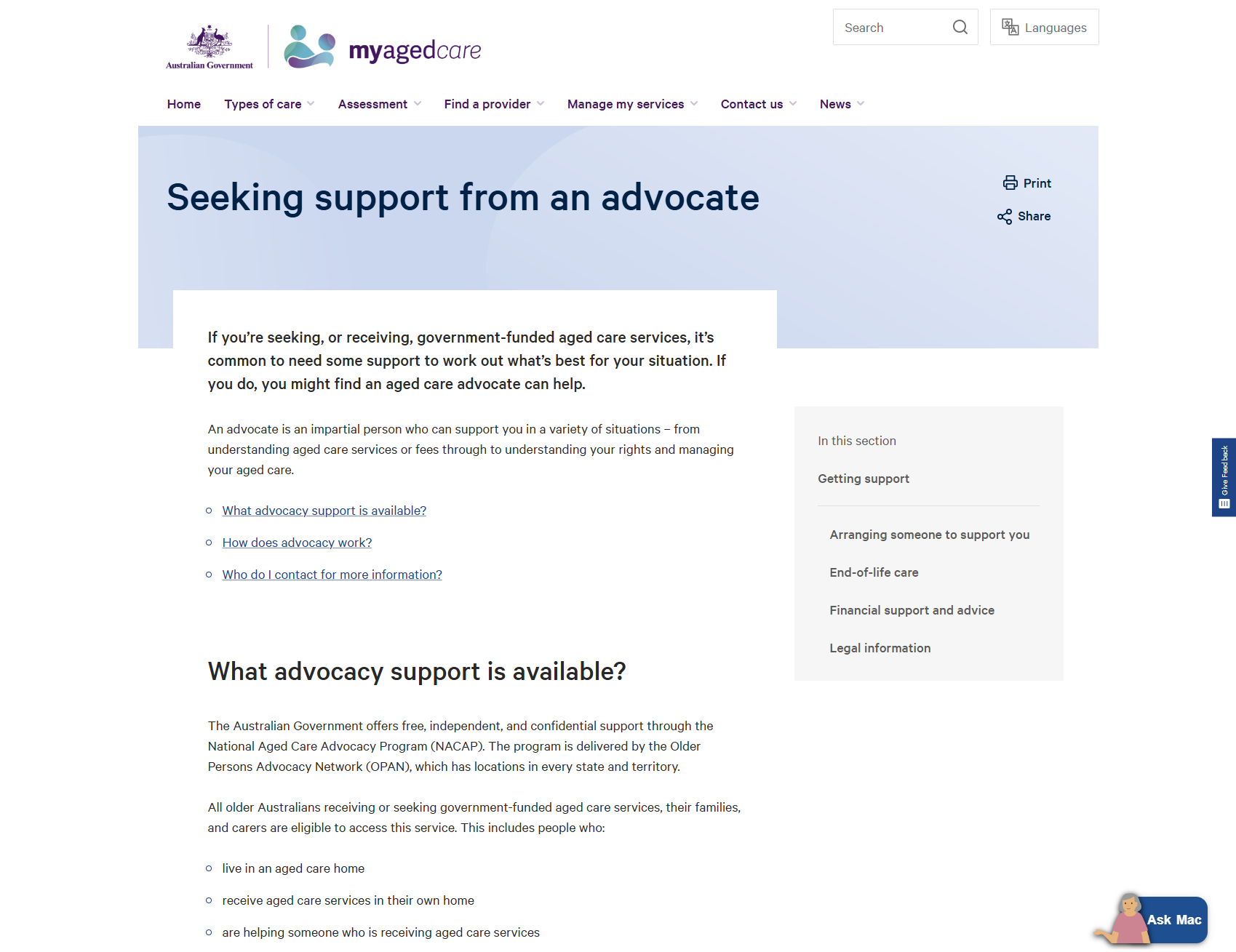
Seeking support from an advocate
This resource describes the advocacy support available for people receiving government-funded aged care, provided through the National Aged Care Advocacy Program. It outlines the role of advocates in assisting with understanding services, managing rights, addressing concerns, and learning self-advocacy skills, supporting respectful and fair treatment in aged care.
Common barriers
This resource outlines common barriers faced by diverse groups in accessing aged care services, including communication challenges, social isolation, experiences of trauma, grief and loss, and social exclusion. It provides guidance on addressing these issues to make sure equitable access to services for all older people.
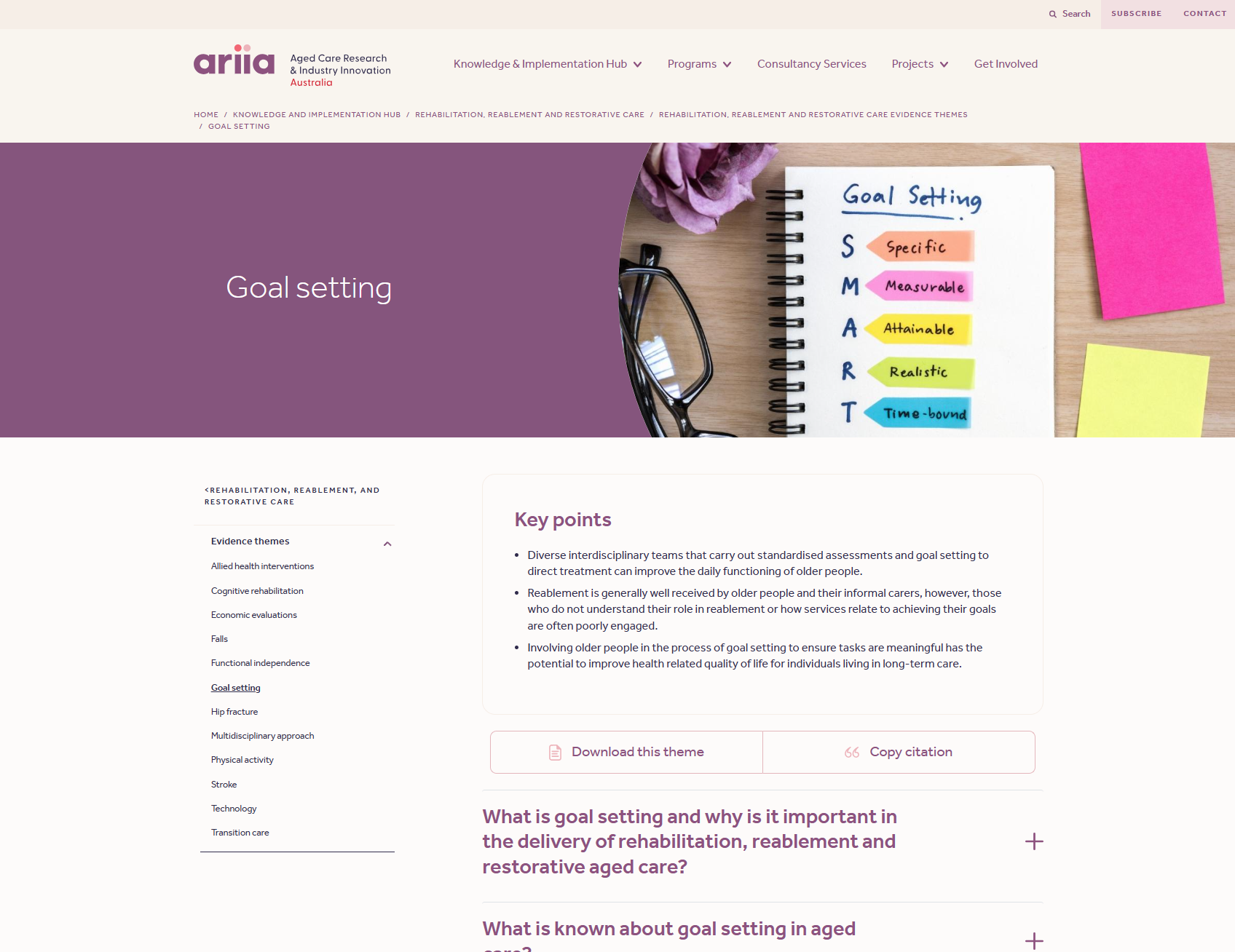
Goal setting
This resource discusses the role of goal setting in enhancing rehabilitation, reablement, and restorative care for older people. It highlights the value of involving older people in defining goals and the positive impact of goal setting on engagement, daily function, and quality of life.
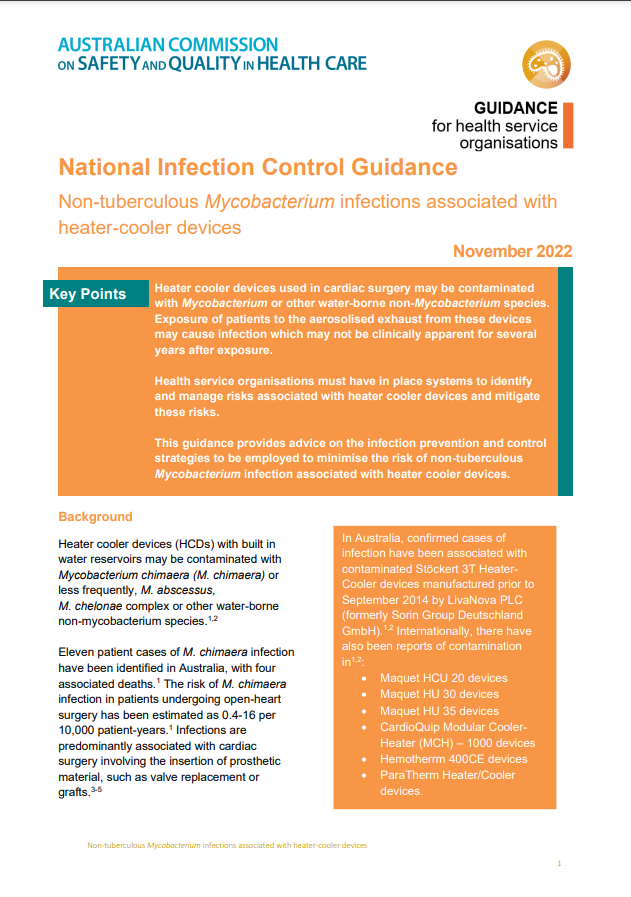
National Infection Control Guidance Non-tuberculous Mycobacterium infections associated with heater-cooler devices
This guidance addresses the infection risks associated with heater-cooler devices, particularly Non-tuberculous Mycobacterium infections. It provides recommendations for Australian healthcare organisations on managing these risks, including using safety notices and infection control guidelines. It should be used alongside state and territory health advice. This resource may apply to healthcare contexts outside of aged care and please consider the applicability of this resource to your care setting.
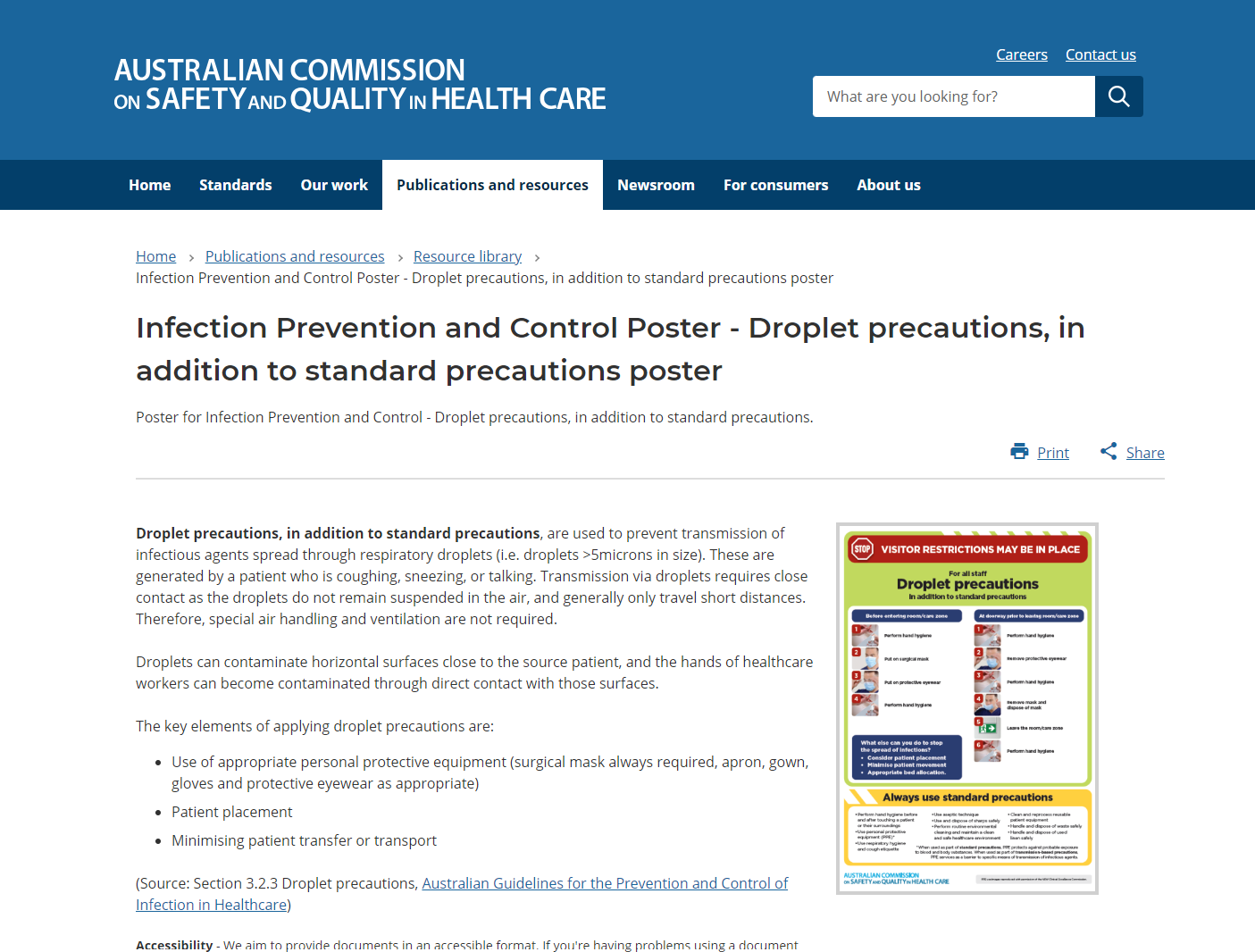
Infection Prevention and Control Poster - Droplet precautions, in addition to standard precautions poster
This resource is a poster on droplet precautions, in addition to standard precautions, for infection prevention. It outlines measures to prevent the transmission of infectious agents spread through respiratory droplets, such as using appropriate personal protective equipment (PPE), patient placement, and minimising patient transport. This resource may apply to healthcare contexts outside of aged care. Please consider the applicability of this resource to your care setting.
Preventing and Controlling Infections Standard
The Preventing and Controlling Infections Standard (National Safety and Quality Health Service Standards) outlines infection prevention and control strategies, antimicrobial stewardship, the safe use of resources, and evidence-based practices. It aims to minimise infection risks and ensure the safety of people receiving care and workforce members. It also supports compliance with infection control standards in healthcare and aged care settings. This resource may apply to healthcare contexts outside of aged care and please consider the applicability of this resource to your care setting.
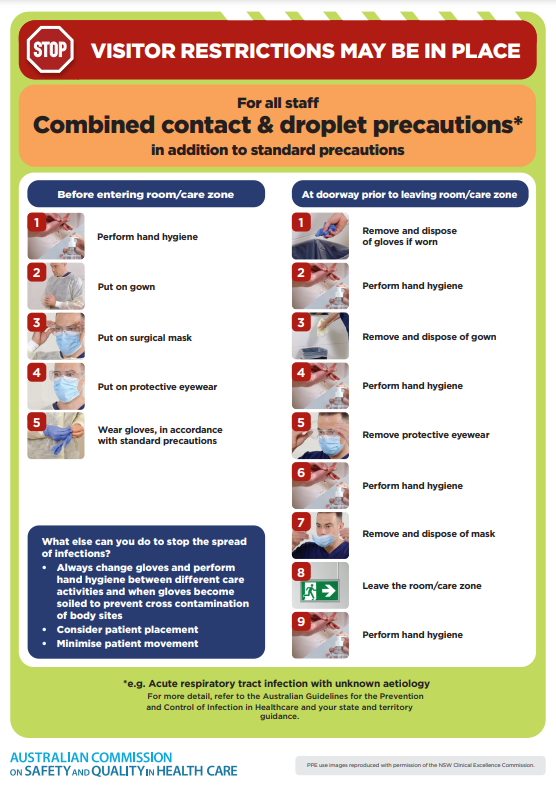
Infection Prevention and Control Poster – Combined contact and droplet precautions
This poster outlines combined contact and droplet precautions for infection prevention and control, in addition to standard precautions. It provides guidance on the use of personal protective equipment (PPE) and other measures to reduce the transmission of infectious agents through direct contact and respiratory droplets.
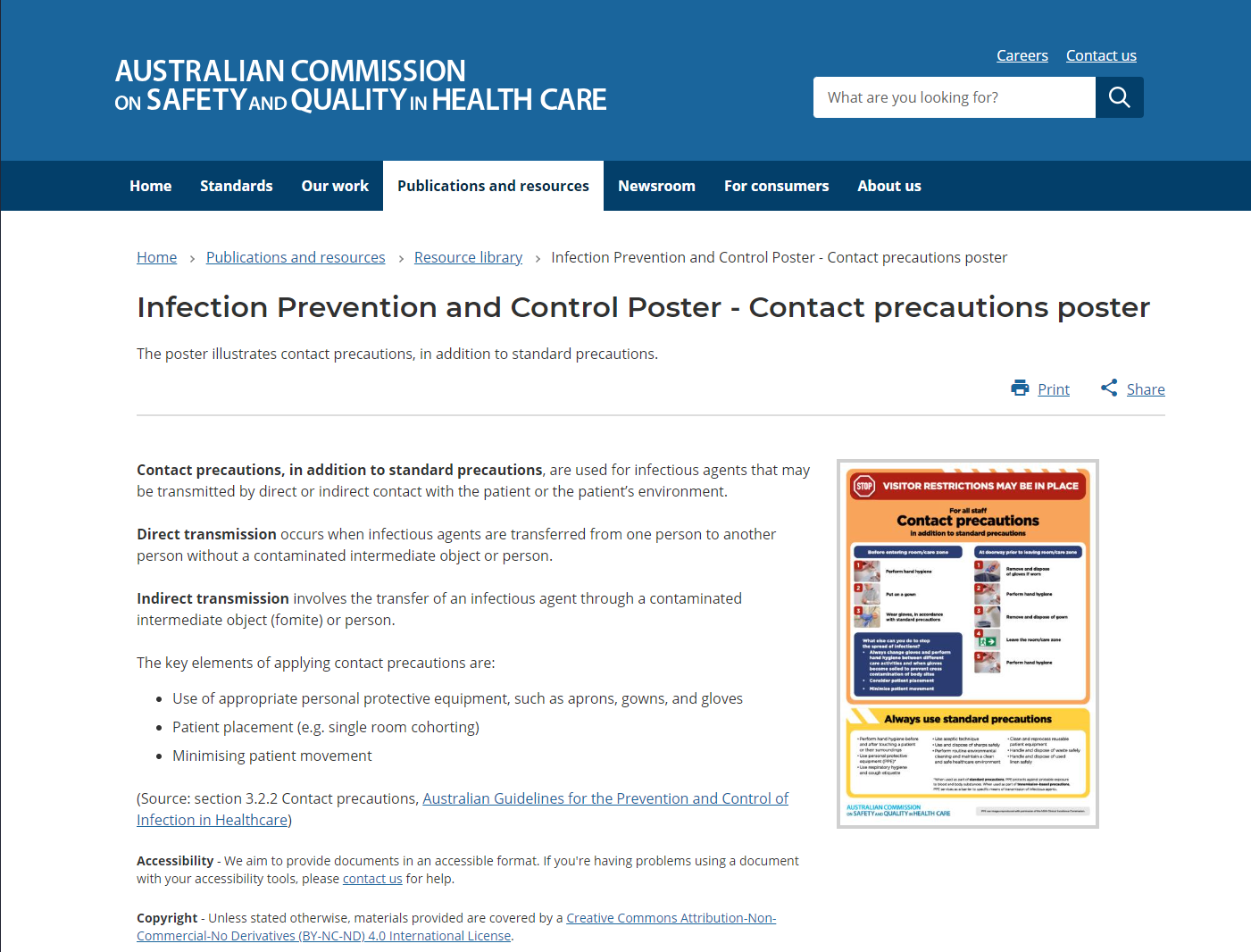
Infection Prevention and Control Poster - Contact precautions poster
This poster outlines contact precautions for infection prevention and control, in addition to standard precautions. It provides guidance on preventing the transmission of infectious agents through direct or indirect contact. Key elements include using personal protective equipment, proper patient placement, and minimising patient movement. This resource may apply to healthcare contexts outside of aged care. Please consider the applicability of this resource to your care setting.
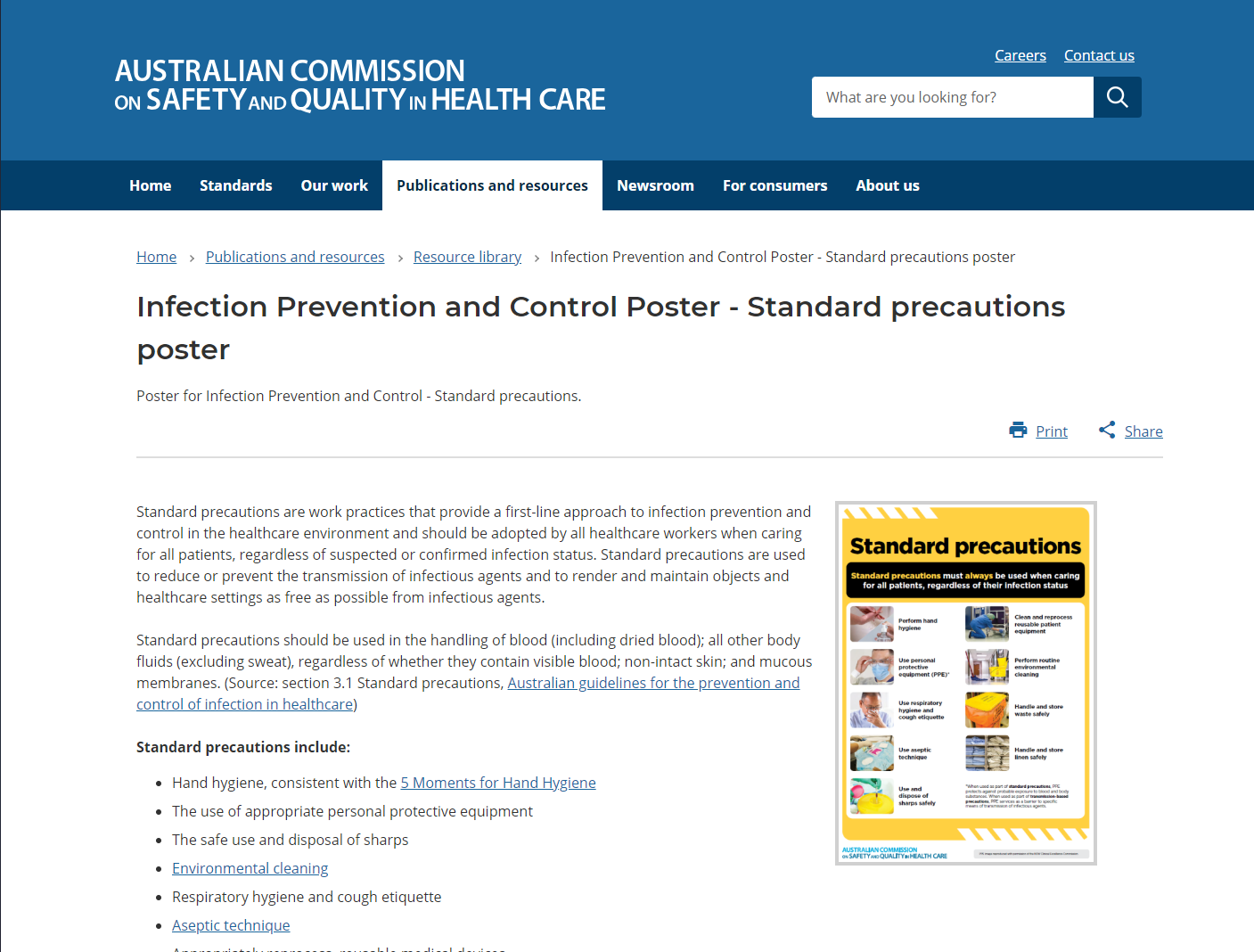
Infection Prevention and Control Poster - Standard precautions poster
This resource is a poster on standard precautions for infection prevention and control in healthcare. It outlines essential practices such as hand hygiene, personal protective equipment use, environmental cleaning, and waste management. The poster helps healthcare workers minimise infection risks and maintain safe care environments. This resource may apply to healthcare contexts outside of aged care. Please consider the applicability of this resource to your care setting.
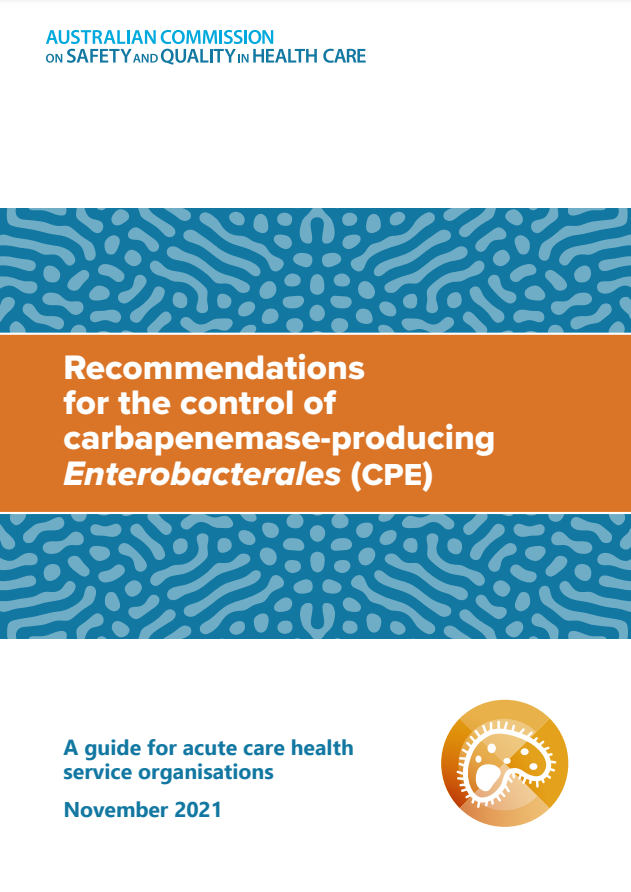
Recommendations for the control of carbapenemase-producing Enterobacterales
This resource provides guidance on preventing and managing carbapenemase-producing Enterobacterales (CPE) in healthcare. It covers screening, outbreak control, and environmental cleaning, helping to reduce antimicrobial resistance. The resource supports infection control policies and aims to enhance safety in aged care and health service organisations.
This resource may refer to information that will be updated from 1 November 2025 to align with the new Aged Care Act and Quality Standards.
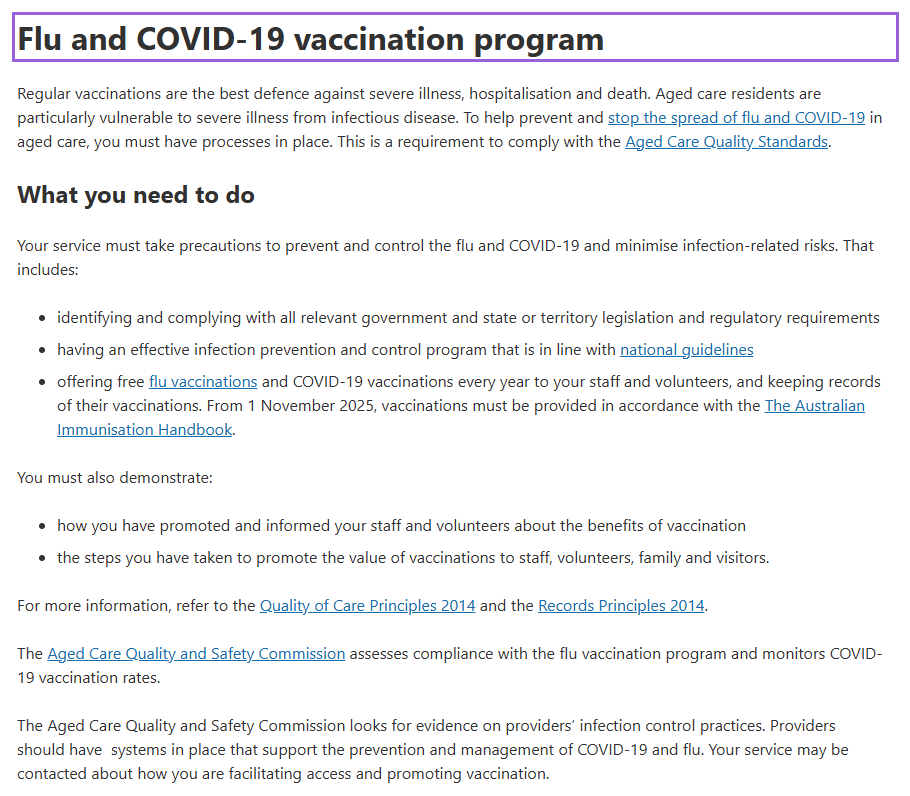
Flu and COVID-19 vaccination program
This resource outlines the flu and COVID-19 vaccination program for residential aged care providers. It includes information about what services must do to take precautions to prevent and control the flu and COVID-19 and minimise infection-related risks. This resource may refer to information that will be updated from 1 November 2025 to align with the new Aged Care Act and Quality Standards.
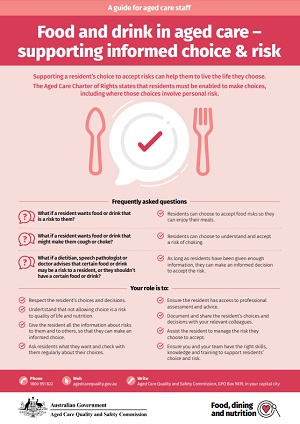
Food and drink in your aged care - supporting informed choice and risk - staff poster
This resource provides guidance for aged care staff on supporting older people's informed choices regarding food and drink, even when those choices involve personal risks. It encourages staff to respect resident autonomy, provide information on risks, document decisions, and ensure access to professional advice, promoting dignity and quality of life in care settings. This resource may refer to information that will be updated from 1 November 2025 to align with the new Aged Care Act and Quality Standards.
Goal planning tool
This resource is a goal planning tool designed to support aged care providers in improving food, dining, nutrition, and consumer choice. It helps providers set objectives, track progress, and implement actions to enhance service quality, ensuring that people’s preferences and dietary needs are consistently met.
This resource may refer to information that will be updated from 1 November 2025 to align with the new Aged Care Act and Quality Standards.
 Goal planning tool (PDF 899.52 KB)
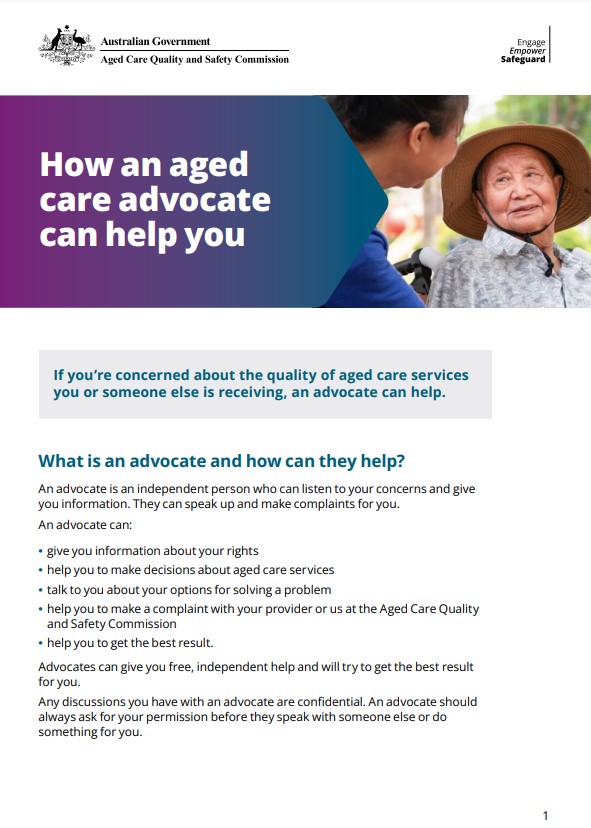
How an aged care advocate can help you
If you are concerned about the quality of the aged care service you or the person you represent is receiving, an advocacy service may be able to help.
How an aged care advocate can help you – fact sheet (PDF 267.87 KB)