The Quality Standards Resource Centre helps extend understanding of the strengthened Aged Care Quality Standards, which took effect from 1 November 2025. You can search for resources by using keywords, or filtering by standard, outcome and audience. Before using the Resource Centre, please read the terms of use.
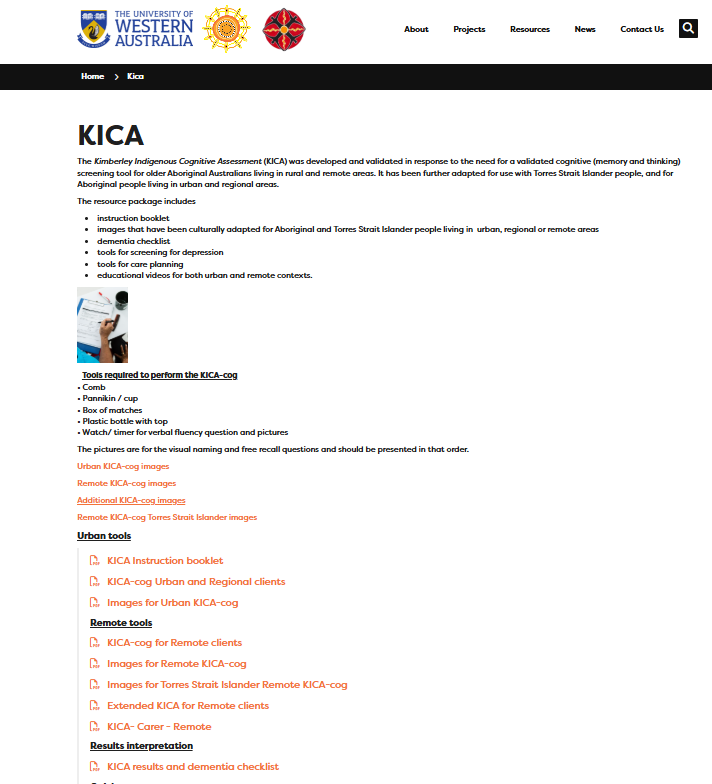
Kimberley Indigenous Cognitive Assessment (KICA)
The Kimberley Indigenous Cognitive Assessment (KICA) is a cognitive screening tool for older Aboriginal Australians living in rural and remote areas. It has been adapted for use with Torres Strait Islander people, and for Aboriginal people living in urban and regional areas.
This resource was developed by a state/territory government or organisation and therefore its applicability and usefulness may be limited.
Dementia Australia
This resource is the Dementia Australia website. The website contains information about the types of dementia, testing, diagnosis, treatment and management of dementia. It includes information about living with dementia, such as behaviour changes, nutrition, staying connected and care options. It also contains information for professionals supporting people living with dementia, including research, tools and other resources.
Standardised care processes
This resource offers evidence-based standardised care processes for aged care providers, covering high-risk clinical areas such as falls, pain, incontinence, and dehydration. It provides structured guidelines to support best practices, ensuring consistent and safe care for older people in residential settings.
This resource was developed by a state/territory government or organisation and therefore its applicability and usefulness may be limited.
Participating with consumers
This resource provides information sheets for residents, families, and carers to support decision-making in residential aged care. Covering topics such as pain management, falls, and medicines, it promotes health literacy, enabling consumers to engage in discussions and report care issues effectively.
This resource was developed by a state/territory government or organisation and therefore its applicability and usefulness may be limited.
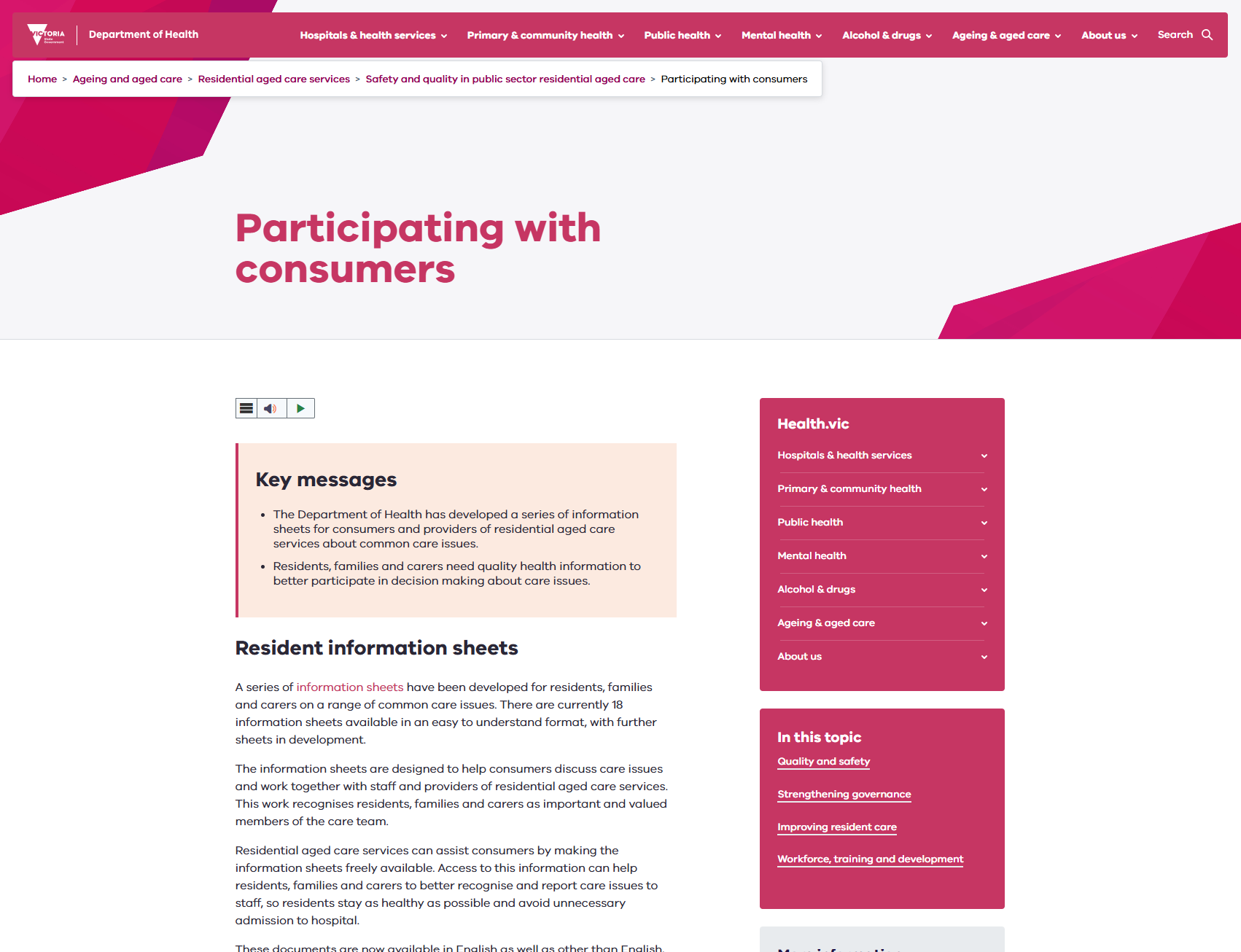
Older people and falls
This resource provides information on the causes, treatments, and prevention of falls in older people. It outlines risk factors, such as home hazards and health conditions, and offers practical tips for reducing falls, including lifestyle changes, home modifications, and medical assessments. The document emphasises the importance of fall prevention in aged care settings.
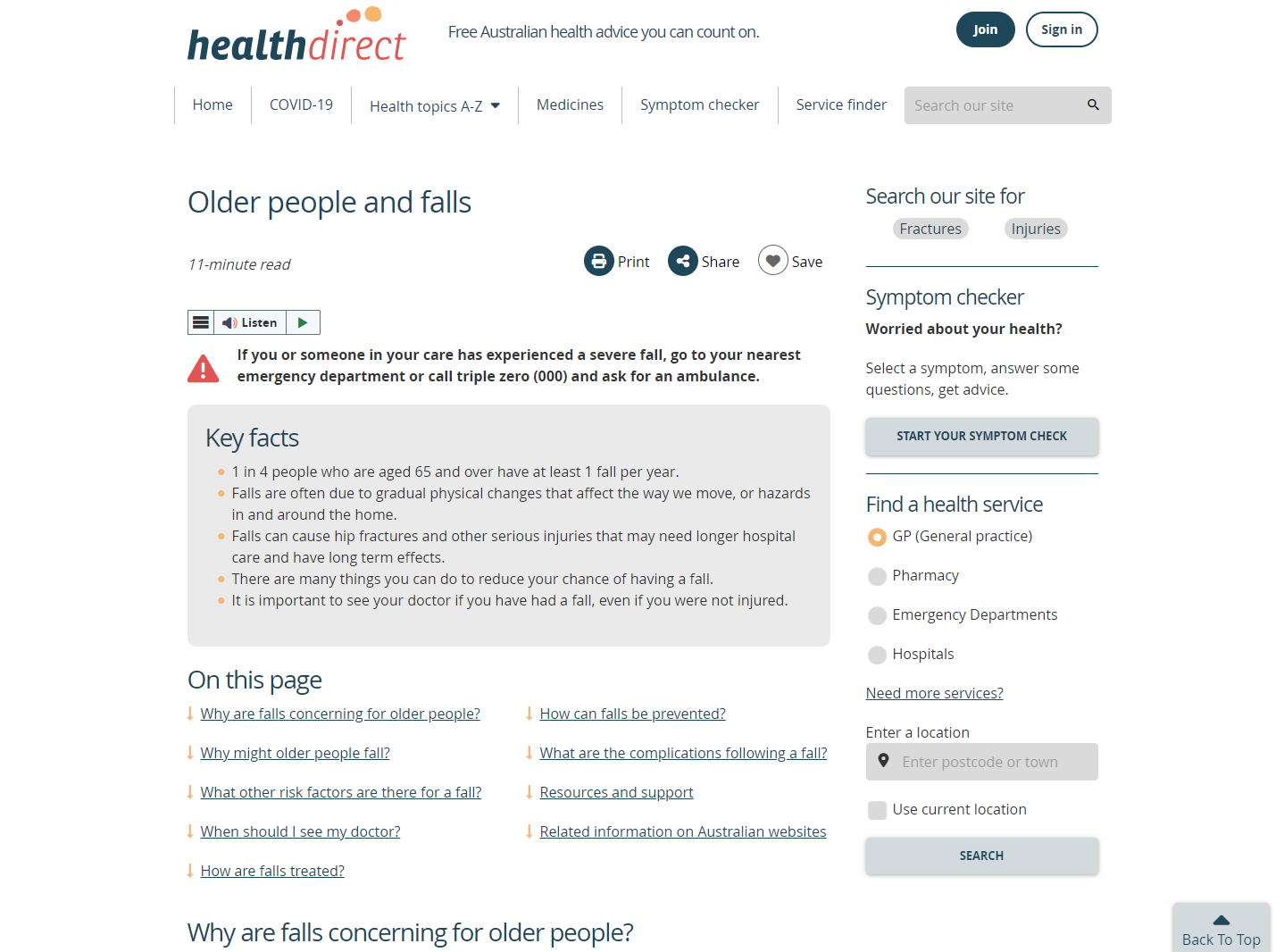
My food and dining preferences - form
This fact sheet helps aged care residents communicate their food and dining preferences. It includes sections for meal choices, dining preferences, assistance needs, health considerations, cultural or religious customs, and contact information for allied health professionals. It also advises staff to monitor changes in weight and contact a dietitian if needed.
This resource may refer to information that will be updated from 1 November 2025 to align with the new Aged Care Act and Quality Standards.
 My food and dining preferences form (PDF 378.98 KB)
Arabic - تفضيلاتي في الطعام وعادات الأكل (PDF 426.01 KB)
French - Mes préférences alimentaires et de repas (PDF 365.82 KB)
German - Meine Essens- und Speisevorlieben (PDF 358.86 KB)
Greek - Οι προτιμήσεις μου για το φαγητό και τα γεύματα (PDF 359.43 KB)
Hungarian - Étel- és étkezési preferenciák (PDF 369.35 KB)
Macedonian - Моите желби во врска со храната и јадењето (PDF 358.79 KB)
Maltese - Il-preferenzi tiegħi tal-ikel u l-ikliet (PDF 364.67 KB)
Portuguese - Minhas preferências alimentares e gastronômicas (PDF 373.26 KB)
Russian - Мои предпочтения в еде и приеме пищи (PDF 353.14 KB)
Serbian - Моје жеље које се тичу хране и обедовања (PDF 353.84 KB)
Simplified Chinese - 我的饮食及用餐偏好 (PDF 420.97 KB)
Traditional Chinese - 我的飲食及用餐偏好 (PDF 422.91 KB)
Spanish - Mis preferencias de alimentos y comidas (PDF 365.1 KB)
Vietnamese - Sở thích ăn uống và thực phẩm của tôi (PDF 340.54 KB)
My food and dining preferences form (PDF 378.98 KB)
Arabic - تفضيلاتي في الطعام وعادات الأكل (PDF 426.01 KB)
French - Mes préférences alimentaires et de repas (PDF 365.82 KB)
German - Meine Essens- und Speisevorlieben (PDF 358.86 KB)
Greek - Οι προτιμήσεις μου για το φαγητό και τα γεύματα (PDF 359.43 KB)
Hungarian - Étel- és étkezési preferenciák (PDF 369.35 KB)
Macedonian - Моите желби во врска со храната и јадењето (PDF 358.79 KB)
Maltese - Il-preferenzi tiegħi tal-ikel u l-ikliet (PDF 364.67 KB)
Portuguese - Minhas preferências alimentares e gastronômicas (PDF 373.26 KB)
Russian - Мои предпочтения в еде и приеме пищи (PDF 353.14 KB)
Serbian - Моје жеље које се тичу хране и обедовања (PDF 353.84 KB)
Simplified Chinese - 我的饮食及用餐偏好 (PDF 420.97 KB)
Traditional Chinese - 我的飲食及用餐偏好 (PDF 422.91 KB)
Spanish - Mis preferencias de alimentos y comidas (PDF 365.1 KB)
Vietnamese - Sở thích ăn uống và thực phẩm của tôi (PDF 340.54 KB)
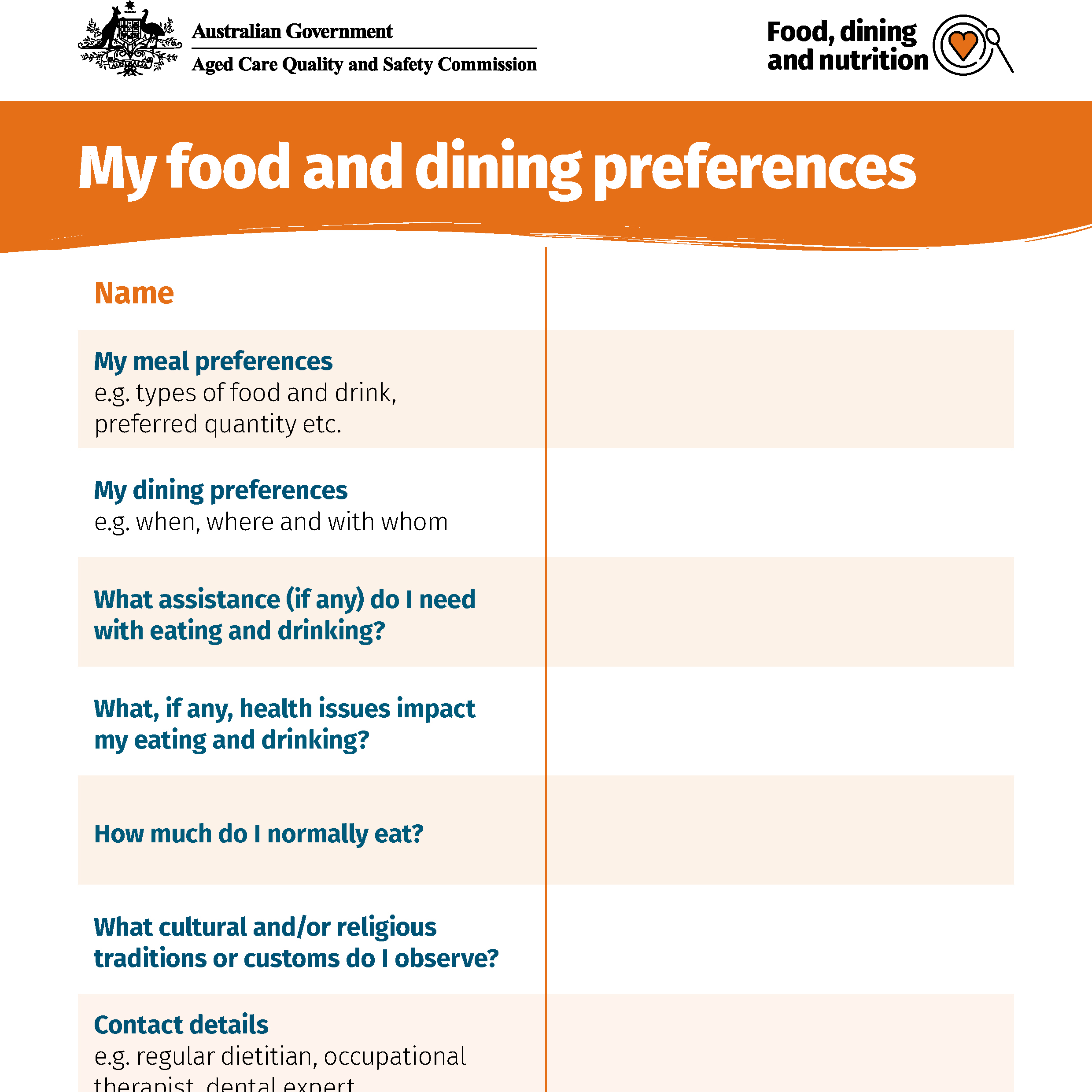
Comprehensive Care - Clinical assessment and diagnosis - Key actions for health service organisations
This resource provides actions for health service organisations to support clinical assessment and diagnosis, promoting a person-centred approach and comprehensive care planning. It highlights training, clear communication of roles, and systems for documenting diagnoses and care plans.
This resource may apply to healthcare contexts outside of aged care. Please consider the applicability of this resource to your care setting. This resource may refer to information that will be updated from 1 November 2025 to align with the new Aged Care Act and Quality Standards.
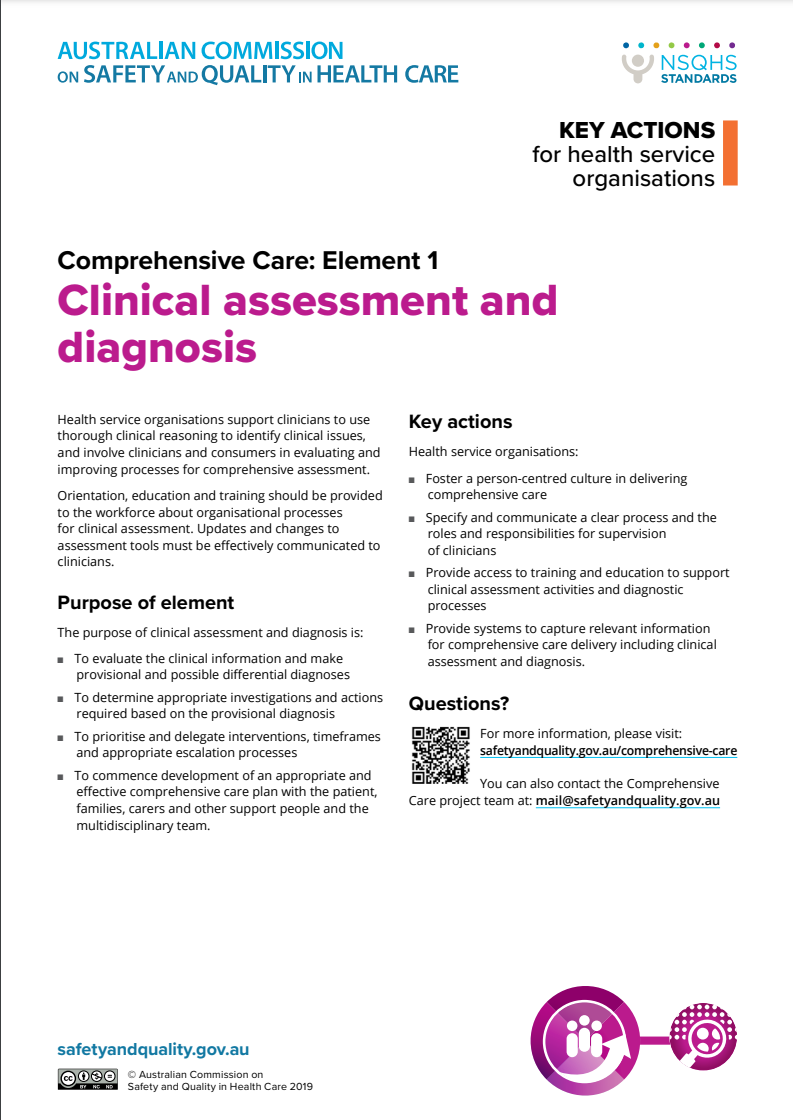
Comprehensive Care - Clinical assessment and diagnosis - Key actions for clinicians
This resource provides actions for health service organisations to support clinical assessment and diagnosis, promoting a person-centred approach and comprehensive care planning. It highlights training, clear communication of roles, and systems for documenting diagnoses and care plans.
This resource may apply to healthcare contexts outside of aged care. Please consider the applicability of this resource to your care setting. This resource may refer to information that will be updated from 1 November 2025 to align with the new Aged Care Act and Quality Standards.
Food, nutrition & dining: resources for providers
This resource provides tools and guidance for aged care providers to ensure quality food, nutrition, and dining experiences. It includes hotlines, resources for dining, choice, swallowing, and oral health, as well as webinars, research findings, and practical tips to support older adults' wellbeing and meet care standards.
This resource may refer to information that will be updated from 1 November 2025 to align with the new Aged Care Act and Quality Standards.
Improving aged care with speech pathology: Why it matters and how it helps
This page highlights the role of speech pathologists in supporting older people with communication, eating, drinking, and swallowing difficulties. It provides resources for aged care providers on how to improve care quality through effective communication tools and tailored strategies. This resource includes practical examples, like sample plates and picture boards, for enhancing dining experiences and supporting individual choice.
This resource may refer to information that will be updated from 1 November 2025 to align with the new Aged Care Act and Quality Standards.
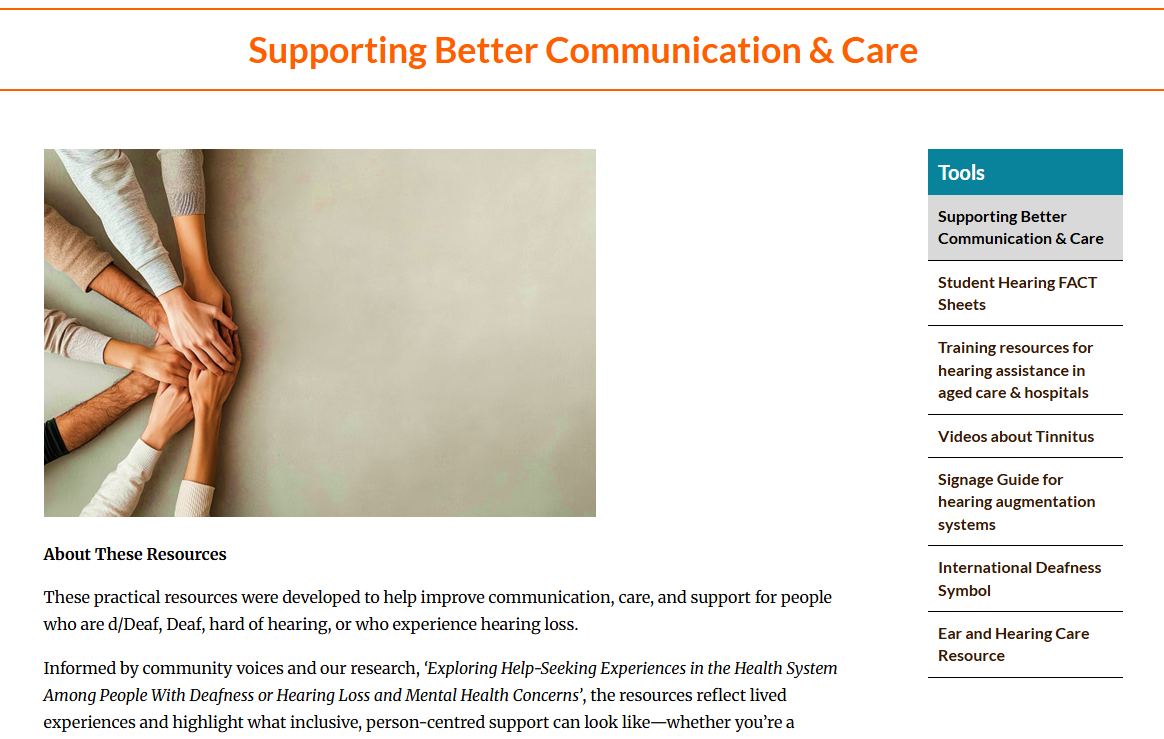
Supporting Better Communication & Care
This webpage provides resources to help improve communication, care and support for people who are deaf, Deaf, hard of hearing, or who experience hearing loss. It includes 3 tools: Everyday Communication, Inclusive Healthcare, and Building Competency. There are also links to other relevant resources.
Healthy Ageing
This resource is a collection of resources on the Tasmanian Government Department of Health webpage about healthy ageing. It includes resources about malnutrition screening, being physically active, and eating well.
This resource was developed by a state/territory government or organisation and therefore its applicability and usefulness may be limited.
Preventing falls at home
This resource provides information on preventing falls at home for older people. It explains common causes of falls, such as poor lighting and slippery surfaces, and offers practical solutions like home modifications, exercise, and footwear adjustments. The document emphasises maintaining safety in and around the home to reduce the risk of falls.
This resource was developed by a state/territory government or organisation and therefore its applicability and usefulness may be limited.
Implementing the Comprehensive Care Standard - Clinical assessment and diagnosis
This document provides guidance on implementing the clinical assessment and diagnosis element of the Comprehensive Care Standard (National Safety and Quality Health Service Standards). It helps clinicians identify a person’s conditions or needs through examination and investigation. The resource supports safe, patient-centred care, improving diagnostic accuracy and promoting teamwork in healthcare settings, including aged care.
This resource may refer to information that will be updated from 1 November 2025 to align with the new Aged Care Act and Quality Standards.
Aboriginal and Torres Strait Islander mental health program
This resource provides information on a mental health program for Aboriginal and Torres Strait Islander people. It includes funding for culturally appropriate mental health services, offering psychological therapies, complex care, and clinical coordination. The program integrates with other services such as drug and alcohol support and suicide prevention initiatives.
This resource may refer to information that will be updated from 1 July 2025 to align with the new Aged Care Act and Quality Standards.
Mental health and wellbeing - Dementia and mental health
This resource examines mental health challenges in people living with dementia, covering complexities in diagnosing conditions like depression and anxiety. It provides evidence-based insights on therapeutic approaches, including music and cognitive therapies, and offers tools to aid aged care providers in supporting mental health in dementia care.
Creating behaviour support plans that better support residents
This document outlines the development of behaviour support plans (BSPs) in aged care, focusing on person-centred assessments, identification of triggers, tailored strategies, and regular reviews. It highlights the involvement of healthcare professionals and adherence to care principles to effectively manage residents’ behavioural changes and improve their quality of life.
This resource may refer to information that will be updated from 1 November 2025 to align with the new Aged Care Act and Quality Standards.