The Quality Standards Resource Centre helps extend understanding of the strengthened Aged Care Quality Standards, which took effect from 1 November 2025. You can search for resources by using keywords, or filtering by standard, outcome and audience. Before using the Resource Centre, please read the terms of use.
palliAGED - Practice Centre
This resource provides information for care workers about palliative care. The Practice Centre provides links to, and information about, tools and resources to use in practice and improve care and outcomes in palliative care. It includes sections on improving practice, symptoms, medicines and tipsheets.
palliAGED - Evidence Centre
This resource provides evidence-based information for the healthcare sector about palliative care. It includes evidence summaries on topics related to palliative care, such as advance care planning, advocacy, care coordination, goals of care, nutrition and needs assessment.
Dementia Australia
This resource is the Dementia Australia website. The website contains information about the types of dementia, testing, diagnosis, treatment and management of dementia. It includes information about living with dementia, such as behaviour changes, nutrition, staying connected and care options. It also contains information for professionals supporting people living with dementia, including research, tools and other resources.
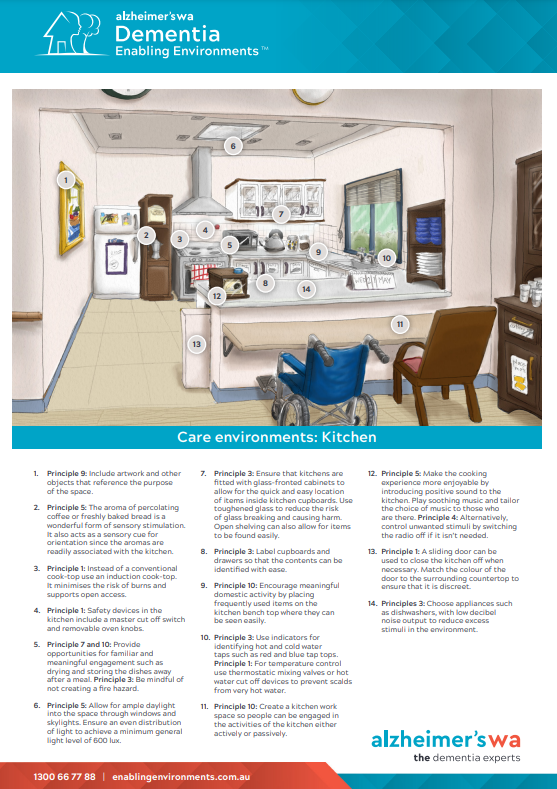
Dementia enabling environments - Care environments: Kitchen
This resource, developed by Alzheimer's WA, is a Dementia Enabling Environments illustration information sheet about kitchens in care environments. It includes principles to create enabling spaces and information about how to design the physical environment to maximise enablement and wellbeing for people living with dementia.
This resource was developed by a state/territory government or organisation and therefore its applicability and usefulness may be limited.
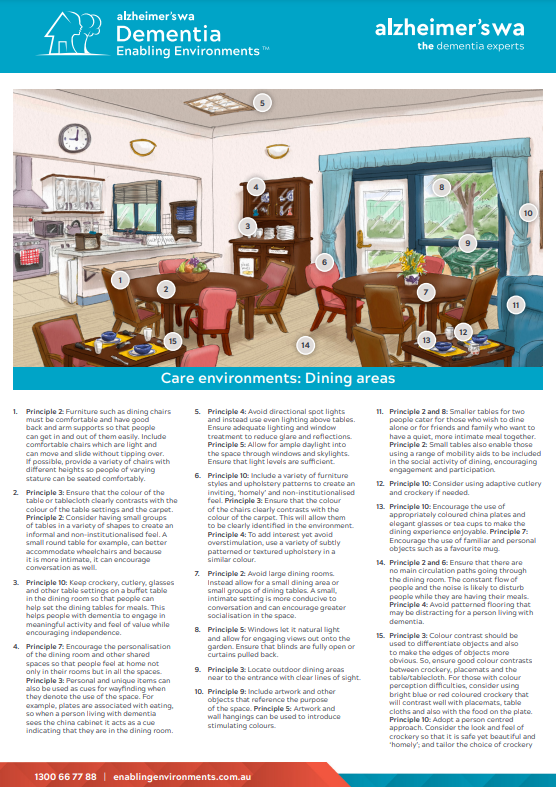
Dementia enabling environments - Care environments: Dining areas
This resource, developed by Alzheimer's WA, is a Dementia Enabling Environments illustration information sheet about dining areas in care environments. It includes principles to create enabling spaces and information about how to design the physical environment to maximise enablement and wellbeing for people living with dementia.
This resource was developed by a state/territory government or organisation and therefore its applicability and usefulness may be limited.
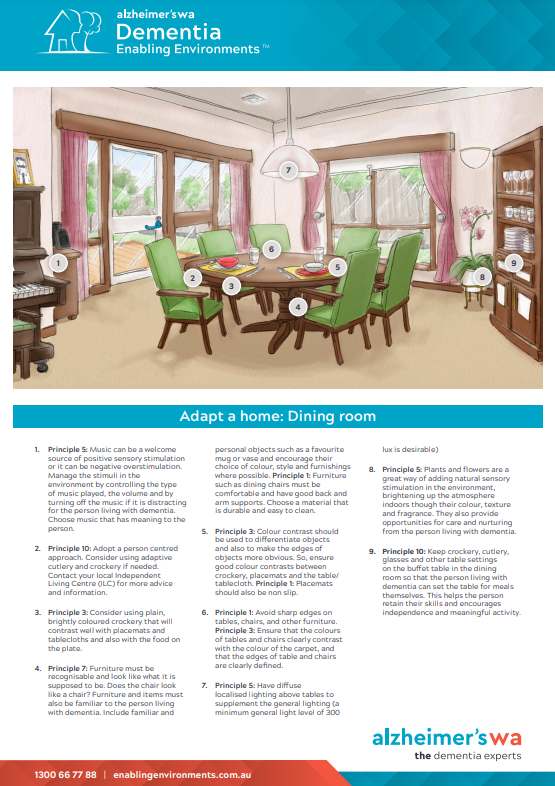
Dementia enabling environments - Adapt a home: Dining room
This resource, developed by Alzheimer's WA, is a Dementia Enabling Environments illustration information sheet about adapting a home, focusing on the dining room. It includes principles to integrate enabling design and make changes within the physical environment to maximise enablement and wellbeing for people living with dementia.
This resource was developed by a state/territory government or organisation and therefore its applicability and usefulness may be limited.
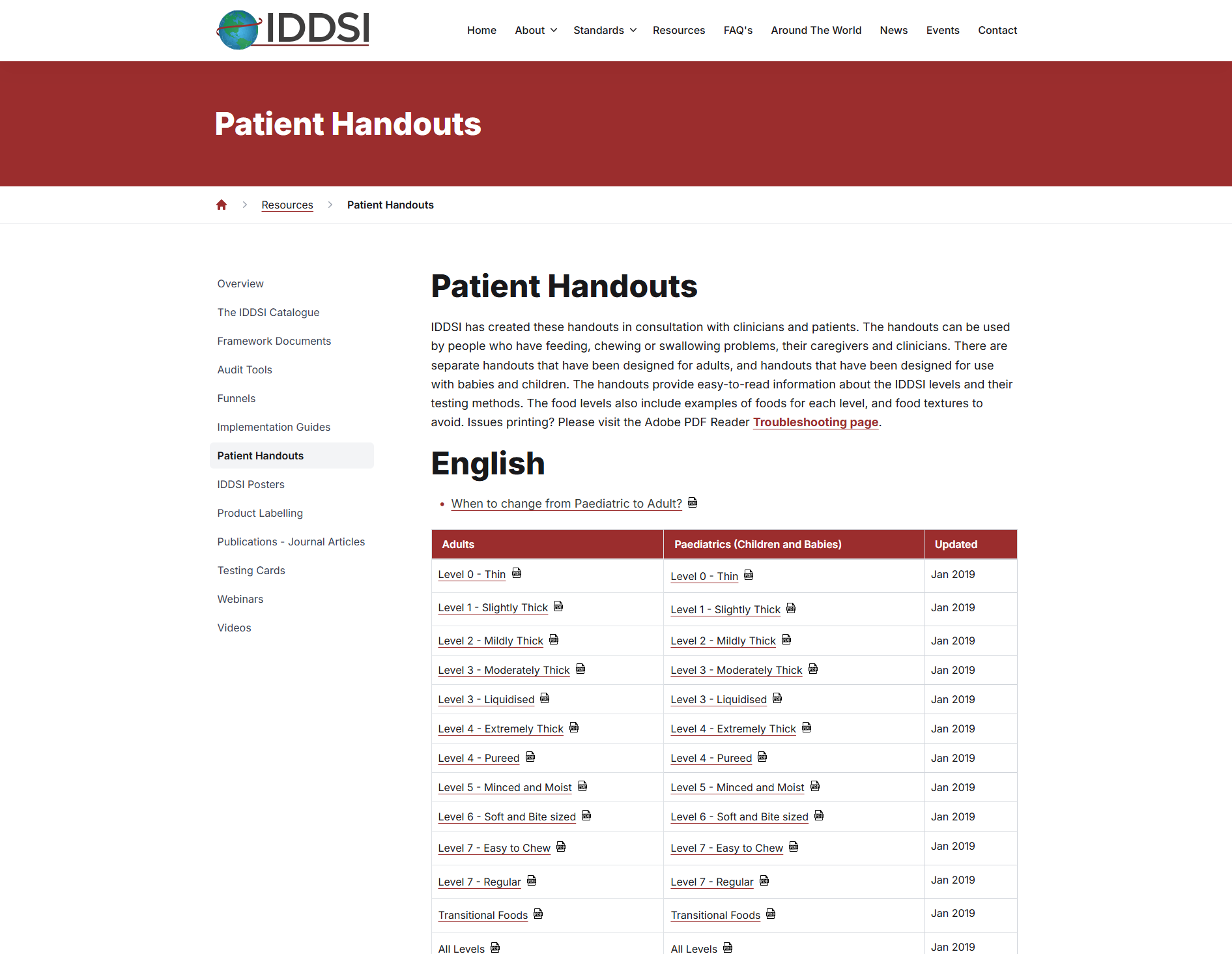
International Dysphagia Diet Initiative - Patient Handouts
This resource provides handouts tailored for people with feeding, chewing, or swallowing difficulties and their carers. It explains the IDDSI framework, describing food texture levels and appropriate testing methods. Separate versions are available for adults and children, each detailing recommended food textures to support safe swallowing practices.
This resource was developed internationally and therefore its applicability and usefulness may be limited.
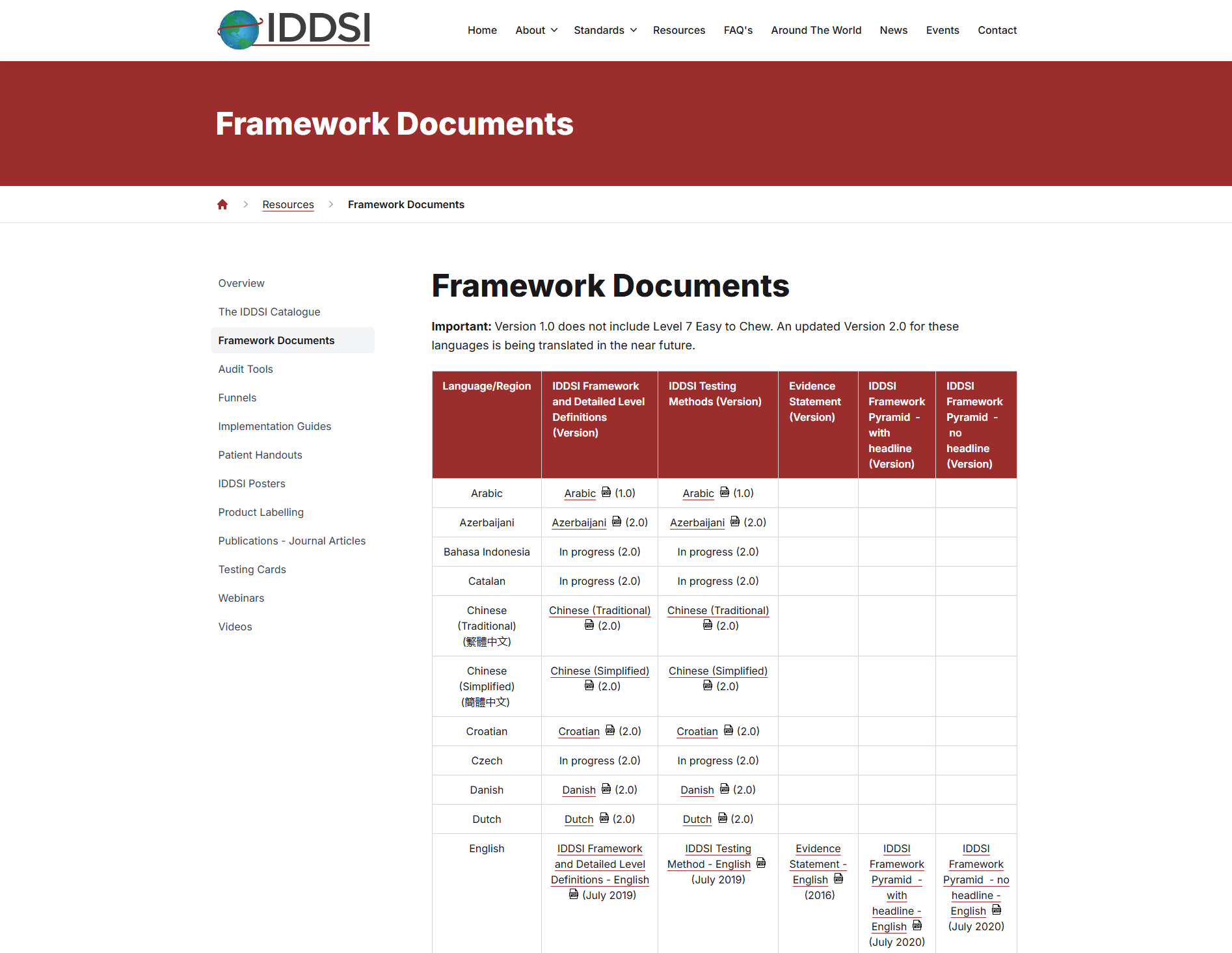
International Dysphagia Diet Initiative - Framework Documents
This resource provides the IDDSI (International Dysphagia Diet Standardisation Initiative) framework, including testing methods, detailed level definitions, audit tools, and implementation guides across language regions. It supports consistent application and understanding of diet textures for people with dysphagia, aiding caregivers in managing dietary needs safely and effectively.
This resource was developed internationally and therefore its applicability and usefulness may be limited.
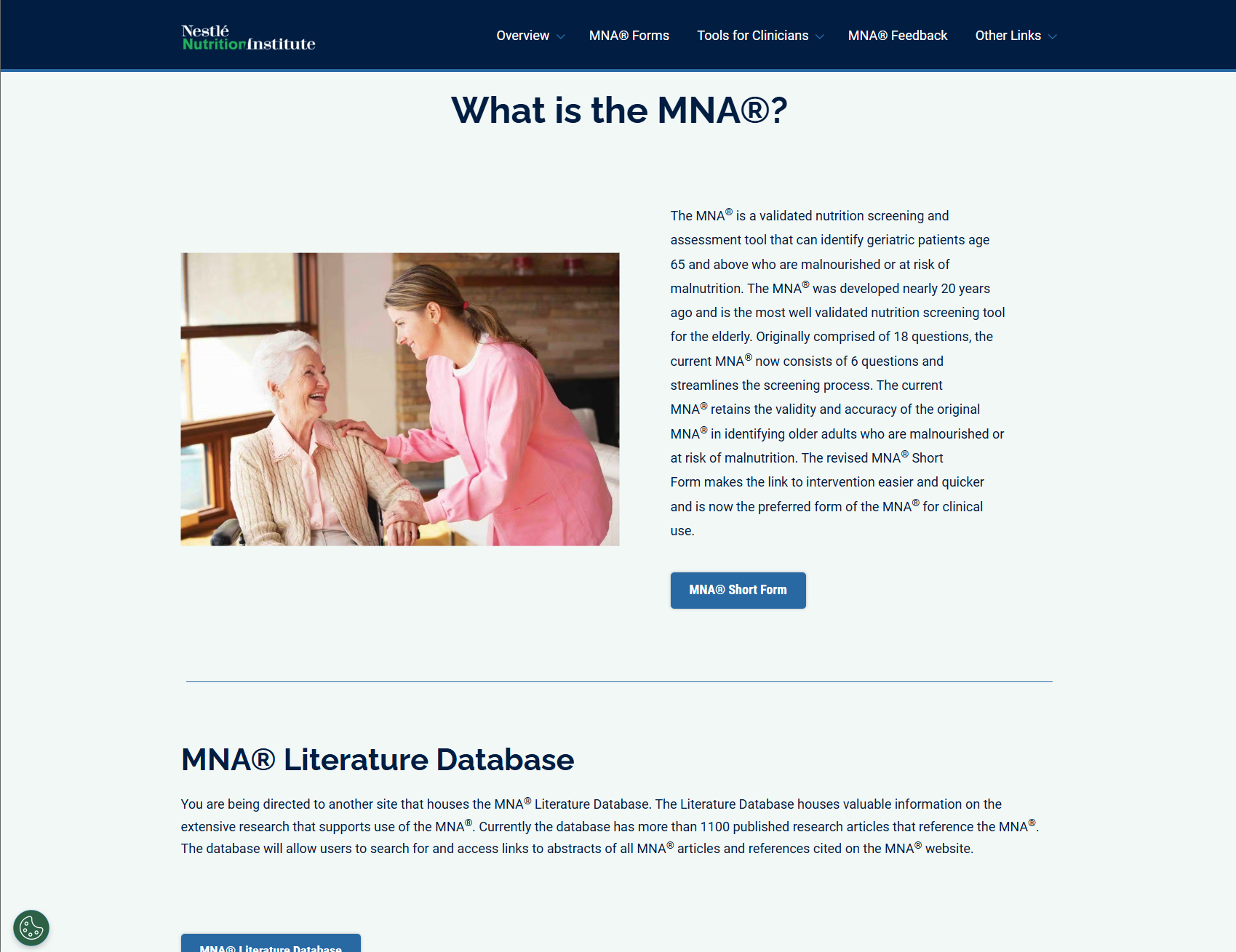
What is the Mini Nutritional Assessment (MNA)?
This resource is a validated nutrition screening and assessment tool to identify malnutrition or risk of malnutrition in people aged 65 and older. It includes an easy-to-use short form for quick identification and intervention planning.
This resource was developed internationally and therefore its applicability and usefulness may be limited.
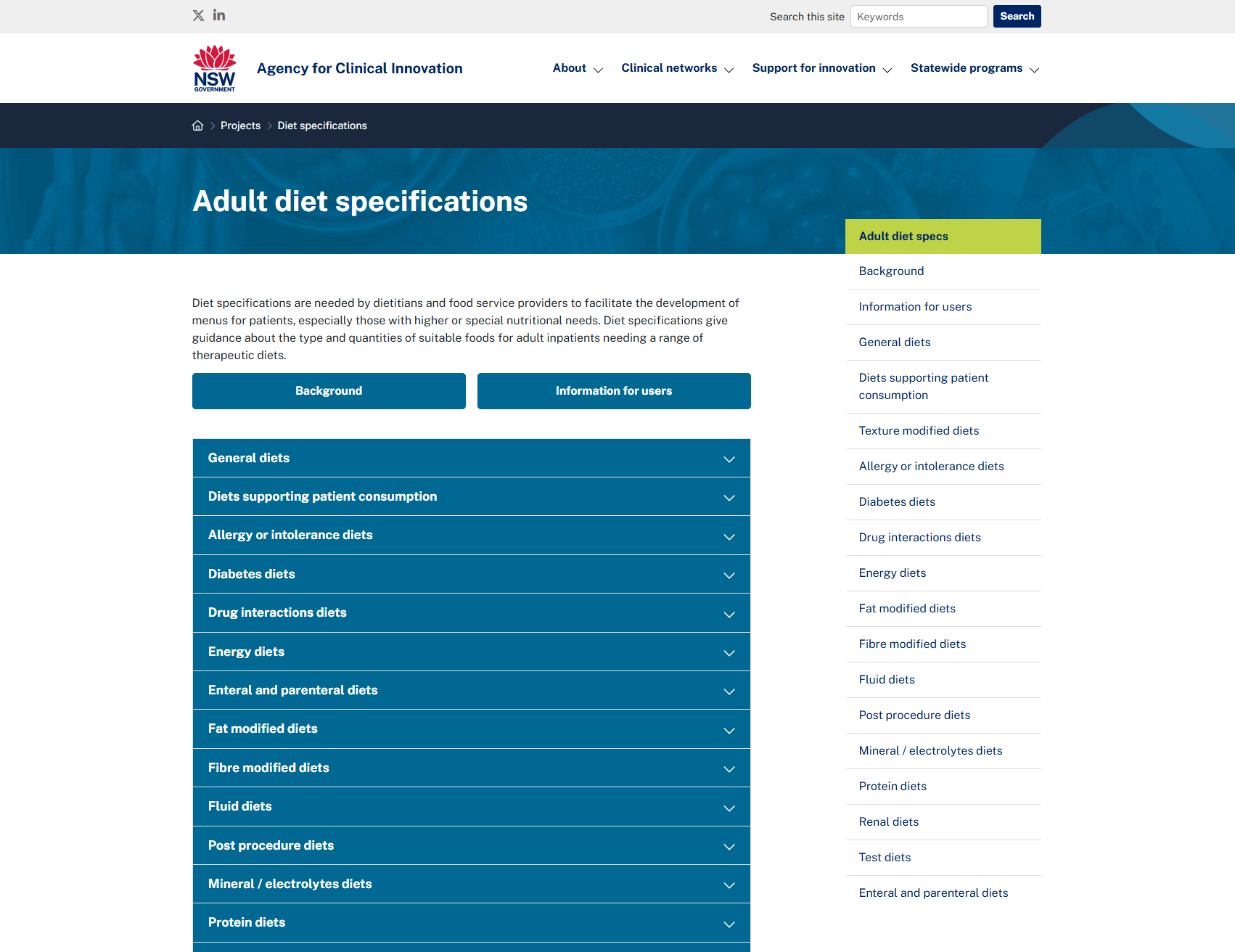
Adult diet specifications
This resource provides specifications for adult diets tailored to inpatient use in NSW hospitals, including allergy-specific and therapeutic requirements. Although intended for inpatients, it can serve as general guidance for dietitians and food service providers in creating meal plans for diverse health needs. This resource applies to healthcare contexts outside of aged care.
This resource was developed by a state/territory government or organisation and therefore its applicability and usefulness may be limited.
Food and Nutrition Manual for Aged Care Homes - Swallowing and food textures
This resource provides guidelines on managing swallowing difficulties in aged care by using texture-modified diets and thickened fluids. It explains various food texture levels and fluid consistencies for safe swallowing, offers practical meal preparation tips, and highlights the importance of regular reassessment by a speech pathologist
This resource was developed by a state/territory government or organisation and therefore its applicability and usefulness may be limited.
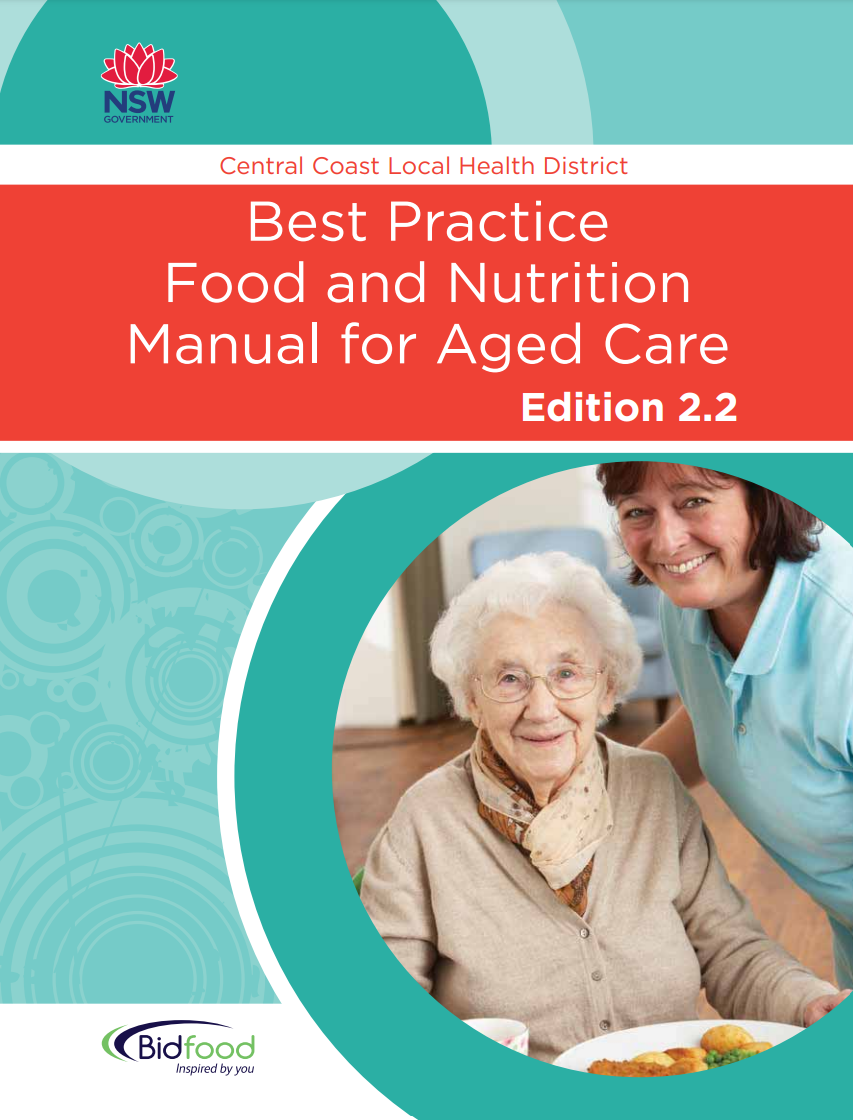
Best Practice Food and Nutrition Manual for Aged Care
This manual offers practical guidelines on food and nutrition best practices in aged care homes, covering menu planning, meal enjoyment, hydration, and malnutrition prevention. It includes checklists, screening tools, and dietary considerations tailored to the needs of older people.
This resource was developed by a state/territory government or organisation and therefore its applicability and usefulness may be limited.
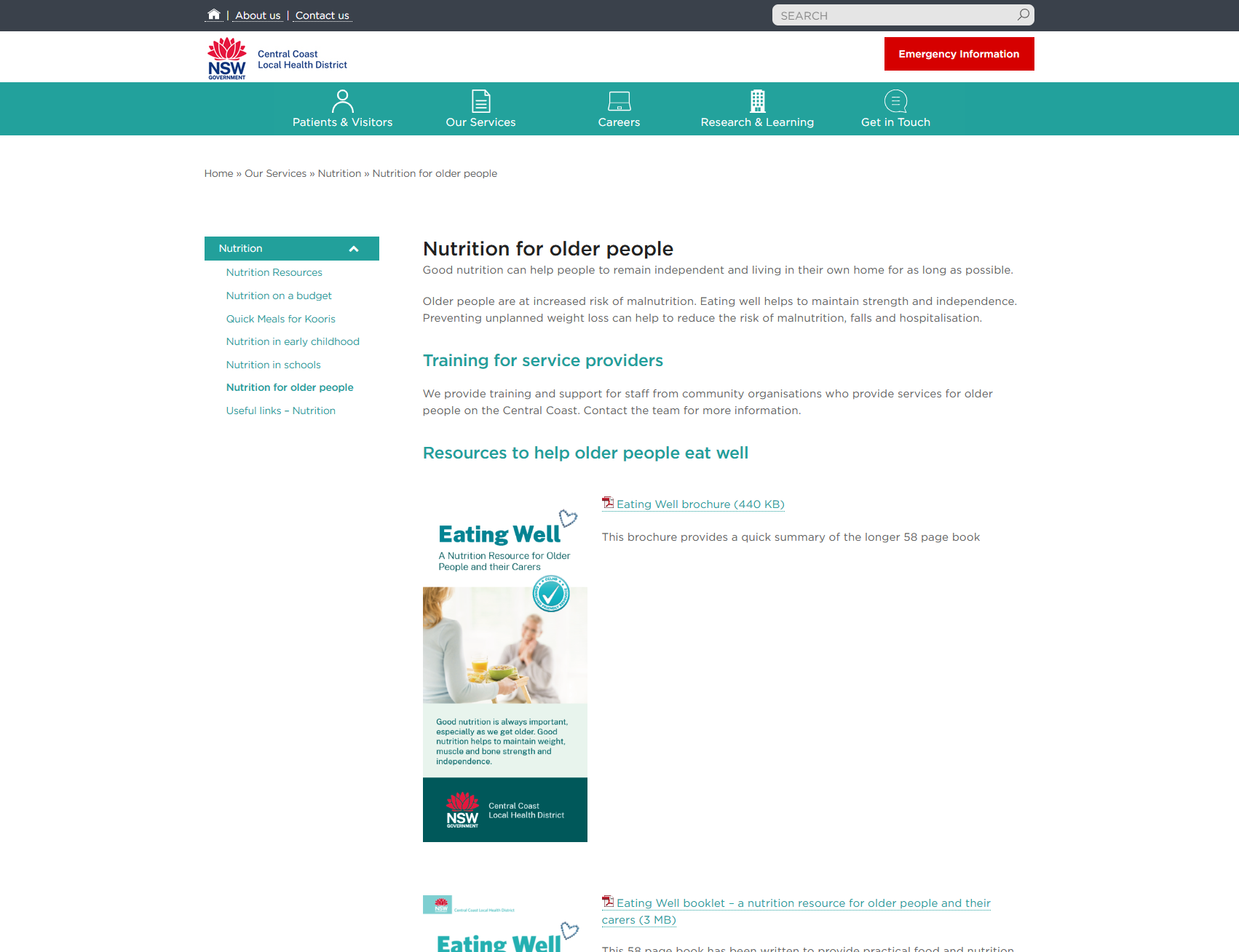
Nutrition for older people
This resource provides nutrition guidelines and support for older people to prevent malnutrition, reduce falls risk, and promote independence. It includes meal planning, dietary tips, and training for service providers, especially those supporting home care.
This resource was developed by a state/territory government or organisation and therefore its applicability and usefulness may be limited.
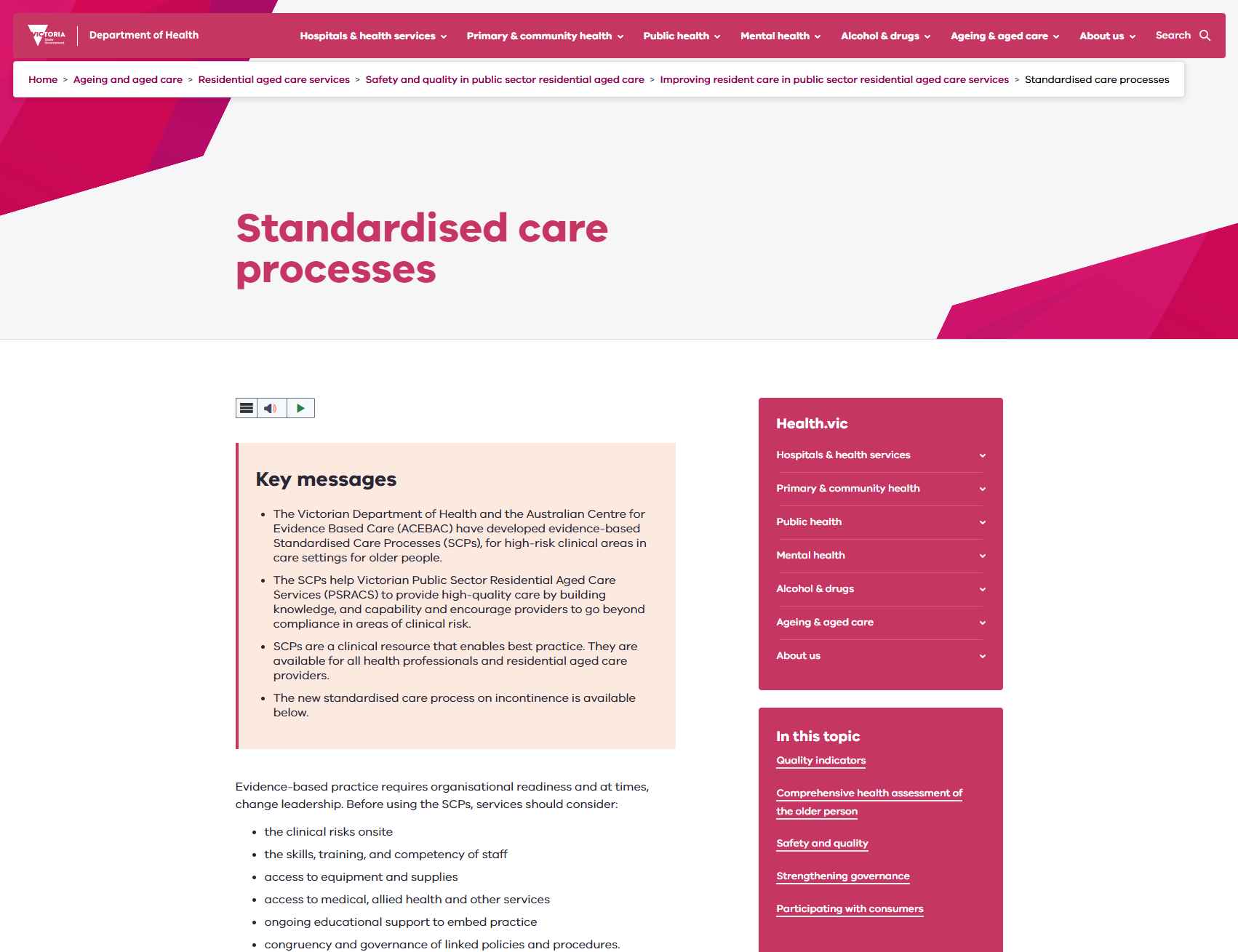
Standardised care processes
This resource offers evidence-based standardised care processes for aged care providers, covering high-risk clinical areas such as falls, pain, incontinence, and dehydration. It provides structured guidelines to support best practices, ensuring consistent and safe care for older people in residential settings.
This resource was developed by a state/territory government or organisation and therefore its applicability and usefulness may be limited.
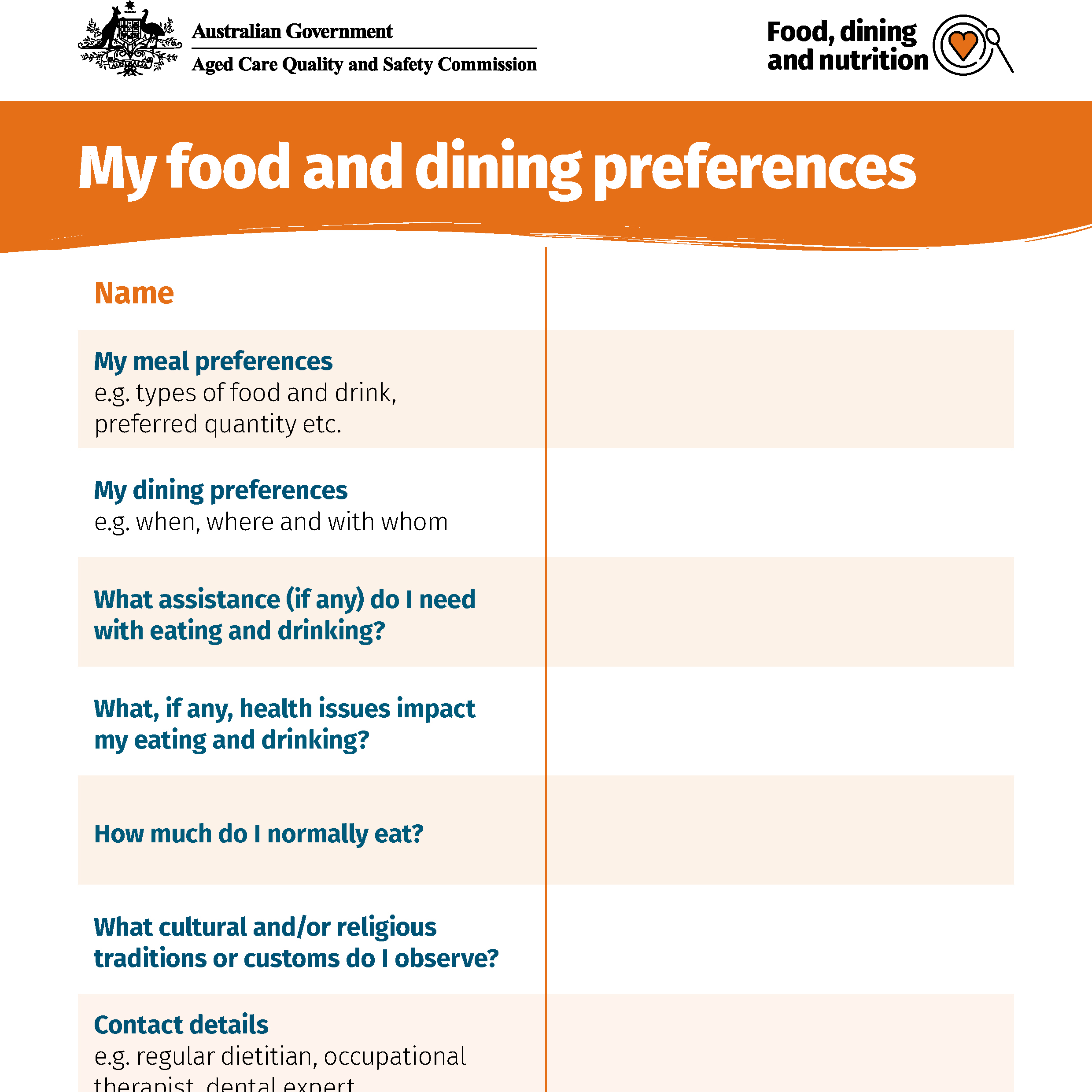
My food and dining preferences - form
This fact sheet helps aged care residents communicate their food and dining preferences. It includes sections for meal choices, dining preferences, assistance needs, health considerations, cultural or religious customs, and contact information for allied health professionals. It also advises staff to monitor changes in weight and contact a dietitian if needed.
This resource may refer to information that will be updated from 1 November 2025 to align with the new Aged Care Act and Quality Standards.
 My food and dining preferences form (PDF 378.98 KB)
Arabic - تفضيلاتي في الطعام وعادات الأكل (PDF 426.01 KB)
French - Mes préférences alimentaires et de repas (PDF 365.82 KB)
German - Meine Essens- und Speisevorlieben (PDF 358.86 KB)
Greek - Οι προτιμήσεις μου για το φαγητό και τα γεύματα (PDF 359.43 KB)
Hungarian - Étel- és étkezési preferenciák (PDF 369.35 KB)
Macedonian - Моите желби во врска со храната и јадењето (PDF 358.79 KB)
Maltese - Il-preferenzi tiegħi tal-ikel u l-ikliet (PDF 364.67 KB)
Portuguese - Minhas preferências alimentares e gastronômicas (PDF 373.26 KB)
Russian - Мои предпочтения в еде и приеме пищи (PDF 353.14 KB)
Serbian - Моје жеље које се тичу хране и обедовања (PDF 353.84 KB)
Simplified Chinese - 我的饮食及用餐偏好 (PDF 420.97 KB)
Traditional Chinese - 我的飲食及用餐偏好 (PDF 422.91 KB)
Spanish - Mis preferencias de alimentos y comidas (PDF 365.1 KB)
Vietnamese - Sở thích ăn uống và thực phẩm của tôi (PDF 340.54 KB)
My food and dining preferences form (PDF 378.98 KB)
Arabic - تفضيلاتي في الطعام وعادات الأكل (PDF 426.01 KB)
French - Mes préférences alimentaires et de repas (PDF 365.82 KB)
German - Meine Essens- und Speisevorlieben (PDF 358.86 KB)
Greek - Οι προτιμήσεις μου για το φαγητό και τα γεύματα (PDF 359.43 KB)
Hungarian - Étel- és étkezési preferenciák (PDF 369.35 KB)
Macedonian - Моите желби во врска со храната и јадењето (PDF 358.79 KB)
Maltese - Il-preferenzi tiegħi tal-ikel u l-ikliet (PDF 364.67 KB)
Portuguese - Minhas preferências alimentares e gastronômicas (PDF 373.26 KB)
Russian - Мои предпочтения в еде и приеме пищи (PDF 353.14 KB)
Serbian - Моје жеље које се тичу хране и обедовања (PDF 353.84 KB)
Simplified Chinese - 我的饮食及用餐偏好 (PDF 420.97 KB)
Traditional Chinese - 我的飲食及用餐偏好 (PDF 422.91 KB)
Spanish - Mis preferencias de alimentos y comidas (PDF 365.1 KB)
Vietnamese - Sở thích ăn uống và thực phẩm của tôi (PDF 340.54 KB)
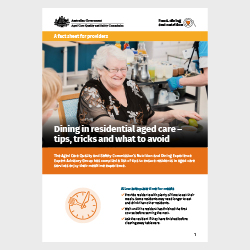
Dining in residential aged care - tips and tricks fact sheet
This fact sheet provides practical tips for enhancing dining experiences in residential aged care settings. It offers guidance on food presentation, meal assistance, creating a respectful and enjoyable atmosphere, supporting independence, and providing culturally appropriate dining options. The aim is to improve mealtime satisfaction while maintaining older peoples' dignity and people's preferences.
This resource may refer to information that will be updated from 1 November 2025 to align with the new Aged Care Act and Quality Standards.
Dining in residential aged care – tips, tricks and what to avoid (PDF 484.37 KB)
Celebrating successes in engaging people to improve food, nutrition and dining
This resource highlights successful practices in engaging older people to improve food, nutrition, and dining experiences. Providers can use examples like food focus groups, family involvement in recipe changes, and resident-led dining committees to promote enjoyable, dignified, and inclusive dining. It fosters better health, wellbeing, and relationships with staff.
This resource may refer to information that will be updated from 1 November 2025 to align with the new Aged Care Act and Quality Standards.
Cultural considerations in Food, Nutrition and Dining
This resource provides guidance on incorporating cultural considerations into food, nutrition, and dining in aged care settings. It highlights the importance of understanding diverse dietary preferences, religious practices, and family dynamics to support person-centred care, improve wellbeing, and promote inclusivity within the aged care environment.
This resource may refer to information that will be updated from 1 November 2025 to align with the new Aged Care Act and Quality Standards.
Food for thought - positive stories
This resource shares positive stories about food, nutrition, and dining improvements in aged care facilities. It highlights initiatives that enhance the dining experience, including resident involvement in meal planning, use of fresh and seasonal ingredients, and creating more social and enjoyable mealtime environments. These stories demonstrate best practices and innovative approaches to improve resident satisfaction and wellbeing.
Food, nutrition & dining: resources for workers
This resource provides aged care workers with tools to enhance food, nutrition, and dining experiences for people in their care. It includes practical guides on offering choice, managing swallowing difficulties, promoting oral health, and creating an enjoyable dining environment, all while ensuring adherence to aged care standards.
This resource may refer to information that will be updated from 1 November 2025 to align with the new Aged Care Act and Quality Standards.