
This artwork tells the story of how the Aged Care Quality and Safety Commission works with First Nations older people, communities, workers and providers to support safe, quality aged care. Every symbol in the artwork has meaning, and together they tell a story of protection, respect, connection, culture and rights.
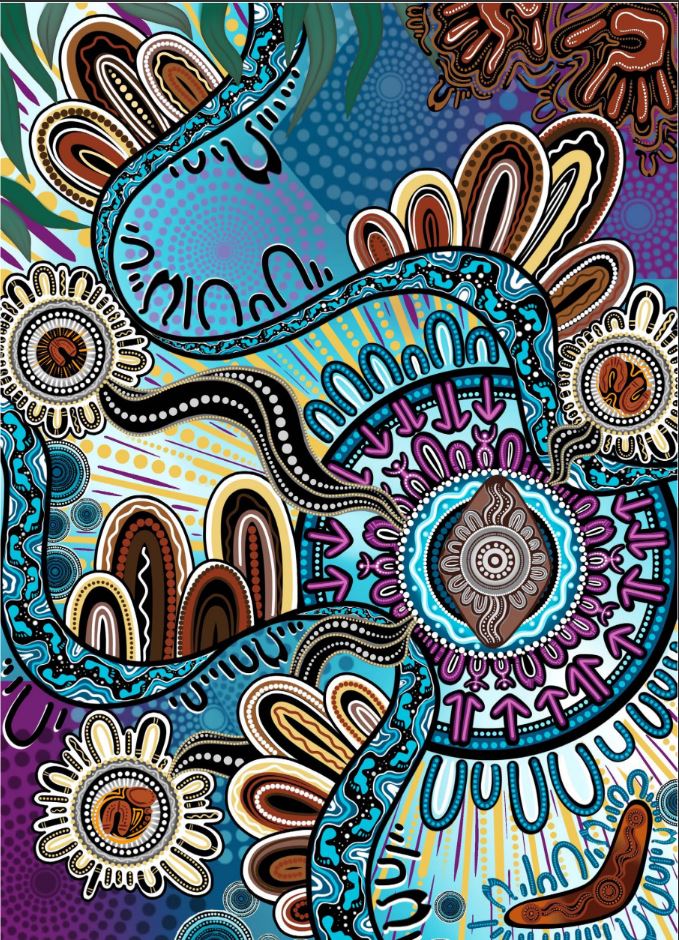
- At the heart of the artwork is the largest community symbol. This represents the Aged Care Quality and Safety Commission. It is the focal point of the artwork, reflecting the Commission's role in supporting and improving aged care across Australia.
- Within the central community symbol sits a shield. The shield represents the Commission's role in protecting and improving the safety, health, wellbeing and quality of life of people receiving aged care services. It reflects the Commission's commitment to ensuring older people receive safe and compassionate care.
- Around the central symbol are U symbols, people and Dhari symbols. Together they represent First Nations older people, communities, workers and service providers. They also reflect the Commission's commitment to building strong and ongoing relationships with those involved in the aged care journey.
- The sun and its rays represent the Commission's vision. They symbolise a future where older Australians can trust and have confidence that aged care services protect and enhance their safety, health, wellbeing and quality of life.
- The U symbol with surrounding lines represents how Elders and First Nations people are respected. It recognises the important role Elders hold within families and communities and the importance of ensuring their voices, knowledge and experiences are valued.
- The U symbol with a speech bubble represents older people having a voice and being able to exercise their rights. It reflects the importance of listening to older people, supporting choice and ensuring people can speak up about their care.
- The two U symbols together represent culturally safe access to aged care. They remind us that care should respect culture, identity, community and connection to Country.
- The footprints woven throughout the artwork represent the aged care journey. They symbolise the different paths people take through life and care, and the support they receive along the way.
- The kangaroo and emu footprints represent continual progress. In First Nations storytelling, these animals move forward rather than backwards, symbolising the Commission's commitment to learning, improving and striving for better outcomes.
- The travelling lines represent connections between communities across Australia. They reflect the communities the Commission visits, listens to and works with, and the journeys older people take throughout their lives.
- The handprints represent connection to culture and Country. Throughout the artwork, leaves, waterholes and mountains represent the many places older people call home, from deserts and bushlands to rainforests and coastal communities. Together, these elements reflect the diversity and richness of First Nations cultures across Australia.
- The dotted circles represent the Commission's values: being impartial, committed to service, accountable, respectful, ethical and demonstrating stewardship. These values guide how the Commission engages with older people, communities and the aged care sector.
- The boomerang represents returning clients and ongoing connection. It reflects the continuing relationship between older people and the services that support them throughout their aged care journey.
Together, these symbols tell a story of protection, respect, cultural safety, connection and empowerment. It is a visual representation of the Commission's commitment to supporting First Nations older people and ensuring their rights, voices and wellbeing remain at the centre of aged care.