The Quality Standards Resource Centre helps extend understanding of the strengthened Aged Care Quality Standards, which took effect from 1 November 2025. You can search for resources by using keywords, or filtering by standard, outcome and audience. Before using the Resource Centre, please read the terms of use.
Handbook of tools to support medicine management in multimorbidity and polypharmacy
This handbook provides tools to support medicine management in multimorbidity and polypharmacy. The Department of Health and Aged Care commissioned the University of South Australia to develop the handbook.
This resource may refer to information that will be updated from 1 November 2025 to align with the new Aged Care Act and Quality Standards.

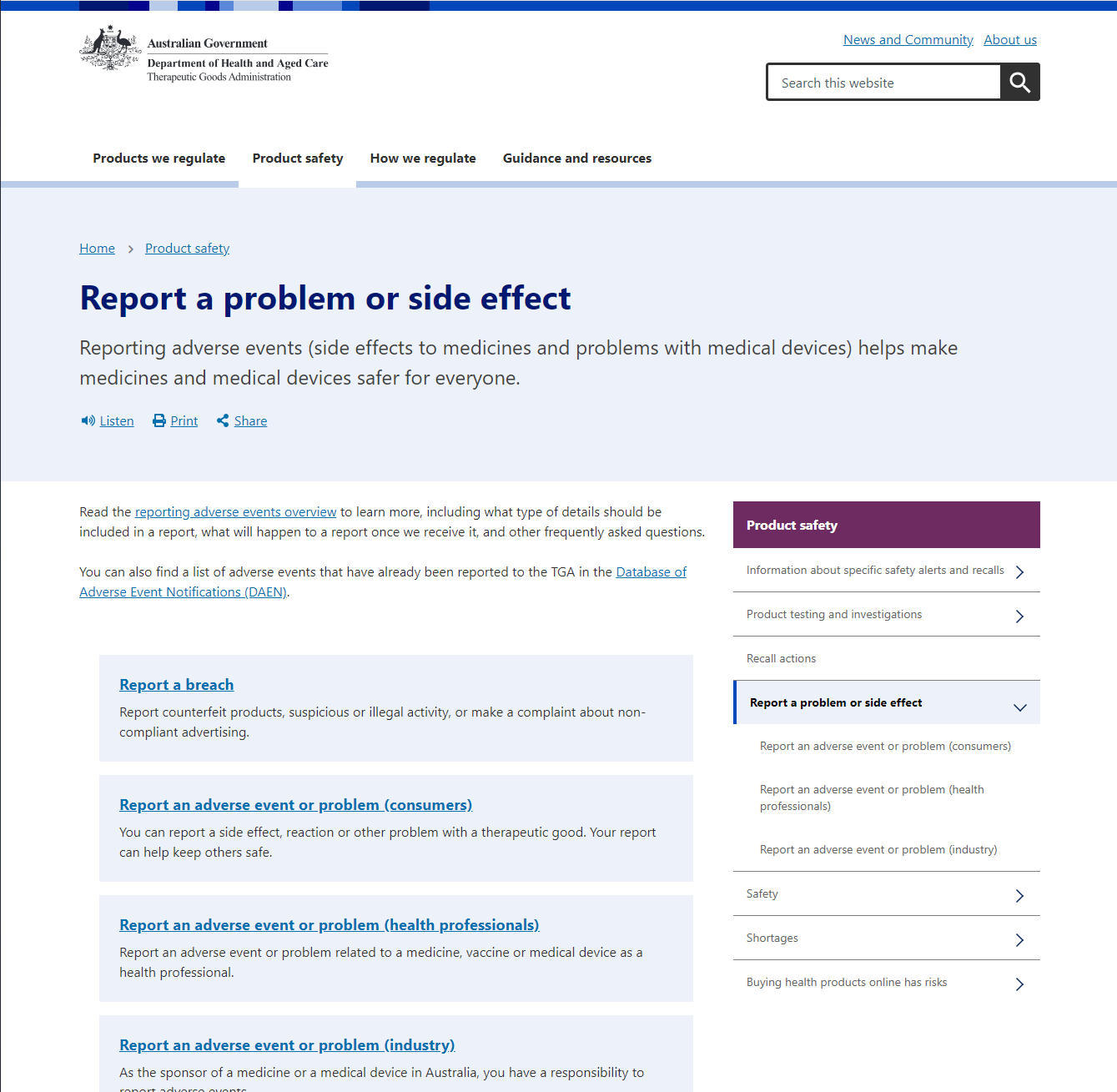
Report a problem or side effect
This resource provides information on how to report adverse events, side effects, or problems related to medicines, vaccines, and medical devices. It includes reporting procedures and information for consumers, health professionals, and industry, aiming to enhance safety and address breaches or non-compliant advertising.
This resource may refer to information that will be updated from 1 November 2025 to align with the new Aged Care Act and Quality Standards.
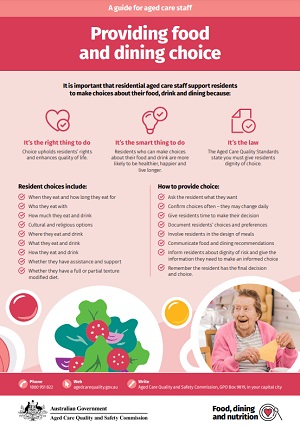
Providing food and dining choice - aged care staff poster
This guide supports aged care staff in providing food and dining choices for residents. It outlines the importance of upholding residents' rights to choose, enhancing their health and quality of life. The guide recommends confirming preferences regularly, involving residents in meal planning, and respecting individual choices regarding when, where, and what they eat or drink. This resource may refer to information that will be updated from 1 November 2025 to align with the new Aged Care Act and Quality Standards.
 Providing food and dining choice - aged care staff poster (PDF 445.57 KB)
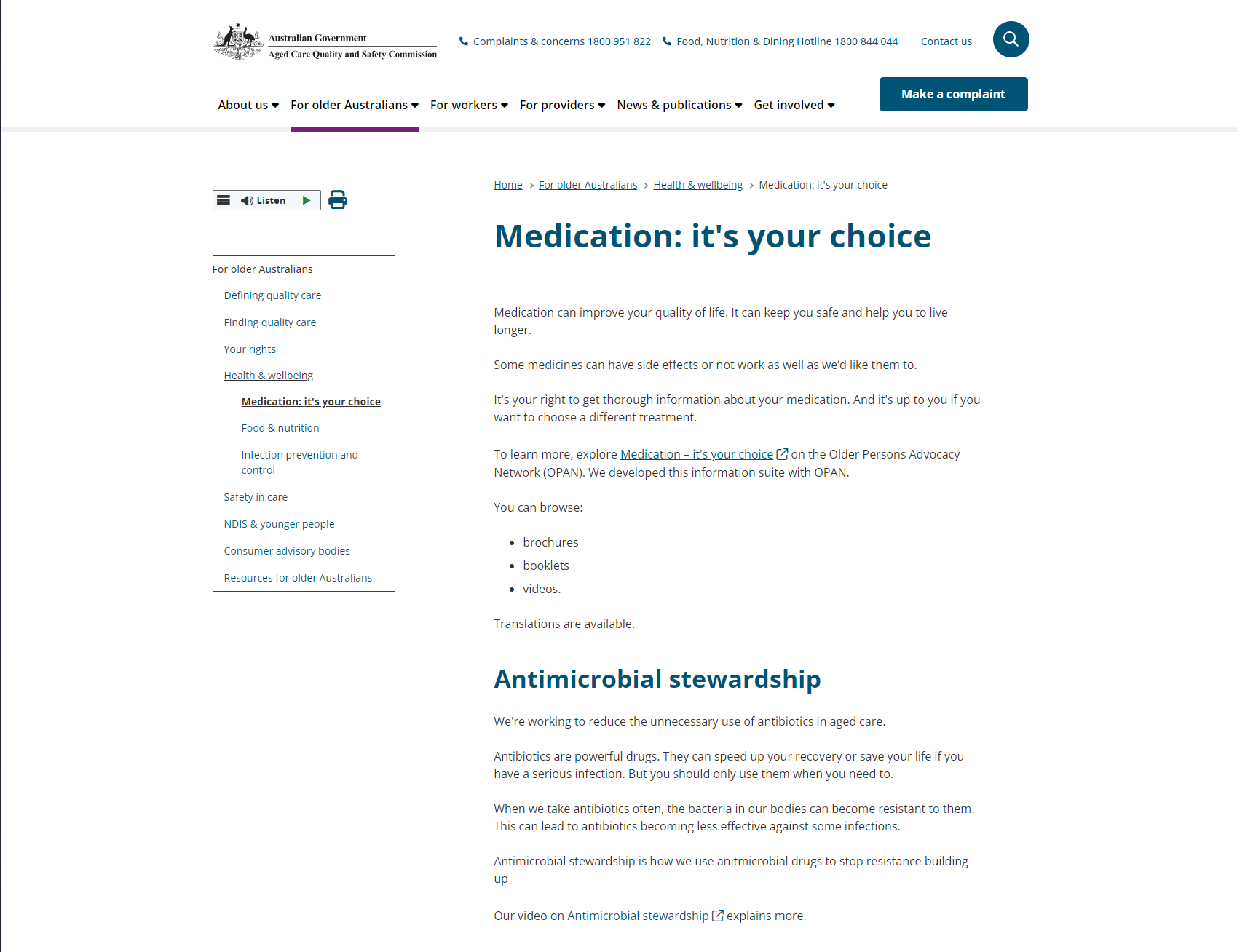
Medication: it's your choice
This resource informs older Australians about their rights and choices regarding medication, including potential side effects, the importance of informed decision-making, and reducing unnecessary antibiotic and psychotropic use. It offers brochures, videos, and fact sheets to support understanding and provide guidance on alternative treatments and safe medication practices.
This resource may refer to information that will be updated from 1 November 2025 to align with the new Aged Care Act and Quality Standards.
Medication management
This resource provides information on medication management in aged care, focusing on psychotropics and antimicrobials. It includes tools for reducing inappropriate use, antimicrobial stewardship guidance, self-assessment resources, and quality bulletins. It aims to improve medication safety, prevent inappropriate prescribing, and support care providers in ensuring safe clinical practices.
This resource may refer to information that will be updated from 1 November 2025 to align with the new Aged Care Act and Quality Standards.
Polypharmacy Consumer Perspective - National Medicines Symposium 2024
This is a presentation on Polypharmacy Consumer Perspective. It includes details of a case example, resolution and care management, and key principles related to medicines and goal of care. This resource may refer to information that will be updated from 1 November 2025 to align with the new Aged Care Act and Quality Standards.
Healthy Ageing
This resource is a collection of resources on the Tasmanian Government Department of Health webpage about healthy ageing. It includes resources about malnutrition screening, being physically active, and eating well.
This resource was developed by a state/territory government or organisation and therefore its applicability and usefulness may be limited.
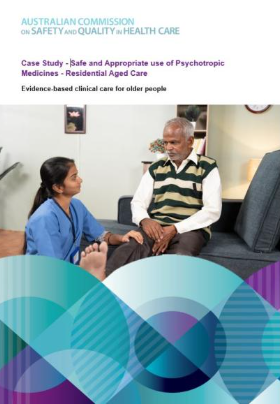
Case study - Safe and Appropriate use of Psychotropic Medicines - Residential Aged Care
This resource is a fictional scenario that follows an older person’s care pathway with a residential aged care provider. The resource focuses on the systems and processes to support high-quality care of older people living with cognitive impairment. It includes 4 key priority areas: person-centred care, medication management, managing changed behaviours and transitions of care.
This resource may refer to information that will be updated from 1 November 2025 to align with the new Aged Care Act and Quality Standards.
Case study - Safe and Appropriate use of Psychotropic Medicines - In-home Aged Care
This resource is a fictional scenario that follows an older person’s care pathway with an in-home aged care provider. The resource focuses on the systems and processes to support high-quality care of older people living with dementia. It includes 4 key priority areas: person-centred care, medication management, managing changed behaviours and transitions of care.
This resource may refer to information that will be updated from 1 November 2025 to align with the new Aged Care Act and Quality Standards.

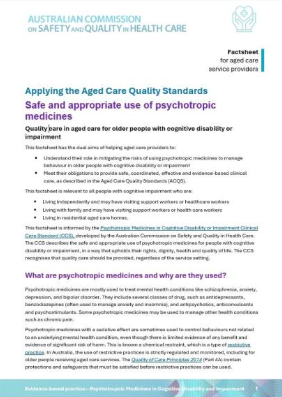
Safe and appropriate use of psychotropic medicines for aged care - Fact sheet
This fact sheet is informed by the Psychotropic Medicines in Cognitive Disability or Impairment Clinical Care Standard (CCS), developed by the Australian Commission on Safety and Quality in Health Care. The CCS describes the safe and appropriate use of psychotropic medicines for people with cognitive disability or impairment, in a way that upholds their rights, dignity, health and quality of life.
This resource may refer to information that will be updated from 1 November 2025 to align with the new Aged Care Act and Quality Standards.
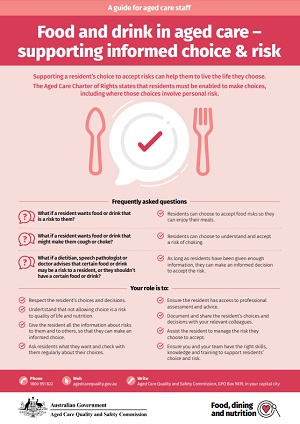
Food and drink in your aged care - supporting informed choice and risk - staff poster
This resource provides guidance for aged care staff on supporting older people's informed choices regarding food and drink, even when those choices involve personal risks. It encourages staff to respect resident autonomy, provide information on risks, document decisions, and ensure access to professional advice, promoting dignity and quality of life in care settings. This resource may refer to information that will be updated from 1 November 2025 to align with the new Aged Care Act and Quality Standards.
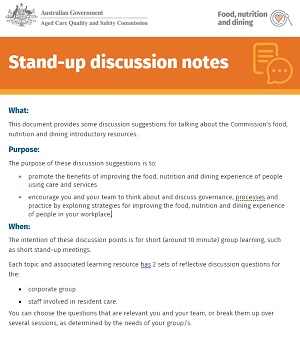
Food, nutrition and dining stand-up discussion notes
This resource provides discussion notes to improve the food, nutrition, and dining experience in aged care settings. It includes reflective questions for corporate teams and care staff, focusing on governance, resident choice, oral health, and support for those with swallowing difficulties. The resource promotes continuous improvement and quality care through group discussions. This resource may refer to information that will be updated from 1 November 2025 to align with the new Aged Care Act and Quality Standards.
 Stand-up discussion notes (DOCX 6.68 MB)
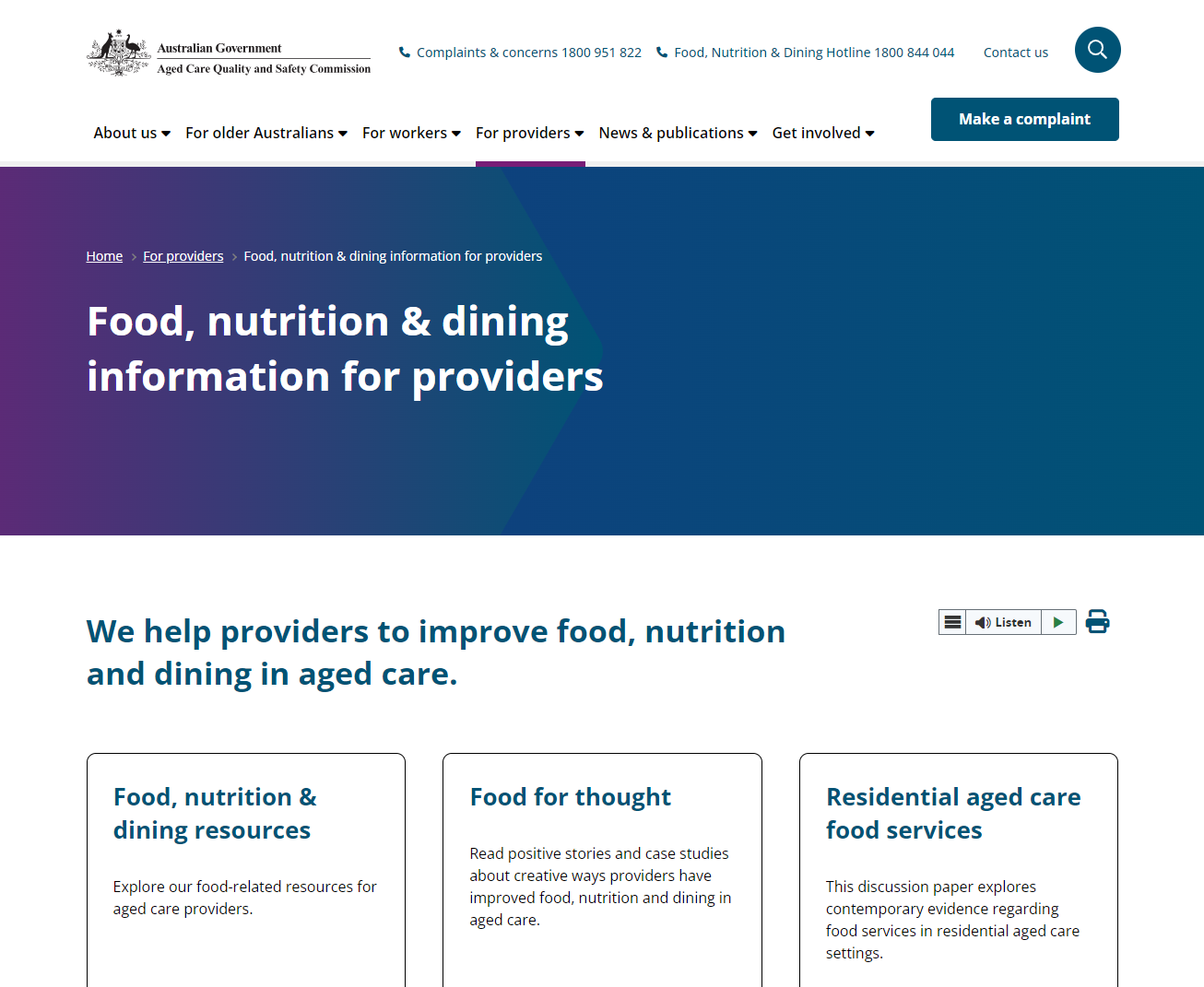
Food, nutrition & dining - information for providers
This resource provides information and support for aged care providers to improve food, nutrition, and dining services. It includes guidance on meeting nutritional standards, promoting resident choice, and ensuring a positive dining experience. The resource also offers tools for monitoring food quality, addressing dietary needs, and enhancing overall meal service delivery. This resource may refer to information that will be updated from 1 July 2025 to align with the new Aged Care Act and Quality Standards.
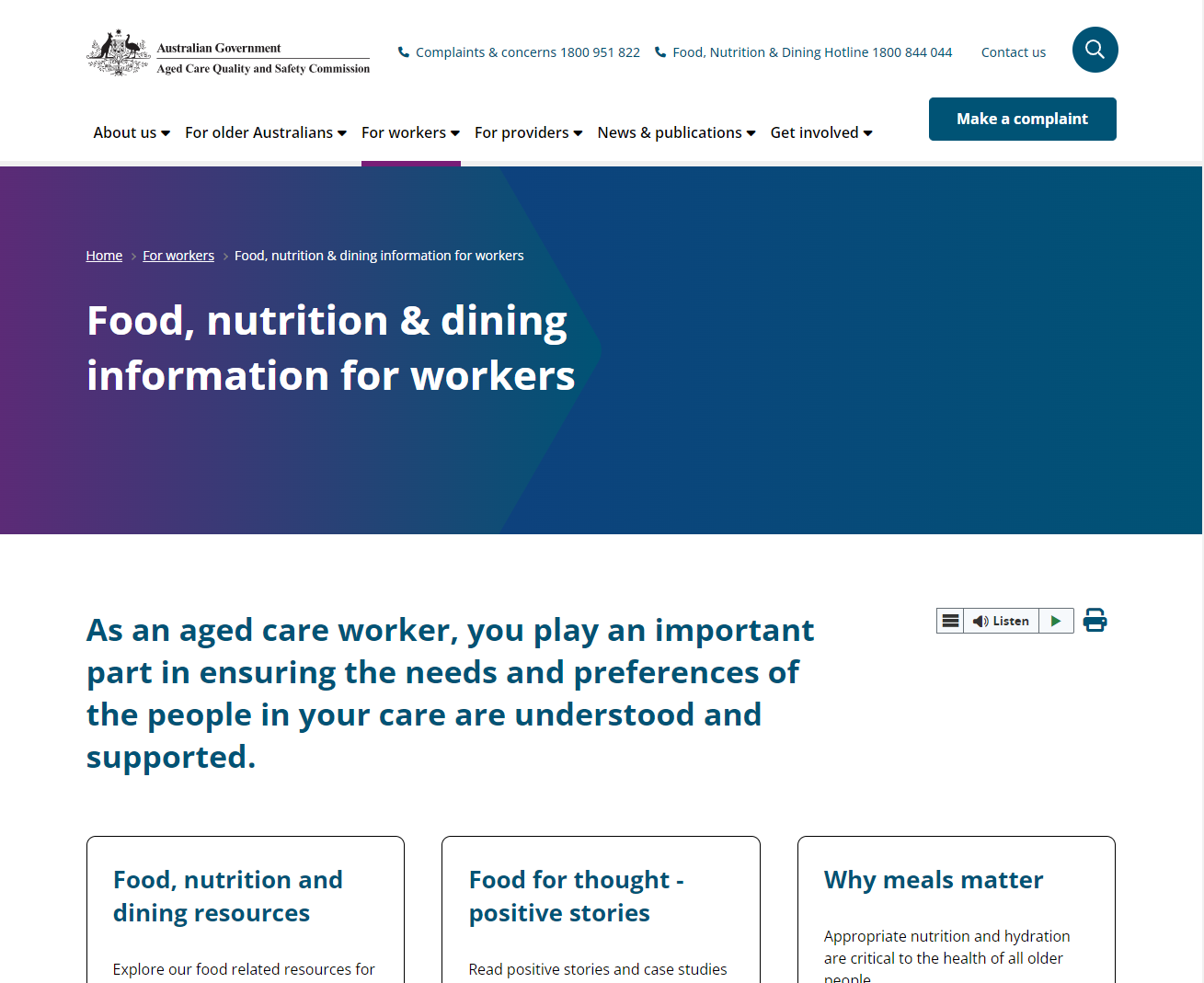
Food, nutrition & dining - information for workers
This resource provides guidance for aged care workers on improving food, nutrition, and dining experiences for residents. It covers meal preparation, resident engagement in food choices, safe food handling, and the importance of nutrition in promoting wellbeing. The resource offers practical tips for ensuring meals meet individual dietary needs and preferences. This resource may refer to information that will be updated from 1 November 2025 to align with the new Aged Care Act and Quality Standards.
Food, nutrition and dining: a reflection on practice
This training PowerPoint is a presentation that trainers/managers can download, customise and use to promote discussion and educate their staff to support and improve the food, nutrition and dining experience of consumers in their care.
The resource is designed to support reflective discussions about what ‘best practice’ looks like and a reflection on how it applies in practice. This resource may refer to information that will be updated from 1 November 2025 to align with the new Aged Care Act and Quality Standards.
Guidelines for pharmacists supporting Aboriginal and Torres Strait Islander peoples with medicines management
This resource describes the professional obligations of pharmacists when supporting Aboriginal and Torres Strait Islander peoples with culturally safe and responsive care and medicines management. It includes information about appropriate and effective processes, desired behaviour or minimum standards of good practice and information about duties and responsibilities.
This resource may refer to information that will be updated from 1 November 2025 to align with the new Aged Care Act and Quality Standards.
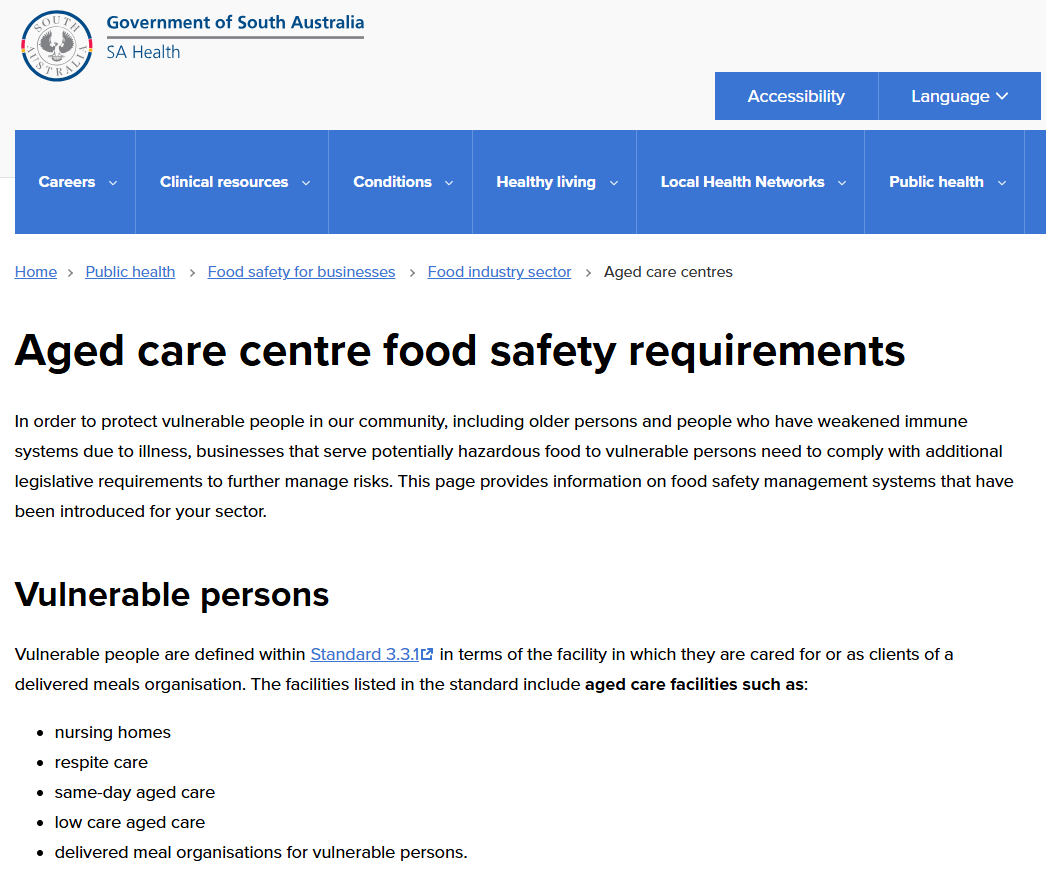
Aged care centre food safety requirements
This resource details food safety requirements for aged care centres, highlighting guidelines for managing risks with potentially hazardous foods. It includes standards for food safety programs, compliance templates, and regulatory guidance to protect vulnerable people.
This resource was developed by a state/territory government or organisation and therefore its applicability and usefulness may be limited.
Residential Medication Management Review and Quality Use of Medicines
This page provides information on the intent of the Residential Medication Management Review and Quality Use of Medicines (RMMR) Program. It outlines its purpose, participation requirements, claiming and payment processes, frequently asked questions, program rules, and extra available downloads.
Medicines use in older people
This resource is chapter six of the Fourth Atlas 2021 of Healthcare Variations. The chapter examines medicines use in people aged 75 and over, focusing on polypharmacy, medication management reviews (MMRs), and proton pump inhibitor (PPI) dispensing. It highlights variations in medication use and recommends improving access to MMR services and interventions for safe, effective medication use in older populations.
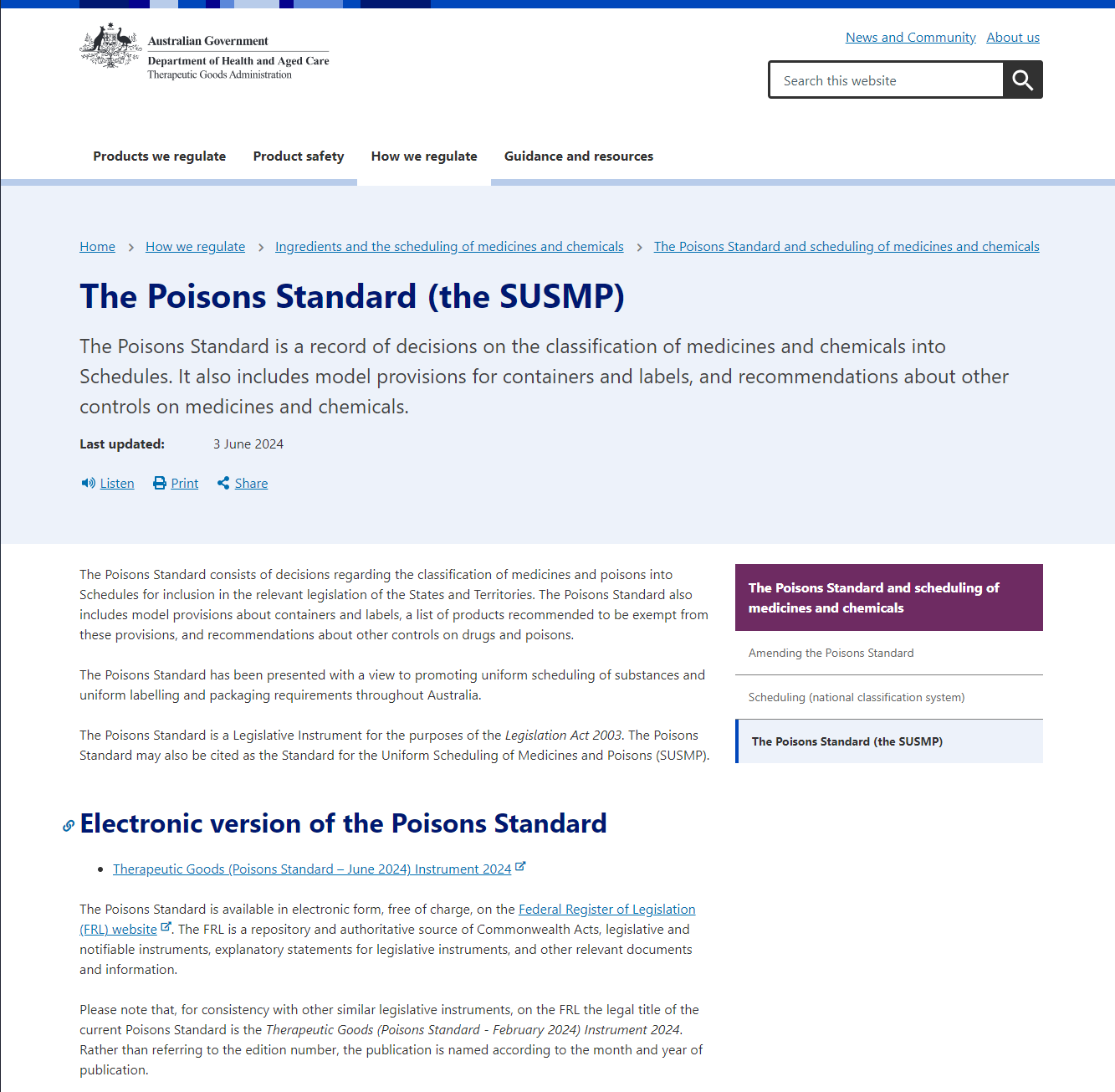
The Poisons Standard (the SUSMP)
The Poisons Standard (SUSMP) is a resource that classifies medicines and chemicals into schedules for regulatory control in Australia. It outlines guidelines for labelling, packaging, and handling of substances. Key points include updates on scheduling decisions, which assist in public safety, healthcare, and chemical management.
This resource may refer to information that will be updated from 1 November 2025 to align with the new Aged Care Act and Quality Standards.