The Quality Standards Resource Centre helps extend understanding of the strengthened Aged Care Quality Standards, which took effect from 1 November 2025. You can search for resources by using keywords, or filtering by standard, outcome and audience. Before using the Resource Centre, please read the terms of use.
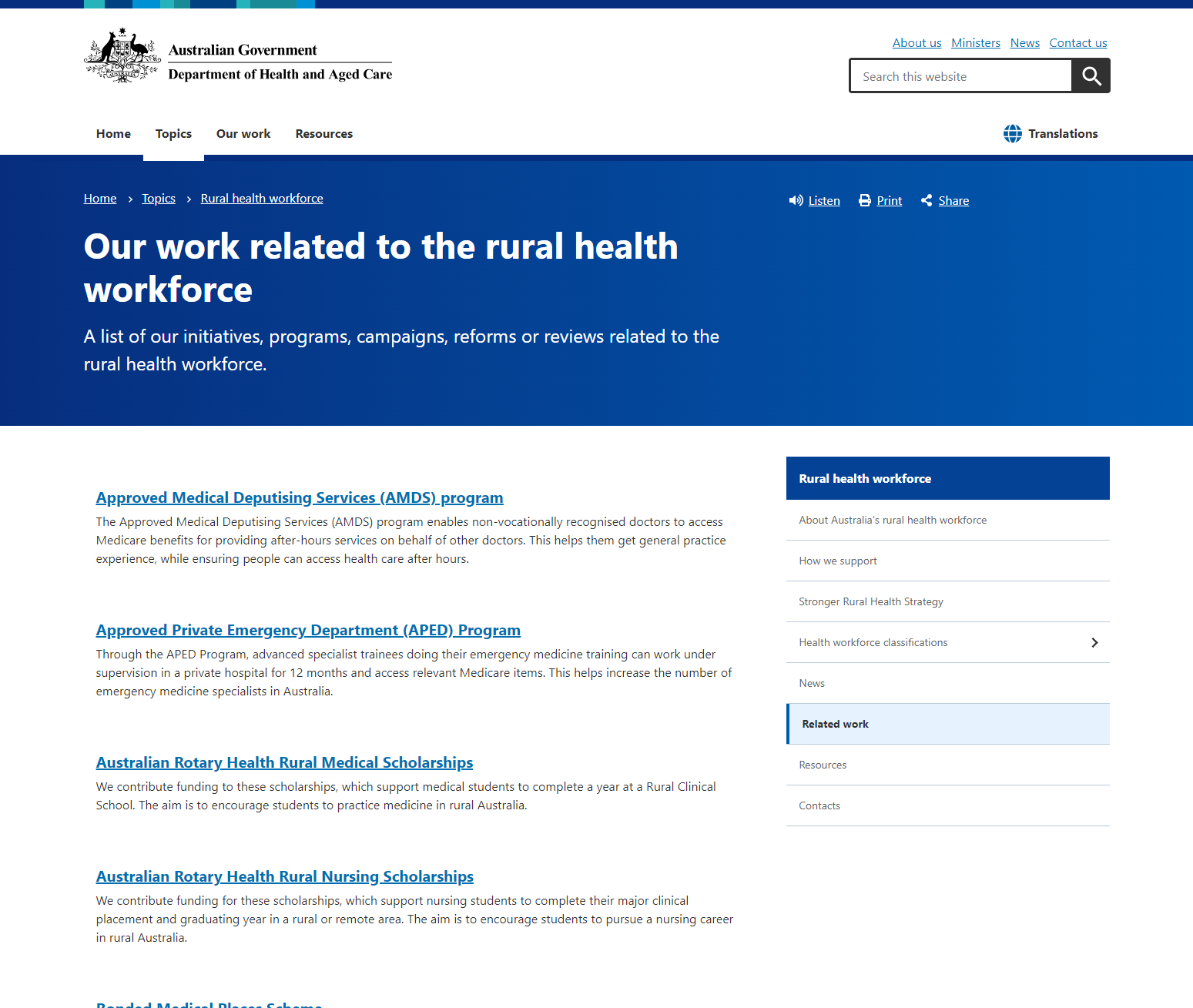
Our work related to the rural health workforce
This resource provides an overview of various initiatives and programs supporting the rural health workforce in Australia. It includes training programs, scholarships, and recruitment schemes aimed at addressing workforce shortages in rural and remote areas. The resource outlines efforts to improve healthcare access and quality through targeted support for medical and nursing professionals. This resource may refer to information that will be updated from 1 November 2025 to align with the new Aged Care Act and Quality Standards.
Oral health care for adult patients - Recommendations
This resource provides recommendations for oral health care in adult inpatients, focusing on preventing issues like aspiration pneumonia, infections, and malnutrition. It emphasises regular oral assessments and evidence-based care practices. Its principles are applicable in aged care settings to enhance overall care.
Please consider the applicability of this resource to your care setting. This resource may refer to information that will be updated from 1 November 2025 to align with the new Aged Care Act and Quality Standards.
Palliative care education and training
This resource provides information on free palliative care education programs available for health and aged care workers. It includes details about various training opportunities, such as online courses and in-person sessions, designed to enhance skills in delivering high-quality palliative care. The programs cover key topics like symptom management, communication, and multidisciplinary care. This resource may refer to information that will be updated from 1 November 2025 to align with the new Aged Care Act and Quality Standards.

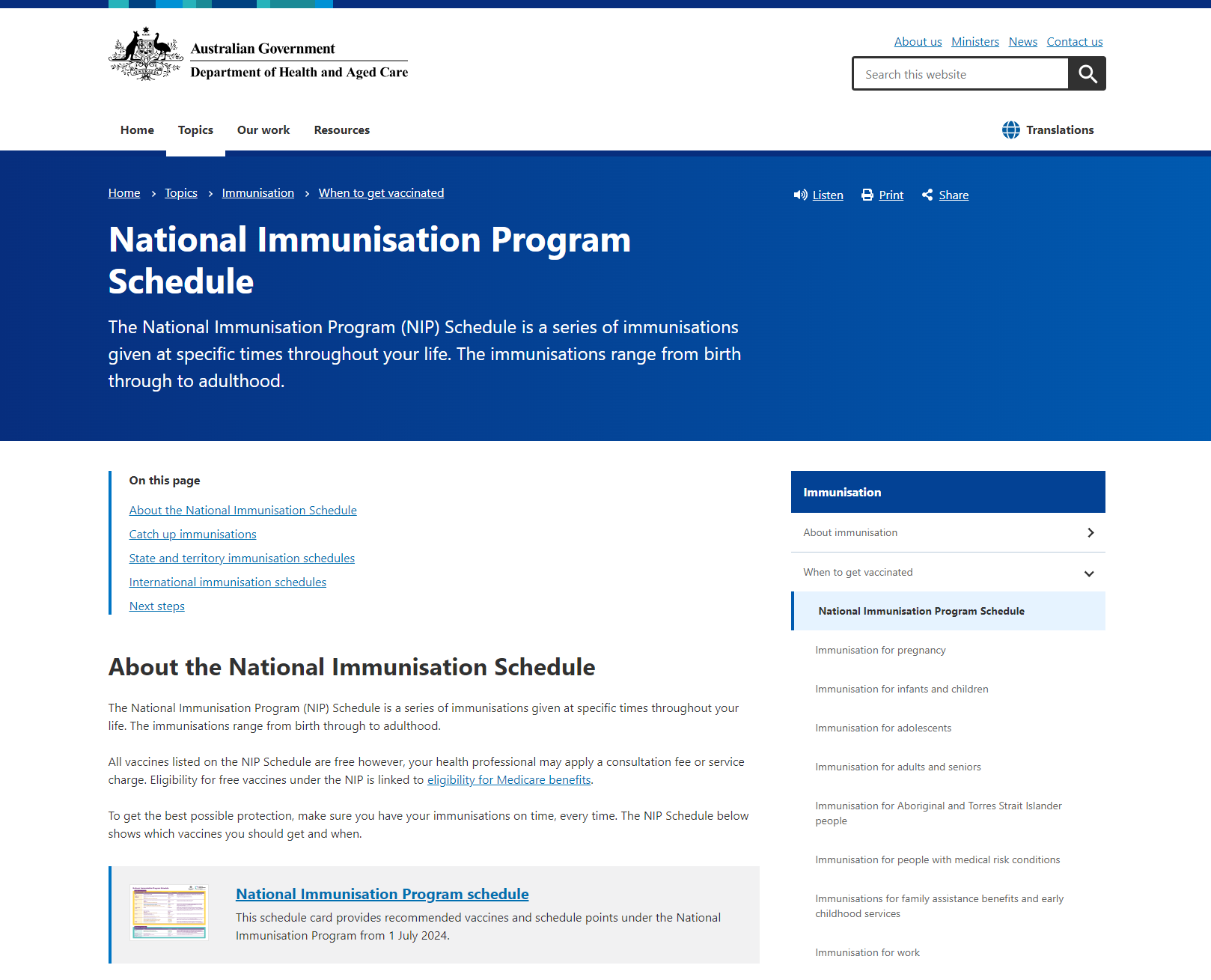
National Immunisation Program Schedule
This resource provides the National Immunisation Program (NIP) Schedule, outlining the recommended immunisations for people at specific stages of life, from birth through to adulthood. It includes information about free vaccines under the NIP and guidance for catch-up immunisations, ensuring the best possible protection through timely vaccinations.
This resource may refer to information that will be updated from 1 November 2025 to align with the new Aged Care Act and Quality Standards.
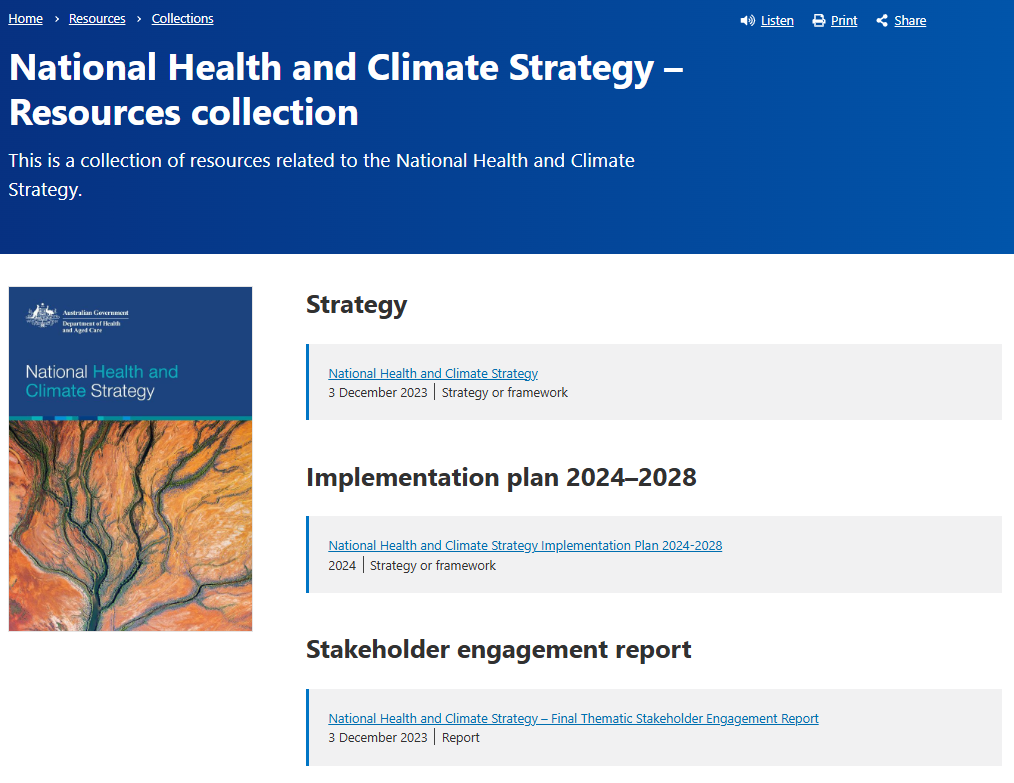
National Health and Climate Strategy – Resources collection
This is a collection of resources related to the National Health and Climate Strategy. The collection includes the strategy, implementation plan 2024-2028, stakeholder engagement report, governance information and publications.
This resource may refer to information that will be updated from 1 November 2025 to align with the new Aged Care Act and Quality Standards.
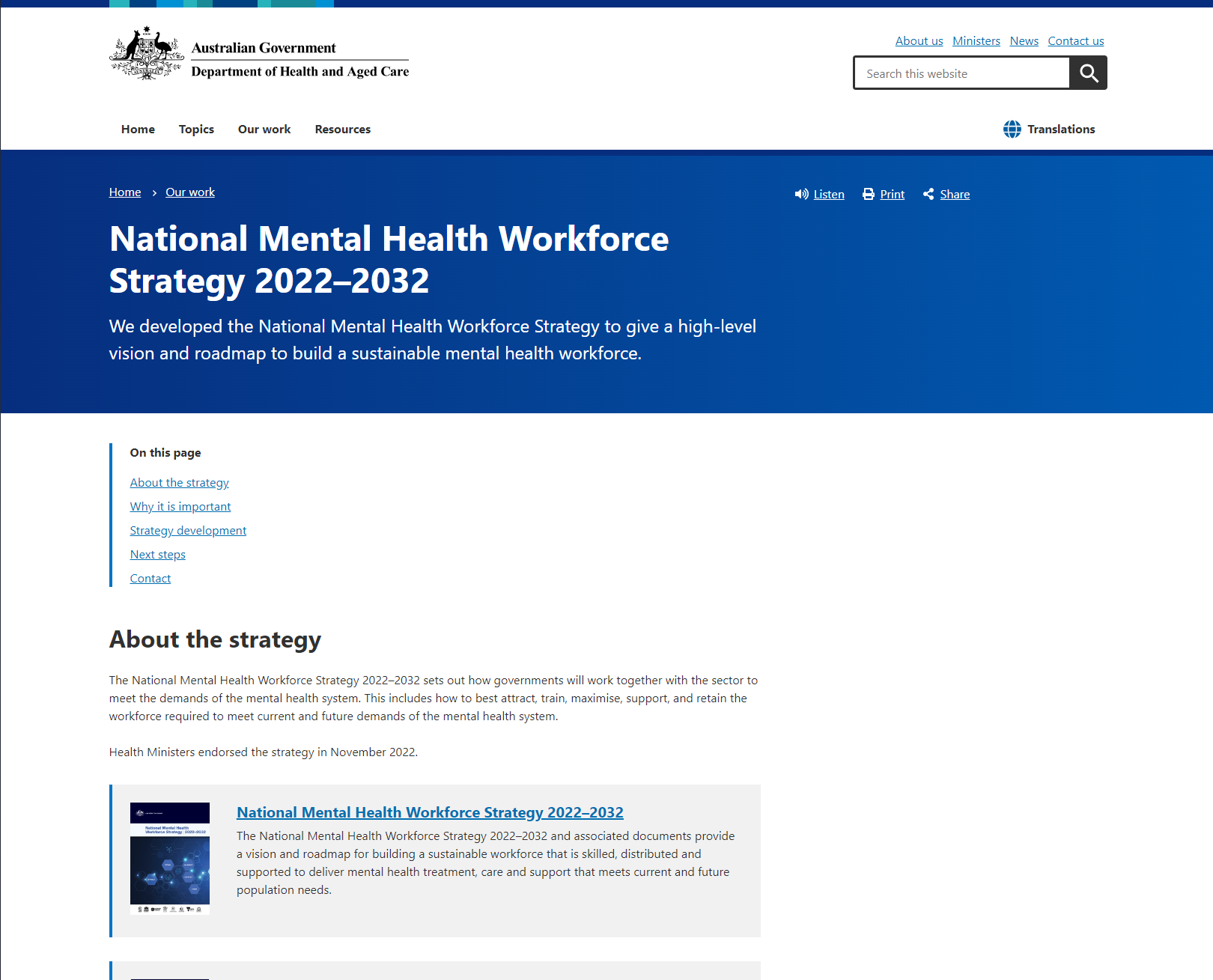
National Mental Health Workforce Strategy 2022–2032
This resource outlines the National Mental Health Workforce Strategy 2022–2032, providing a roadmap to build a sustainable, skilled mental health workforce. It focuses on attracting, training, and retaining professionals to meet future demands, including those in aged care. The strategy supports coordinated mental health services across various sectors, ensuring a person-centred approach and promoting mental health careers.
This resource may refer to information that will be updated from 1 November 2025 to align with the new Aged Care Act and Quality Standards.
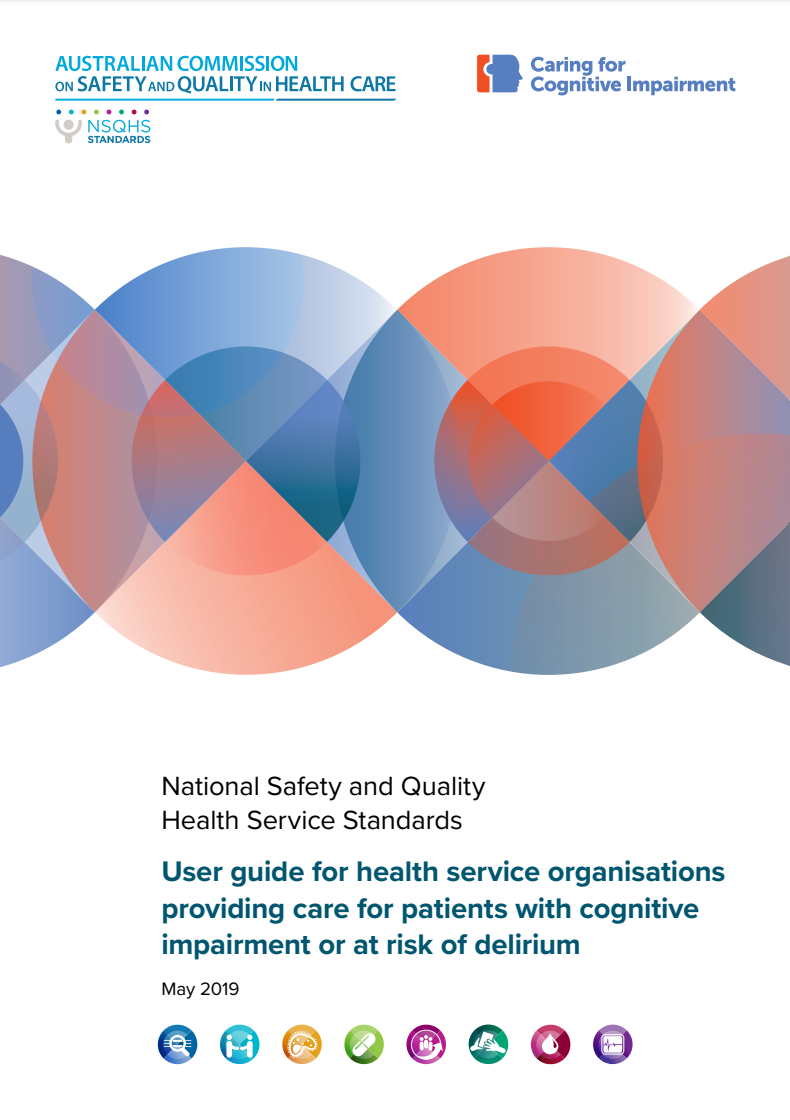
NSQHS Standards user guide for health service organisations providing care for patients with cognitive impairment or at risk of delirium
This user guide provides key actions from the NSQHS Standards for delivering safe care to people with cognitive impairment or at risk of delirium. It includes strategies for risk mitigation, evidence-based care, and clinical governance, applicable to aged care settings to ensure comprehensive, dignified, and high-quality care.
This resource may refer to information that will be updated from 1 November 2025 to align with the new Aged Care Act and Quality Standards.
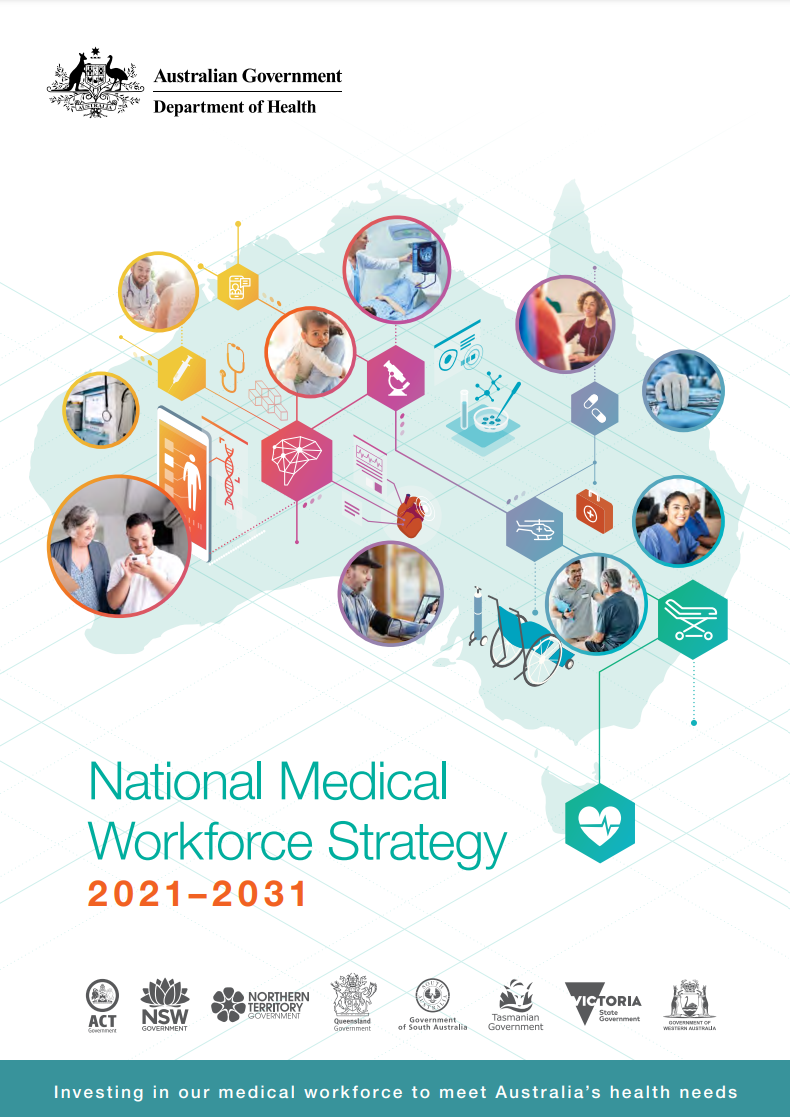
National Medical Workforce Strategy 2021–2031
This resource outlines the National Medical Workforce Strategy 2021–2031, developed to guide long-term medical planning across Australia. It provides a structured approach to creating a sustainable, well-trained medical workforce. The strategy includes 25 actions under 5 priority areas: collaboration, rebalancing supply, reforming training, building generalist capabilities, and ensuring workforce flexibility.
This resource may refer to information that will be updated from 1 November 2025 to align with the new Aged Care Act and Quality Standards.
National Notifiable Diseases Surveillance System (NNDSS)
This resource provides an overview of the National Notifiable Diseases Surveillance System (NNDSS), which tracks over 70 diseases that pose a risk to public health in Australia. It helps identify disease trends, supports outbreak responses, and informs public health policies. The system collects de-identified data from states and territories to ensure coordinated disease management.
This resource may refer to information that will be updated from 1 November 2025 to align with the new Aged Care Act and Quality Standards.
Optimising ventilation for infection prevention and control in healthcare settings
This resource provides guidance on optimising ventilation in healthcare settings to prevent and control infections. It outlines actions that organisations can take to improve ventilation systems, reduce infection transmission risks, and enhance the safety of both patients and staff. It should be used alongside relevant health authority notices.
This resource may refer to information that will be updated from 1 November 2025 to align with the new Aged Care Act and Quality Standards.
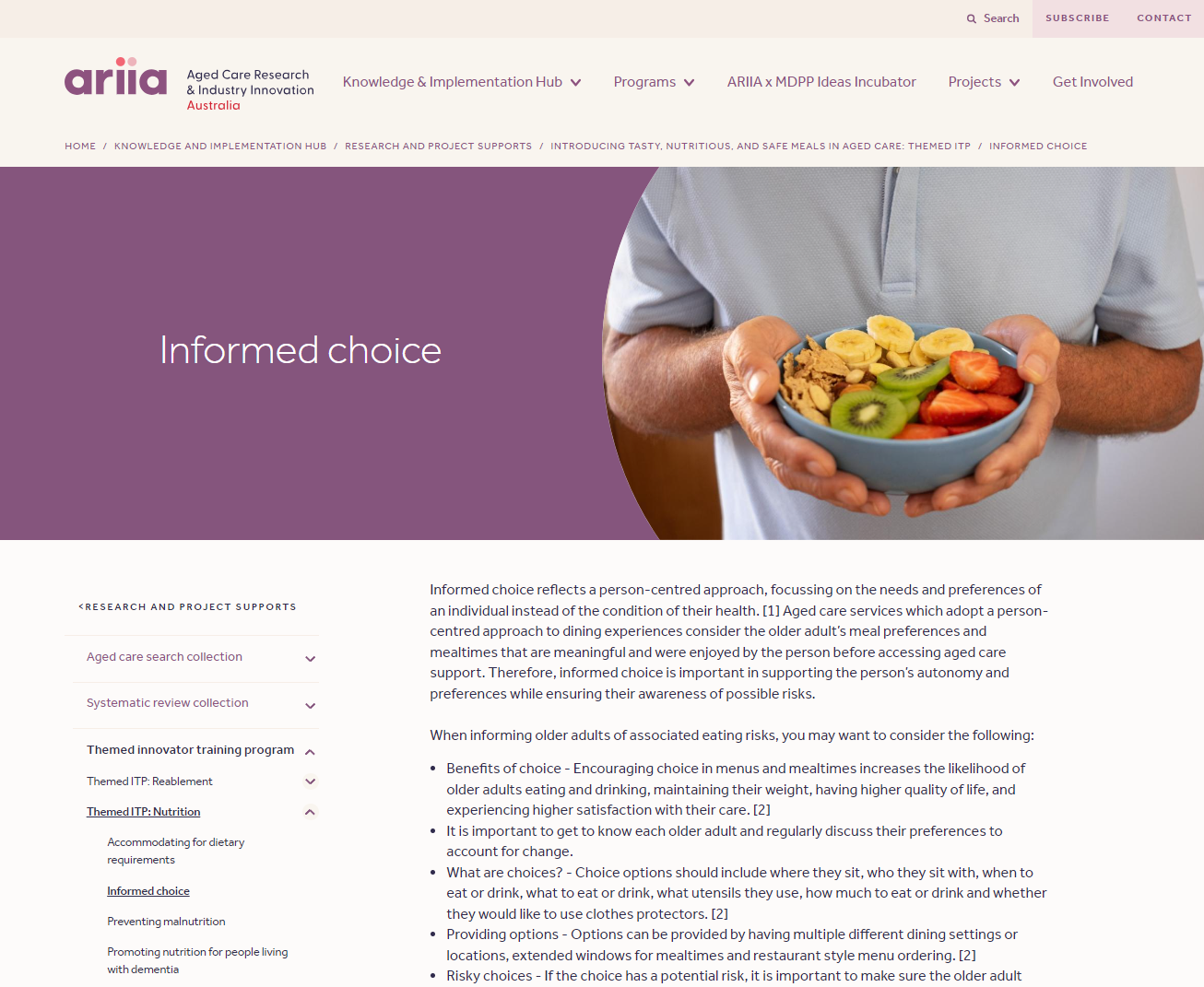
Nutrition - Informed choice
This resource discusses the importance of informed choice in aged care dining, emphasising a person-centred approach. It highlights the benefits of offering choice in meals and mealtimes, outlines how to manage decisions that involve risk, and provides tools for aged care workers to support resident autonomy while ensuring safety and satisfaction.
This resource may refer to information that will be updated from 1 November 2025 to align with the new Aged Care Act and Quality Standards.
NSQHS Standards User Guide for the Health Care of People with Intellectual Disability
This resource provides guidance for the health care of people with intellectual disability. The user guide is part of the Australian Commission on Safety and Quality in Health Care's National Safety and Quality Health Service (NSQHS) Standards. The resource was developed in response to significant evidence of poor health outcomes for people with intellectual disability in Australia’s health system.
This resource may refer to information that will be updated from 1 November 2025 to align with the new Aged Care Act and Quality Standards.
National Safety and Quality Health Service Standards (second edition)
This resource outlines the second edition of the National Safety and Quality Health Service (NSQHS) Standards. It aims to protect people from harm and improve healthcare quality. The 8 standards cover areas like clinical governance, infection control, and medication safety, supporting aged care providers in meeting safety and quality expectations.
This resource may refer to information that will be updated from 1 November 2025 to align with the new Aged Care Act and Quality Standards.
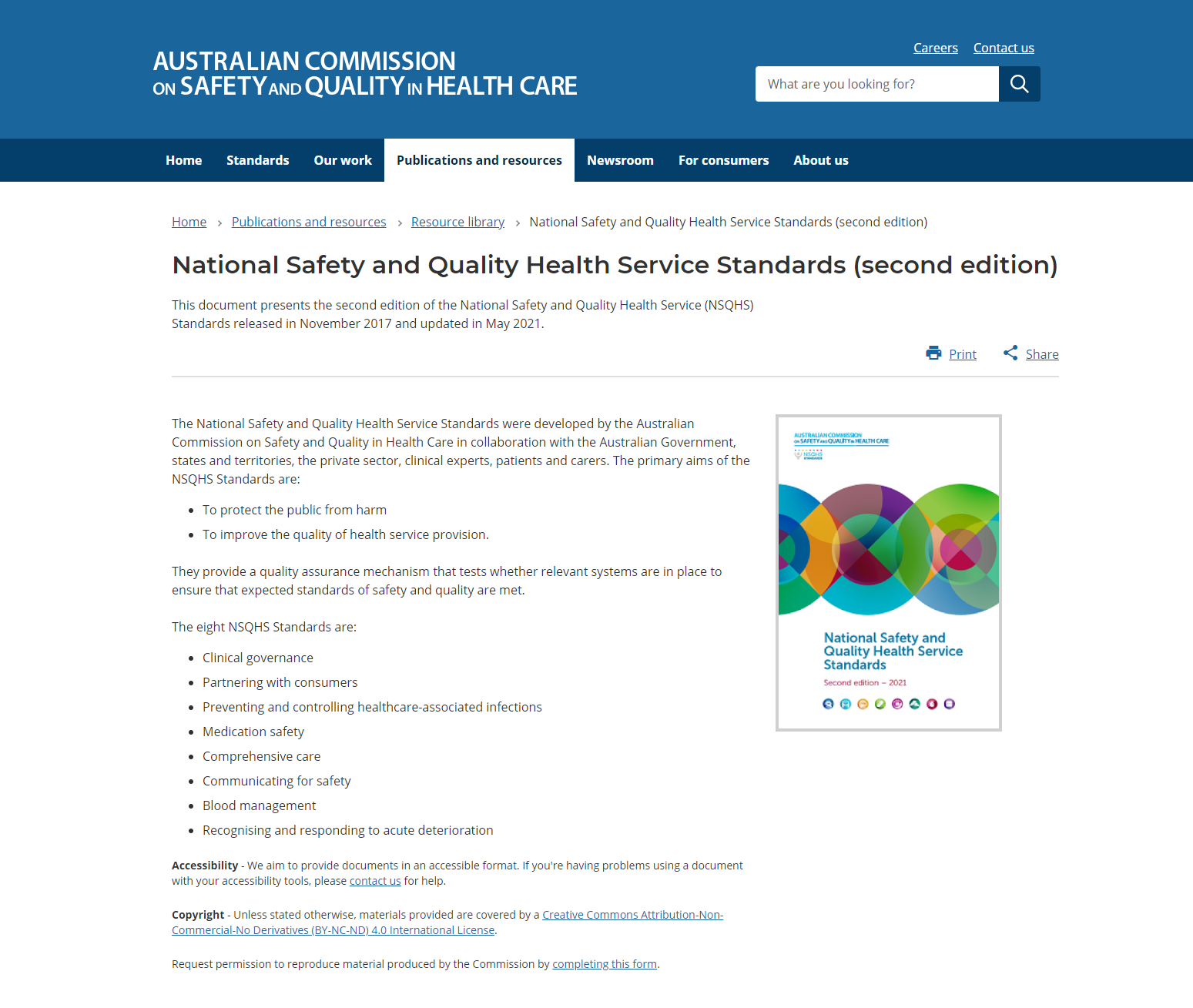
National Nursing Workforce Strategy
The resource provides information on the National Nursing Workforce Strategy, which outlines long-term plans for workforce sustainability, diversity, and development. It supports collaboration among stakeholders, promotes evidence-based care, and addresses challenges in regional and remote areas to ensure quality nursing care across the healthcare system.
This resource may refer to information that will be updated from 1 November 2025 to align with the new Aged Care Act and Quality Standards.
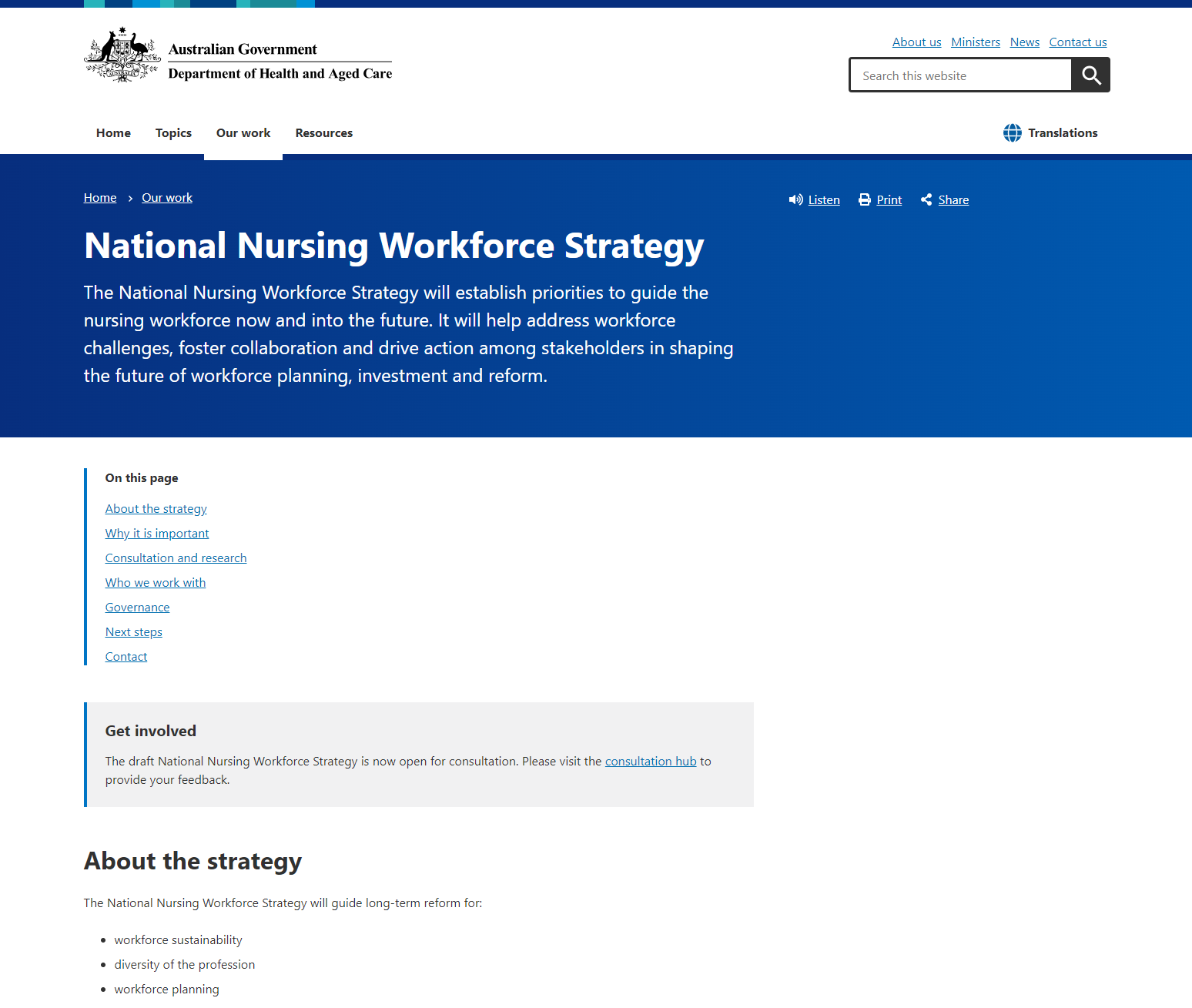
Nourishing connections: The vital role of social dining in aged care
This resource explains how social dining in aged care can enhance nutrition and wellbeing by fostering social connections. It encourages creating positive dining environments that promote engagement and respect personal preferences during mealtimes.
This resource may refer to information that will be updated from 1 November 2025 to align with the new Aged Care Act and Quality Standards.
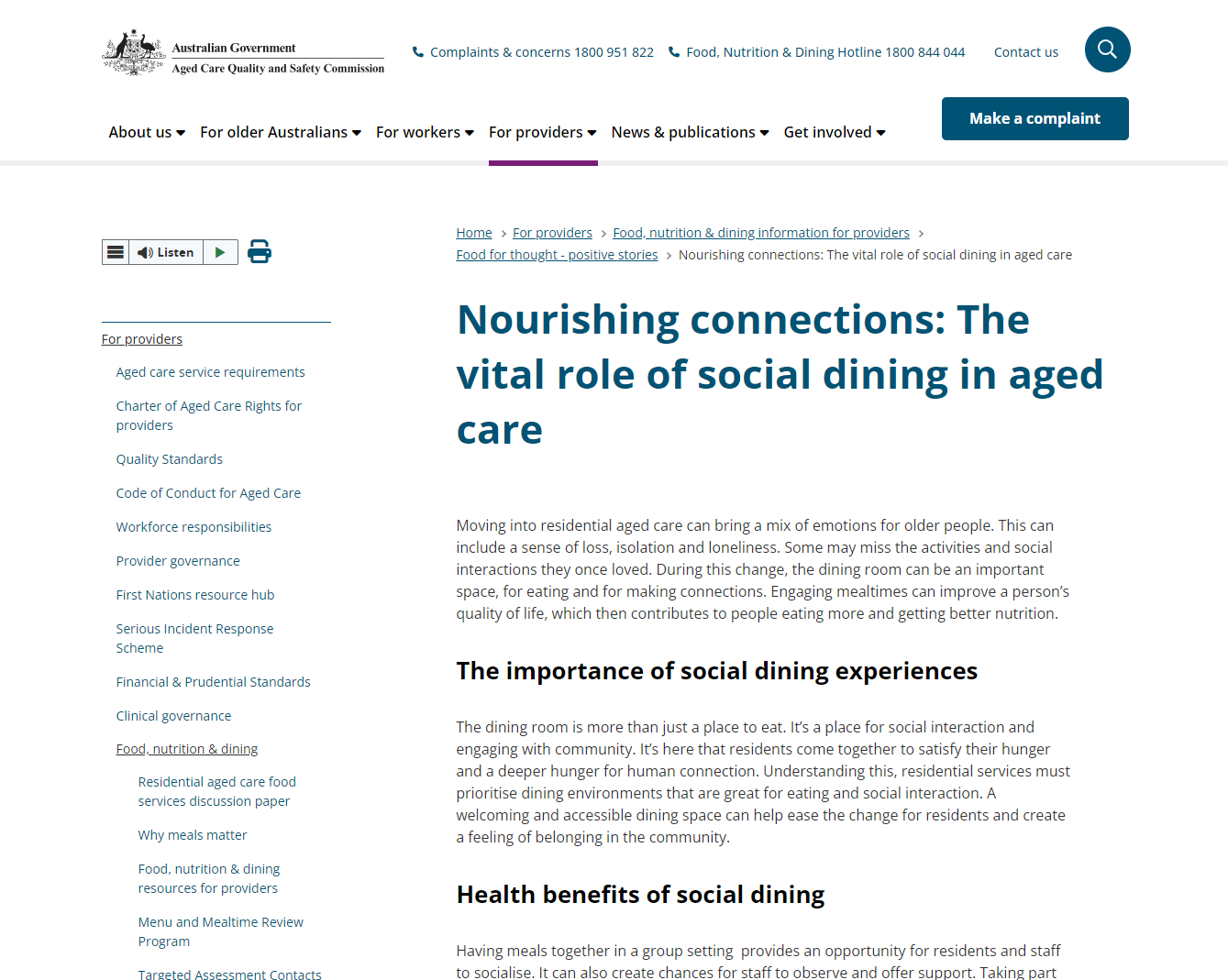
Non-compliance
This resource outlines the processes for managing non-compliance in aged care services. It includes information on banning orders, enforceable undertakings, and how the Commission addresses non-compliance through monitoring, complaints directions, and enforcement policies. Providers can also search for performance reports to track compliance.
This resource may refer to information that will be updated from 1 November 2025 to align with the new Aged Care Act and Quality Standards.
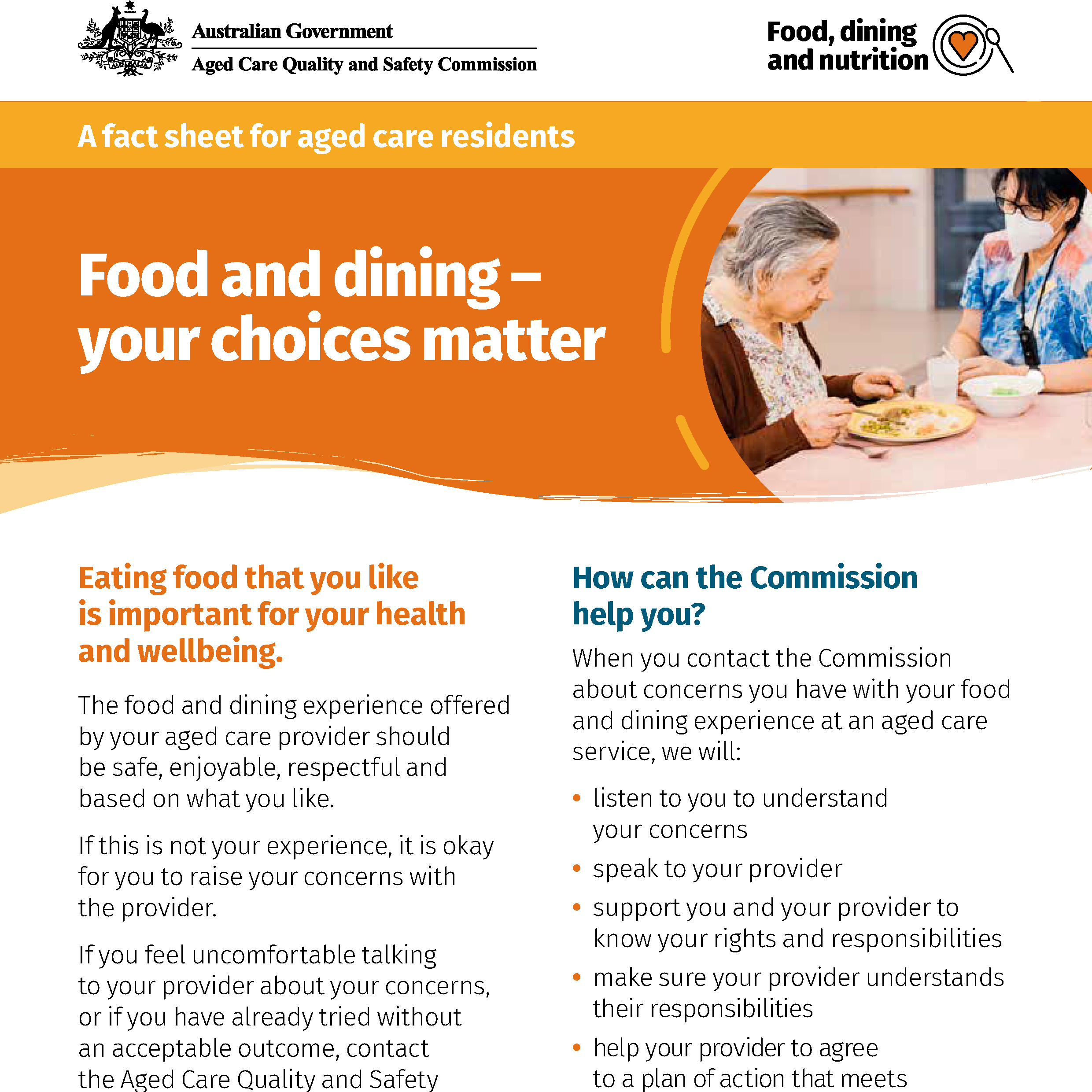
Food and dining - your choices matter
This fact sheet informs aged care residents of their rights to safe, enjoyable, and respectful dining experiences. It outlines steps for raising concerns with providers about food and dining, offers a preference form for residents to communicate their dietary needs, and provides contact information for support services if issues remain unresolved. This resource may refer to information that will be updated from 1 November 2025 to align with the new Aged Care Act and Quality Standards.
 English - Food and dining – your choices matter (PDF 484.79 KB)
Arabic - تهمّّنا تفضيلاتكم في الطعام وعادات الأكل (PDF 767.17 KB)
Chinese Simplified - 食品和餐饮—— 您的选择很重要 (PDF 785.39 KB)
Chinese Traditional - 食品和餐飲—— 您的選擇很重要 (PDF 788.7 KB)
French - Alimentation et repas – vos choix sont importants (PDF 684.4 KB)
German - Essen und Speisen – Ihre Wahl zählt (PDF 686.18 KB)
Greek - Φαγητό και γεύματα – οι επιλογές σας έχουν σημασία (PDF 690.89 KB)
Hungarian - Ételek és étkezés – az Ön döntése számít (PDF 684.42 KB)
Macedonian - Храна и јадење - вашиот избор е важен (PDF 683.21 KB)
Maltese - L-ikel u l-ikliet - l-għażliet tiegħek huma importanti (PDF 685.65 KB)
Russian - Питание и прием пищи: ваш выбор имеет значение (PDF 682.53 KB)
Serbian - Храна и обедовање – ваш избор је важан (PDF 681.46 KB)
Spanish - Alimentos y comidas: sus preferencias importan (PDF 679.42 KB)
English - Food and dining – your choices matter (PDF 484.79 KB)
Arabic - تهمّّنا تفضيلاتكم في الطعام وعادات الأكل (PDF 767.17 KB)
Chinese Simplified - 食品和餐饮—— 您的选择很重要 (PDF 785.39 KB)
Chinese Traditional - 食品和餐飲—— 您的選擇很重要 (PDF 788.7 KB)
French - Alimentation et repas – vos choix sont importants (PDF 684.4 KB)
German - Essen und Speisen – Ihre Wahl zählt (PDF 686.18 KB)
Greek - Φαγητό και γεύματα – οι επιλογές σας έχουν σημασία (PDF 690.89 KB)
Hungarian - Ételek és étkezés – az Ön döntése számít (PDF 684.42 KB)
Macedonian - Храна и јадење - вашиот избор е важен (PDF 683.21 KB)
Maltese - L-ikel u l-ikliet - l-għażliet tiegħek huma importanti (PDF 685.65 KB)
Russian - Питание и прием пищи: ваш выбор имеет значение (PDF 682.53 KB)
Serbian - Храна и обедовање – ваш избор је важан (PDF 681.46 KB)
Spanish - Alimentos y comidas: sus preferencias importan (PDF 679.42 KB)
Governing for Reform in Aged Care Program
This resource outlines the Governing for Reform in Aged Care Program, designed to strengthen corporate and clinical governance capabilities for aged care leaders. It provides tools, online learning modules, webinars, and podcasts to support governance improvement and help leaders engage in reform efforts.
This resource may refer to information that will be updated from 1 November 2025 to align with the new Aged Care Act and Quality Standards.
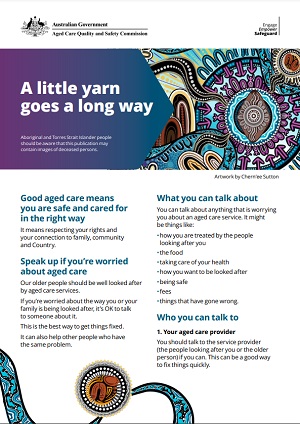
A little yarn goes a long way - Fact sheet
The ‘A little yarn goes a long way’ fact sheet has been developed to inform older Aboriginal and Torres Strait Islander people, and their friends and family, about the support available to help them resolve concerns about aged care services, and why it’s important to raise these concerns.
Information is also available in 7 different languages including: English, Alyawarra, Arrernte, Luritja, Pitjantjatjarra, Torres Strait Creole and Warlpiri.
English - A little yarn goes a long way (PDF 769.91 KB)
Alyawarra - A little yarn goes a long way (PDF 3.74 MB)
Arrernte - A little yarn goes a long way (PDF 3.73 MB)
Luritja - A little yarn goes a long way (PDF 3.73 MB)
Pitjantjatjarra - A little yarn goes a long way (PDF 3.73 MB)
Torres Strait Creole - A little yarn goes a long way (PDF 3.74 MB)
Warlpiri - A little yarn goes a long way (PDF 3.73 MB)
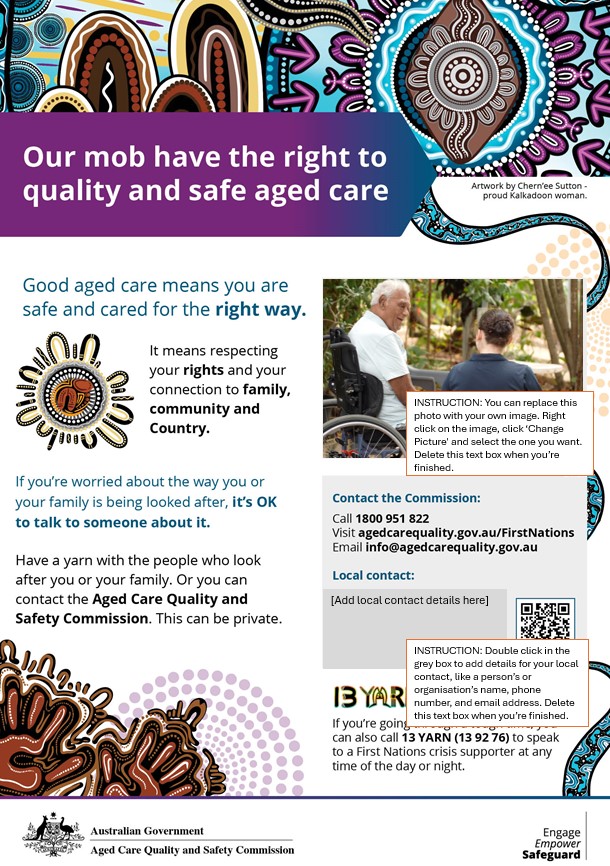
Explaining aged care and your rights – locally tailorable poster - First Nations resources
We’ve developed a tailorable poster for you to edit with your own local details, and print and display at community notice boards or waiting areas.