The Quality Standards Resource Centre helps extend understanding of the strengthened Aged Care Quality Standards, which take effect from 1 November 2025. The Resource Centre will be updated to reflect key changes made to the draft strengthened Standards. You can search for resources by using keywords, or filtering by standard, outcome, audience and theme. Before using the Resource Centre, please read the terms of use.
Wound Healing Interventions
This resource provides the 2021 Australian guidelines on wound healing interventions for diabetic foot disease (DFD) and foot ulcers (DFU). It includes evidence-based recommendations for healthcare professionals on appropriate practices, such as sharp debridement, exudate control, adjunctive treatments, and decision-making pathways to enhance wound healing and improve patient outcomes.
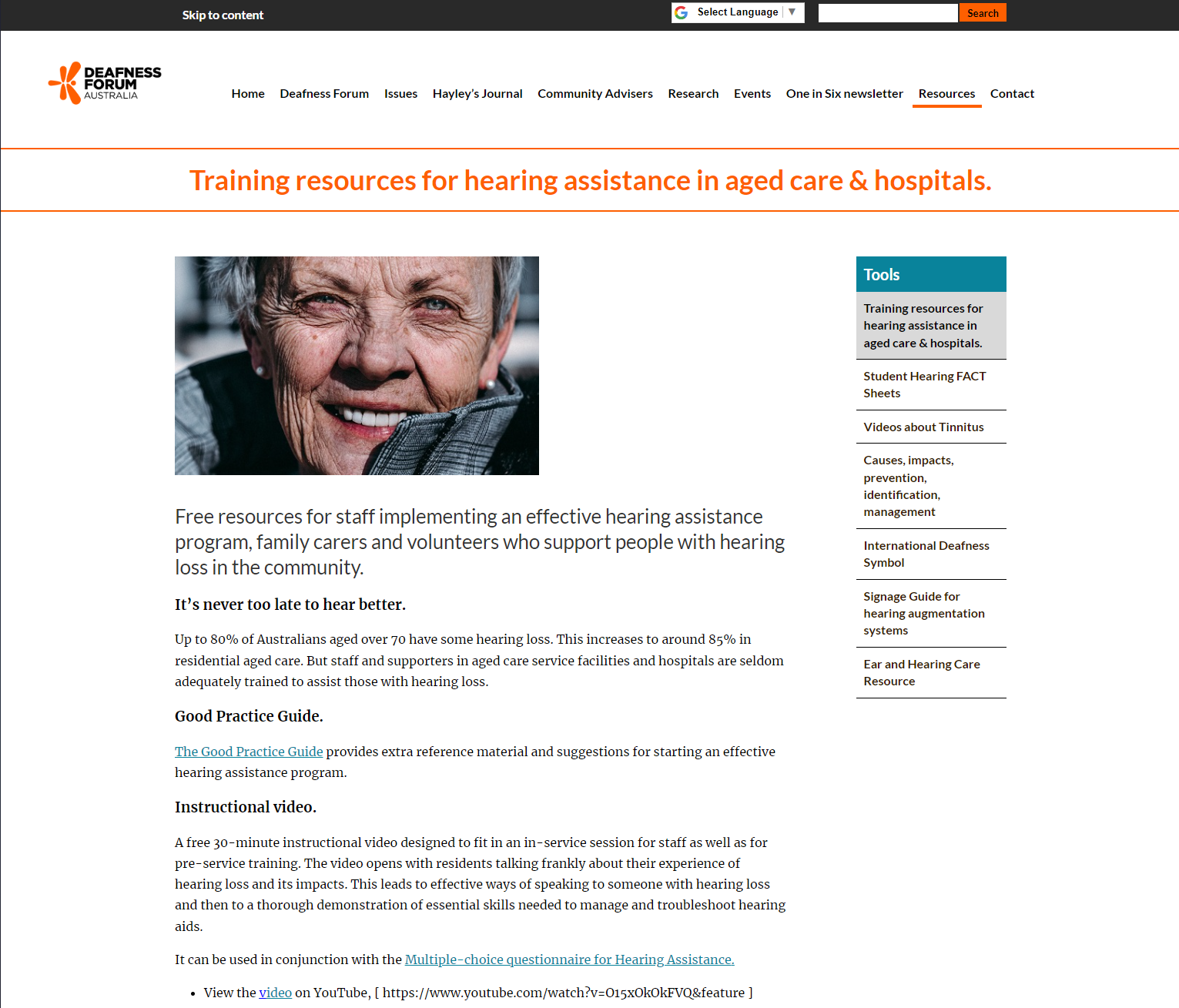
Training resources for hearing assistance in aged care & hospitals
This resource provides free training materials for hearing assistance in aged care and hospital settings. It includes a Good Practice Guide, instructional video, poster series, and training modules. The resources aim to equip staff, volunteers, and family carers with knowledge to support people with hearing loss effectively.
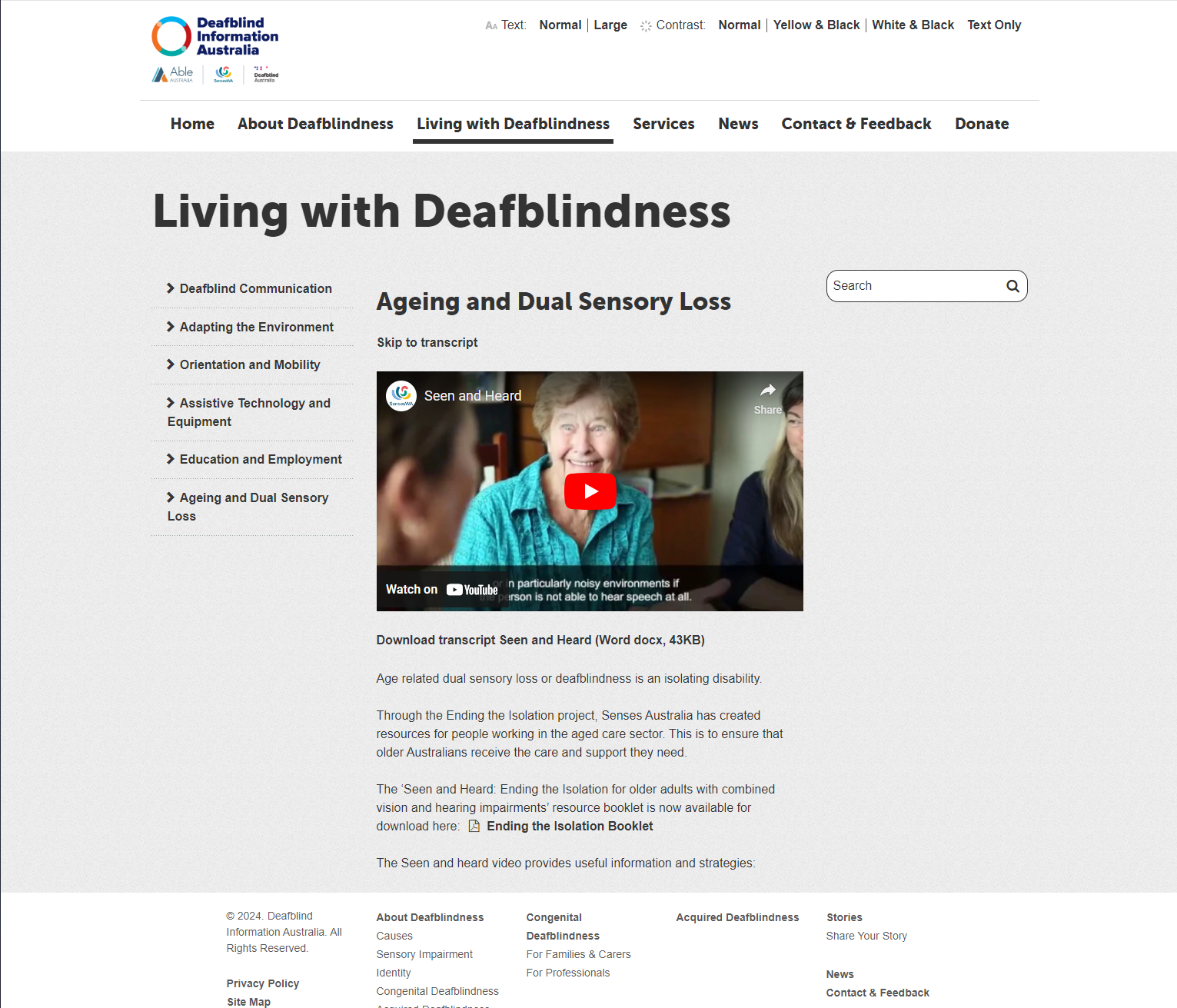
Ageing and dual sensory loss
This resource provides information and strategies for supporting older adults with age-related dual sensory loss or deafblindness. It includes a resource booklet and video developed to help aged care workers understand and address the needs of people with combined vision and hearing impairments to reduce isolation and enhance care.
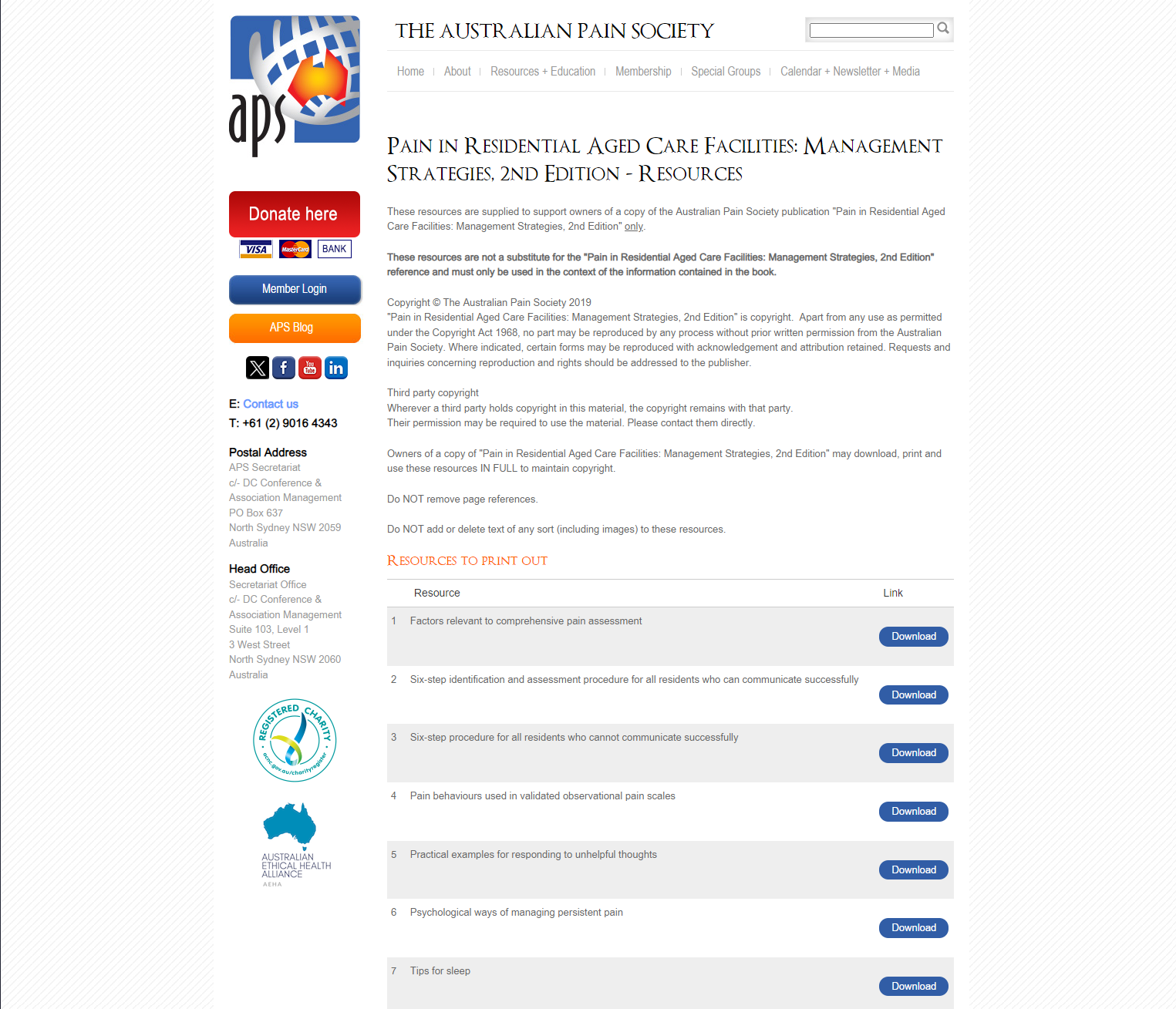
Pain in Residential Aged Care Facilities: Management Strategies - Resources
This resource provides downloadable tools to support the management of pain in residential aged care facilities. It covers comprehensive pain assessment, pain management strategies for communicative and non-communicative residents, complementary therapies, opioid considerations, and quality indicators, aiming to enhance care practices and improve residents' quality of life.
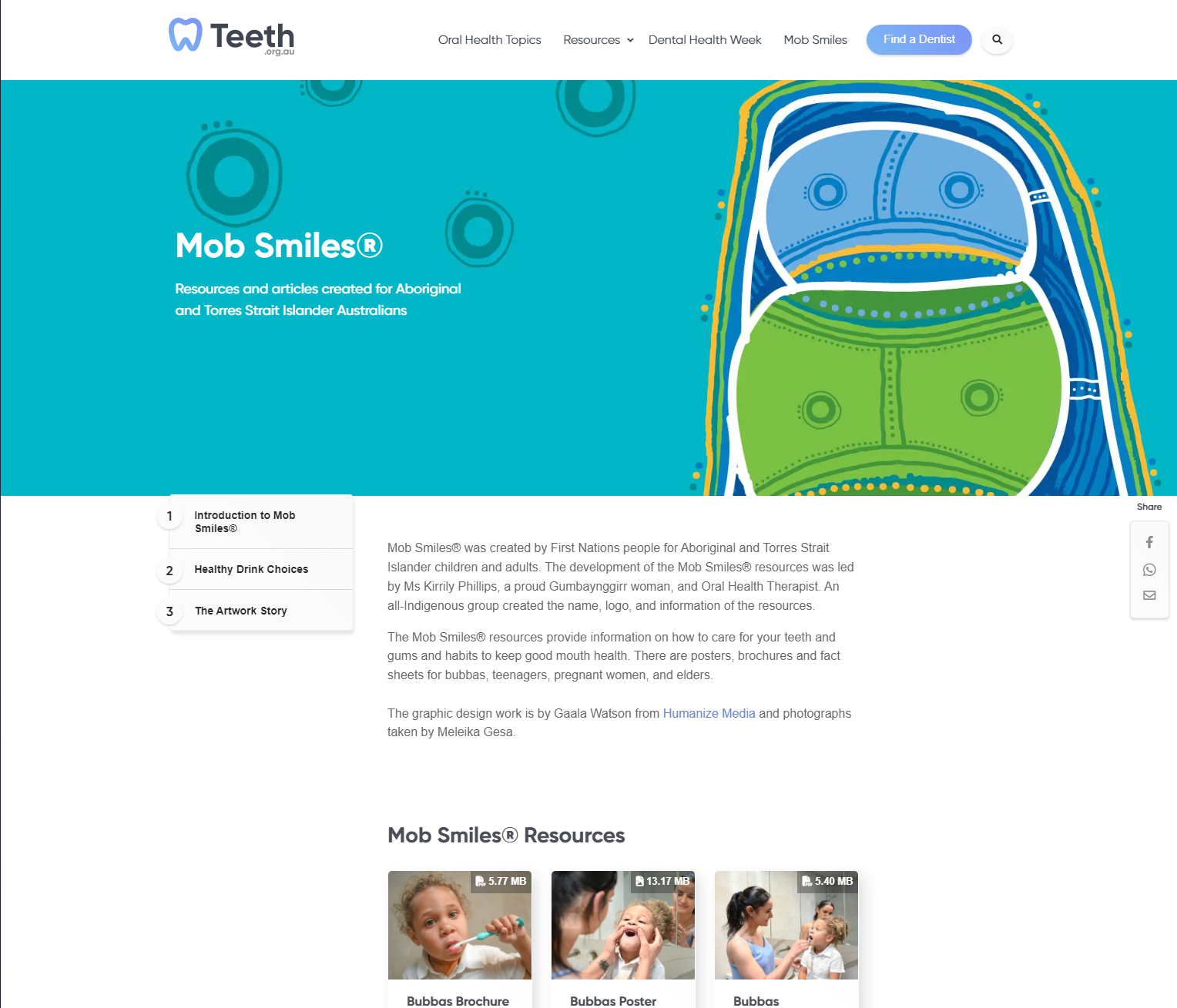
Mob Smiles - Resources and articles created for Aboriginal and Torres Strait Islander Australians
This resource, Mob Smiles, provides culturally appropriate oral health information for Aboriginal and Torres Strait Islander people. It includes brochures, posters, and fact sheets tailored for different life stages such as children, teenagers, elders, and pregnant women. The content focuses on dental care, healthy habits, and oral health education.
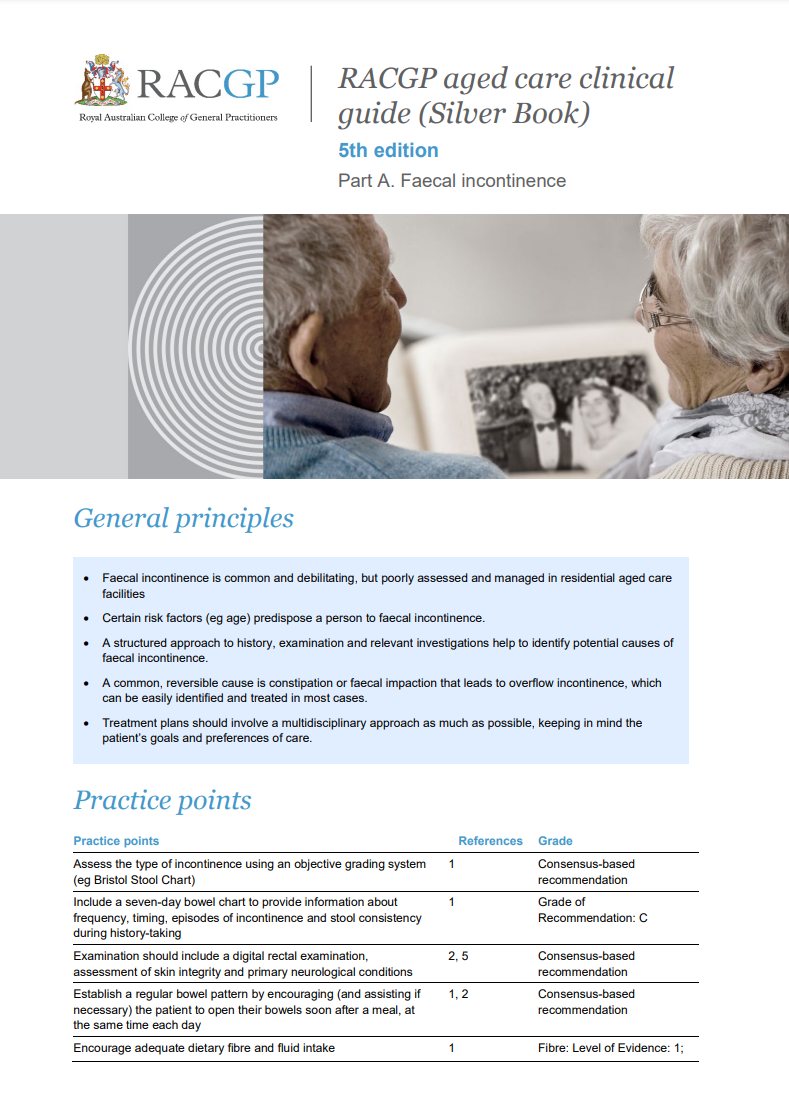
RACGP aged care clinical guide (Silver Book) - Part A - Faecal incontinence
This guide addresses the assessment and management of urinary incontinence in older adults. It outlines a stepwise approach to evaluation, including identifying transient causes, detailed history-taking, medication review, and focused examination. It provides information on management including lifestyle measures, medications, bladder drainage options, and potential referral to specialists based on individual needs and the type of incontinence.
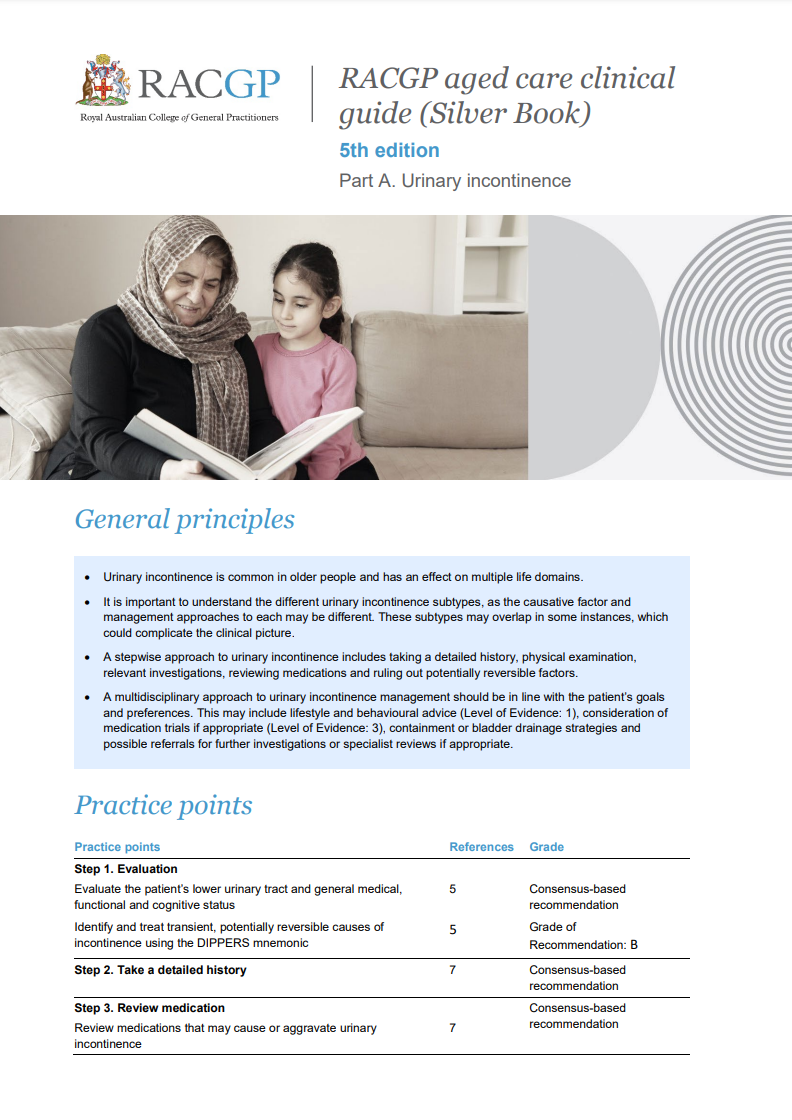
RACGP aged care clinical guide (Silver Book) - Part A - Urinary incontinence
This guide addresses the assessment and management of urinary incontinence in older adults. It outlines a stepwise approach to evaluation, including identifying transient causes, detailed history-taking, medication review, and focused examination. It provides information on management including lifestyle measures, medications, bladder drainage options, and potential referral to specialists based on individual needs and the type of incontinence.
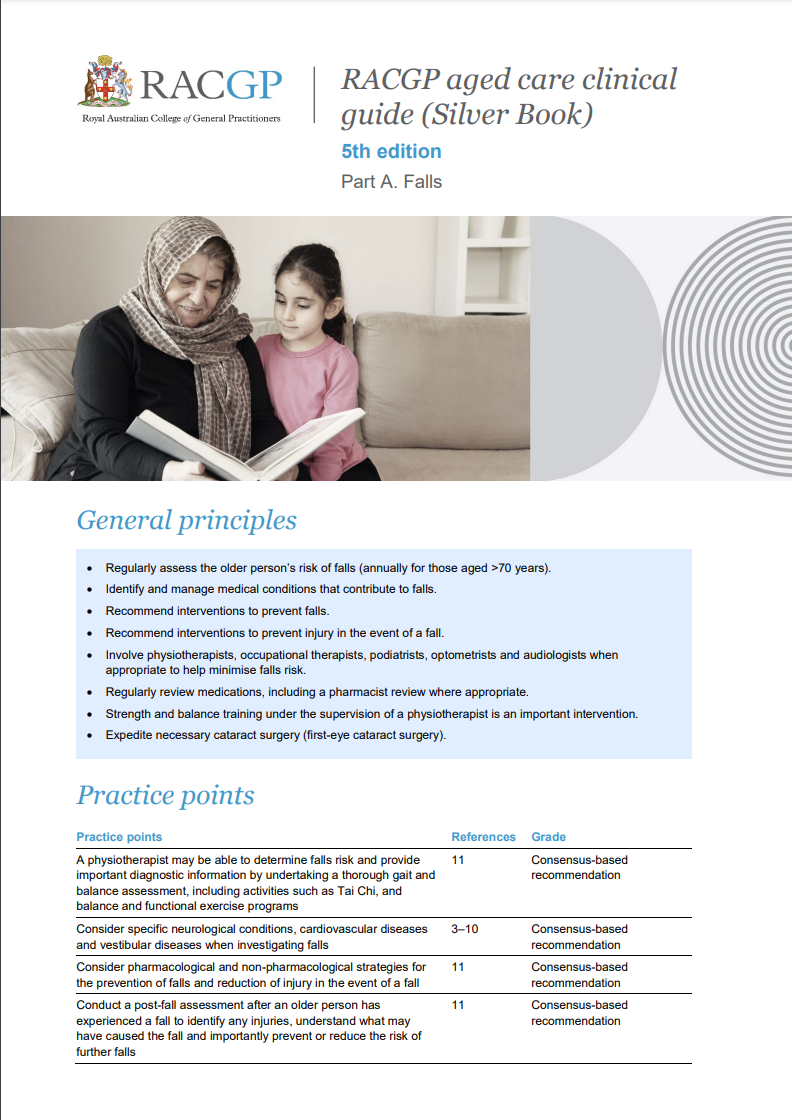
RACGP aged care clinical guide (Silver Book) - Part A - Falls
This guide covers fall prevention and management in older adults, focusing on assessing fall risks, involving multidisciplinary teams (e.g. physiotherapists, occupational therapists), and recommending both non-pharmacological and pharmacological interventions. It includes steps for post-fall assessments, medication review, and strategies for preventing injuries, with a comprehensive approach to improving outcomes in aged care.
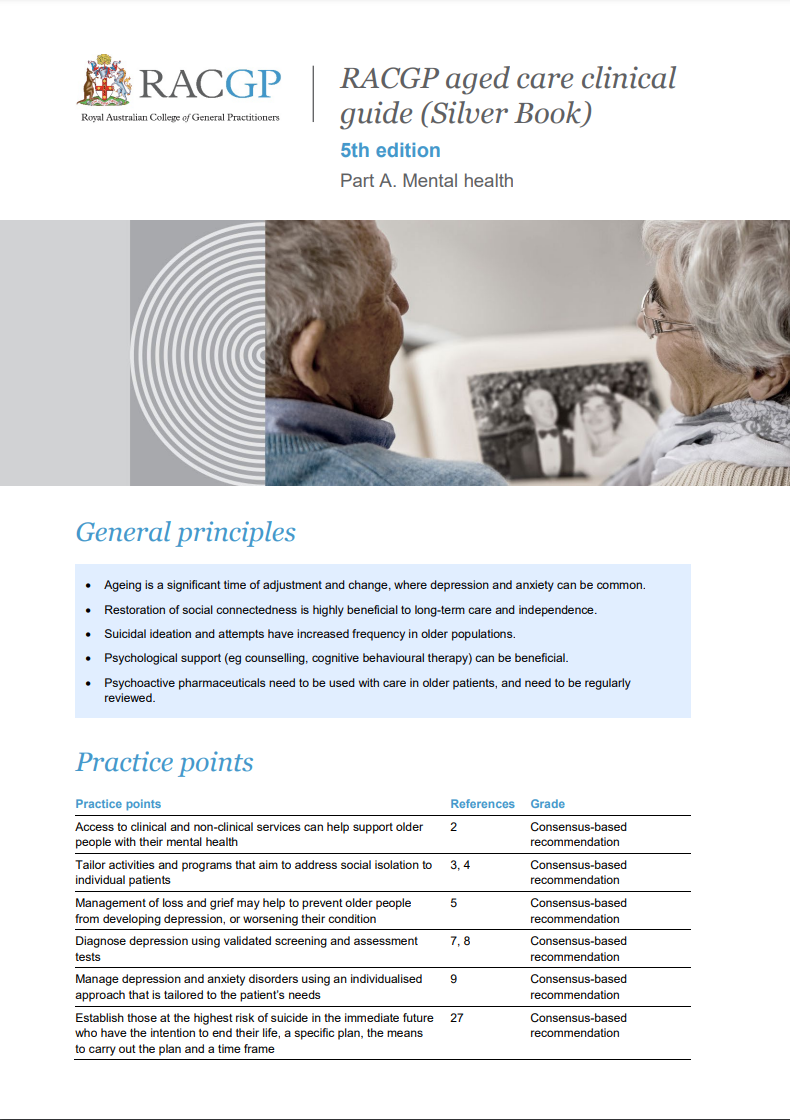
RACGP aged care clinical guide (Silver Book) - Part A - Mental health
This guide addresses mental health in older adults, including social isolation, depression, anxiety, suicide risk, bipolar disorder, and schizophrenia. It provides consensus-based recommendations for tailored interventions, diagnosis through validated assessments, and management strategies that combine clinical and non-clinical approaches.
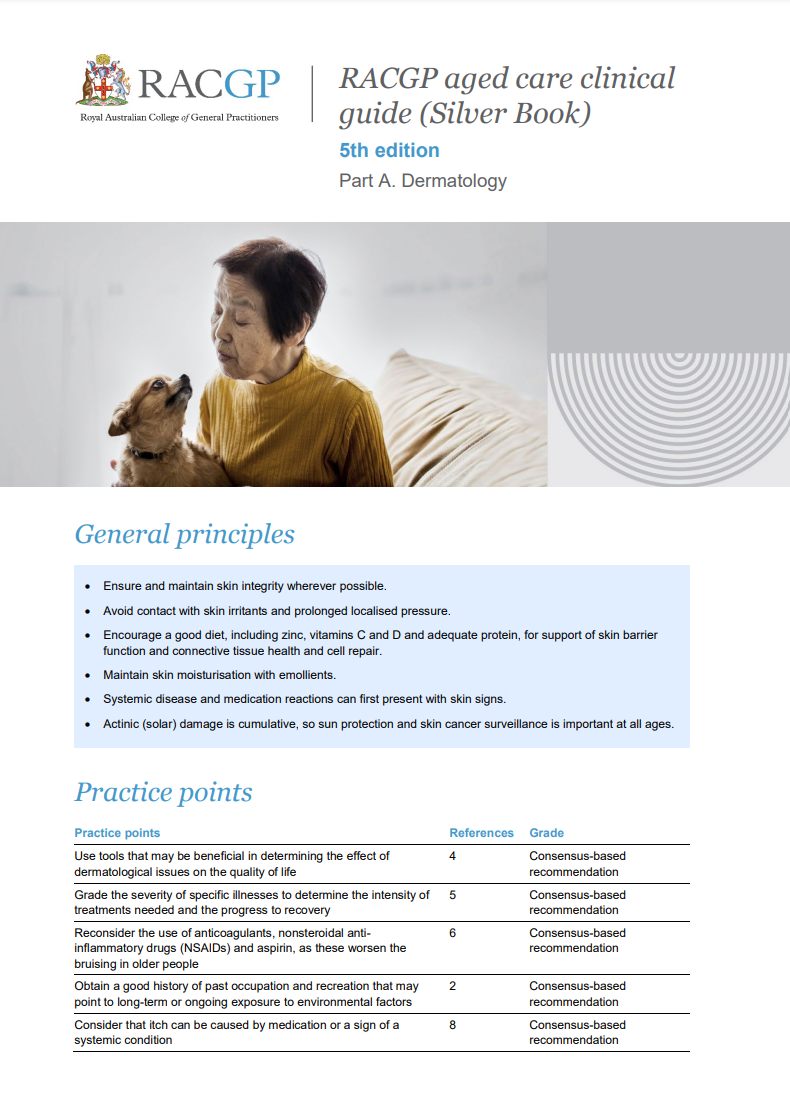
RACGP aged care clinical guide (Silver Book) - Part A - Dermatology
This guide provides recommendations for dermatological care in older adults, addressing skin integrity, sun damage, bruising, and wound management. It highlights factors affecting skin health, like systemic disease, medication, and environmental exposure. It recommends regular skin assessments, non-pharmacological interventions, moisturisation, and tailored approaches for managing conditions like ulcers, pruritus, and skin cancer in aged care settings.
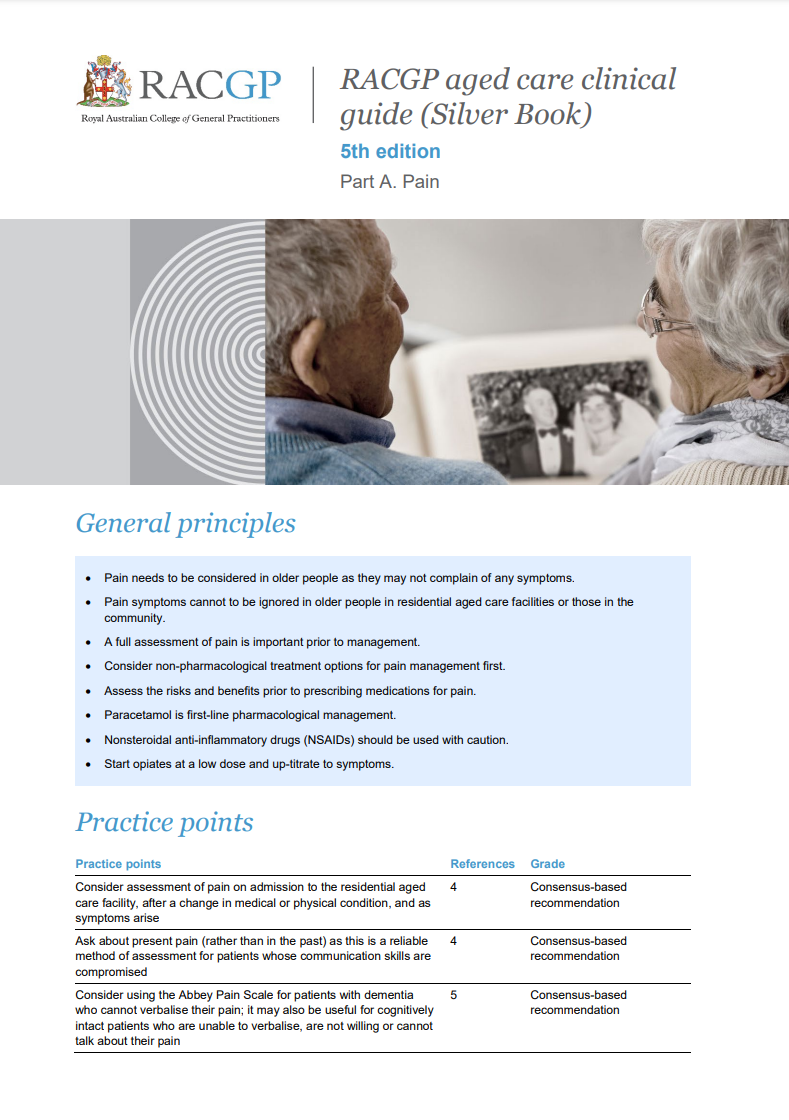
RACGP aged care clinical guide (Silver Book) - Part A - Pain
This guide provides strategies for managing pain in older adults in aged care, focusing on assessment, non-pharmacological treatments, and pharmacological interventions. It includes practice points on appropriate medication use, considerations for pain assessment tools, and recommendations for safe management, including tailored care and treatment monitoring to improve quality of life.
My food and dining preferences - form
This fact sheet helps aged care residents communicate their food and dining preferences. It includes sections for meal choices, dining preferences, assistance needs, health considerations, cultural or religious customs, and contact information for allied health professionals. It also advises staff to monitor changes in weight and contact a dietitian if needed.
This resource may refer to information that will be updated from 1 November 2025 to align with the new Aged Care Act and Quality Standards.
 My food and dining preferences form (PDF 378.98 KB)
Arabic - تفضيلاتي في الطعام وعادات الأكل (PDF 426.01 KB)
French - Mes préférences alimentaires et de repas (PDF 365.82 KB)
German - Meine Essens- und Speisevorlieben (PDF 358.86 KB)
Greek - Οι προτιμήσεις μου για το φαγητό και τα γεύματα (PDF 359.43 KB)
Hungarian - Étel- és étkezési preferenciák (PDF 369.35 KB)
Macedonian - Моите желби во врска со храната и јадењето (PDF 358.79 KB)
Maltese - Il-preferenzi tiegħi tal-ikel u l-ikliet (PDF 364.67 KB)
Portuguese - Minhas preferências alimentares e gastronômicas (PDF 373.26 KB)
Russian - Мои предпочтения в еде и приеме пищи (PDF 353.14 KB)
Serbian - Моје жеље које се тичу хране и обедовања (PDF 353.84 KB)
Simplified Chinese - 我的饮食及用餐偏好 (PDF 420.97 KB)
Traditional Chinese - 我的飲食及用餐偏好 (PDF 422.91 KB)
Spanish - Mis preferencias de alimentos y comidas (PDF 365.1 KB)
Vietnamese - Sở thích ăn uống và thực phẩm của tôi (PDF 340.54 KB)
My food and dining preferences form (PDF 378.98 KB)
Arabic - تفضيلاتي في الطعام وعادات الأكل (PDF 426.01 KB)
French - Mes préférences alimentaires et de repas (PDF 365.82 KB)
German - Meine Essens- und Speisevorlieben (PDF 358.86 KB)
Greek - Οι προτιμήσεις μου για το φαγητό και τα γεύματα (PDF 359.43 KB)
Hungarian - Étel- és étkezési preferenciák (PDF 369.35 KB)
Macedonian - Моите желби во врска со храната и јадењето (PDF 358.79 KB)
Maltese - Il-preferenzi tiegħi tal-ikel u l-ikliet (PDF 364.67 KB)
Portuguese - Minhas preferências alimentares e gastronômicas (PDF 373.26 KB)
Russian - Мои предпочтения в еде и приеме пищи (PDF 353.14 KB)
Serbian - Моје жеље које се тичу хране и обедовања (PDF 353.84 KB)
Simplified Chinese - 我的饮食及用餐偏好 (PDF 420.97 KB)
Traditional Chinese - 我的飲食及用餐偏好 (PDF 422.91 KB)
Spanish - Mis preferencias de alimentos y comidas (PDF 365.1 KB)
Vietnamese - Sở thích ăn uống và thực phẩm của tôi (PDF 340.54 KB)
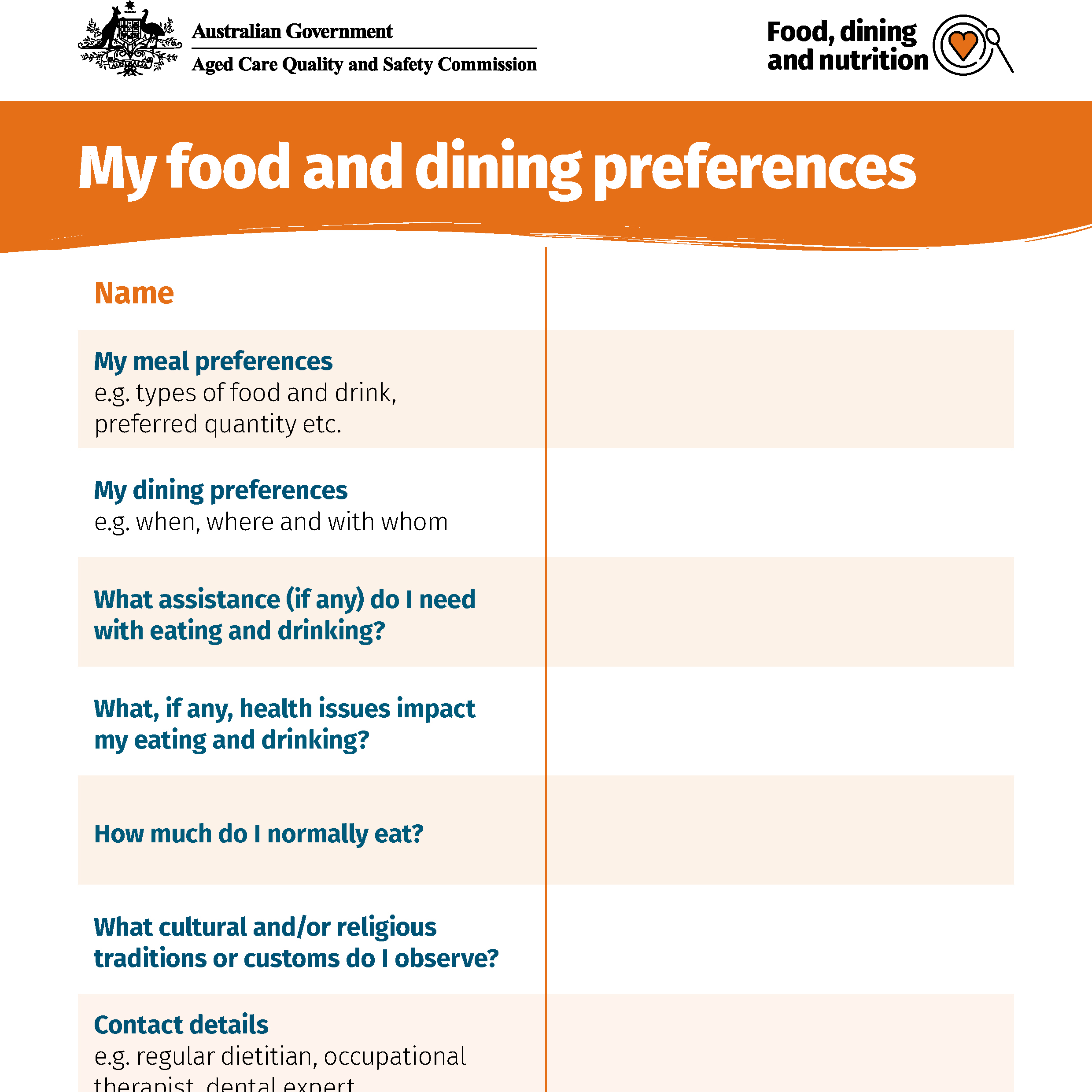
Dining in residential aged care - tips and tricks fact sheet
This fact sheet provides practical tips for enhancing dining experiences in residential aged care settings. It offers guidance on food presentation, meal assistance, creating a respectful and enjoyable atmosphere, supporting independence, and providing culturally appropriate dining options. The aim is to improve mealtime satisfaction while maintaining older peoples' dignity and people's preferences.
This resource may refer to information that will be updated from 1 November 2025 to align with the new Aged Care Act and Quality Standards.
Dining in residential aged care – tips, tricks and what to avoid (PDF 484.37 KB)
Falls prevention
This resource provides guidance for preventing falls and harm from falls in older people in healthcare settings. This resource may refer to information that will be updated from 1 November 2025 to align with the new Aged Care Act and Quality Standards.
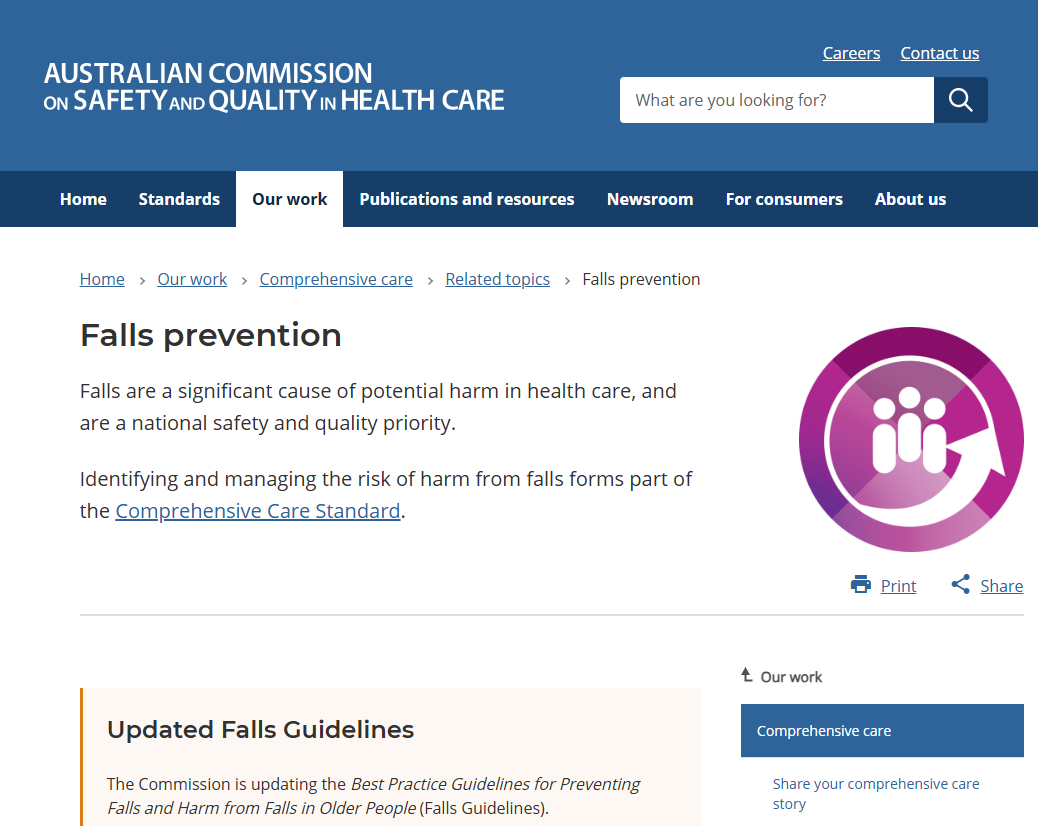
Analysis of a survey of food and dining experiences in residential aged care services - Final report
This resource provides insights into food, dining, and nutrition in residential aged care services. It is based on a survey conducted to understand residents’ dining experiences, preferences, and the quality of food and service provided. The findings highlight the importance of fresh, familiar meals, flexible mealtimes, and a homelike dining environment to enhance the quality of life for older people. This resource may refer to information that will be updated from 1 November 2025 to align with the new Aged Care Act and Quality Standards.
Residential aged care food services discussion paper
This paper presents a high-level overview of contemporary evidence regarding food services in residential aged care settings.
Residential aged care food services discussion paper (PDF 536.47 KB)
Celebrating successes in engaging people to improve food, nutrition and dining
This resource highlights successful practices in engaging older people to improve food, nutrition, and dining experiences. Providers can use examples like food focus groups, family involvement in recipe changes, and resident-led dining committees to promote enjoyable, dignified, and inclusive dining. It fosters better health, wellbeing, and relationships with staff.
This resource may refer to information that will be updated from 1 November 2025 to align with the new Aged Care Act and Quality Standards.
Cultural considerations in Food, Nutrition and Dining
This resource provides guidance on incorporating cultural considerations into food, nutrition, and dining in aged care settings. It highlights the importance of understanding diverse dietary preferences, religious practices, and family dynamics to support person-centred care, improve wellbeing, and promote inclusivity within the aged care environment.
This resource may refer to information that will be updated from 1 November 2025 to align with the new Aged Care Act and Quality Standards.
Food for thought - positive stories
This resource shares positive stories about food, nutrition, and dining improvements in aged care facilities. It highlights initiatives that enhance the dining experience, including resident involvement in meal planning, use of fresh and seasonal ingredients, and creating more social and enjoyable mealtime environments. These stories demonstrate best practices and innovative approaches to improve resident satisfaction and wellbeing.
Food, nutrition & dining: resources for workers
This resource provides aged care workers with tools to enhance food, nutrition, and dining experiences for people in their care. It includes practical guides on offering choice, managing swallowing difficulties, promoting oral health, and creating an enjoyable dining environment, all while ensuring adherence to aged care standards.
This resource may refer to information that will be updated from 1 November 2025 to align with the new Aged Care Act and Quality Standards.