The Quality Standards Resource Centre helps extend understanding of the strengthened Aged Care Quality Standards, which took effect from 1 November 2025. You can search for resources by using keywords, or filtering by standard, outcome and audience. Before using the Resource Centre, please read the terms of use.
Translating and Interpreting Service (TIS National)
The Translating and Interpreting Service (TIS National) provides interpreting support for people with limited English proficiency and agencies requiring assistance to communicate with non-English-speaking clients. Services include telephone, on-site, and video interpreting, with options for both government and fee-paying clients across Australia.
About dentists and dental practitioners
This resource outlines the roles and qualifications of dental professionals, including dentists, hygienists, and prosthetists, and their responsibilities in patient care. It emphasises the importance of registration, adherence to standards, and compliance monitoring to prevent fraud in Medicare billing and prescribing practices.

Different languages, same aged care
This resource provides information on a free translation service for government-subsidised aged care providers, enabling communication in languages other than English. It helps aged care providers reach diverse communities, including culturally and linguistically diverse individuals, First Nations people, and those who are Deaf or hard of hearing, supporting culturally inclusive care.
This resource may refer to information that will be updated from 1 November 2025 to align with the new Aged Care Act and Quality Standards.
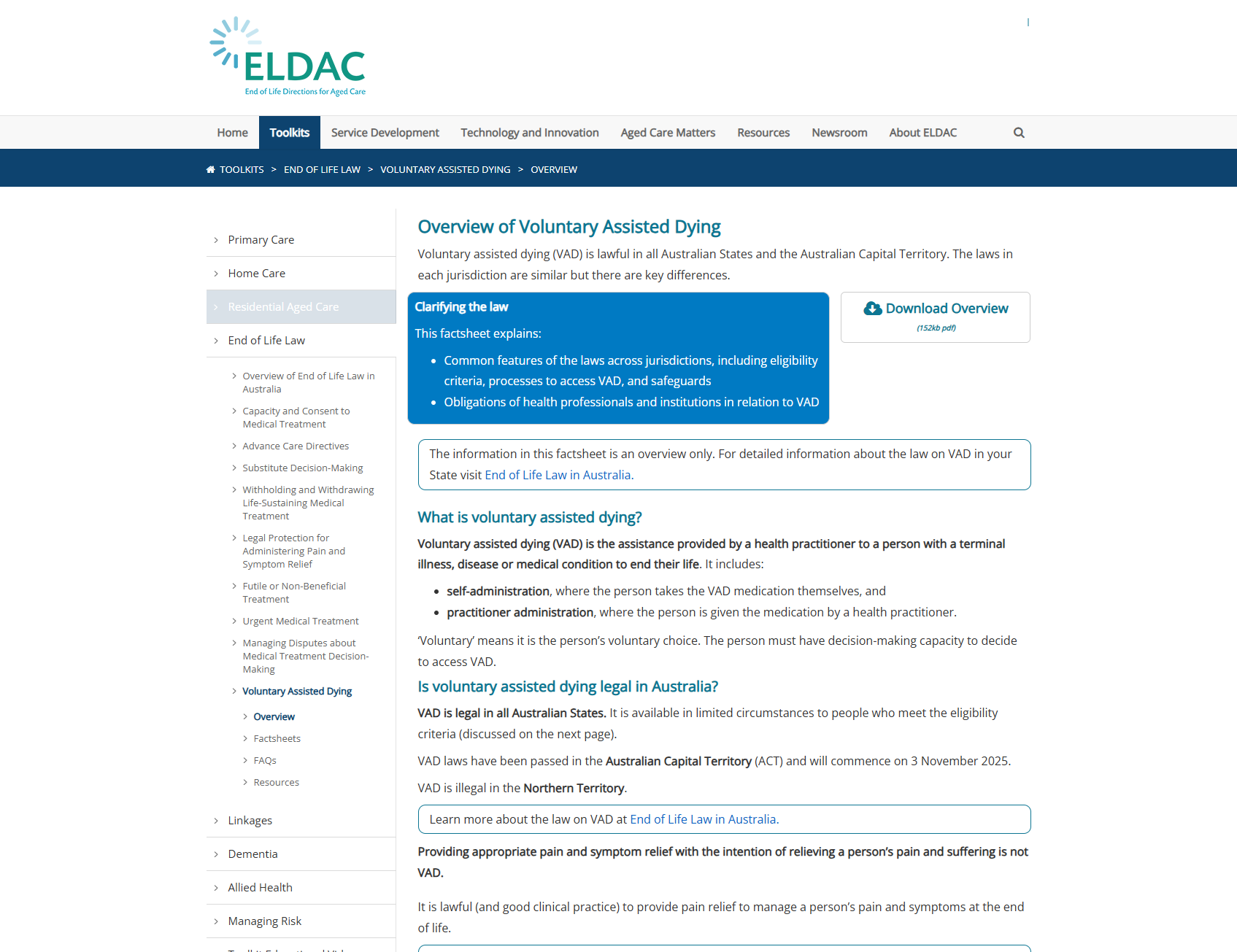
Overview of Voluntary Assisted Dying
This resource provides an overview of voluntary assisted dying (VAD) in Australia, detailing eligibility criteria, procedures, and legal requirements. It covers how VAD laws vary across jurisdictions, safeguards in place, and responsibilities for health professionals and institutions. Health professionals can conscientiously object but may still have legal responsibilities.
Aged Care Volunteer Visitors Scheme (ACVVS)
This resource explains the Aged Care Volunteer Visitors Scheme (ACVVS), which connects volunteers with older people to provide companionship and reduce social isolation. It details how to become a volunteer, request a visitor, and outlines the scheme's benefits for both recipients and volunteers in aged care settings.
This resource may refer to information that will be updated from 1 November 2025 to align with the new Aged Care Act and Quality Standards.
Physical activity and exercise guidelines - For older Australians (65 years and over)
This resource provides Australia’s physical activity and sedentary behaviour guidelines for older adults. It outlines how much physical activity is recommended, the importance of reducing sitting time, and the benefits of staying active. The guidelines help promote better physical and mental health across the lifespan.
This resource may refer to information that will be updated from 1 November 2025 to align with the new Aged Care Act and Quality Standards.
Positive ageing
This resource focuses on positive ageing, encouraging older people to maintain their health, independence, and connection to community. It covers planning for healthy ageing, staying physically active, and accessing aged care services when needed. The resource promotes ageing as a positive experience, offering practical guidance to support older people in living well. This resource may refer to information that will be updated from 1 November 2025 to align with the new Aged Care Act and Quality Standards.
QI Program Module 7 – Activities of daily living
This resource explains the importance of measuring activities of daily living (ADLs) for older people in residential aged care. It guides providers on using the Barthel Index to assess ADLs quarterly, helping identify risks of functional decline and implement strategies to maintain independence and improve quality of life. This resource may refer to information that will be updated from 1 November 2025 to align with the new Aged Care Act and Quality Standards.
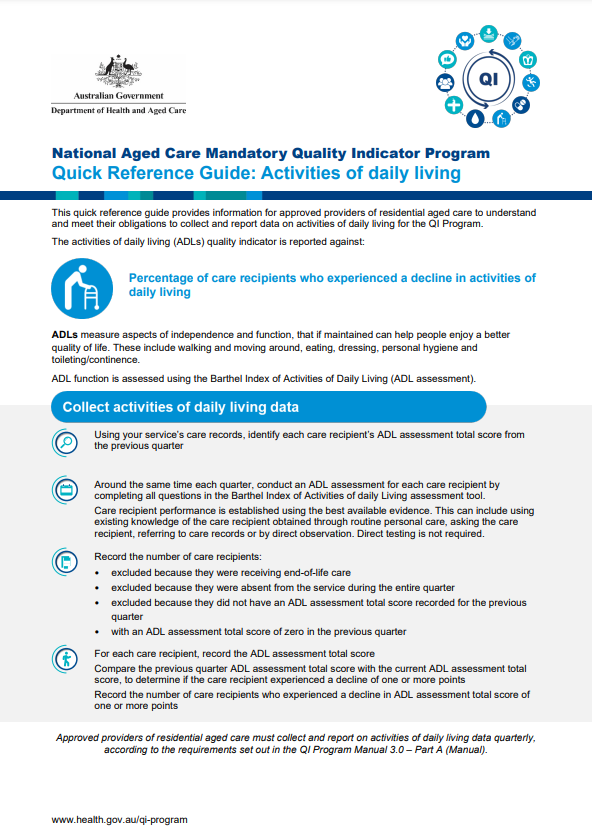
QI Program quick reference guide – Activities of daily living
This quick reference guide provides residential aged care providers with instructions on collecting and reporting data for the Quality Indicator Program. It focuses on measuring the decline in activities of daily living (ADLs) using the Barthel Index, helping providers monitor care recipients' functional independence and implement appropriate support strategies. This resource may refer to information that will be updated from 1 November 2025 to align with the new Aged Care Act and Quality Standards.
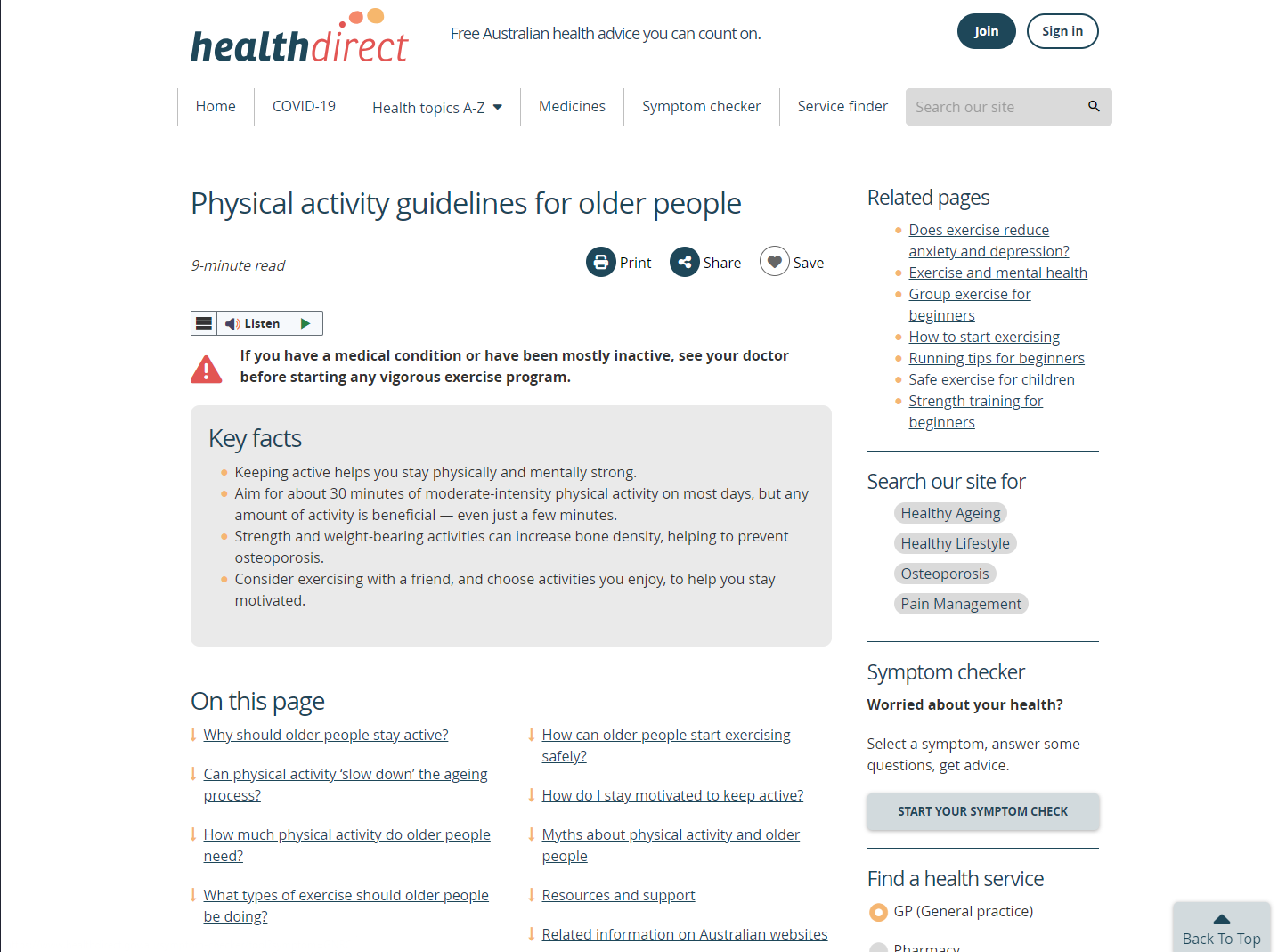
Physical activity guidelines for older people
This resource provides physical activity guidelines for older people, highlighting the benefits of staying active. It recommends 30 minutes of moderate-intensity activity daily, including strength, flexibility, balance, and cardiovascular exercises. The document also provides tips for safely starting and maintaining an exercise routine to support healthy ageing.
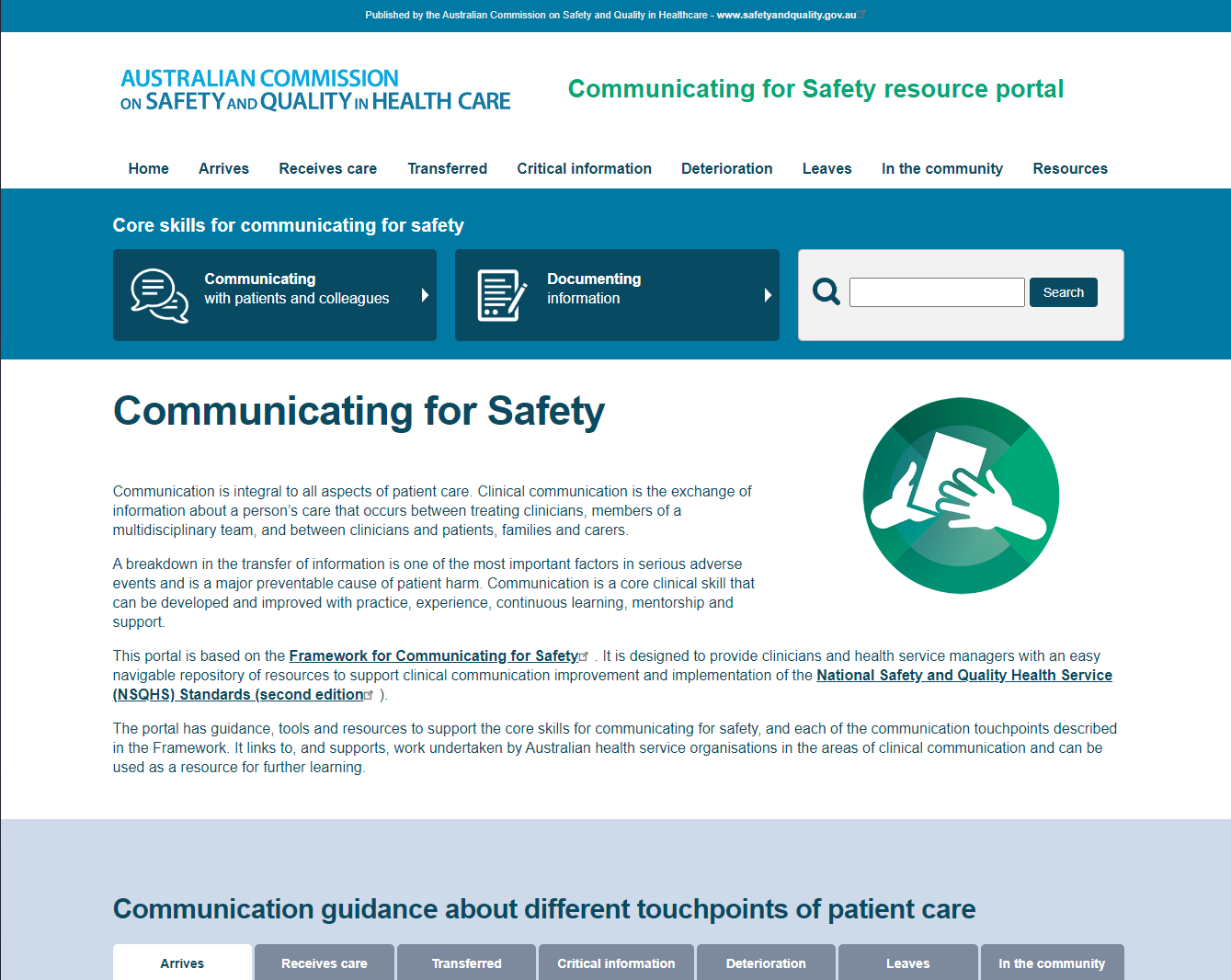
Communicating for Safety
This resource provides tools and guidance on improving clinical communication to enhance patient safety. It focuses on key communication touchpoints, such as handovers, decision-making, and care transitions. Designed to support healthcare providers, it offers practical strategies to reduce errors and improve outcomes in aged care and other healthcare settings.
This resource may refer to information that will be updated from 1 November 2025 to align with the new Aged Care Act and Quality Standards.
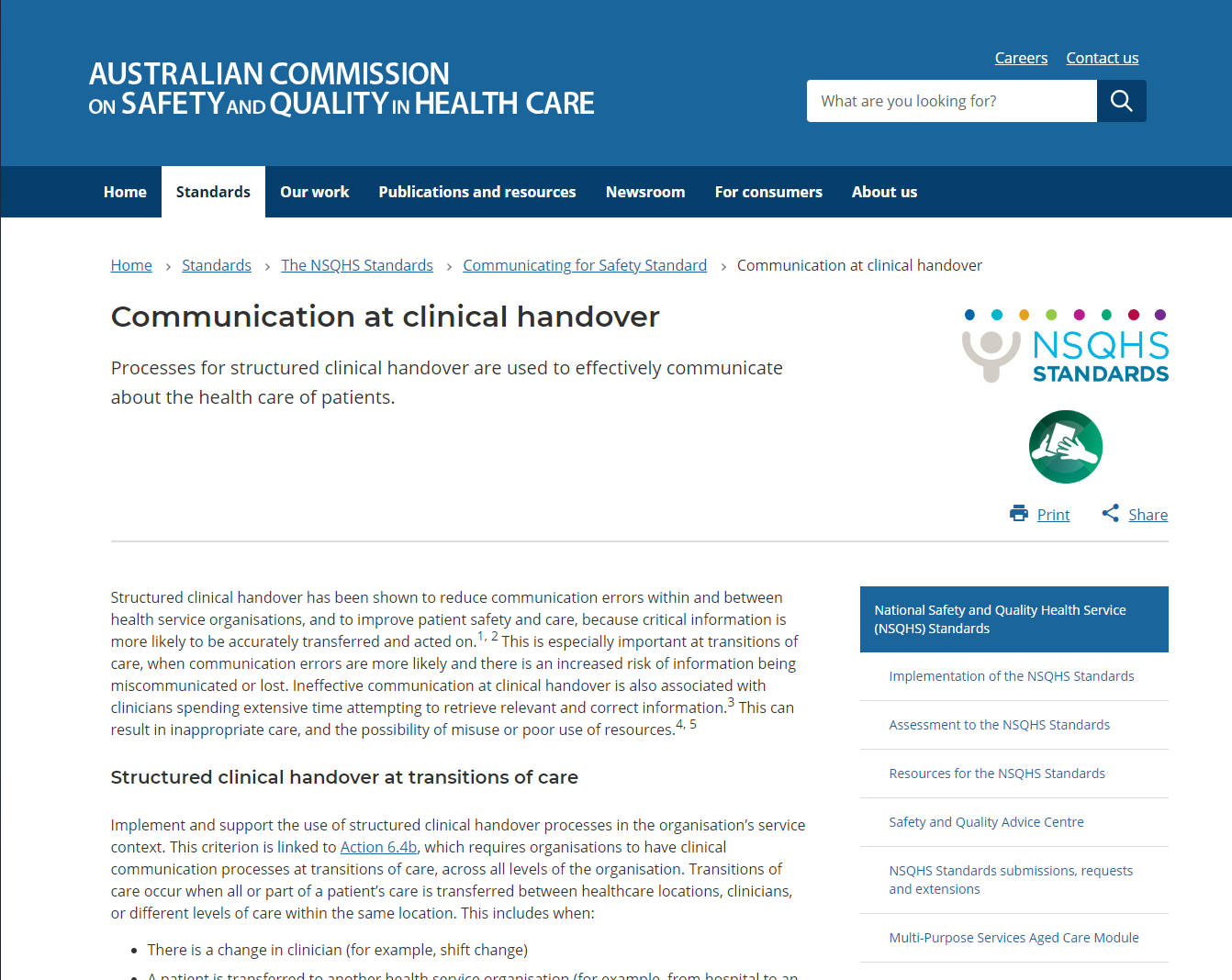
Communication at clinical handover
This resource focuses on structured clinical handover processes to improve communication during patient care transitions. It highlights the importance of standardising handover procedures to make sure relevant information is effectively communicated, reducing errors and enhancing patient safety, especially during care transfers in healthcare settings, including aged care.
This resource may refer to information that will be updated from 1 November 2025 to align with the new Aged Care Act and Quality Standards.
Fact sheet - Principles of safe and high-quality transitions of care
This resource outlines the principles for safe and high-quality transitions of care, emphasising person-centred care, multidisciplinary collaboration, and effective communication. It highlights the need for secure documentation, continuity of care, and coordination among healthcare teams to make sure smooth transitions and minimise risks during transfers between care providers.
This resource may refer to information that will be updated from 1 November 2025 to align with the new Aged Care Act and Quality Standards.
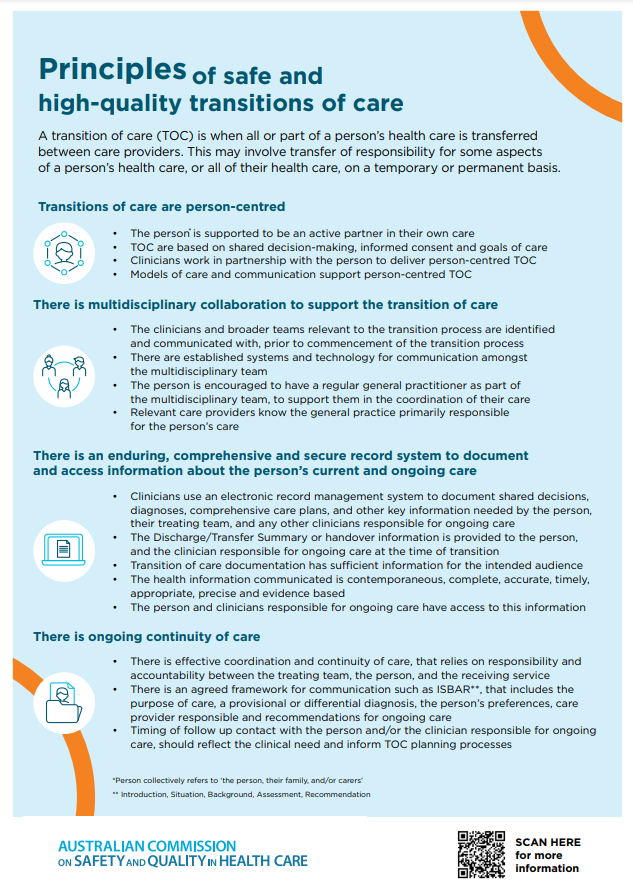
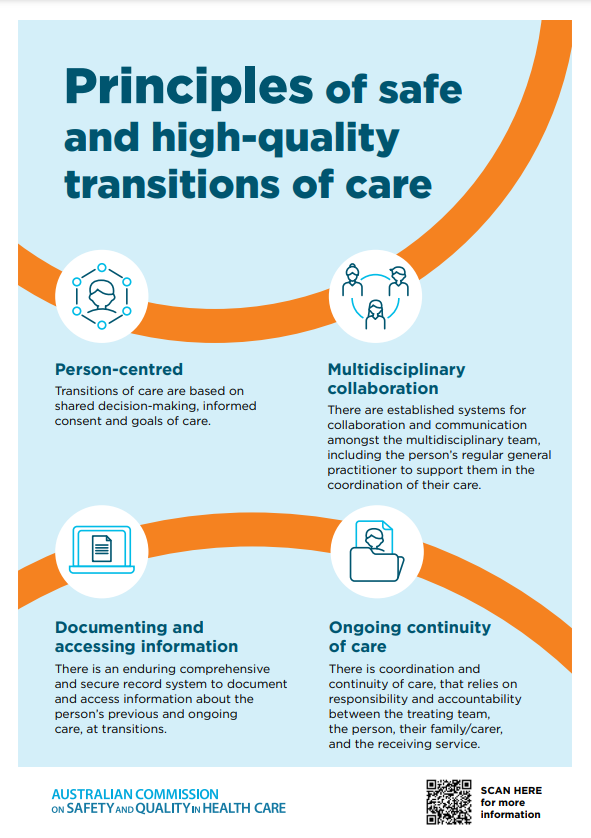
Poster - Principles of safe and high-quality transitions of care
This resource outlines the principles of safe and high-quality transitions of care. It highlights the importance of person-centred care, multidisciplinary collaboration, and clear communication between providers. It ensures coordination, accountability, and secure documentation to support continuity of care when transferring people between care settings. This resource may refer to information that will be updated from 1 November 2025 to align with the new Aged Care Act and Quality Standards.
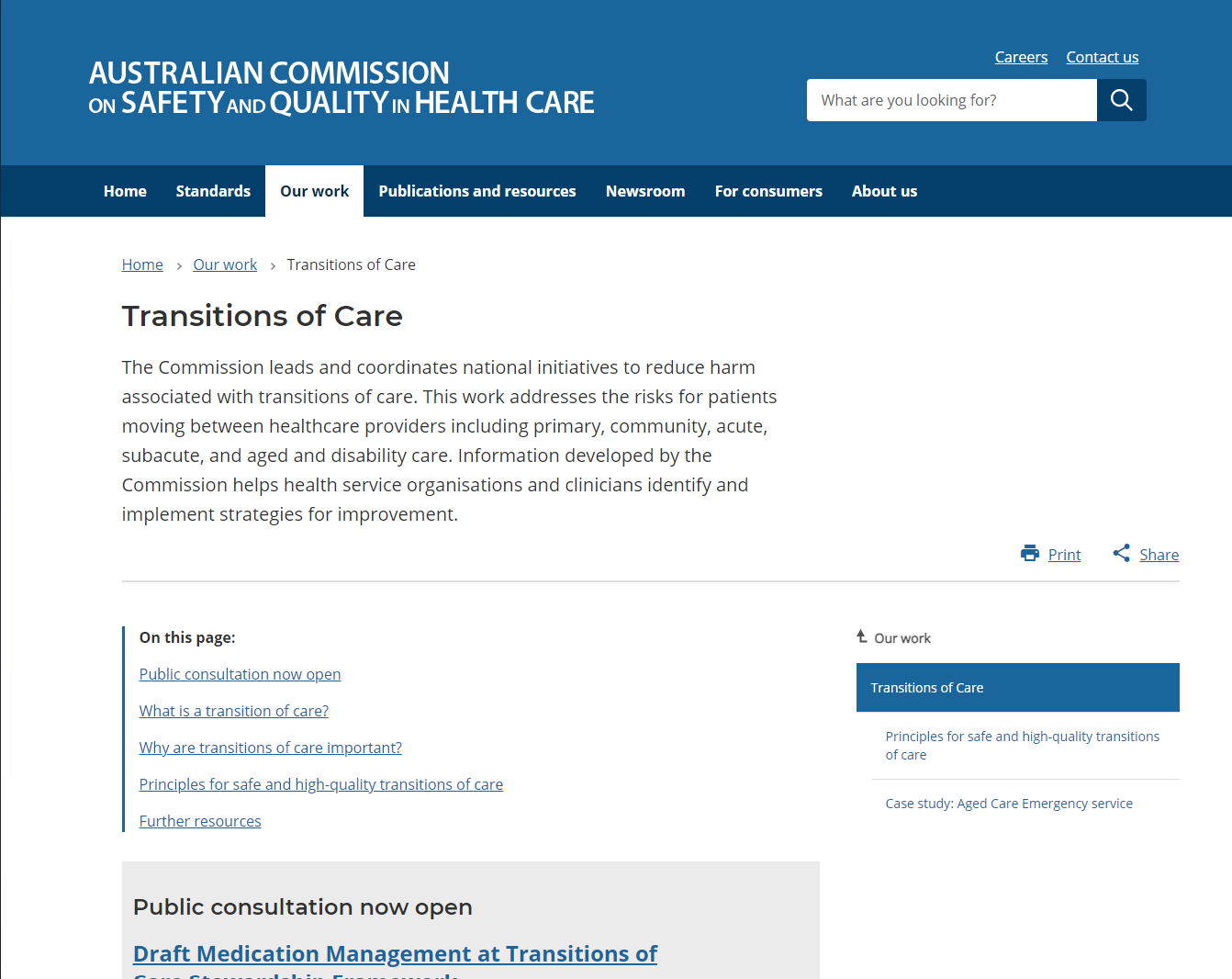
Transitions of Care
This resource explains transitions of care, when responsibility for a person’s health care is transferred between providers. It covers the risks involved, such as medication errors and readmissions, and offers principles for safe and high-quality transitions across care settings, including aged care, to reduce harm and improve outcomes. This resource may refer to information that will be updated from 1 November 2025 to align with the new Aged Care Act and Quality Standards.
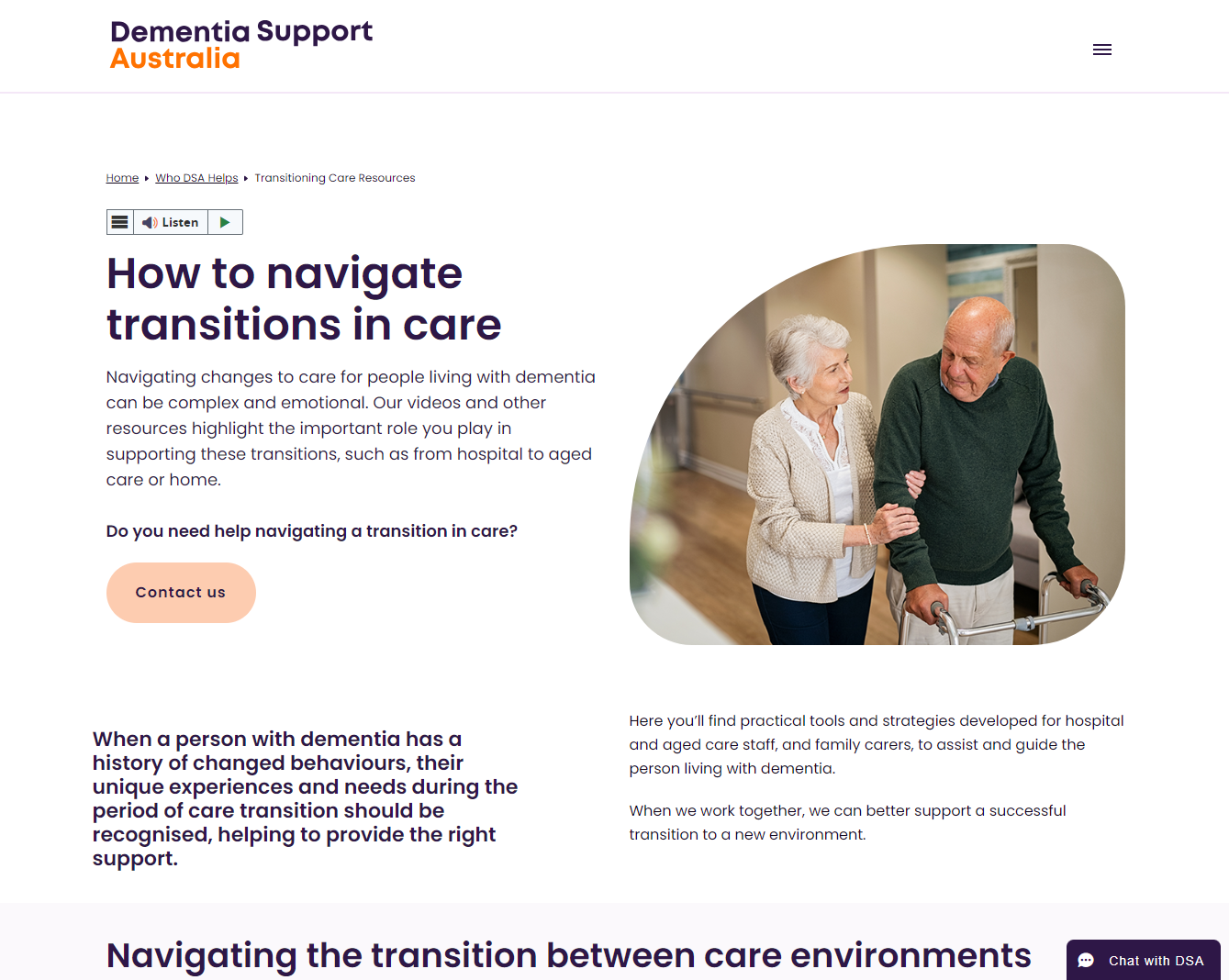
How to navigate transitions in care
This resource offers tools and strategies for navigating care transitions for people living with dementia. It provides support to hospital, aged care staff, and family carers, ensuring that the unique needs of those with dementia are met during transitions, such as moving from hospital to aged care or home.
How Home Care Packages interact with other aged care programs
This resource explains how Home Care Packages interact with other aged care programs, such as the Commonwealth Home Support Programme, residential respite care, and the Transition Care Programme. It outlines how to coordinate services to avoid overlaps and provides guidance for accessing multiple programs without service duplication.
This resource may refer to information that will be updated from 1 November 2025 to align with the new Aged Care Act and Quality Standards.
Support at Home program handbook
This resource outlines the design and key components of the Support at Home program, effective from 1 November 2025. It provides guidance for aged care providers on service delivery, budgeting, and assessment processes, helping older people remain independent at home. It also details regulatory requirements and transition from existing programs.
This resource may refer to information that will be updated from 1 November 2025 to align with the new Aged Care Act and Quality Standards.
Cultural considerations in Food, Nutrition and Dining
This resource provides guidance on incorporating cultural considerations into food, nutrition, and dining in aged care settings. It highlights the importance of understanding diverse dietary preferences, religious practices, and family dynamics to support person-centred care, improve wellbeing, and promote inclusivity within the aged care environment.
This resource may refer to information that will be updated from 1 November 2025 to align with the new Aged Care Act and Quality Standards.
Reportable incidents
This resource outlines reportable incidents within aged care, including Priority 1 and Priority 2 incidents. It provides information on the 8 types of incidents that must be reported, such as psychological abuse, neglect, and the inappropriate use of restrictive practices, helping providers meet their obligations.
This resource may refer to information that will be updated from 1 November 2025 to align with the new Aged Care Act and Quality Standards.