The Quality Standards Resource Centre helps extend understanding of the strengthened Aged Care Quality Standards, which took effect from 1 November 2025. You can search for resources by using keywords, or filtering by standard, outcome and audience. Before using the Resource Centre, please read the terms of use.
What is hand hygiene?
This resource provides guidance on proper hand hygiene practices in healthcare settings. It covers key topics such as the correct use of alcohol-based hand rubs, when to wash hands with soap and water, and appropriate glove use. It also addresses common hand care issues and strategies for preventing dermatitis in healthcare workers.
This resource may refer to information that will be updated from 1 November 2025 to align with the new Aged Care Act and Quality Standards.
Communicable Diseases Network Australia (CDNA)
This resource provides an overview of the Communicable Diseases Network Australia (CDNA), which coordinates national surveillance and prevention of communicable diseases. It outlines CDNA’s role in managing outbreaks, developing policy, and strengthening disease control. The document supports collaboration with national and international partners to prevent and manage disease outbreaks effectively.
This resource may refer to information that will be updated from 1 November 2025 to align with the new Aged Care Act and Quality Standards.
COVID-19 advice for health professionals
This resource offers COVID-19 guidance for health professionals, including infection prevention, antiviral treatments, and telehealth services. It advises on managing high-risk patients, accessing personal protective equipment (PPE), and maintaining hygiene standards. It is essential for ensuring safe healthcare delivery, particularly in aged care settings during the pandemic.
This resource may refer to information that will be updated from 1 November 2025 to align with the new Aged Care Act and Quality Standards.
COVID-19 resources for health professionals, including aged care providers, pathology providers and health care managers
This resource offers COVID-19 guidance for health professionals and aged care providers. It includes information on managing outbreaks, infection control, PPE use, and telehealth services. These resources support safe and effective care delivery while ensuring compliance with guidelines during the pandemic in aged care settings.
This resource may refer to information that will be updated from 1 November 2025 to align with the new Aged Care Act and Quality Standards.
COVID-19 vaccine advice and recommendations for 2024
This resource provides the latest COVID-19 vaccine advice for 2024. It covers primary vaccination doses, booster eligibility, general facts about vaccines and the latest data for case numbers and vaccinations. It also includes vaccine information for specific groups of people including Aboriginal and Torres Strait Islander people, people in aged care and people with disability.
This resource may refer to information that will be updated from 1 November 2025 to align with the new Aged Care Act and Quality Standards.
Give flu the boot
This resource promotes the free influenza vaccine for Aboriginal and Torres Strait Islander people aged 6 months and older. It explains the benefits of flu vaccination, including reducing the risk of severe illness and hospitalisation, and provides guidance on when and where to receive the vaccine to protect communities from influenza.
This resource may refer to information that will be updated from 1 November 2025 to align with the new Aged Care Act and Quality Standards.
Government support for providers and workers
This resource outlines government support for aged care providers managing COVID-19 outbreaks. It covers information on infection prevention measures, vaccination assistance, and mental health resources to help providers maintain care quality and safety during outbreaks.
This resource may refer to information that will be updated from 1 November 2025 to align with the new Aged Care Act and Quality Standards.
ICEG-endorsed resources for infection prevention and control
This resource collection includes guidance on infection prevention and control practices endorsed by the Infection Prevention and Control Expert Group (ICEG). It supports health and aged care providers with best practices related to COVID-19, personal protective equipment (PPE), cleaning, disinfection, and minimising transmission risks in institutional and community settings.
This resource may refer to information that will be updated from 1 November 2025 to align with the new Aged Care Act and Quality Standards.
National Notifiable Diseases Surveillance System (NNDSS)
This resource provides an overview of the National Notifiable Diseases Surveillance System (NNDSS), which tracks over 70 diseases that pose a risk to public health in Australia. It helps identify disease trends, supports outbreak responses, and informs public health policies. The system collects de-identified data from states and territories to ensure coordinated disease management.
This resource may refer to information that will be updated from 1 November 2025 to align with the new Aged Care Act and Quality Standards.
Resources on sexually transmissible infections
This resource offers materials from the Beforeplay campaign to raise awareness about sexually transmissible infections (STIs). It provides videos, fact sheets, and posters aimed at educating people on STI prevention, testing, and protection, with tailored resources for various groups including young people, couples, and healthcare professionals.
Respiratory syncytial virus (RSV) infection
This resource provides information about respiratory syncytial virus (RSV), a common and highly contagious respiratory virus. It explains symptoms, diagnosis, and prevention, highlighting that RSV can be serious for infants and older adults with chronic conditions. It also details how RSV cases are monitored through national surveillance systems.
This resource may refer to information that will be updated from 1 November 2025 to align with the new Aged Care Act and Quality Standards.
Shield yourself from shingles
This resource provides information on the shingles vaccine, which is free for Aboriginal and Torres Strait Islander people aged 50 and over. It explains the risks of shingles, vaccination locations, and potential side effects. The document encourages older adults to discuss vaccination with their healthcare professional to protect against shingles.
This resource may refer to information that will be updated from 1 November 2025 to align with the new Aged Care Act and Quality Standards.
Translated resources on sexually transmissible infections
This resource provides translated videos, fact sheets, and posters from the Beforeplay campaign to educate multicultural communities about sexually transmissible infections (STIs). It promotes STI testing, safe sex practices, and includes materials in multiple languages to improve accessibility and encourage conversations around sexual health.
Your questions answered - Influenza
This resource answers common questions about influenza vaccination. It explains the importance of annual flu vaccines, who should get vaccinated, and how the vaccine works. It highlights the vaccine's role in preventing serious complications, particularly for older adults, children, pregnant people, and those with chronic health conditions.
This resource may refer to information that will be updated from 1 November 2025 to align with the new Aged Care Act and Quality Standards.
Respiratory syncytial virus (RSV)
This resource explains respiratory syncytial virus (RSV), a common and highly contagious virus that affects the airways and lungs. It outlines symptoms, prevention, and potential complications, especially for young children and older adults. It also provides information on diagnosis, treatment, and recently approved vaccines for at-risk groups.
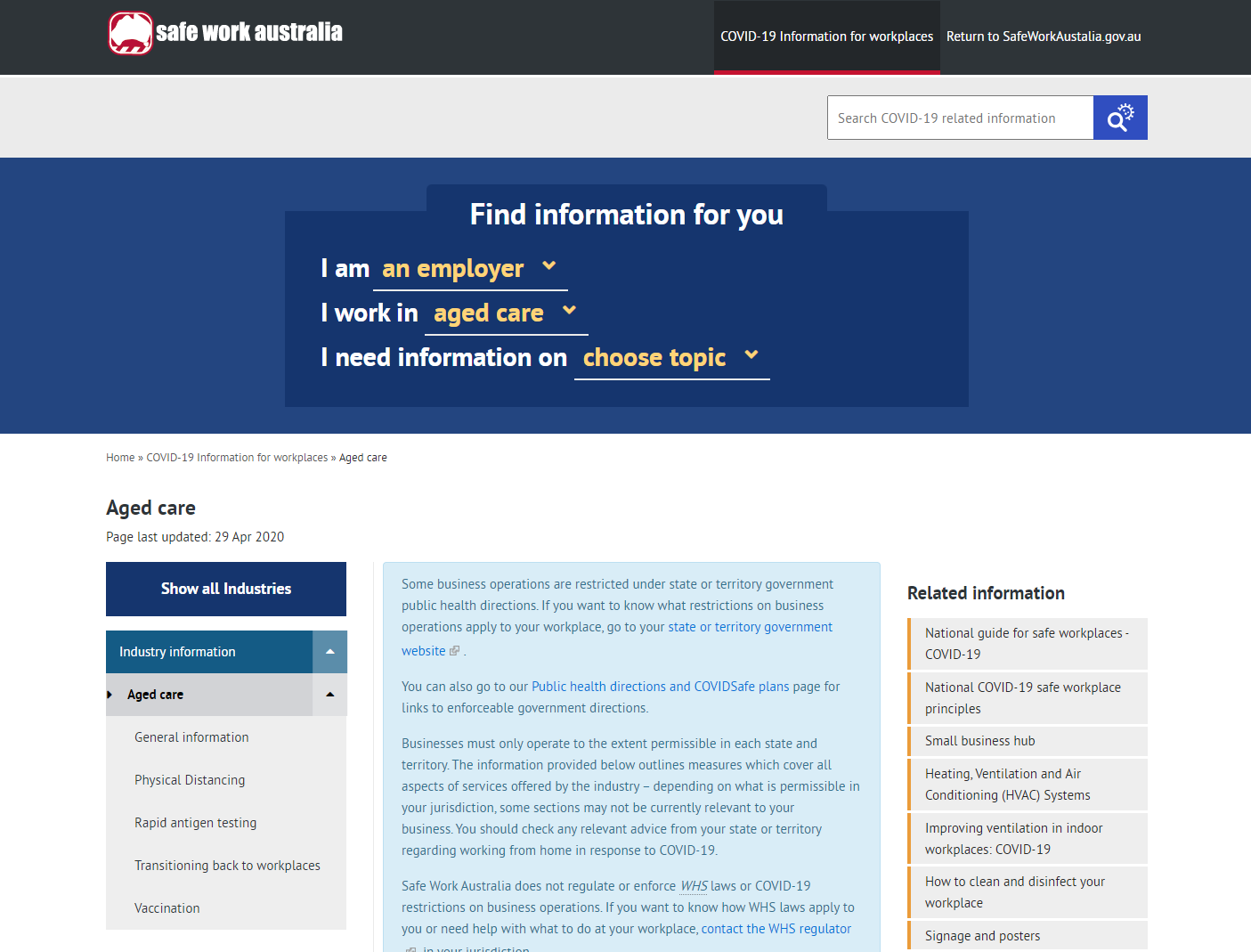
COVID-19 Information for workplaces - Aged care
This resource provides work health and safety (WHS) guidance for the aged care industry during COVID-19. It includes information on employer responsibilities, safe workplace practices, and compliance with public health directions. It supports aged care providers in managing COVID-19 risks across various settings, including residential, respite, and in-home care services.
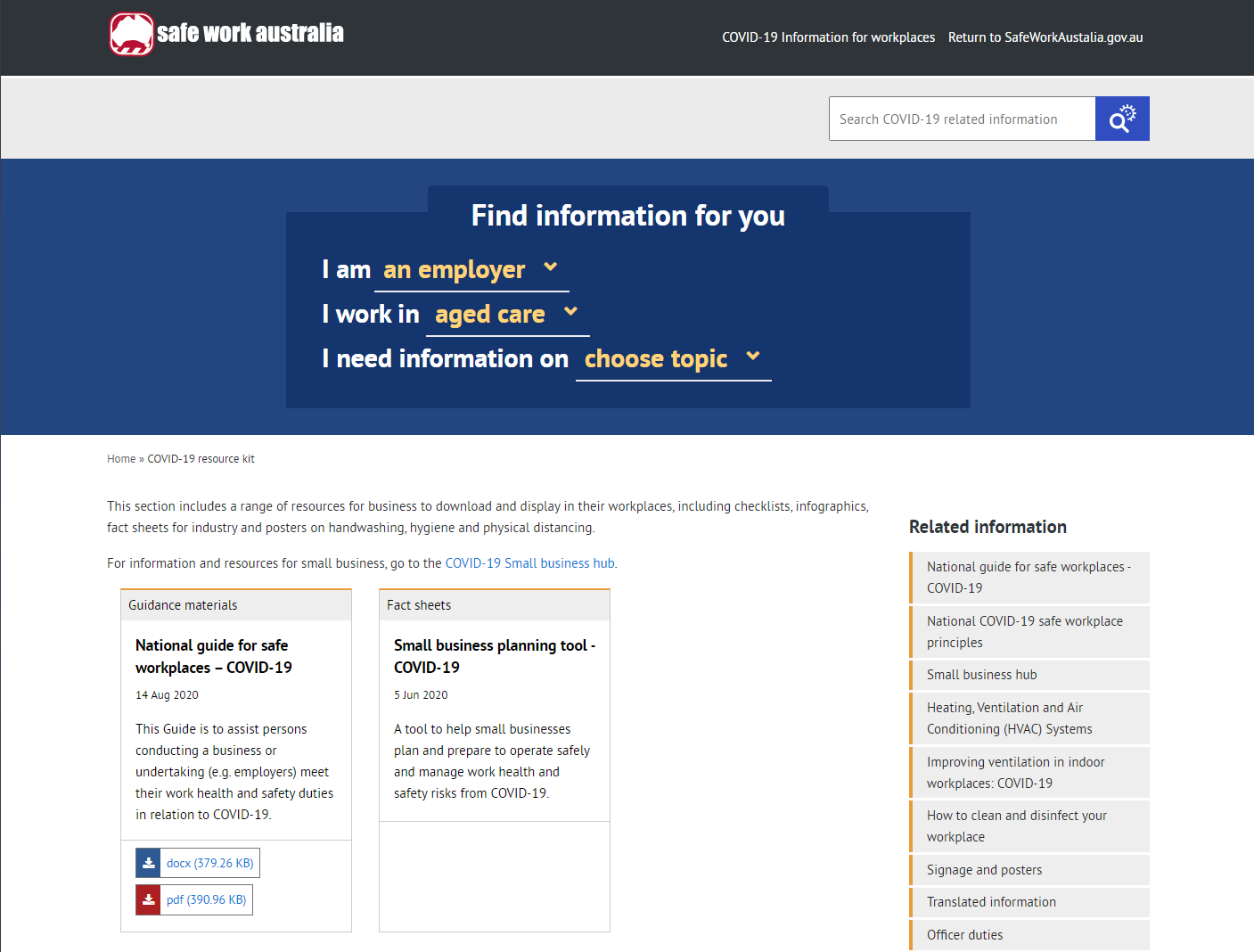
COVID-19 resource kit
This resource kit provides downloadable tools for businesses, including aged care, to manage COVID-19 risks. It includes checklists, posters, and infographics covering hygiene, physical distancing, cleaning, and response actions if a worker contracts COVID-19. These materials help workplaces implement safe practices and reduce the spread of the virus.
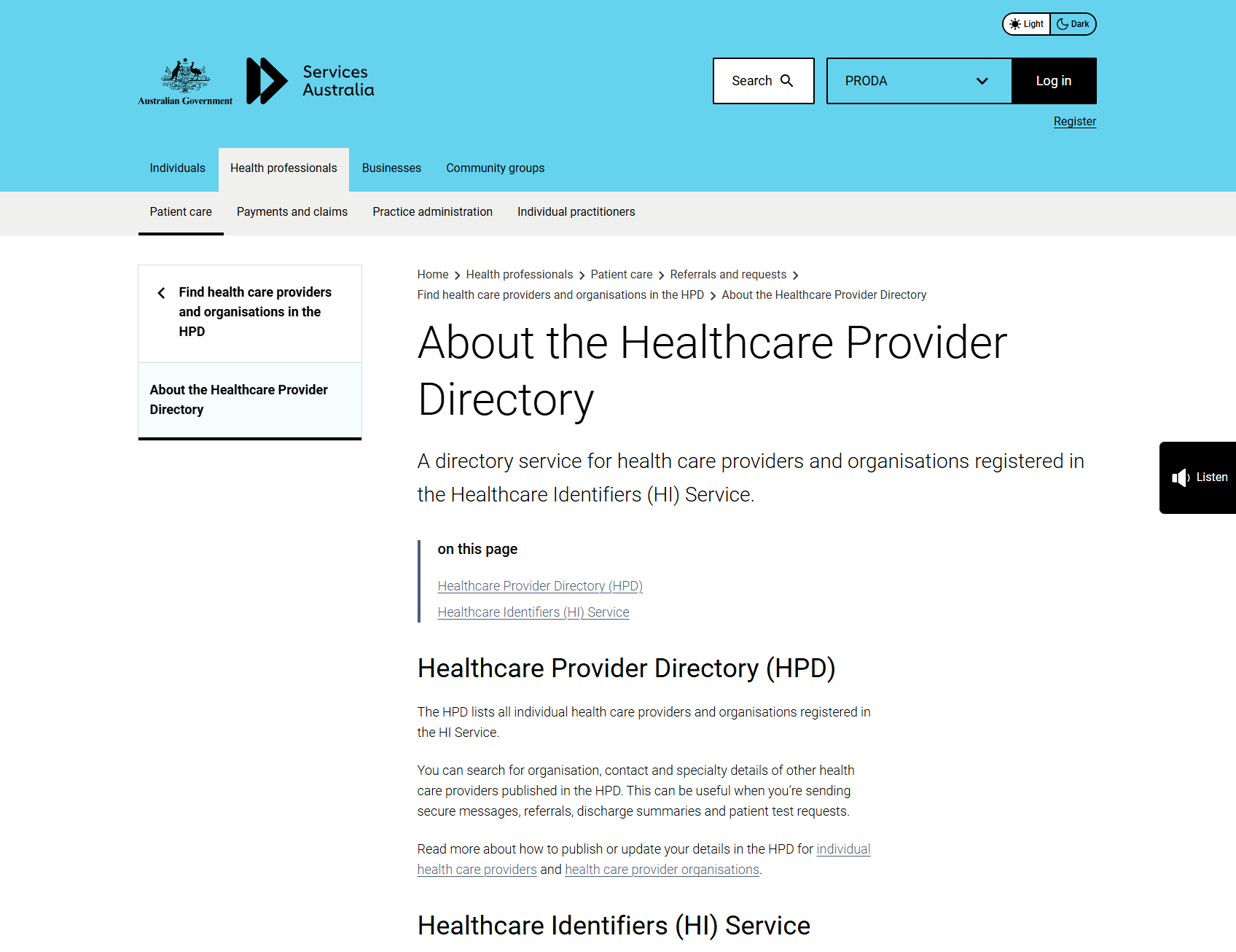
Healthcare Provider Directory (HPD)
This resource explains the Healthcare Provider Directory (HPD), a service listing registered health care providers and organisations in the Healthcare Identifiers (HI) Service. It enables health professionals to access contact and specialty information for secure messaging, referrals, and discharge summaries.
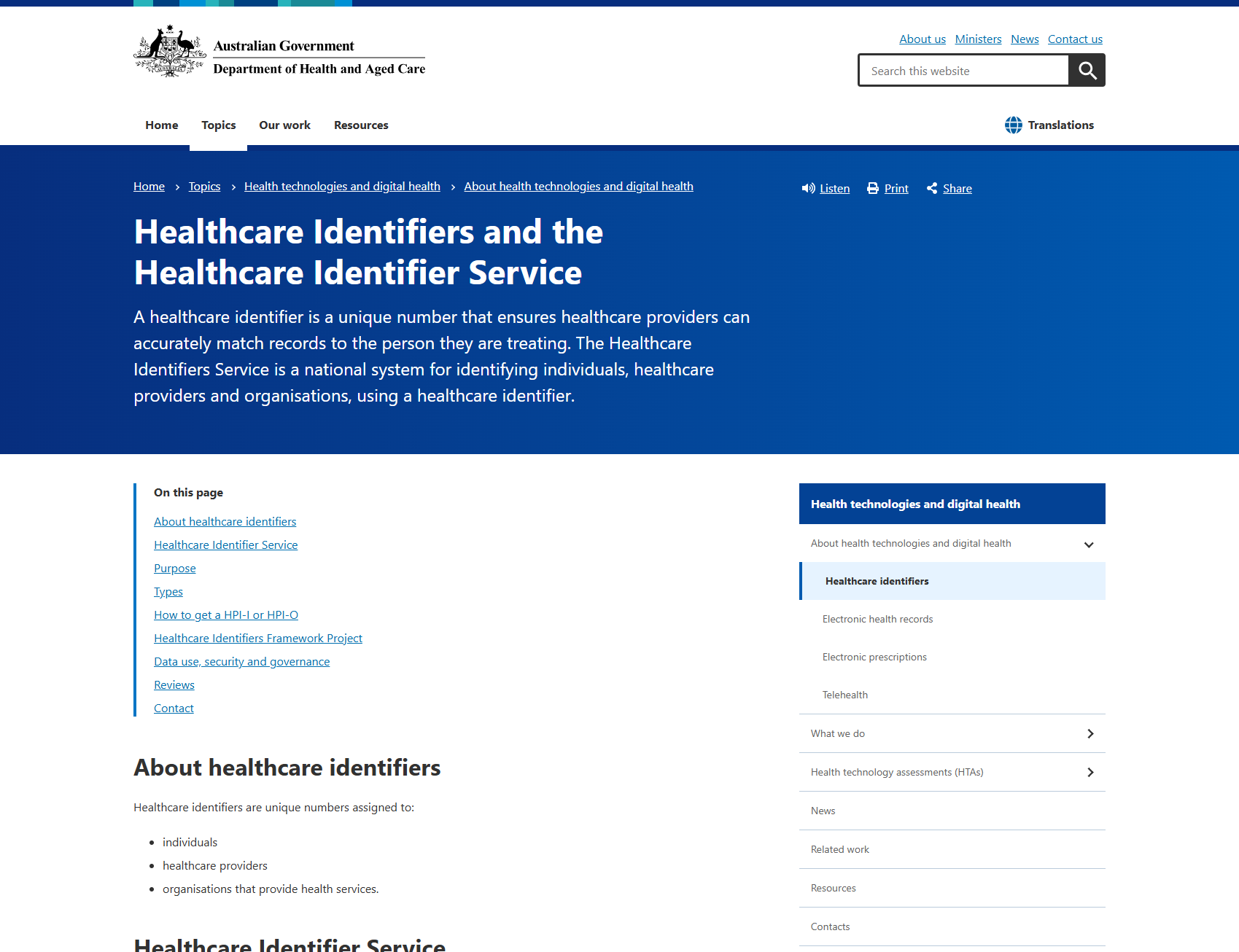
Healthcare Identifiers and the Healthcare Identifier Service
This document explains the Healthcare Identifier Service, a national system for assigning unique healthcare identifiers to individuals, providers, and healthcare organisations. The service aims to improve patient safety, ensure accurate records, and facilitate secure data sharing across health, aged care, and allied health services. It includes privacy measures and public consultation outcomes for potential legislative improvements.
This resource may refer to information that will be updated from 1 November 2025 to align with the new Aged Care Act and Quality Standards.
Conformant clinical software products
This resource provides a register of conformant clinical software products that meet national digital health requirements, enabling functions like My Health Record access, health summary uploads, and prescription management. Organisations using the register should verify entries’ currency and accuracy as updates depend on software developers.