The Quality Standards Resource Centre helps extend understanding of the strengthened Aged Care Quality Standards, which took effect from 1 November 2025. You can search for resources by using keywords, or filtering by standard, outcome and audience. Before using the Resource Centre, please read the terms of use.
Medication management
This resource provides information on medication management in aged care, focusing on psychotropics and antimicrobials. It includes tools for reducing inappropriate use, antimicrobial stewardship guidance, self-assessment resources, and quality bulletins. It aims to improve medication safety, prevent inappropriate prescribing, and support care providers in ensuring safe clinical practices.
This resource may refer to information that will be updated from 1 November 2025 to align with the new Aged Care Act and Quality Standards.
Food, Nutrition and Dining Hotline - Stakeholder Communications Kit
This resource provides a communications kit to help promote the Food, Nutrition, and Dining Hotline. It includes social media posts, fact sheets, and videos to support providers in raising awareness of the hotline, which offers advice, information, and assistance on food, nutrition, and dining-related matters in aged care.
This resource may refer to information that will be updated from 1 November 2025 to align with the new Aged Care Act and Quality Standards.
Person-centred care case studies
This resource provides case studies on person-centred care approaches used by Australian and international healthcare organisations. It highlights strategies for engaging and partnering with consumers, offering guidance to organisations aiming to implement person-centred practices. Providers can be explored and consider aspects applicable in the aged care setting. This resource may apply to healthcare contexts outside of aged care. Please consider the applicability of this resource to your care setting.
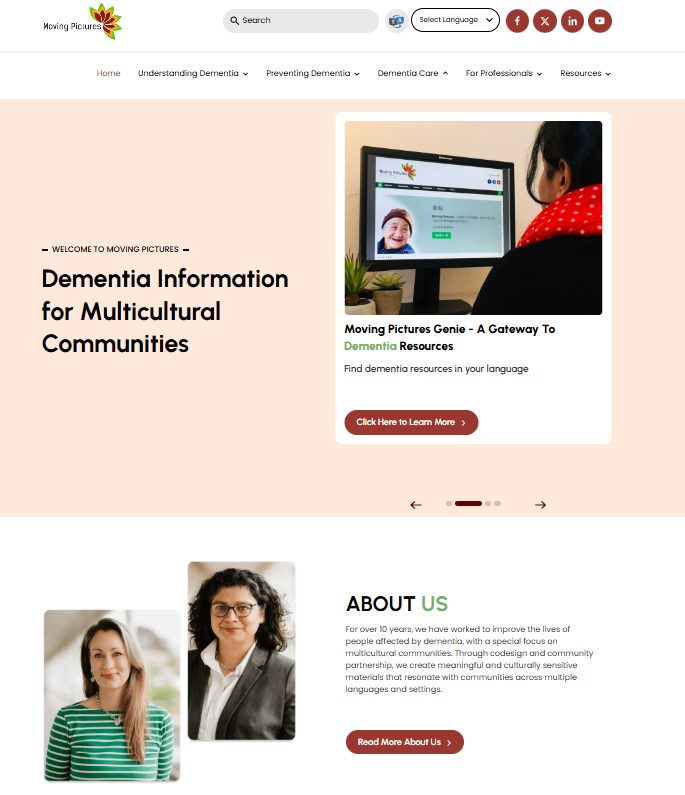
Dementia information for multicultural communities
This resource provides dementia information and resources for multicultural communities, offering animations, videos, and materials in multiple languages. It aims to improve understanding of dementia and its prevention in diverse cultural groups, supporting awareness and early intervention.
This resource may apply to healthcare contexts outside of aged care. Please consider the applicability of this resource to your care setting.
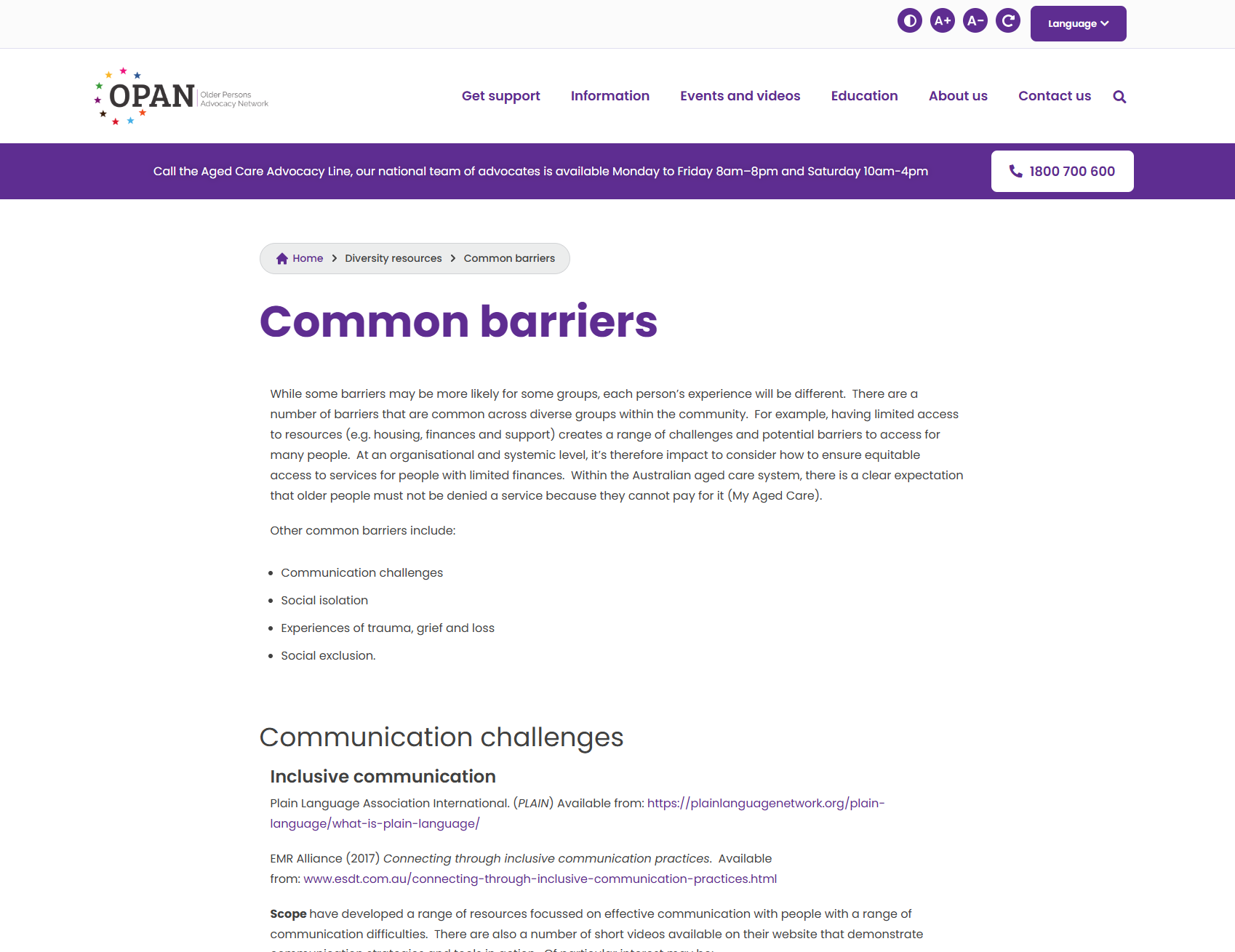
Common barriers
This resource outlines common barriers faced by diverse groups in accessing aged care services, including communication challenges, social isolation, experiences of trauma, grief and loss, and social exclusion. It provides guidance on addressing these issues to make sure equitable access to services for all older people.
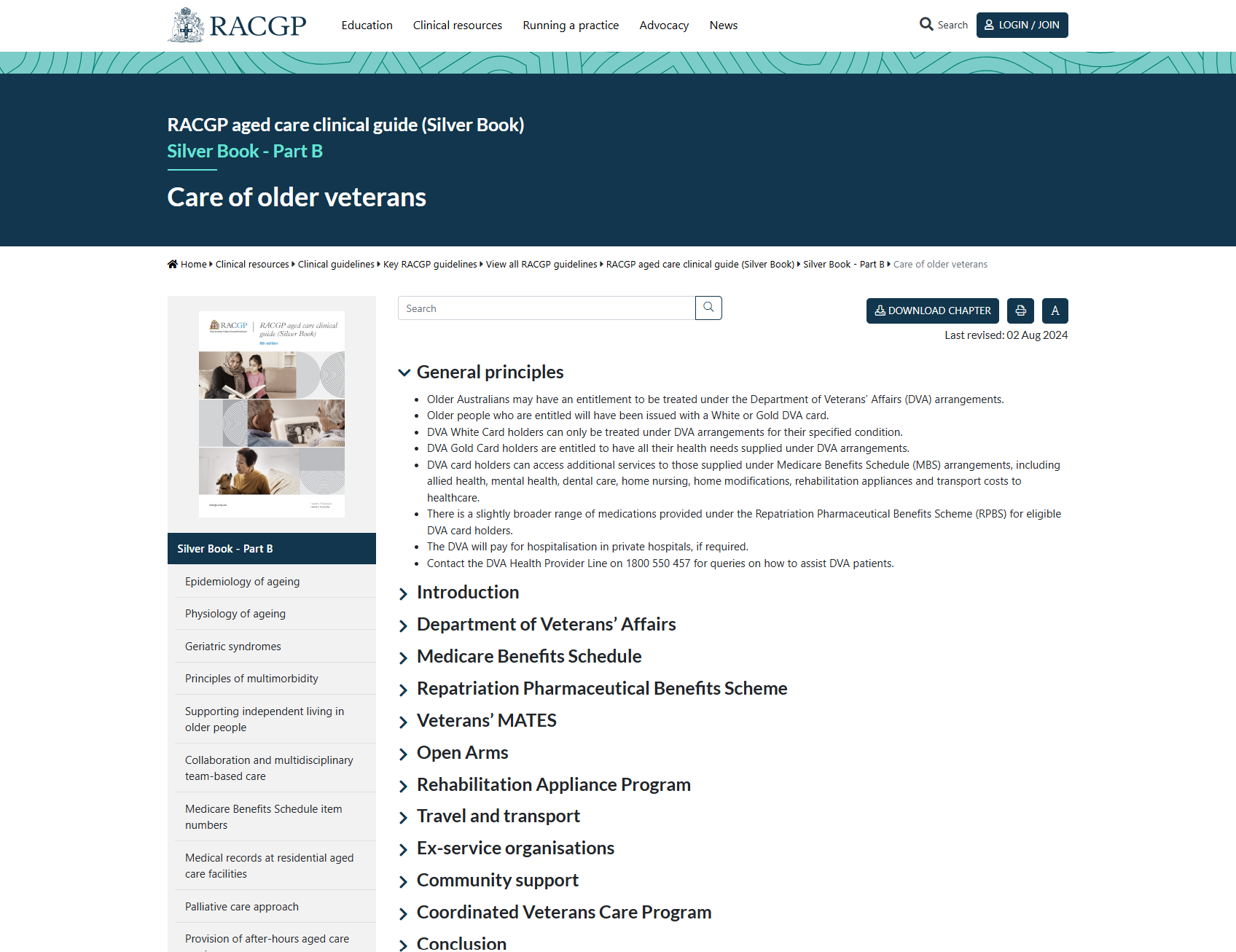
RACGP aged care clinical guide (Silver Book) - Part B - Care of older veterans
This resource provides guidelines on caring for older veterans, focusing on areas such as multimorbidity, medication management, and palliative care. It highlights unique healthcare entitlements and support structures available to veterans, supporting aged care providers in delivering comprehensive, person-centred care.
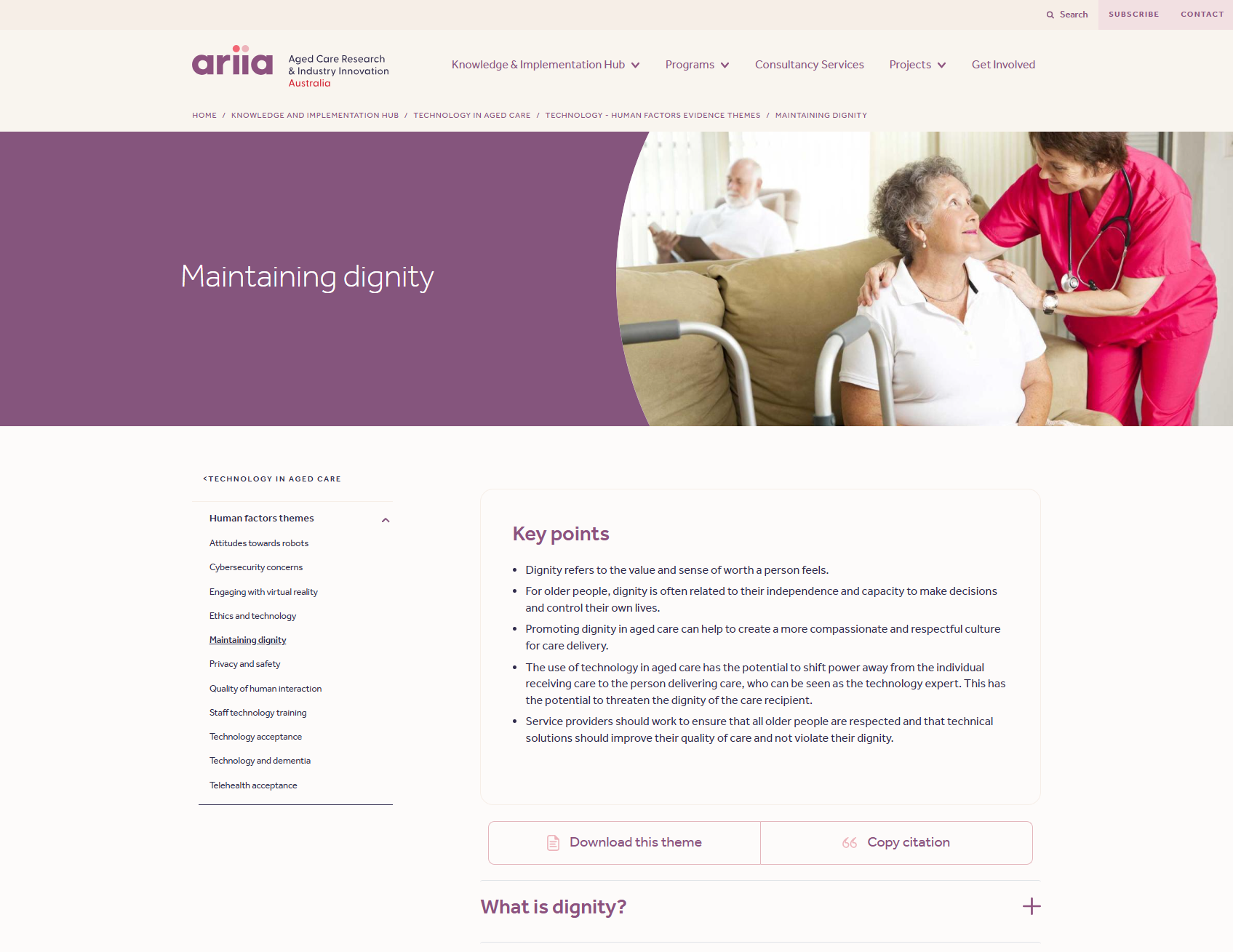
Maintaining dignity
This resource highlights the importance of maintaining dignity for older people in aged care, focusing on how technology use can impact their sense of autonomy and respect. It advises service providers to make sure technological solutions enhance care quality without compromising the dignity of those receiving care.
Privacy and safety
This resource addresses balancing privacy and safety for older people using technology in aged care. It highlights the importance of making sure surveillance technology supports independent living while respecting personal dignity, and it explores considerations for safety and privacy in care settings.
Protecting the Rights of Older Australians
This resource provides an overview of Australia’s approach to addressing the abuse of older people, including the National Plan, specialist services, awareness campaigns, and legal reforms. It aims to increase awareness, support prevention efforts, and offer accessible resources for those experiencing or at risk of abuse.
Privacy and confidentiality – Introduction to aged care video
This resource is a training video guiding aged care staff on the importance of maintaining privacy and confidentiality for people receiving care. It covers protecting personal information, proper handling of sensitive data, and safe sharing practices, aiming to make sure clients feel secure in sharing information.
This resource may refer to information that will be updated from 1 November 2025 to align with the new Aged Care Act and Quality Standards.
Your right to quality care
This resource outlines the rights of people receiving aged care, including the right to safe, high-quality care, dignity, independence, and privacy. It also covers steps for addressing concerns, accessing advocacy, and using the Charter of Aged Care Rights as a foundation for understanding and exercising these rights.
This resource may refer to information that will be updated from 1 November 2025 to align with the new Aged Care Act and Quality Standards.
I need information on my rights
This resource provides information on aged care rights, including guidance on self-advocacy and accessing support. It offers resources, free educational sessions, and access to advocates for assistance with government-funded aged care services, empowering people to address concerns and understand their entitlements.
Your aged care rights
This resource offers tools for self-advocacy in aged care, helping people understand their rights and what to expect from providers. It includes resources on the Charter of Aged Care Rights, care planning, and maintaining connections, supporting people in navigating and maximising their aged care experience.
This resource may refer to information that will be updated from 1 November 2025 to align with the new Aged Care Act and Quality Standards.
Essential element 2: Identifying goals of care
This resource guides providers in identifying and setting goals of care with patients through shared decision-making. It fosters collaboration between patients, family, and healthcare teams to clarify expectations and establish personalised clinical and personal care objectives.
This resource may apply to healthcare contexts outside of aged care. Please consider the applicability of this resource to your care setting. This resource may refer to information that will be updated from 1 November 2025 to align with the new Aged Care Act and Quality Standards.
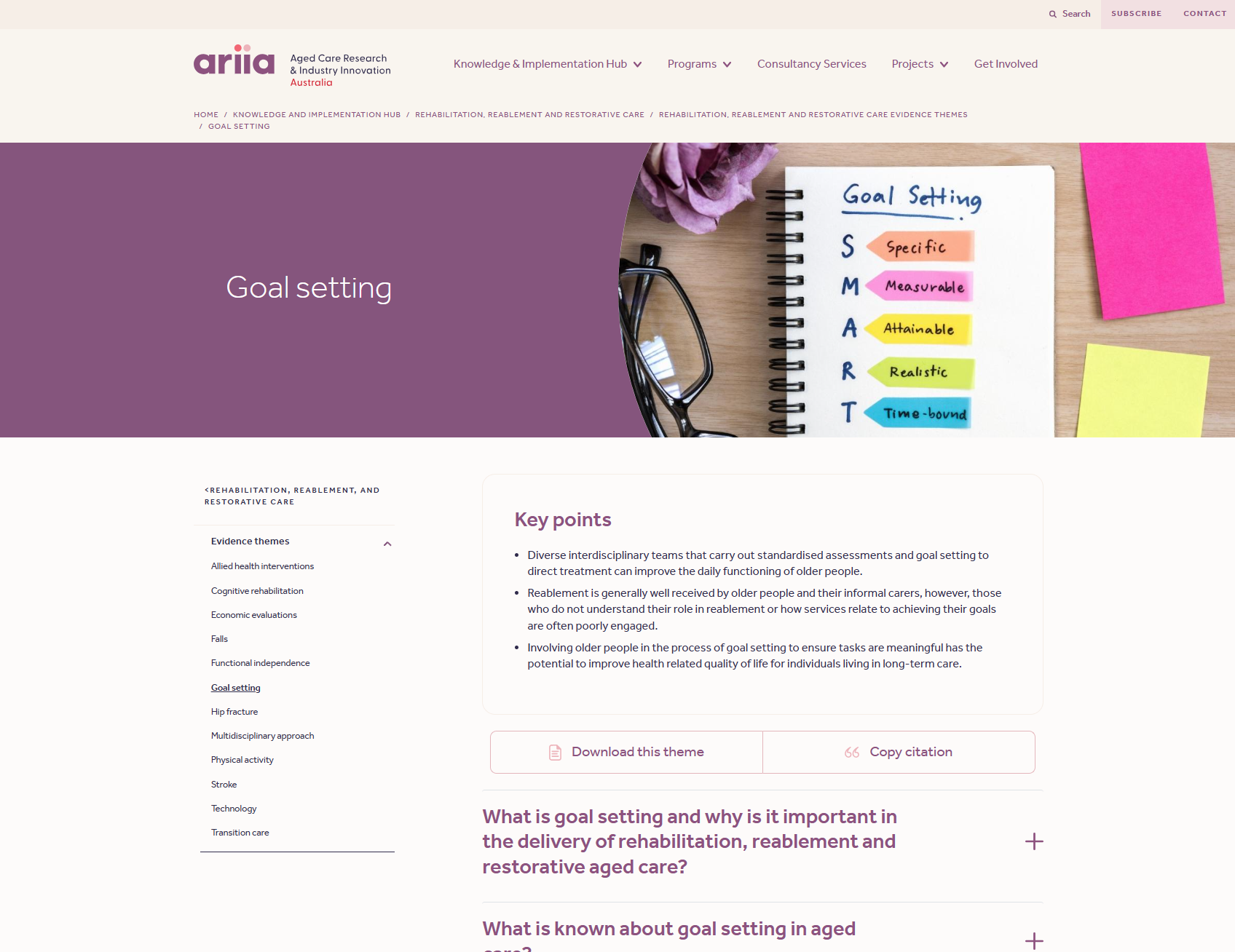
Goal setting
This resource discusses the role of goal setting in enhancing rehabilitation, reablement, and restorative care for older people. It highlights the value of involving older people in defining goals and the positive impact of goal setting on engagement, daily function, and quality of life.
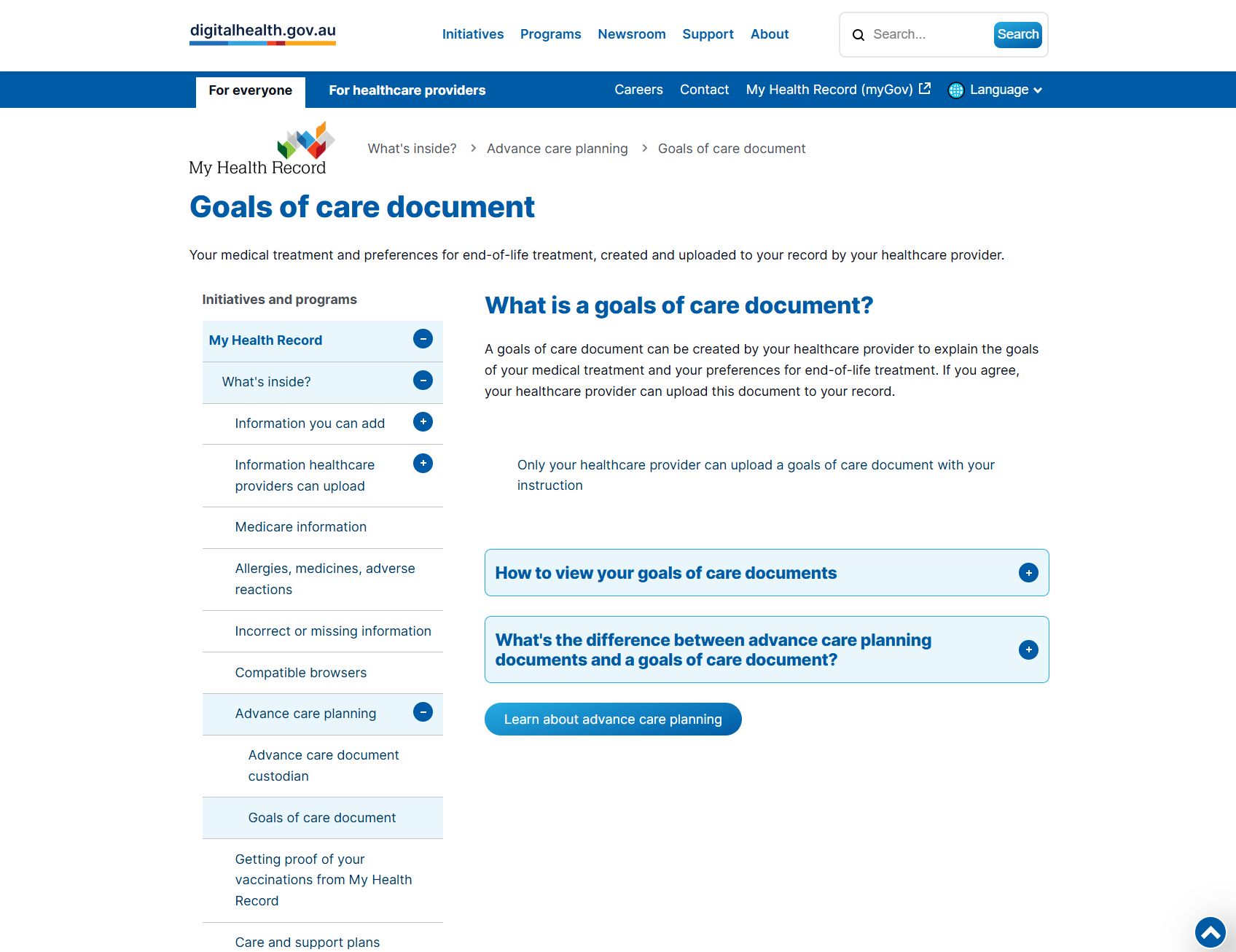
Goals of care document
This resource explains the purpose of a goals of care document, which outlines a person’s medical treatment goals and end of life care preferences. It describes how healthcare providers create and upload these documents to health records, supporting informed decision-making and access to care preferences.
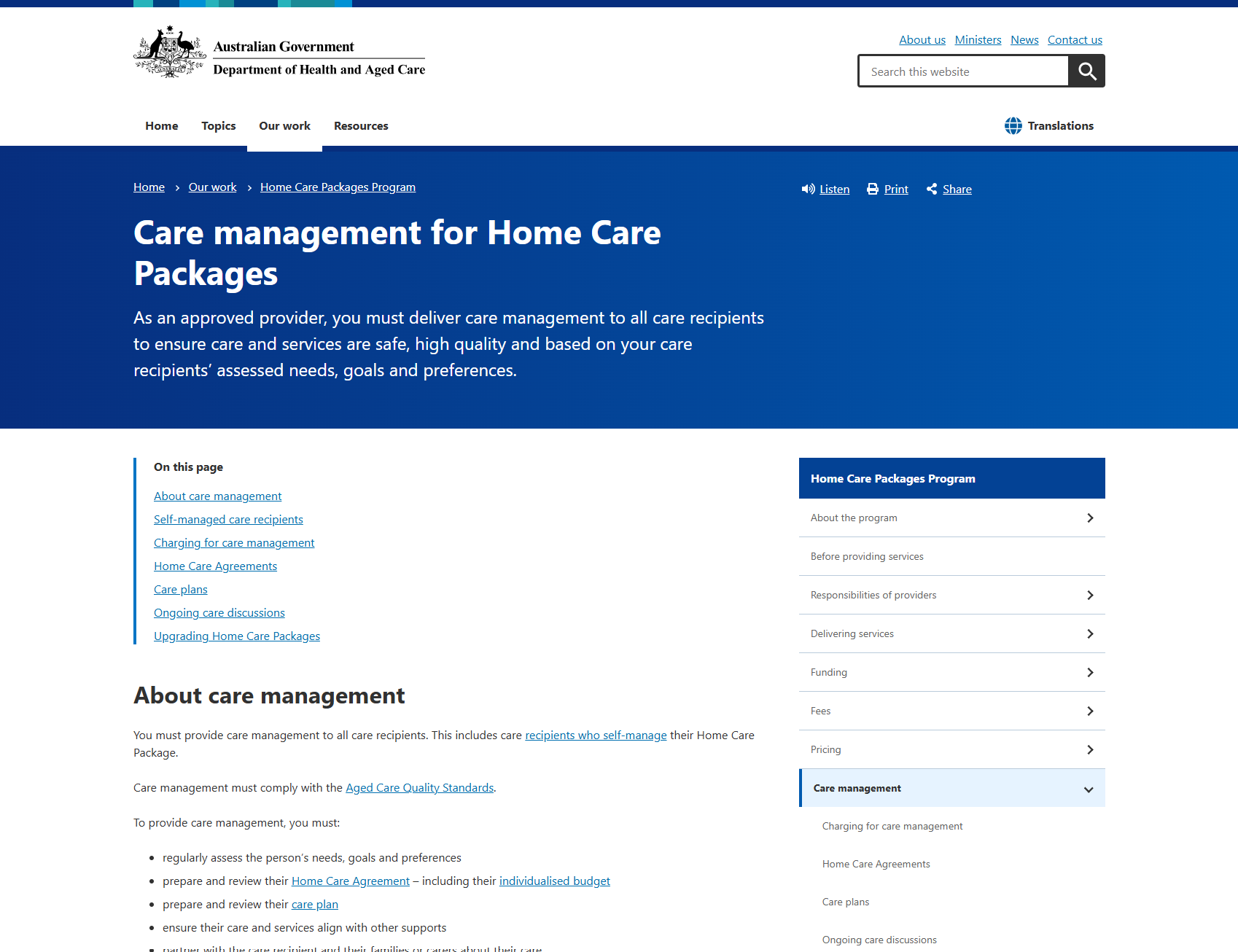
Care management for Home Care Packages
This resource details requirements for managing Home Care Packages, including creating care plans, maintaining Home Care Agreements, and conducting ongoing care discussions. Providers must align services with the person’s needs, goals, and preferences, ensuring high-quality care that is culturally safe and compliant with quality standards.
This resource may refer to information that will be updated from 1 November 2025 to align with the new Aged Care Act and Quality Standards.
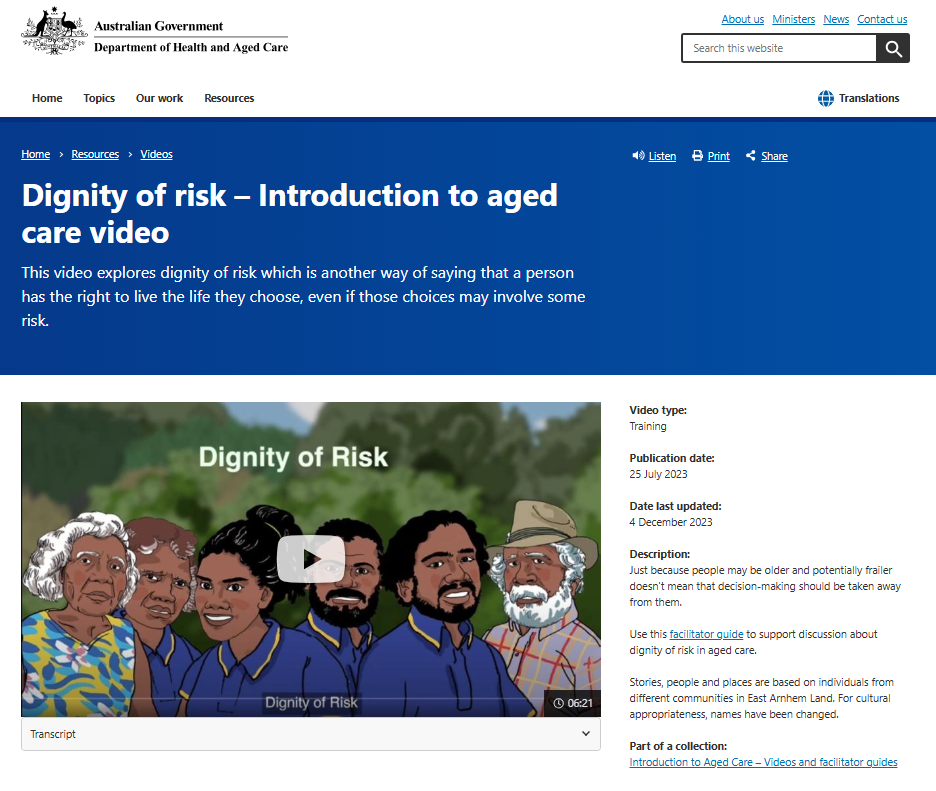
Dignity of risk – Introduction to aged care video
This video explains the concept of dignity of risk in aged care, emphasising that older people have the right to make their own choices, even when those choices involve risks. It provides examples of how care providers can support decision-making while promoting safety and respect for individual autonomy.
This resource may refer to information that will be updated from 1 November 2025 to align with the new Aged Care Act and Quality Standards.
Measurement tools for assessing quality of life, consumer satisfaction and consumer experience across residential and in-home aged care: Summary Report
This report reviews validated tools for measuring quality of life, consumer satisfaction, and experience in aged care, assessing their suitability for residential and home care. It provides an evidence-based ranking of tools to support aged care providers in quality improvement, accountability, and aligning with the National Aged Care Quality Indicator Program.
This resource may refer to information that will be updated from 1 November 2025 to align with the new Aged Care Act and Quality Standards.
Seeking support from an advocate
This resource describes the advocacy support available for people receiving government-funded aged care, provided through the National Aged Care Advocacy Program. It outlines the role of advocates in assisting with understanding services, managing rights, addressing concerns, and learning self-advocacy skills, supporting respectful and fair treatment in aged care.