The Quality Standards Resource Centre helps extend understanding of the strengthened Aged Care Quality Standards, which take effect from 1 November 2025. The Resource Centre will be updated to reflect key changes made to the draft strengthened Standards. You can search for resources by using keywords, or filtering by standard, outcome, audience and theme. Before using the Resource Centre, please read the terms of use.
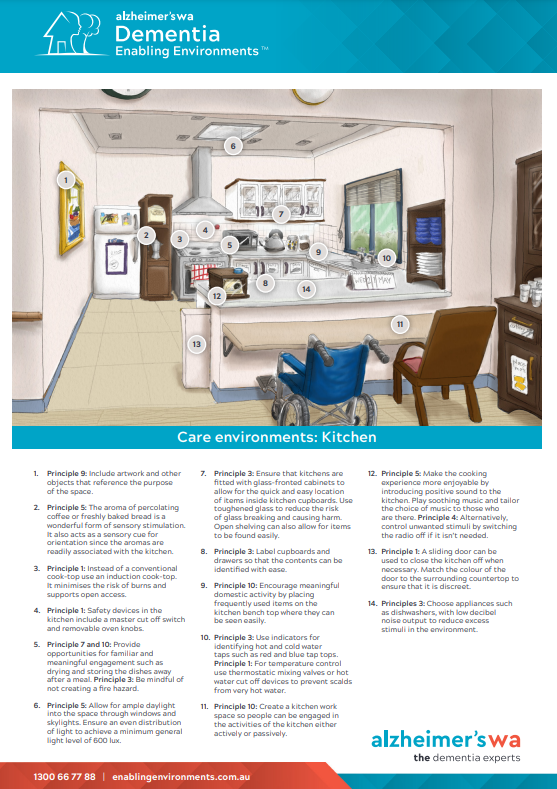
Dementia enabling environments - Care environments: Kitchen
This resource, developed by Alzheimer's WA, is a Dementia Enabling Environments illustration information sheet about kitchens in care environments. It includes principles to create enabling spaces and information about how to design the physical environment to maximise enablement and wellbeing for people living with dementia.
This resource was developed by a state/territory government or organisation and therefore its applicability and usefulness may be limited.
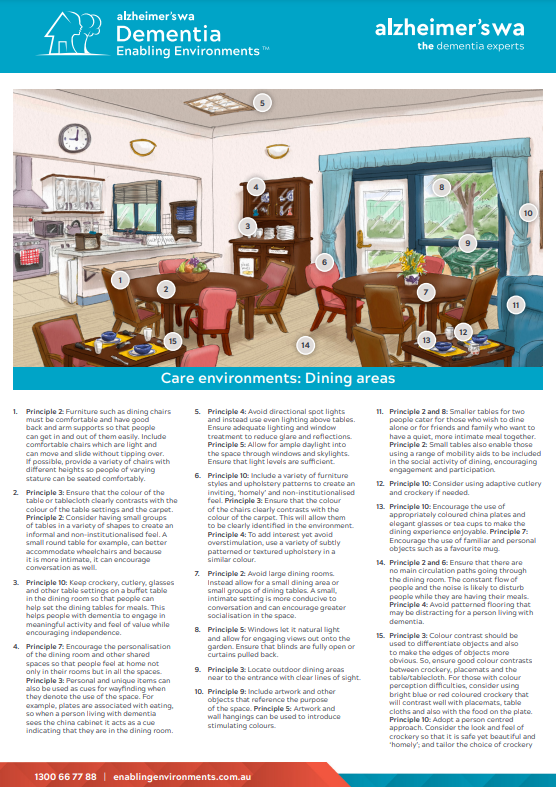
Dementia enabling environments - Care environments: Dining areas
This resource, developed by Alzheimer's WA, is a Dementia Enabling Environments illustration information sheet about dining areas in care environments. It includes principles to create enabling spaces and information about how to design the physical environment to maximise enablement and wellbeing for people living with dementia.
This resource was developed by a state/territory government or organisation and therefore its applicability and usefulness may be limited.
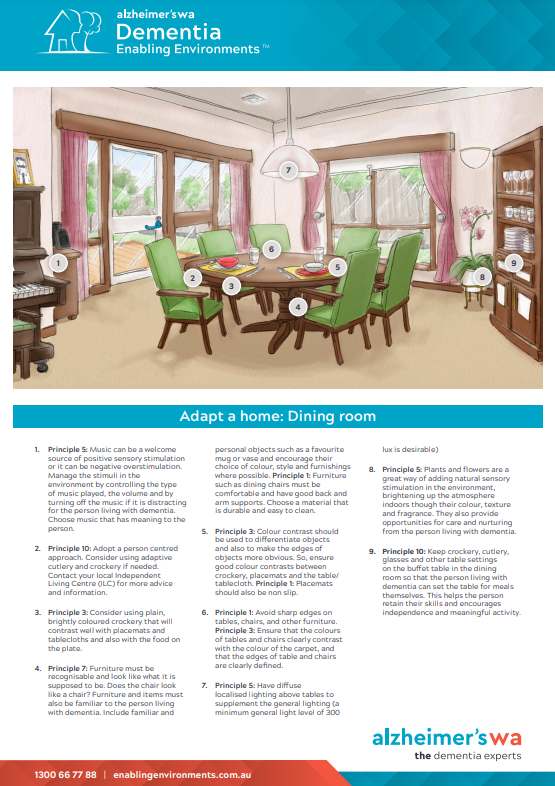
Dementia enabling environments - Adapt a home: Dining room
This resource, developed by Alzheimer's WA, is a Dementia Enabling Environments illustration information sheet about adapting a home, focusing on the dining room. It includes principles to integrate enabling design and make changes within the physical environment to maximise enablement and wellbeing for people living with dementia.
This resource was developed by a state/territory government or organisation and therefore its applicability and usefulness may be limited.
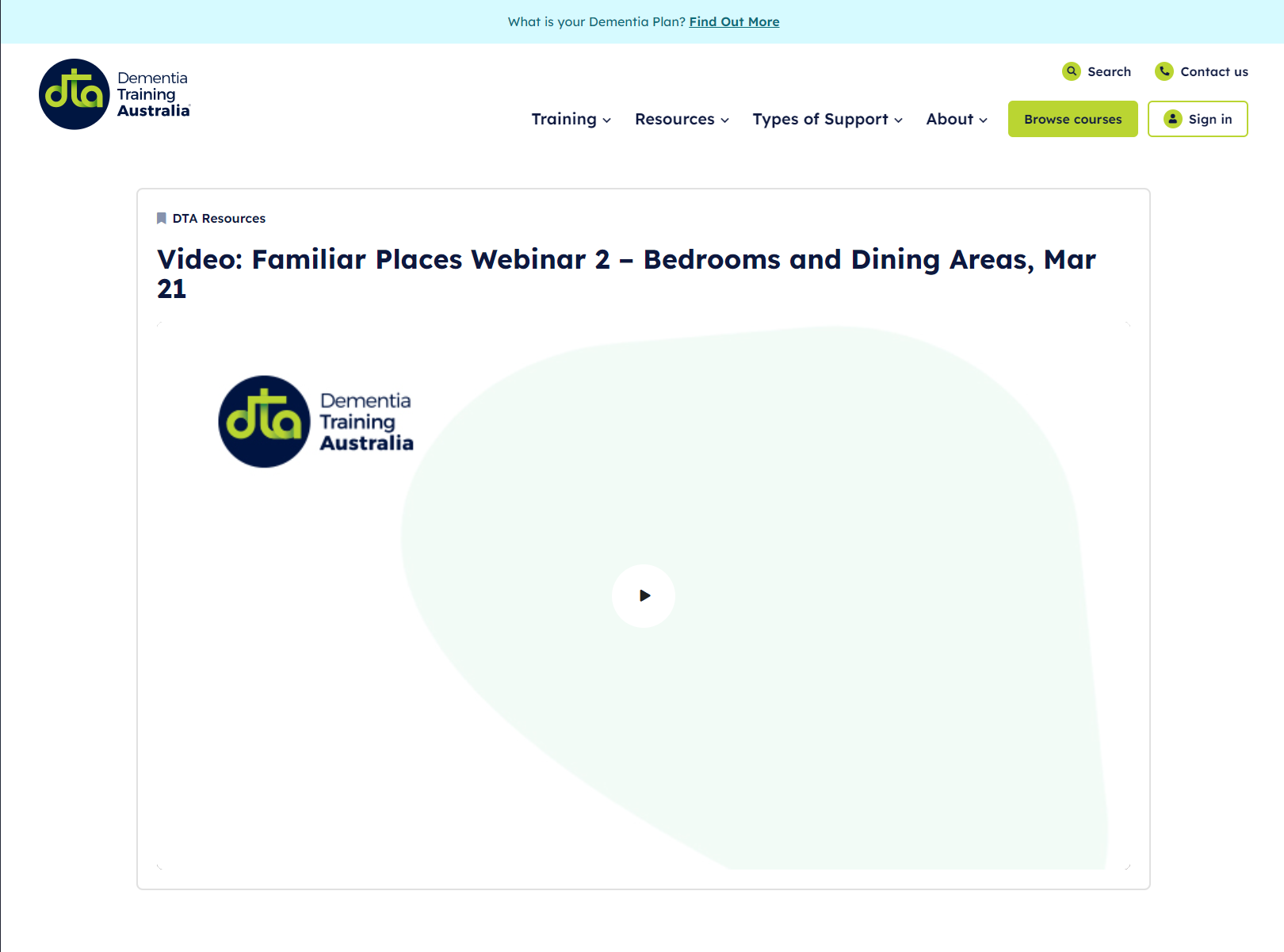
Familiar Places Webinar 2 – Bedrooms and Dining Areas
This webpage provides a video webinar focused on familiar places, such as bedrooms and dining areas, for dementia care environments. It offers insights into how these spaces can be designed to support the wellbeing of people living with dementia, with a particular emphasis on creating comfortable and familiar settings.
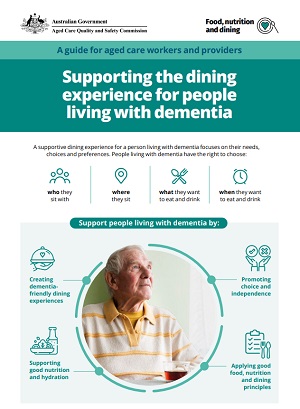
Supporting the dining experience for people living with dementia – Providers and workers guide
This guide is about how to support people living with dementia to maintain good nutrition and enjoy positive dining experiences.
This resource may refer to information that will be updated from 1 November 2025 to align with the new Aged Care Act and Quality Standards.
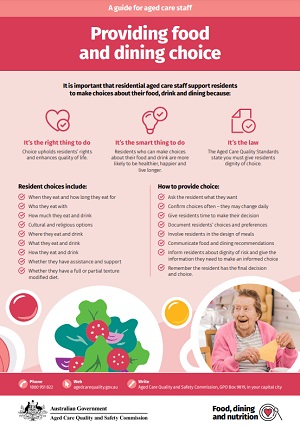
Providing food and dining choice - aged care staff poster
This guide supports aged care staff in providing food and dining choices for residents. It outlines the importance of upholding residents' rights to choose, enhancing their health and quality of life. The guide recommends confirming preferences regularly, involving residents in meal planning, and respecting individual choices regarding when, where, and what they eat or drink. This resource may refer to information that will be updated from 1 November 2025 to align with the new Aged Care Act and Quality Standards.
 Providing food and dining choice - aged care staff poster (PDF 445.57 KB)
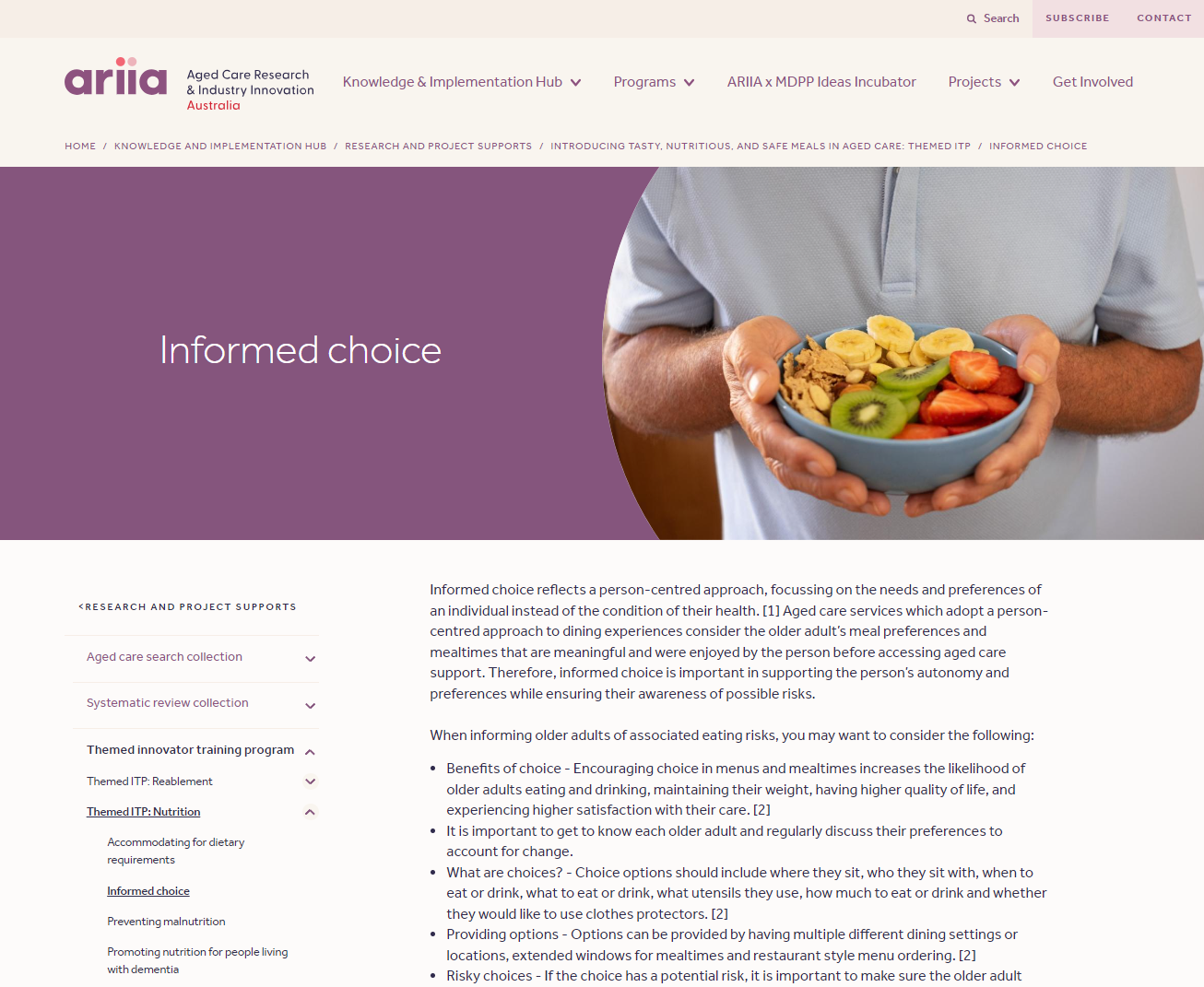
Nutrition - Informed choice
This resource discusses the importance of informed choice in aged care dining, emphasising a person-centred approach. It highlights the benefits of offering choice in meals and mealtimes, outlines how to manage decisions that involve risk, and provides tools for aged care workers to support resident autonomy while ensuring safety and satisfaction.
This resource may refer to information that will be updated from 1 November 2025 to align with the new Aged Care Act and Quality Standards.
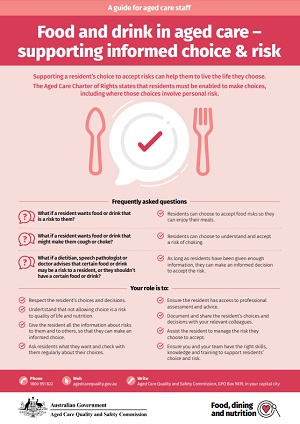
Food and dining - your choices matter
This fact sheet informs aged care residents of their rights to safe, enjoyable, and respectful dining experiences. It outlines steps for raising concerns with providers about food and dining, offers a preference form for residents to communicate their dietary needs, and provides contact information for support services if issues remain unresolved. This resource may refer to information that will be updated from 1 November 2025 to align with the new Aged Care Act and Quality Standards.
English - Food and dining – your choices matter (PDF 484.79 KB)
Arabic - تهمّّنا تفضيلاتكم في الطعام وعادات الأكل (PDF 767.17 KB)
Chinese Simplified - 食品和餐饮—— 您的选择很重要 (PDF 785.39 KB)
Chinese Traditional - 食品和餐飲—— 您的選擇很重要 (PDF 788.7 KB)
French - Alimentation et repas – vos choix sont importants (PDF 684.4 KB)
German - Essen und Speisen – Ihre Wahl zählt (PDF 686.18 KB)
Greek - Φαγητό και γεύματα – οι επιλογές σας έχουν σημασία (PDF 690.89 KB)
Hungarian - Ételek és étkezés – az Ön döntése számít (PDF 684.42 KB)
Macedonian - Храна и јадење - вашиот избор е важен (PDF 683.21 KB)
Maltese - L-ikel u l-ikliet - l-għażliet tiegħek huma importanti (PDF 685.65 KB)
Russian - Питание и прием пищи: ваш выбор имеет значение (PDF 682.53 KB)
Serbian - Храна и обедовање – ваш избор је важан (PDF 681.46 KB)
Spanish - Alimentos y comidas: sus preferencias importan (PDF 679.42 KB)
Healthy Ageing
This resource is a collection of resources on the Tasmanian Government Department of Health webpage about healthy ageing. It includes resources about malnutrition screening, being physically active, and eating well.
This resource was developed by a state/territory government or organisation and therefore its applicability and usefulness may be limited.
Improving accommodation in residential aged care
This resource provides information on improving accommodation in residential aged care through the National Aged Care Design Principles and Guidelines, effective from July 2024. It covers areas such as creating dementia-friendly environments, improving access to outdoor spaces, fostering community connections, and ensuring privacy. The guidelines aim to promote independence and a home-like atmosphere.
This resource may refer to information that will be updated from 1 November 2025 to align with the new Aged Care Act and Quality Standards.
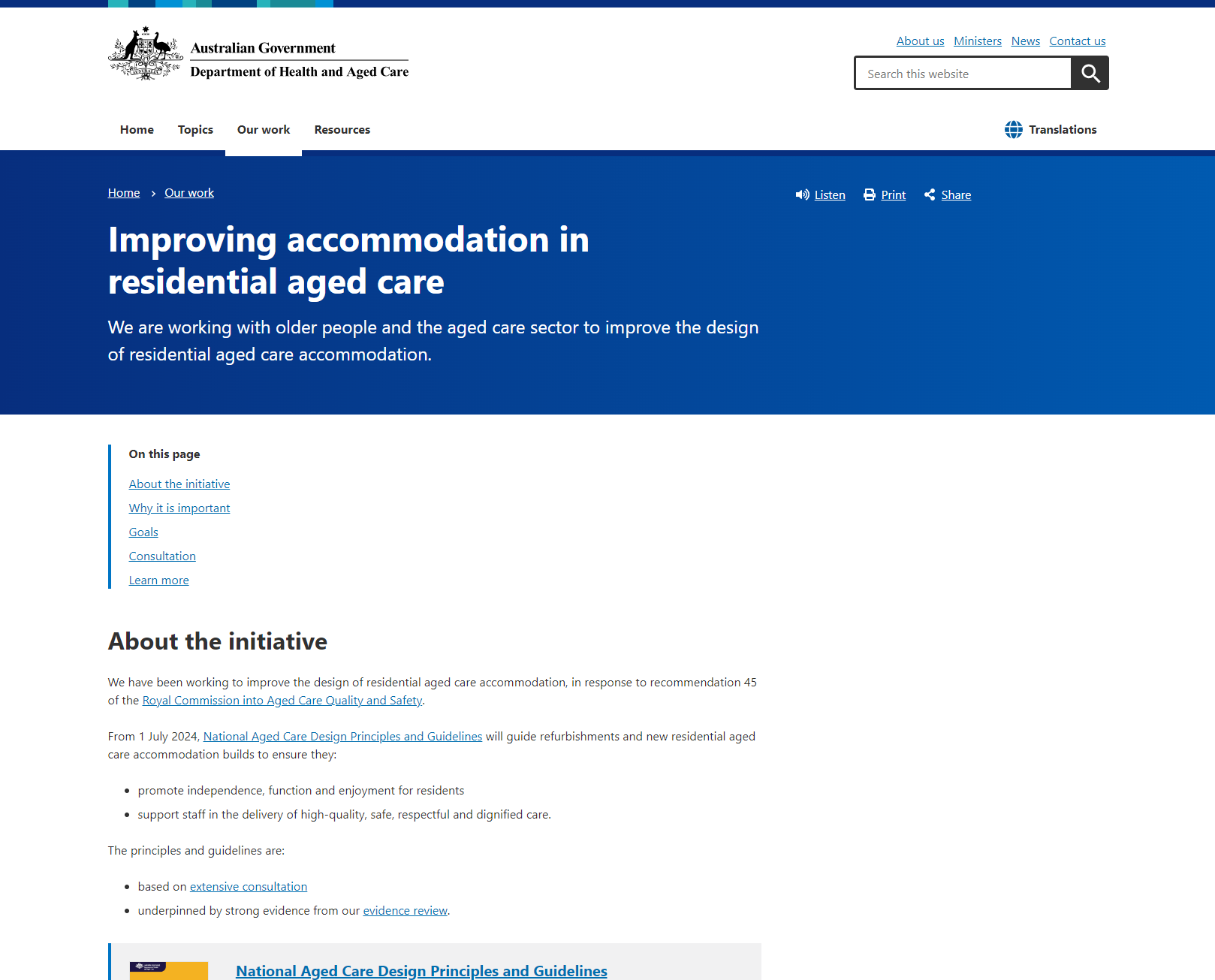
Food and drink in your aged care - supporting informed choice and risk - staff poster
This resource provides guidance for aged care staff on supporting older people's informed choices regarding food and drink, even when those choices involve personal risks. It encourages staff to respect resident autonomy, provide information on risks, document decisions, and ensure access to professional advice, promoting dignity and quality of life in care settings. This resource may refer to information that will be updated from 1 November 2025 to align with the new Aged Care Act and Quality Standards.
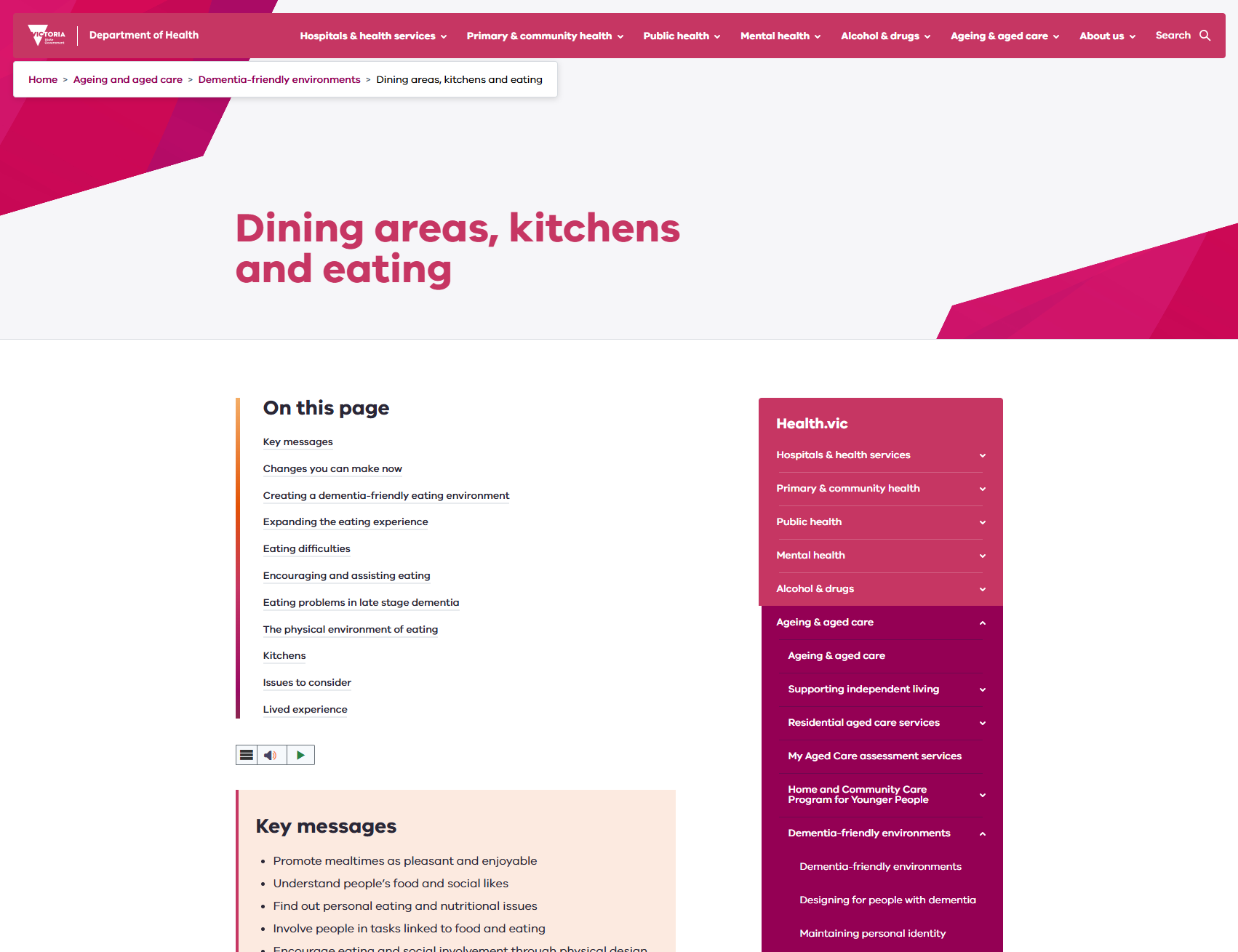
Dementia-friendly environments - Dining areas, kitchens and eating
This resource provides guidelines for creating dementia-friendly dining and kitchen spaces, emphasising sensory engagement, personalised meal experiences, and a home-like environment. It includes practical adjustments for lighting, noise, seating, and social interaction to enhance dining enjoyment.
This resource was developed by a state/territory government or organisation and therefore its applicability and usefulness may be limited.