The Quality Standards Resource Centre helps extend understanding of the strengthened Aged Care Quality Standards, which took effect from 1 November 2025. You can search for resources by using keywords, or filtering by standard, outcome and audience. Before using the Resource Centre, please read the terms of use.
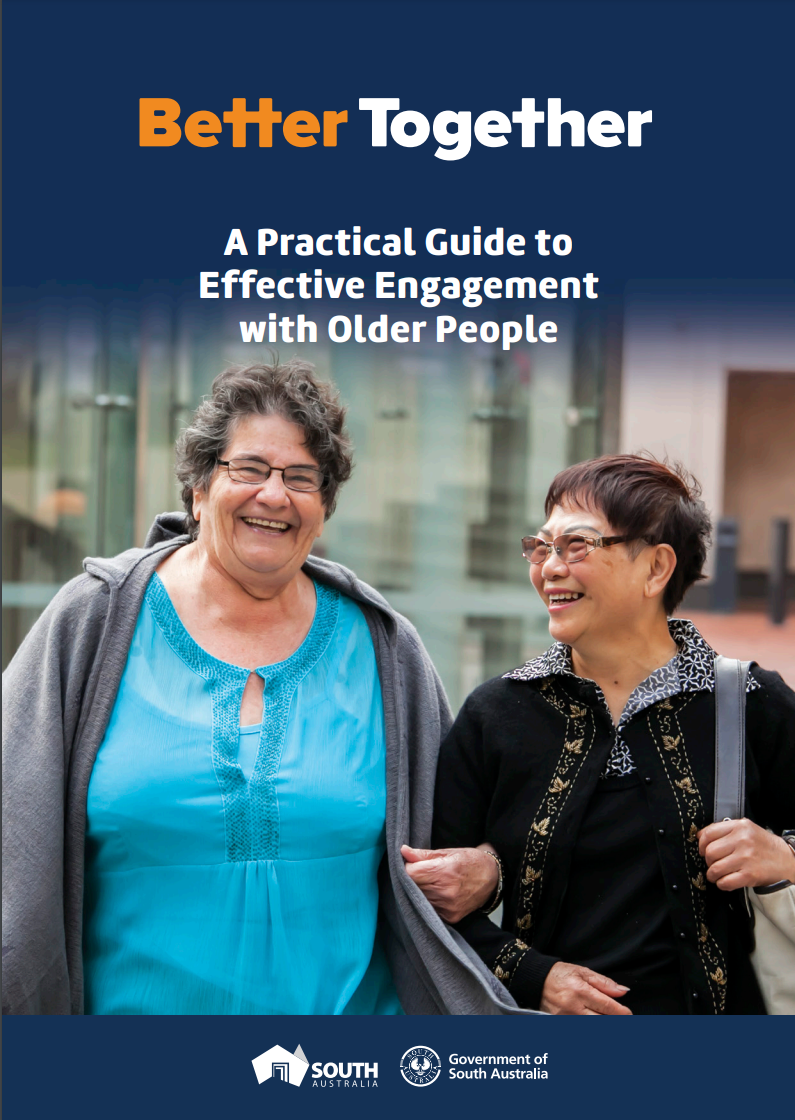
Better Together: A practical guide to effective engagement with older people
This resource offers practical guidance on effective engagement with older people, highlighting diverse communication methods, cultural sensitivity, and inclusive strategies to capture meaningful input. It supports collaborative relationships and respectful dialogue with older people in decision-making processes.
This resource was developed by a state/territory government or organisation and therefore its applicability and usefulness may be limited.
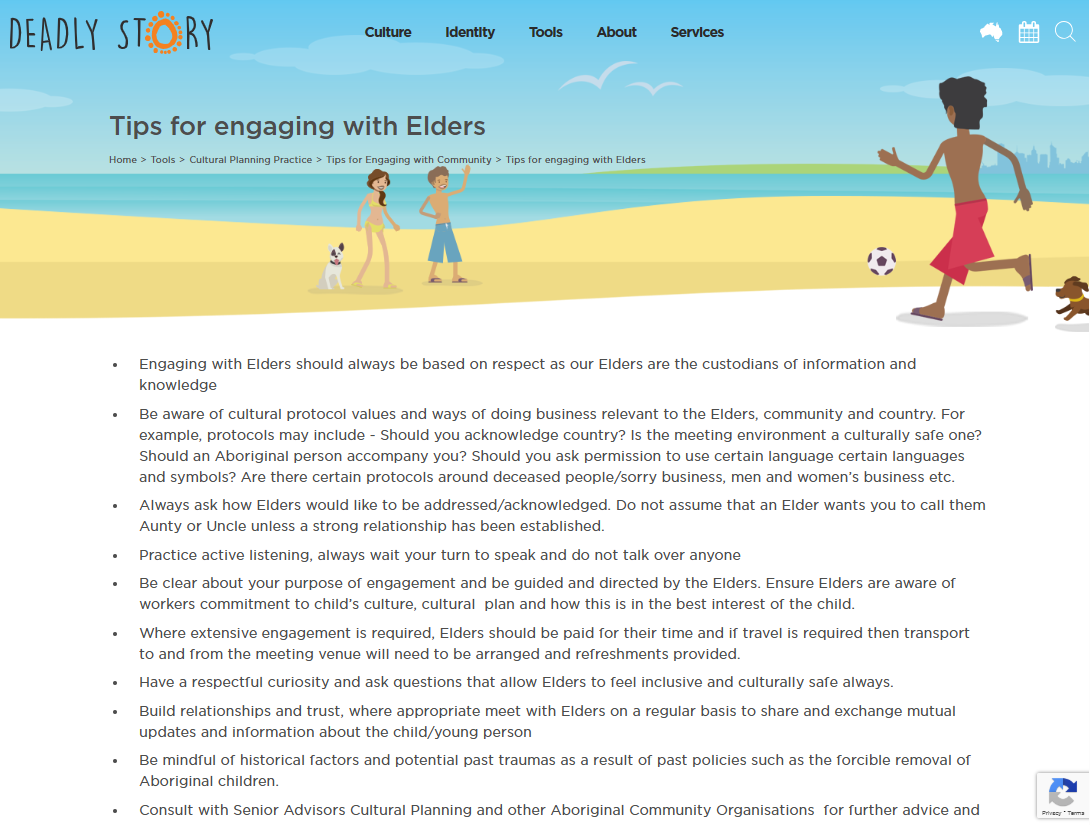
Tips for engaging with Elders
This resource provides tips for engaging with Elders from Aboriginal communities. It includes practical advice for communicating and engaging in a respectful way, with a focus on awareness and understanding of the person and their community.
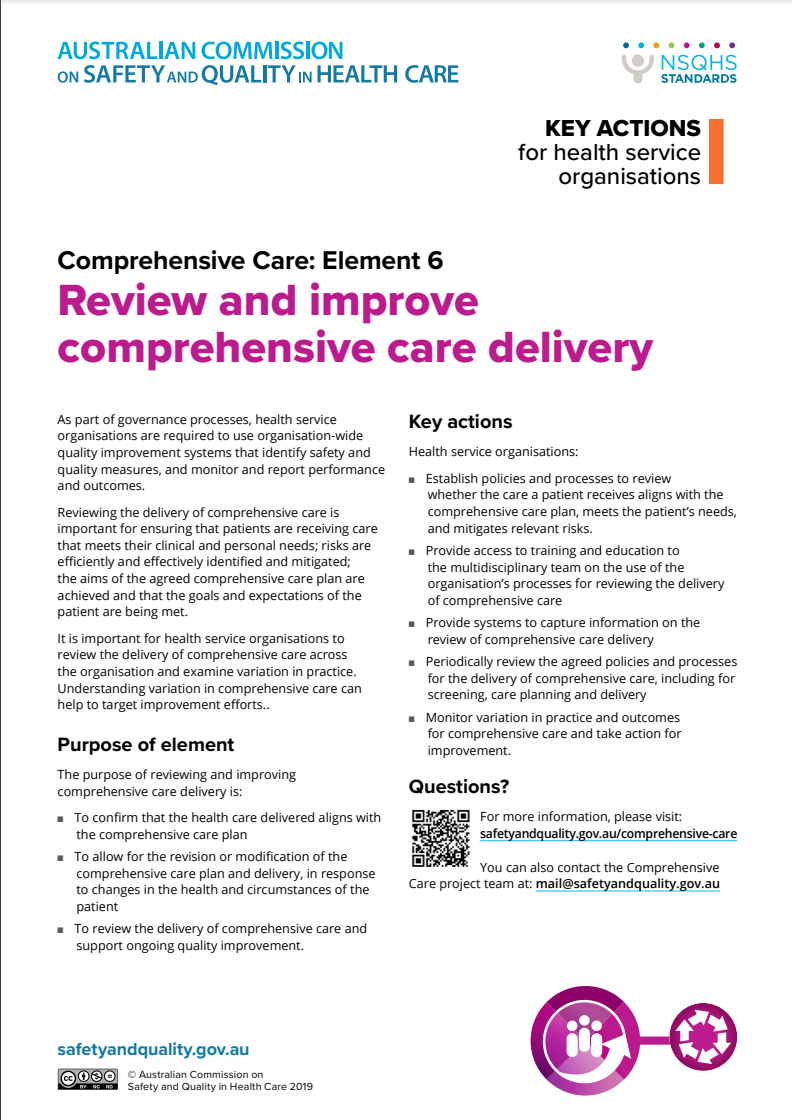
Comprehensive Care - Review and improve comprehensive care delivery - Key actions for health service organisations
This resource outlines actions for health service organisations to review and improve comprehensive care delivery, focusing on aligning care with patients' needs and care plans. It emphasises regular assessment, multidisciplinary collaboration, and quality improvement to maintain responsive, person-centred care across services.
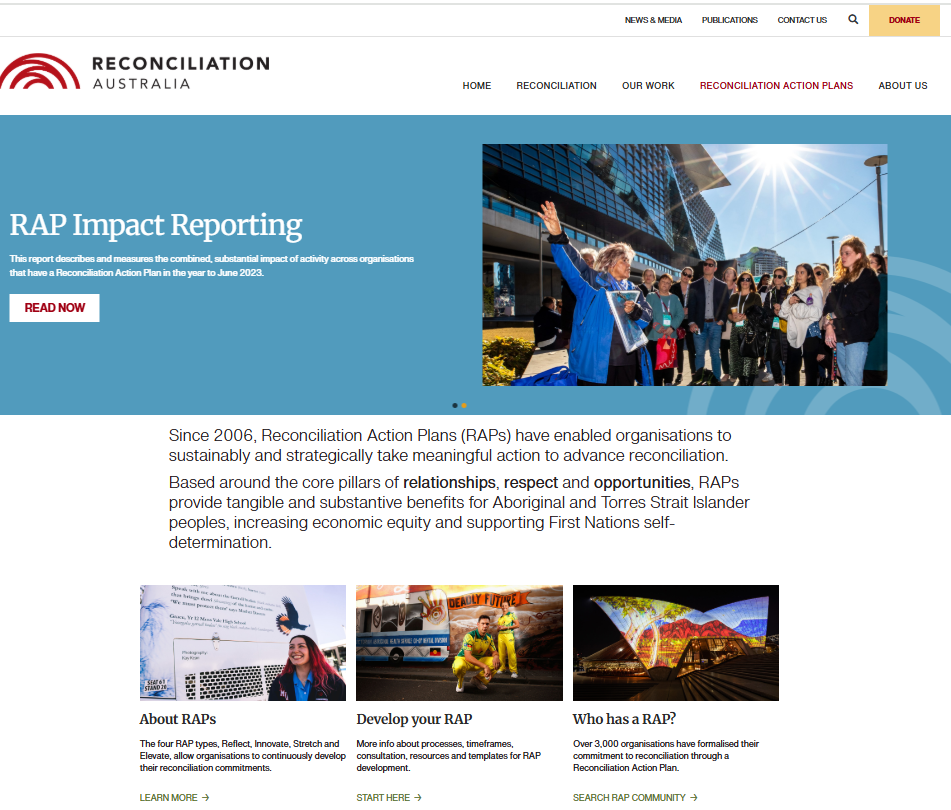
Reconciliation Action Plans
This resource provides information about Reconciliation Action Plans (RAPs), including what they are, how to develop a RAP for your organisation, and who has one. RAPs support organisations to strategically take meaningful action to advance reconciliation.
Benefits of effective incident management video
In this short video, we provide an overview of the benefits of effective incident management in residential aged care settings under the Serious Incident Response Scheme (SIRS), which commenced on 1 April 2021.
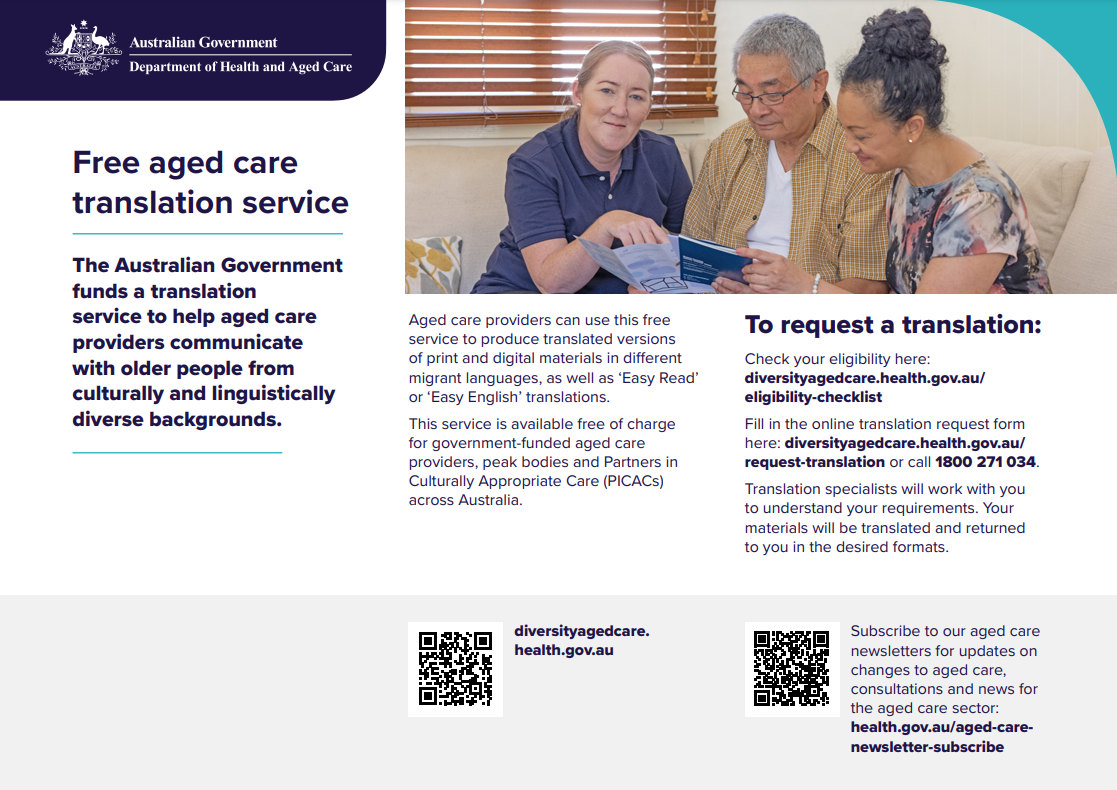
Free aged care translation service
This resource provides information on a free translation and interpreting service funded by the government for aged care providers. It supports effective communication with older people from diverse backgrounds, offering language translation, sign language, and captioning services to enhance accessibility and inclusivity in aged care.
This resource may refer to information that will be updated from 1 November 2025 to align with the new Aged Care Act and Quality Standards.
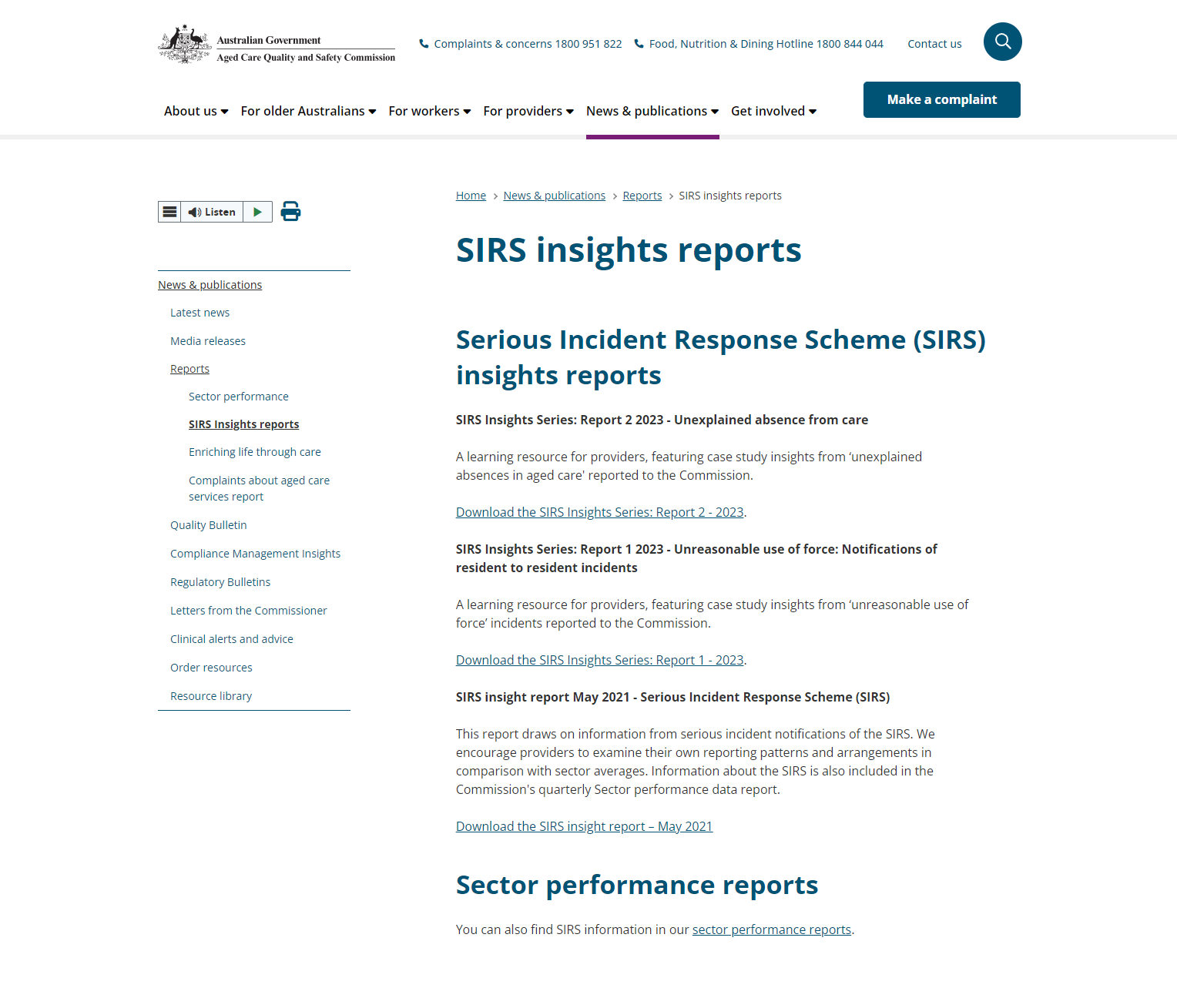
SIRS insights reports
This resource provides Serious Incident Response Scheme (SIRS) insights reports, offering case study examples and data to help aged care providers improve incident management practices. The reports feature learnings from incidents such as unexplained absences and unreasonable use of force, helping providers assess their own practices and enhance care quality.
This resource may refer to information that will be updated from 1 November 2025 to align with the new Aged Care Act and Quality Standards.
Incident Management Systems
This resource explains Incident Management Systems (IMS) used in aged care to record, manage, and respond to incidents. It provides guidance on building a safety culture, recording and analysing incidents, and implementing steps to prevent reoccurrences, supporting continuous improvement in care delivery.
This resource may refer to information that will be updated from 1 November 2025 to align with the new Aged Care Act and Quality Standards.
Serious Incident Response Scheme (SIRS)
This resource outlines the Serious Incident Response Scheme (SIRS), which helps reduce abuse and neglect of older people in aged care services. It mandates that Commonwealth-subsidised aged care providers implement systems to manage and prevent serious incidents. Providers must report incidents such as abuse, neglect, and unlawful contact, ensuring older people’s safety and wellbeing. This resource may refer to information that will be updated from 1 November 2025 to align with the new Aged Care Act and Quality Standards.
Serious incidents
This resource provides information on how aged care providers should respond to serious incidents, ensuring the safety, health, and wellbeing of people in care. It outlines mandatory reporting requirements for incidents such as abuse, neglect, or financial coercion under the Serious Incident Response Scheme (SIRS), aiming to promote transparency and accountability in aged care settings. This resource may refer to information that will be updated from 1 November 2025 to align with the new Aged Care Act and Quality Standards.
The Serious Incident Response Scheme
This resource provides an introduction to the Serious Incident Response Scheme (SIRS), outlining its role in managing and reporting serious incidents in aged care. It includes guidance on incident management systems, the responsibilities of managers and workers, and reporting requirements for residential and home services.
This resource may refer to information that will be updated from 1 November 2025 to align with the new Aged Care Act and Quality Standards.
Reportable incidents
This resource outlines reportable incidents within aged care, including Priority 1 and Priority 2 incidents. It provides information on the 8 types of incidents that must be reported, such as psychological abuse, neglect, and the inappropriate use of restrictive practices, helping providers meet their obligations.
This resource may refer to information that will be updated from 1 November 2025 to align with the new Aged Care Act and Quality Standards.
National Aged Care Mandatory Quality Indicator Program
The National Aged Care Mandatory Quality Indicator Program aids residential aged care providers in enhancing their services by allowing them to benchmark their performance against national outcomes. The program resource provides guidance on data submission frequency, explains the program's role, and provides more information on open hours and contact details.
This resource may refer to information that will be updated from 1 November 2025 to align with the new Aged Care Act and Quality Standards.
Governing for Reform in Aged Care Program
This resource outlines the Governing for Reform in Aged Care Program, designed to strengthen corporate and clinical governance capabilities for aged care leaders. It provides tools, online learning modules, webinars, and podcasts to support governance improvement and help leaders engage in reform efforts.
This resource may refer to information that will be updated from 1 November 2025 to align with the new Aged Care Act and Quality Standards.
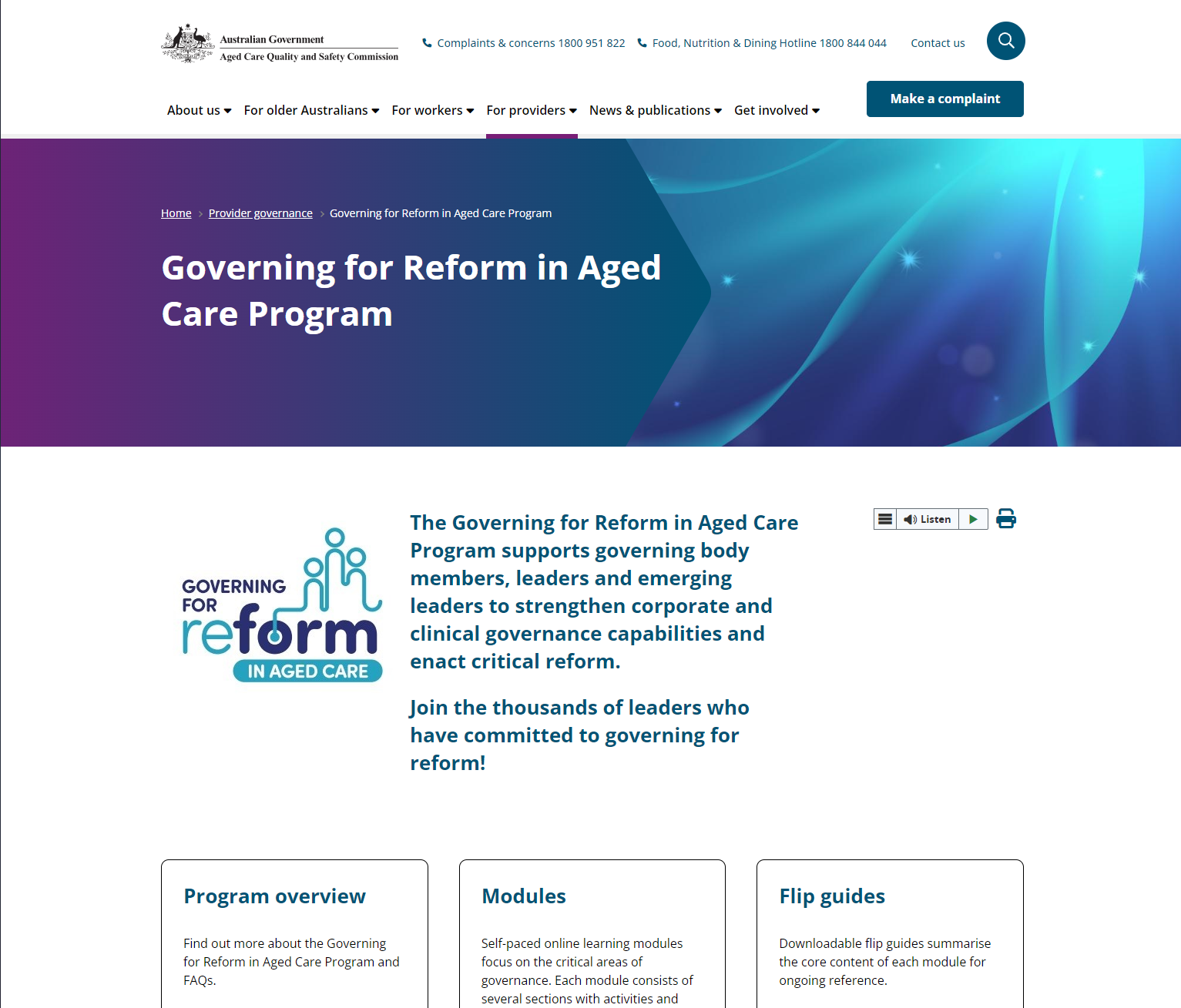
Food focus group resources
This resource is a collection of resources about food focus groups. It includes a fact sheet about setting up a food focus group and a checklist for an effective food focus group. It also contains associated templates, including agenda, minutes, terms of reference and feedback form.
This resource may refer to information that will be updated from 1 November 2025 to align with the new Aged Care Act and Quality Standards.
Effective incident management education pack
The Effective incident management education pack is designed for providers to deliver to their own staff. It can be delivered in full or delivered as a series of shorter sessions where you can focus on the sections that are most relevant to your setting or the time you have available.
This pack will support your staff to understand the role they play in effectively managing incidents at your aged care service and help them understand what an incident management system is and its key elements.
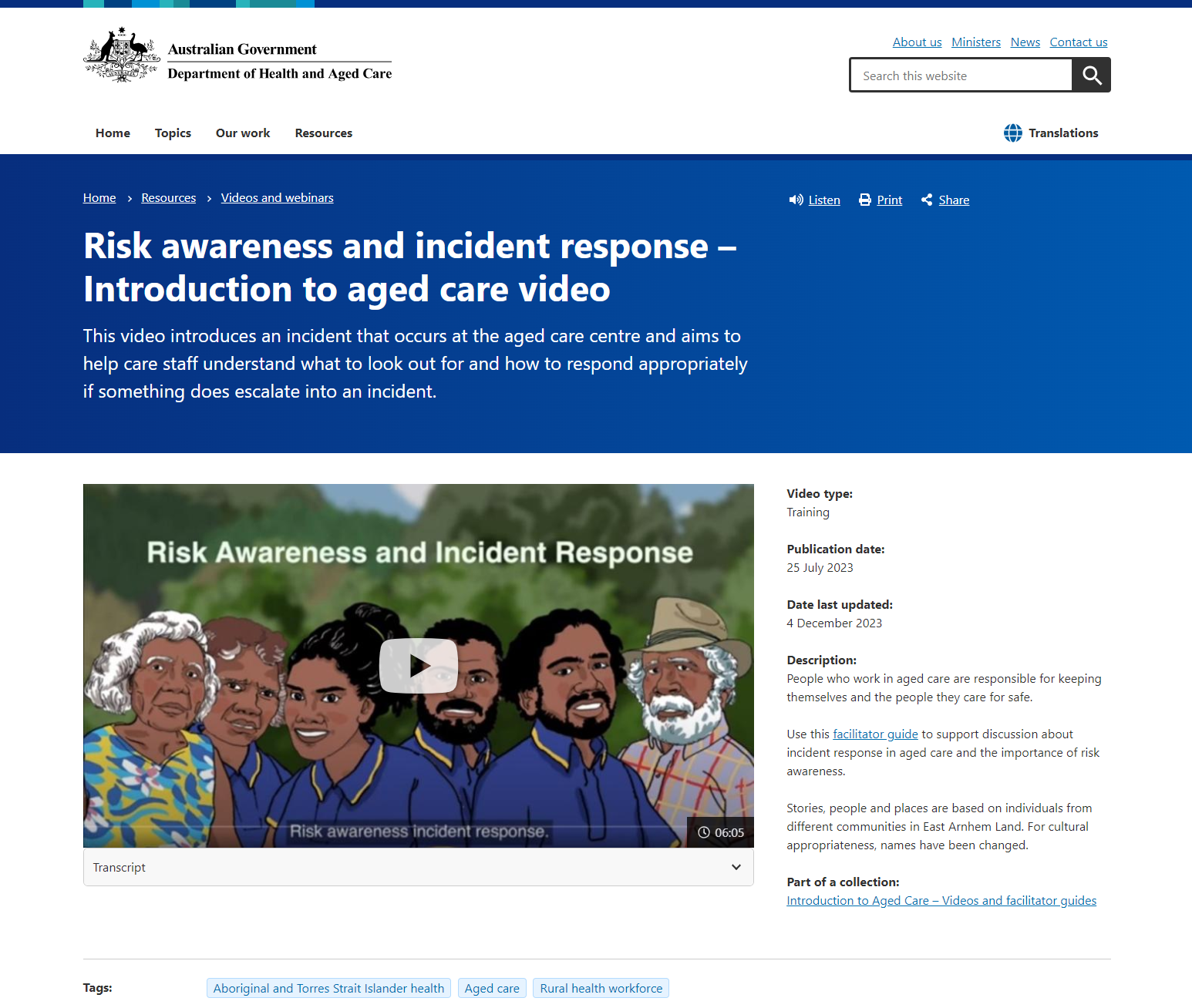
Risk awareness and incident response – Introduction to aged care video
This resource provides a training video for aged care staff on risk awareness and incident response. It demonstrates how to identify potential risks and manage escalating situations effectively in an aged care setting. The video offers practical guidance on maintaining safety for both staff and people in care during incidents, emphasising the importance of calm communication and post-incident reflection. This resource may refer to information that will be updated from 1 November 2025 to align with the new Aged Care Act and Quality Standards.
Effective incident management system checklist
This resource provides a checklist to help aged care providers ensure their incident management systems meet regulatory requirements. It outlines key responsibilities, reporting processes, and steps to review and manage incidents effectively, aligning with the Serious Incident Response Scheme (SIRS) guidelines.
This resource may refer to information that will be updated from 1 November 2025 to align with the new Aged Care Act and Quality Standards.
 Effective incident management system checklist (October 2022) (PDF 675.36 KB)
First Nations - Stakeholder Communications Toolkit
This Toolkit is designed for First Nations stakeholders including providers, workers and others involved in providing aged care services for First Nations people. We’ve developed it to make it easy for you to share relevant resources with your networks and members
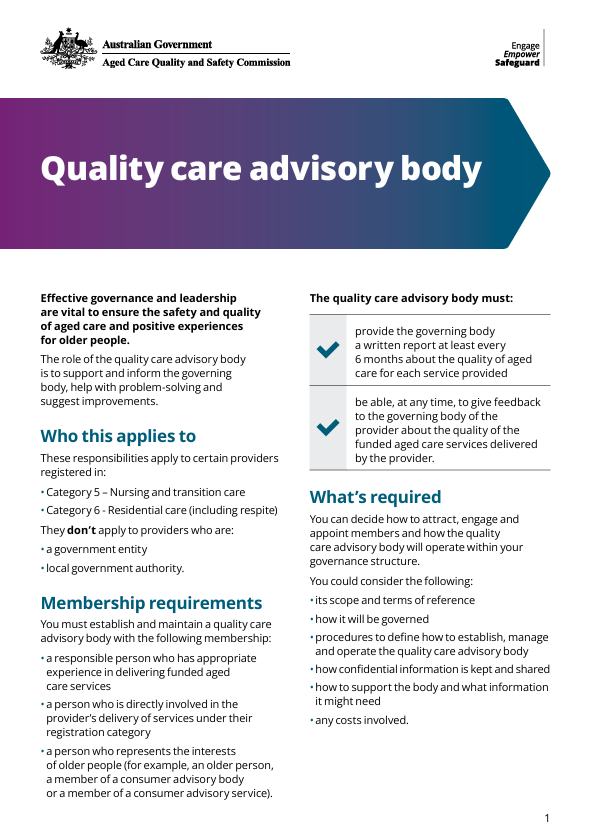
Quality care advisory body fact sheet
Explains the quality care advisory body obligations, including who must be on the advisory body and what actions, reports and feedback are required.
Quality care advisory body fact sheet (PDF 196.24 KB)