The Quality Standards Resource Centre helps extend understanding of the strengthened Aged Care Quality Standards, which took effect from 1 November 2025. You can search for resources by using keywords, or filtering by standard, outcome and audience. Before using the Resource Centre, please read the terms of use.
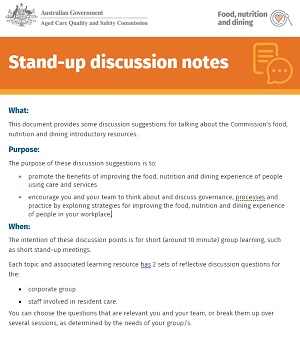
Food, nutrition and dining stand-up discussion notes
This resource provides discussion notes to improve the food, nutrition, and dining experience in aged care settings. It includes reflective questions for corporate teams and care staff, focusing on governance, resident choice, oral health, and support for those with swallowing difficulties. The resource promotes continuous improvement and quality care through group discussions. This resource may refer to information that will be updated from 1 November 2025 to align with the new Aged Care Act and Quality Standards.
 Stand-up discussion notes (DOCX 6.68 MB)
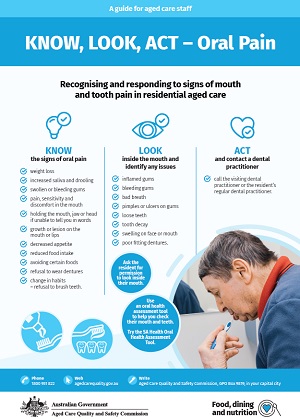
KNOW, LOOK, ACT - Oral Pain aged care staff poster
This poster serves as a resource for aged care staff to recognise and respond to signs of oral pain in residents. It provides guidance on identifying mouth and tooth pain and taking appropriate action to address these issues. The poster is available for download and use in residential aged care settings. This resource may refer to information that will be updated from 1 November 2025 to align with the new Aged Care Act and Quality Standards.
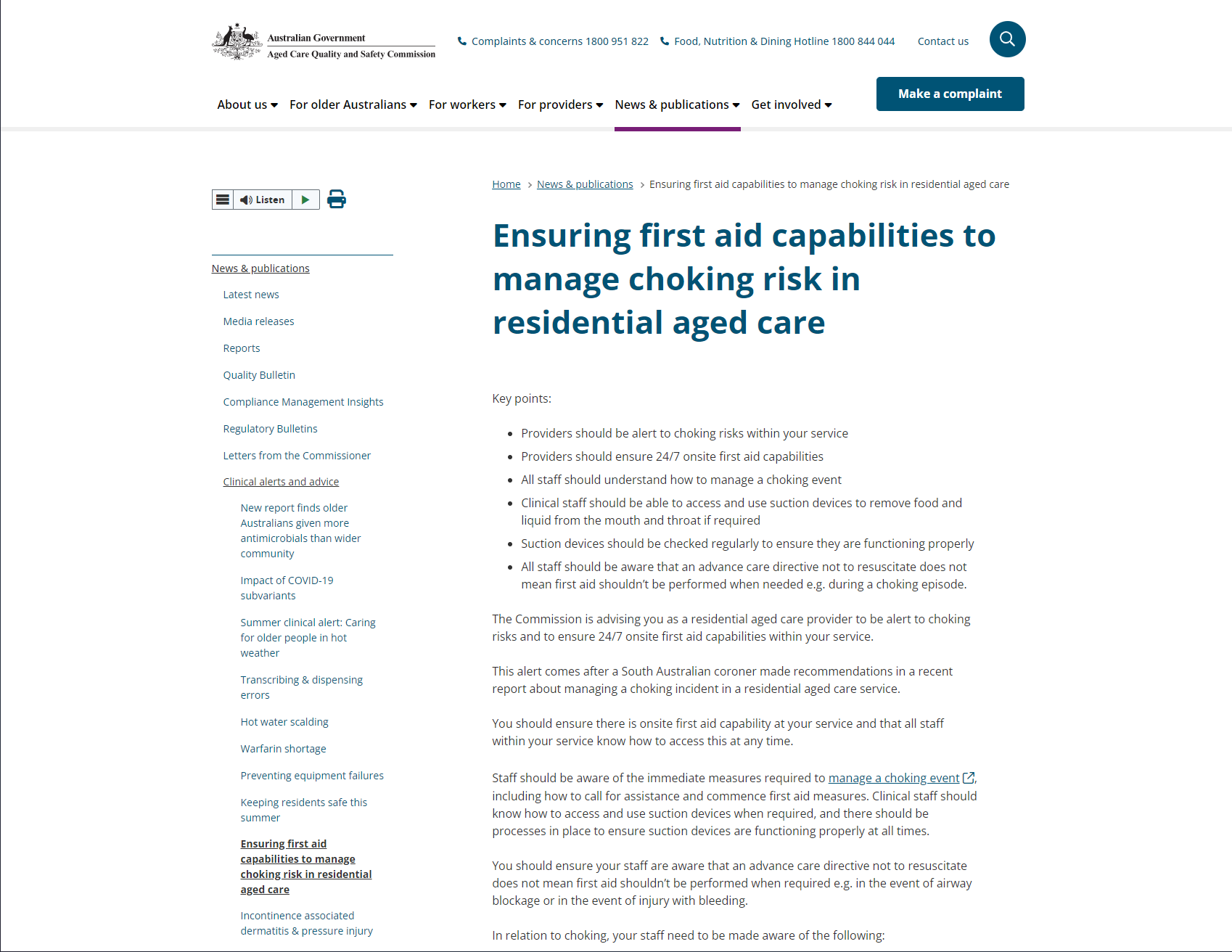
Ensuring first aid capabilities to manage choking risk in residential aged care
This page provides guidance for residential aged care services on managing choking risks. It advises 24/7 first aid capabilities, staff training on choking incidents, the use of suction devices, and understanding that advance care directives do not prevent the administering of first aid. The alert also recommends collaborating with speech pathologists, documenting discussions, and managing choking events through incident review and support.
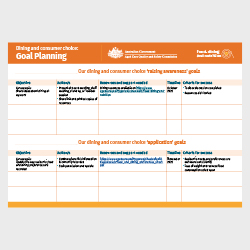
Goal planning tool
This resource is a goal planning tool designed to support aged care providers in improving food, dining, nutrition, and consumer choice. It helps providers set objectives, track progress, and implement actions to enhance service quality, ensuring that people’s preferences and dietary needs are consistently met.
This resource may refer to information that will be updated from 1 November 2025 to align with the new Aged Care Act and Quality Standards.
 Goal planning tool (PDF 899.52 KB)
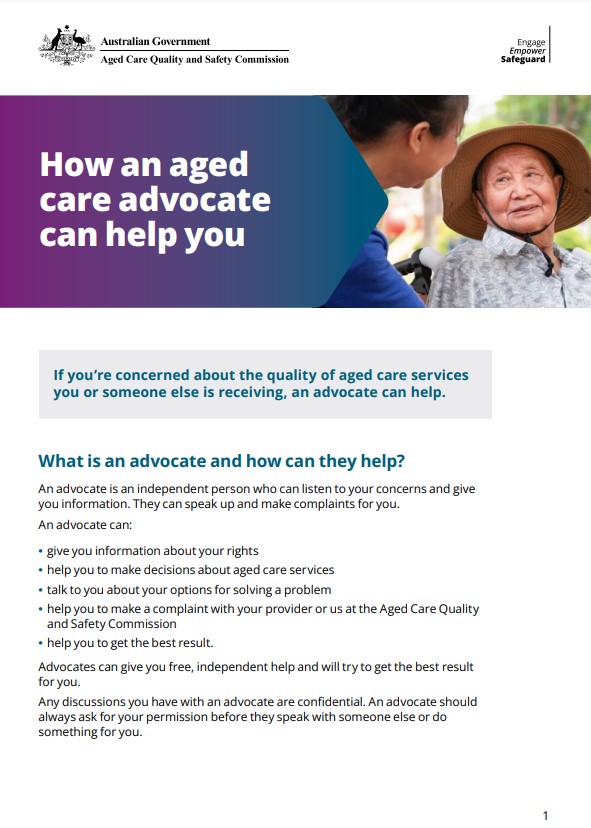
How an aged care advocate can help you
If you are concerned about the quality of the aged care service you or the person you represent is receiving, an advocacy service may be able to help.
How an aged care advocate can help you – fact sheet (PDF 267.87 KB)
Food, nutrition and dining: a reflection on practice
This training PowerPoint is a presentation that trainers/managers can download, customise and use to promote discussion and educate their staff to support and improve the food, nutrition and dining experience of consumers in their care.
The resource is designed to support reflective discussions about what ‘best practice’ looks like and a reflection on how it applies in practice. This resource may refer to information that will be updated from 1 November 2025 to align with the new Aged Care Act and Quality Standards.
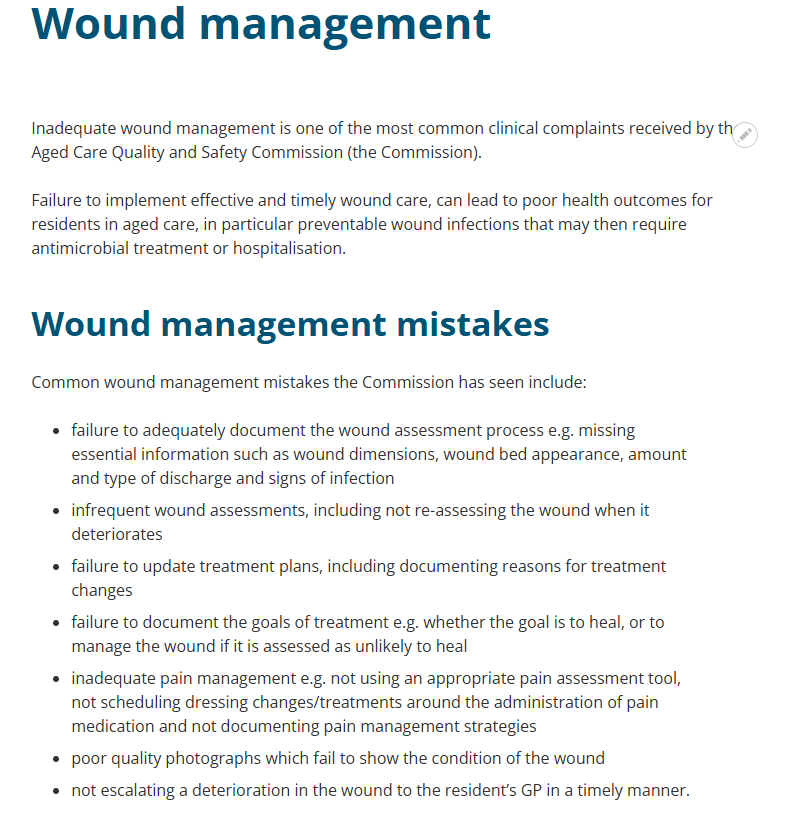
Wound management
This resource provides information about wound management, including wound management mistakes. It contains treatment plan information and highlights the importance of monitoring and analysing data under the National Mandatory Quality Indicator Program.
This resource may refer to information that will be updated from 1 November 2025 to align with the new Aged Care Act and Quality Standards.
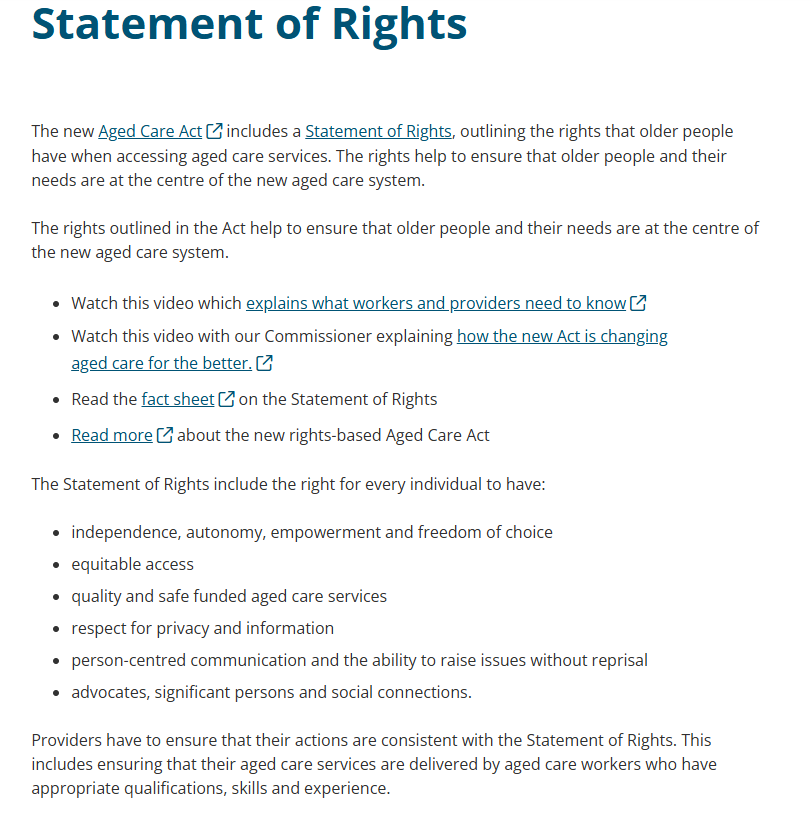
Statement of Rights - Workers
This resource provides information for providers about the Statement of Rights. The Statement of Rights promote quality and safe care for older persons accessing, or seeking to access, funded aged care services. The rights help to ensure that older people and their needs are at the centre of the new aged care system.
This page includes information about what the Statement of Rights means for providers, and has links to additional resources about the rights, including videos and fact sheets.
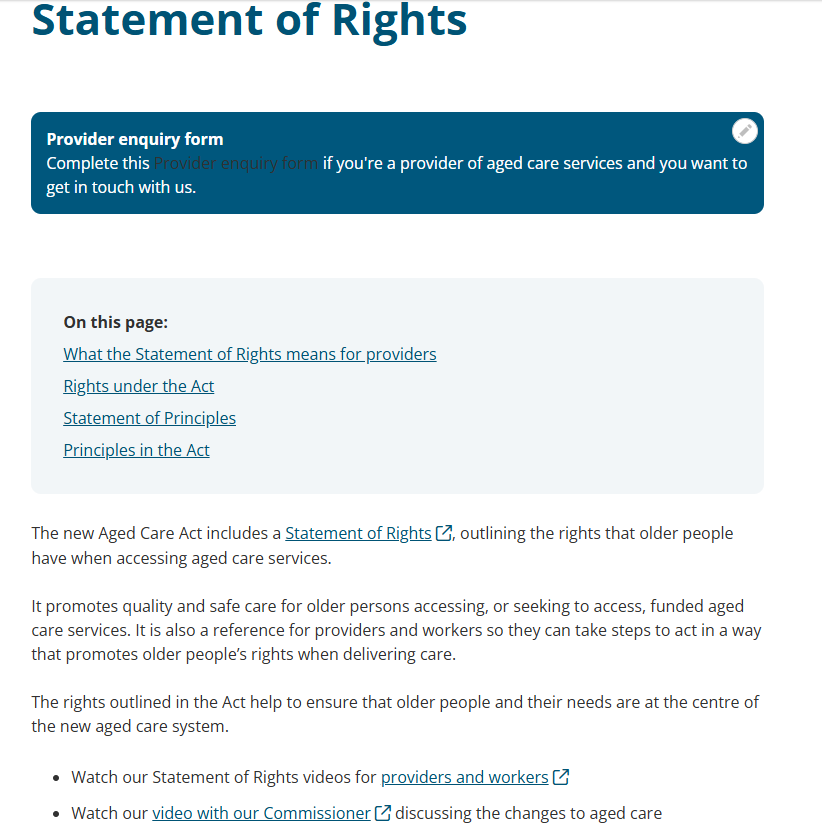
Statement of Rights - Providers
This resource provides information for providers about the Statement of Rights. The Statement of Rights promote quality and safe care for older persons accessing, or seeking to access, funded aged care services. The rights help to ensure that older people and their needs are at the centre of the new aged care system.
This page includes information about what the Statement of Rights means for providers, and has links to additional resources about the rights, including videos and fact sheets.
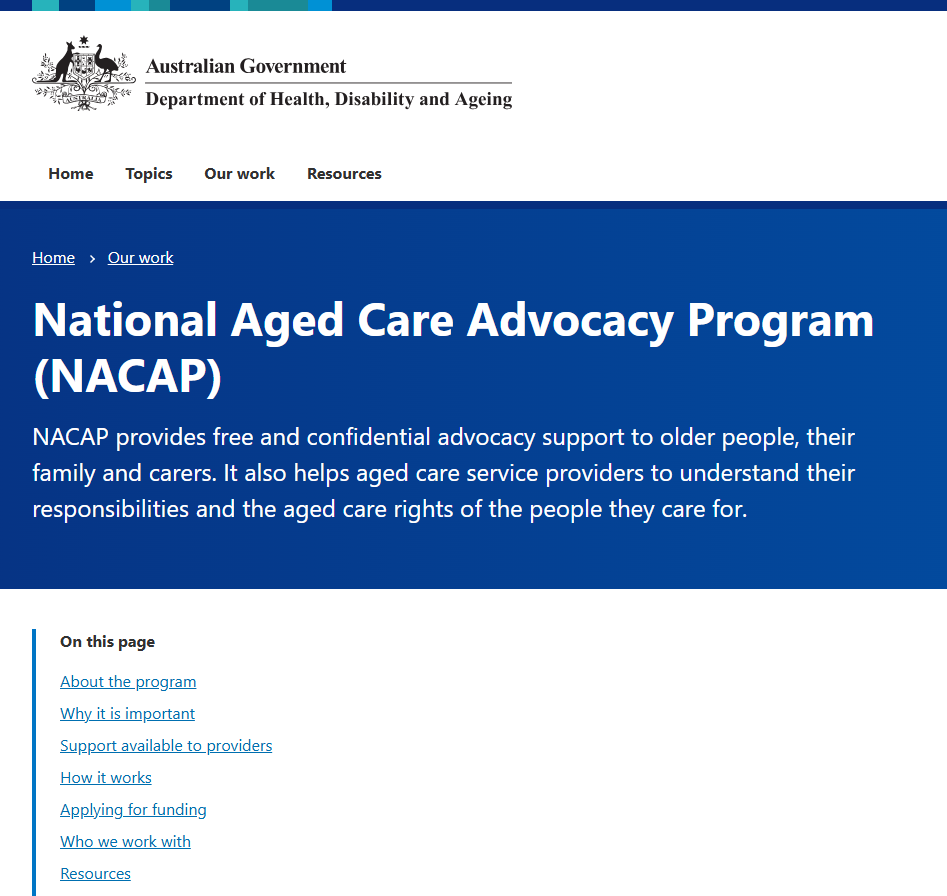
National Aged Care Advocacy Program (NACAP)
This resource outlines the National Aged Care Advocacy Program (NACAP), which provides free and confidential advocacy services to older people receiving government-subsidised aged care. It helps people understand their rights, navigate the aged care system, and resolve issues. It also offers education and support to aged care providers to ensure they uphold these rights.
This resource may refer to information that will be updated from 1 November 2025 to align with the new Aged Care Act and Quality Standards.
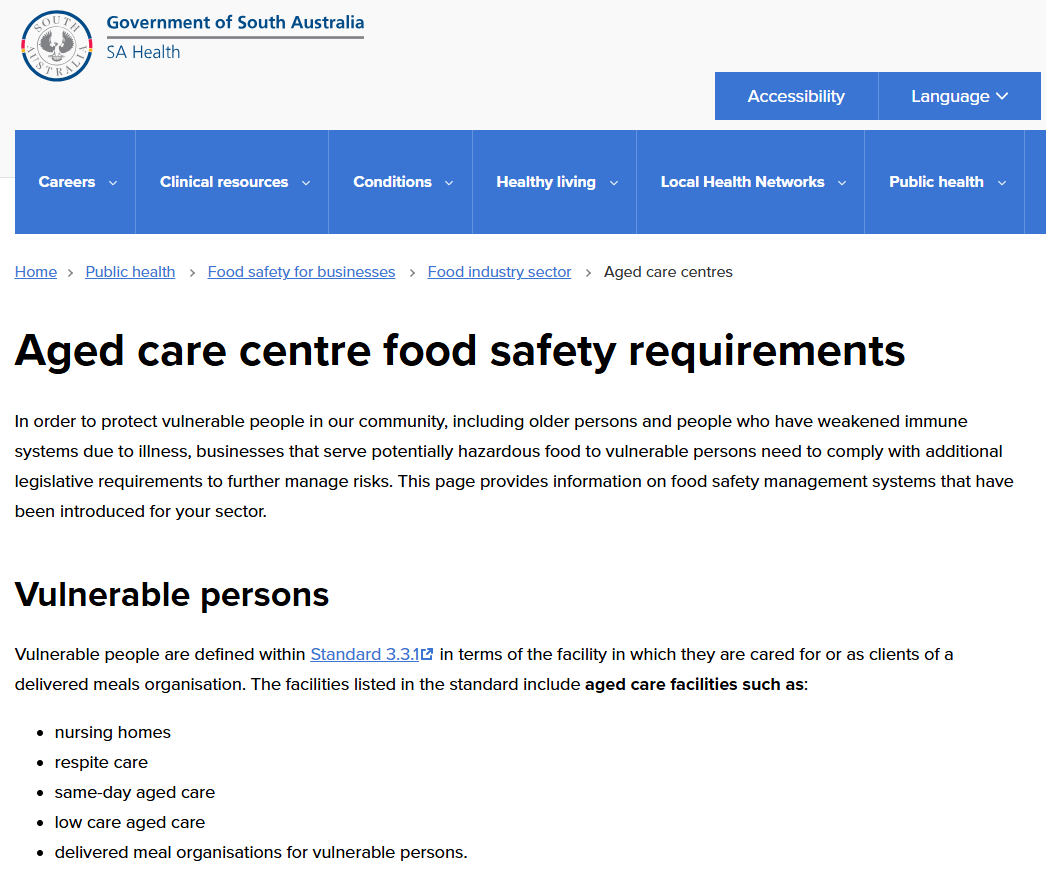
Aged care centre food safety requirements
This resource details food safety requirements for aged care centres, highlighting guidelines for managing risks with potentially hazardous foods. It includes standards for food safety programs, compliance templates, and regulatory guidance to protect vulnerable people.
This resource was developed by a state/territory government or organisation and therefore its applicability and usefulness may be limited.
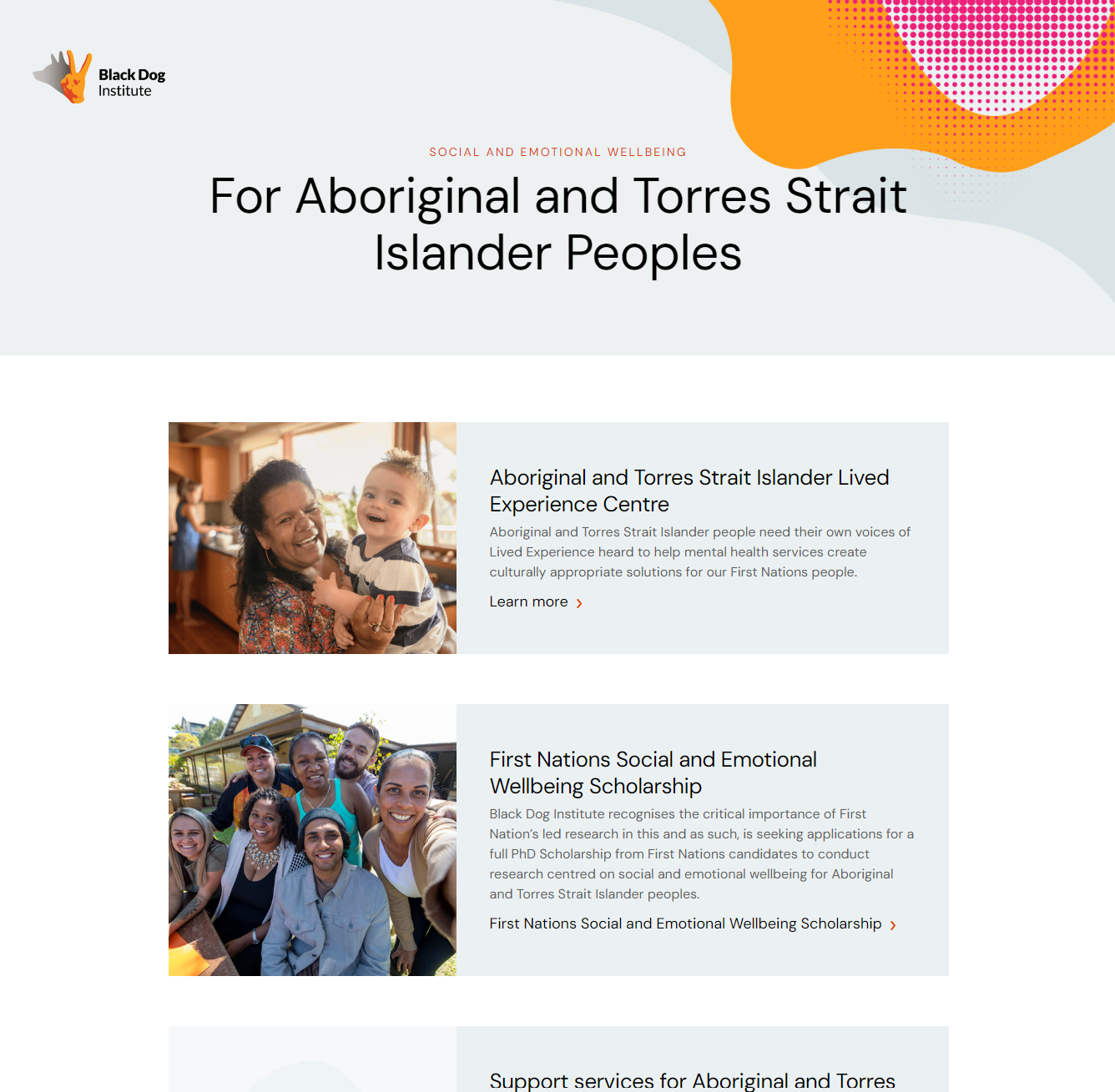
Social and emotional wellbeing resources for Aboriginal and Torres Strait Islander Peoples
This page provides resources for Aboriginal and Torres Strait Islander people on social and emotional wellbeing. It contains information on support services, scholarships, lived experience centres, stories and other resources for mental health.
Teeth.org.au
Teeth.org.au is a website designed to provide oral health information to maintain a healthy mouth. It provides educational resources, information on accessing dental care, finding a dentist tool, and articles on oral health.

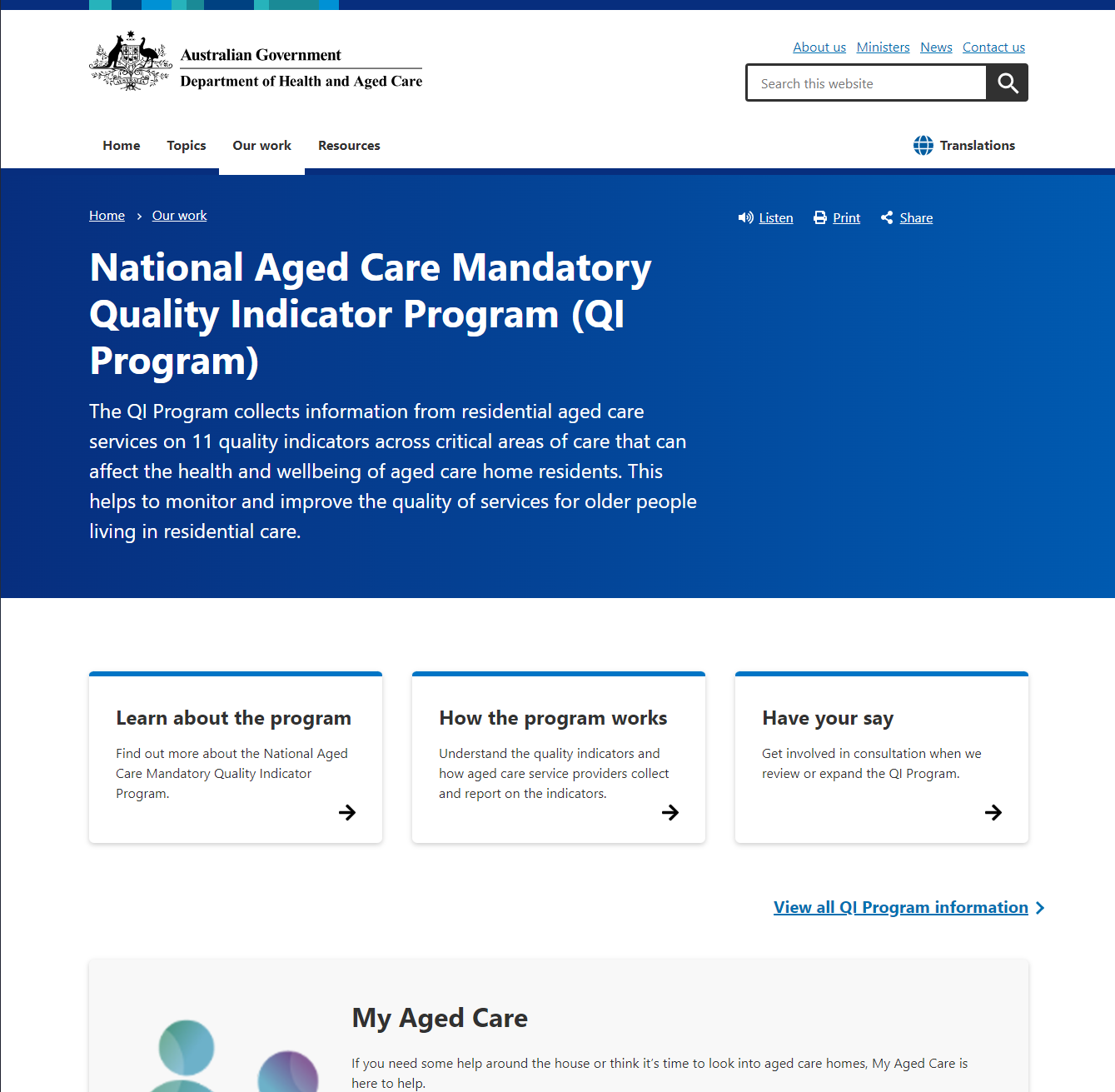
National Aged Care Mandatory Quality Indicator Program (QI Program)
This resource provides information on the National Aged Care Mandatory Quality Indicator Program (QI Program). The program gathers data on 11 quality indicators from residential aged care services to enhance care standards and outcomes for residents. It includes resources, quick guides, consultation papers, and surveys for improving quality indicators in both residential and in-home aged care services.
This resource may refer to information that will be updated from 1 November 2025 to align with the new Aged Care Act and Quality Standards.
National Safety and Quality Digital Mental Health Standards
These standards outline frameworks to ensure the safety and quality of digital mental health services in Australia. It includes standards for clinical and technical governance, partnering with consumers, and delivering a safe model of care. The standards aim to improve service quality, protect users, and establish guidelines for best practices across digital platforms.
This resource may refer to information that will be updated from 1 November 2025 to align with the new Aged Care Act and Quality Standards.
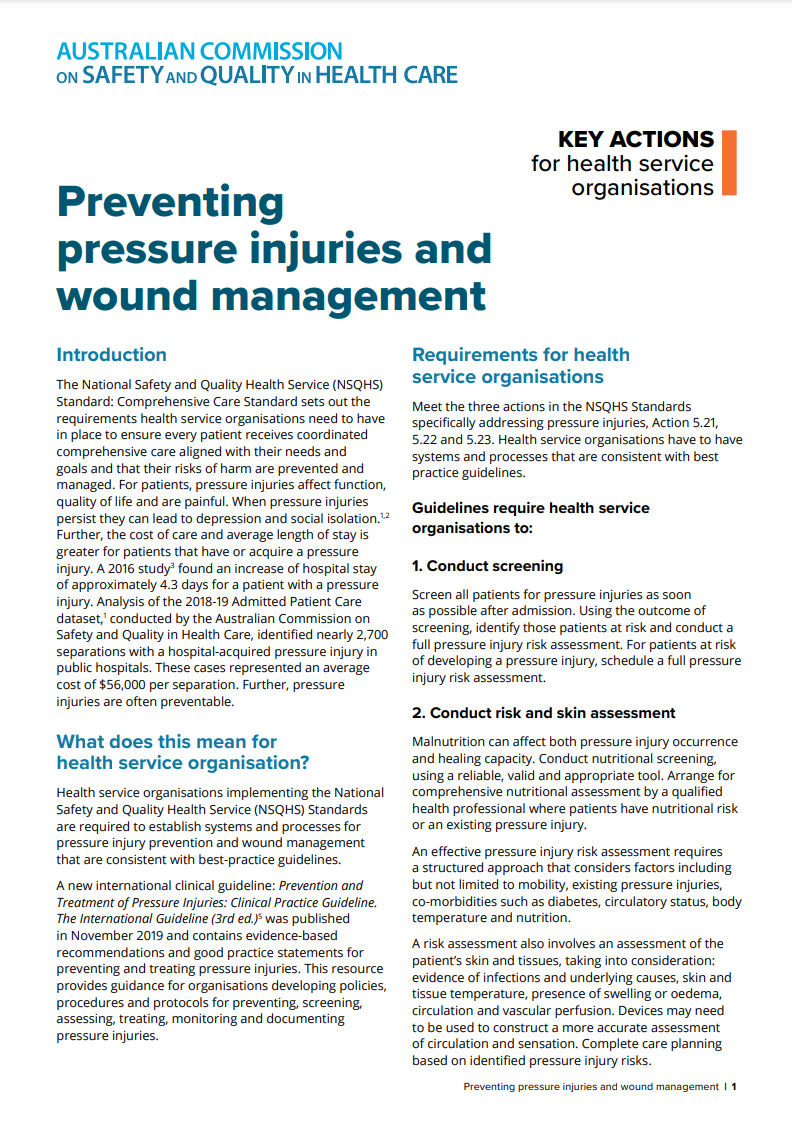
NSQHS Standards - Preventing pressure injuries and wound management
This resource provides guidance for organisations developing policies, procedures and protocols for preventing, screening, assessing, treating, monitoring and documenting pressure injuries. The fact sheet also provides a pressure injury flowchart for adult hospital admissions.
This resource may refer to information that will be updated from 1 November 2025 to align with the new Aged Care Act and Quality Standards.
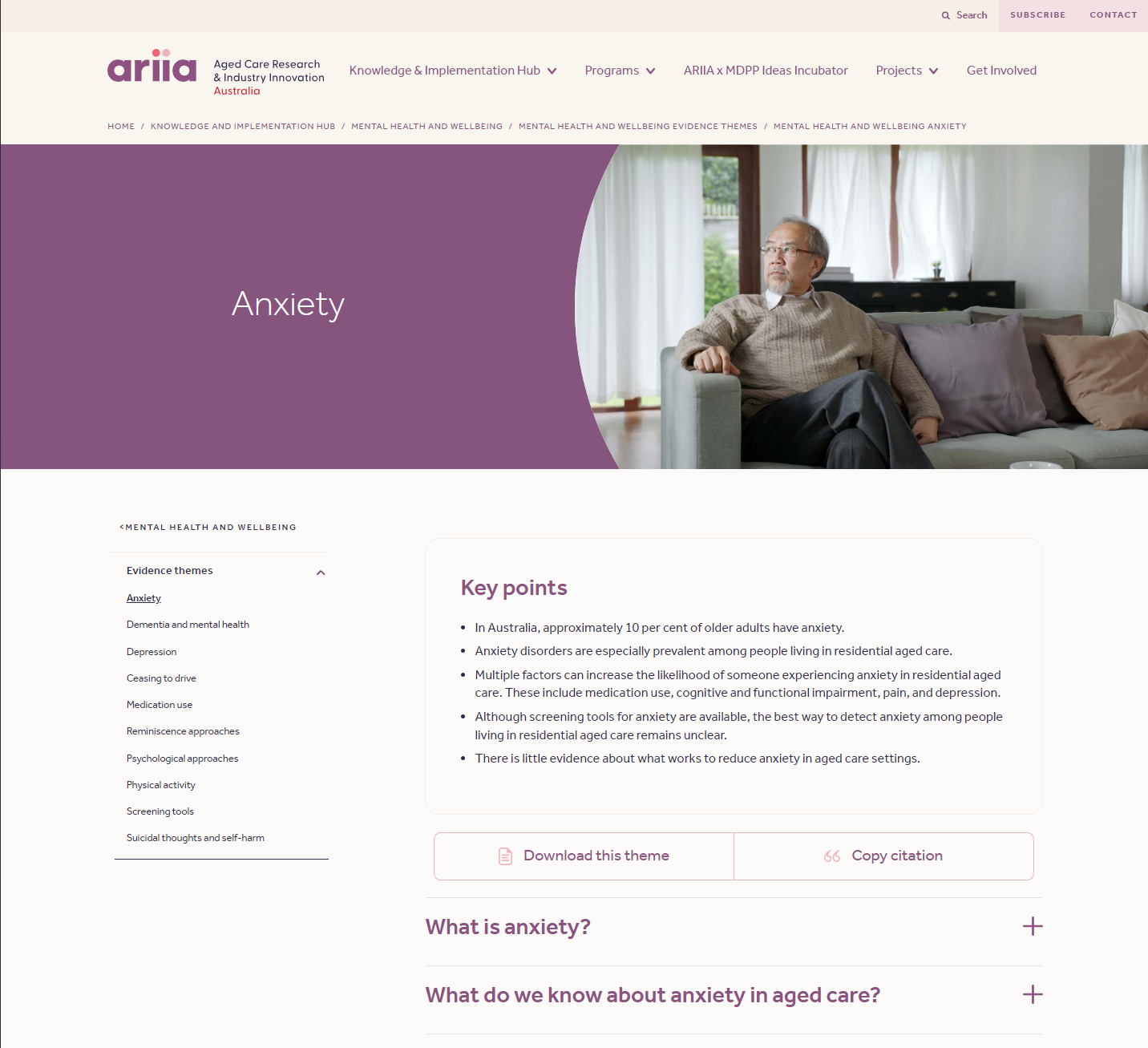
Mental health and wellbeing - Anxiety
This resource provides information on anxiety among older adults, especially those in residential aged care. It outlines risk factors, detection tools, and effectiveness of non-pharmacological interventions such as reminiscence therapy and cognitive behavioural therapy. It also provides guidance on what both individuals and organisations can do to prevent and manage anxiety effectively.
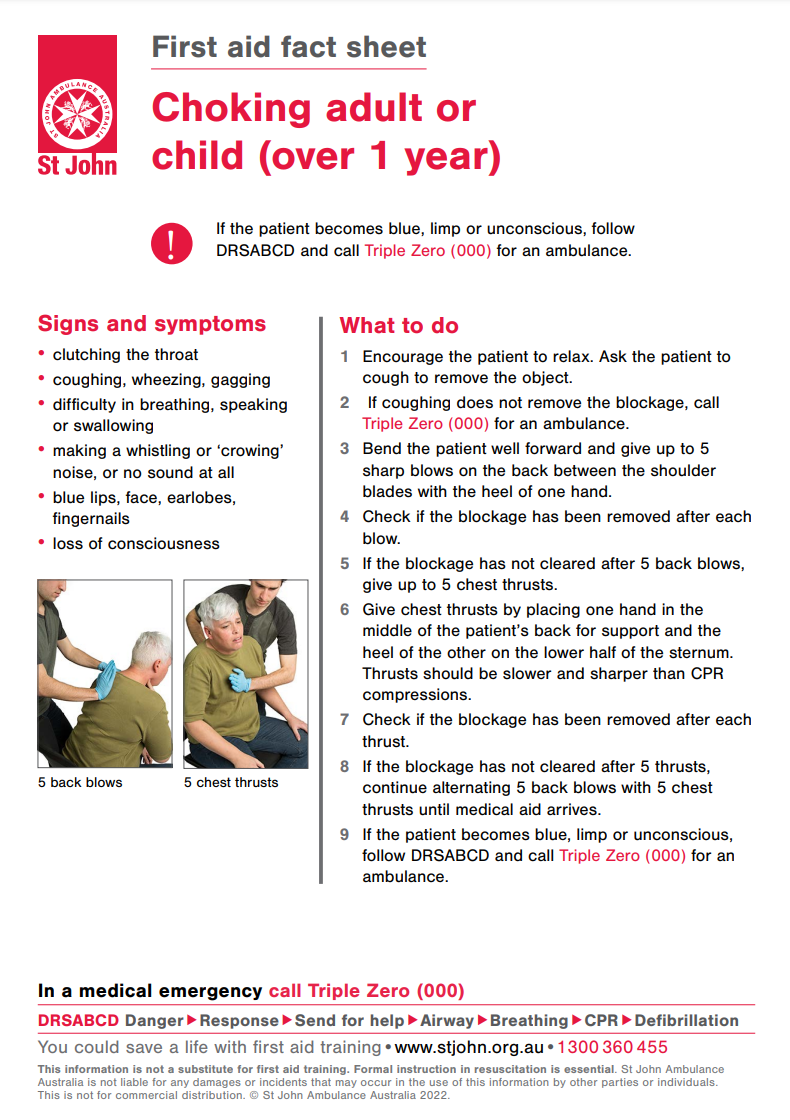
First aid fact sheet - Choking adult or child (over 1 year)
This fact sheet provides first aid instructions for choking in adults or children over one year. It details recognising choking symptoms and steps for emergency care and guidance to call emergency services if necessary.
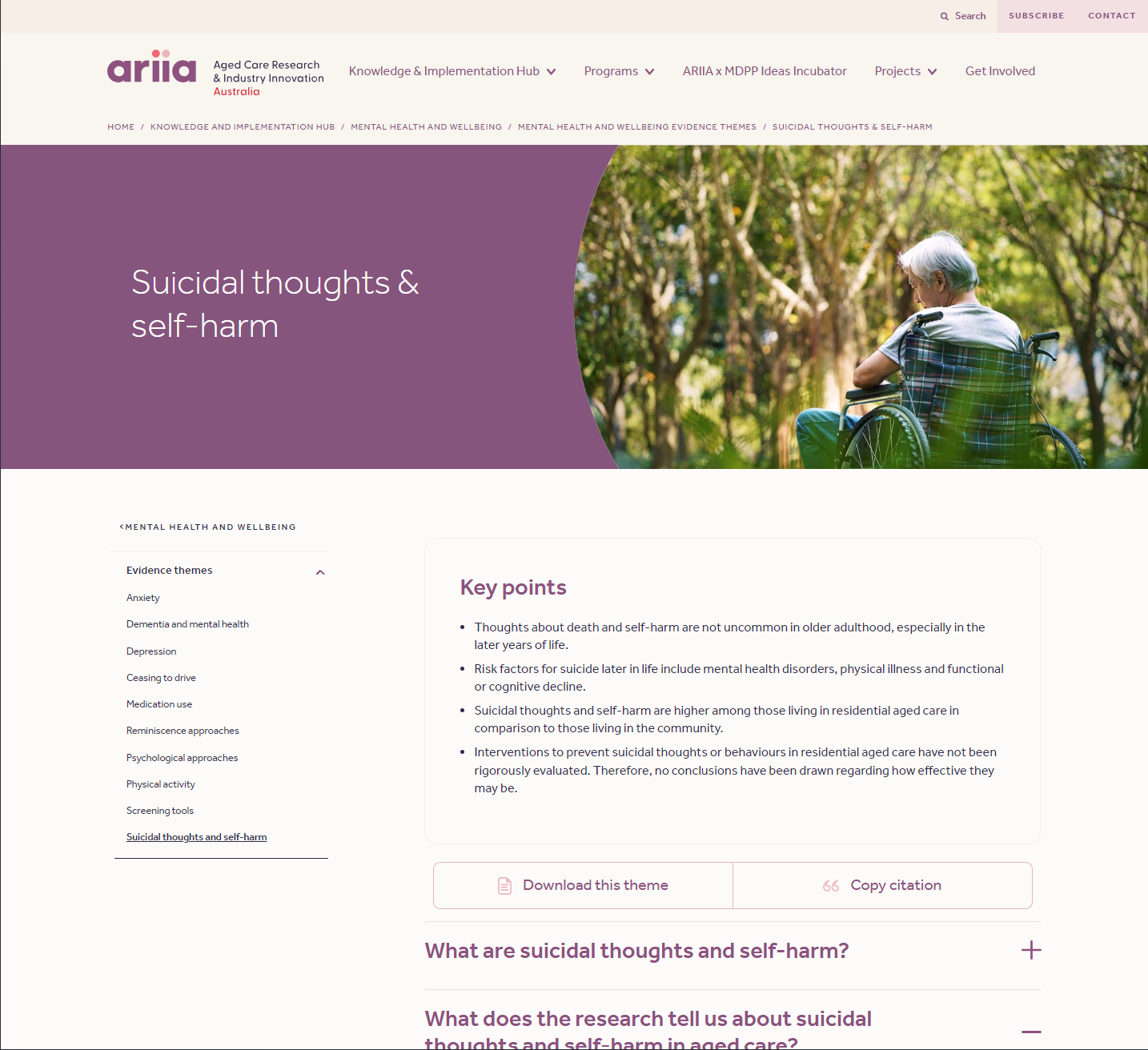
Mental health and wellbeing - Suicidal thoughts and self-harm
This resource examines suicidal thoughts and self-harm in older adults, particularly in residential aged care. It discusses associated risk factors, the prevalence of mental health conditions, what organisations and individuals can do and gaps in understanding suicide risk. It also reviews interventions, highlighting the need for mental health assessments and training to improve detection and care.
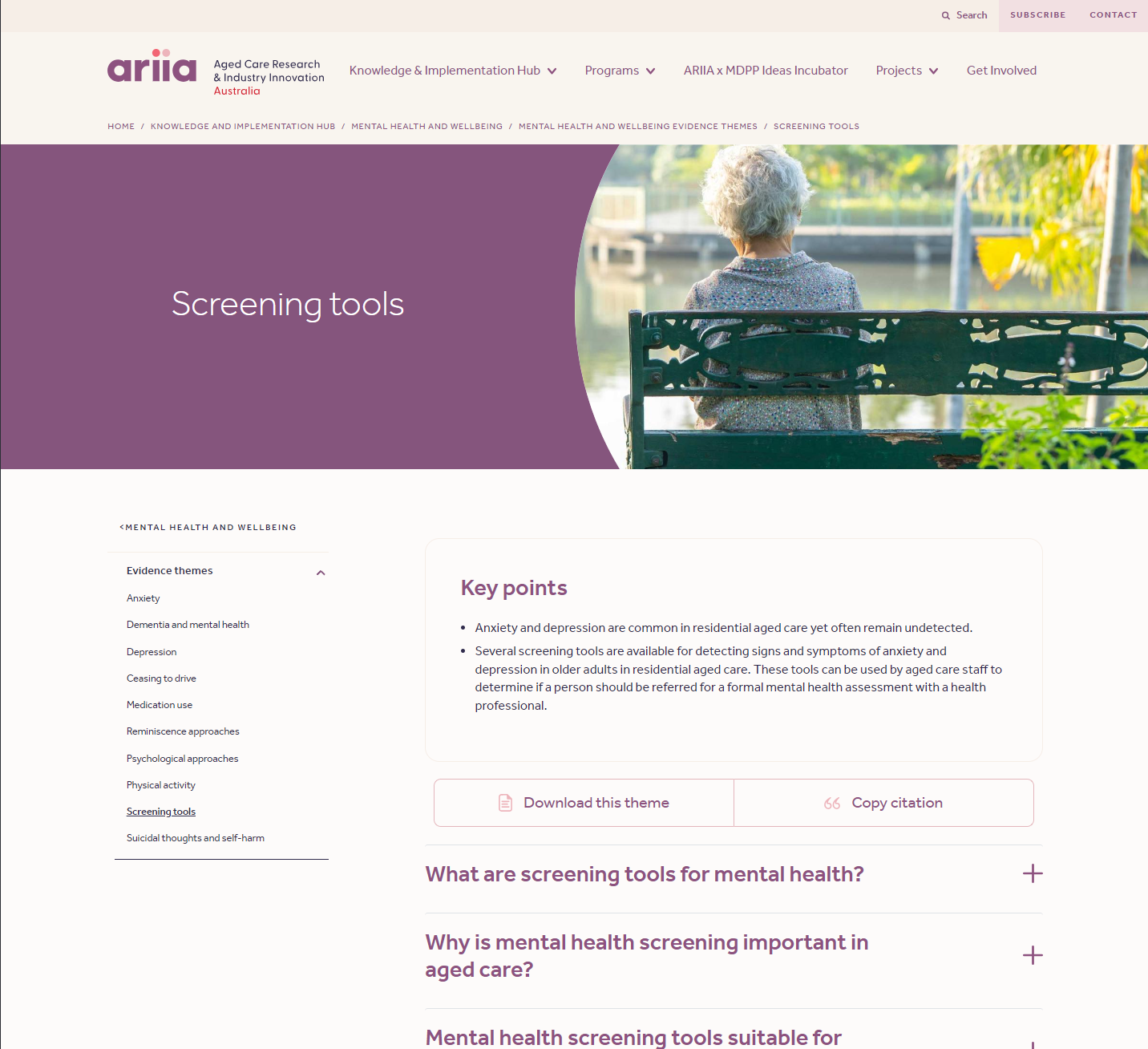
Mental health and wellbeing - Screening tools
This resource covers screening tools for detecting anxiety and depression in older adults, especially in residential aged care. It discusses the importance of mental health screening, steps individuals and organisations can take, choosing appropriate tools, and highlights tools such as the Geriatric Depression Scale and Cornell Scale for Depression in Dementia. It emphasises early detection and routine mental health screening in aged care.