The Quality Standards Resource Centre helps extend understanding of the strengthened Aged Care Quality Standards, which took effect from 1 November 2025. You can search for resources by using keywords, or filtering by standard, outcome and audience. Before using the Resource Centre, please read the terms of use.
Home services
This page provides guidance for home service providers delivering care to older people in their homes. It outlines how providers must follow the Aged Care Quality Standards, conduct regular assessments, manage risks, and ensure the safety of vulnerable people. It includes resources to help providers identify and manage risks.
This resource may refer to information that will be updated from 1 November 2025 to align with the new Aged Care Act and Quality Standards.
Heaters and burns - Reducing heater burn risks in residential aged care services
This resource provides guidance for aged care providers on managing risks related to hydronic heaters. It advises regular maintenance, accurate temperature checks, and positioning of beds away from heaters. Installing guards and monitoring heat settings are also recommended to prevent burns and ensure the safety of older people in cooler months.
This resource may refer to information that will be updated from 1 November 2025 to align with the new Aged Care Act and Quality Standards.
Hot water scalding
This page provides guidance for aged care providers on preventing and responding to hot water scalding incidents. It highlights the importance of staff oversight, proper training, and temperature checks when providing care. It also includes immediate first aid steps for burns, helping to reduce risks for vulnerable people, especially older people.
This resource may refer to information that will be updated from 1 November 2025 to align with the new Aged Care Act and Quality Standards.
Preventing equipment failures
This resource highlights the importance of preventing equipment failures in aged care settings. It outlines the need for regular maintenance checks, adherence to manufacturer guidelines, and proper record-keeping to ensure safety. The document also provides recommendations for improving the safety and reliability of critical devices, such as mobility hoists and medical equipment.
This resource may refer to information that will be updated from 1 November 2025 to align with the new Aged Care Act and Quality Standards.
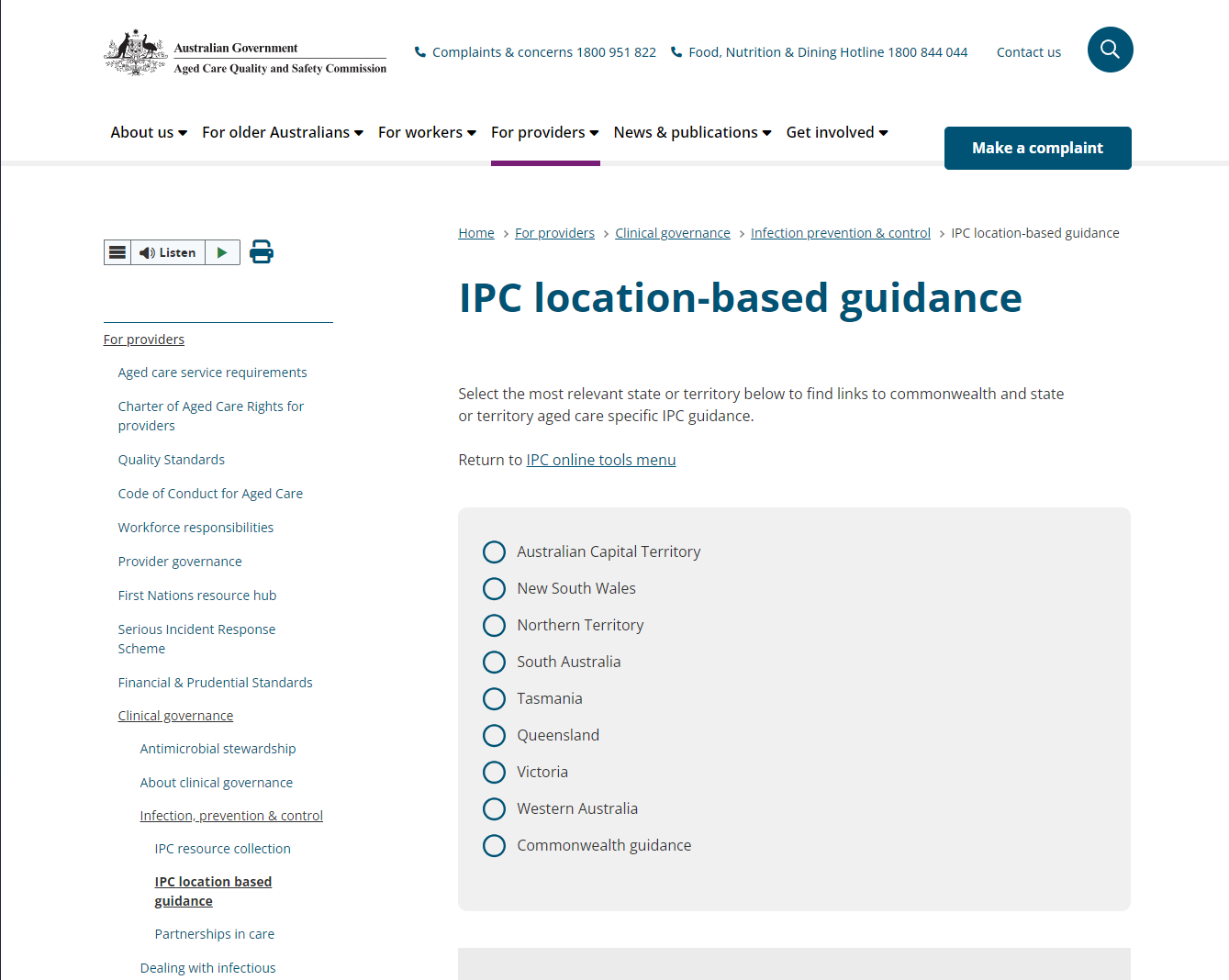
IPC location-based guidance
This resource provides infection prevention and control (IPC) location-based guidance tailored for aged care providers. It includes state and territory-specific IPC requirements and offers links to relevant Commonwealth and local guidance. The document helps providers access and prioritise the appropriate IPC information to maintain compliance with regulations.
This resource may refer to information that will be updated from 1 November 2025 to align with the new Aged Care Act and Quality Standards.
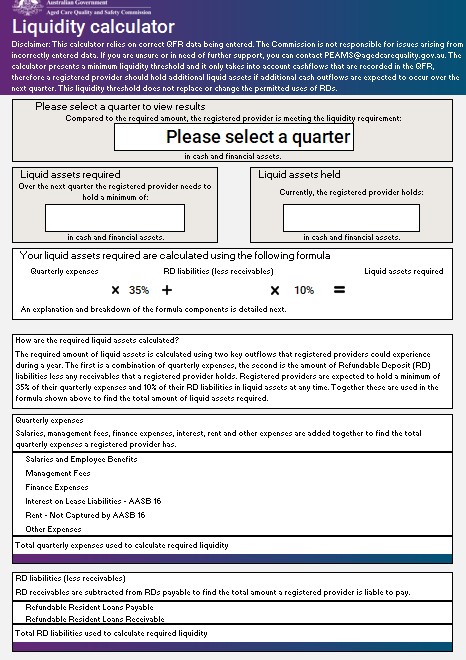
Liquidity calculator for registered providers in the aged care sector
This calculator informs registered providers of the minimum level of liquid assets they are required to hold calculated based on Quarterly Financial Report (QFR) financial statements.
 Liquidity calculator instructions (PDF 1.26 MB)
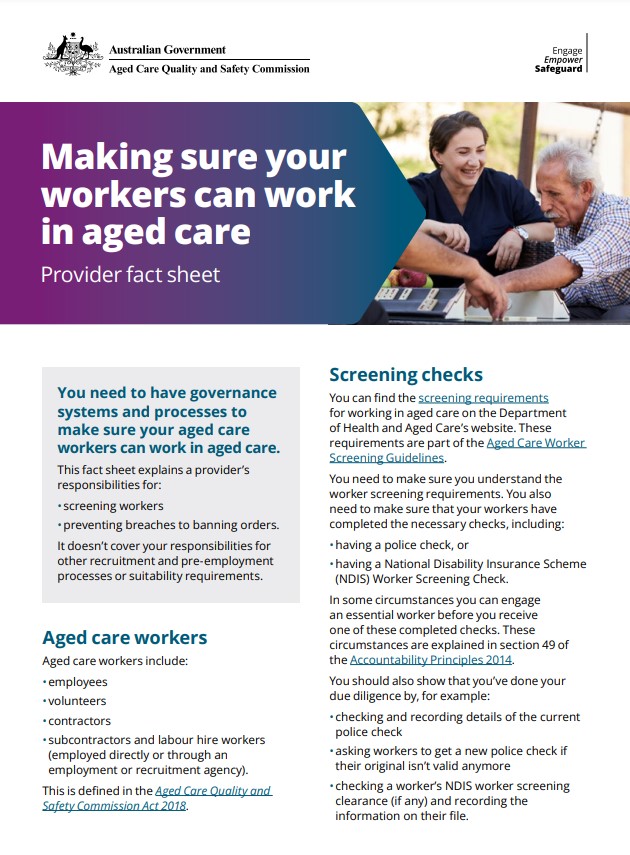
Making sure your workers can work in aged care
Registered providers need to have governance systems and processes to make sure their aged care workers can work in aged care. This fact sheet explains providers’ obligations to:
- screen aged care workers
- make sure aged care workers don’t have banning orders against them that restrict or ban them from being involved in aged care.
Making sure your workers can work in aged care (PDF 469.26 KB)
Provider Governance Policy
Under the new Act, registered providers will need to meet certain governance obligations.
Our Provider Governance Policy outlines our expectations of providers and guiding principles of good governance. It includes:
- definitions and principles of good governance
- provider governance obligations
- how we collect provider governance information
- how we respond to provider governance risks.
Provider Governance Policy (PDF 2.07 MB)
Your questions answered – Compliance
In this video, Peter Edwards, Executive Director, Compliance and Enforcement Group, answers your questions about how we will manage non-compliance from 1 November 2025.

Joint letter from CMO and Commissioner to Board Chairs on winter preparedness 2025
Joint letter from the Chief Medical Officer Professor Anthony Lawler and Commissioner Liz Hefren-Webb to Board Chairs, Residential Aged Care Providers on winter preparedness in residential aged care.
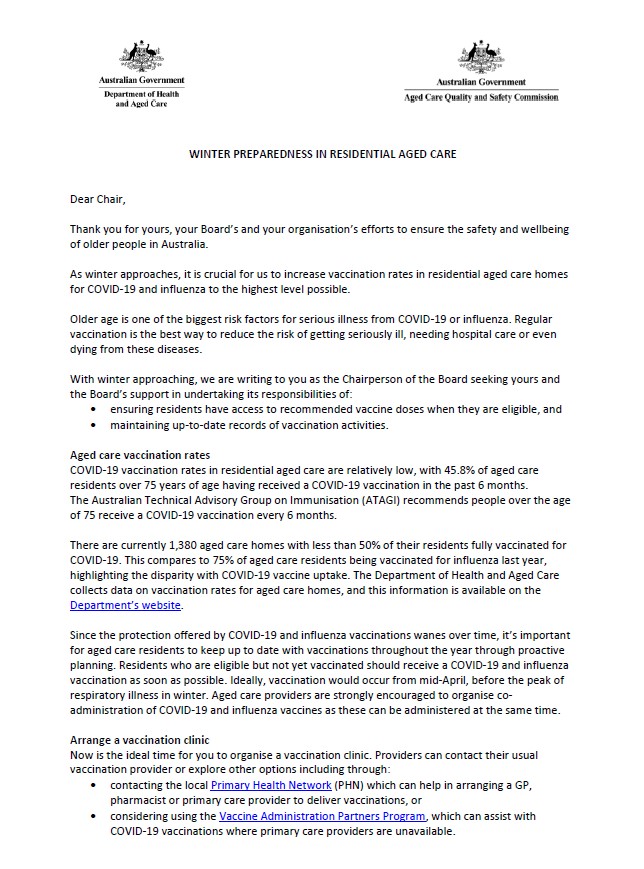
Audit Evidence Collection Tool (AECT) – Registration
Organisations or persons must complete the Audit Evidence Collection Tool (AECT) – Registration as part of the initial registration audit. This is compulsory for organisations or persons applying for registration in categories 4, 5 and 6 from 1 November 2025.
The registration audit helps us to understand if the organisation or person can conform with the related strengthened Aged Care Quality Standards.
We use this tool to collect evidence about:
 Audit Evidence Collection Tool (AECT) – Registration (XLSX 444.19 KB)
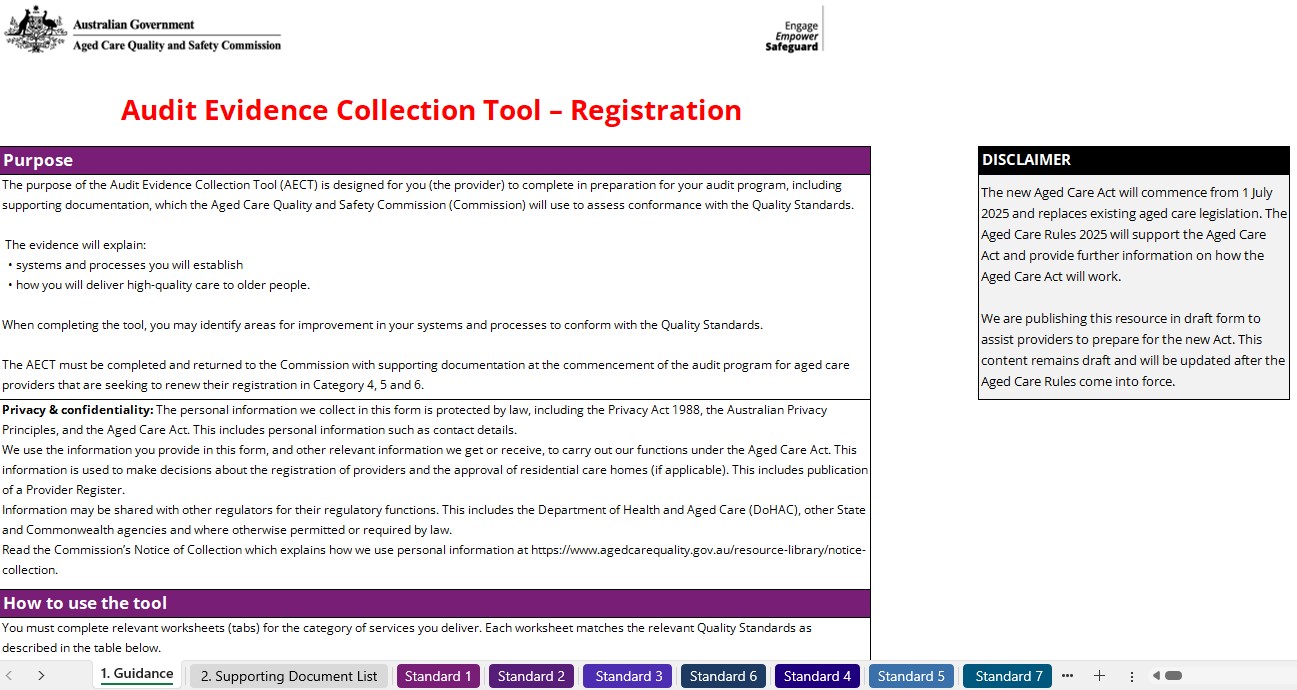
Audit Evidence Collection Tool (AECT) – Renewal
Providers must complete the Audit Evidence Collection Tool (AECT) – Renewal as part of a renewal audit in registration categories 4, 5 and 6. This is compulsory for providers from 1 November 2025.
Providers only need to complete this tool once as part of the audit program.
The renewal audit helps us to understand if the provider can conform with the related strengthened Aged Care Quality Standards.
We use this tool to collect evidence about:
- your systems and processes
- how you deliver safe and quality care to older people.
Audit Evidence Collection Tool (AECT) – Renewal (XLSX 405.09 KB)
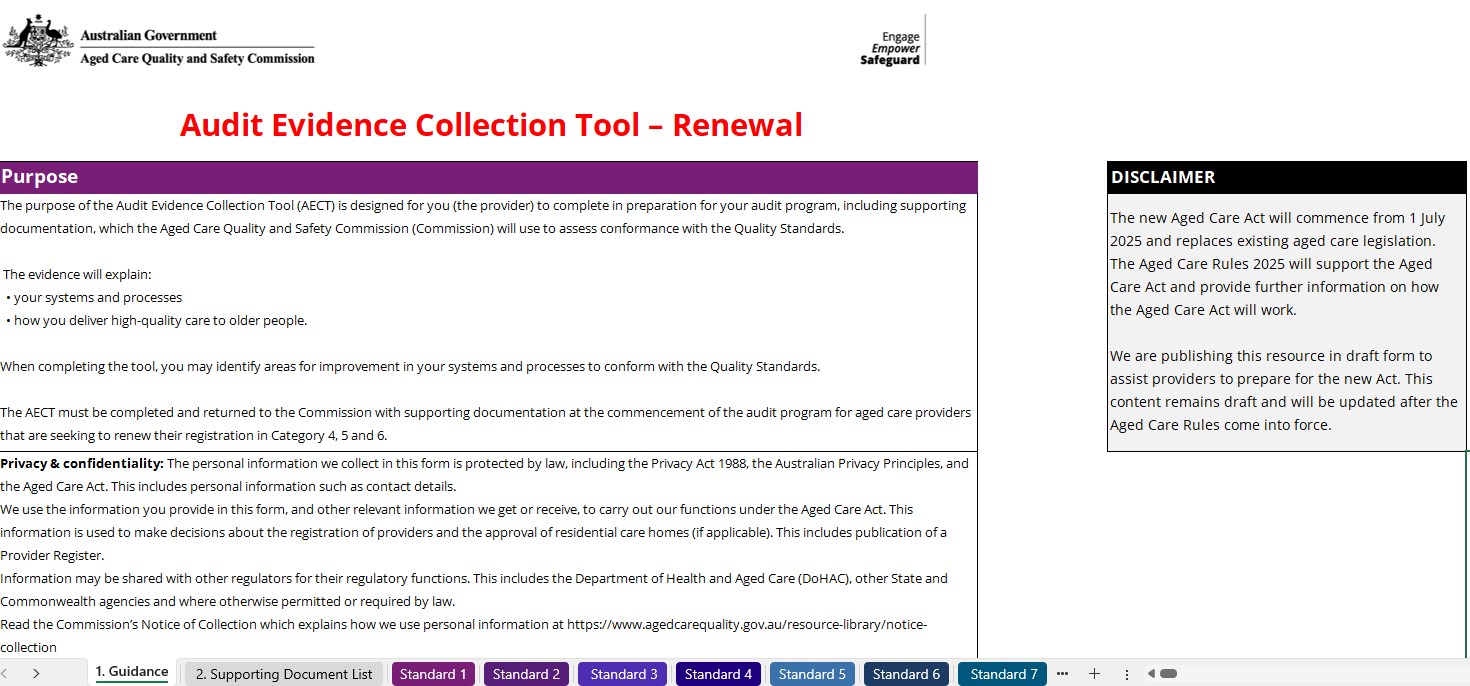
Audit Evidence Collection Tool (AECT) – Variation
Providers must complete the Audit Evidence Collection Tool (AECT) – Variation as part of a variation audit, where they are asking to add categories 4, 5 or 6 to their registration. This is compulsory for providers from 1 November 2025.
The variation audit helps us to understand if the provider can conform with the related strengthened Aged Care Quality Standards.
We use this tool to collect evidence about:
- the systems and processes you will establish
- how you will deliver safe and quality care to older people.
Audit Evidence Collection Tool (AECT) – Variation (XLSX 438.55 KB)
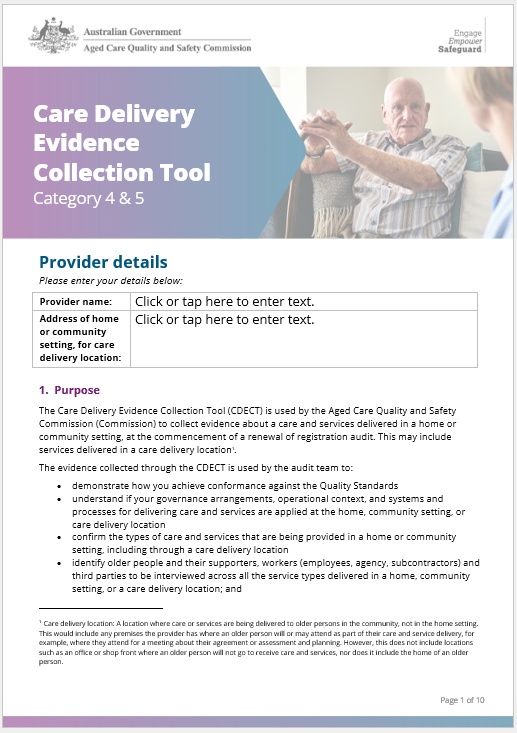
Care Delivery Evidence Collection Tool (CDECT) – Care delivery location (Category 4 & 5)
Providers must complete this tool as part of a renewal audit in registration categories 4 and 5.
We will identify a targeted sample of care delivery locations (Category 4 & 5). You will be notified of this sample and the CDECT – Care delivery location must only be completed for these targeted sample locations.
We use this tool to collect evidence about care and services delivered in a home or community setting.
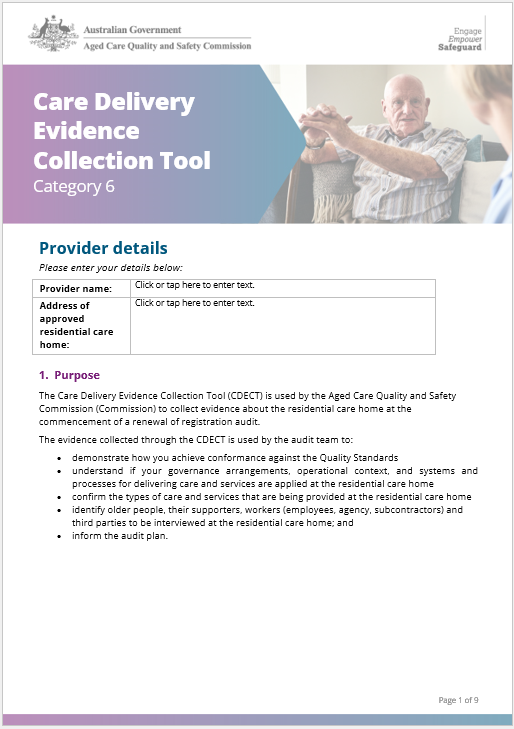
Care Delivery Evidence Collection Tool (CDECT) – Residential (Category 6)
Providers must complete this tool as part of a renewal audit in registration category 6.
The CDECT – Residential must be completed once for each category 6 service.
We use this tool to collect evidence about the residential care home.
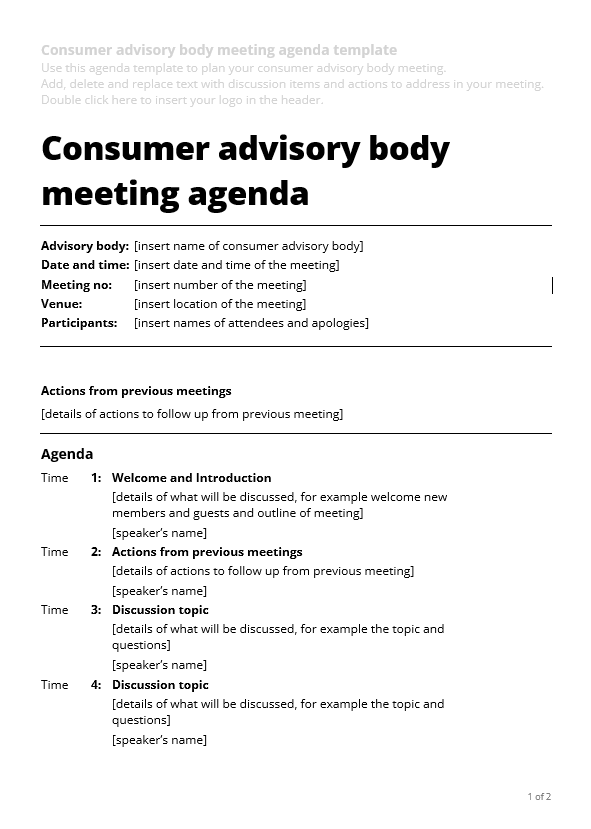
Consumer advisory body meeting agenda template
A template that consumer advisory body members can use to plan their meeting agendas.
 Consumer advisory body meeting agenda template (DOCX 2.39 MB)
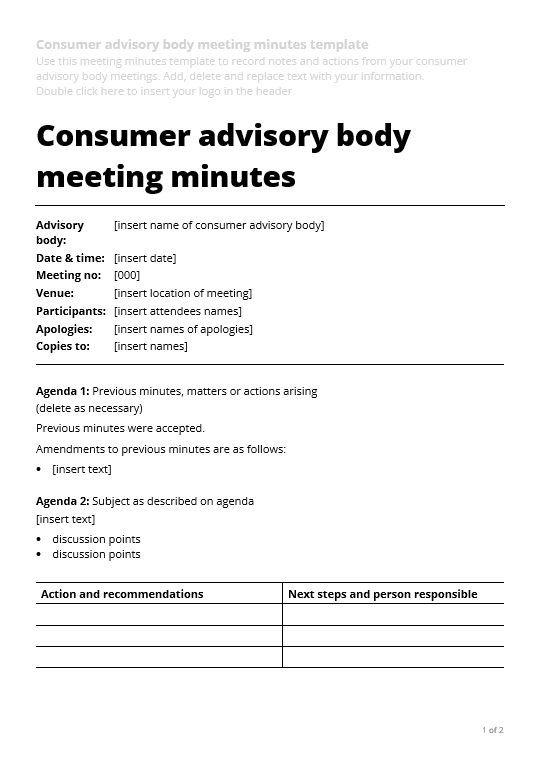
Consumer advisory body minutes template
A template that consumer advisory body members can use in their meetings to take minutes.
Consumer advisory body minutes template (DOCX 2.4 MB)
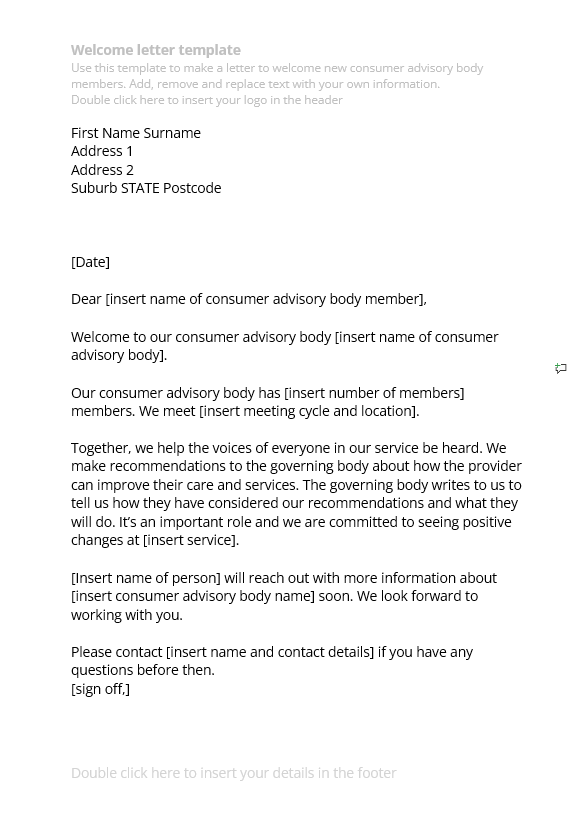
Consumer advisory body welcome letter template
A welcome letter template that consumer advisory body members can use to communicate with new members.
Consumer advisory body welcome letter template (DOCX 3.8 MB)
First Nations - YouTube videos
This resource includes a series of YouTube videos developed by the Aged Care Quality and Safety Commission. Australian First Nations older people discuss good quality, culturally appropriate and safe aged care, including person-centred care, rights and how to speak up about care. This resource may refer to information that will be updated from 1 November 2025 to align with the new Aged Care Act and Quality Standards.

First Nations - Digital Flipchart - Your rights in aged care
A visual guide for conversations between providers/workers and older people about aged care. It includes notes for providers/workers to help guide the conversation.