Aged care laws in Australia have now changed. The new Aged Care Act 2024 and Aged Care Rules 2025 now apply. While we complete updating of our website, including draft guidance and other materials, to align with the new laws, providers are advised to refer to the new Act and Rules for any required clarification of their obligations and legal responsibilities. Thank you for your patience.

Quality Standards Resource Centre

The Quality Standards Resource Centre helps extend understanding of the strengthened Aged Care Quality Standards, which take effect from 1 November 2025. The Resource Centre will be updated to reflect key changes made to the draft strengthened Standards. You can search for resources by using keywords, or filtering by standard, outcome, audience and theme. Before using the Resource Centre, please read the terms of use.

Displaying 1 to 20 of 24 result(s)
/quality-standards/good-spirit-good-life-quality-life-framework

Good Spirit Good Life - a Quality of life framework

Guidance

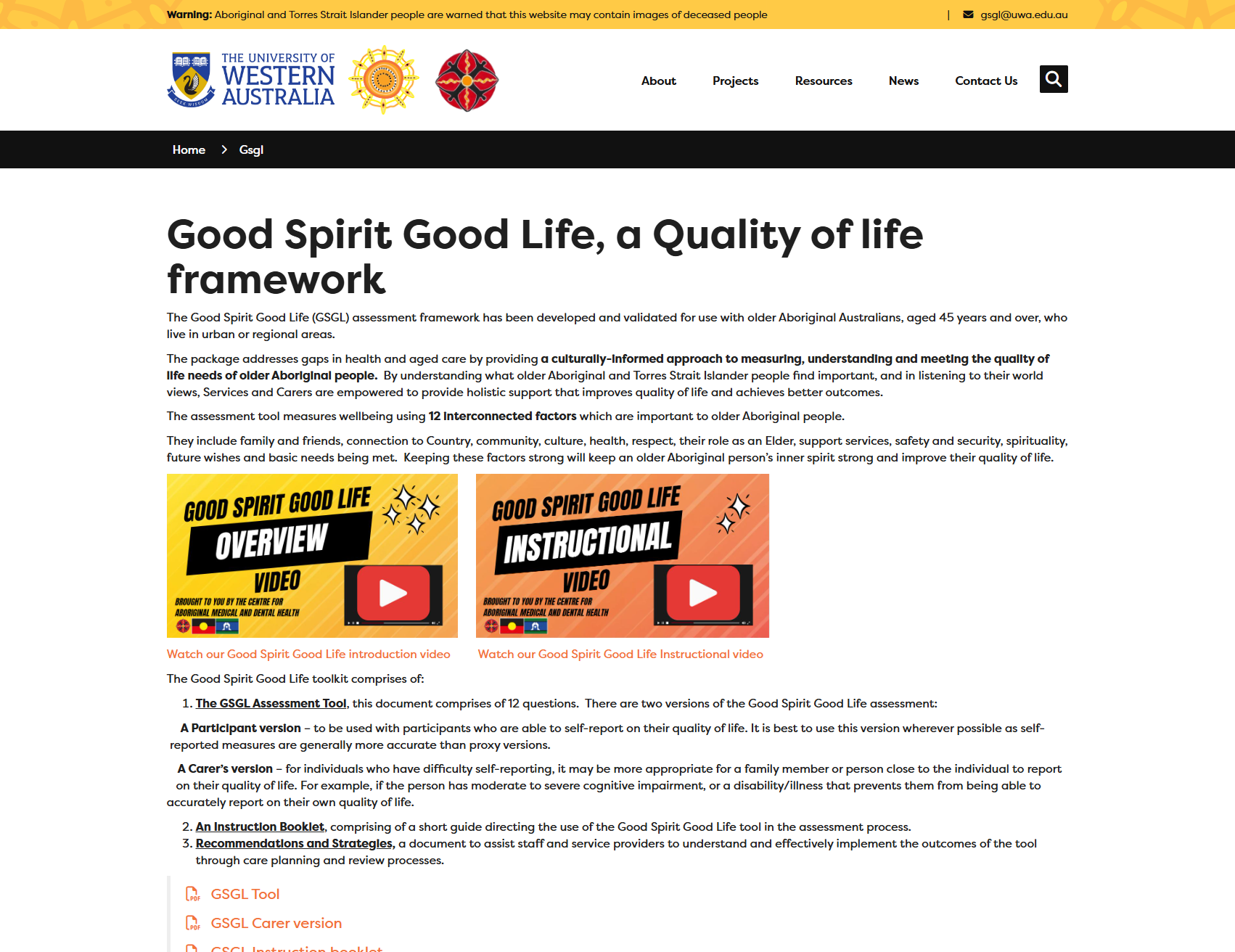
This resource describes the Good Spirit Good Life (GSGL) framework for assessing the quality of life of older Aboriginal people, focusing on culturally important factors such as connection to Country, family, and spirituality. It includes tools for both self-reporting and carer-assisted reporting.

This resource was developed by a state/territory government or organisation and therefore its applicability and usefulness may be limited.
Author
External resource
Key Theme
Person-centred care, Dignity, respect and privacy, Assessment and planning
Standard
1: The Individual, 3: The Care and Services
Outcomes
1.1: Person-centred care, 1.2: Dignity, respect and privacy, 3.1 Assessment and planning
Good Spirit Good Life - a Quality of life framework
/quality-standards/better-together-practical-guide-effective-engagement-older-people

Better Together: A practical guide to effective engagement with older people

Guidance

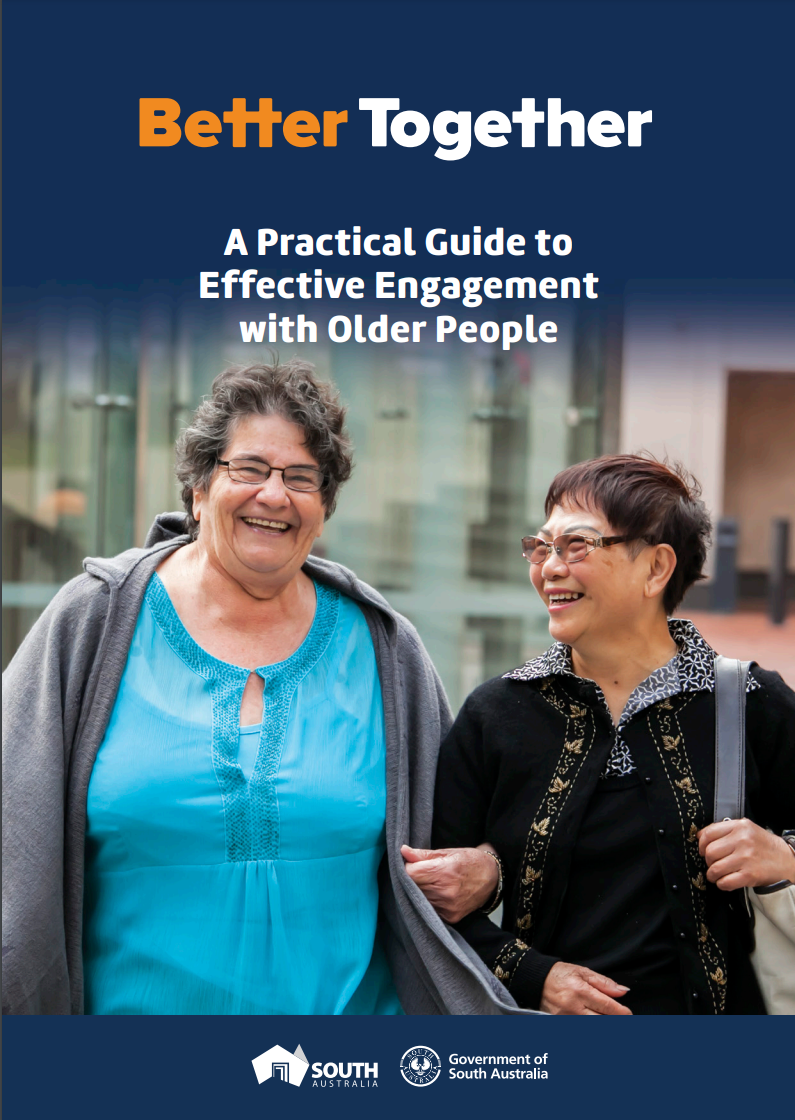
This resource offers practical guidance on effective engagement with older people, highlighting diverse communication methods, cultural sensitivity, and inclusive strategies to capture meaningful input. It supports collaborative relationships and respectful dialogue with older people in decision-making processes.

This resource was developed by a state/territory government or organisation and therefore its applicability and usefulness may be limited.
Author
External resource
Key Theme
Person-centred care, Corporate and clinical governance, Assessment and planning
Standard
1: The Individual, 2: The Organisation, 3: The Care and Services
Outcomes
1.1: Person-centred care, 2.1: Partnering with individuals, 3.1 Assessment and planning
Better Together: A practical guide to effective engagement with older people
/quality-standards/translating-and-interpreting-service-tis-national

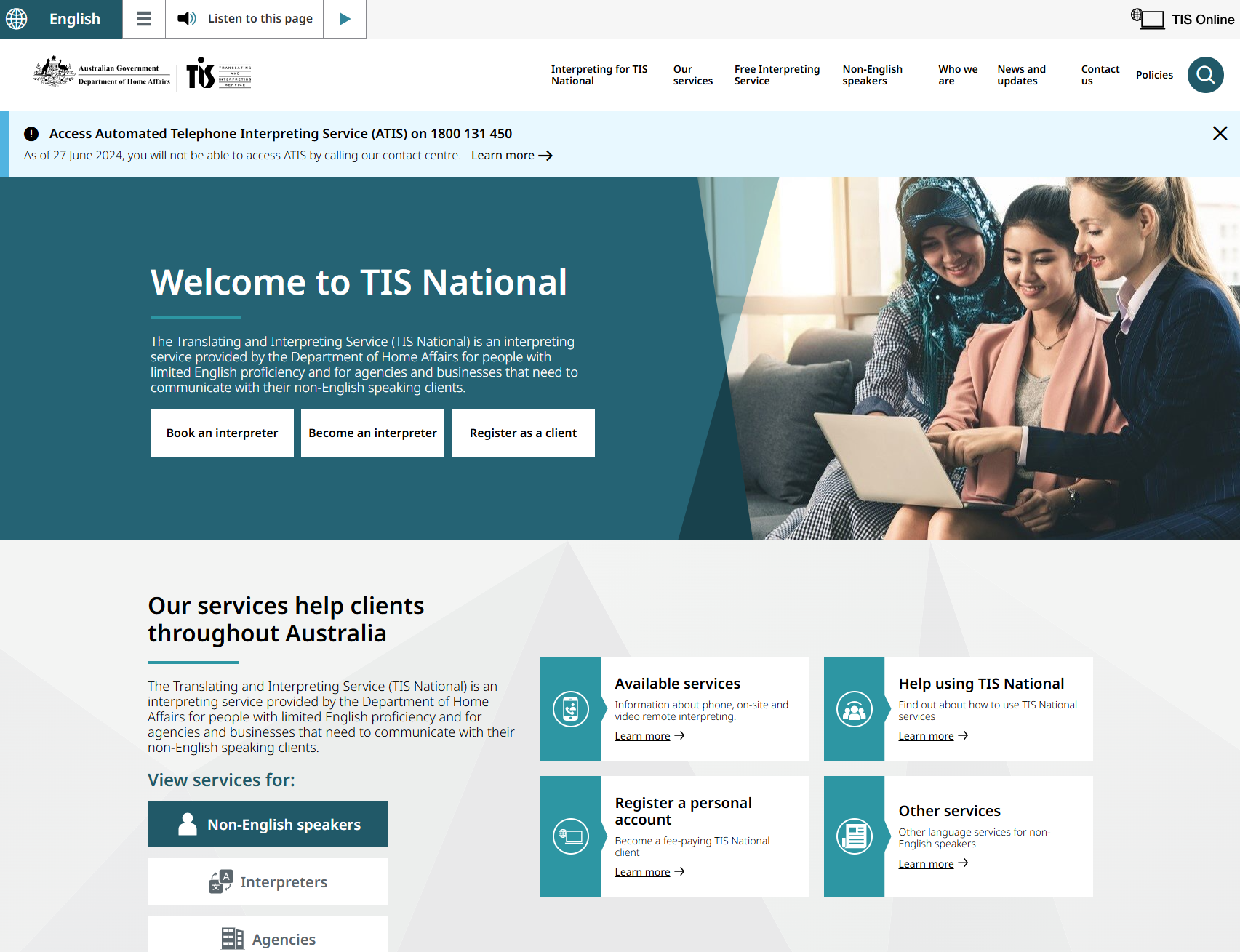
Translating and Interpreting Service (TIS National)

Guidance, Tool

The Translating and Interpreting Service (TIS National) provides interpreting support for people with limited English proficiency and agencies requiring assistance to communicate with non-English-speaking clients. Services include telephone, on-site, and video interpreting, with options for both government and fee-paying clients across Australia.
Author
External resource
Key Theme
Person-centred care, Delivering comprehensive care and services
Standard
1: The Individual, 3: The Care and Services
Outcomes
1.1: Person-centred care, 3.3: Communicating for safety and quality
Translating and Interpreting Service (TIS National)
/quality-standards/action-133-welcoming-environments

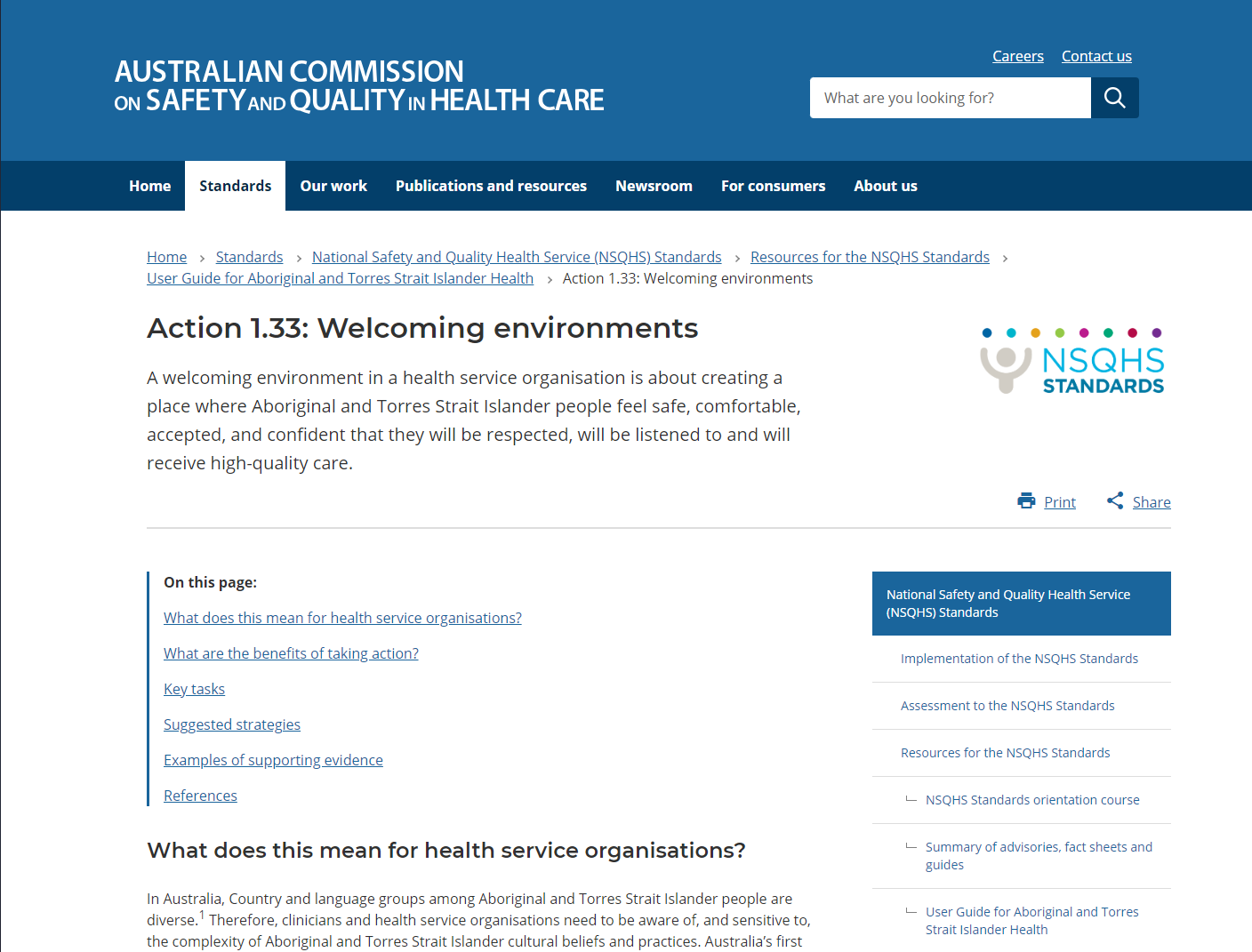
Action 1.33: Welcoming environments

Guidance

This resource provides guidance on creating welcoming environments in healthcare services, including aged care, to make sure Aboriginal and Torres Strait Islander people feel safe, respected, and supported. It outlines strategies for cultural safety, collaboration with communities, and improving access to care through inclusive design, training, and environmental changes. 
Author
Australian Commission On Safety And Quality In Health Care
Key Theme
Person-centred care, Delivering comprehensive care and services, Environment
Standard
1: The Individual, 4: The Environment
Outcomes
1.1: Person-centred care, 4.1b: Environment – services delivered other than in the individual’s home
Action 1.33: Welcoming environments
/quality-standards/trauma-informed-care-and-practice-organisational-toolkit

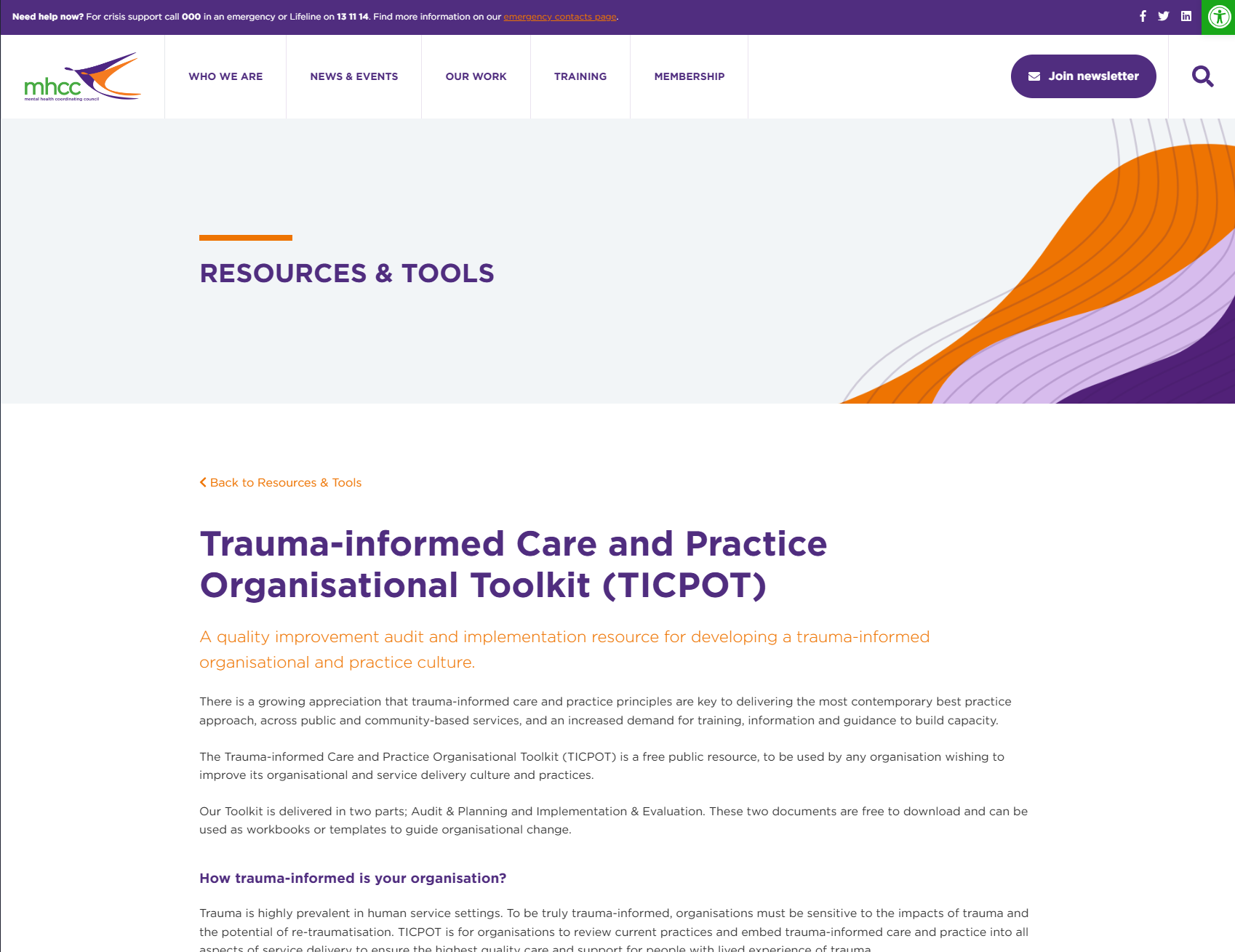
Trauma-informed Care and Practice Organisational Toolkit

Tool

This toolkit provides guidance for organisations on implementing trauma-informed care practices, aiming to improve safety, trust, and empowerment in care settings. It outlines strategies to adapt policies, environments, and staff approaches to better support people with trauma histories in various care environments.
Author
External resource
Key Theme
Person-centred care, Accountability and quality system, Delivering comprehensive care and services
Standard
1: The Individual, 2: The Organisation, 3: The Care and Services
Outcomes
1.1: Person-centred care, 2.3: Accountability, quality system and policies and procedures, 3.2: Delivery of funded aged care services
Trauma-informed Care and Practice Organisational Toolkit
/quality-standards/person-centred-care-case-studies

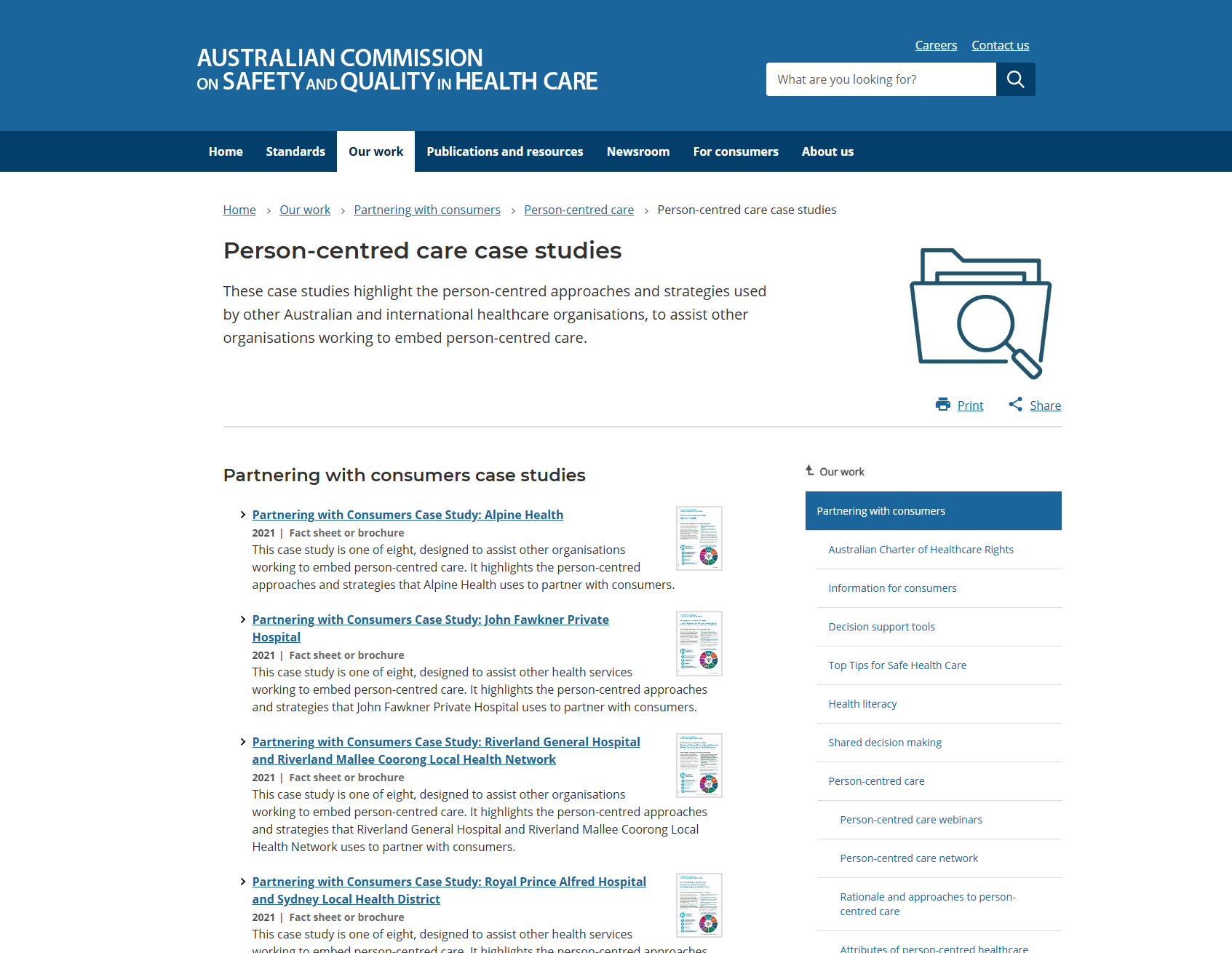
Person-centred care case studies

Guidance
Published date

This resource provides case studies on person-centred care approaches used by Australian and international healthcare organisations. It highlights strategies for engaging and partnering with consumers, offering guidance to organisations aiming to implement person-centred practices. Providers can be explored and consider aspects applicable in the aged care setting. This resource may apply to healthcare contexts outside of aged care. Please consider the applicability of this resource to your care setting.
Author
Australian Commission On Safety And Quality In Health Care
Key Theme
Person-centred care
Standard
1: The Individual
Outcomes
1.1: Person-centred care
Person-centred care case studies
/quality-standards/aged-care-workforce-planning-and-support-programs

Aged care workforce planning and support programs

Webinar
Published date

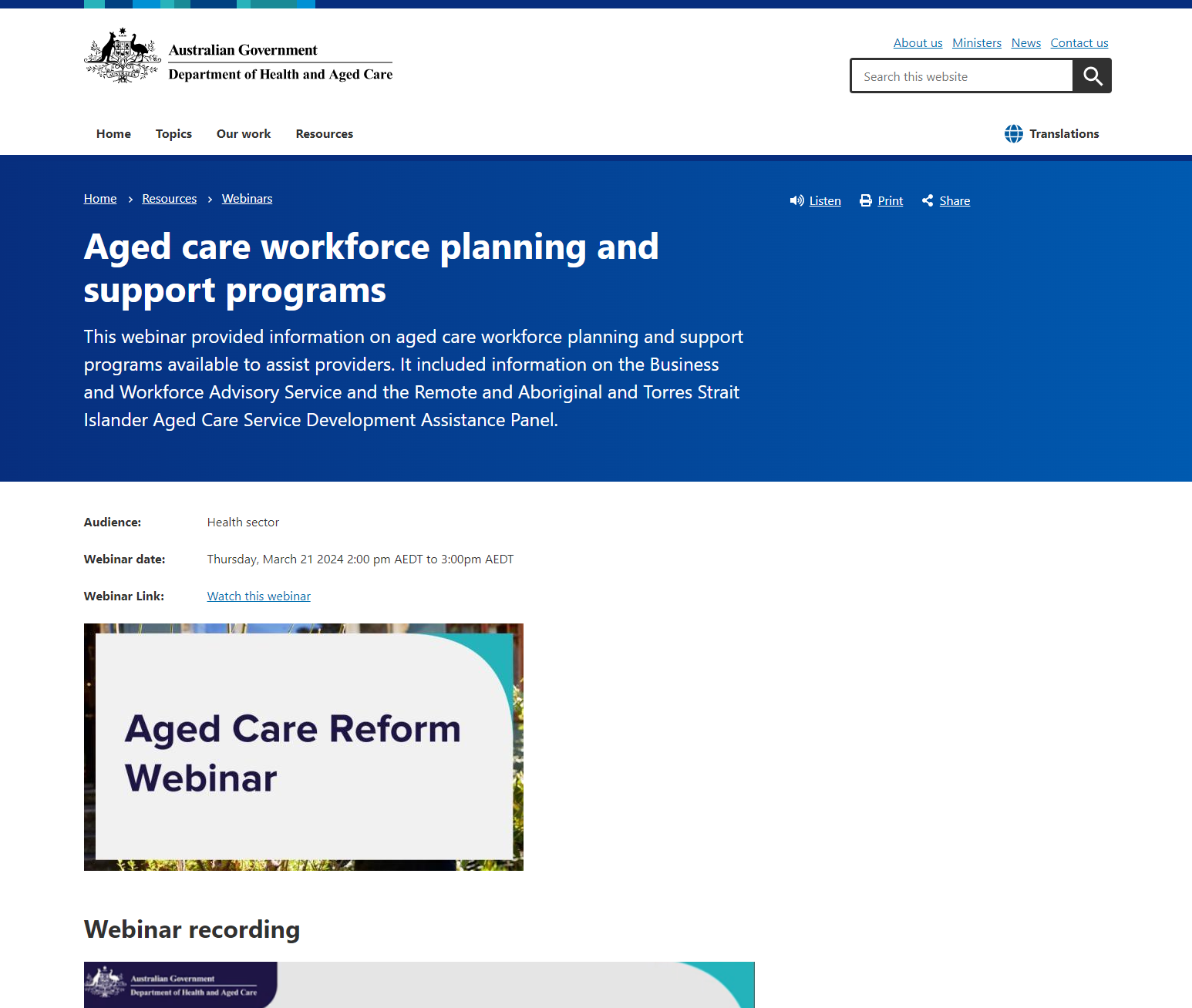
This resource provides information about aged care workforce planning and support programs available to help providers. It covers initiatives such as the Business and Workforce Advisory Service and the Remote and Aboriginal and Torres Strait Islander Aged Care Service Development Assistance Panel. 

This resource may refer to information that will be updated from 1 November 2025 to align with the new Aged Care Act and Quality Standards.
Author
Department of Health, Disability and Ageing
Key Theme
Workforce and human resources management
Standard
2: The Organisation
Outcomes
2.9: Human resource management
Aged care workforce planning and support programs
/quality-standards/workforce-responsibilities

Workforce responsibilities

Guidance

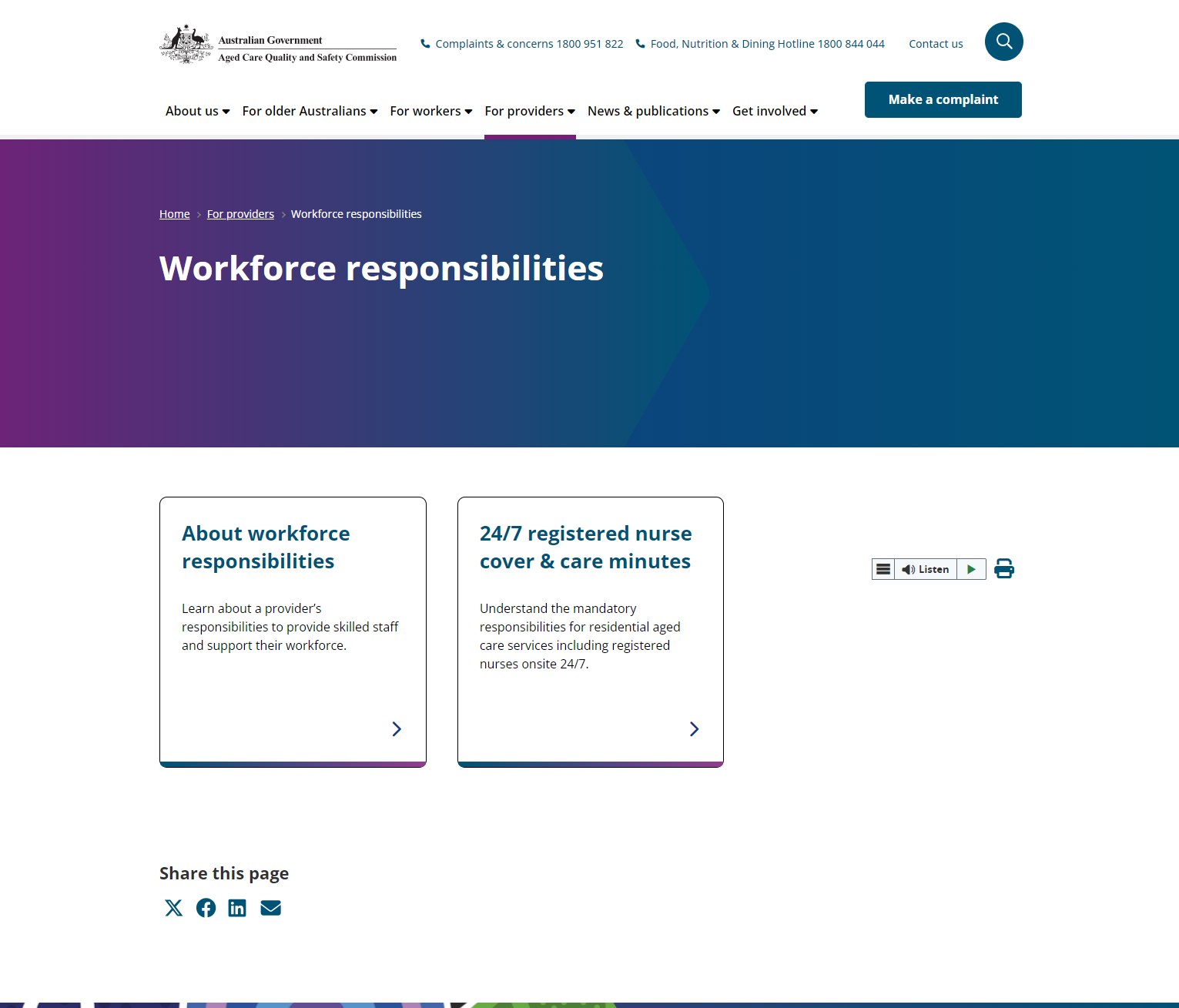
This resource outlines the workforce responsibilities of aged care providers, including the legal obligation to provide skilled staff and support their workforce. It details mandatory requirements such as 24/7 registered nurse coverage and care minutes for residential aged care services​. 

This resource may refer to information that will be updated from 1 November 2025 to align with the new Aged Care Act and Quality Standards.
Author
Aged Care Quality & Safety Commission
Key Theme
Workforce and human resources management
Standard
2: The Organisation
Outcomes
2.8: Workforce planning, 2.9: Human resource management
Workforce responsibilities
/quality-standards/code-conduct-aged-care

Code of Conduct for Aged Care

Guidance

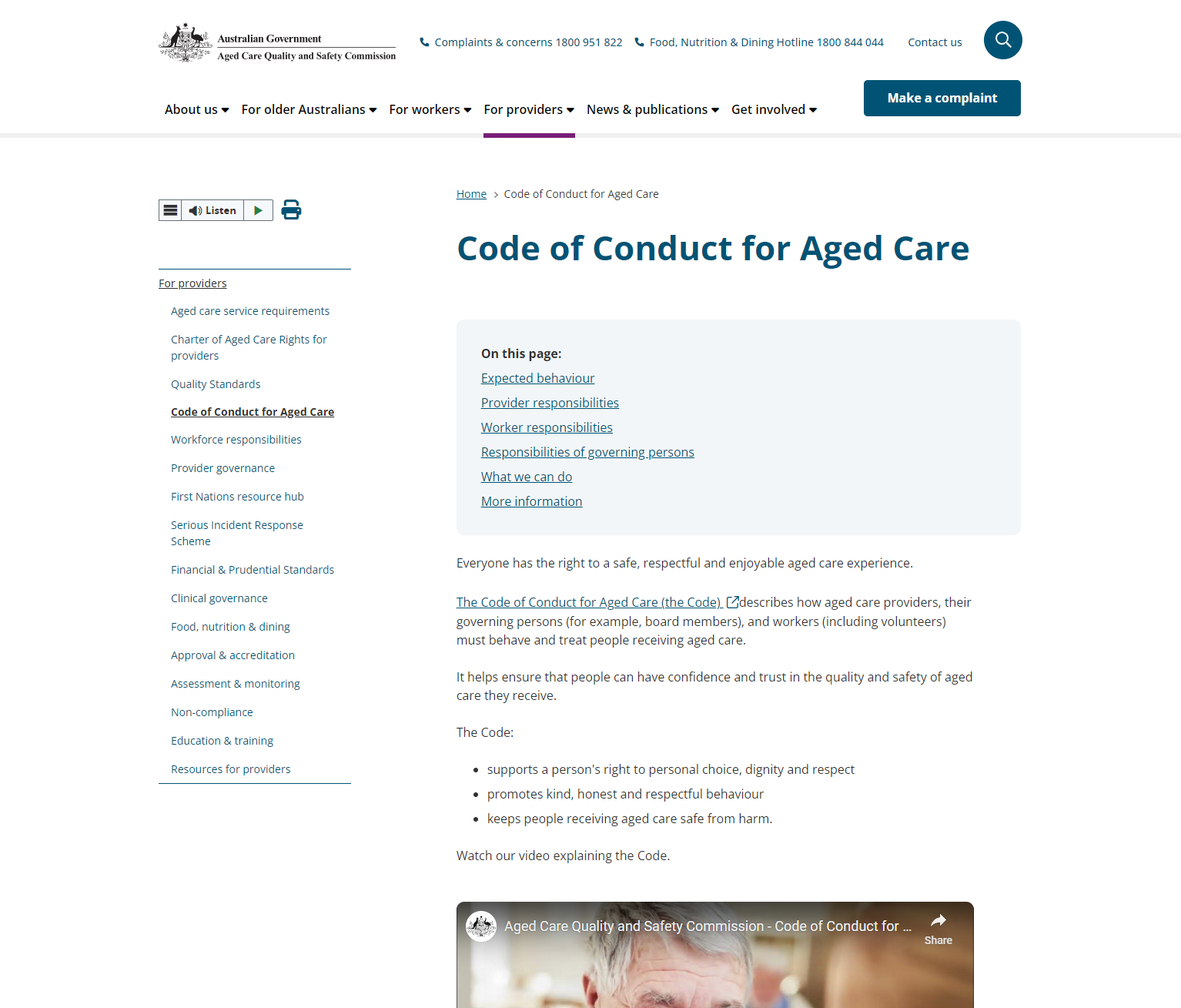
This resource outlines the Code of Conduct for Aged Care, which sets expectations for the behaviour of providers, governing persons, and workers. It promotes respect, safety, and quality in aged care services, ensuring people’s rights are protected. The Code includes guidance on handling concerns and preventing abuse or neglect​. 

This resource may refer to information that will be updated from 1 November 2025 to align with the new Aged Care Act and Quality Standards.
Author
Aged Care Quality & Safety Commission
Key Theme
Workforce and human resources management, Dignity, respect and privacy
Standard
2: The Organisation, 1: The Individual
Outcomes
2.9: Human resource management, 1.2: Dignity, respect and privacy
Code of Conduct for Aged Care
/quality-standards/code-conduct-workers

Code of Conduct for workers

Guidance

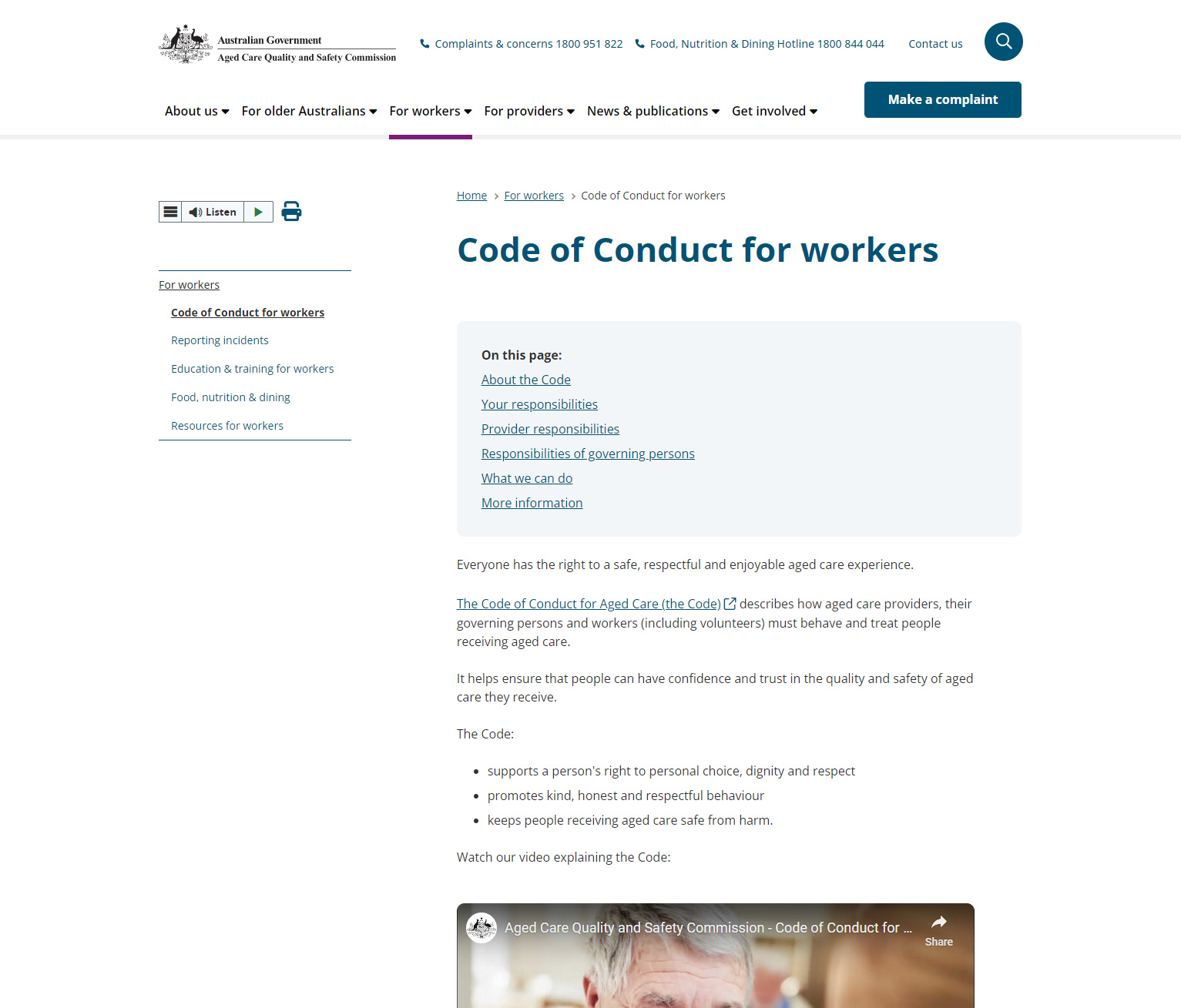
This resource outlines the Code of Conduct for Aged Care workers, detailing expected behaviours such as respect, honesty, and integrity. It ensures people receiving care are treated with dignity, kept safe from harm, and supported. The Code applies to all aged care workers, including volunteers​. 

This resource may refer to information that will be updated from 1 November 2025 to align with the new Aged Care Act and Quality Standards.
Author
Aged Care Quality & Safety Commission
Key Theme
Workforce and human resources management, Dignity, respect and privacy
Standard
2: The Organisation, 1: The Individual
Outcomes
2.9: Human resource management, 1.2: Dignity, respect and privacy
Code of Conduct for workers
/quality-standards/different-languages-same-aged-care

Different languages, same aged care

Guidance

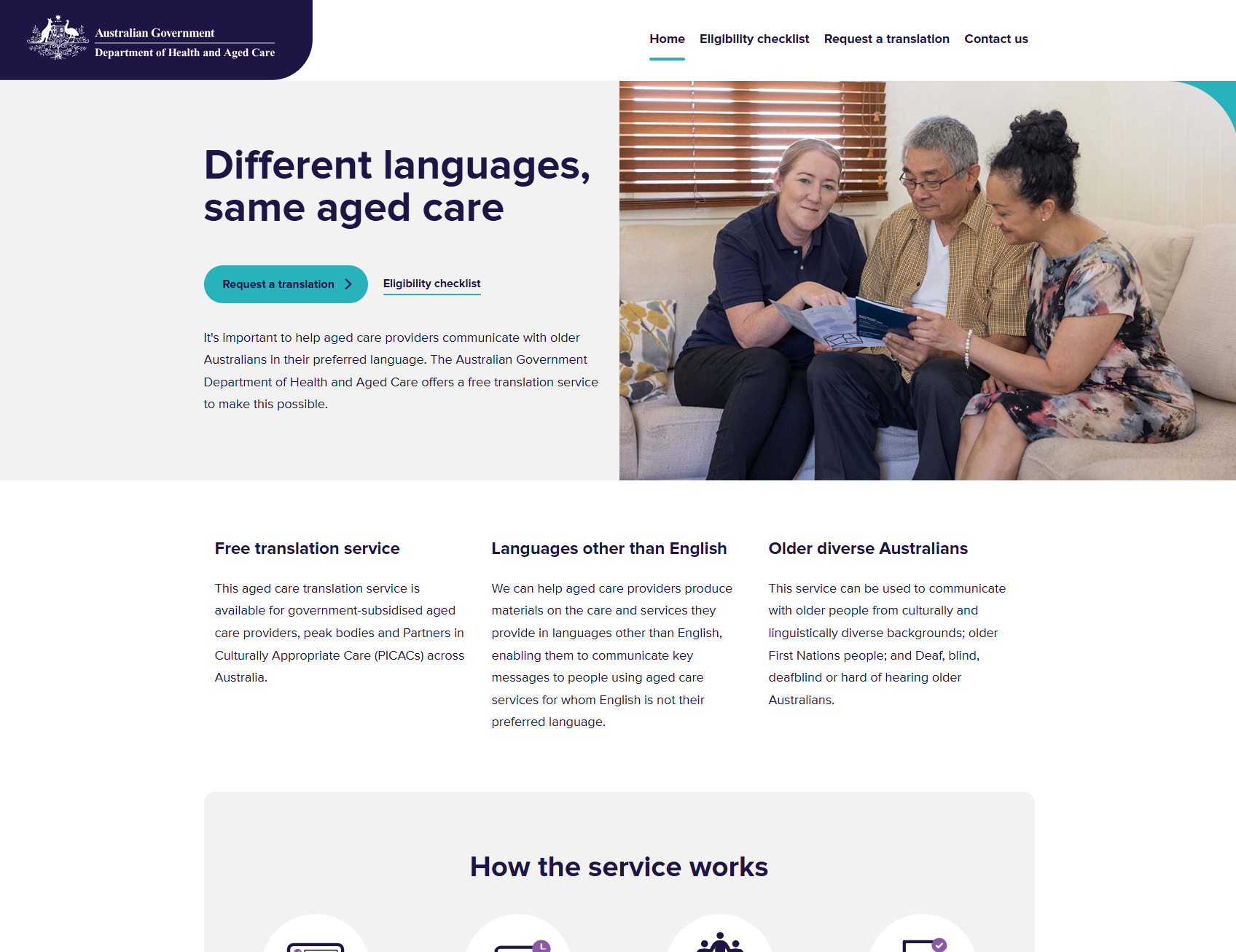
This resource provides information on a free translation service for government-subsidised aged care providers, enabling communication in languages other than English. It helps aged care providers reach diverse communities, including culturally and linguistically diverse individuals, First Nations people, and those who are Deaf or hard of hearing, supporting culturally inclusive care. 

This resource may refer to information that will be updated from 1 November 2025 to align with the new Aged Care Act and Quality Standards.
Author
Department of Health, Disability and Ageing
Key Theme
Person-centred care, Delivering comprehensive care and services
Standard
1: The Individual, 3: The Care and Services, 5: Clinical Care
Outcomes
1.1: Person-centred care, 3.3: Communicating for safety and quality, 5.6 Cognitive impairment  
Different languages, same aged care
/quality-standards/independence-and-conflict-interest

Independence and conflict of interest

Guidance

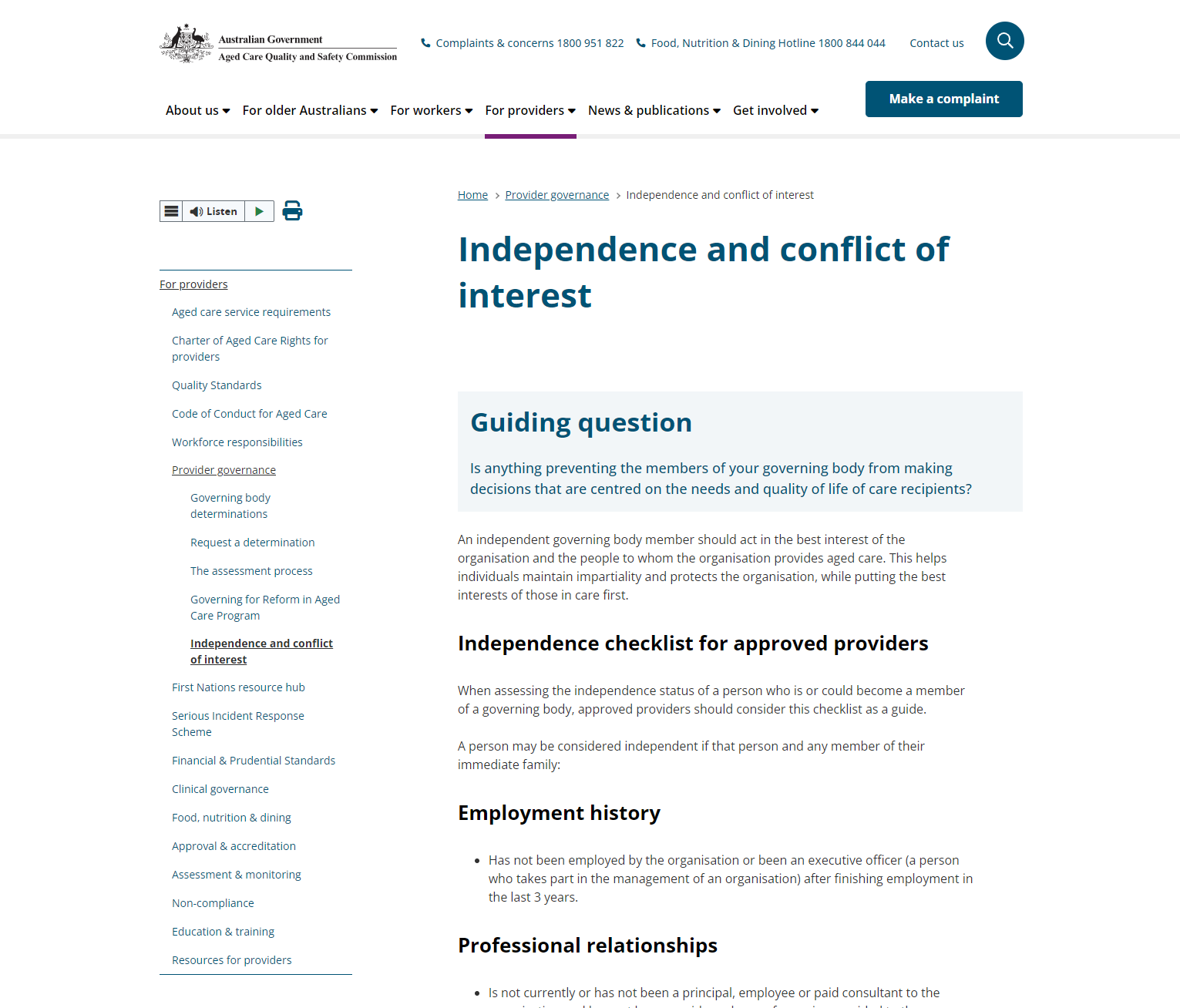
This resource outlines the principles for managing independence and conflicts of interest in aged care provider governance. It includes guidance on maintaining impartiality, identifying potential conflicts, and implementing conflict-of-interest policies. It helps providers ensure that decisions are made in the best interests of people receiving care​. 

This resource may refer to information that will be updated from 1 November 2025 to align with the new Aged Care Act and Quality Standards.
Author
Aged Care Quality & Safety Commission
Key Theme
Workforce and human resources management
Standard
2: The Organisation
Outcomes
2.9: Human resource management
Independence and conflict of interest
/quality-standards/national-aboriginal-and-torres-strait-islander-flexible-aged-care-program

National Aboriginal and Torres Strait Islander Flexible Aged Care Program

Guidance
Published date
Last Updated

This resource provides information on the National Aboriginal and Torres Strait Islander Flexible Aged Care Program. The program funds flexible and culturally appropriate aged care services for Aboriginal and Torres Strait Islander communities, mainly in rural and remote areas. It covers service provider requirements, funding processes, and adaptations to ongoing aged care reforms. 

This resource may refer to information that will be updated from 1 November 2025 to align with the new Aged Care Act and Quality Standards.

Author
Department of Health, Disability and Ageing
Key Theme
Person-centred care, Delivering comprehensive care and services, Corporate and clinical governance, Care coordination and transitions
Standard
3: The Care and Services, 2: The Organisation, 1: The Individual, 7: The Residential Community
Outcomes
3.2: Delivery of funded aged care services, 2.1: Partnering with individuals, 1.1: Person-centred care, 7.2: Transitions
National Aboriginal and Torres Strait Islander Flexible Aged Care Program
/quality-standards/partnerships-care-agreement-sample

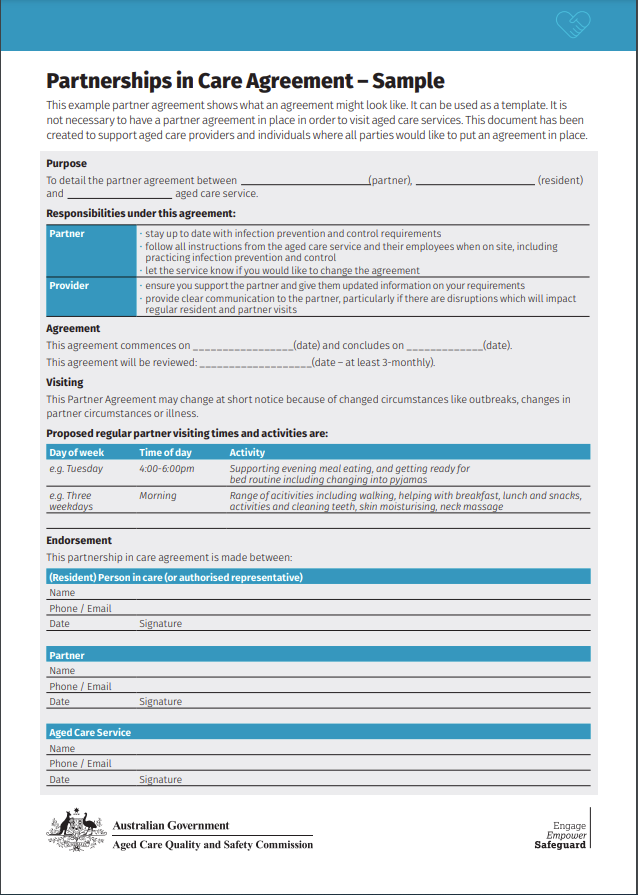
Partnerships in Care Agreement – Sample

Tool

This resource is a sample of what a partner agreement might look like. It can be used as a template. This document has been created to support aged care providers and individuals where all parties would like to put an agreement in place. 

This resource may refer to information that will be updated from 1 November 2025 to align with the new Aged Care Act and Quality Standards.
Author
Aged Care Quality & Safety Commission
Key Theme
Person-centred care, Dignity, respect and privacy, Infection prevention and control
Standard
1: The Individual, 4: The Environment, 5: Clinical Care
Outcomes
1.1: Person-centred care, 1.2: Dignity, respect and privacy, 4.2: Infection prevention and control, 5.2: Preventing and controlling infections in delivering clinical care services
Partnerships in care agreement
/quality-standards/governing-reform-aged-care-program

Governing for Reform in Aged Care Program

Guidance

This resource outlines the Governing for Reform in Aged Care Program, designed to strengthen corporate and clinical governance capabilities for aged care leaders. It provides tools, online learning modules, webinars, and podcasts to support governance improvement and help leaders engage in reform efforts. 

This resource may refer to information that will be updated from 1 November 2025 to align with the new Aged Care Act and Quality Standards. 

Author
Aged Care Quality & Safety Commission
Key Theme
Corporate and clinical governance, Accountability and quality system, Risk management system, Incident management system, Feedback and complaints management system, Information management system, Workforce and human resources management, Emergency and disaster management
Standard
2: The Organisation
Outcomes
2.1: Partnering with individuals, 2.2a: Quality, safety and inclusion culture to support aged care workers to deliver quality care, 2.3: Accountability, quality system and policies and procedures, 2.4: Risk management, 2.5: Incident management, 2.6a: Complaints and feedback management for aged care workers, 2.6b: Complaints and feedback management for individuals, 2.7: Information management, 2.8: Workforce planning, 2.9: Human resource management, 2.10: Emergency and disaster management
Governing for Reform in Aged Care Program
/quality-standards/consumer-advisory-bodies

Consumer advisory bodies

Guidance

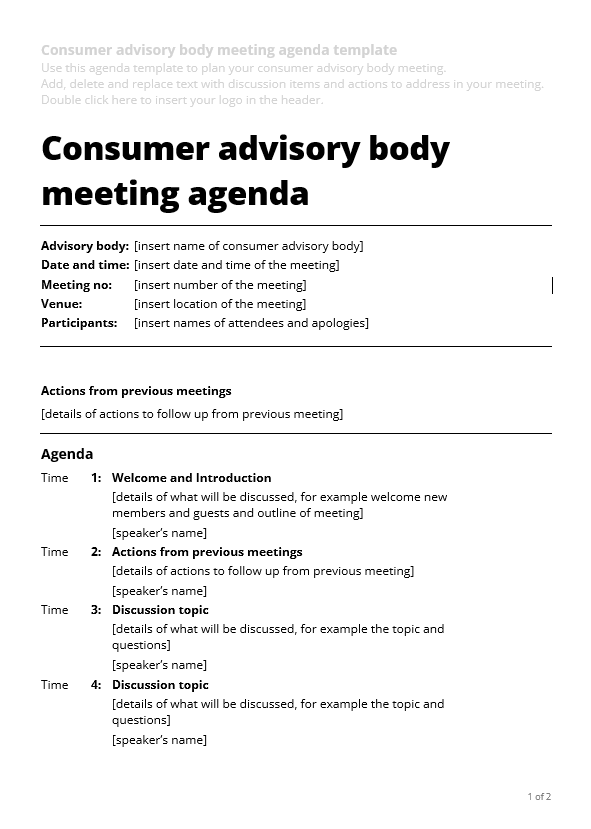
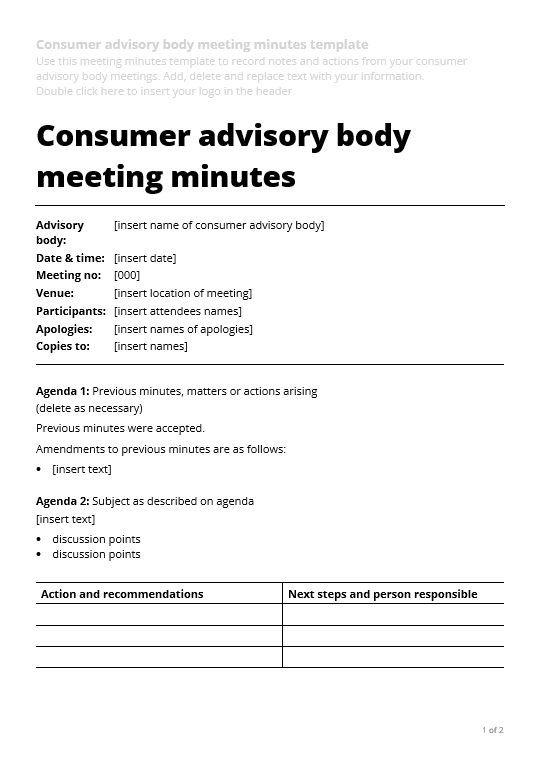
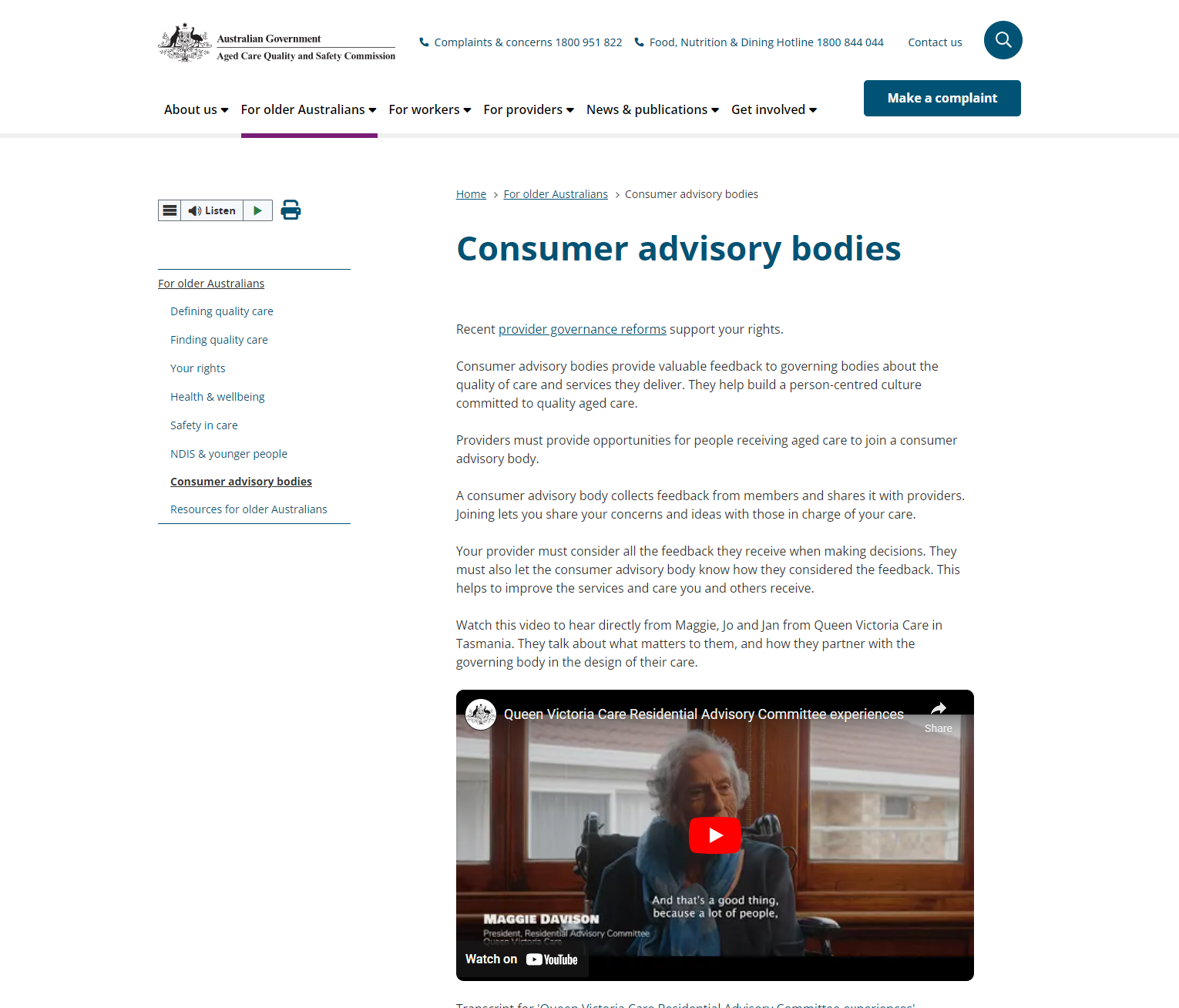
This resource explains the role of consumer advisory bodies in aged care, which provide feedback to governing bodies on care and services. It outlines the process for joining, the importance of feedback in decision-making, and the responsibility of providers to offer participation opportunities annually​. 

This resource may refer to information that will be updated from 1 November 2025 to align with the new Aged Care Act and Quality Standards.
Author
Aged Care Quality & Safety Commission
Key Theme
Feedback and complaints management system, Person-centred care
Standard
2: The Organisation, 1: The Individual
Outcomes
2.6b: Complaints and feedback management for individuals, 1.1: Person-centred care
Consumer advisory bodies
/quality-standards/allied-health-regulation

Allied health regulation

Guidance

This resource provides information about the regulation of allied health professions in Australia. It includes those registered under the National Registration and Accreditation Scheme (NRAS) and self-regulating professions managed by professional peak bodies. It also provides links to further information about allied health professions currently registered with AHPRA and information for overseas-qualified practitioners.

Author
External resource
Key Theme
Workforce and human resources management, Delivering comprehensive care and services, Assessment and planning, Care coordination and transitions
Standard
5: Clinical Care, 2: The Organisation
Outcomes
5.4: Comprehensive care, 2.8: Workforce planning, 2.9: Human resource management
Allied health regulation
/quality-standards/nursing-and-midwifery-board-professional-standards

Nursing and Midwifery Board - Professional standards

Guidance
Last Updated

This resource outlines the professional standards required for nurses and midwives to practise in Australia, including codes of conduct, standards for practice, and codes of ethics. It provides access to various documents, fact sheets, and guidelines that define the expected practice and behaviour for different nursing roles.

Author
External resource
Key Theme
Corporate and clinical governance, Workforce and human resources management
Standard
5: Clinical Care, 2: The Organisation
Outcomes
5.1: Clinical governance, 2.9: Human resource management
Nursing and Midwifery Board - Professional standards
/quality-standards/draft-national-consumer-engagement-strategy-health-and-wellbeing

Draft National Consumer Engagement Strategy for Health and Wellbeing

Guidance
Published date

This resource presents the Draft National Consumer Engagement Strategy for Health and Wellbeing, which aims to foster partnerships between health policymakers and communities. It is designed to involve people and communities in the development and implementation of preventive health policies. The strategy supports policymakers and program developers in engaging effectively with consumers to achieve improved health outcomes across Australia. 

Author
Department of Health, Disability and Ageing
Key Theme
Person-centred care, Corporate and clinical governance, Assessment and planning, Care coordination and transitions
Standard
1: The Individual, 2: The Organisation, 3: The Care and Services
Outcomes
1.1: Person-centred care, 2.1: Partnering with individuals, 3.1 Assessment and planning, 3.4: Planning and coordination of funded aged care services
Draft National Consumer Engagement Strategy for Health and Wellbeing
/quality-standards/cultural-respect-framework-2016-2026-aboriginal-and-torres-strait-islander-health

Cultural Respect Framework 2016-2026 for Aboriginal and Torres Strait Islander health

Guidance
Published date

This resource outlines a national approach to building a culturally respectful health system for Aboriginal and Torres Strait Islander people. It focuses on 6 domains, including communication, workforce development, and data evaluation, to ensure culturally safe, accessible care. It is applicable to aged care, helping providers meet cultural safety standards and improve health outcomes for Aboriginal and Torres Strait Islander people.

Author
External resource
Key Theme
Person-centred care, Corporate and clinical governance, Accountability and quality system, Delivering comprehensive care and services
Standard
1: The Individual, 2: The Organisation, 3: The Care and Services
Outcomes
1.1: Person-centred care, 2.2a: Quality, safety and inclusion culture to support aged care workers to deliver quality care, 2.2b: Quality, safety and inclusion culture to support individuals, 3.2: Delivery of funded aged care services
Cultural Respect Framework 2016-2026 for Aboriginal and Torres Strait Islander health