The Quality Standards Resource Centre helps extend understanding of the strengthened Aged Care Quality Standards, which took effect from 1 November 2025. You can search for resources by using keywords, or filtering by standard, outcome and audience. Before using the Resource Centre, please read the terms of use.
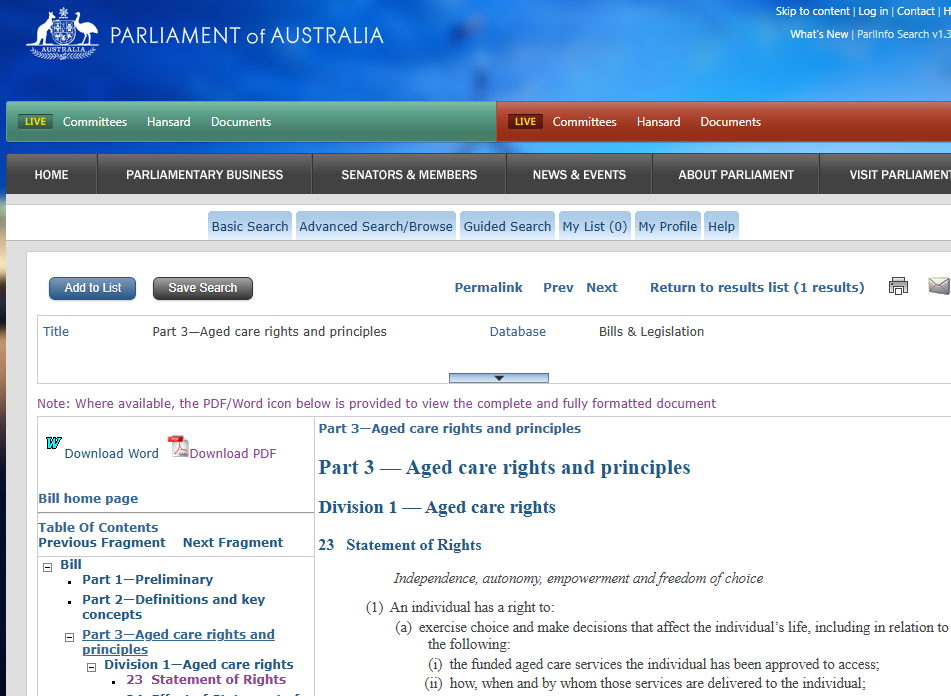
Part 3 - Aged care rights and principles
This resource is available on the Parliament of Australia website. It includes information about aged care rights and principles, including the Statement of Rights. The Statement of Rights outlines the rights that older people will have when accessing aged care services.
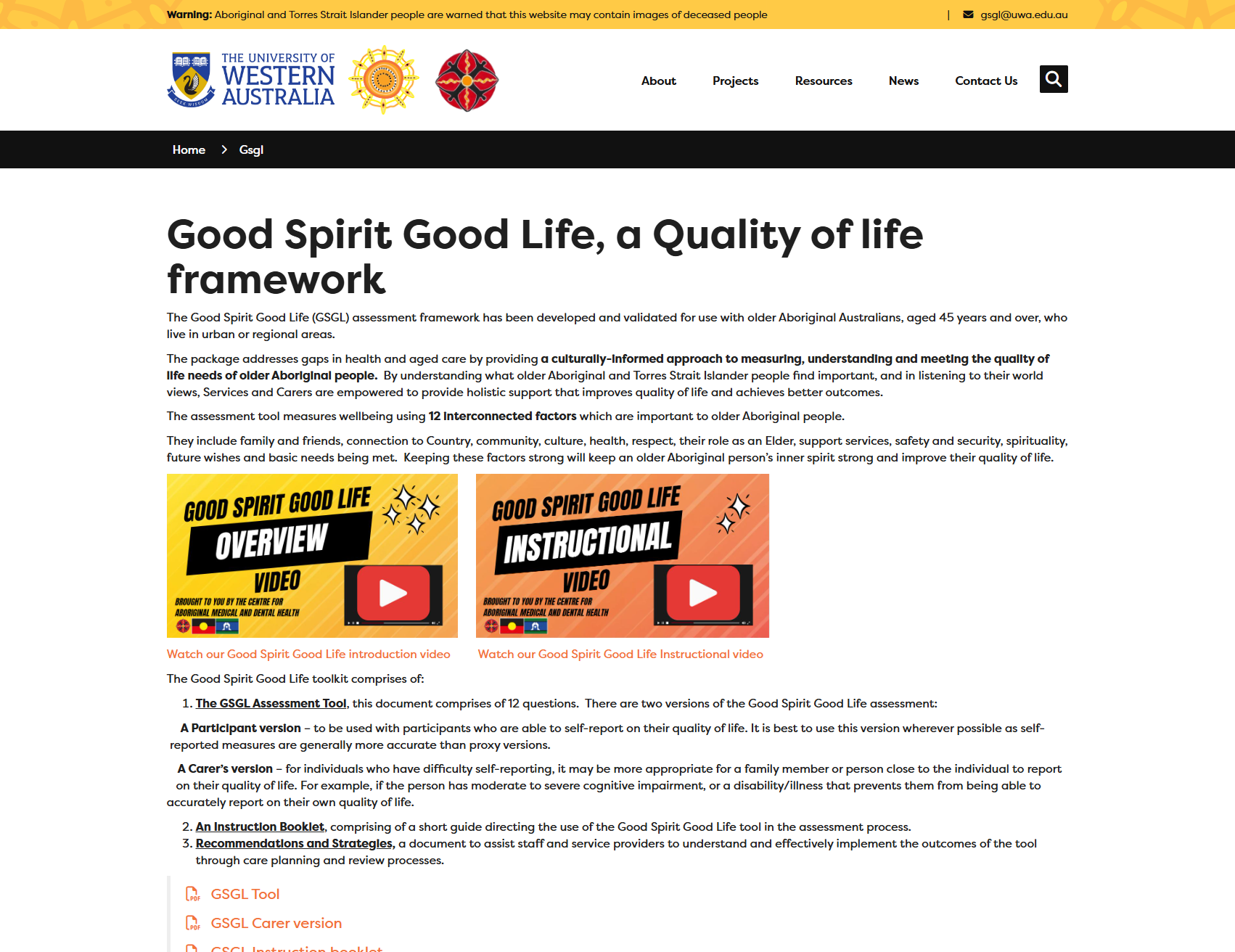
Good Spirit Good Life - a Quality of life framework
This resource describes the Good Spirit Good Life (GSGL) framework for assessing the quality of life of older Aboriginal people, focusing on culturally important factors such as connection to Country, family, and spirituality. It includes tools for both self-reporting and carer-assisted reporting.
This resource was developed by a state/territory government or organisation and therefore its applicability and usefulness may be limited.
Better Together: A practical guide to effective engagement with older people
This resource offers practical guidance on effective engagement with older people, highlighting diverse communication methods, cultural sensitivity, and inclusive strategies to capture meaningful input. It supports collaborative relationships and respectful dialogue with older people in decision-making processes.
This resource was developed by a state/territory government or organisation and therefore its applicability and usefulness may be limited.
Translating and Interpreting Service (TIS National)
The Translating and Interpreting Service (TIS National) provides interpreting support for people with limited English proficiency and agencies requiring assistance to communicate with non-English-speaking clients. Services include telephone, on-site, and video interpreting, with options for both government and fee-paying clients across Australia.
Action 1.33: Welcoming environments
This resource provides guidance on creating welcoming environments in healthcare services, including aged care, to make sure Aboriginal and Torres Strait Islander people feel safe, respected, and supported. It outlines strategies for cultural safety, collaboration with communities, and improving access to care through inclusive design, training, and environmental changes.
Trauma-informed Care and Practice Organisational Toolkit
This toolkit provides guidance for organisations on implementing trauma-informed care practices, aiming to improve safety, trust, and empowerment in care settings. It outlines strategies to adapt policies, environments, and staff approaches to better support people with trauma histories in various care environments.
Protecting the Rights of Older Australians
This resource provides an overview of Australia’s approach to addressing the abuse of older people, including the National Plan, specialist services, awareness campaigns, and legal reforms. It aims to increase awareness, support prevention efforts, and offer accessible resources for those experiencing or at risk of abuse.
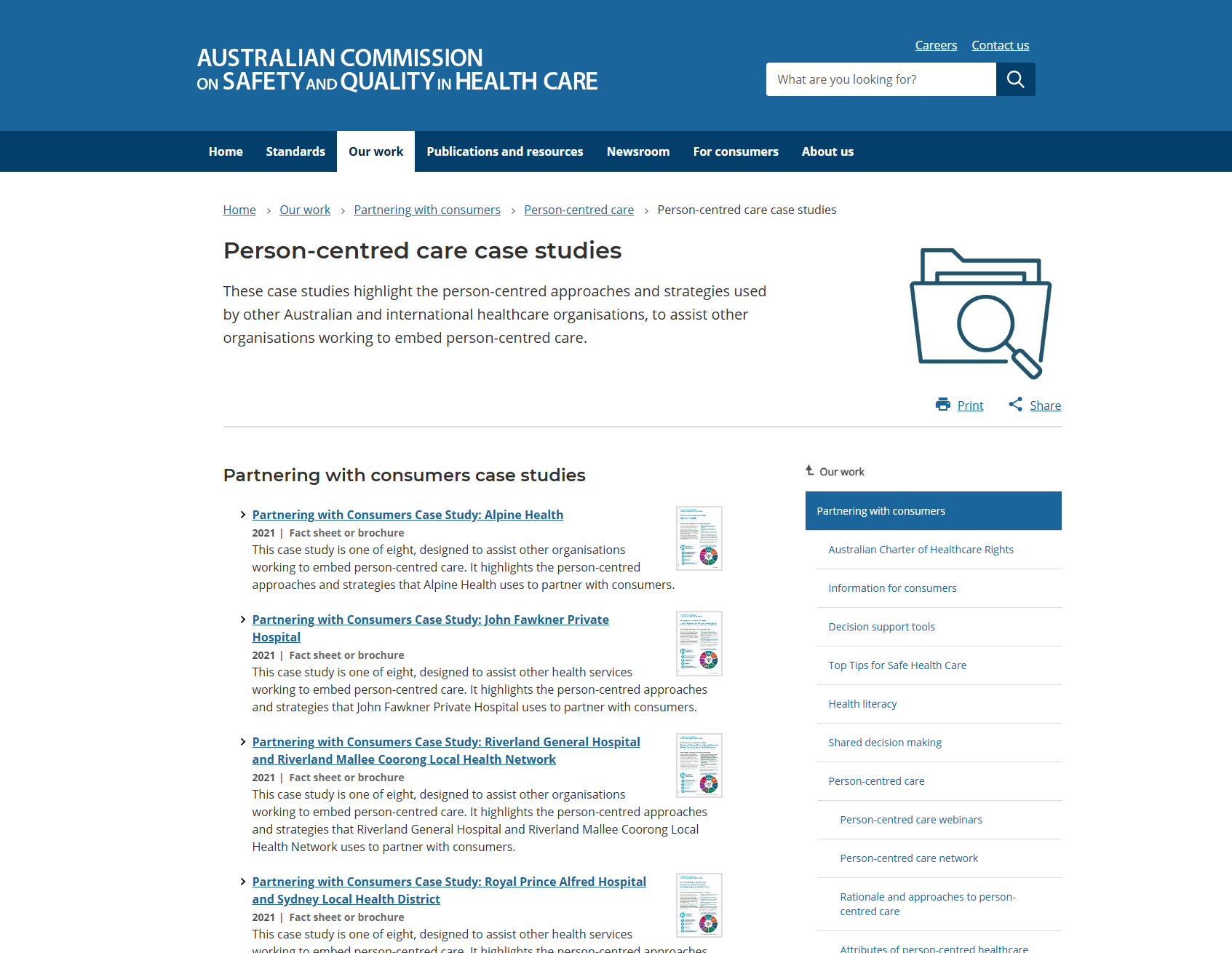
Person-centred care case studies
This resource provides case studies on person-centred care approaches used by Australian and international healthcare organisations. It highlights strategies for engaging and partnering with consumers, offering guidance to organisations aiming to implement person-centred practices. Providers can be explored and consider aspects applicable in the aged care setting. This resource may apply to healthcare contexts outside of aged care. Please consider the applicability of this resource to your care setting.
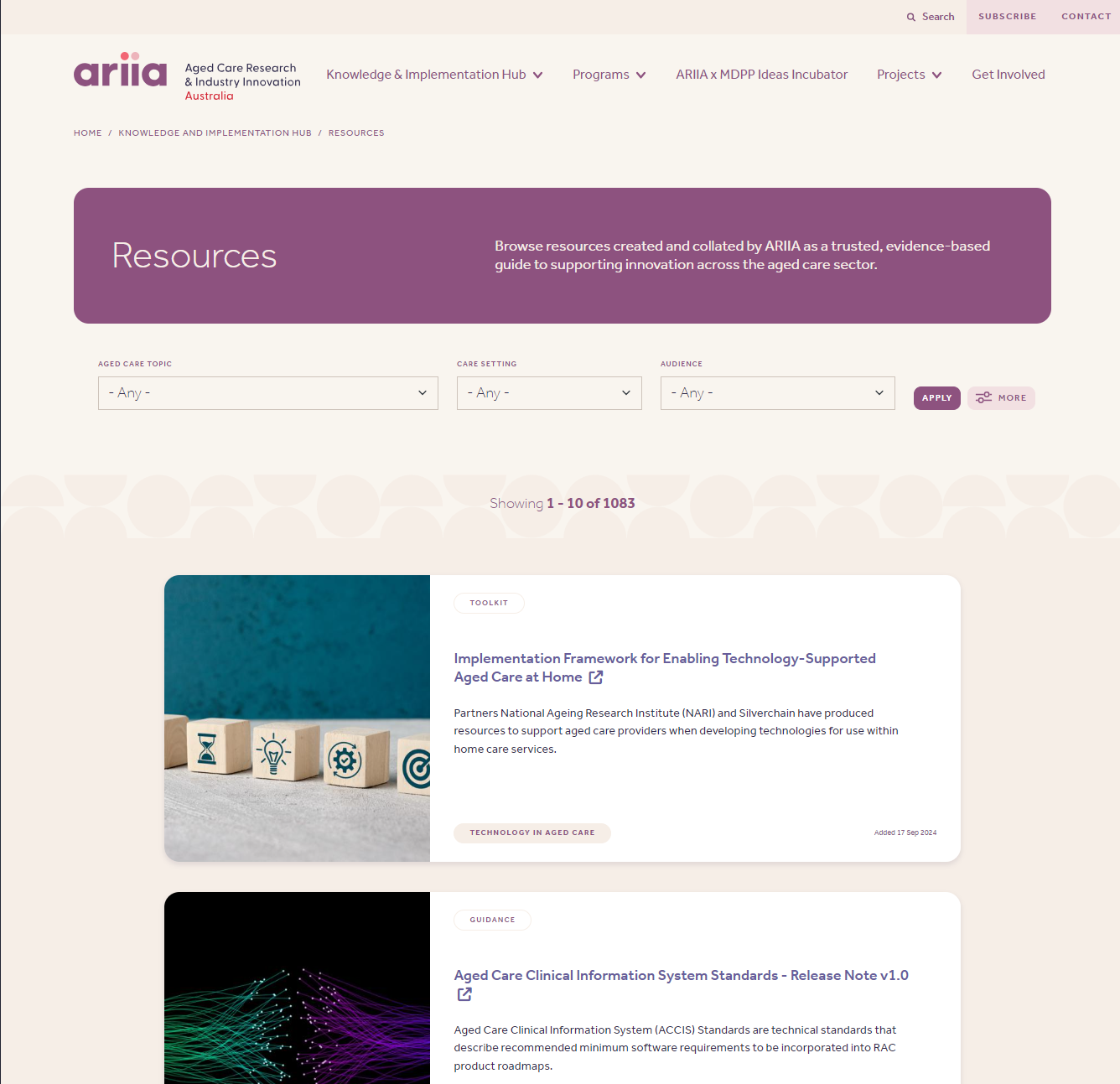
ARIIA Knowledge and Implementation Hub - Resources
The ARIIA Resources Hub is an evidence-based guide that supports innovation across the aged care sector. It provides a comprehensive collection of tools, guidelines, and frameworks for aged care providers, focusing on technology adoption, clinical standards, and care improvement strategies. The hub offers resources to enhance service quality and support the digital transformation of aged care.
This resource may refer to information that will be updated from 1 November 2025 to align with the new Aged Care Act and Quality Standards.
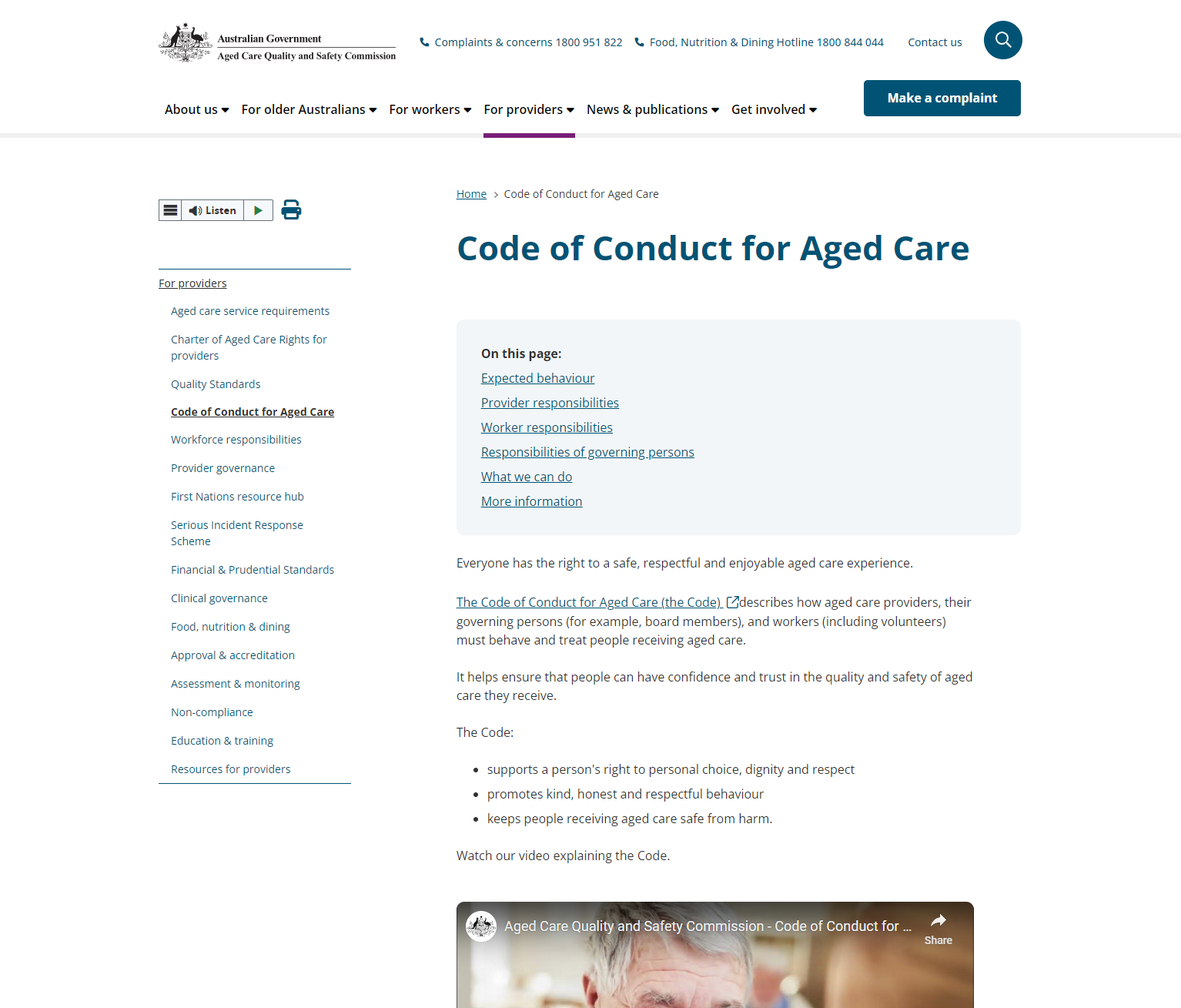
Code of Conduct for Aged Care
This resource outlines the Code of Conduct for Aged Care, which sets expectations for the behaviour of providers, governing persons, and workers. It promotes respect, safety, and quality in aged care services, ensuring people’s rights are protected. The Code includes guidance on handling concerns and preventing abuse or neglect.
This resource may refer to information that will be updated from 1 November 2025 to align with the new Aged Care Act and Quality Standards.
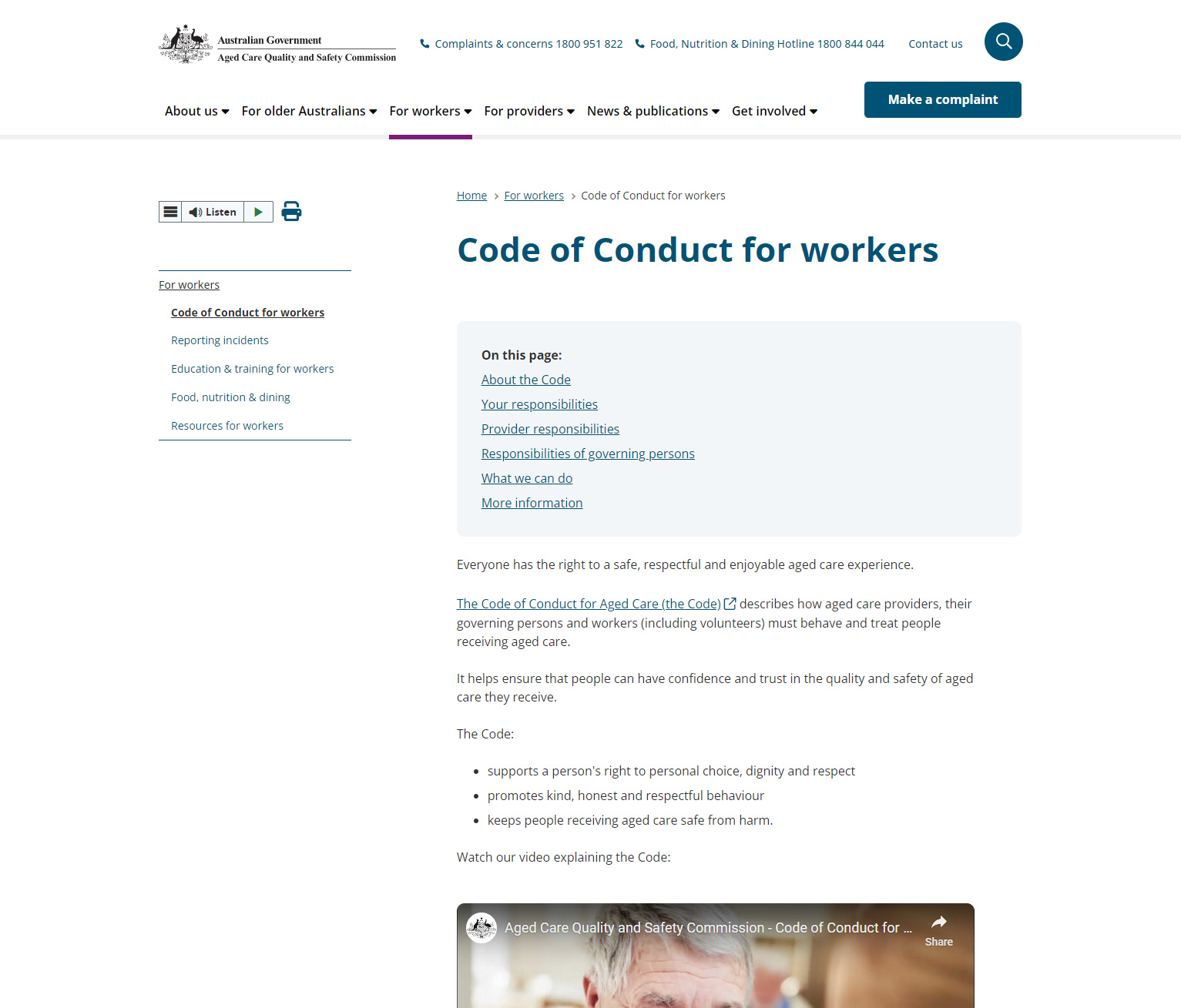
Code of Conduct for workers
This resource outlines the Code of Conduct for Aged Care workers, detailing expected behaviours such as respect, honesty, and integrity. It ensures people receiving care are treated with dignity, kept safe from harm, and supported. The Code applies to all aged care workers, including volunteers.
This resource may refer to information that will be updated from 1 November 2025 to align with the new Aged Care Act and Quality Standards.
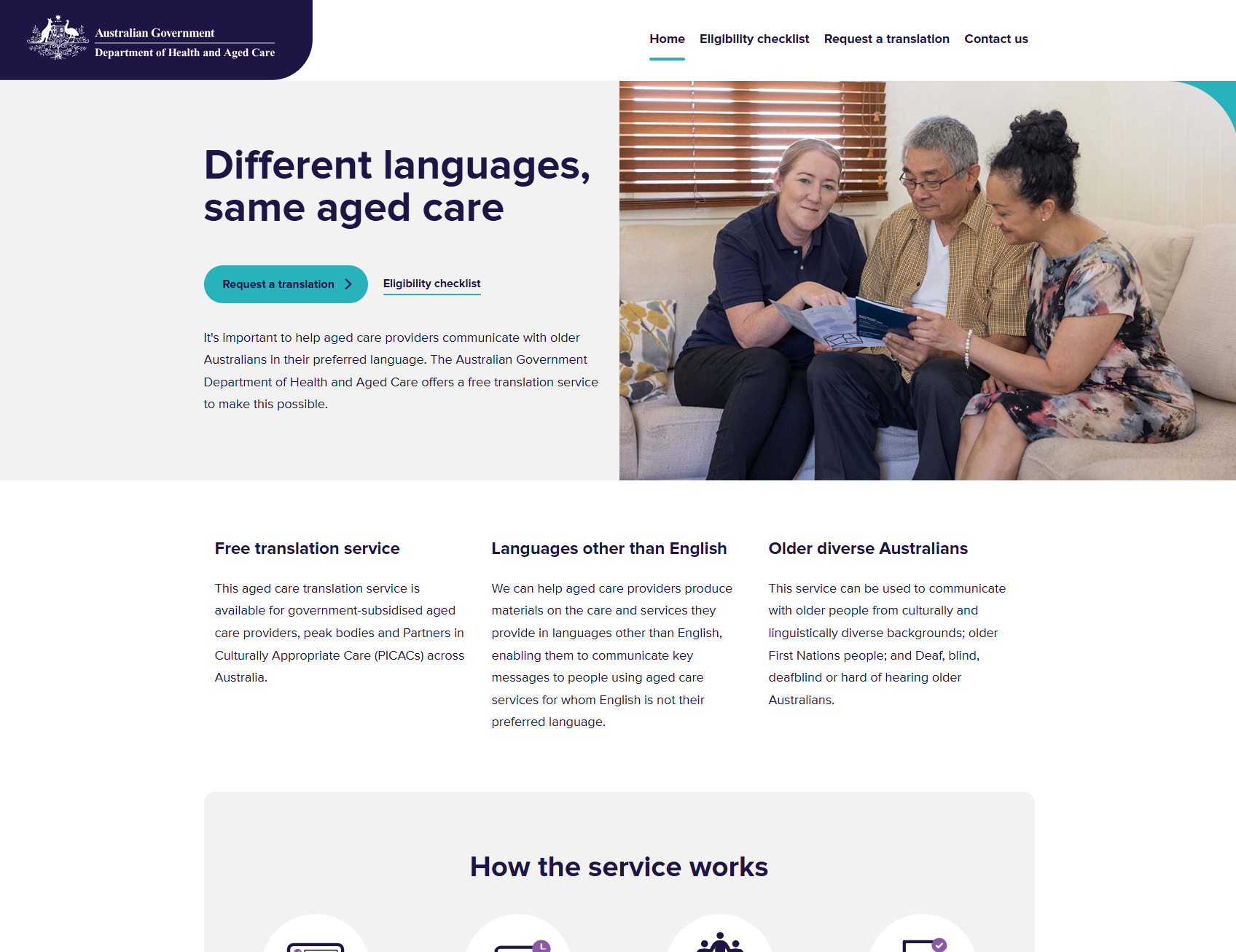
Different languages, same aged care
This resource provides information on a free translation service for government-subsidised aged care providers, enabling communication in languages other than English. It helps aged care providers reach diverse communities, including culturally and linguistically diverse individuals, First Nations people, and those who are Deaf or hard of hearing, supporting culturally inclusive care.
This resource may refer to information that will be updated from 1 November 2025 to align with the new Aged Care Act and Quality Standards.
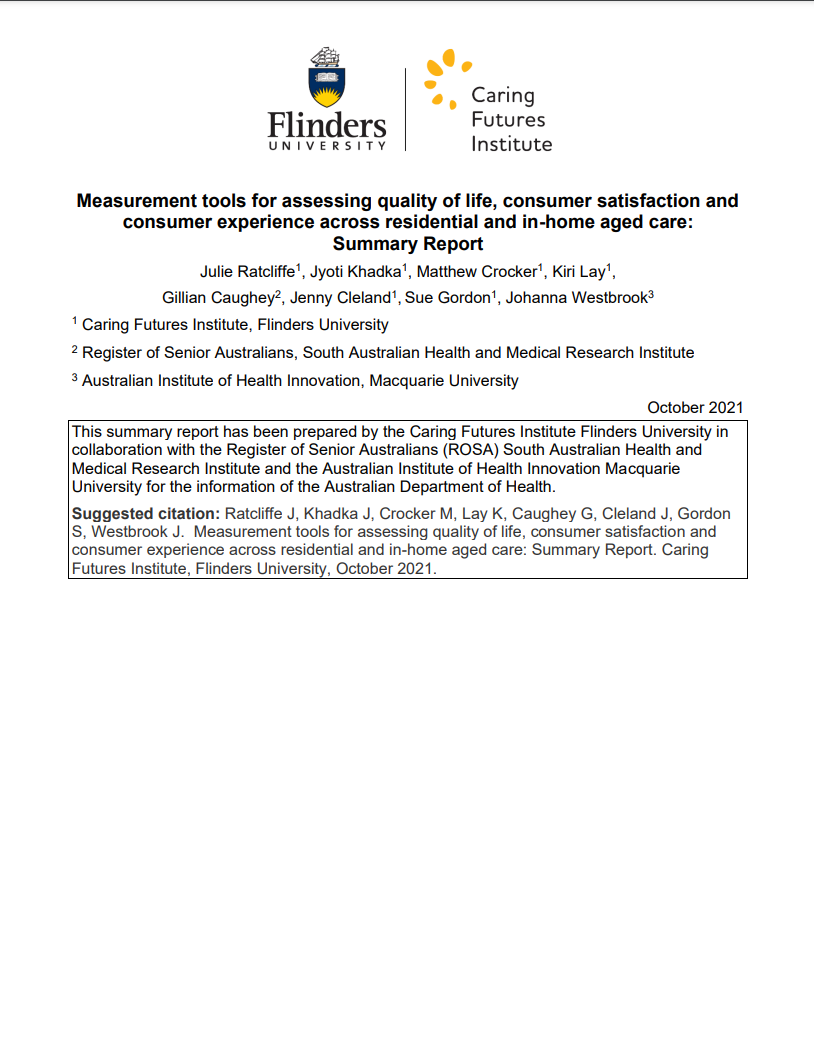
Measurement tools for assessing quality of life, consumer satisfaction and consumer experience across residential and in-home aged care: Summary Report
This report reviews validated tools for measuring quality of life, consumer satisfaction, and experience in aged care, assessing their suitability for residential and home care. It provides an evidence-based ranking of tools to support aged care providers in quality improvement, accountability, and aligning with the National Aged Care Quality Indicator Program.
This resource may refer to information that will be updated from 1 November 2025 to align with the new Aged Care Act and Quality Standards.
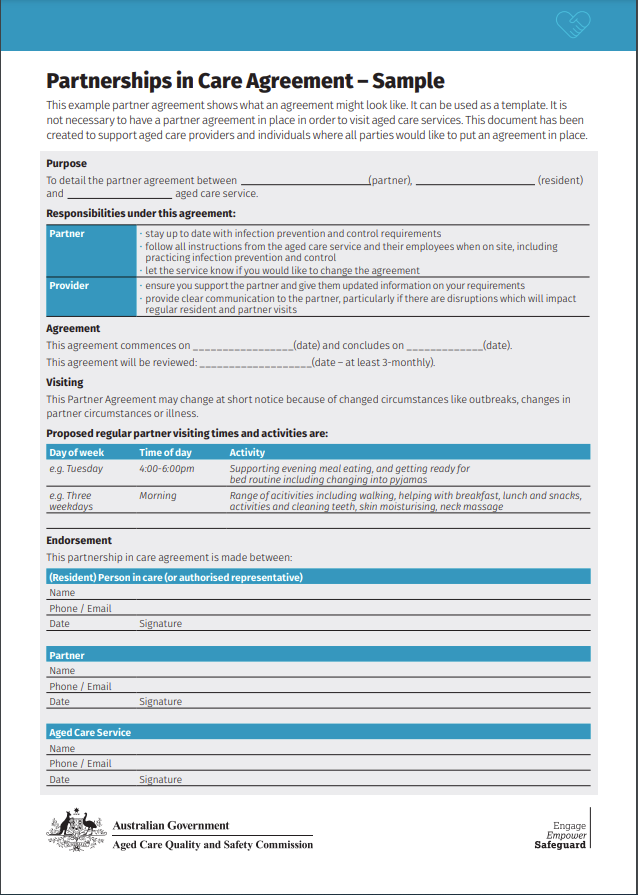
Partnerships in Care Agreement – Sample
This resource is a sample of what a partner agreement might look like. It can be used as a template. This document has been created to support aged care providers and individuals where all parties would like to put an agreement in place.
This resource may refer to information that will be updated from 1 November 2025 to align with the new Aged Care Act and Quality Standards.
 Partnerships in Care Agreement – Sample (PDF 108.45 KB)
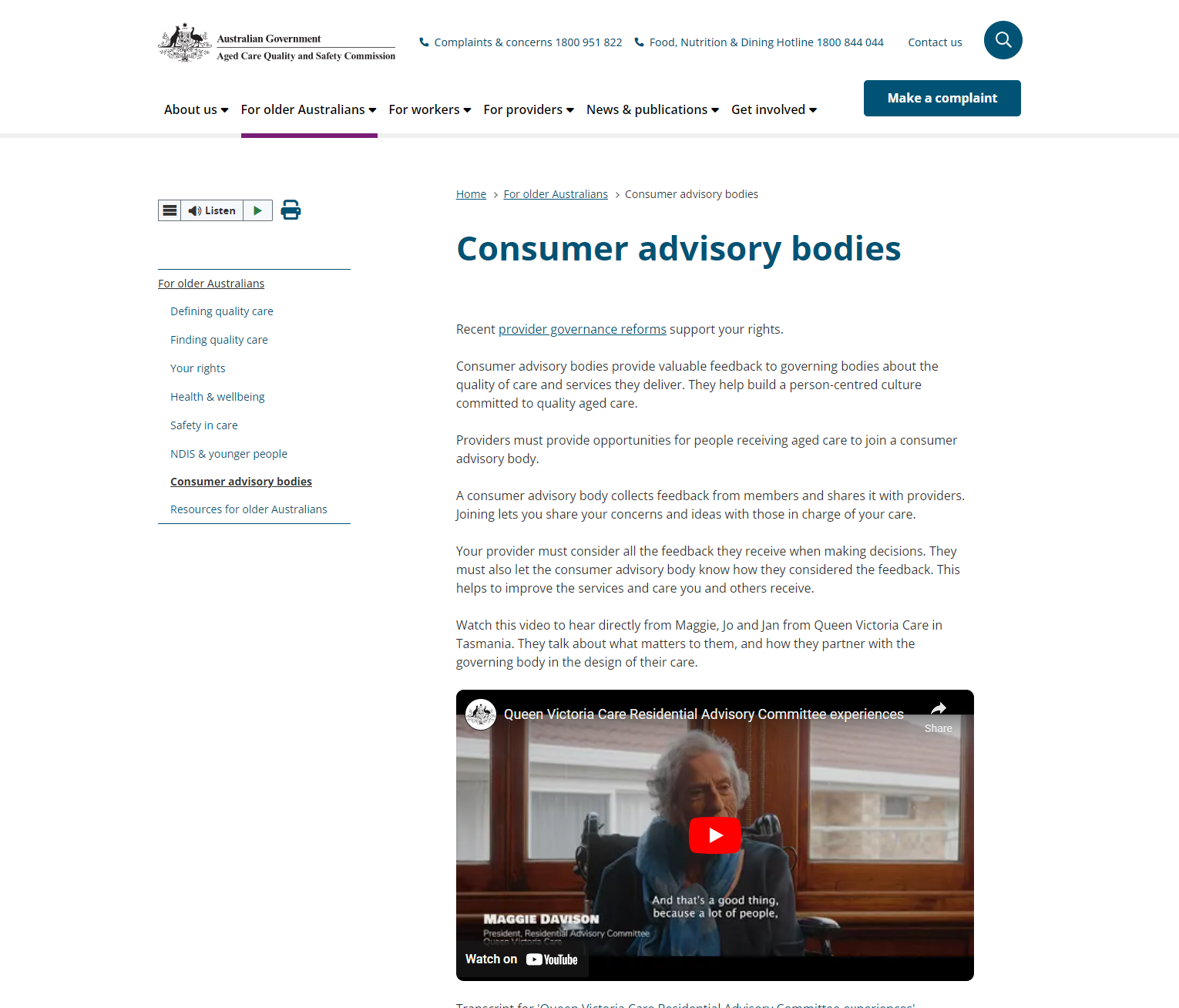
Consumer advisory bodies
This resource explains the role of consumer advisory bodies in aged care, which provide feedback to governing bodies on care and services. It outlines the process for joining, the importance of feedback in decision-making, and the responsibility of providers to offer participation opportunities annually.
This resource may refer to information that will be updated from 1 November 2025 to align with the new Aged Care Act and Quality Standards.
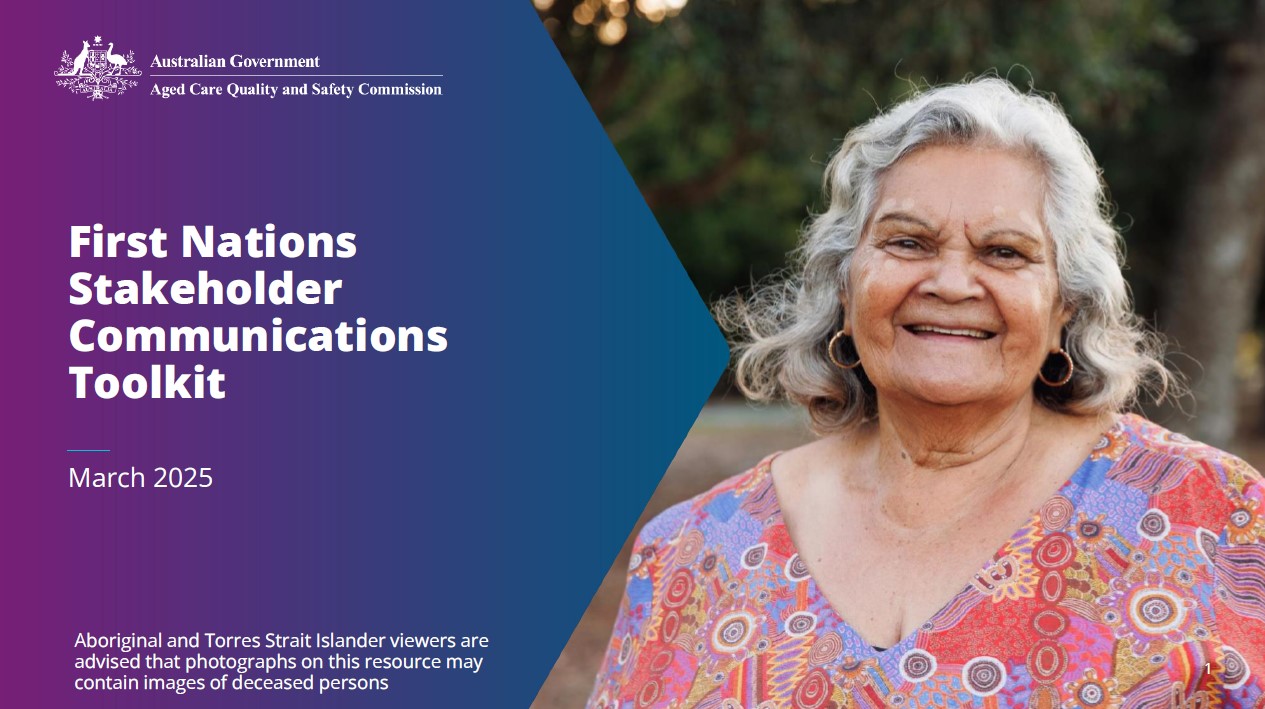
First Nations - Stakeholder Communications Toolkit
This Toolkit is designed for First Nations stakeholders including providers, workers and others involved in providing aged care services for First Nations people. We’ve developed it to make it easy for you to share relevant resources with your networks and members
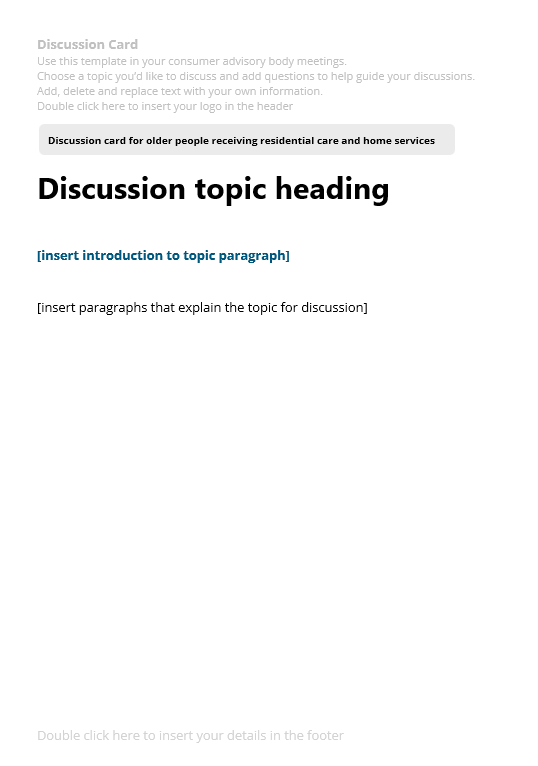
Consumer advisory body discussion card template
A discussion card template that consumer advisory body members can use to write their own topics and questions to prompt discussion about any concerns older people receiving care may have.
 Consumer advisory body discussion card template (DOCX 3.08 MB)
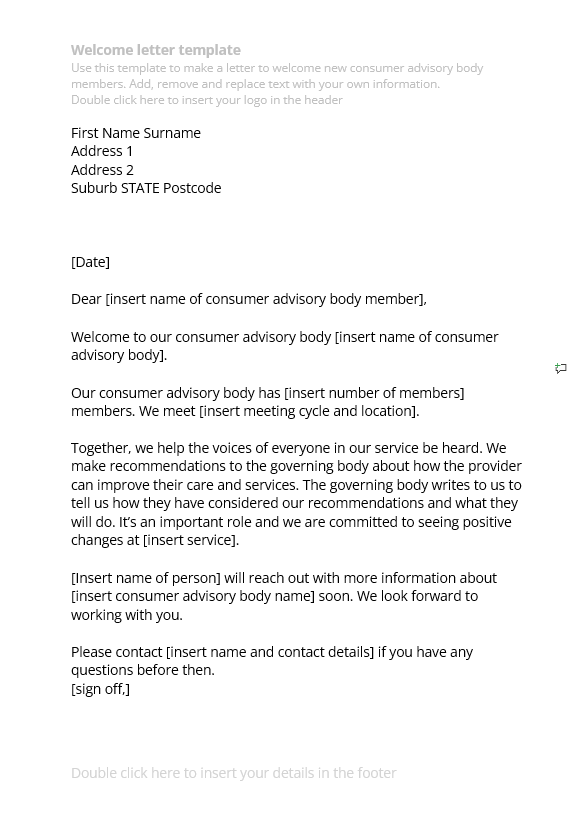
Consumer advisory body welcome letter template
A welcome letter template that consumer advisory body members can use to communicate with new members.
Consumer advisory body welcome letter template (DOCX 3.8 MB)
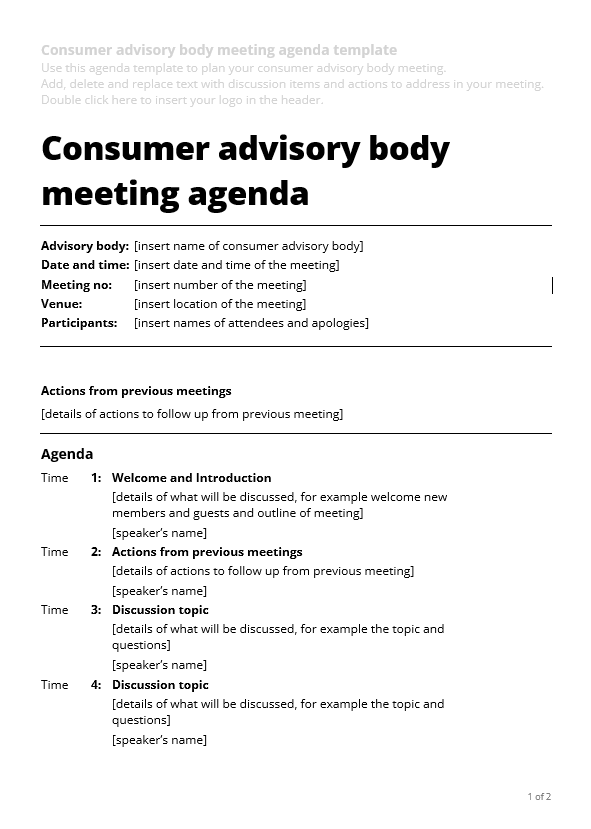
Consumer advisory body meeting agenda template
A template that consumer advisory body members can use to plan their meeting agendas.
Consumer advisory body meeting agenda template (DOCX 2.39 MB)
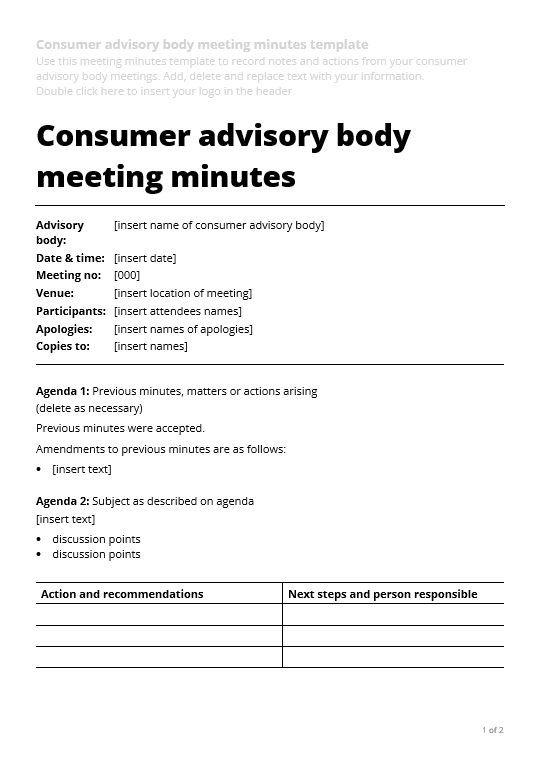
Consumer advisory body minutes template
A template that consumer advisory body members can use in their meetings to take minutes.
Consumer advisory body minutes template (DOCX 2.4 MB)