The Quality Standards Resource Centre helps extend understanding of the strengthened Aged Care Quality Standards, which took effect from 1 November 2025. You can search for resources by using keywords, or filtering by standard, outcome and audience. Before using the Resource Centre, please read the terms of use.
NSQHS Standards User Guide for the Health Care of People with Intellectual Disability
This resource provides guidance for the health care of people with intellectual disability. The user guide is part of the Australian Commission on Safety and Quality in Health Care's National Safety and Quality Health Service (NSQHS) Standards. The resource was developed in response to significant evidence of poor health outcomes for people with intellectual disability in Australia’s health system.
This resource may refer to information that will be updated from 1 November 2025 to align with the new Aged Care Act and Quality Standards.
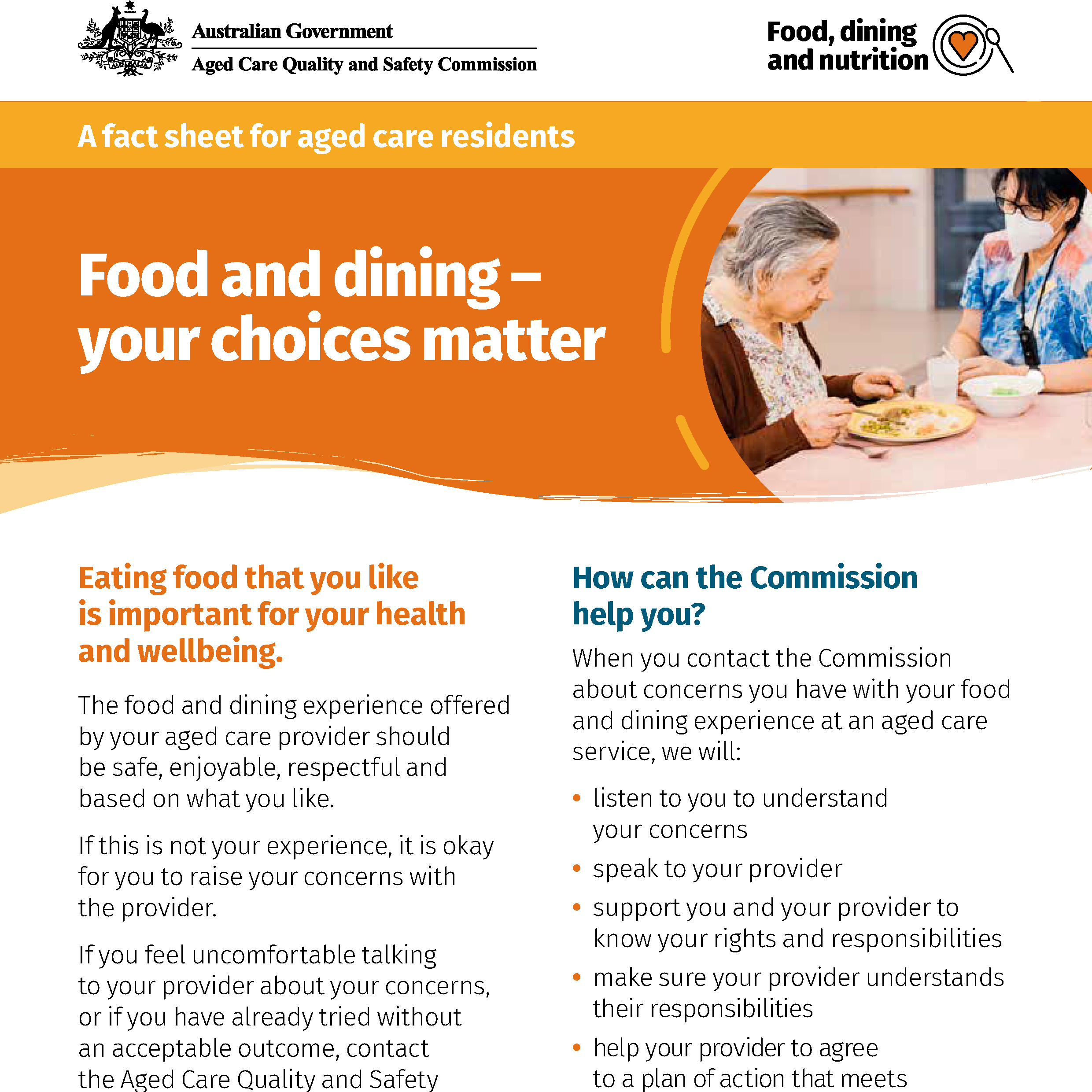
Food and dining - your choices matter
This fact sheet informs aged care residents of their rights to safe, enjoyable, and respectful dining experiences. It outlines steps for raising concerns with providers about food and dining, offers a preference form for residents to communicate their dietary needs, and provides contact information for support services if issues remain unresolved. This resource may refer to information that will be updated from 1 November 2025 to align with the new Aged Care Act and Quality Standards.
 English - Food and dining – your choices matter (PDF 484.79 KB)
Arabic - تهمّّنا تفضيلاتكم في الطعام وعادات الأكل (PDF 767.17 KB)
Chinese Simplified - 食品和餐饮—— 您的选择很重要 (PDF 785.39 KB)
Chinese Traditional - 食品和餐飲—— 您的選擇很重要 (PDF 788.7 KB)
French - Alimentation et repas – vos choix sont importants (PDF 684.4 KB)
German - Essen und Speisen – Ihre Wahl zählt (PDF 686.18 KB)
Greek - Φαγητό και γεύματα – οι επιλογές σας έχουν σημασία (PDF 690.89 KB)
Hungarian - Ételek és étkezés – az Ön döntése számít (PDF 684.42 KB)
Macedonian - Храна и јадење - вашиот избор е важен (PDF 683.21 KB)
Maltese - L-ikel u l-ikliet - l-għażliet tiegħek huma importanti (PDF 685.65 KB)
Russian - Питание и прием пищи: ваш выбор имеет значение (PDF 682.53 KB)
Serbian - Храна и обедовање – ваш избор је важан (PDF 681.46 KB)
Spanish - Alimentos y comidas: sus preferencias importan (PDF 679.42 KB)
English - Food and dining – your choices matter (PDF 484.79 KB)
Arabic - تهمّّنا تفضيلاتكم في الطعام وعادات الأكل (PDF 767.17 KB)
Chinese Simplified - 食品和餐饮—— 您的选择很重要 (PDF 785.39 KB)
Chinese Traditional - 食品和餐飲—— 您的選擇很重要 (PDF 788.7 KB)
French - Alimentation et repas – vos choix sont importants (PDF 684.4 KB)
German - Essen und Speisen – Ihre Wahl zählt (PDF 686.18 KB)
Greek - Φαγητό και γεύματα – οι επιλογές σας έχουν σημασία (PDF 690.89 KB)
Hungarian - Ételek és étkezés – az Ön döntése számít (PDF 684.42 KB)
Macedonian - Храна и јадење - вашиот избор е важен (PDF 683.21 KB)
Maltese - L-ikel u l-ikliet - l-għażliet tiegħek huma importanti (PDF 685.65 KB)
Russian - Питание и прием пищи: ваш выбор имеет значение (PDF 682.53 KB)
Serbian - Храна и обедовање – ваш избор је важан (PDF 681.46 KB)
Spanish - Alimentos y comidas: sus preferencias importan (PDF 679.42 KB)
Governing for Reform in Aged Care Program
This resource outlines the Governing for Reform in Aged Care Program, designed to strengthen corporate and clinical governance capabilities for aged care leaders. It provides tools, online learning modules, webinars, and podcasts to support governance improvement and help leaders engage in reform efforts.
This resource may refer to information that will be updated from 1 November 2025 to align with the new Aged Care Act and Quality Standards.
Older Persons Advocacy Network
This resource provides information on aged care advocacy services, offering free and confidential support to older people receiving government-funded aged care. It includes resources to help people understand their rights, navigate the aged care system, and access advocacy for issues such as care quality, decision-making, and protection from harm.
This resource may refer to information that will be updated from 1 November 2025 to align with the new Aged Care Act and Quality Standards.
Effective incident management education pack
The Effective incident management education pack is designed for providers to deliver to their own staff. It can be delivered in full or delivered as a series of shorter sessions where you can focus on the sections that are most relevant to your setting or the time you have available.
This pack will support your staff to understand the role they play in effectively managing incidents at your aged care service and help them understand what an incident management system is and its key elements.
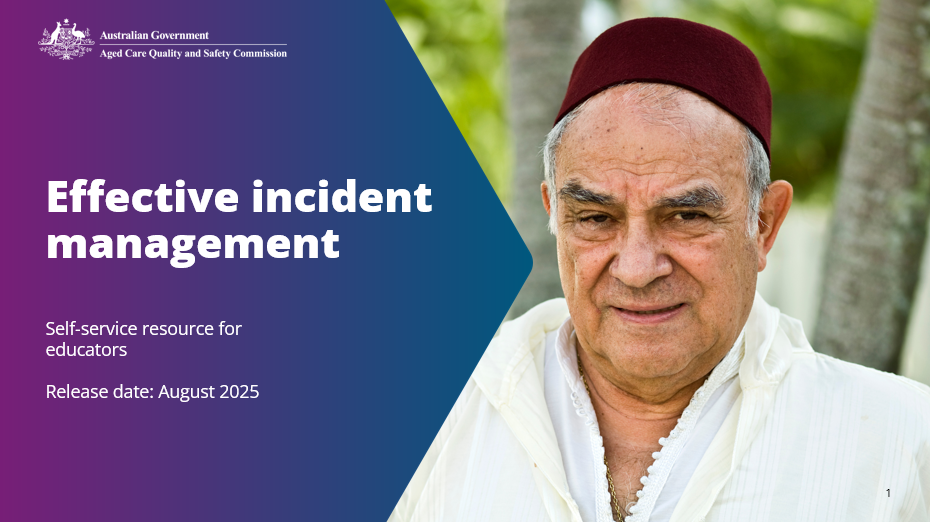
Risk awareness and incident response – Introduction to aged care video
This resource provides a training video for aged care staff on risk awareness and incident response. It demonstrates how to identify potential risks and manage escalating situations effectively in an aged care setting. The video offers practical guidance on maintaining safety for both staff and people in care during incidents, emphasising the importance of calm communication and post-incident reflection. This resource may refer to information that will be updated from 1 November 2025 to align with the new Aged Care Act and Quality Standards.
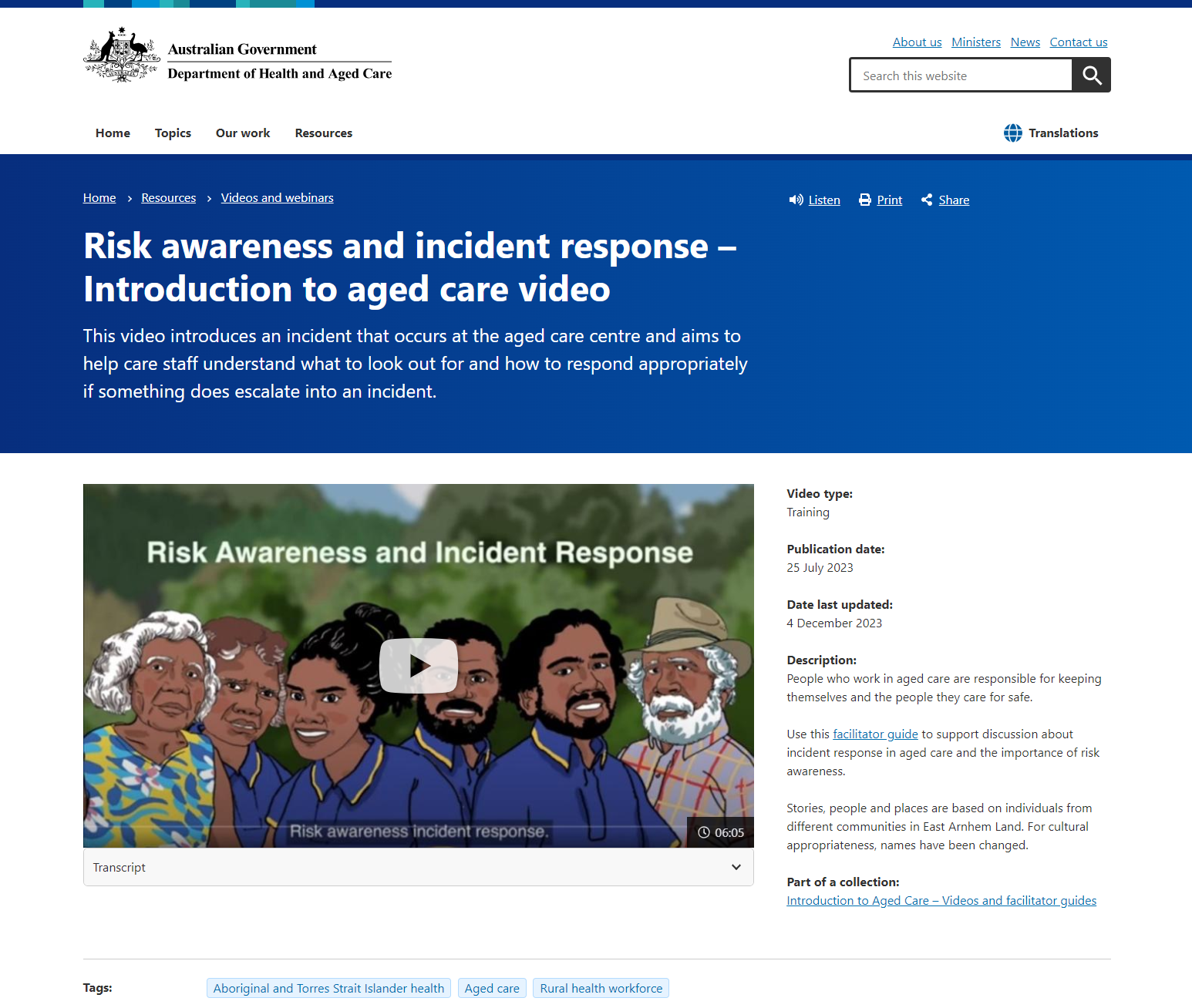
COTA - Council on the Ageing
This resource provides information on the Council on the Ageing (COTA) Australia's work, including advocacy, policy priorities, and resources for older adults. It highlights key areas such as dental care affordability, aged care reform, and independence for seniors. The site offers publications, submissions to inquiries, and the Aged Care Visitors Code, relevant for aged care providers and consumers.
Dignity of risk – Introduction to aged care video
This video explains the concept of dignity of risk in aged care, emphasising that older people have the right to make their own choices, even when those choices involve risks. It provides examples of how care providers can support decision-making while promoting safety and respect for individual autonomy.
This resource may refer to information that will be updated from 1 November 2025 to align with the new Aged Care Act and Quality Standards.
Seeking support from an advocate
This resource describes the advocacy support available for people receiving government-funded aged care, provided through the National Aged Care Advocacy Program. It outlines the role of advocates in assisting with understanding services, managing rights, addressing concerns, and learning self-advocacy skills, supporting respectful and fair treatment in aged care.
Common barriers
This resource outlines common barriers faced by diverse groups in accessing aged care services, including communication challenges, social isolation, experiences of trauma, grief and loss, and social exclusion. It provides guidance on addressing these issues to make sure equitable access to services for all older people.
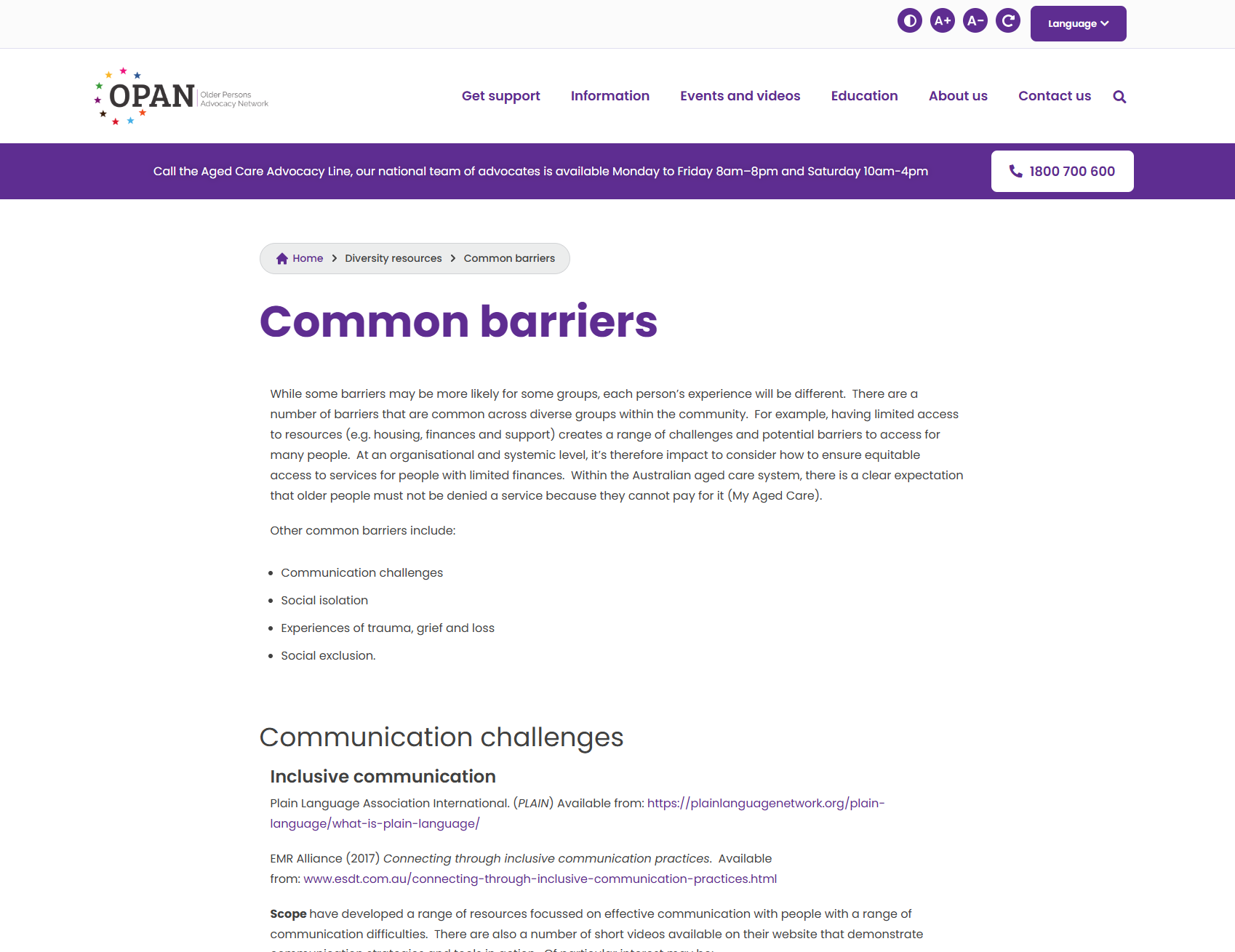
Goal setting
This resource discusses the role of goal setting in enhancing rehabilitation, reablement, and restorative care for older people. It highlights the value of involving older people in defining goals and the positive impact of goal setting on engagement, daily function, and quality of life.
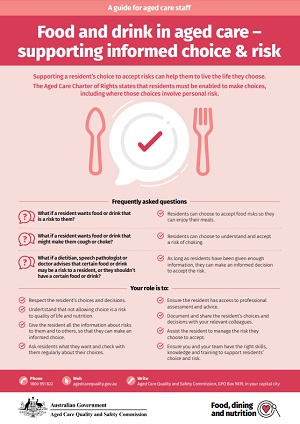
Food and drink in your aged care - supporting informed choice and risk - staff poster
This resource provides guidance for aged care staff on supporting older people's informed choices regarding food and drink, even when those choices involve personal risks. It encourages staff to respect resident autonomy, provide information on risks, document decisions, and ensure access to professional advice, promoting dignity and quality of life in care settings. This resource may refer to information that will be updated from 1 November 2025 to align with the new Aged Care Act and Quality Standards.
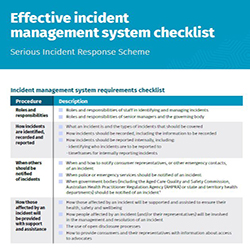
Effective incident management system checklist
This resource provides a checklist to help aged care providers ensure their incident management systems meet regulatory requirements. It outlines key responsibilities, reporting processes, and steps to review and manage incidents effectively, aligning with the Serious Incident Response Scheme (SIRS) guidelines.
This resource may refer to information that will be updated from 1 November 2025 to align with the new Aged Care Act and Quality Standards.
Effective incident management system checklist (October 2022) (PDF 675.36 KB)
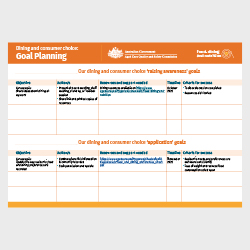
Goal planning tool
This resource is a goal planning tool designed to support aged care providers in improving food, dining, nutrition, and consumer choice. It helps providers set objectives, track progress, and implement actions to enhance service quality, ensuring that people’s preferences and dietary needs are consistently met.
This resource may refer to information that will be updated from 1 November 2025 to align with the new Aged Care Act and Quality Standards.
Goal planning tool (PDF 899.52 KB)
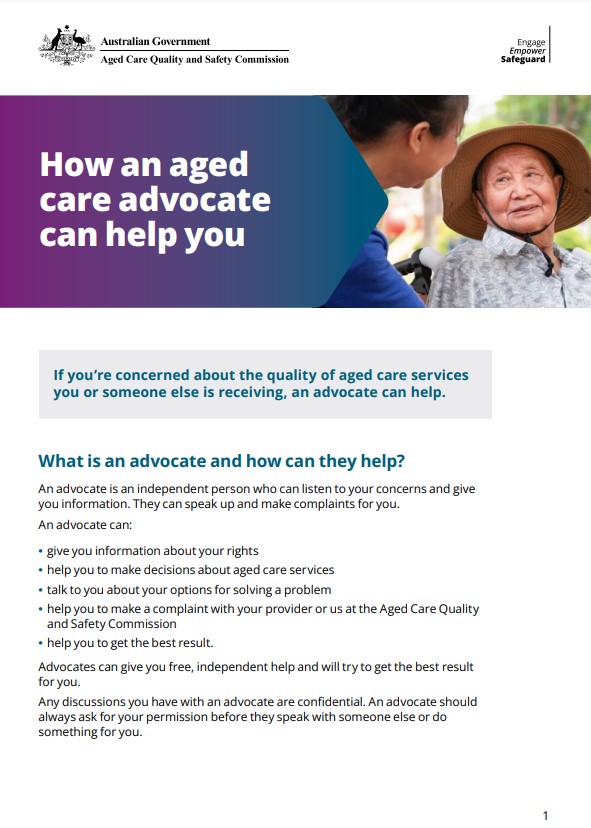
How an aged care advocate can help you
If you are concerned about the quality of the aged care service you or the person you represent is receiving, an advocacy service may be able to help.
How an aged care advocate can help you – fact sheet (PDF 267.87 KB)
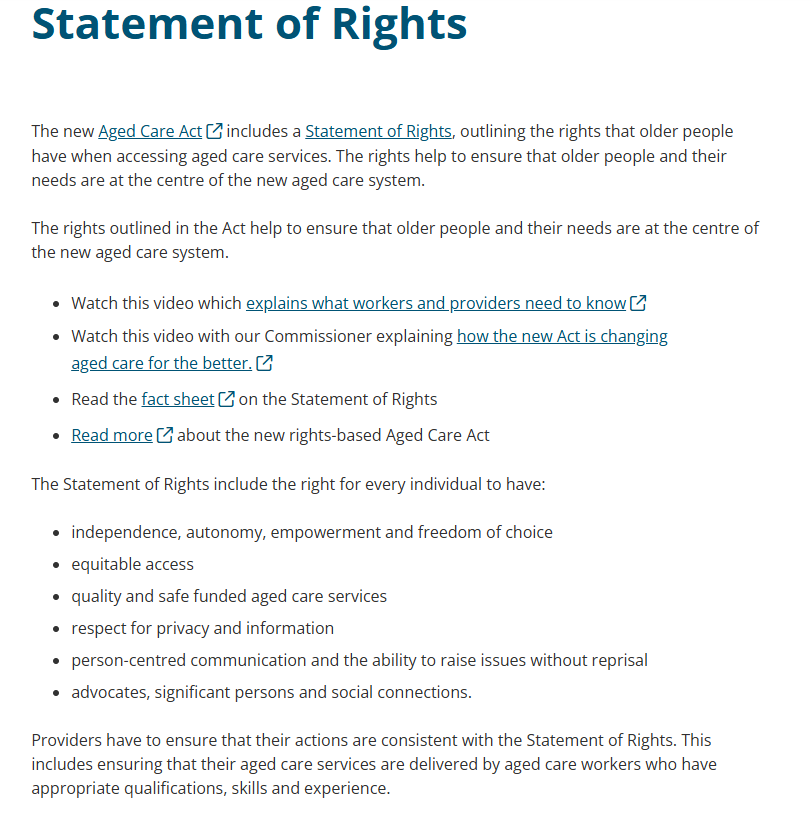
Statement of Rights - Workers
This resource provides information for providers about the Statement of Rights. The Statement of Rights promote quality and safe care for older persons accessing, or seeking to access, funded aged care services. The rights help to ensure that older people and their needs are at the centre of the new aged care system.
This page includes information about what the Statement of Rights means for providers, and has links to additional resources about the rights, including videos and fact sheets.
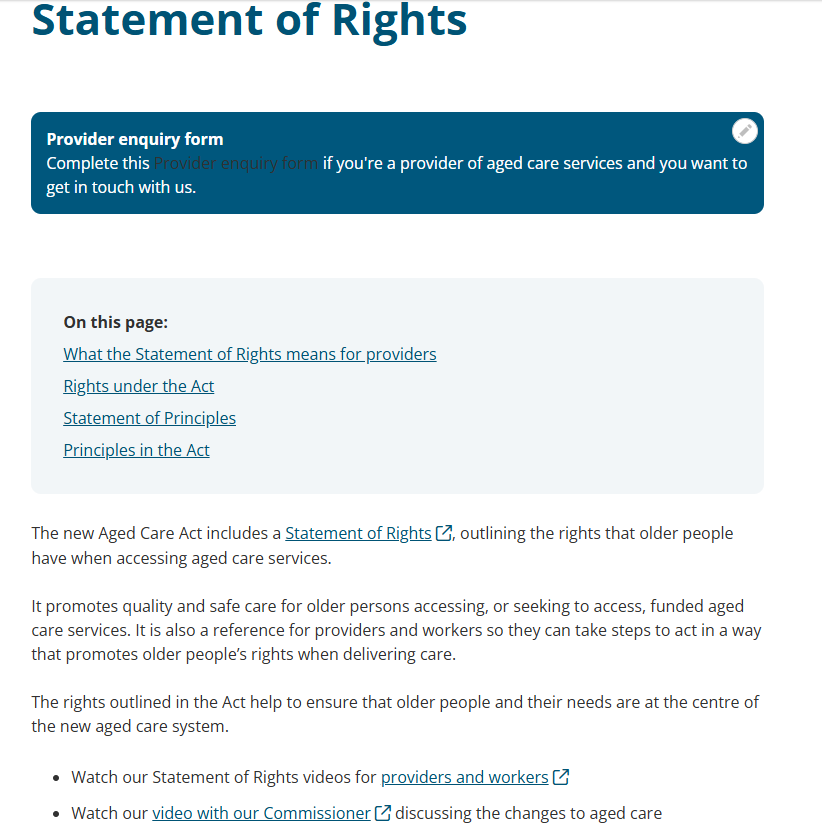
Statement of Rights - Providers
This resource provides information for providers about the Statement of Rights. The Statement of Rights promote quality and safe care for older persons accessing, or seeking to access, funded aged care services. The rights help to ensure that older people and their needs are at the centre of the new aged care system.
This page includes information about what the Statement of Rights means for providers, and has links to additional resources about the rights, including videos and fact sheets.
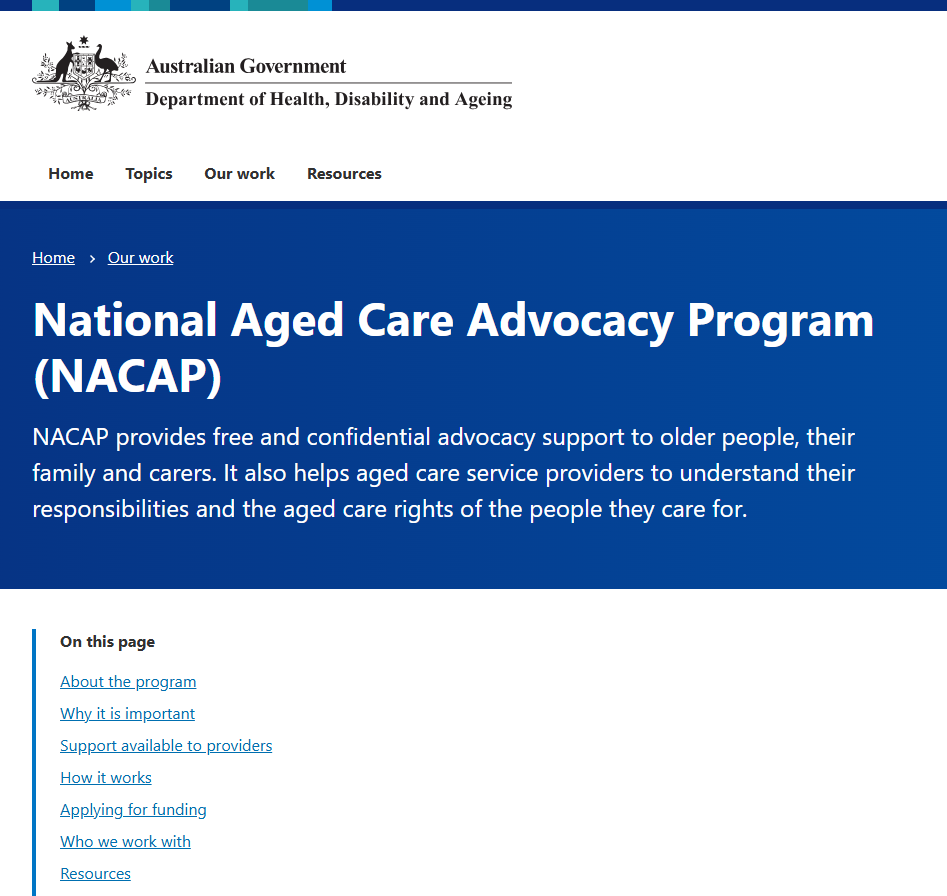
National Aged Care Advocacy Program (NACAP)
This resource outlines the National Aged Care Advocacy Program (NACAP), which provides free and confidential advocacy services to older people receiving government-subsidised aged care. It helps people understand their rights, navigate the aged care system, and resolve issues. It also offers education and support to aged care providers to ensure they uphold these rights.
This resource may refer to information that will be updated from 1 November 2025 to align with the new Aged Care Act and Quality Standards.
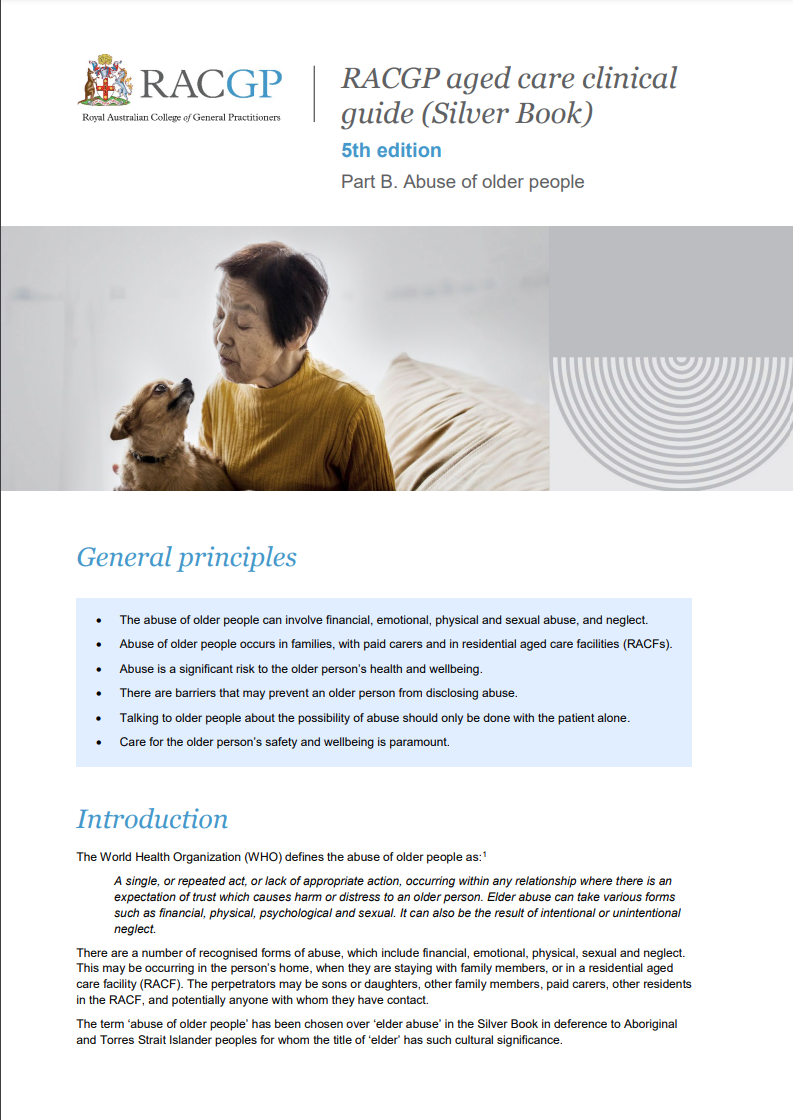
RACGP aged care clinical guide (Silver Book) - Part B - Abuse of older people
This resource provides guidance on recognising, assessing, and managing abuse of older people in various settings, including residential aged care. It covers types of abuse (financial, emotional, physical, sexual, neglect), risk factors, barriers to disclosure, and steps for prevention. The document also includes recommendations for safety planning, intervention strategies, and resources for support across Australian states and territories.
Tips for Careworkers: Culturally Responsive Care - Communication
This resource provides practice tip sheets for care workers, focusing on culturally responsive care for people from culturally and linguistically diverse backgrounds. It outlines communication strategies, emphasising person-centred care, cultural sensitivity, and effective interaction with patients and families, especially at the end of life.