The Quality Standards Resource Centre helps extend understanding of the strengthened Aged Care Quality Standards, which took effect from 1 November 2025. You can search for resources by using keywords, or filtering by standard, outcome and audience. Before using the Resource Centre, please read the terms of use.
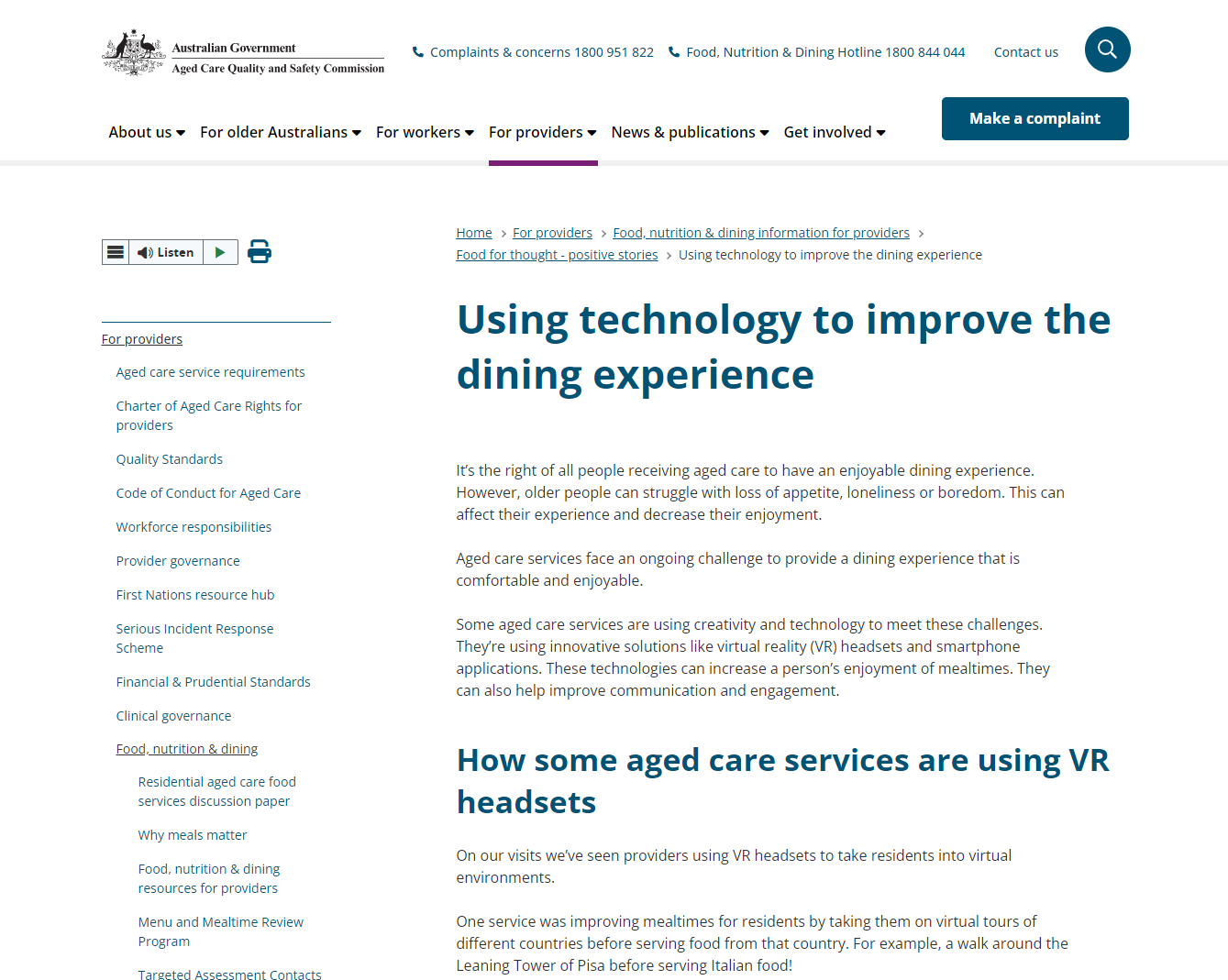
Using technology to improve the dining experience
This resource provides guidance on how technology, such as virtual reality (VR) and mobile applications, can enhance the dining experience in aged care settings. These tools are designed to increase engagement, support meal choices, improve communication with families, and contribute to overall wellbeing by making mealtimes more enjoyable.
This resource may refer to information that will be updated from 1 November 2025 to align with the new Aged Care Act and Quality Standards.
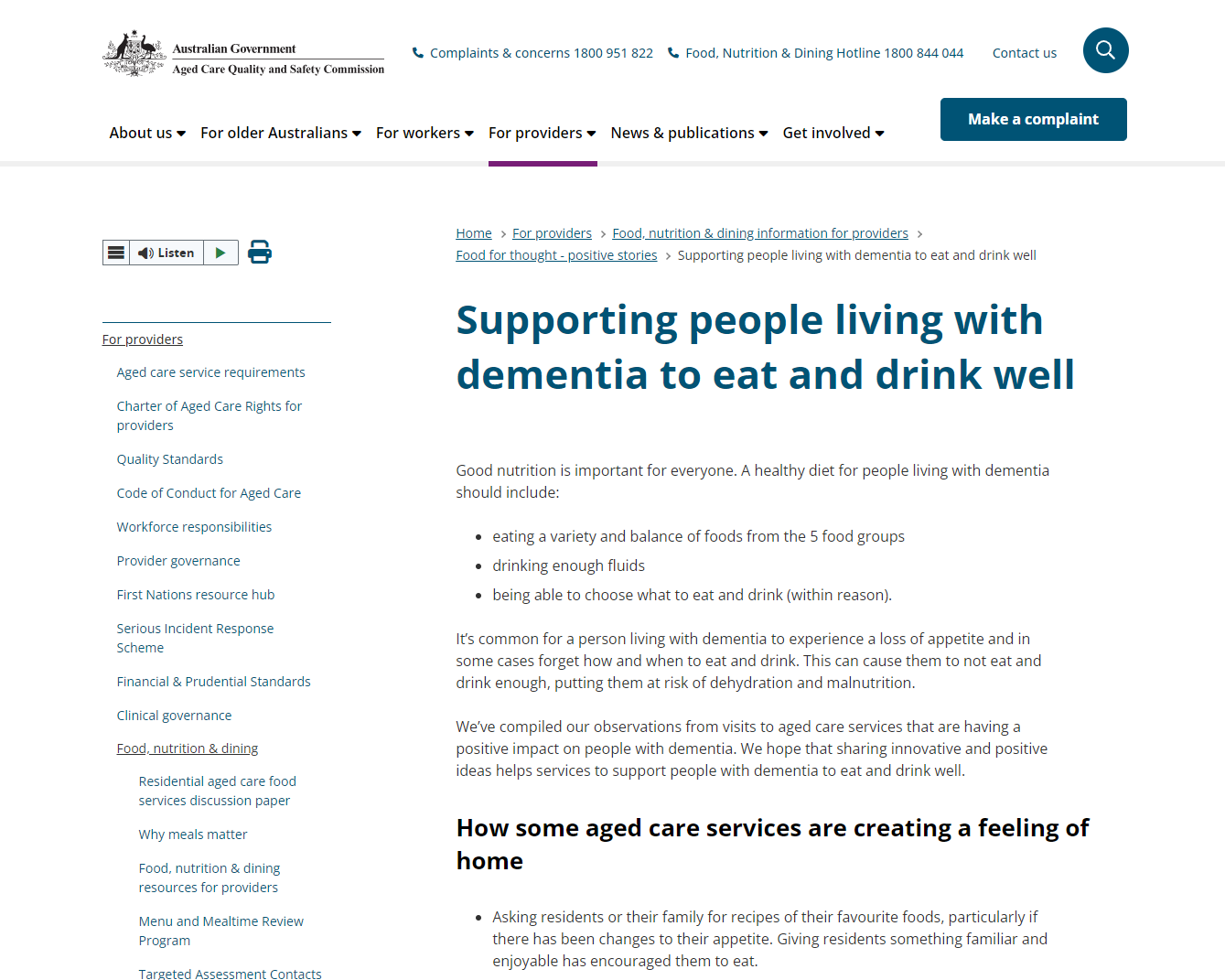
Supporting people living with dementia to eat and drink well
This resource provides guidance for aged care services on how to support people living with dementia to eat and drink well. It highlights innovative approaches such as creating familiar, enjoyable meals, reducing mealtime interruptions, and offering 24-hour access to nutritious foods. These strategies help address challenges like malnutrition and dehydration.
This resource may refer to information that will be updated from 1 November 2025 to align with the new Aged Care Act and Quality Standards.
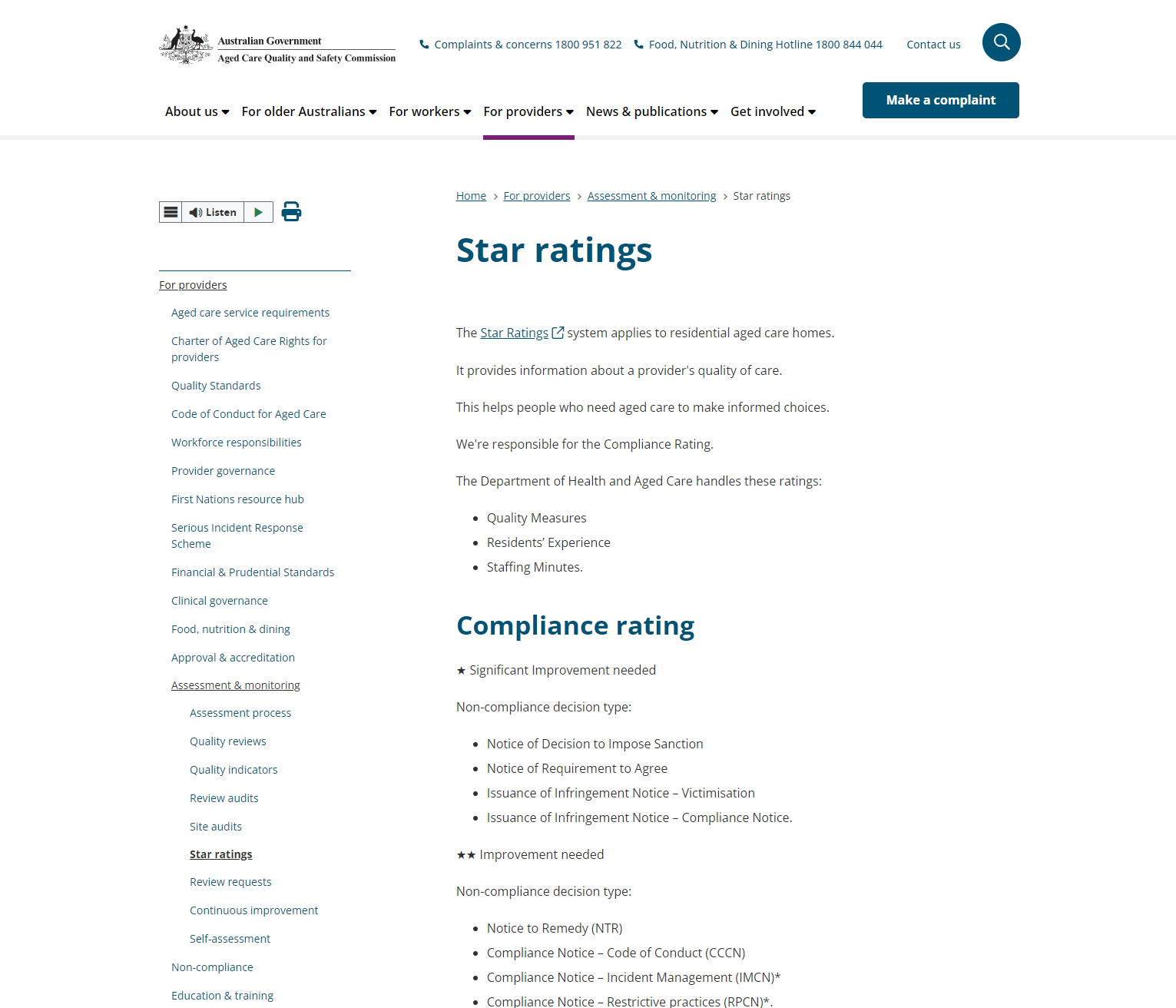
Star ratings
This resource explains the star rating system for residential aged care homes, which helps people make informed care decisions. It outlines ratings based on compliance, quality measures, residents’ experiences, and staffing minutes. Providers are evaluated on their performance, with ratings updated daily to reflect changes in compliance.
This resource may refer to information that will be updated from 1 November 2025 to align with the new Aged Care Act and Quality Standards.
Sector performance
This resource provides quarterly reports on the performance of the aged care sector, including data on residential care audits, home services quality reviews, complaints, and Serious Incident Response Scheme notifications. The reports offer insights into sector-wide performance and help providers monitor compliance and improve service quality.
This resource may refer to information that will be updated from 1 November 2025 to align with the new Aged Care Act and Quality Standards.
An Introduction to Activities of Daily Living (ADLs)
This resource explains Activities of Daily Living (ADLs), which are essential tasks that people must perform to care for themselves. It covers basic ADLs like mobility, dressing, and feeding, as well as instrumental ADLs such as managing finances and medication. The document highlights the clinical importance of assessing and supporting ADLs in aged care.
This resource may refer to information that will be updated from 1 November 2025 to align with the new Aged Care Act and Quality Standards.
Respecting the privacy and dignity of clients
This resource provides guidance about respecting the privacy and dignity of clients. It includes information about personal privacy, the Privacy Act, what classifies as health information, consent and privacy of information. It also includes information about person-centred care and client dignity.
This resource may refer to information that will be updated from 1 November 2025 to align with the new Aged Care Act and Quality Standards.
Review requests
This resource outlines the process for aged care providers to request a reconsideration of regulatory decisions. It explains how to submit a request, including the timeline and required information. Providers and quality assessors can seek reviews through this process to address any concerns regarding regulatory outcomes.
This resource may refer to information that will be updated from 1 November 2025 to align with the new Aged Care Act and Quality Standards.
Regulatory Strategy 2024–25
Our Regulatory Strategy sets out how the Commission will deliver on our goals and commitments. This resource may refer to information that will be updated from 1 November 2025 to align with the new Aged Care Act and Quality Standards.
 Regulatory Strategy 2024–25 (PDF 1.08 MB)
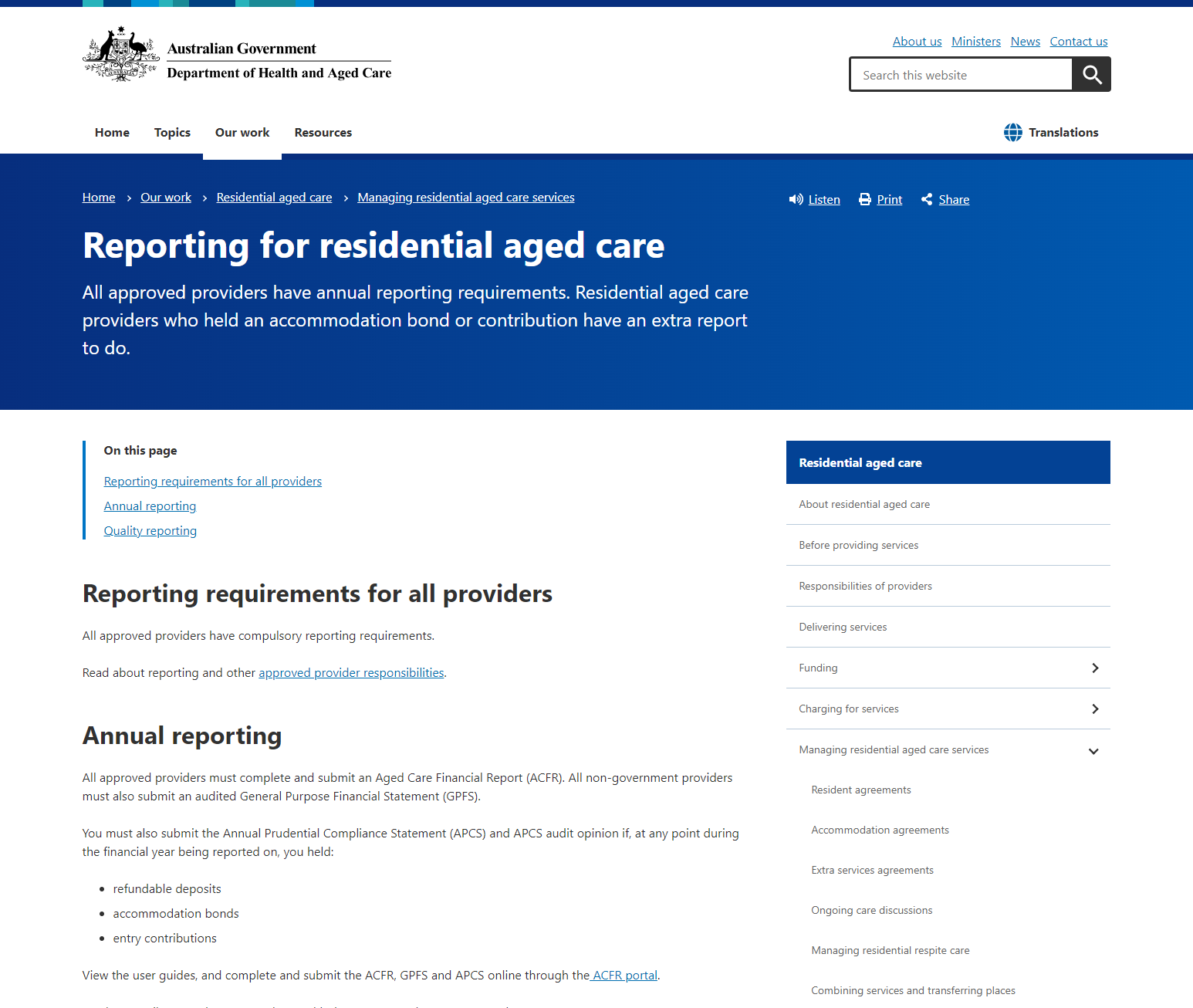
Reporting for residential aged care
This resource outlines the reporting requirements for approved residential aged care providers. It includes instructions for submitting the Aged Care Financial Report (ACFR), General Purpose Financial Statement (GPFS), and Annual Prudential Compliance Statement (APCS). It also covers quality reporting under the National Aged Care Mandatory Quality Indicator Program, ensuring transparency and compliance with regulatory standards.
This resource may refer to information that will be updated from 1 November 2025 to align with the new Aged Care Act and Quality Standards.
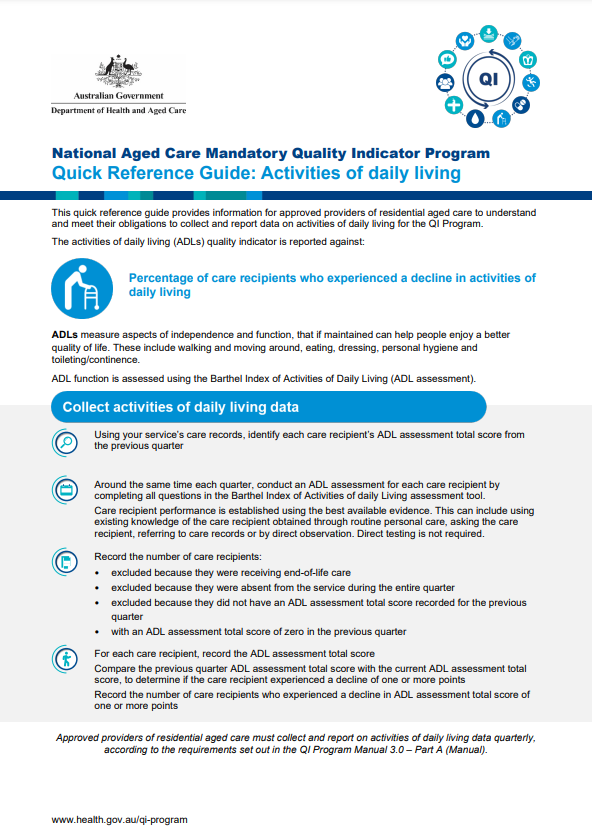
QI Program quick reference guide – Activities of daily living
This quick reference guide provides residential aged care providers with instructions on collecting and reporting data for the Quality Indicator Program. It focuses on measuring the decline in activities of daily living (ADLs) using the Barthel Index, helping providers monitor care recipients' functional independence and implement appropriate support strategies. This resource may refer to information that will be updated from 1 November 2025 to align with the new Aged Care Act and Quality Standards.
QI Program Module 7 – Activities of daily living
This resource explains the importance of measuring activities of daily living (ADLs) for older people in residential aged care. It guides providers on using the Barthel Index to assess ADLs quarterly, helping identify risks of functional decline and implement strategies to maintain independence and improve quality of life. This resource may refer to information that will be updated from 1 November 2025 to align with the new Aged Care Act and Quality Standards.
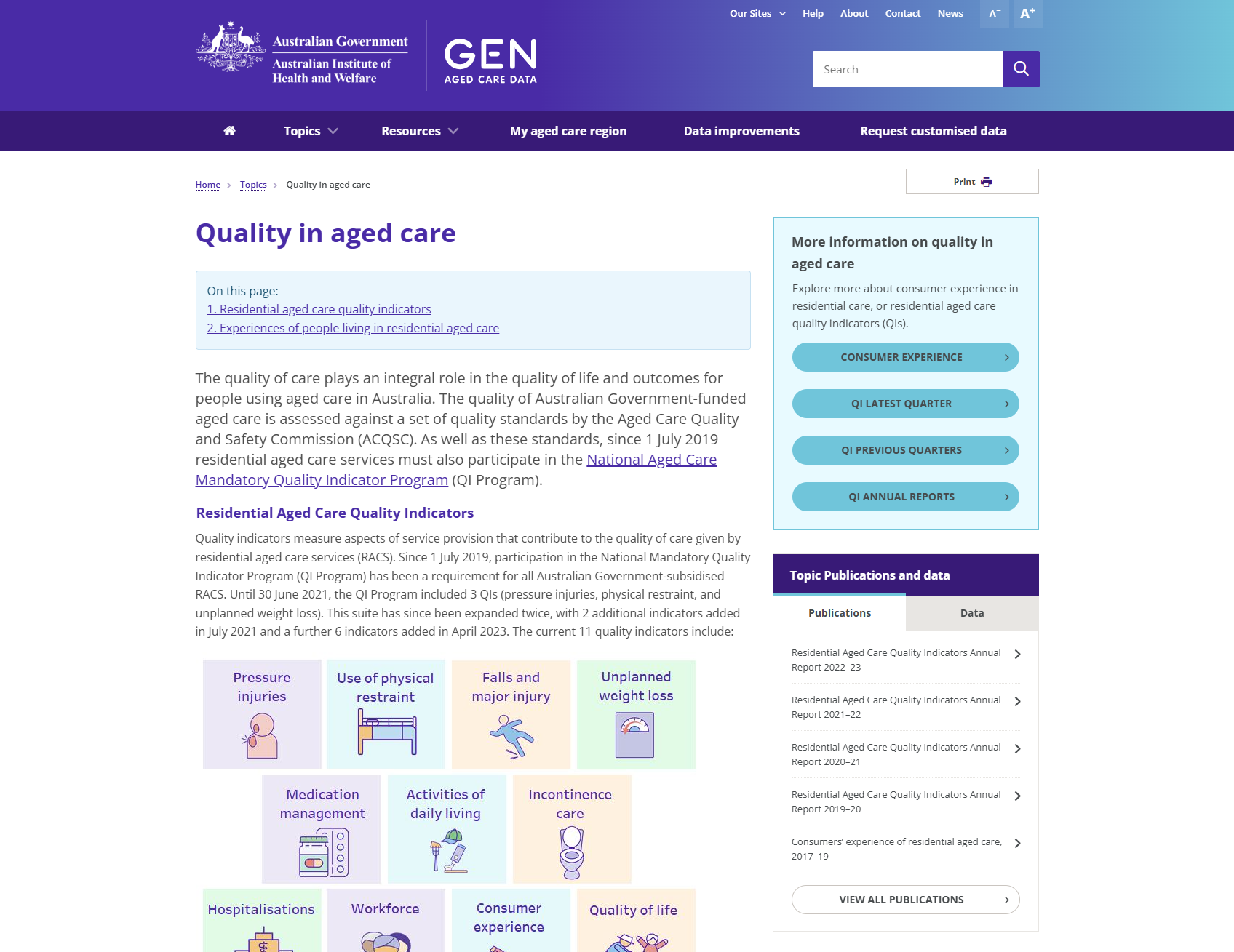
Quality in aged care - Gen Data Page
This resource provides an overview of quality indicators and consumer experience surveys in aged care. It details mandatory quality metrics, including physical and clinical indicators, and feedback from people in aged care, offering insights into service performance and supporting informed choices in aged care settings.
This resource may refer to information that will be updated from 1 November 2025 to align with the new Aged Care Act and Quality Standards.
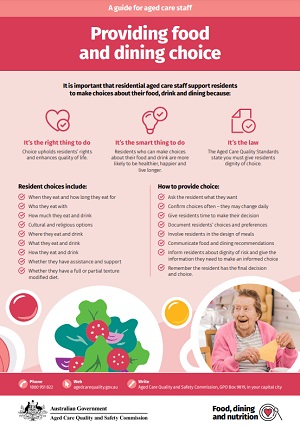
Providing food and dining choice - aged care staff poster
This guide supports aged care staff in providing food and dining choices for residents. It outlines the importance of upholding residents' rights to choose, enhancing their health and quality of life. The guide recommends confirming preferences regularly, involving residents in meal planning, and respecting individual choices regarding when, where, and what they eat or drink. This resource may refer to information that will be updated from 1 November 2025 to align with the new Aged Care Act and Quality Standards.
Providing food and dining choice - aged care staff poster (PDF 445.57 KB)
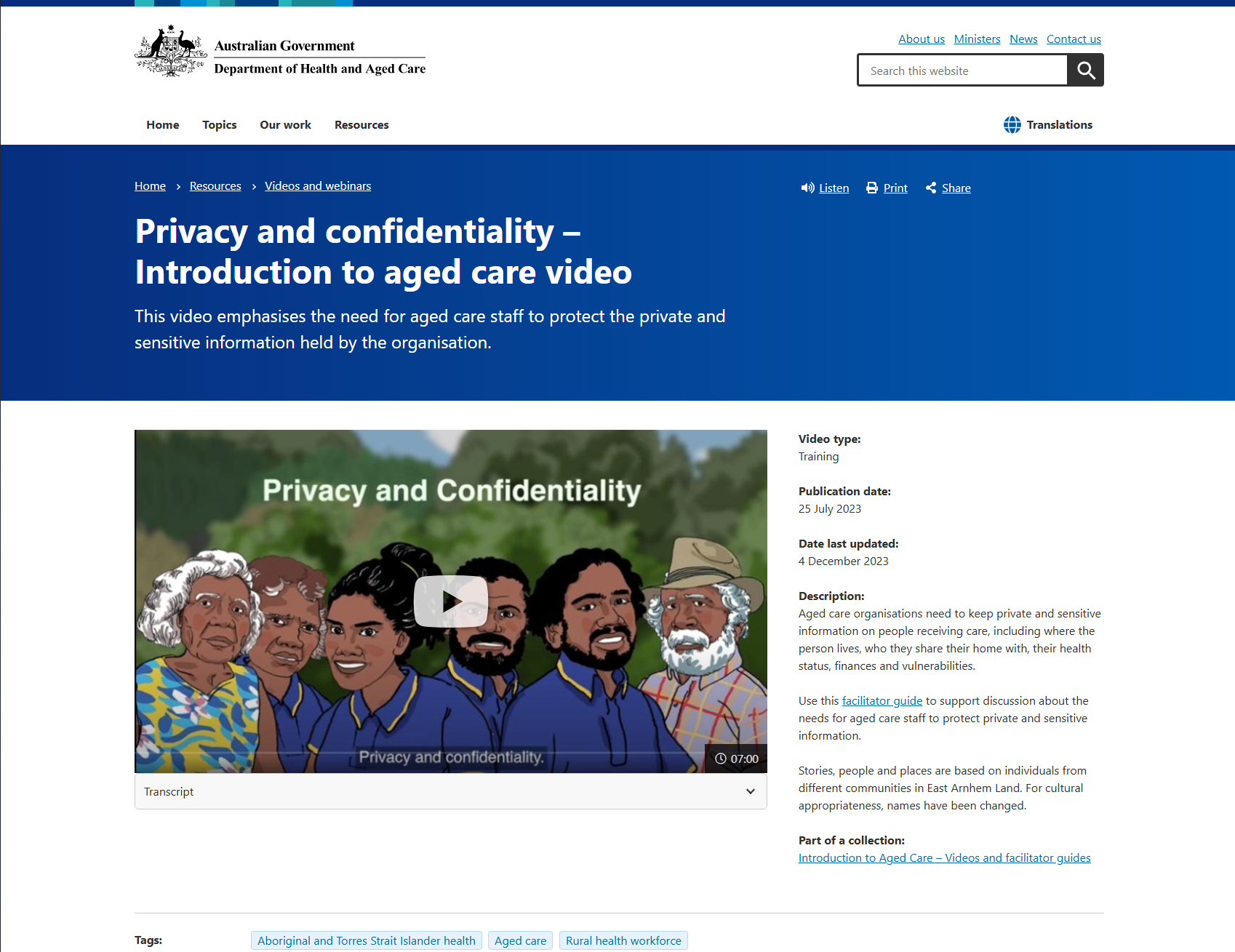
Privacy and confidentiality – Introduction to aged care video
This resource is a training video guiding aged care staff on the importance of maintaining privacy and confidentiality for people receiving care. It covers protecting personal information, proper handling of sensitive data, and safe sharing practices, aiming to make sure clients feel secure in sharing information.
This resource may refer to information that will be updated from 1 November 2025 to align with the new Aged Care Act and Quality Standards.
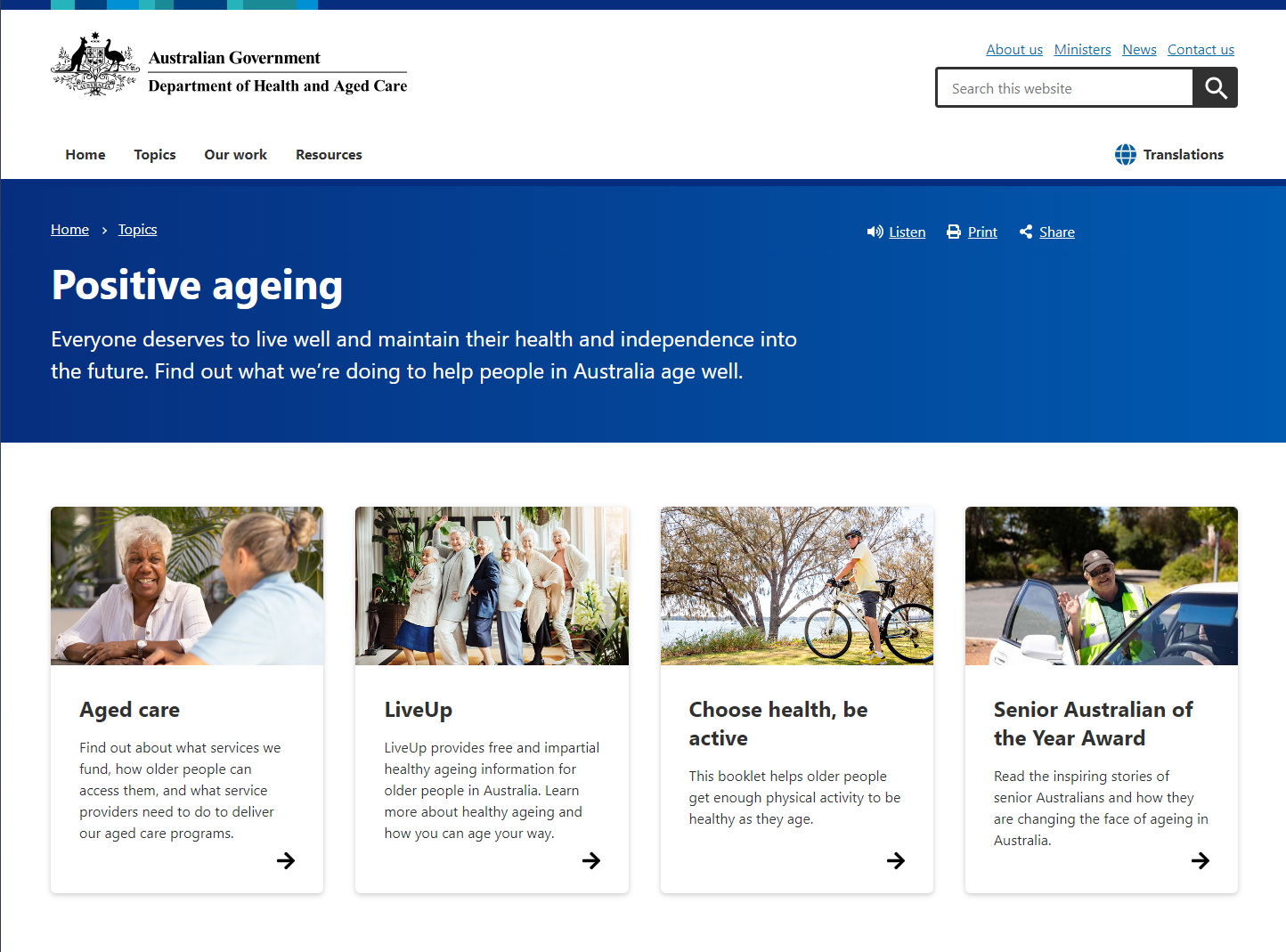
Positive ageing
This resource focuses on positive ageing, encouraging older people to maintain their health, independence, and connection to community. It covers planning for healthy ageing, staying physically active, and accessing aged care services when needed. The resource promotes ageing as a positive experience, offering practical guidance to support older people in living well. This resource may refer to information that will be updated from 1 November 2025 to align with the new Aged Care Act and Quality Standards.
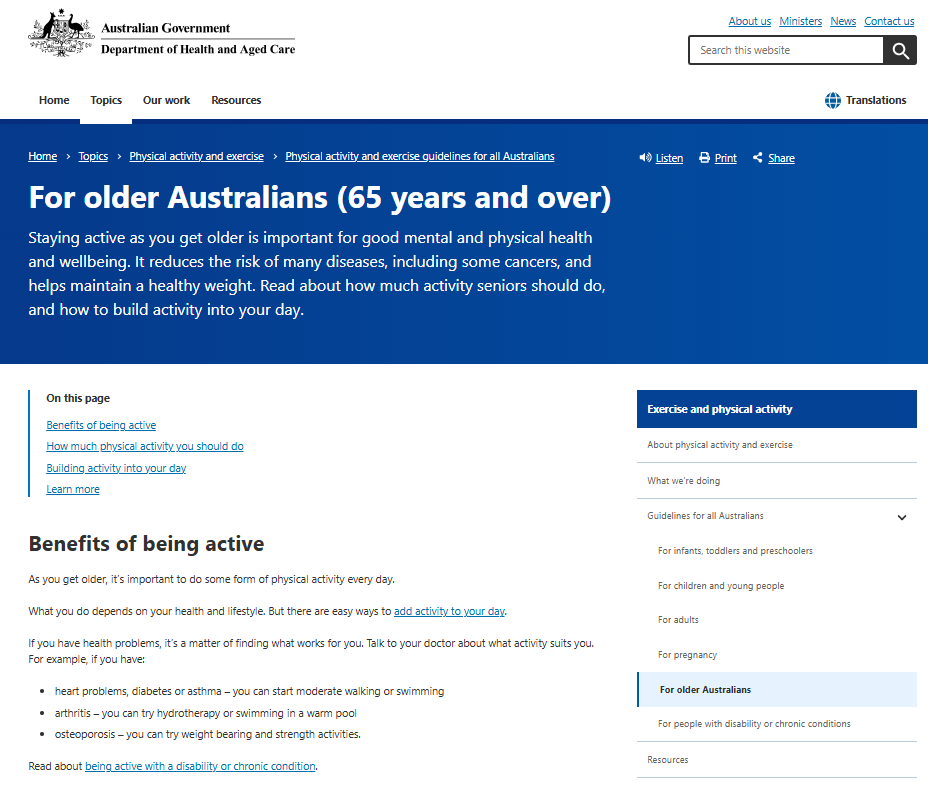
Physical activity and exercise guidelines - For older Australians (65 years and over)
This resource provides Australia’s physical activity and sedentary behaviour guidelines for older adults. It outlines how much physical activity is recommended, the importance of reducing sitting time, and the benefits of staying active. The guidelines help promote better physical and mental health across the lifespan.
This resource may refer to information that will be updated from 1 November 2025 to align with the new Aged Care Act and Quality Standards.
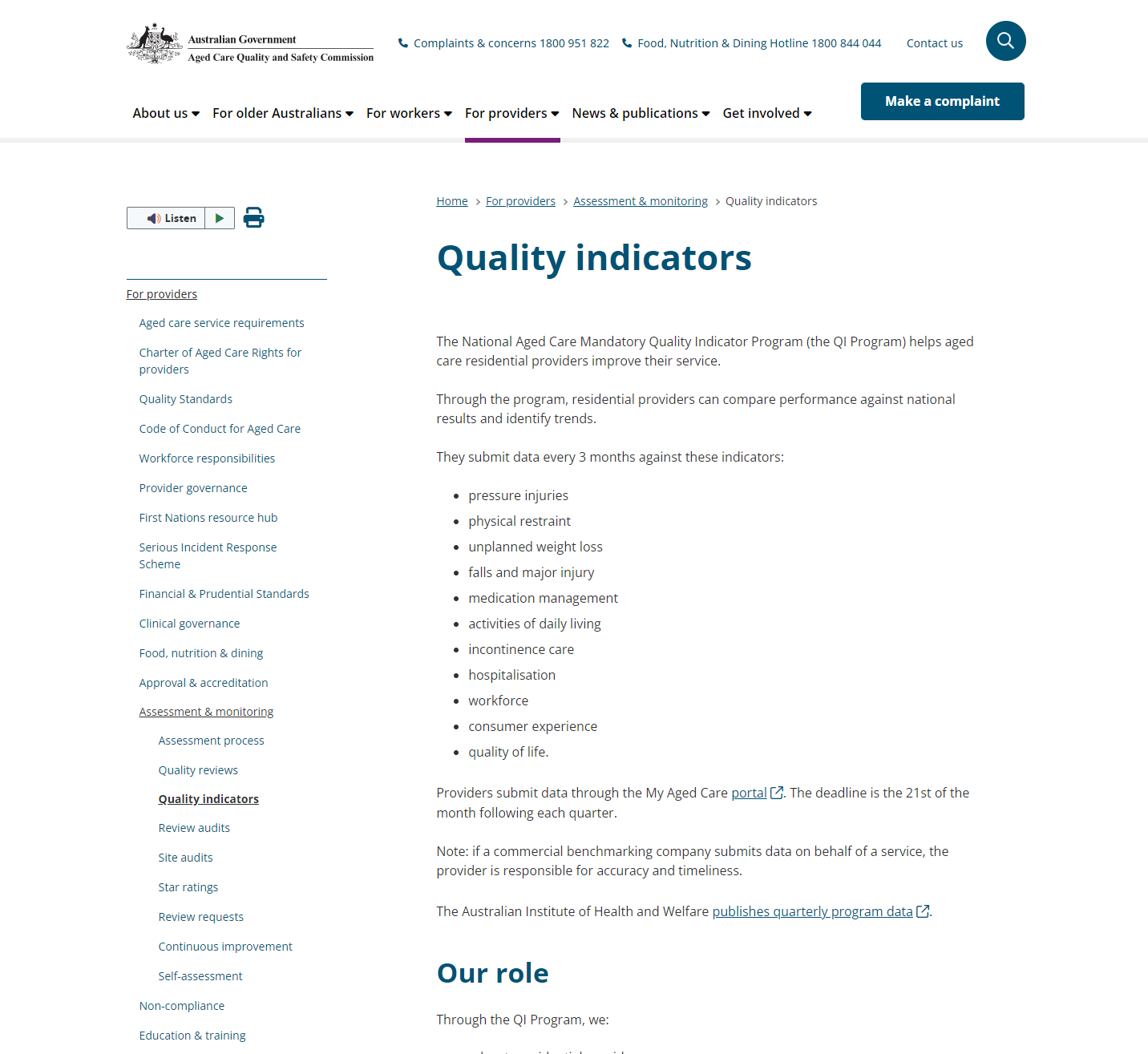
National Aged Care Mandatory Quality Indicator Program
The National Aged Care Mandatory Quality Indicator Program aids residential aged care providers in enhancing their services by allowing them to benchmark their performance against national outcomes. The program resource provides guidance on data submission frequency, explains the program's role, and provides more information on open hours and contact details.
This resource may refer to information that will be updated from 1 November 2025 to align with the new Aged Care Act and Quality Standards.
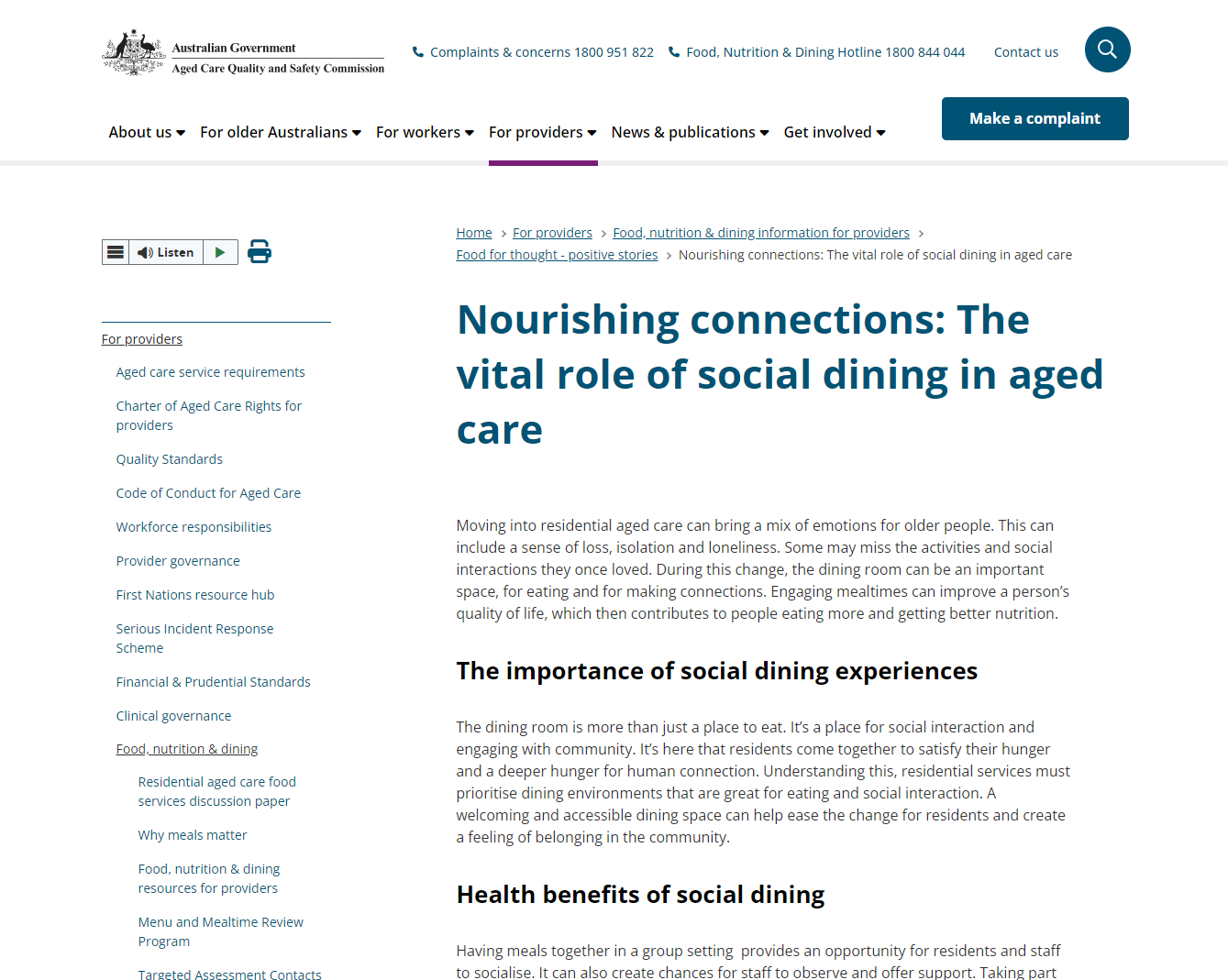
Nourishing connections: The vital role of social dining in aged care
This resource explains how social dining in aged care can enhance nutrition and wellbeing by fostering social connections. It encourages creating positive dining environments that promote engagement and respect personal preferences during mealtimes.
This resource may refer to information that will be updated from 1 November 2025 to align with the new Aged Care Act and Quality Standards.
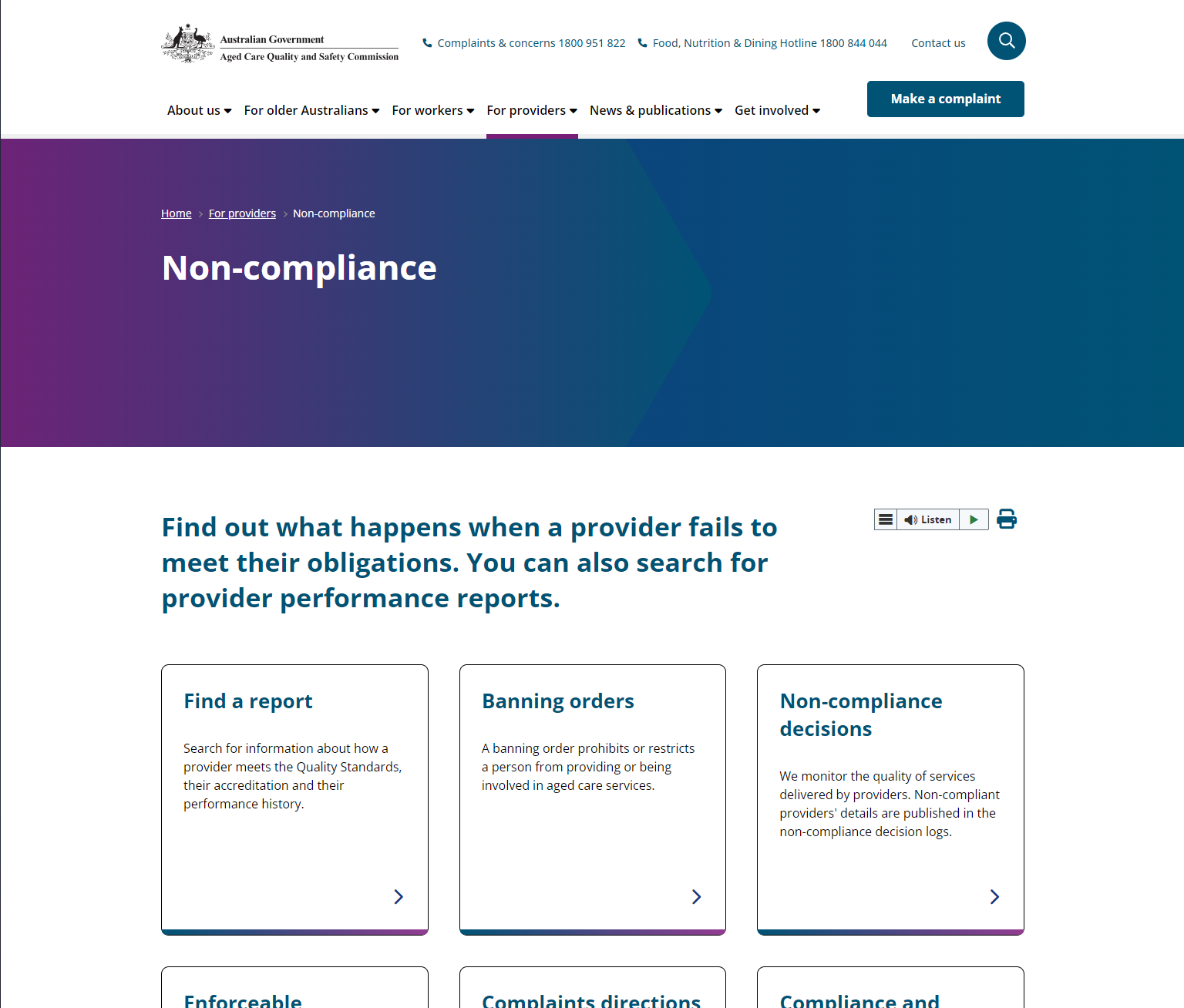
Non-compliance
This resource outlines the processes for managing non-compliance in aged care services. It includes information on banning orders, enforceable undertakings, and how the Commission addresses non-compliance through monitoring, complaints directions, and enforcement policies. Providers can also search for performance reports to track compliance.
This resource may refer to information that will be updated from 1 November 2025 to align with the new Aged Care Act and Quality Standards.
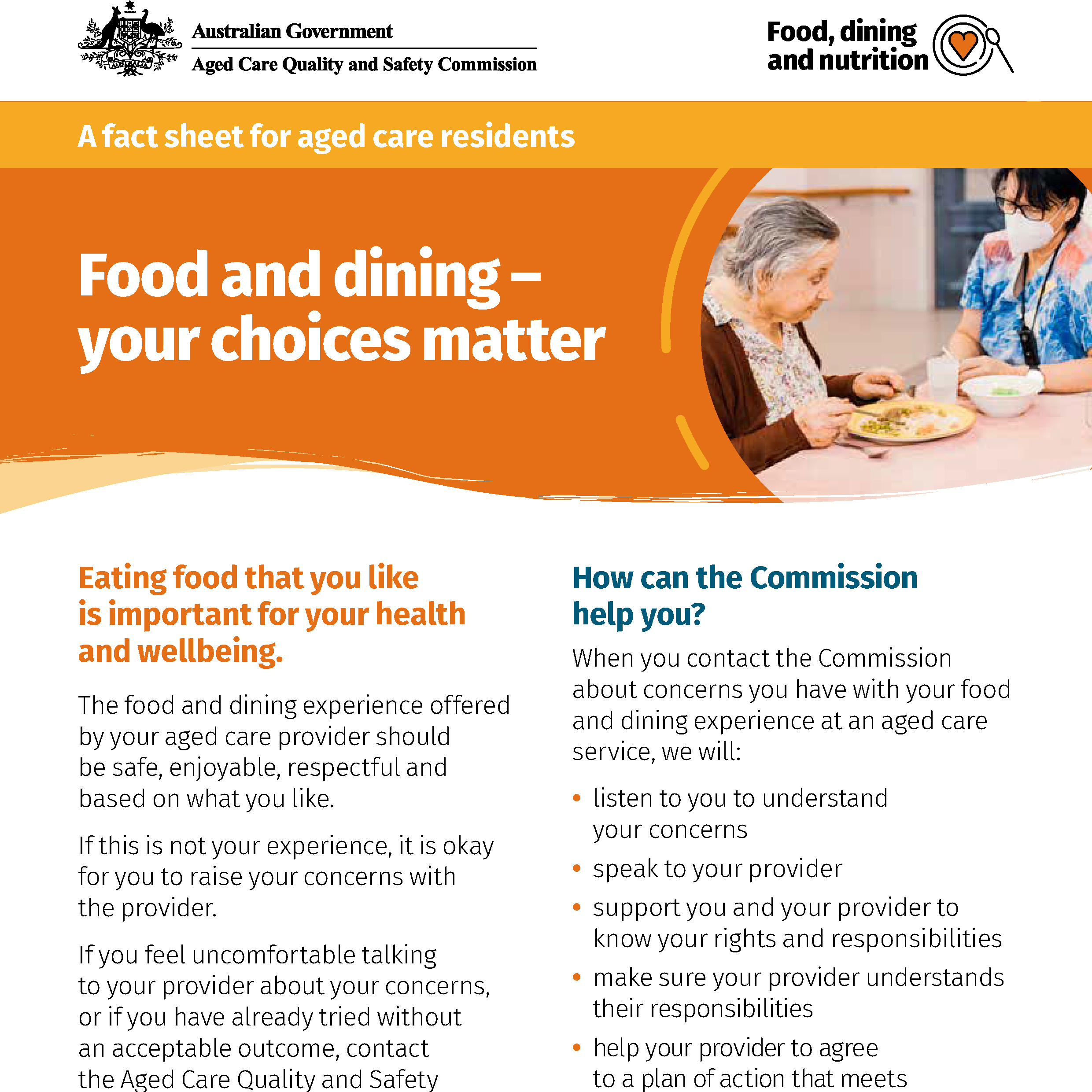
Food and dining - your choices matter
This fact sheet informs aged care residents of their rights to safe, enjoyable, and respectful dining experiences. It outlines steps for raising concerns with providers about food and dining, offers a preference form for residents to communicate their dietary needs, and provides contact information for support services if issues remain unresolved. This resource may refer to information that will be updated from 1 November 2025 to align with the new Aged Care Act and Quality Standards.
English - Food and dining – your choices matter (PDF 484.79 KB)
Arabic - تهمّّنا تفضيلاتكم في الطعام وعادات الأكل (PDF 767.17 KB)
Chinese Simplified - 食品和餐饮—— 您的选择很重要 (PDF 785.39 KB)
Chinese Traditional - 食品和餐飲—— 您的選擇很重要 (PDF 788.7 KB)
French - Alimentation et repas – vos choix sont importants (PDF 684.4 KB)
German - Essen und Speisen – Ihre Wahl zählt (PDF 686.18 KB)
Greek - Φαγητό και γεύματα – οι επιλογές σας έχουν σημασία (PDF 690.89 KB)
Hungarian - Ételek és étkezés – az Ön döntése számít (PDF 684.42 KB)
Macedonian - Храна и јадење - вашиот избор е важен (PDF 683.21 KB)
Maltese - L-ikel u l-ikliet - l-għażliet tiegħek huma importanti (PDF 685.65 KB)
Russian - Питание и прием пищи: ваш выбор имеет значение (PDF 682.53 KB)
Serbian - Храна и обедовање – ваш избор је важан (PDF 681.46 KB)
Spanish - Alimentos y comidas: sus preferencias importan (PDF 679.42 KB)