The Higher Everyday Living Fee (HELF) Regulatory Bulletin covers HELF agreements, supporting choice for older people, bundled services and charging practices. It also describes what the Commission does when providers do not meet their obligations.
 RB 2026-3 - Regulatory Bulletin Higher Everyday Living Fee (PDF 671.88 KB)
Use the Audit Evidence Collection Tool (AECT)- Registration renewal guide to help you complete the Audit Evidence Collection Tool (AECT) – Renewal as part of a renewal of registration audit in categories 4, 5 and 6.
Terms of use for the bulk associated provider notifications API.
API terms of use (PDF 357.08 KB)
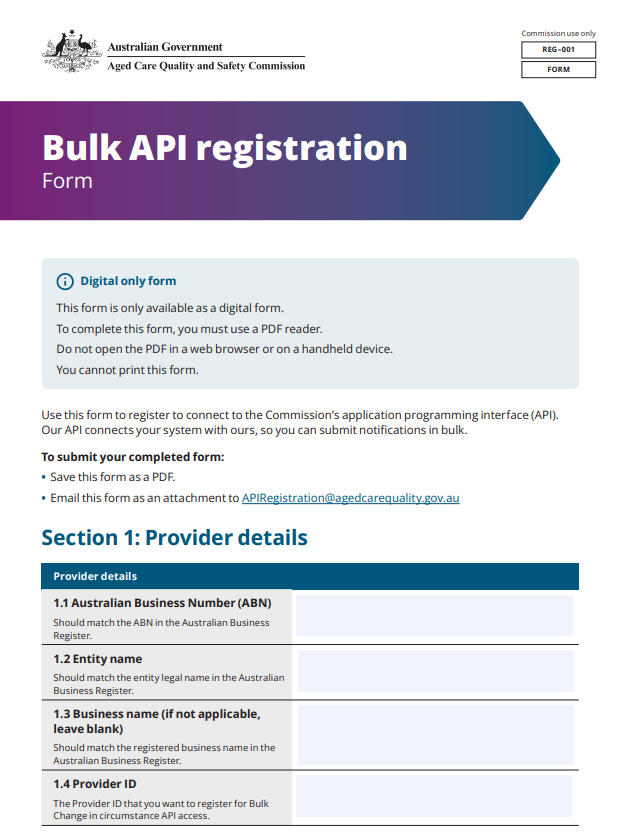
Use this form to register to connect to the Commission’s application programming interface (API). Our API connects your system with ours, so you can submit notifications in bulk.
Bulk API registration form (PDF 336.5 KB)
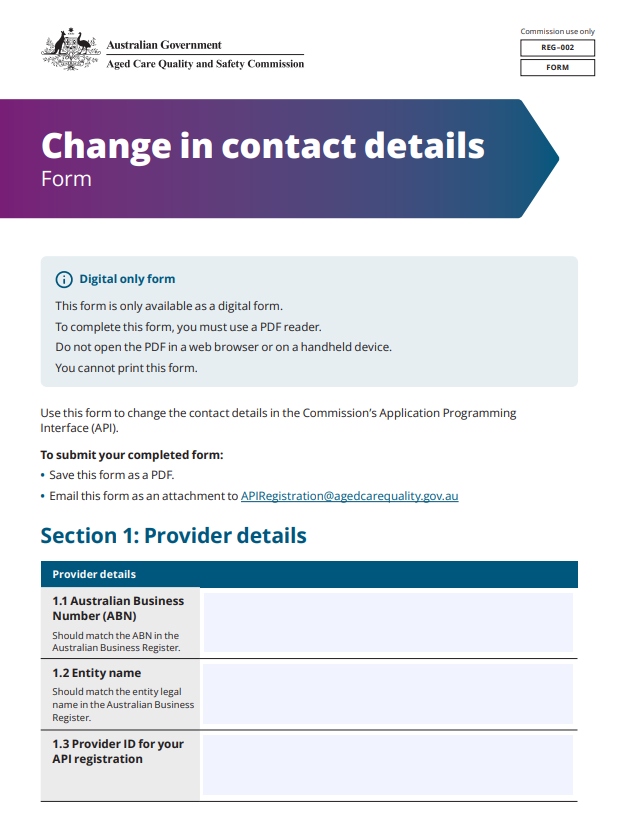
Use this form to change the contact details in the Commission’s Application Programming Interface (API).
Bulk API Change in contact details form (PDF 312.09 KB)
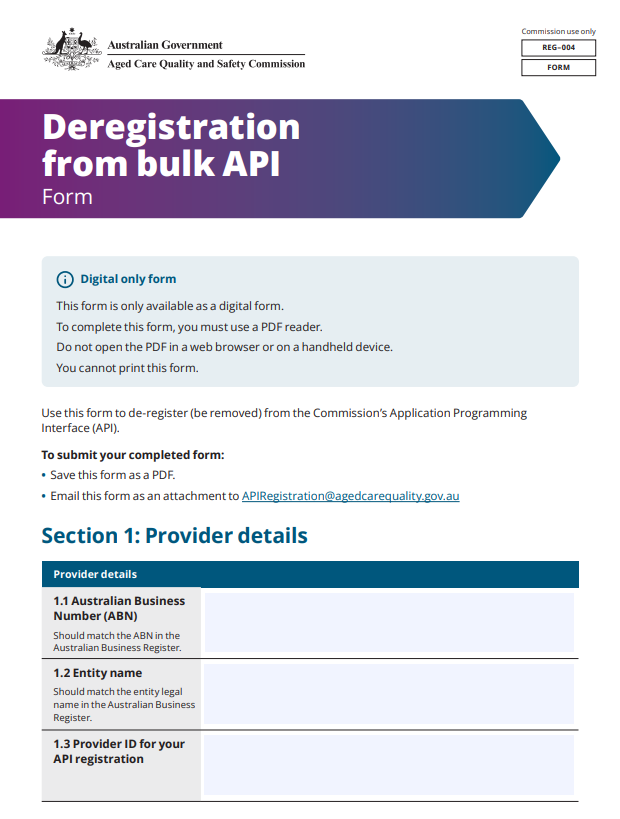
Use this form to de-register (be removed) from the Commission’s Application Programming Interface (API).
Deregistration from bulk API form (PDF 284.19 KB)
This specification sets out the requirements that providers and third-party software operators must meet to achieve and maintain conformance with the Commission’s Associated Provider Notifications Application Program Interface (API).
Associated Provider Notifications API Conformance Specification (PDF 294.55 KB)
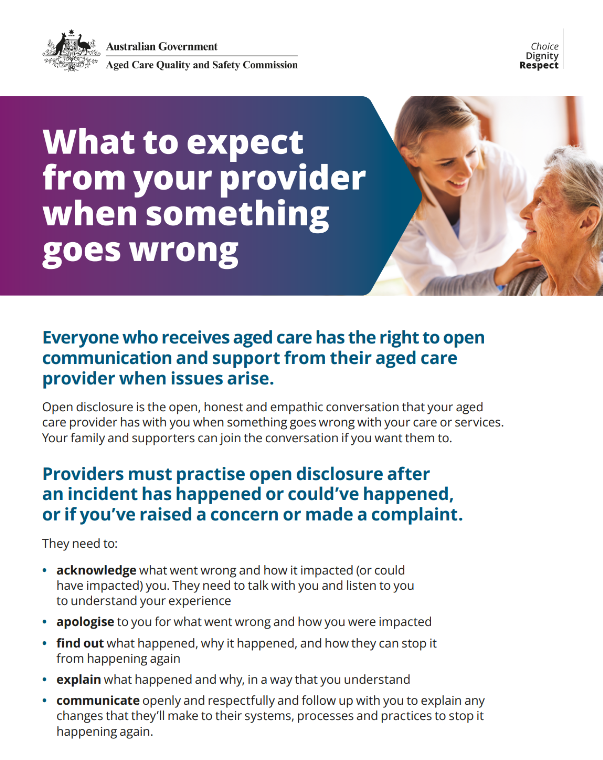
Everyone who receives aged care has the right to open communication and support from their aged care provider when issues arise. Open disclosure is the open, honest and empathic conversation that your aged care provider has with you when something goes wrong with your care or services.
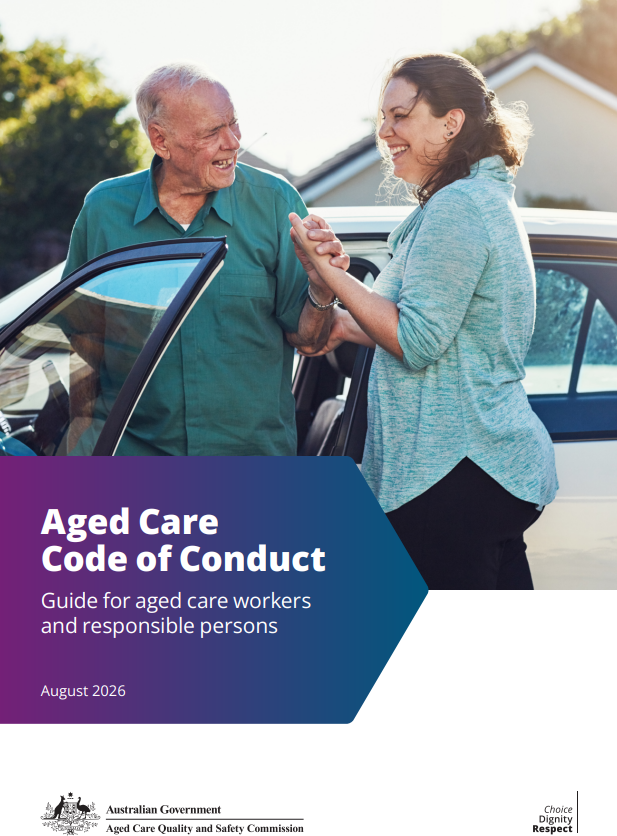
This guide explains the Aged Care Code of Conduct and what it means for workers and responsible persons. It covers:
- the 8 requirements of Code
- behaviour we expect
- behaviour that is unacceptable
- how the Code fits with your broader responsibilities
- how to speak up if something isn’t right.
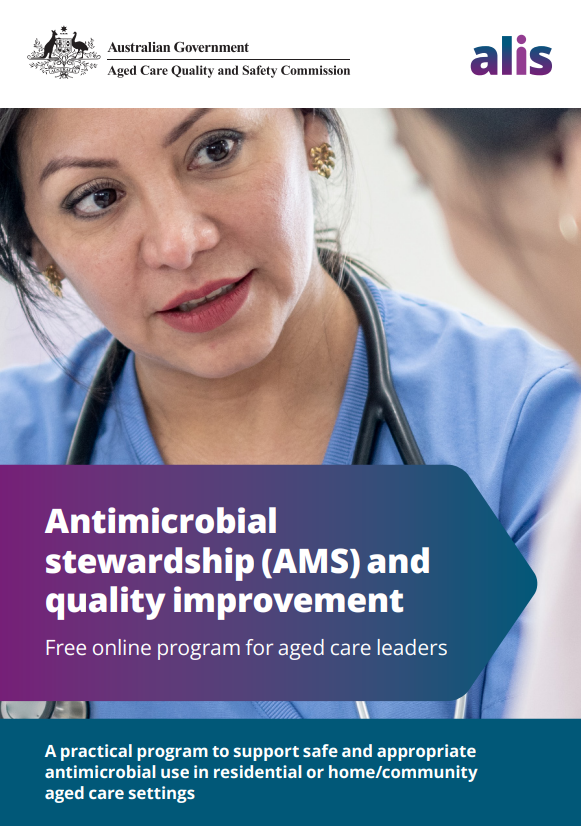
This resource explains the free antimicrobial stewardship and quality improvement program for aged care leaders.
Antimicrobial stewardship (AMS) and quality improvement - flyer (PDF 505.48 KB)
A set of colouring sheets to create fun/educational activities for older people in aged care.

This Cost Recovery Implementation Statement (CRIS) provides information on our charging arrangements (fees) for provider registration, renewal, variation and any associated audits.
2026-27 Cost Recovery Implementation Statement (PDF 693.27 KB)
This toolkit supports community organisations to distribute and promote information to older people, their families and supporters about key topics including:

Older people receiving aged care now have stronger rights and protections under the Aged Care Act 2024.
This means older people have the right to make decisions about their care, be treated with dignity and respect, feel safe, and have their culture, identity and preferences respected.
Watch Aged Care Quality and Safety Commissioner, Liz Hefren-Webb's message to learn more about aged care rights, speaking up, and the support available.
This toolkit supports providers and workers to engage with older people, their families and supporters about their rights in aged care, raising concerns and the role of the Commission.
This toolkit supports stakeholders to engage with:
- older people, their families and supporters about their rights in aged care, raising concerns and the role of the Commission
- providers and workers about their obligations in supporting older people to understand their rights and how to raise concerns.
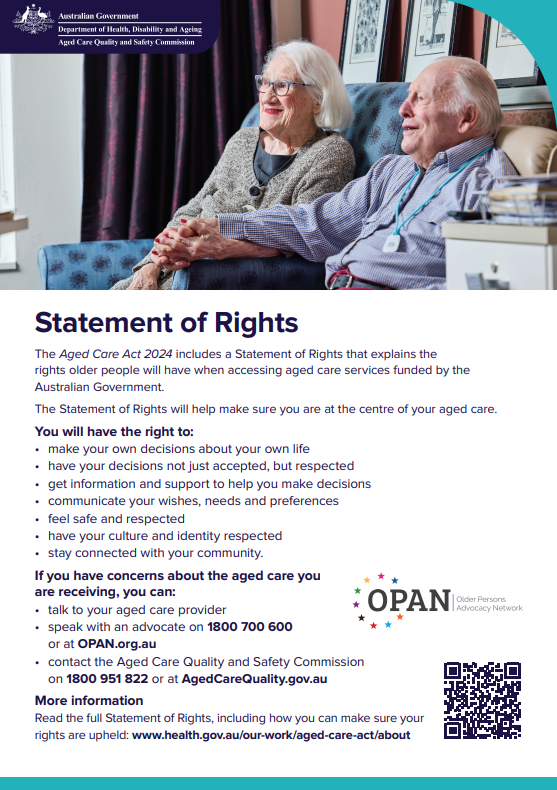
The Aged Care Act 2024 includes a Statement of Rights that explains the rights older people will have when accessing aged care services funded by the Australian Government. The following fact sheet provides an overview of these rights.
Statement of Rights - fact sheet (PDF 2.27 MB)
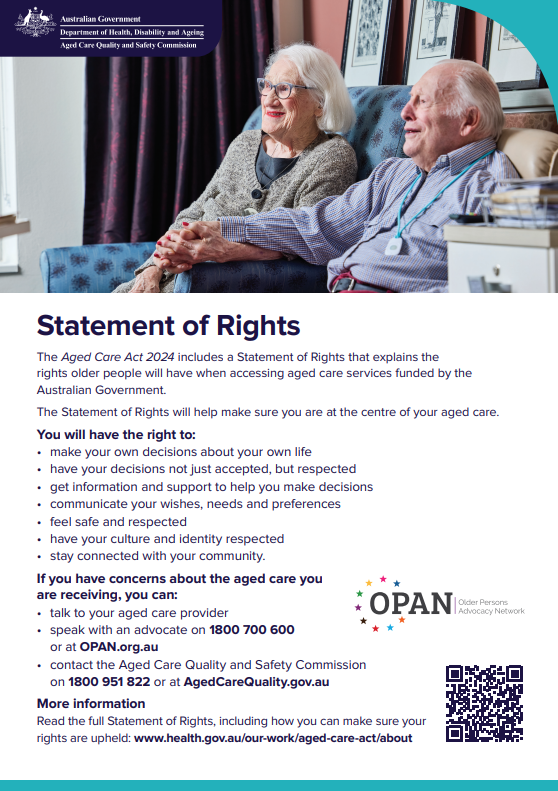
The Aged Care Act 2024 includes a Statement of Rights that explains the rights older people will have when accessing aged care services funded by the Australian Government. The following poster provides an overview of these rights.
Statement of Rights - poster (PDF 2.26 MB)
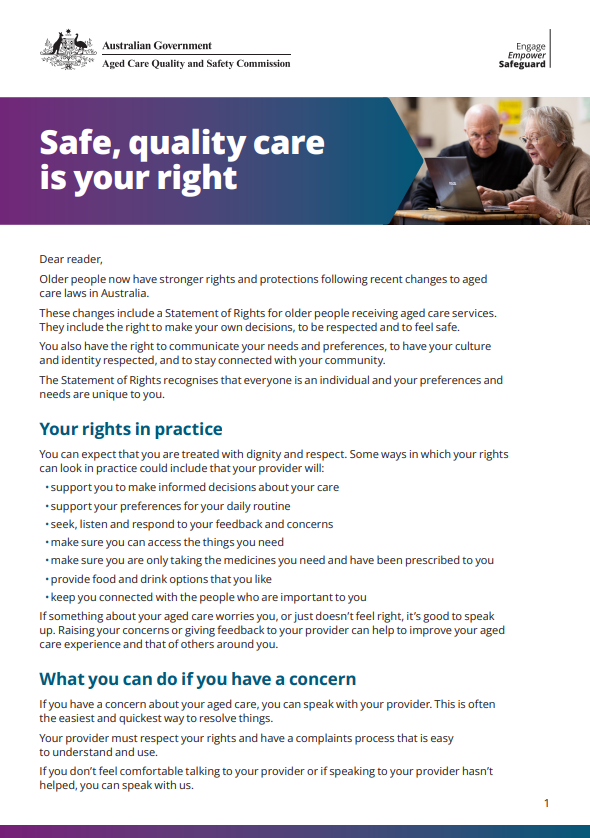
A letter to older people, families and supporters from the Commissioner and the Aged Care Complaints Commissioner explaining the Statement of Rights, the role of the provider in supporting older people to raise concerns and the role of the Commission.
Arabic - الرعاية اآلمنة والجيدة حق لك (PDF 4.96 MB)
Chinese Simplified - 获得安全、优质的照 护是您的权利 (PDF 5.08 MB)
Chinese Traditional - 獲得安全、優質的 照護是您的權利 (PDF 4.95 MB)
Croatian - Sigurna i kvalitetna skrb je vaše pravo (PDF 4.9 MB)
Gujarati - સલામત, ગુણવત્તા સંભાળ એ તમારો હક્્ક છ (PDF 5.09 MB)
Hindi - सुरक्षित, गुणवत्तापूर््वक देखभाल आपका अधिकार ह (PDF 5.09 MB)
Macedonian - Безбедната и квалитетна нега е ваше право (PDF 4.89 MB)
Maltese - Kura sigura u ta’ kwalità huwa d-dritt tiegħek (PDF 4.91 MB)
Nepali - सुरक्षित, गुणस््तरीय हेरचाह तपाईंको अधिकार हो (PDF 5.09 MB)
Punjabi - ਸੁਰੱਖਿਅਤ, ਗੁਣਵੱਤਾ ਭਰਪੂਰ ਦੇਖਭਾਲ ਤੁਹਾਡਾ ਅਧਿਕਾਰ ਹ (PDF 4.91 MB)
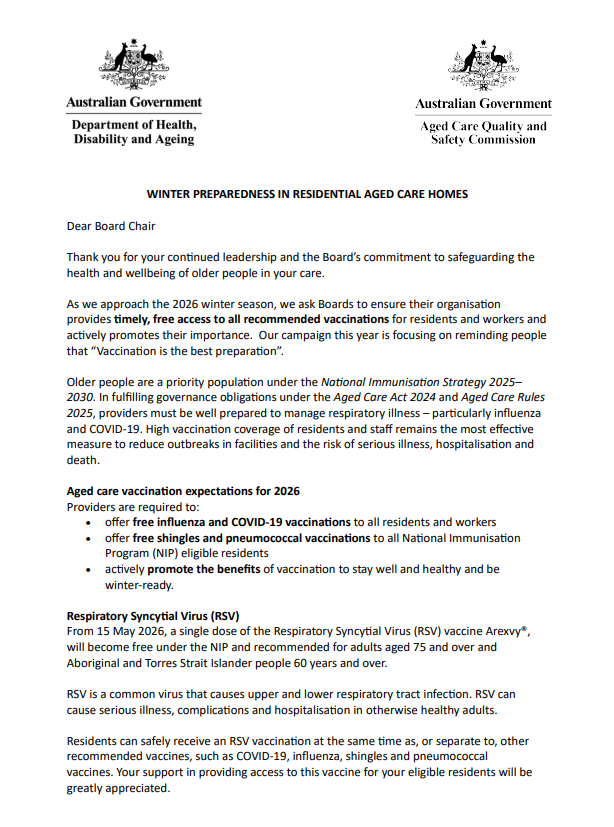
As the 2026 winter season approaches, Boards of residential aged care providers are asked to ensure their organisation provides timely, free access to all recommended vaccinations for residents and workers and actively promotes their importance.
Joint letter on winter preparedness in residential aged care (PDF 295.98 KB)