The Quality Standards Resource Centre helps extend understanding of the strengthened Aged Care Quality Standards, which took effect from 1 November 2025. You can search for resources by using keywords, or filtering by standard, outcome and audience. Before using the Resource Centre, please read the terms of use.
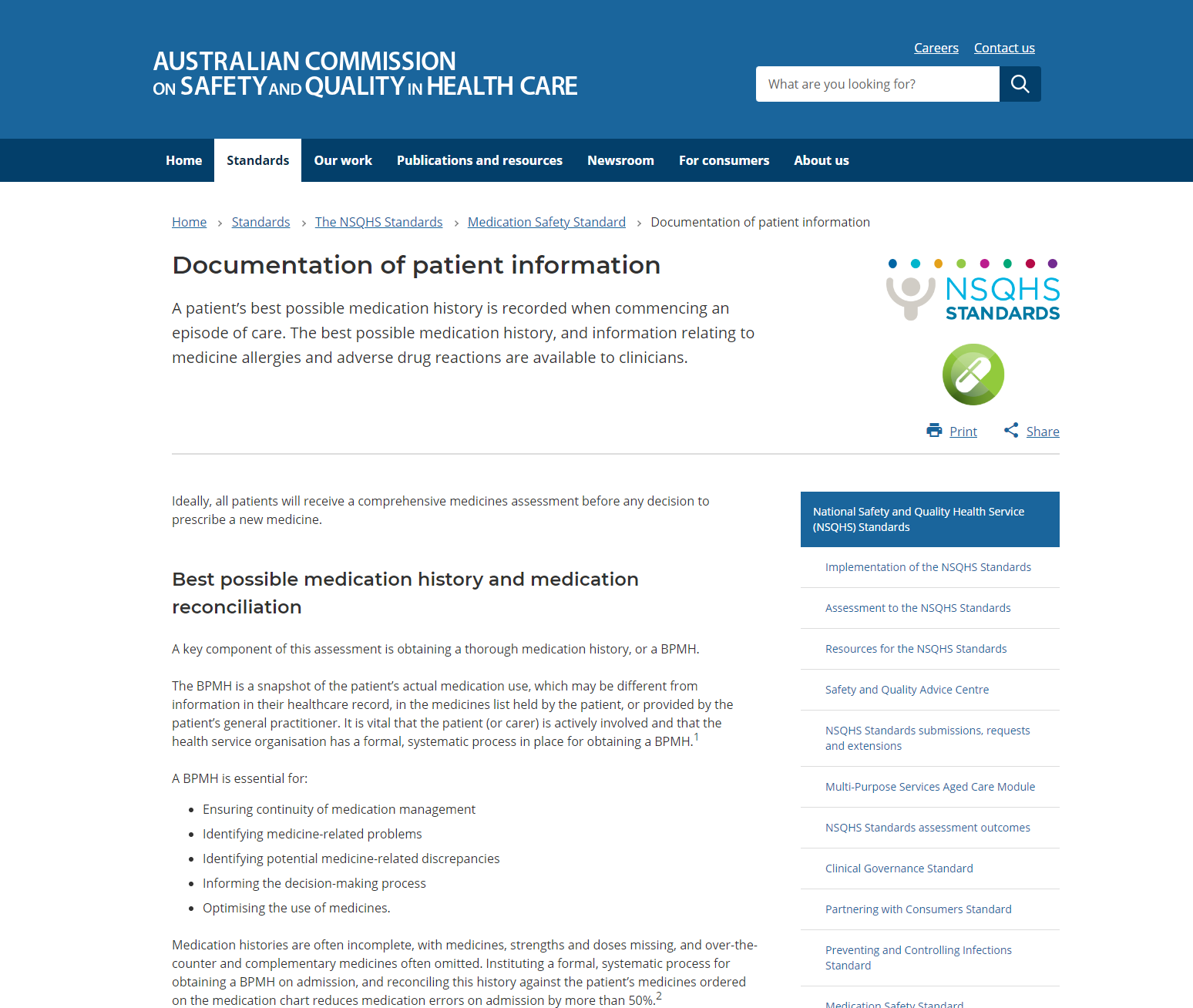
Documentation of patient information
This resource outlines best practices for documenting patient information related to medication history and adverse drug reactions. It provides guidance on obtaining the best possible medication history (BPMH), reconciling medications at care transitions, and recording known allergies. The resource helps aged care providers ensure accurate medication management, reduce errors, and prevent harm from adverse drug events.
This resource may apply to healthcare contexts outside of aged care. Please consider the applicability of this resource to your care setting.
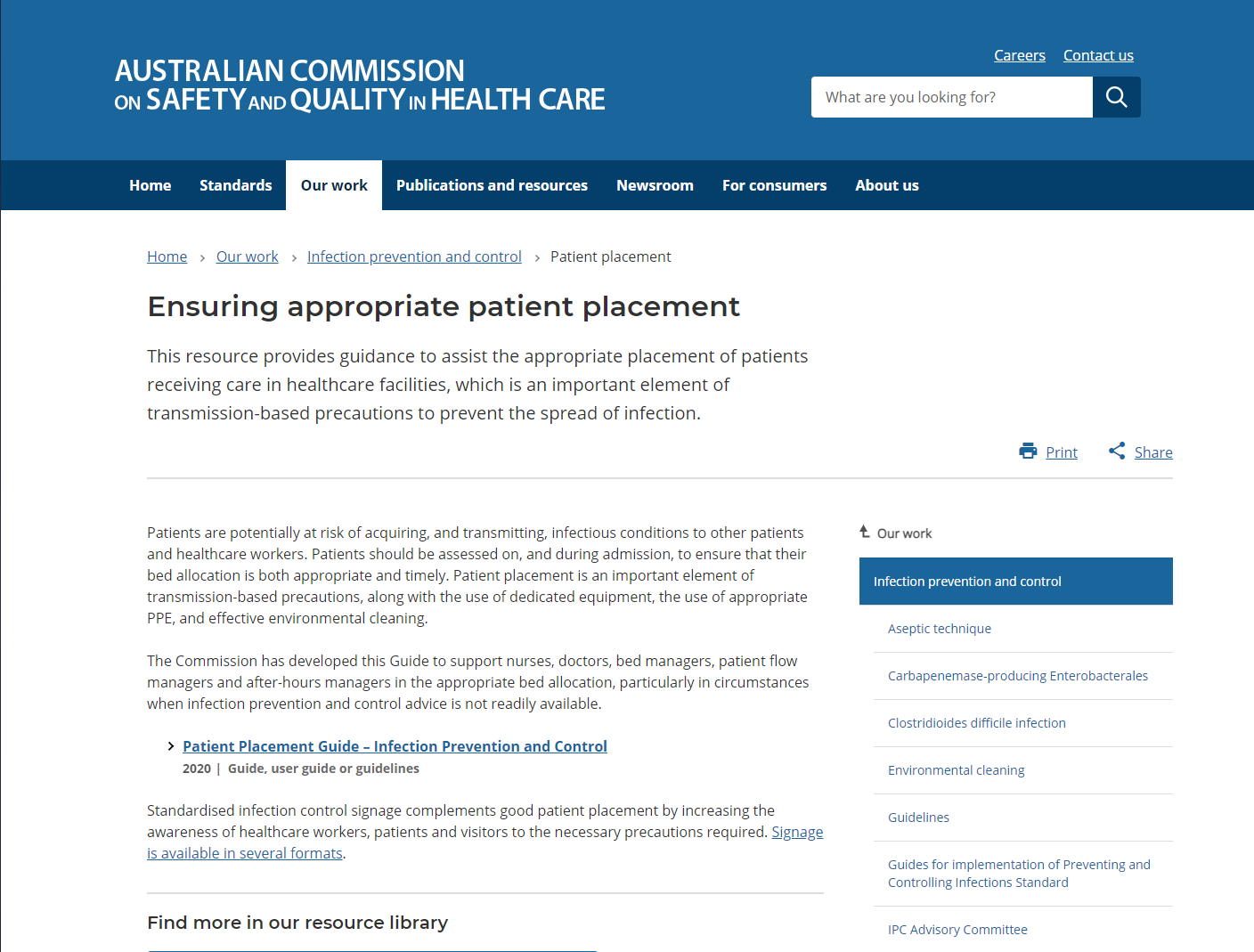
Ensuring appropriate patient placement
This resource provides guidance on ensuring appropriate patient placement in healthcare settings to prevent the spread of infections. It supports healthcare workers in assessing and allocating beds based on infection risks, promoting effective use of PPE, dedicated equipment, and environmental cleaning as part of transmission-based precautions.
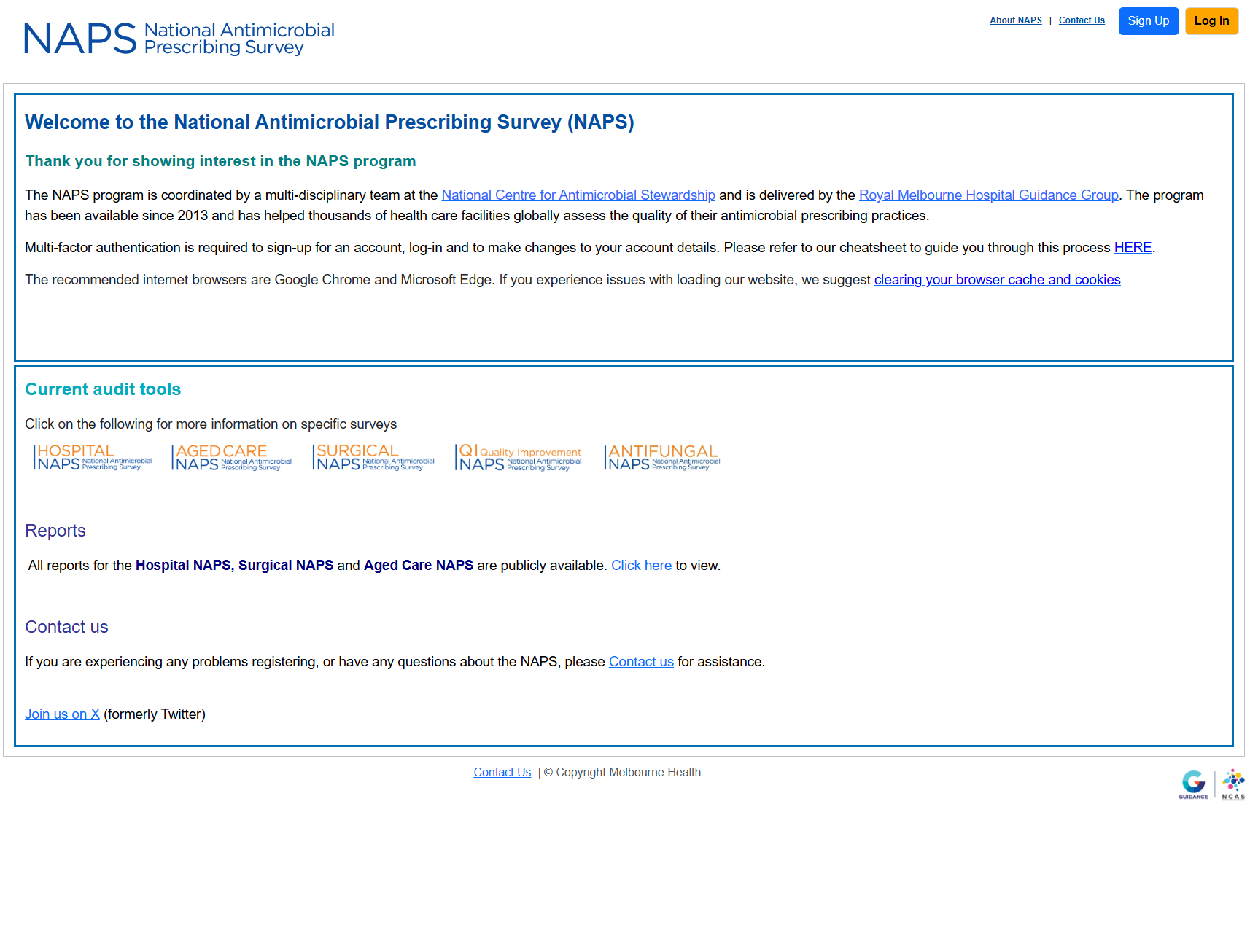
National Antimicrobial Prescribing Survey (NAPS)
This survey resource provides a framework for assessing antimicrobial prescribing practices in aged care and other health settings. It supports health facilities in evaluating the appropriateness of antimicrobial use through audit tools and data collection, contributing to antimicrobial stewardship and improved patient care quality.
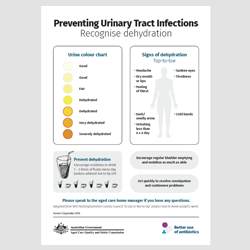
Preventing urinary tract infections: recognise dehydration poster
This provider poster is an educational tool is part of the Commission’s resource bundle to improve antibiotic use for urinary tract infections in aged care services.
 Preventing urinary tract infections (English) (PDF 268.48 KB)
Arabic - الوقاية من التهابات المسالك البولية (PDF 247.14 KB)
Chinese Simplified - 预防尿路感染 (PDF 379.59 KB)
Chinese Traditional - 預防尿路感染 (PDF 214.94 KB)
Croatian - Sprječavanje infekcija mokraćnog sustava (PDF 216.87 KB)
Dari - جلوگیری از عفونتهای مجاری ادراری (PDF 226.51 KB)
Dinka - Pɛ̈n Tuany ë lɛc (PDF 200.17 KB)
Farsi - پیشگیری از عفونت های مجاری ادرار (PDF 224.74 KB)
French - Prévention des infections urinaires (PDF 202.22 KB)
Greek - Πρόληψη Ουρολοιμώξεων (PDF 190.09 KB)
Indonesian - Mencegah Infeksi Saluran Kemih (PDF 200.34 KB)
Italian - Prevenzione delle infezioni del tratto urinario (PDF 200.45 KB)
Khmer - Preventing Urinary Tract Infections (PDF 208.03 KB)
Korean - 요로 감염 예방 (PDF 205.57 KB)
Pashto - د ادرارو د الرې د انتاناتو مخنیوی (PDF 225.71 KB)
Punjabi - ਪਿਸ਼਼ਾਬ ਨਾਲੀ ਦੀਆਂ ਲਾਗਾਂ ਦੀ ਰੋਕਥਾਮ ਕਰਨਾ (PDF 195.34 KB)
Somali - Ka hortaga Caabuqa Goobta Kaadi mareenka (PDF 211.32 KB)
Spanish - Prevención de las Infecciones del Tracto Urinario (PDF 201.38 KB)
Thai - การป้้องกัันโรคติิดเชื้้อในทางเดิินปััสสาวะ (PDF 202.81 KB)
Tamil - சிறுநீர்ப் பாதைத் தொொற்றுகளைத் தடுத்்தல (PDF 208.2 KB)
Turkish - İdrar Yolu Enfeksiyonlarının Önlenmesi (PDF 204.55 KB)
Urdu - پیشاب کے نظام میں انفیکشنوں کی روک تھام (PDF 228.26 KB)
Vietnamese - Đề phòng Nhiễm trùng đường Tiết niệu (PDF 193.49 KB)
Preventing urinary tract infections (English) (PDF 268.48 KB)
Arabic - الوقاية من التهابات المسالك البولية (PDF 247.14 KB)
Chinese Simplified - 预防尿路感染 (PDF 379.59 KB)
Chinese Traditional - 預防尿路感染 (PDF 214.94 KB)
Croatian - Sprječavanje infekcija mokraćnog sustava (PDF 216.87 KB)
Dari - جلوگیری از عفونتهای مجاری ادراری (PDF 226.51 KB)
Dinka - Pɛ̈n Tuany ë lɛc (PDF 200.17 KB)
Farsi - پیشگیری از عفونت های مجاری ادرار (PDF 224.74 KB)
French - Prévention des infections urinaires (PDF 202.22 KB)
Greek - Πρόληψη Ουρολοιμώξεων (PDF 190.09 KB)
Indonesian - Mencegah Infeksi Saluran Kemih (PDF 200.34 KB)
Italian - Prevenzione delle infezioni del tratto urinario (PDF 200.45 KB)
Khmer - Preventing Urinary Tract Infections (PDF 208.03 KB)
Korean - 요로 감염 예방 (PDF 205.57 KB)
Pashto - د ادرارو د الرې د انتاناتو مخنیوی (PDF 225.71 KB)
Punjabi - ਪਿਸ਼਼ਾਬ ਨਾਲੀ ਦੀਆਂ ਲਾਗਾਂ ਦੀ ਰੋਕਥਾਮ ਕਰਨਾ (PDF 195.34 KB)
Somali - Ka hortaga Caabuqa Goobta Kaadi mareenka (PDF 211.32 KB)
Spanish - Prevención de las Infecciones del Tracto Urinario (PDF 201.38 KB)
Thai - การป้้องกัันโรคติิดเชื้้อในทางเดิินปััสสาวะ (PDF 202.81 KB)
Tamil - சிறுநீர்ப் பாதைத் தொொற்றுகளைத் தடுத்்தல (PDF 208.2 KB)
Turkish - İdrar Yolu Enfeksiyonlarının Önlenmesi (PDF 204.55 KB)
Urdu - پیشاب کے نظام میں انفیکشنوں کی روک تھام (PDF 228.26 KB)
Vietnamese - Đề phòng Nhiễm trùng đường Tiết niệu (PDF 193.49 KB)
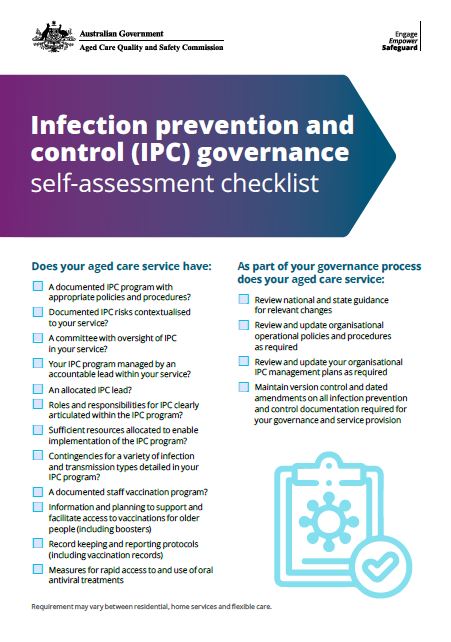
IPC Self assessment checklists
The Aged Care Quality and Safety Commission (the Commission) undertakes a range of regulatory activities to monitor compliance and mitigate risk to aged care consumers. The Commission has incorporated spot check monitoring of infection control practice into its usual regulatory activities. You can find more information about Infection control spot checks here.
To Dip or Not to Dip - Implementation Guide for Nurse and Pharmacist Champions
To Dip or Not to Dip (TDONTD) is a quality improvement intervention successfully implemented in UK and Australian aged care homes to improve UTI assessment and antibiotic prescribing appropriateness.
This implementation guide has been drawn from the experiences of homes and champions who have implemented TDONTD, along with feedback from aged care nurses and personal care assistants who have used TDONTD resources.

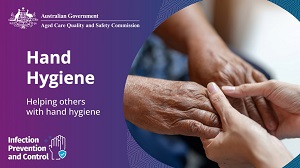
Hand Hygiene - Helping others with hand hygiene
Infection prevention and control helps to stop the spread of germs like bacteria and viruses that cause respiratory infections and gastroenteritis. Hand hygiene is a very important part of this.
In this video you will learn how to clean another person's hands.
Your role in infection prevention and control when visiting an aged care service
Infection prevention and control, also known as IPC, are the steps and processes that people can use to reduce the spread of harmful germs and bacteria.
People who visit aged care services can help support IPC processes.
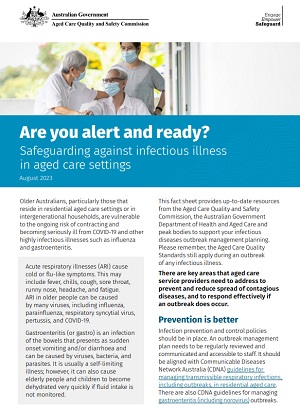
Are you alert and ready? Safeguarding against infectious illness in aged care settings
Older Australians, particularly those that reside in residential aged care settings or in multigenerational households, are vulnerable to the ongoing risk of contracting and becoming seriously ill from COVID-19 and other highly infectious illnesses such as influenza and gastroenteritis.
Partnerships in care – Partner information package
The partner information pack presents information for all people visiting and volunteering in residential aged care services. The resource includes information on the importance of infection prevention and control (IPC), the use of personal protective equipment (PPE), and changes in what you need to do if you visit during an outbreak.
Arabic - الشراكة في الرعاية الرعاية المشتركة (PDF 4.87 MB)
Chinese Simplified - 护理合作伙伴 携手护理 (PDF 4.81 MB)
Chinese Traditional - 護理合作夥伴 攜手護理 (PDF 4.73 MB)
Dutch - Samenwerking in de zorg Samen zorgdragen (PDF 4.34 MB)
German - Pflegepartnerschaften Gemeinsam pflegen (PDF 4.38 MB)
Hungarian - Gondozási partnerség Gondozás közösen (PDF 4.38 MB)
Korean - 돌봄 파트너십 함께하는 돌봄 (PDF 4.87 MB)
Latvian - Aprūpes partnerība Kopīgas rūpes (PDF 4.33 MB)
Macedonian - Партнерства во грижа Да се грижиме заедно (PDF 4.31 MB)
Maltese - Sħubija fil-kura Nieħdu ħsieb flimkien (PDF 4.35 MB)
Polish - Partnerstwo w opiece Wspólna opieka (PDF 4.37 MB)
Portuguese - Parceiros nos cuidados Cuidando juntos (PDF 4.37 MB)
Russian - Партнеры по уходу Заботимся вместе (PDF 4.33 MB)
Spanish - Atención en colaboración Cuidamos juntos (PDF 4.35 MB)
Turkish - Bakım ortaklıkları Birlikte dikkat etmek (PDF 4.32 MB)
Ukrainian - Партнерство у сфері догляду Піклуємося разом (PDF 4.33 MB)
Vietnamese - Quan hệ đối tác chăm sóc Cùng nhau chăm sóc (PDF 4.33 MB)

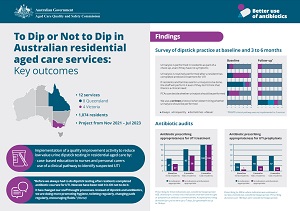
To Dip or Not to Dip in Australian residential aged care services - project findings
This visual abstract presents outcomes from a quality improvement project aimed at reducing low-value urine dipstick testing in aged care services. It included nurse education, implementing clinical pathways for UTI identification, and evaluating urinalysis practices and antibiotic prescribing. The findings demonstrate improved antibiotic prescribing appropriateness for UTIs over a 6-month follow-up period.
This resource may refer to information that will be updated from 1 November 2025 to align with the new Aged Care Act and Quality Standards.
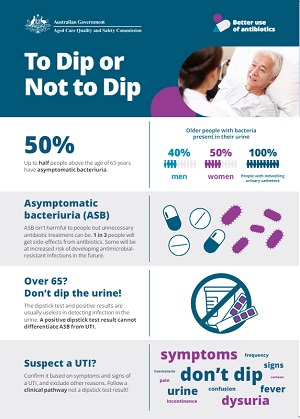
To Dip or Not to Dip - huddle tool A3 poster
This huddle tool poster provides guidance on appropriate use of urine dipstick tests in older adults. It explains that asymptomatic bacteriuria (ASB) is common and not harmful, but that unnecessary antibiotic treatment can be. It suggests confirming urinary tract infections (UTIs) through clinical symptoms rather than dipstick results.
This resource may refer to information that will be updated from 1 November 2025 to align with the new Aged Care Act and Quality Standards.
To Dip or Not to Dip - huddle tool A3 poster (PDF 393.96 KB)
Better use of medications in aged care
This discussion paper explores strategies to improve medication management in aged care, including reducing inappropriate prescriptions and promoting non-pharmacological interventions. It reviews current interventions' effectiveness, highlights the use of psychotropic medications, and identifies areas for improving practices through multifaceted and multidisciplinary approaches for better resident outcomes and healthcare quality.
This resource may refer to information that will be updated from 1 November 2025 to align with the new Aged Care Act and Quality Standards.
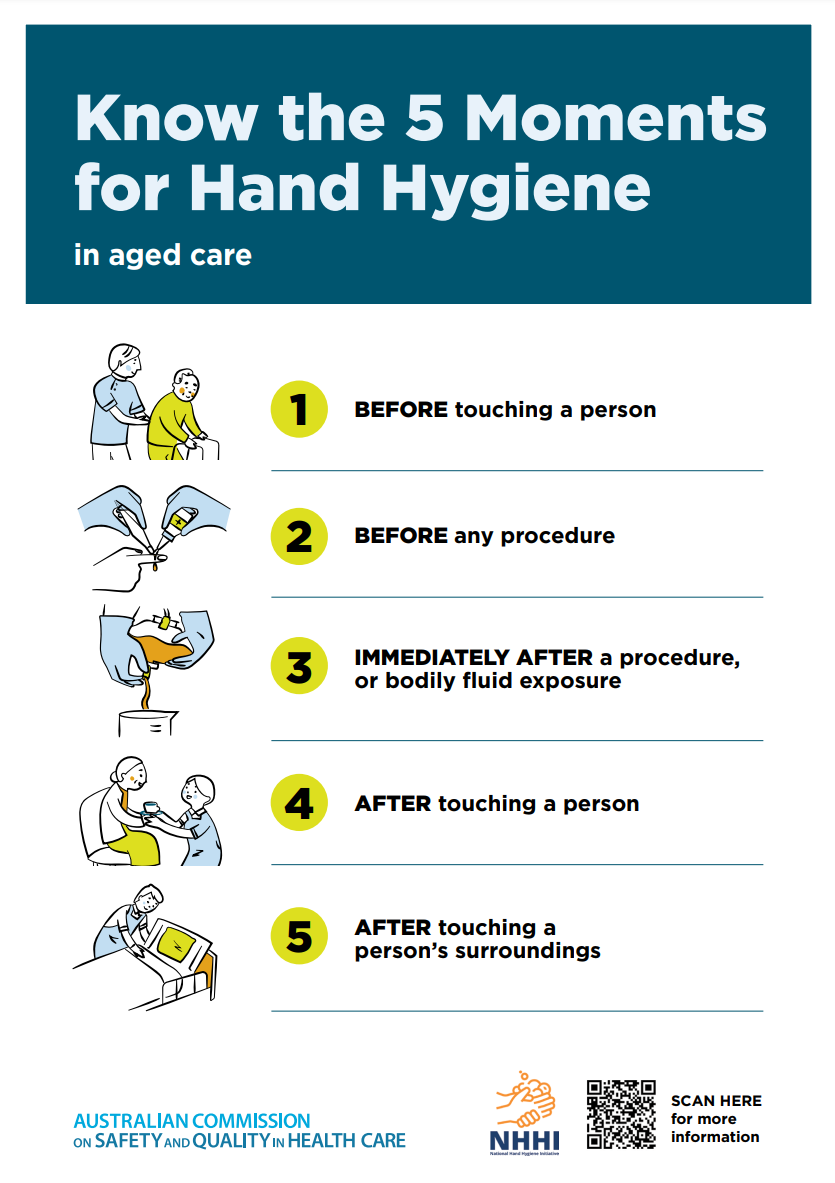
The 5 Moments for Hand Hygiene in aged care
This resource is a poster outlining the ‘5 Moments for Hand Hygiene’ in aged care settings. It provides clear guidance on when to perform hand hygiene: before touching a person, before a procedure, immediately after a procedure or bodily fluid exposure, after touching a person, and after touching a person's surroundings.
This resource may refer to information that will be updated from 1 November 2025 to align with the new Aged Care Act and Quality Standards.
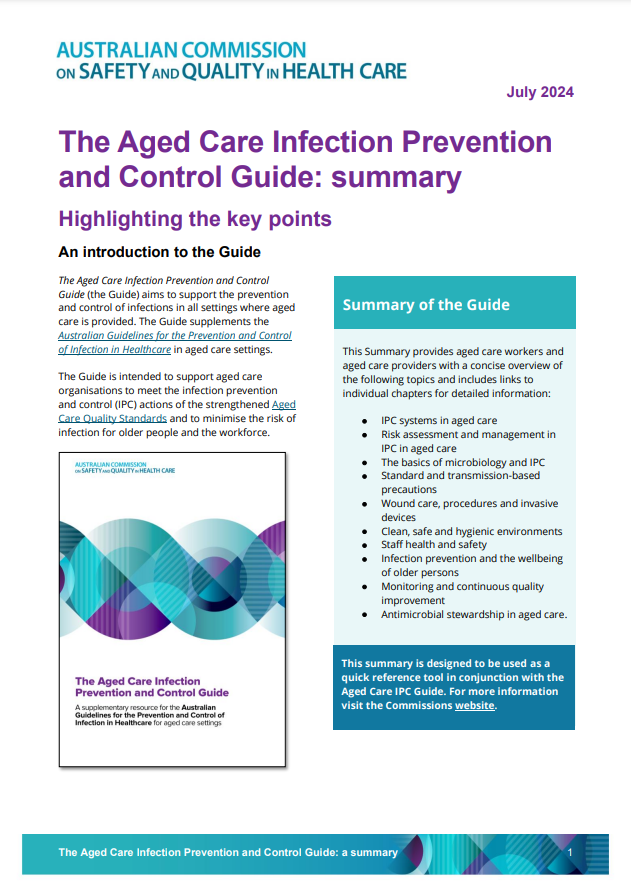
The Aged Care Infection Prevention and Control Guide: summary resource
This summary provides an overview of the Aged Care Infection Prevention and Control (IPC) Guide. It includes key topics such as IPC systems, risk assessment, standard and transmission-based precautions, staff health and safety, antimicrobial stewardship, and continuous quality improvement. It supports aged care providers in maintaining infection control standards.
This resource may refer to information that will be updated from 1 November 2025 to align with the new Aged Care Act and Quality Standards.
The Australian Immunisation Handbook
This resource provides clinical advice for health professionals on the safe and effective use of vaccines. It includes guidelines for vaccine administration, special risk groups, and updates on vaccine-preventable diseases. The handbook is a comprehensive reference for ensuring the best immunisation practices, particularly important in protecting vulnerable populations, including those in aged care.
This resource may refer to information that will be updated from 1 November 2025 to align with the new Aged Care Act and Quality Standards.
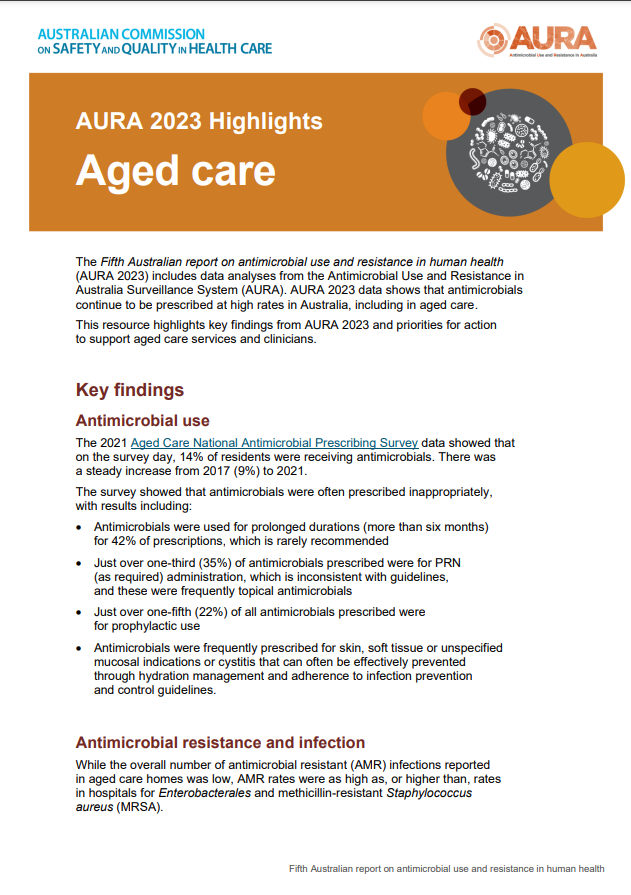
AURA 2023 Highlights for Aged care
This resource summarises key findings from the AURA 2023 report, focusing on antimicrobial use and resistance in aged care. It provides priorities for action to reduce inappropriate prescriptions, promote antimicrobial stewardship, and improve infection prevention and control in aged care settings, aligning with quality standards to enhance care for older people.
This resource may refer to information that will be updated from 1 November 2025 to align with the new Aged Care Act and Quality Standards.
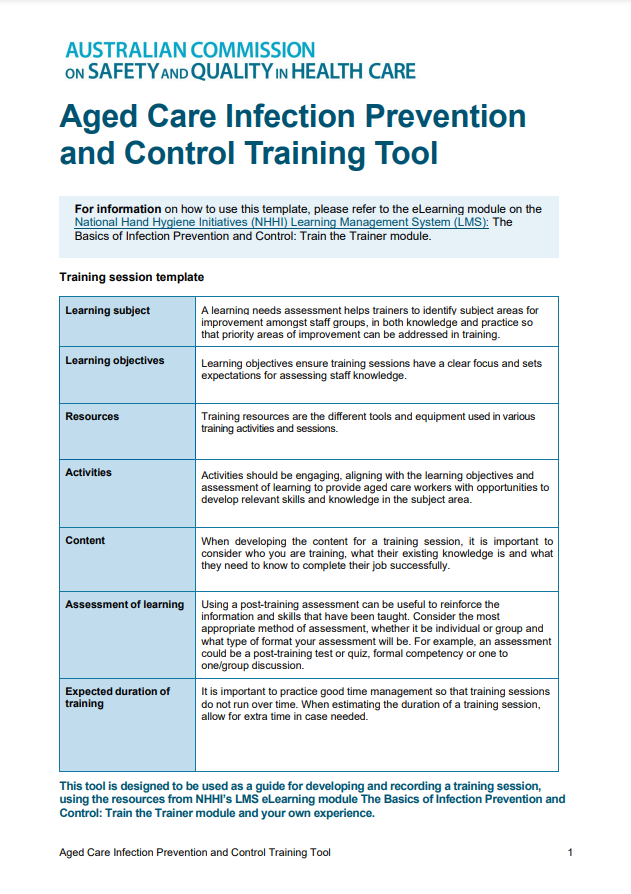
Aged Care Infection Prevention and Control Training Tool
This resource is a training tool designed to help develop and record infection prevention and control training sessions in aged care. It includes templates for learning objectives, content development, and assessment methods, ensuring effective delivery of key infection control practices using structured guidance and eLearning resources.
This resource may refer to information that will be updated from 1 November 2025 to align with the new Aged Care Act and Quality Standards.
The Aged Care Infection Prevention and Control Guide
This resource outlines the basic principles of infection prevention and control and explains how to apply these principles using a risk-based approach. The guide supports implementation of the strengthened Aged Care Quality Standards. It is a supplementary resource for the Australian Guidelines for the Prevention and Control of Infection in Healthcare for aged care settings.
This resource may refer to information that will be updated from 1 November 2025.
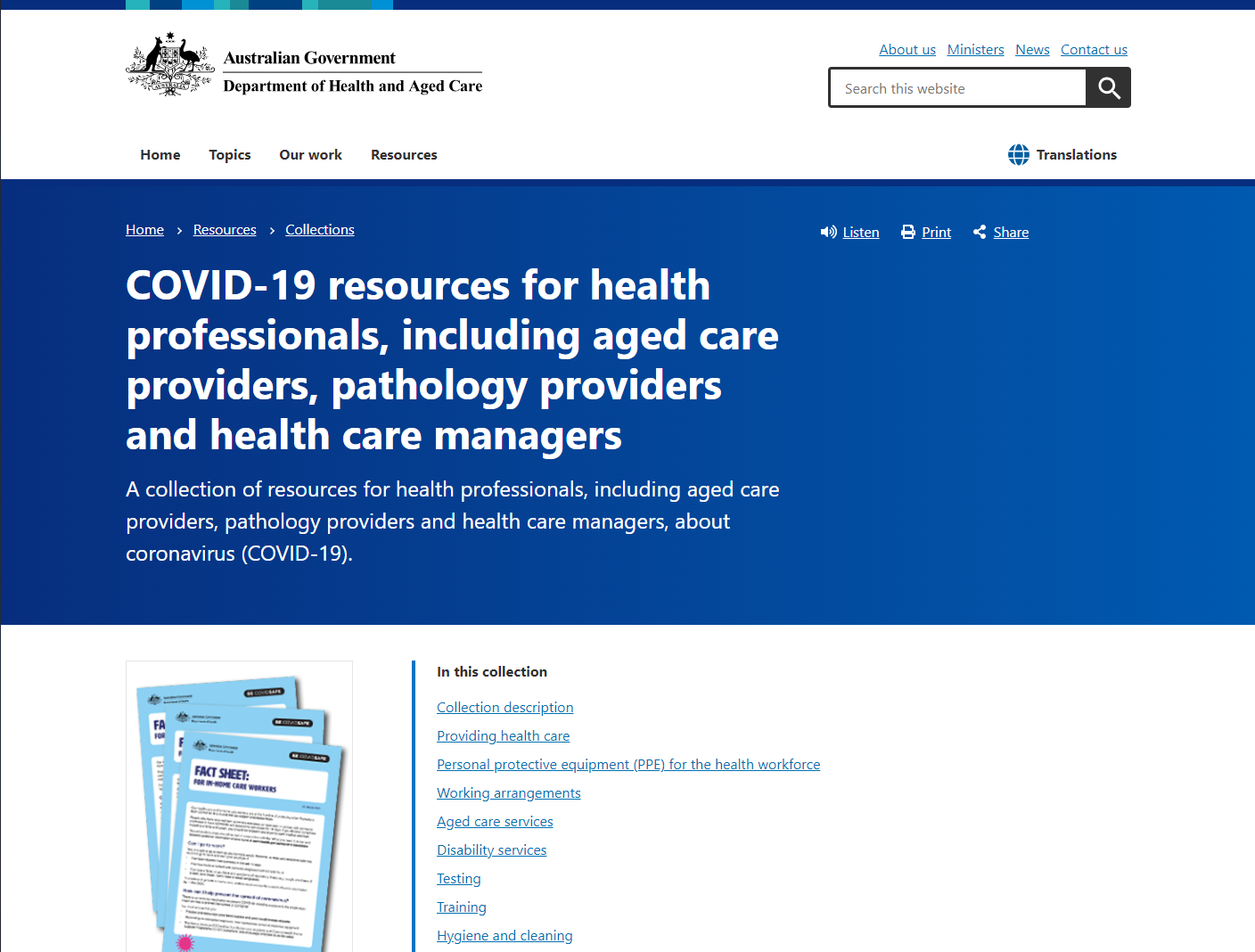
COVID-19 resources for health professionals, including aged care providers, pathology providers and health care managers
This resource offers COVID-19 guidance for health professionals and aged care providers. It includes information on managing outbreaks, infection control, PPE use, and telehealth services. These resources support safe and effective care delivery while ensuring compliance with guidelines during the pandemic in aged care settings.
This resource may refer to information that will be updated from 1 November 2025 to align with the new Aged Care Act and Quality Standards.