The Quality Standards Resource Centre helps extend understanding of the strengthened Aged Care Quality Standards, which took effect from 1 November 2025. You can search for resources by using keywords, or filtering by standard, outcome and audience. Before using the Resource Centre, please read the terms of use.
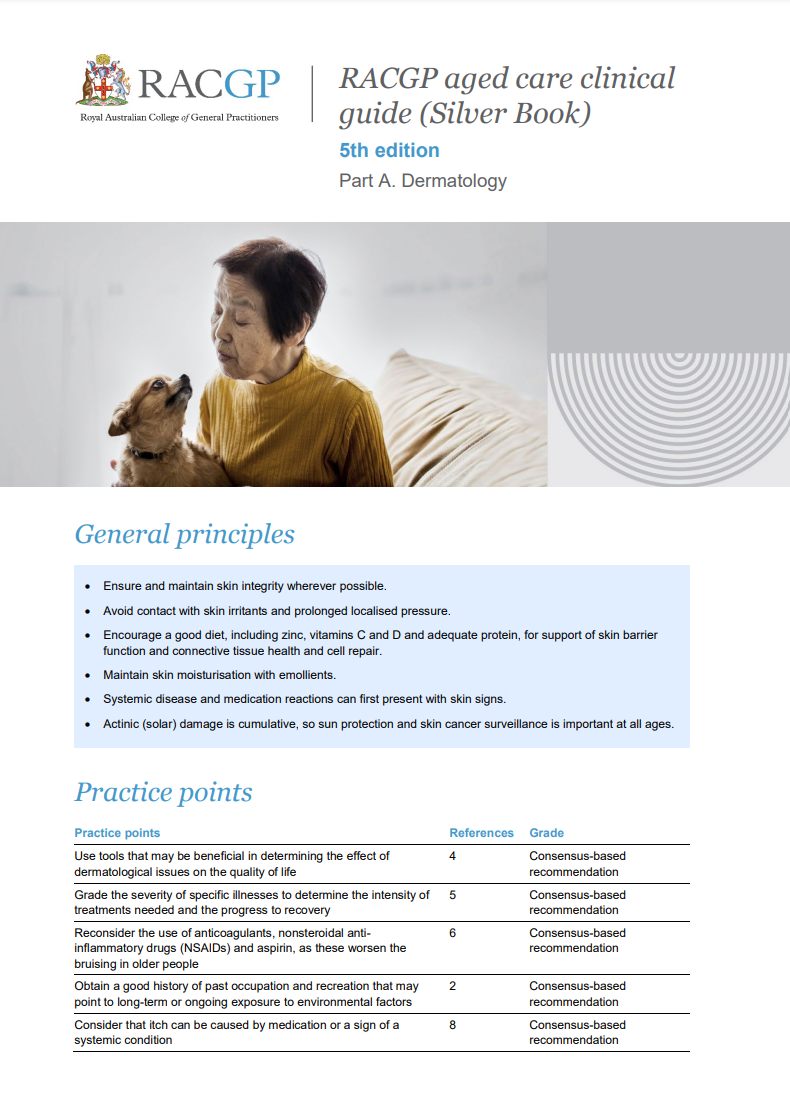
RACGP aged care clinical guide (Silver Book) - Part A - Dermatology
This guide provides recommendations for dermatological care in older adults, addressing skin integrity, sun damage, bruising, and wound management. It highlights factors affecting skin health, like systemic disease, medication, and environmental exposure. It recommends regular skin assessments, non-pharmacological interventions, moisturisation, and tailored approaches for managing conditions like ulcers, pruritus, and skin cancer in aged care settings.
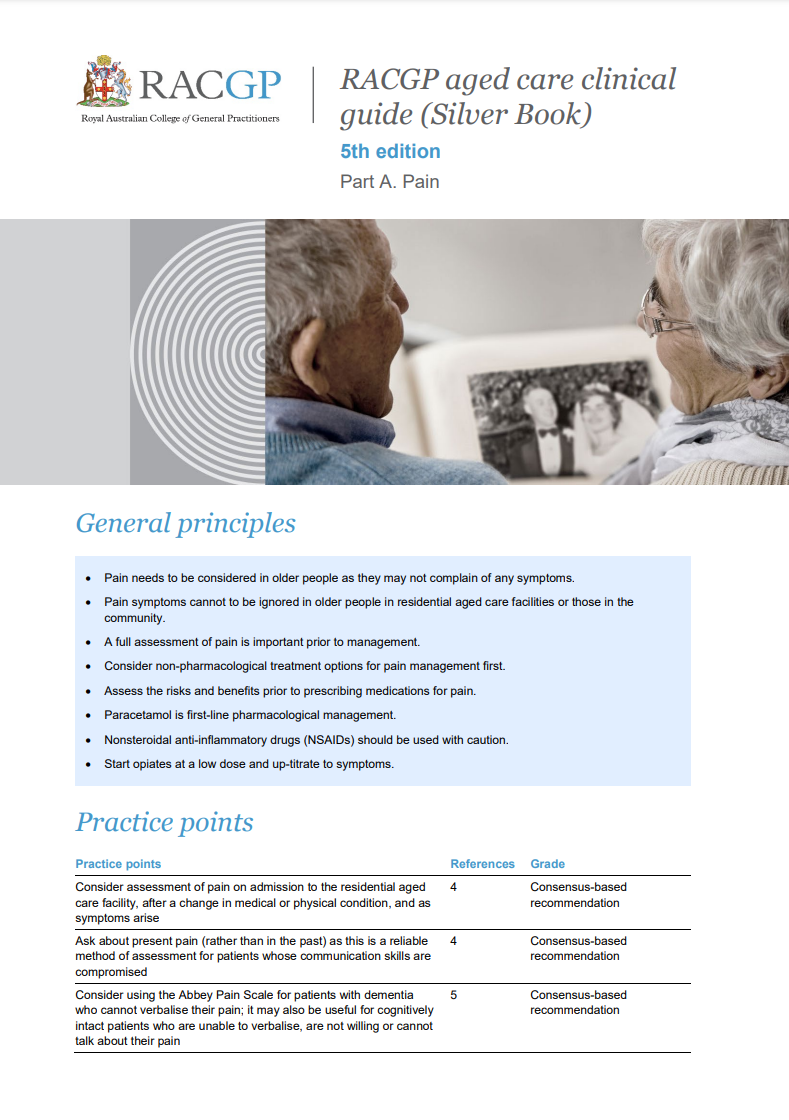
RACGP aged care clinical guide (Silver Book) - Part A - Pain
This guide provides strategies for managing pain in older adults in aged care, focusing on assessment, non-pharmacological treatments, and pharmacological interventions. It includes practice points on appropriate medication use, considerations for pain assessment tools, and recommendations for safe management, including tailored care and treatment monitoring to improve quality of life.
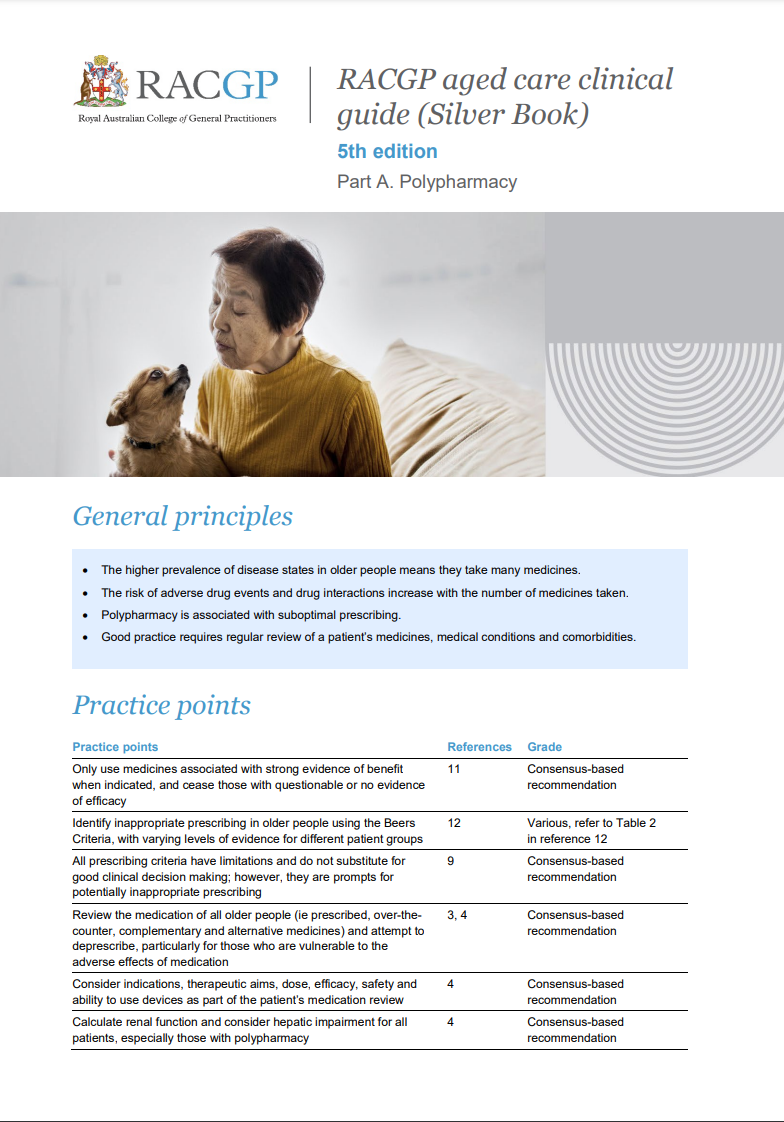
RACGP aged care clinical guide (Silver Book) - Part A - Polypharmacy
This guide addresses polypharmacy in aged care, focusing on identifying inappropriate prescribing and reviewing all medications, including prescription, over-the-counter and complementary and alternative medicines. It includes recommendations for reducing medication use through deprescribing, ensuring medication safety, and regular review of renal and hepatic functions. Tools such as Beers Criteria and other screening frameworks are provided to support optimal medication management in older adults.
RACGP aged care clinical guide (Silver Book) - Part A - Deprescribing
This guide focuses on deprescribing in aged care, aiming to reduce unnecessary or potentially harmful medications. It provides a framework for reviewing medication, assessing risks and benefits, developing tapering plans, and involving multidisciplinary teams. It provides recommendations including; patient-cantered communication, establishing written plans for medication withdrawal, and monitoring outcomes to improve quality of life.
RACGP aged care clinical guide (Silver Book) - Part B - Abuse of older people
This resource provides guidance on recognising, assessing, and managing abuse of older people in various settings, including residential aged care. It covers types of abuse (financial, emotional, physical, sexual, neglect), risk factors, barriers to disclosure, and steps for prevention. The document also includes recommendations for safety planning, intervention strategies, and resources for support across Australian states and territories.
To Dip or Not to Dip - Implementation Guide for Nurse and Pharmacist Champions
To Dip or Not to Dip (TDONTD) is a quality improvement intervention successfully implemented in UK and Australian aged care homes to improve UTI assessment and antibiotic prescribing appropriateness.
This implementation guide has been drawn from the experiences of homes and champions who have implemented TDONTD, along with feedback from aged care nurses and personal care assistants who have used TDONTD resources.

Are you alert and ready? Safeguarding against infectious illness in aged care settings
Older Australians, particularly those that reside in residential aged care settings or in multigenerational households, are vulnerable to the ongoing risk of contracting and becoming seriously ill from COVID-19 and other highly infectious illnesses such as influenza and gastroenteritis.
Colouring, conversation, creativity and care
These colouring resources have been designed specifically for the Aged Care Quality and Safety Commission with the intention of providing a multifaceted creative experience for older Australians living in residential or home aged care settings, and for the people who care for them.
 fnd-colouring-resources-engagement-pages.pdf (PDF 1.72 MB)
fnd-colouring-resources-instructions.pdf (PDF 3.86 MB)
fnd-colouring-resources-engagement-pages.pdf (PDF 1.72 MB)
fnd-colouring-resources-instructions.pdf (PDF 3.86 MB)
Tips for engaging with Elders
This resource provides tips for engaging with Elders from Aboriginal communities. It includes practical advice for communicating and engaging in a respectful way, with a focus on awareness and understanding of the person and their community.
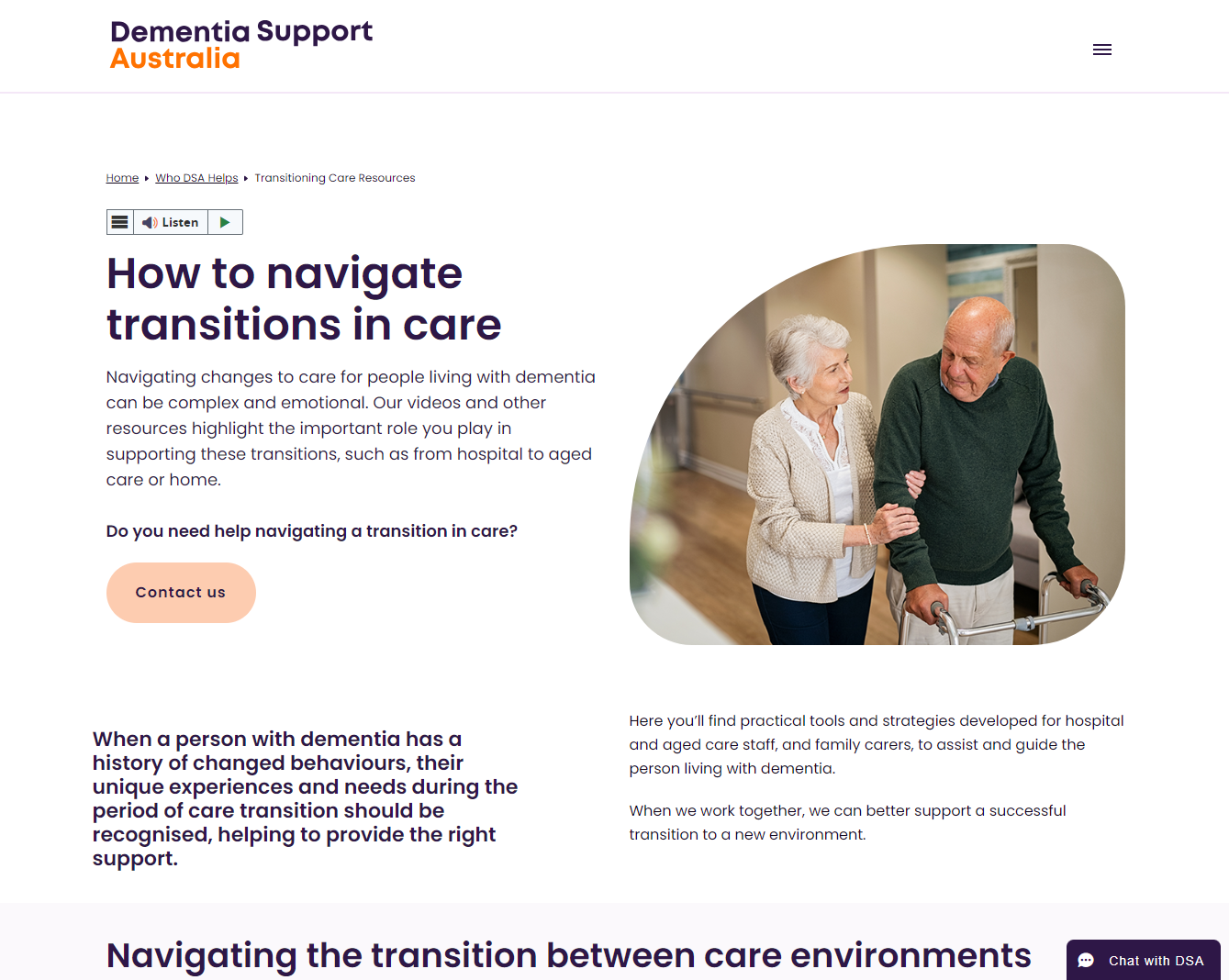
How to navigate transitions in care
This resource offers tools and strategies for navigating care transitions for people living with dementia. It provides support to hospital, aged care staff, and family carers, ensuring that the unique needs of those with dementia are met during transitions, such as moving from hospital to aged care or home.
Partnerships in care – Partner information package
The partner information pack presents information for all people visiting and volunteering in residential aged care services. The resource includes information on the importance of infection prevention and control (IPC), the use of personal protective equipment (PPE), and changes in what you need to do if you visit during an outbreak.
Arabic - الشراكة في الرعاية الرعاية المشتركة (PDF 4.87 MB)
Chinese Simplified - 护理合作伙伴 携手护理 (PDF 4.81 MB)
Chinese Traditional - 護理合作夥伴 攜手護理 (PDF 4.73 MB)
Dutch - Samenwerking in de zorg Samen zorgdragen (PDF 4.34 MB)
German - Pflegepartnerschaften Gemeinsam pflegen (PDF 4.38 MB)
Hungarian - Gondozási partnerség Gondozás közösen (PDF 4.38 MB)
Korean - 돌봄 파트너십 함께하는 돌봄 (PDF 4.87 MB)
Latvian - Aprūpes partnerība Kopīgas rūpes (PDF 4.33 MB)
Macedonian - Партнерства во грижа Да се грижиме заедно (PDF 4.31 MB)
Maltese - Sħubija fil-kura Nieħdu ħsieb flimkien (PDF 4.35 MB)
Polish - Partnerstwo w opiece Wspólna opieka (PDF 4.37 MB)
Portuguese - Parceiros nos cuidados Cuidando juntos (PDF 4.37 MB)
Russian - Партнеры по уходу Заботимся вместе (PDF 4.33 MB)
Spanish - Atención en colaboración Cuidamos juntos (PDF 4.35 MB)
Turkish - Bakım ortaklıkları Birlikte dikkat etmek (PDF 4.32 MB)
Ukrainian - Партнерство у сфері догляду Піклуємося разом (PDF 4.33 MB)
Vietnamese - Quan hệ đối tác chăm sóc Cùng nhau chăm sóc (PDF 4.33 MB)

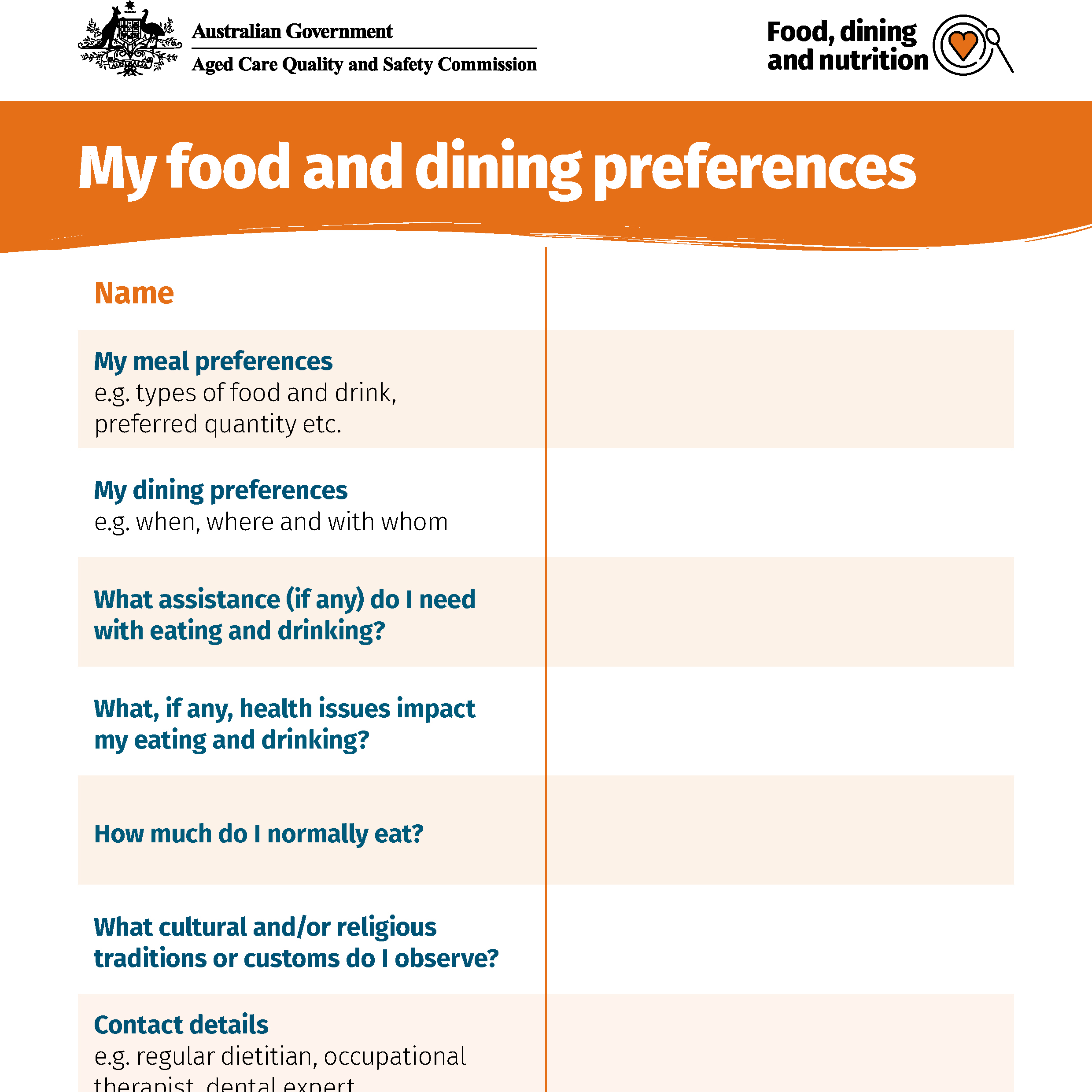
My food and dining preferences - form
This fact sheet helps aged care residents communicate their food and dining preferences. It includes sections for meal choices, dining preferences, assistance needs, health considerations, cultural or religious customs, and contact information for allied health professionals. It also advises staff to monitor changes in weight and contact a dietitian if needed.
This resource may refer to information that will be updated from 1 November 2025 to align with the new Aged Care Act and Quality Standards.
My food and dining preferences form (PDF 378.98 KB)
Arabic - تفضيلاتي في الطعام وعادات الأكل (PDF 426.01 KB)
French - Mes préférences alimentaires et de repas (PDF 365.82 KB)
German - Meine Essens- und Speisevorlieben (PDF 358.86 KB)
Greek - Οι προτιμήσεις μου για το φαγητό και τα γεύματα (PDF 359.43 KB)
Hungarian - Étel- és étkezési preferenciák (PDF 369.35 KB)
Macedonian - Моите желби во врска со храната и јадењето (PDF 358.79 KB)
Maltese - Il-preferenzi tiegħi tal-ikel u l-ikliet (PDF 364.67 KB)
Portuguese - Minhas preferências alimentares e gastronômicas (PDF 373.26 KB)
Russian - Мои предпочтения в еде и приеме пищи (PDF 353.14 KB)
Serbian - Моје жеље које се тичу хране и обедовања (PDF 353.84 KB)
Simplified Chinese - 我的饮食及用餐偏好 (PDF 420.97 KB)
Traditional Chinese - 我的飲食及用餐偏好 (PDF 422.91 KB)
Spanish - Mis preferencias de alimentos y comidas (PDF 365.1 KB)
Vietnamese - Sở thích ăn uống và thực phẩm của tôi (PDF 340.54 KB)
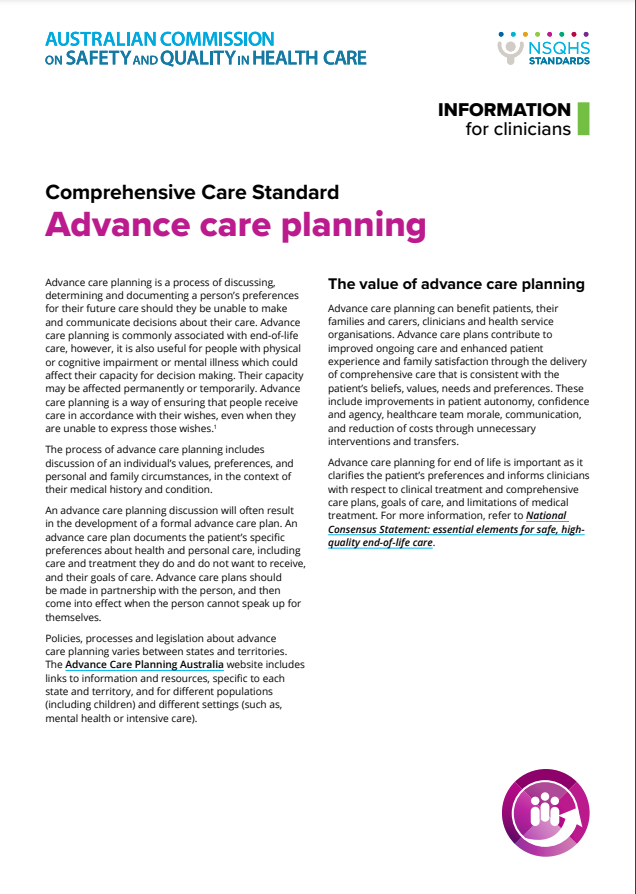
Advance care planning - Information for clinicians
This resource guides clinicians on the importance of advance care planning, particularly for those with life-limiting illnesses, chronic conditions, or cognitive impairment. It outlines the need for early conversations about patient preferences and comprehensive care, ensuring decisions are documented, shared, and align with clinical handover processes to respect patient autonomy and improve care outcomes.
This resource may refer to information that will be updated from 1 November 2025 to align with the new Aged Care Act and Quality Standards.
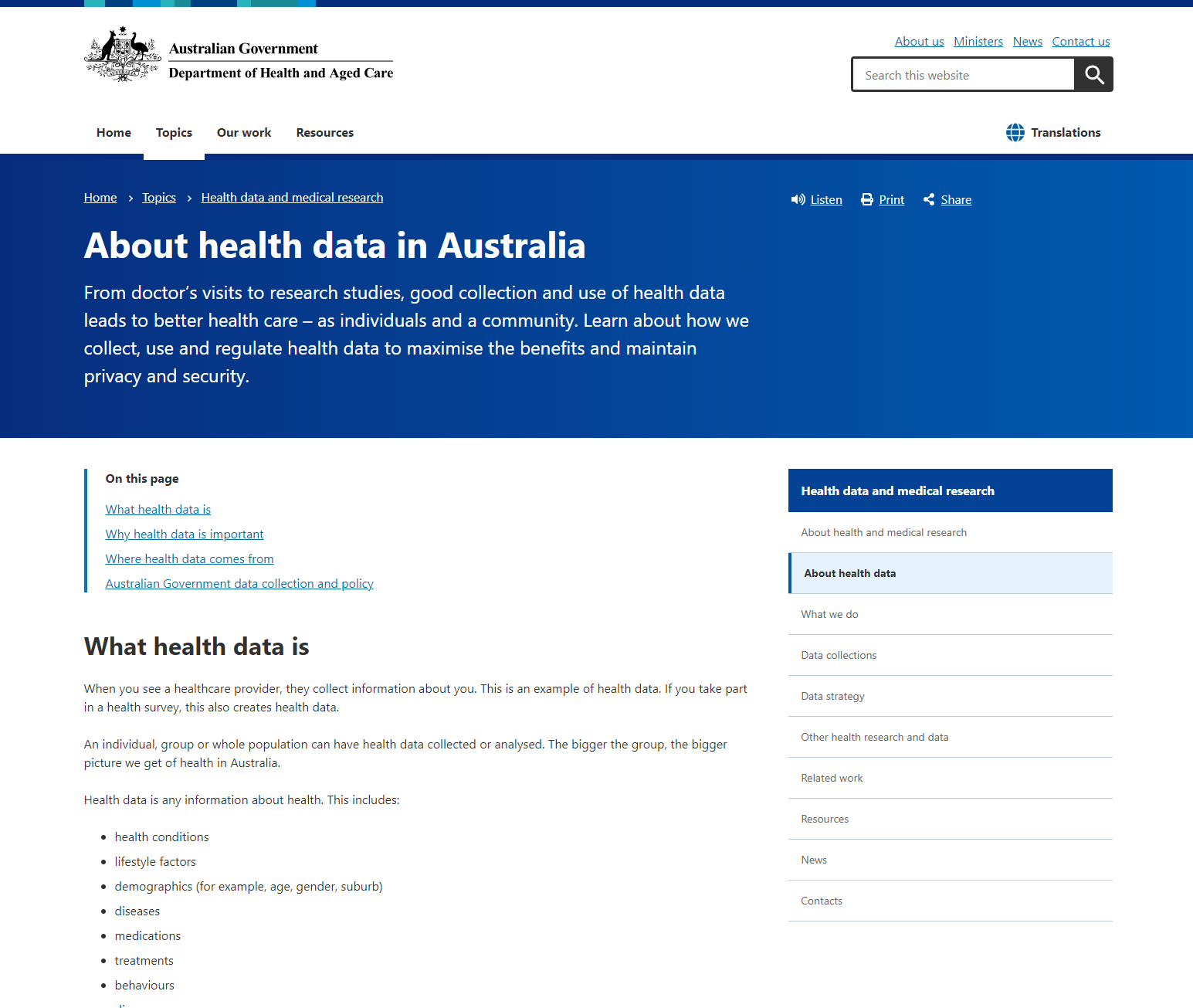
About health data in Australia
This resource explains the collection, use, and regulation of health data in Australia. It highlights the importance of health data in improving healthcare, policy-making, and research. The document details various data sources, including the National Health Data Hub, ensuring data privacy and security while maximising the benefits of health information for research and service improvement. This resource may refer to information that will be updated from 1 November 2025 to align with the new Aged Care Act and Quality Standards.
Aged Care Financial Report
This resource outlines the mandatory Aged Care Financial Report (ACFR) for approved aged care providers. It details reporting requirements for residential care, home care, multi-purpose services, and short-term restorative care. Providers must submit financial data on income, expenses, and compliance statements to receive government funding. This resource may refer to information that will be updated from 1 November 2025 to align with the new Aged Care Act and Quality Standards.
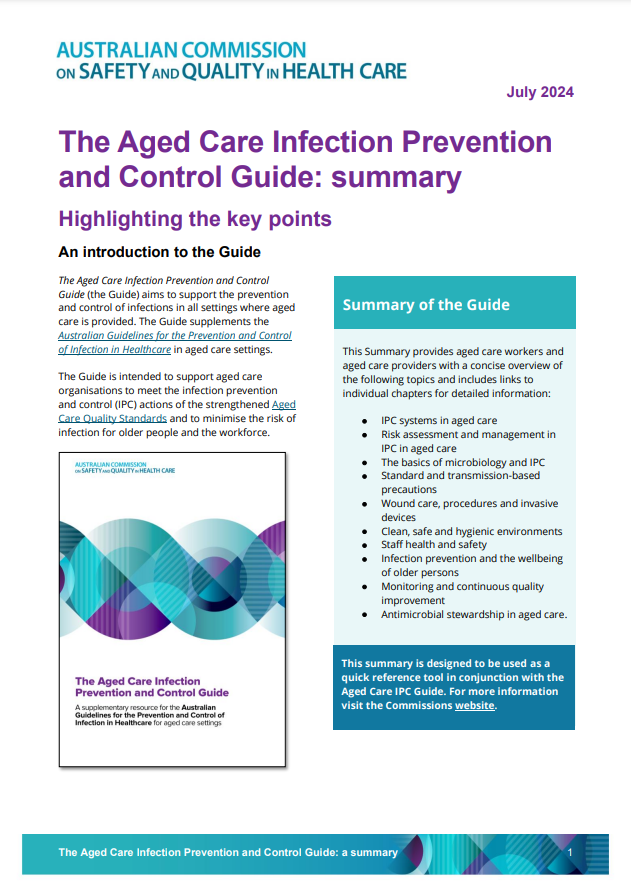
The Aged Care Infection Prevention and Control Guide: summary resource
This summary provides an overview of the Aged Care Infection Prevention and Control (IPC) Guide. It includes key topics such as IPC systems, risk assessment, standard and transmission-based precautions, staff health and safety, antimicrobial stewardship, and continuous quality improvement. It supports aged care providers in maintaining infection control standards.
This resource may refer to information that will be updated from 1 November 2025 to align with the new Aged Care Act and Quality Standards.
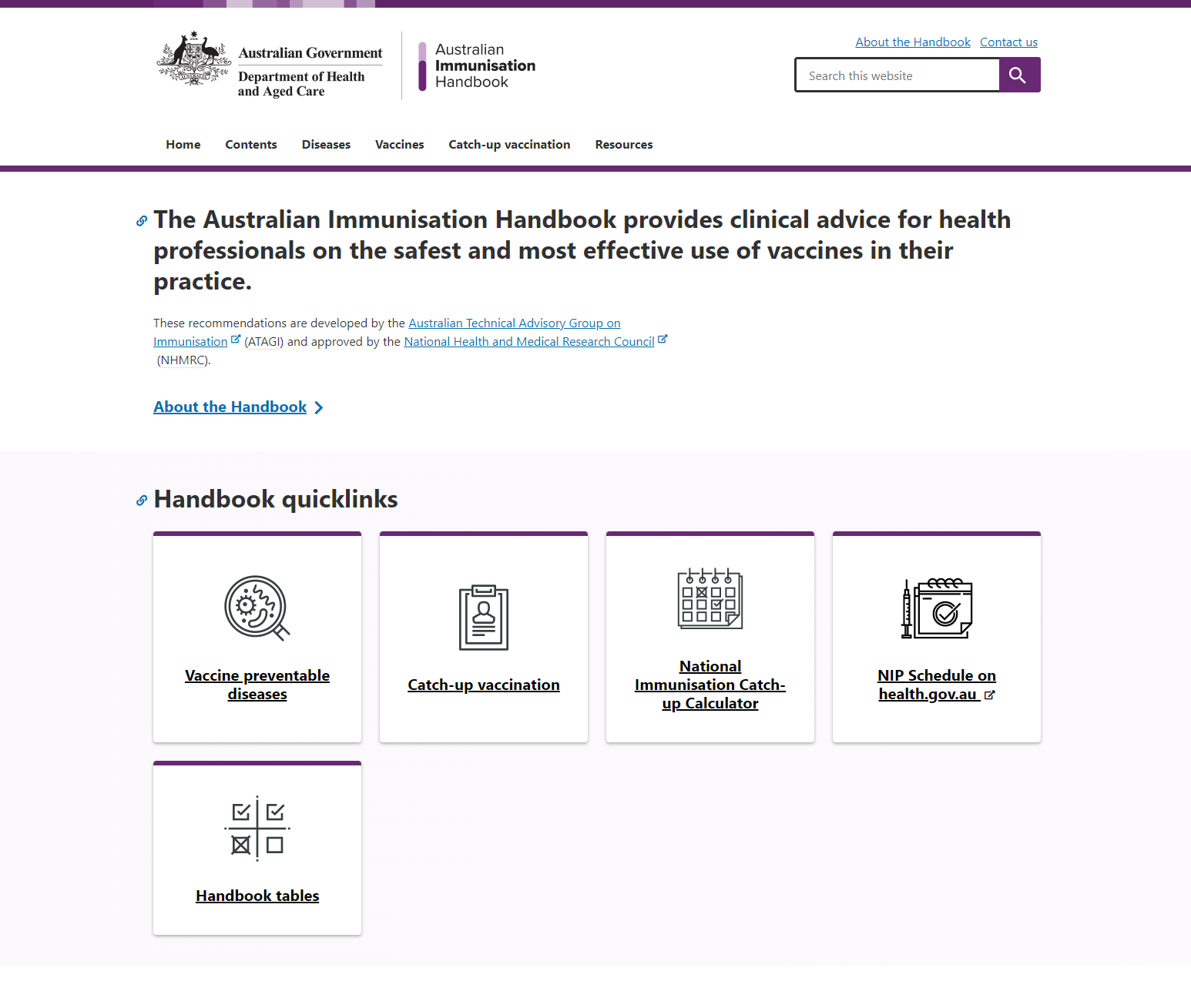
The Australian Immunisation Handbook
This resource provides clinical advice for health professionals on the safe and effective use of vaccines. It includes guidelines for vaccine administration, special risk groups, and updates on vaccine-preventable diseases. The handbook is a comprehensive reference for ensuring the best immunisation practices, particularly important in protecting vulnerable populations, including those in aged care.
This resource may refer to information that will be updated from 1 November 2025 to align with the new Aged Care Act and Quality Standards.
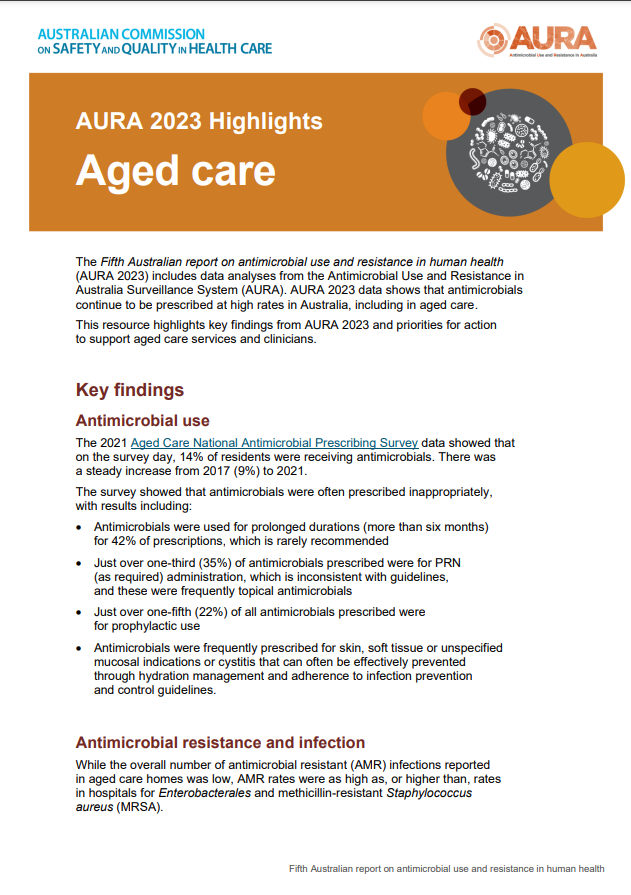
AURA 2023 Highlights for Aged care
This resource summarises key findings from the AURA 2023 report, focusing on antimicrobial use and resistance in aged care. It provides priorities for action to reduce inappropriate prescriptions, promote antimicrobial stewardship, and improve infection prevention and control in aged care settings, aligning with quality standards to enhance care for older people.
This resource may refer to information that will be updated from 1 November 2025 to align with the new Aged Care Act and Quality Standards.
The Aged Care Infection Prevention and Control Guide
This resource outlines the basic principles of infection prevention and control and explains how to apply these principles using a risk-based approach. The guide supports implementation of the strengthened Aged Care Quality Standards. It is a supplementary resource for the Australian Guidelines for the Prevention and Control of Infection in Healthcare for aged care settings.
This resource may refer to information that will be updated from 1 November 2025.
Aged Care Volunteer Visitors Scheme (ACVVS)
This resource explains the Aged Care Volunteer Visitors Scheme (ACVVS), which connects volunteers with older people to provide companionship and reduce social isolation. It details how to become a volunteer, request a visitor, and outlines the scheme's benefits for both recipients and volunteers in aged care settings.
This resource may refer to information that will be updated from 1 November 2025 to align with the new Aged Care Act and Quality Standards.