This example response supports the information providers need to consider when reporting stealing or financial coercion in the My Aged Care portal.
This example response supports the information providers need to consider when reporting neglect in the My Aged Care portal.
 SIRS notification example response – Neglect (PDF 514.56 KB)
This example response supports the information providers need to consider when reporting inappropriate use of restrictive practices in the My Aged Care portal.
This example response supports the information providers need to consider when reporting unexplained absence from care in the My Aged Care portal.
This example response supports the information providers need to consider when reporting unreasonable use of force in the My Aged Care portal.
SIRS notification example response – Unreasonable use of force (PDF 492.49 KB)
This example response supports the information providers need to consider when reporting unlawful sexual contact in the My Aged Care portal.
SIRS Notification Example Response - Unlawful Sexual Conduct (PDF 534.92 KB)
This example response supports the information providers need to consider when reporting psychological or emotional abuse in the My Aged Care portal.
This example response supports the information providers need to consider when reporting unexpected death in the My Aged Care portal.
SIRS notification example response – Unexpected death (PDF 488.04 KB)
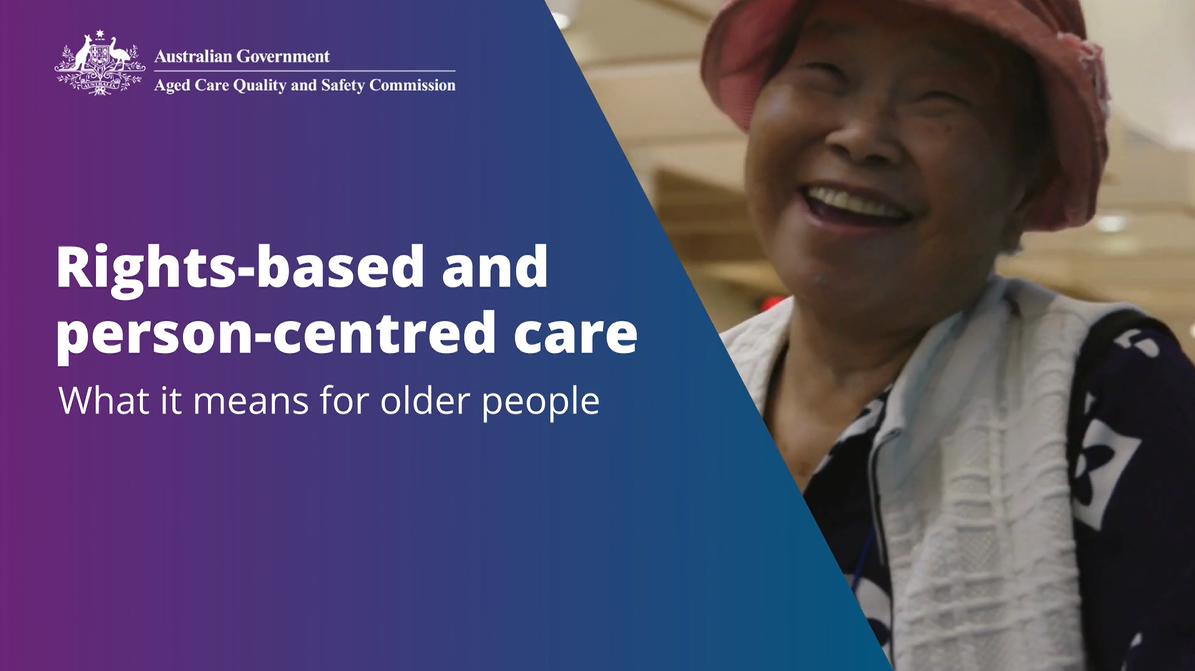
This video explains what right-based and person-centred care means and how you can work with your provider to achieve it.
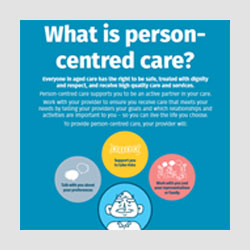
The poster and video will support you in understanding person-centred care.
A3 poster — What is person-centred care? (PDF 1.04 MB)
Consumer guide — What is person-centred care? (PDF 1.79 MB)
This provider frequently asked questions responds to questions to the Commission about use of the psychotropic self-assessment tool in residential aged care services.
This provider fact sheet explains their responsibilities regarding the management of new consumers who require restrictive practices or have started them before entering the service.
New consumers and restrictive practices – fact sheet (PDF 567.42 KB)
This fact sheet summarises observations by the Commission from engagements with residential aged care services that experienced a COVID-19 outbreak in 2021. It has been informed by our monitoring of more than 350 COVID-19 outbreaks at residential aged care services across several states, and our participation in more than 1,500 outbreak management meetings.
fact-sheet-learned-from-covid-19-outbreak-2021.pdf (PDF 394.99 KB)

On Monday 20 December 2021, the Aged Care Quality and Safety Commissioner, Ms Janet Anderson, PSM, sent a letter to providers inviting them to register their interest with the new Governing for Reform in Aged Care program.

This guidance provides information for providers on the problem solving model supports the key elements of an effective incident management system.
This guidance gives providers practical tips when making reports about serious incidents through the My Aged Care Provider Portal.
On Wednesday 1 December 2021, the Aged Care Quality and Safety Commissioner, Ms Janet Anderson, PSM, sent a letter to residential approved providers on advanced planning and preparation for emergency events.
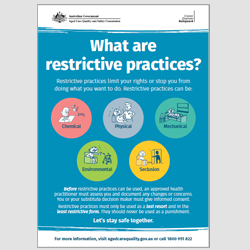
The Commission has developed a package of resources to help consumers understand the new restrictive practices requirements.
A3 poster – What are restrictive practices? (PDF 763.82 KB)
Consumer guide – What are restrictive practices? (PDF 751.25 KB)
This presentation is an educational tool is part of the Commission’s resource bundle to improve antibiotic use for urinary tract infections in aged care services.

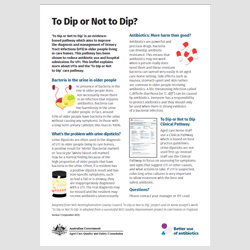
This flyer is part of the Commission’s resource bundle to improve antibiotic use for urinary tract infections in aged care services.
To Dip or Not to Dip flyer - English (PDF 214.47 KB)
Arabic - تغمس أم ال؟ (PDF 262.89 KB)
Chinese Simplified - 是否使用试纸? (PDF 394.06 KB)
Chinese Traditional - 是否使用試紙? (PDF 273.17 KB)
Croatian - Testirati ili ne testirati? (PDF 201.72 KB)
Dari - آغشته کردن یا نکردن؟ (PDF 239.62 KB)
Dinka - Bë yiik Ya Cë Bë Yiik? (PDF 210.1 KB)
Farsi - آزمایش ادرار را انجام بدهیم یا ندهیم؟ (PDF 248.35 KB)
French - Tremper ou ne pas tremper? (PDF 205.76 KB)
Greek - Να χρησιμοποιήσω ταινία ούρων ή όχι; (PDF 187.71 KB)
Hindi - To Dip or Not to Dip? (PDF 236.96 KB)
Indonesian - Menggunakan dipstick atau tidak (PDF 193.75 KB)
Italian - Immergere o non immergere? (PDF 194.62 KB)
Khmer - ជ្រលក់់ ឬមិ ិនជ្រលក (PDF 228.76 KB)
Korean - 요시험지 검사, 할 것인가 말 것인가? (PDF 200.49 KB)
Pashto - ډوب کول یا نه ډوب کول؟ (PDF 248.83 KB)
Somali - In la geliyo ama in aan la gelin? (PDF 204.24 KB)
Spanish - Sumergir o no sumergir (PDF 208.59 KB)
Thai - จุ่ม หรือไม่จุ่ม (PDF 206.55 KB)
Turkish - Daldırmak mı yoksa daldırmamak mı? (PDF 173.65 KB)
Urdu - ڈپ سٹک ٹیسٹ کیا جائے یا نہیں؟ (PDF 242.61 KB)
Vietnamese - ‘Nhúng hay Không nhúng’ (PDF 211.78 KB)