The Quality Standards Resource Centre helps extend understanding of the strengthened Aged Care Quality Standards, which took effect from 1 November 2025. You can search for resources by using keywords, or filtering by standard, outcome and audience. Before using the Resource Centre, please read the terms of use.
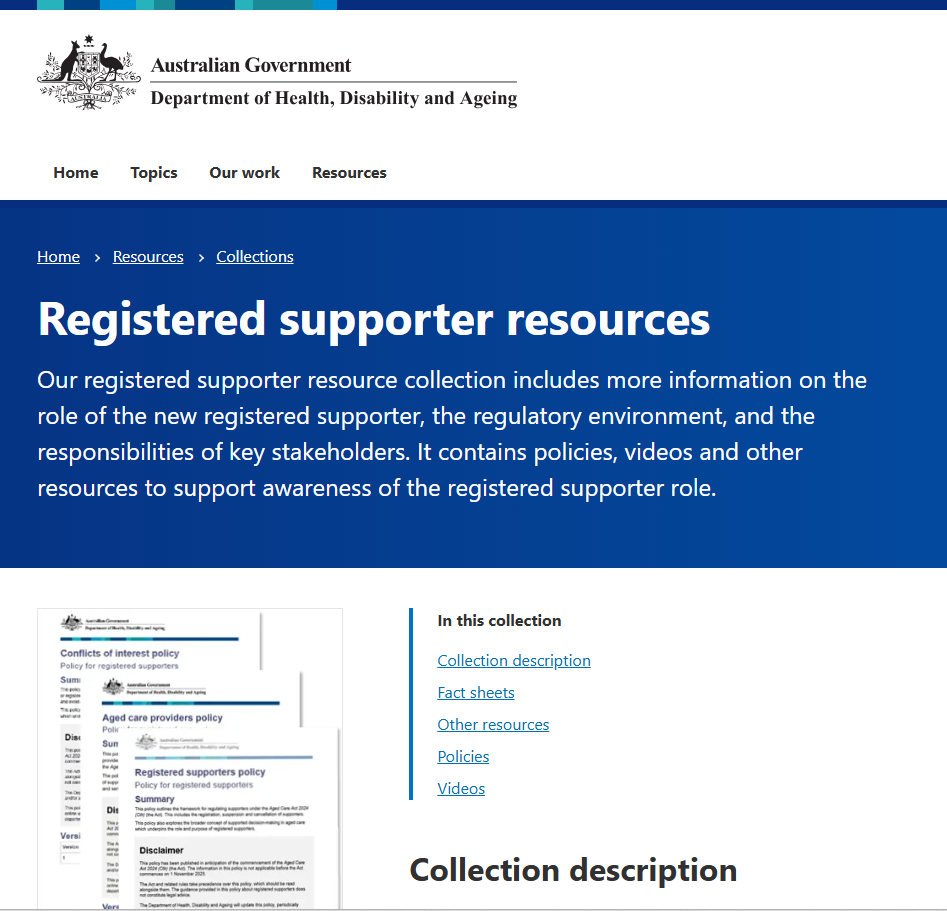
Registered supporter resources
The registered supporter resource collection includes information on the role of registered supporters, the regulatory environment, and the responsibilities of key stakeholders. It contains policies, videos and other resources to support awareness of the registered supporter role.
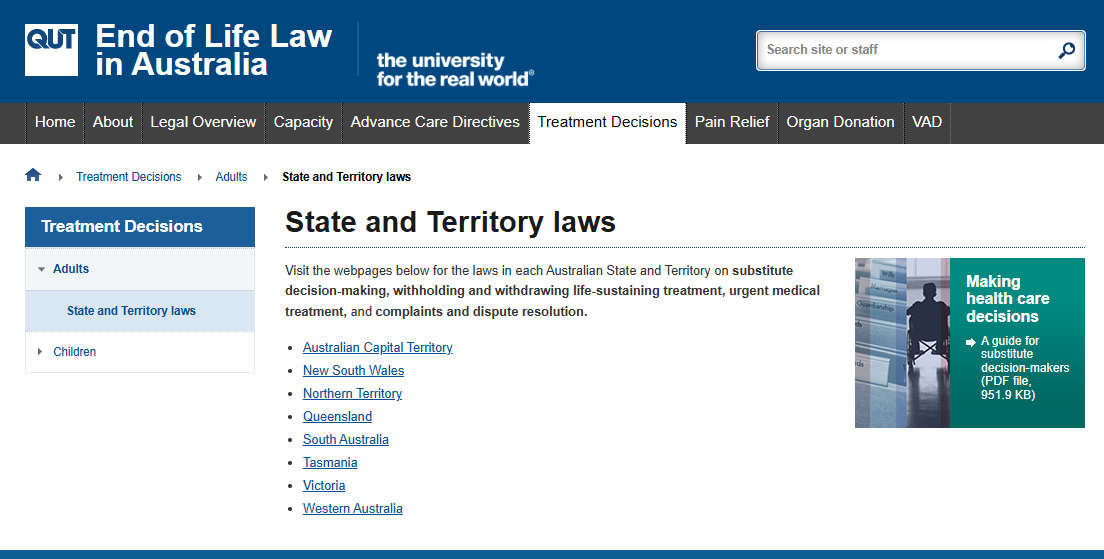
End of Life Law in Australia - State and Territory laws
This resource provides links to the laws in each Australian State and Territory on substitute decision-making, withholding and withdrawing life-sustaining treatment, urgent medical treatment, and complaints and dispute resolution.
This resource was developed by a state/territory government or organisation and therefore its applicability and usefulness may be limited.
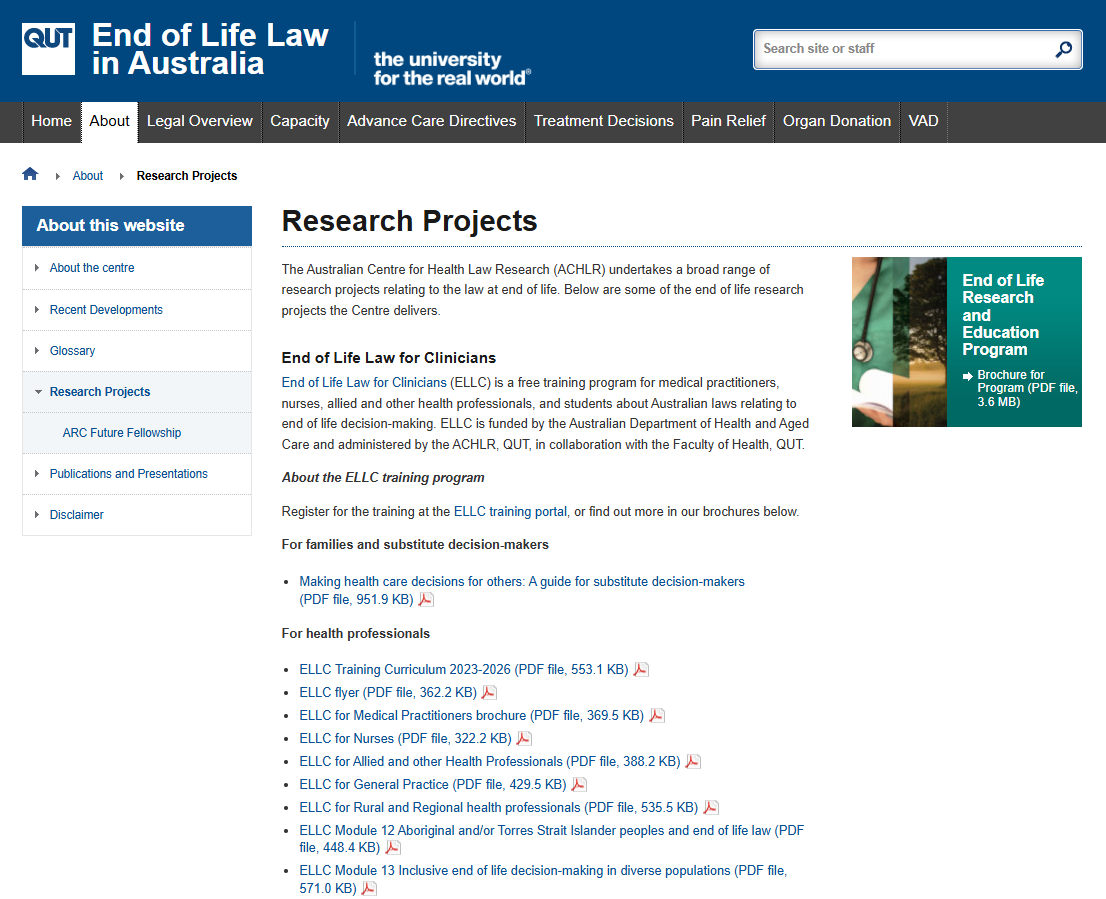
End of Life Law in Australia - Research Projects
This resource provides links to a range of research projects related to the law at end of life undertaken by the Australian Centre for Health Law Research (ACHLR). This includes a guidance sheet for substitute decision-makers to make health care decisions for someone who cannot make decisions themselves. It covers when substitute decision-making may be needed, difference between 'supporter' and 'substitute decision-maker', categories of substitute decision-makers, how to make decisions, whether health professionals can make decisions, and links to state-specific resources.
painACT Online Learning modules
This resource provides online training modules in pain assessment and management for aged care settings. It covers pain in aged care; impact of pain on the person, family, and staff; conversations about pain; pain assessment; pain and non-pharmacological management; dementia and cognitive impairment; and documentation.
Variation of registration audit
This guide helps you prepare for and take part in a variation of registration audit.
It describes:
- the purpose of audits and how they inform (help us make) registration decisions
- the 3 stages of the audit process (initiation, delivery, reporting)
- what to expect and what to do at each stage
- the types of evidence we consider during audits
- how we define our audit ratings
- the audit tools we use
- other relevant resources.
 Variation of registration audit (PDF 434.06 KB)
Effective incident management education pack
The Effective incident management education pack is designed for providers to deliver to their own staff. It can be delivered in full or delivered as a series of shorter sessions where you can focus on the sections that are most relevant to your setting or the time you have available.
This pack will support your staff to understand the role they play in effectively managing incidents at your aged care service and help them understand what an incident management system is and its key elements.

Infection prevention & control resources
This resource provides guidance on infection prevention and control for aged care providers, outlining responsibilities to make sure safety and minimise infection risks. It covers the development of infection control programs, training requirements, governance, and compliance with national standards, supporting the delivery of safe, high-quality care in residential aged care settings.
This resource may refer to information that will be updated from 1 July 2025 to align with the new Aged Care Act and Quality Standards.
Digital health - For healthcare providers
This resource provides guidance for aged care assessors and service providers on accessing and using the My Aged Care portals. It outlines steps for setting up secure access through authentication methods, managing organisation information, and creating staff accounts, supporting efficient service delivery and assessment processes.
This resource may refer to information that will be updated from 1 July 2025 to align with the new Aged Care Act and Quality Standards.

Aged care workforce
This resource provides information about the aged care workforce, highlighting opportunities for those interested in joining the sector. It details available programs such as scholarships, training, and clinical placements for nurses and aged care workers. It also includes initiatives to support the growth, training, and development of the aged care workforce to ensure quality care for older adults.
This resource may refer to information that will be updated from 1 July 2025 to align with the new Aged Care Act and Quality Standards.
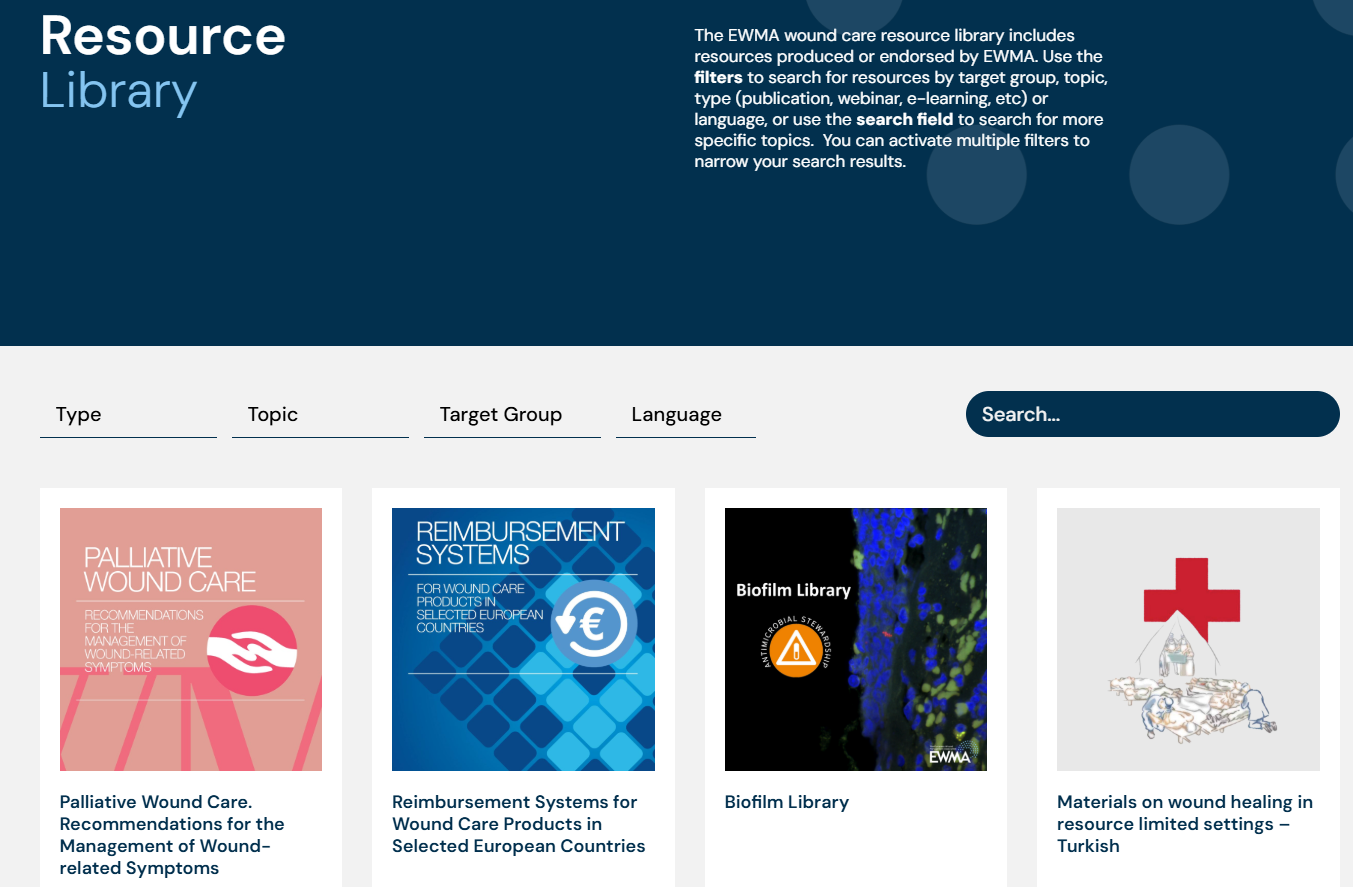
European Wound Management Association - Resource Library
This resource library offers a collection of wound care materials, including publications, webinars, and e-learning modules, covering topics like wound healing, infection management, compression therapy, and advanced treatments. It provides resources for various target groups and is available in multiple languages.
This resource was developed internationally and therefore its applicability and usefulness may be limited.
First Nations - YouTube videos
This resource includes a series of YouTube videos developed by the Aged Care Quality and Safety Commission. Australian First Nations older people discuss good quality, culturally appropriate and safe aged care, including person-centred care, rights and how to speak up about care. This resource may refer to information that will be updated from 1 November 2025 to align with the new Aged Care Act and Quality Standards.

First Nations - Digital Flipchart - Your rights in aged care
A visual guide for conversations between providers/workers and older people about aged care. It includes notes for providers/workers to help guide the conversation.

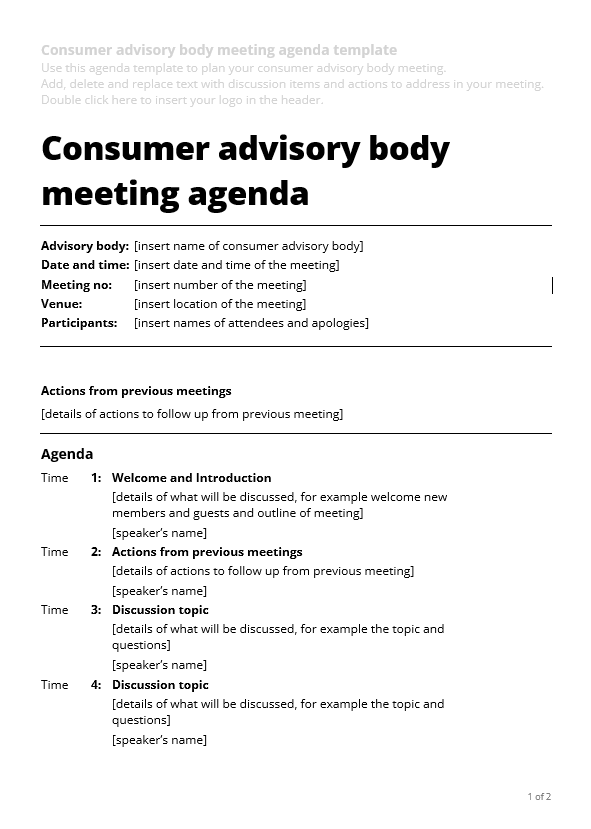
Consumer advisory body meeting agenda template
A template that consumer advisory body members can use to plan their meeting agendas.
 Consumer advisory body meeting agenda template (DOCX 2.39 MB)
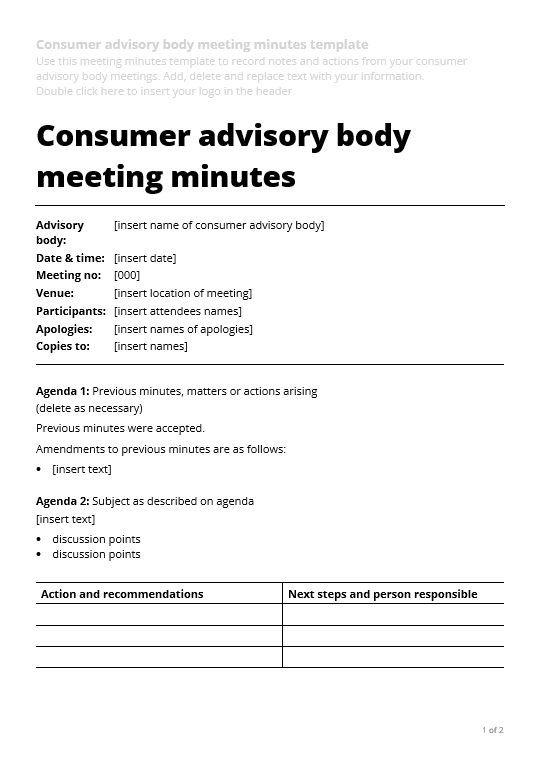
Consumer advisory body minutes template
A template that consumer advisory body members can use in their meetings to take minutes.
Consumer advisory body minutes template (DOCX 2.4 MB)
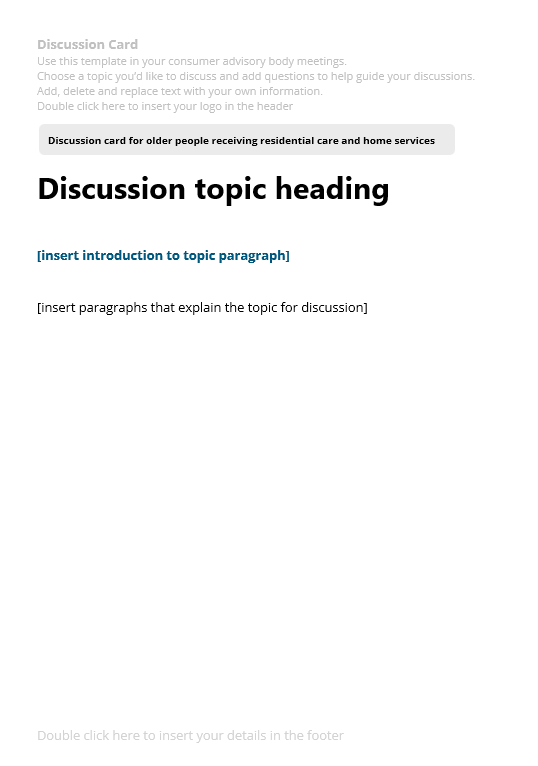
Consumer advisory body discussion card template
A discussion card template that consumer advisory body members can use to write their own topics and questions to prompt discussion about any concerns older people receiving care may have.
Consumer advisory body discussion card template (DOCX 3.08 MB)
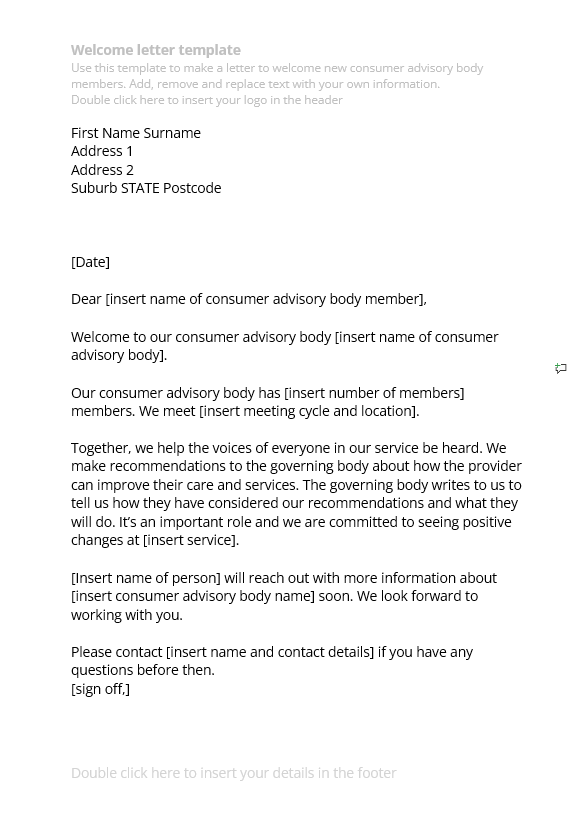
Consumer advisory body welcome letter template
A welcome letter template that consumer advisory body members can use to communicate with new members.
Consumer advisory body welcome letter template (DOCX 3.8 MB)
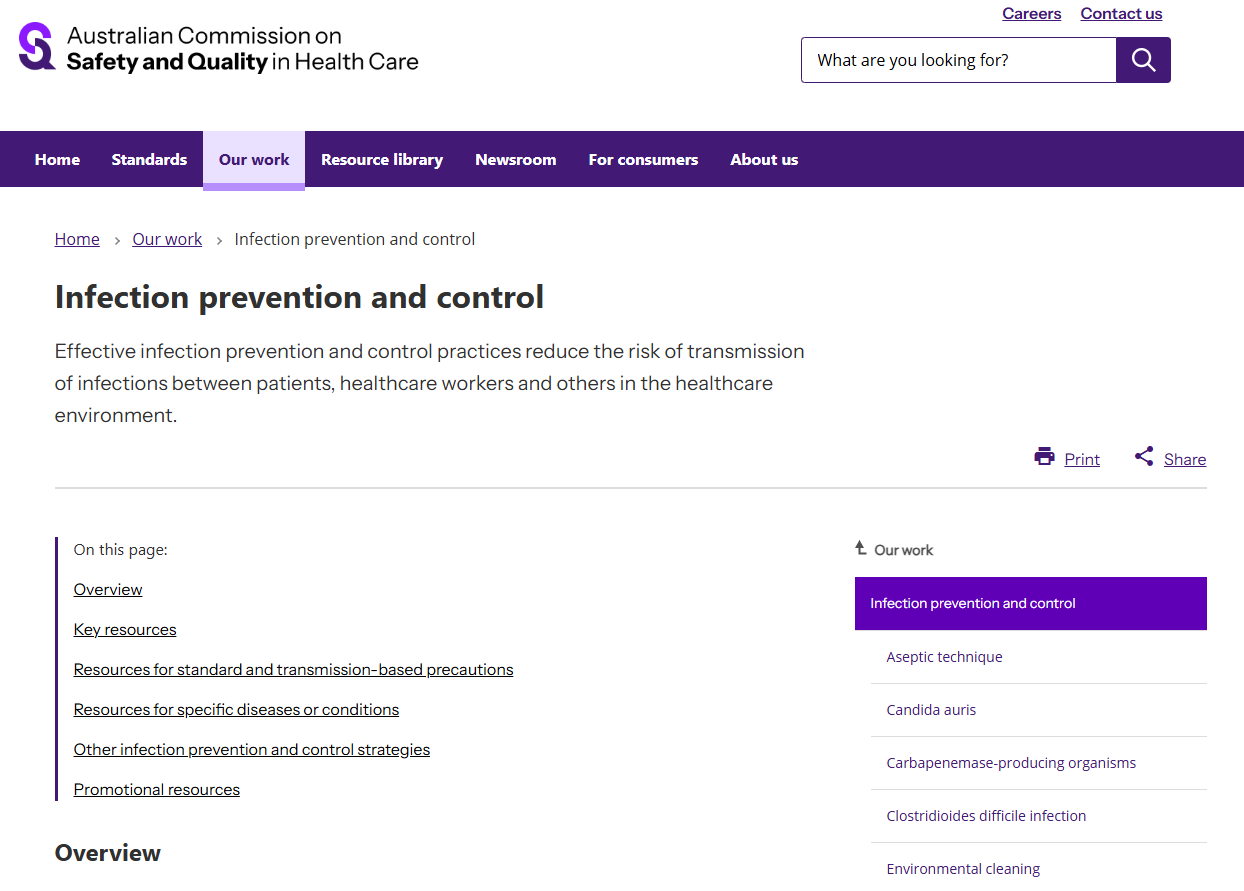
Infection prevention and control - ACSQH
This resource provides guidelines to reduce infection transmission risks in healthcare settings. It provides information on standard and transmission-based precautions, specific diseases or conditions, other infection prevention and control strategies and promotional resources practices such as hand hygiene, use of personal protective equipment, and environmental cleaning.
This resource may refer to information that will be updated from 1 November 2025 to align with the new Aged Care Act and Quality Standards.
Managing worker risk policy
Our Managing Worker Risk Policy explains our approach in detecting, assessing and responding to risks arising from the actions, inactions and behaviours of workers.
This policy includes information about:
Managing worker risk policy (PDF 386.18 KB)
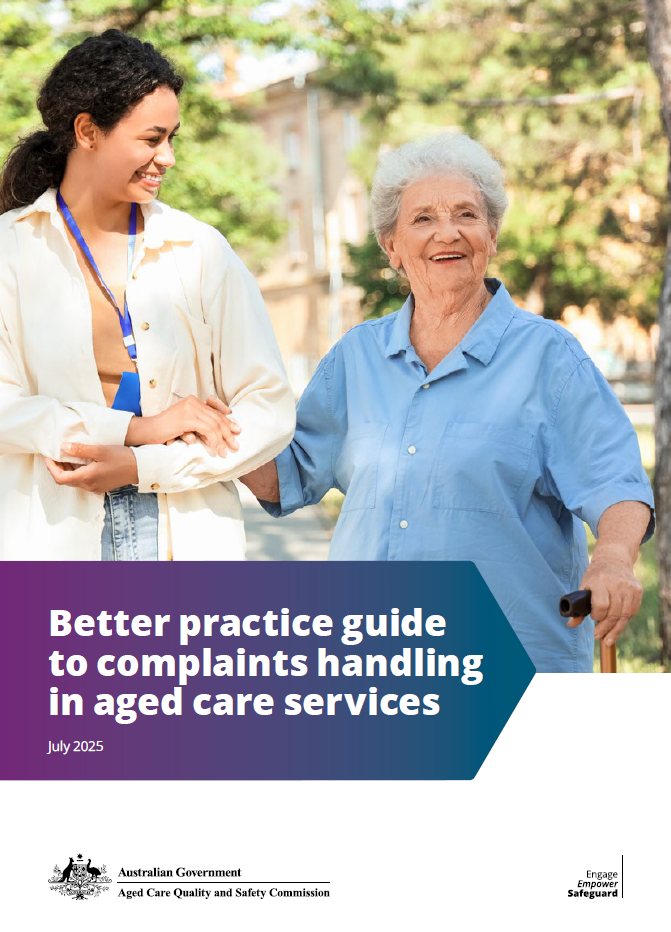
Better practice guide to complaints handling in aged care services
This booklet aims to give guidance on how to:
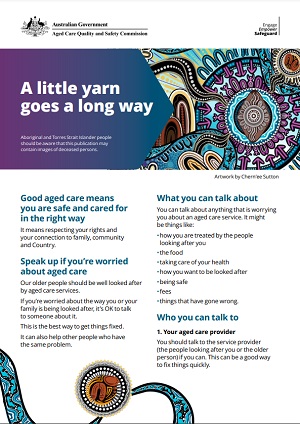
A little yarn goes a long way - Fact sheet
The ‘A little yarn goes a long way’ fact sheet has been developed to inform older Aboriginal and Torres Strait Islander people, and their friends and family, about the support available to help them resolve concerns about aged care services, and why it’s important to raise these concerns.
Information is also available in 7 different languages including: English, Alyawarra, Arrernte, Luritja, Pitjantjatjarra, Torres Strait Creole and Warlpiri.
English - A little yarn goes a long way (PDF 769.91 KB)
Alyawarra - A little yarn goes a long way (PDF 3.74 MB)
Arrernte - A little yarn goes a long way (PDF 3.73 MB)
Luritja - A little yarn goes a long way (PDF 3.73 MB)
Pitjantjatjarra - A little yarn goes a long way (PDF 3.73 MB)
Torres Strait Creole - A little yarn goes a long way (PDF 3.74 MB)
Warlpiri - A little yarn goes a long way (PDF 3.73 MB)