In this short video, we discuss reporting incidents under the Serious Incident Response Scheme (SIRS) which commenced on 1 April 2021.
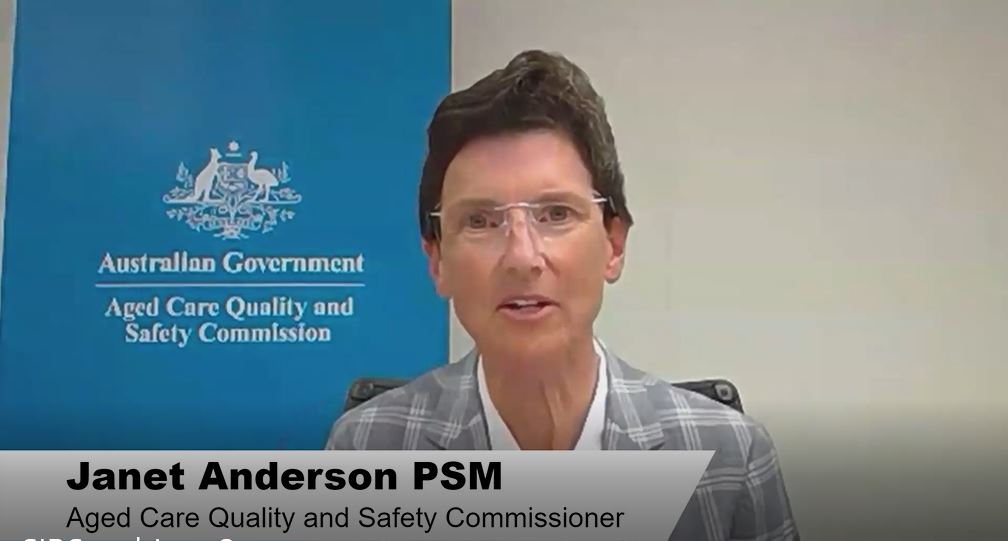
In this short video, Aged Care Quality and Safety Commissioner Janet Anderson provides an overview for approved residential aged care providers of the Serious Incident Response Scheme (SIRS) which commenced on 1 April 2021.

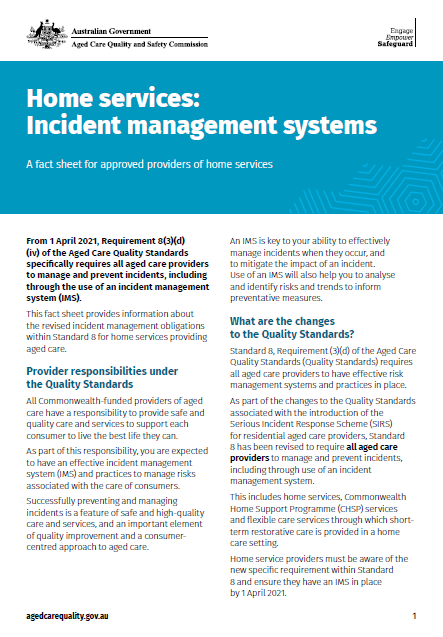
This fact sheet provides information about the revised incident management obligations within Standard 8 for home services providing aged care.
 Home services: Incident management systems fact sheet (PDF) (PDF 405.53 KB)
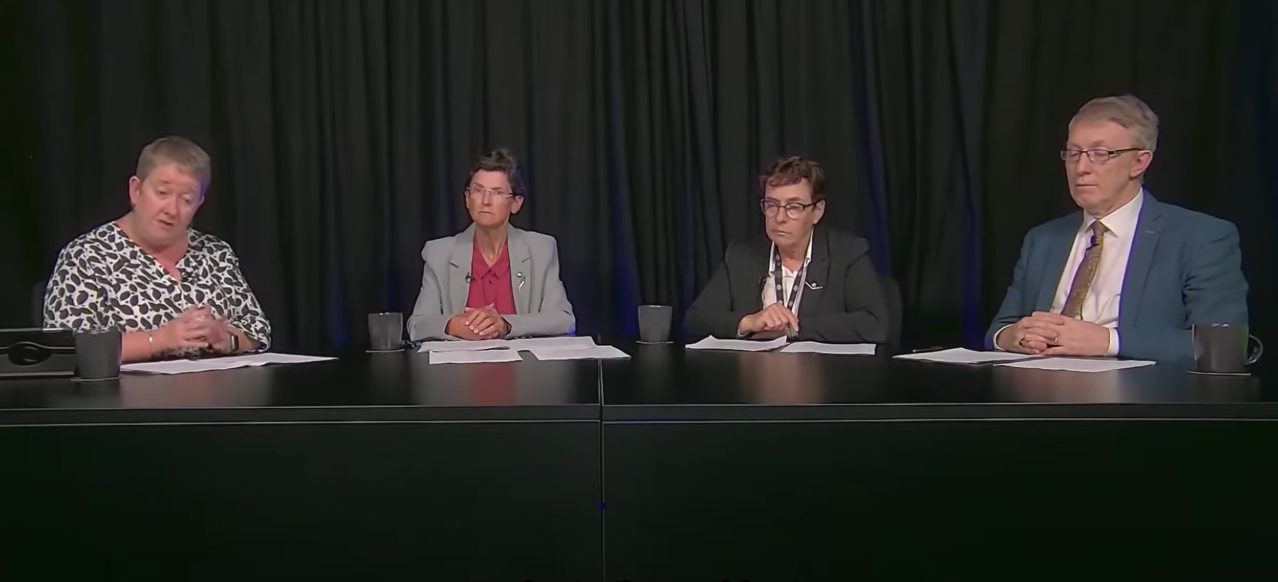
The Serious Incident Response Scheme (SIRS) launched on 1 April 2021. The Commission is helping the aged care sector to prepare for the introduction of the scheme with information and resources and is hosting a series of webinars about the scheme. This fourth webinar discussed the role of the Commission under the SIRS.
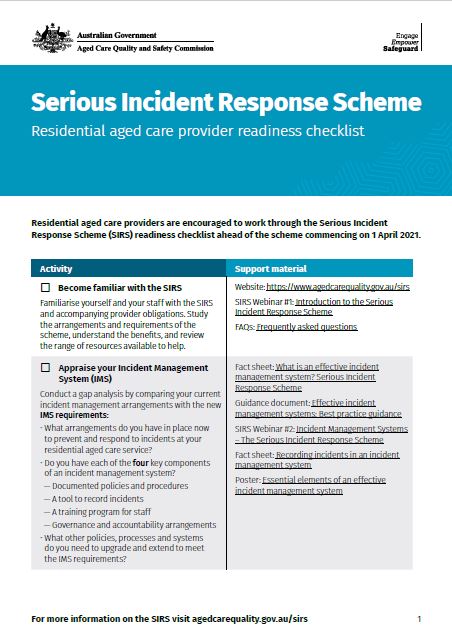
Serious Incident Response Scheme - Residential aged care provider readiness checklist
Residential aged care providers are encouraged to work through the Serious Incident Response Scheme (SIRS) readiness checklist.
SIRS Readiness checklist (PDF 256.8 KB)
The Serious Incident Response Scheme (SIRS) launched on 1 April 2021. The Commission is helping the aged care sector to prepare for the introduction of the scheme with information and resources and is hosting a series of webinars about the scheme. This third webinar discussed reporting incidents to the Commission under the SIRS.

This booklet aims to give guidance on how to:
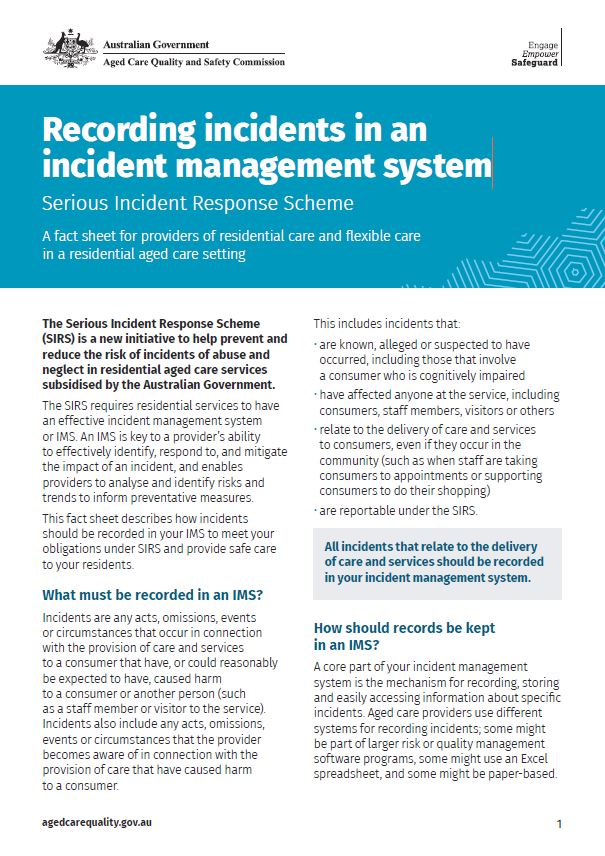
The Serious Incident Response Scheme (SIRS) is a new initiative to help prevent and reduce the risk of incidents of abuse and neglect in residential aged care services subsidised by the Australian Government. The SIRS requires residential services to have an effective incident management system or IMS.
An IMS is key to a provider’s ability to effectively identify, respond to, and mitigate the impact of an incident, and enables providers to analyse and identify risks and trends to inform preventative measures.
This fact sheet describes how incidents should be recorded in your IMS to meet your obligations under SIRS and provide safe care to your residents.
Recording incidents in an incident management system (PDF 281.12 KB)
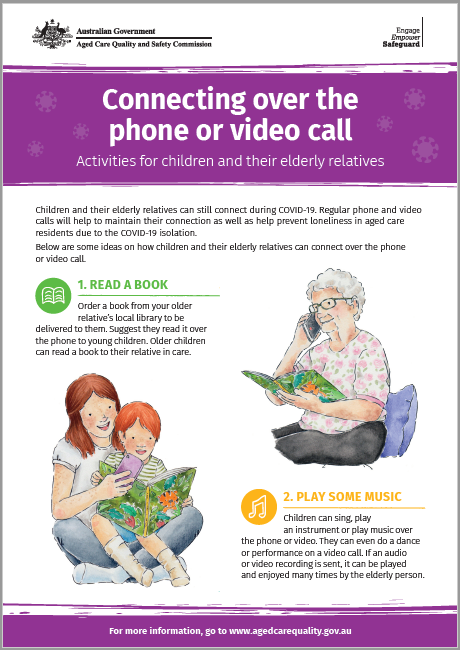
Children and their elderly relatives can still connect during COVID-19. Regular phone and video calls will help to maintain their connection as well as help prevent loneliness in aged care
residents due to the COVID-19 isolation.
The Serious Incident Response Scheme (SIRS) launched on 1 April 2021. The Aged Care Quality and Safety Commission is helping the aged care sector to prepare for the introduction of the scheme with information and resources and is hosting a series of webinars about the scheme. This second webinar discussed the importance of an effective Incident Management System under the SIRS.
This guidance provides information for providers to help them to develop and embed a best practice incident management system which enables them to respond to and manage specific incidents and near misses by assessing:
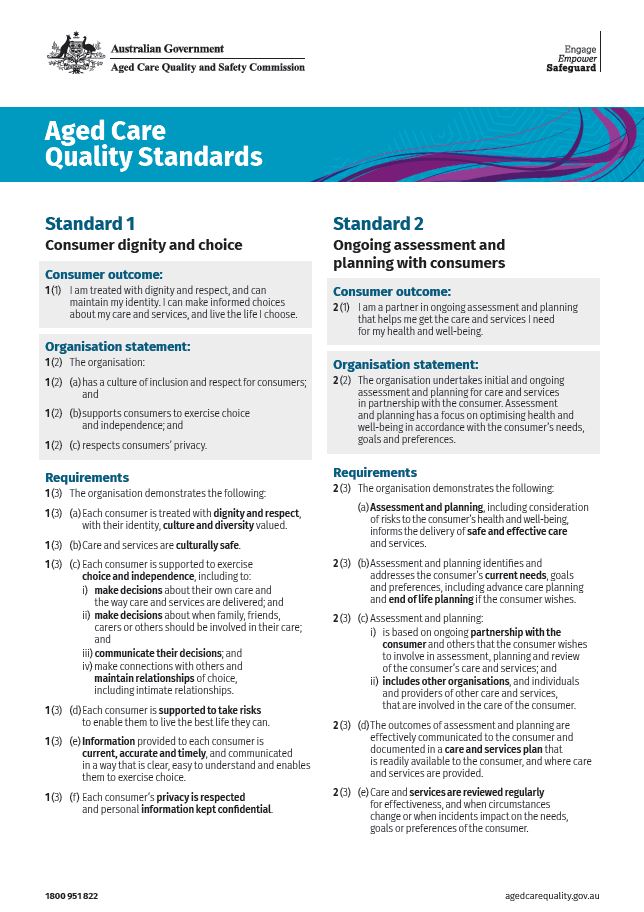
A fact sheet outlining the Aged Care Quality Standards.
This resource is not available to order.
Aged Care Quality Standards fact sheet (PDF 316.24 KB)
The Serious Incident Response Scheme (SIRS) launched on 1 April 2021. The Aged Care Quality and Safety Commission is helping the aged care sector to prepare for the introduction of the scheme with information and resources and is hosting a series of webinars about the scheme. This first webinar provides an introduction to SIRS and the importance of incident management systems.

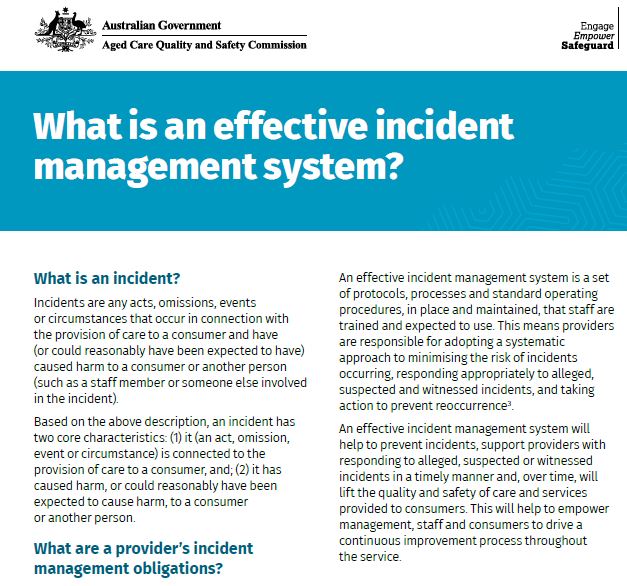
This fact sheet provides guidance to providers of aged care on an effective incident management system, the Serious Incident Response Scheme (SIRS). The Serious Incident Response Scheme (SIRS) is a new initiative to help prevent and reduce the risk of incidents of abuse and neglect in residential aged care services subsidised by the Australian Government.
This fact sheet provides updated information for providers of aged care on effective infection prevention and control capability. This is critical to the safe, effective delivery of personal and clinical care in aged care. This is particularly the case during the coronavirus COVID-19 pandemic.
On Thursday 10 December 2020, the Aged Care Quality and Safety Commissioner Janet Anderson hosted a webinar on the recently released new outbreak management planning in aged care guide for aged care providers.

The Commissioner wrote to approved providers on 7 December 2020 about visitor access in a COVID-normal world

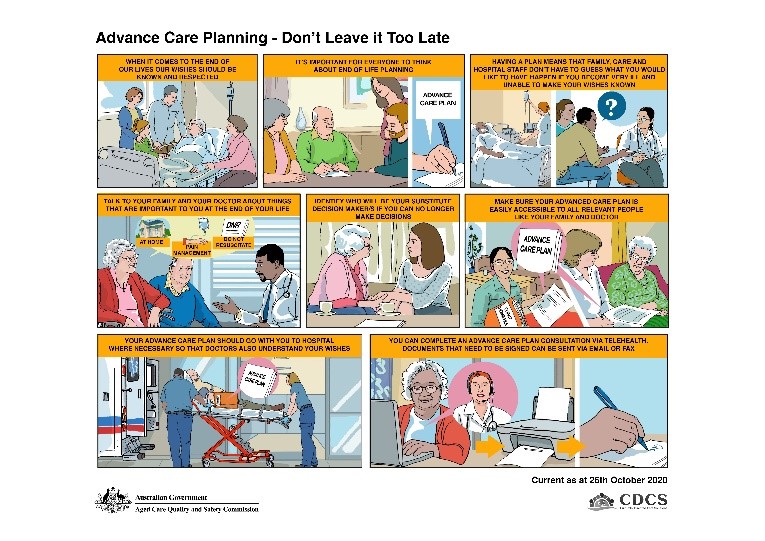
To support the aged care sector, the Commission has developed a range of storyboards that are designed to illustrate key behaviours and priority issues. The storyboards are particularly helpful in supporting people whose English or literacy levels may be a barrier when it comes to accessing content and are relevant to all providers and consumers, their families and representatives across the aged care sector.
Advance Care Planning – Don’t Leave it Too Late
Advance Care Planning Storyboard (PDF) (PDF 422.46 KB)
Advance Care Planning Explainer (PDF) (PDF 228.25 KB)
 Advance Care Planning Explainer (Word) (DOCX 315.75 KB)
This fact sheet provides a brief overview of the process for preparing to return several residents to their residential aged care facility (RACF) from hospital.
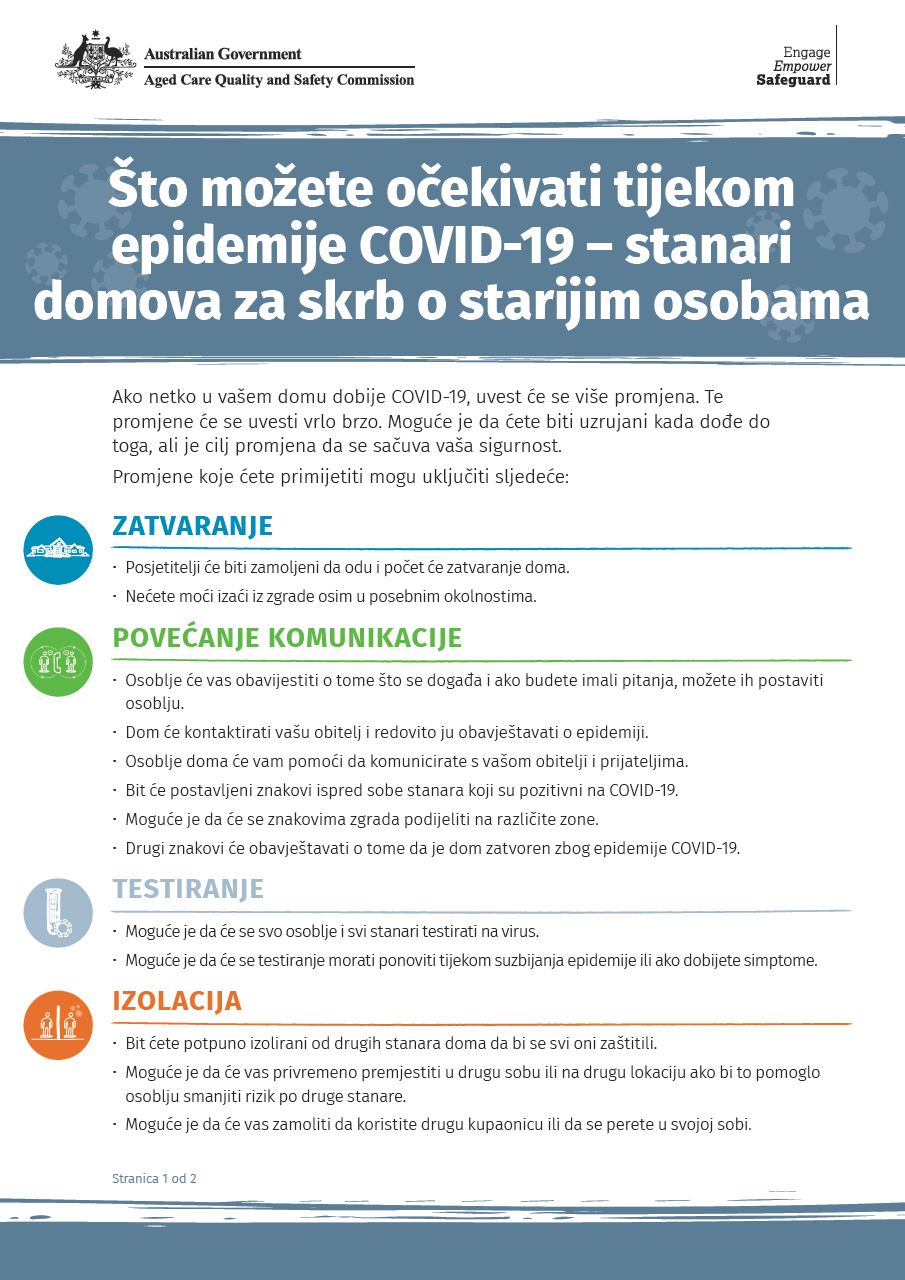
These translated guides will help you understand what to expect if someone has COVID-19 in your residential aged care service, including that a number of changes will take place. These changes will be made very quickly. You might be anxious when these changes take place but the aim is to keep you safe.