The Quality Standards Resource Centre helps extend understanding of the strengthened Aged Care Quality Standards, which take effect from 1 November 2025. The Resource Centre will be updated to reflect key changes made to the draft strengthened Standards. You can search for resources by using keywords, or filtering by standard, outcome, audience and theme. Before using the Resource Centre, please read the terms of use.
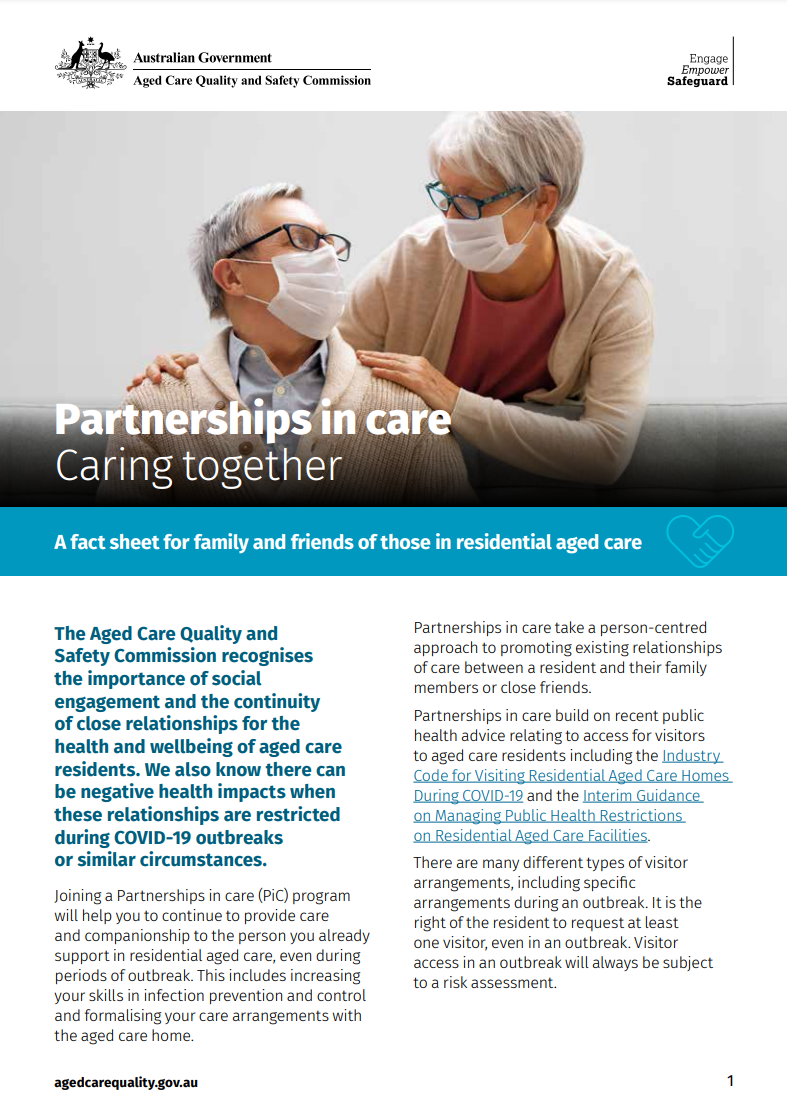
Partnerships in care – Partner information package
The partner information pack presents information for all people visiting and volunteering in residential aged care services. The resource includes information on the importance of infection prevention and control (IPC), the use of personal protective equipment (PPE), and changes in what you need to do if you visit during an outbreak.
 Arabic - الشراكة في الرعاية الرعاية المشتركة (PDF 4.87 MB)
Chinese Simplified - 护理合作伙伴 携手护理 (PDF 4.81 MB)
Chinese Traditional - 護理合作夥伴 攜手護理 (PDF 4.73 MB)
Dutch - Samenwerking in de zorg Samen zorgdragen (PDF 4.34 MB)
German - Pflegepartnerschaften Gemeinsam pflegen (PDF 4.38 MB)
Hungarian - Gondozási partnerség Gondozás közösen (PDF 4.38 MB)
Korean - 돌봄 파트너십 함께하는 돌봄 (PDF 4.87 MB)
Latvian - Aprūpes partnerība Kopīgas rūpes (PDF 4.33 MB)
Macedonian - Партнерства во грижа Да се грижиме заедно (PDF 4.31 MB)
Maltese - Sħubija fil-kura Nieħdu ħsieb flimkien (PDF 4.35 MB)
Polish - Partnerstwo w opiece Wspólna opieka (PDF 4.37 MB)
Portuguese - Parceiros nos cuidados Cuidando juntos (PDF 4.37 MB)
Russian - Партнеры по уходу Заботимся вместе (PDF 4.33 MB)
Spanish - Atención en colaboración Cuidamos juntos (PDF 4.35 MB)
Turkish - Bakım ortaklıkları Birlikte dikkat etmek (PDF 4.32 MB)
Ukrainian - Партнерство у сфері догляду Піклуємося разом (PDF 4.33 MB)
Vietnamese - Quan hệ đối tác chăm sóc Cùng nhau chăm sóc (PDF 4.33 MB)
Arabic - الشراكة في الرعاية الرعاية المشتركة (PDF 4.87 MB)
Chinese Simplified - 护理合作伙伴 携手护理 (PDF 4.81 MB)
Chinese Traditional - 護理合作夥伴 攜手護理 (PDF 4.73 MB)
Dutch - Samenwerking in de zorg Samen zorgdragen (PDF 4.34 MB)
German - Pflegepartnerschaften Gemeinsam pflegen (PDF 4.38 MB)
Hungarian - Gondozási partnerség Gondozás közösen (PDF 4.38 MB)
Korean - 돌봄 파트너십 함께하는 돌봄 (PDF 4.87 MB)
Latvian - Aprūpes partnerība Kopīgas rūpes (PDF 4.33 MB)
Macedonian - Партнерства во грижа Да се грижиме заедно (PDF 4.31 MB)
Maltese - Sħubija fil-kura Nieħdu ħsieb flimkien (PDF 4.35 MB)
Polish - Partnerstwo w opiece Wspólna opieka (PDF 4.37 MB)
Portuguese - Parceiros nos cuidados Cuidando juntos (PDF 4.37 MB)
Russian - Партнеры по уходу Заботимся вместе (PDF 4.33 MB)
Spanish - Atención en colaboración Cuidamos juntos (PDF 4.35 MB)
Turkish - Bakım ortaklıkları Birlikte dikkat etmek (PDF 4.32 MB)
Ukrainian - Партнерство у сфері догляду Піклуємося разом (PDF 4.33 MB)
Vietnamese - Quan hệ đối tác chăm sóc Cùng nhau chăm sóc (PDF 4.33 MB)

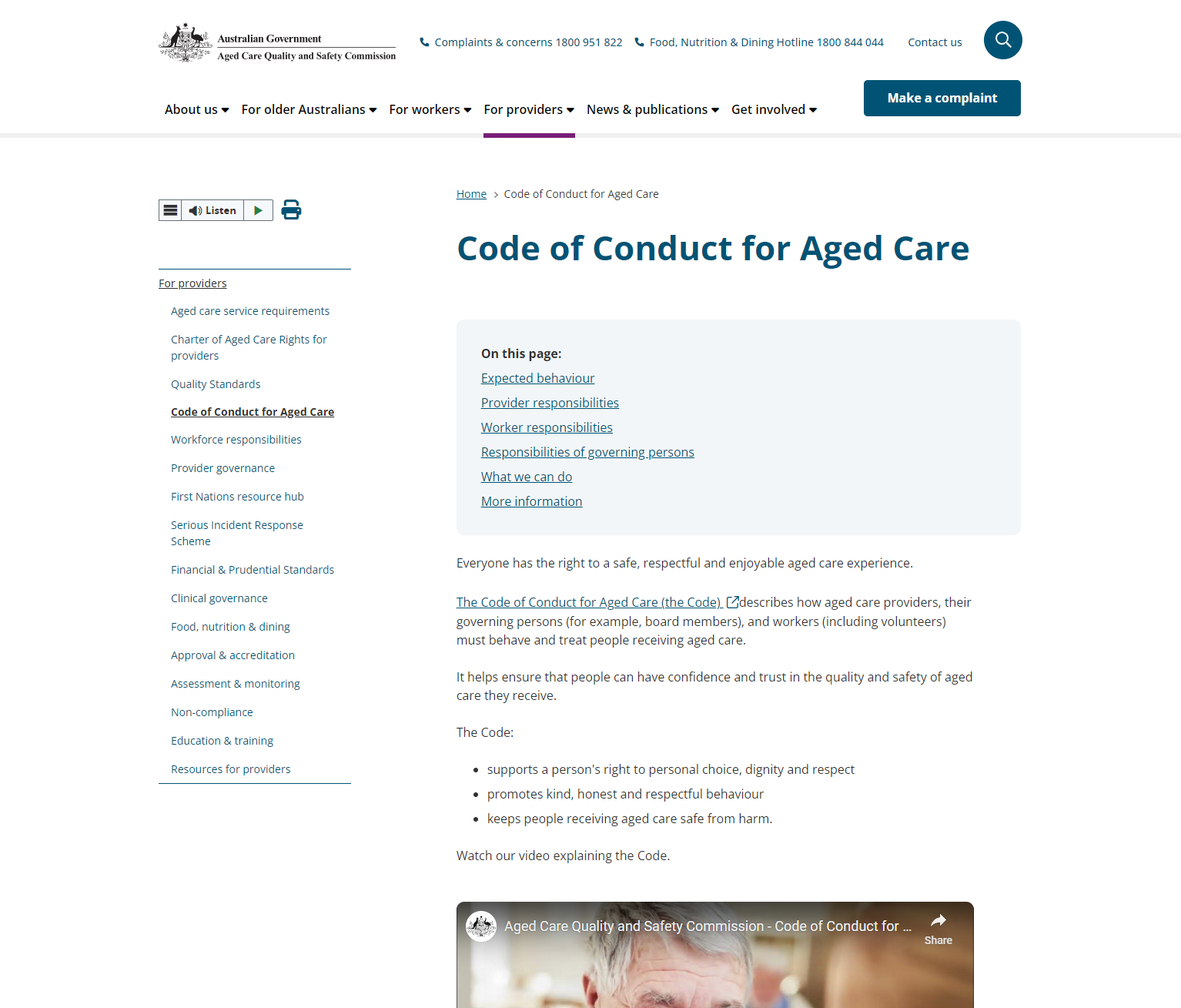
Code of Conduct for Aged Care
This resource outlines the Code of Conduct for Aged Care, which sets expectations for the behaviour of providers, governing persons, and workers. It promotes respect, safety, and quality in aged care services, ensuring people’s rights are protected. The Code includes guidance on handling concerns and preventing abuse or neglect.
This resource may refer to information that will be updated from 1 November 2025 to align with the new Aged Care Act and Quality Standards.
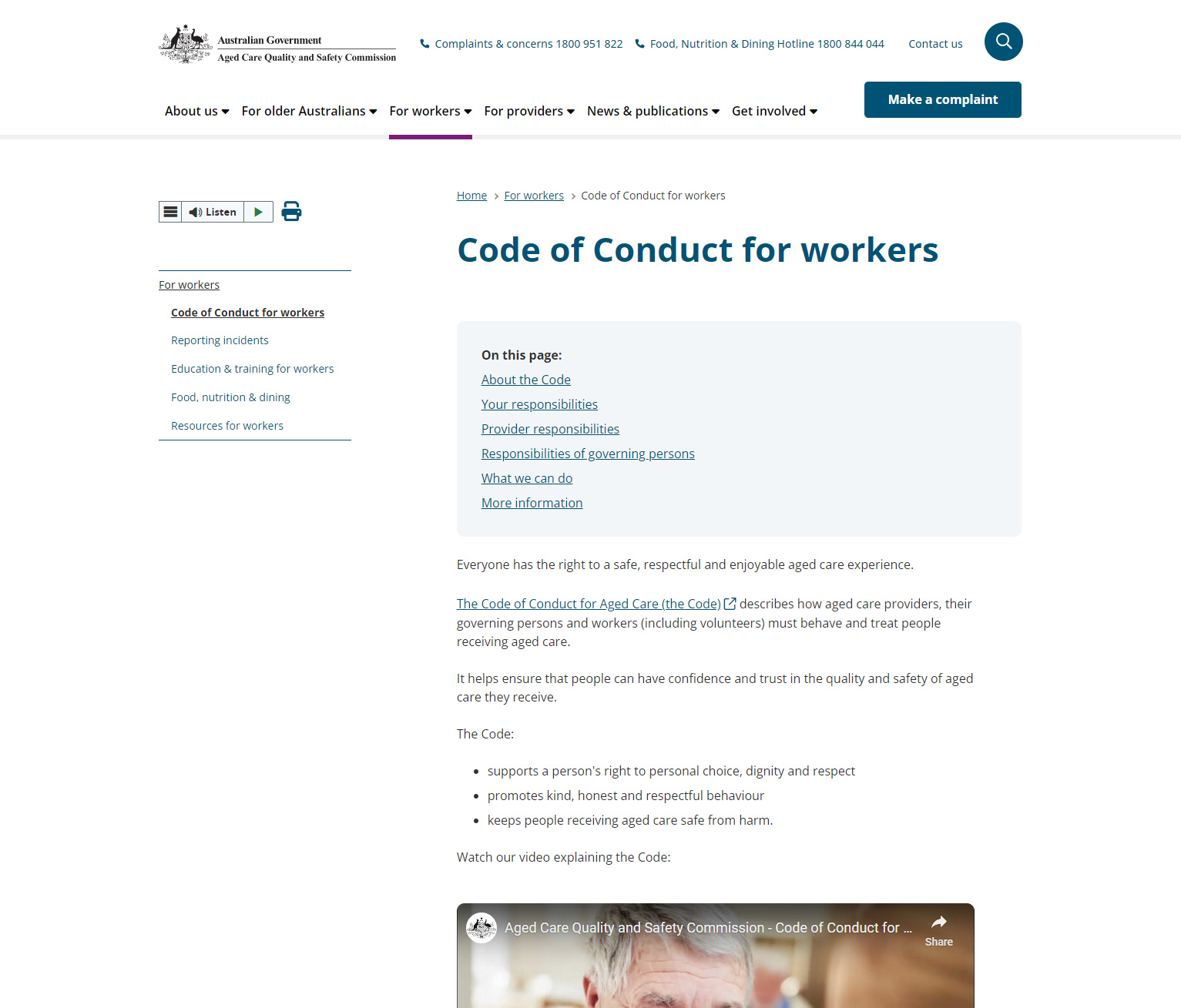
Code of Conduct for workers
This resource outlines the Code of Conduct for Aged Care workers, detailing expected behaviours such as respect, honesty, and integrity. It ensures people receiving care are treated with dignity, kept safe from harm, and supported. The Code applies to all aged care workers, including volunteers.
This resource may refer to information that will be updated from 1 November 2025 to align with the new Aged Care Act and Quality Standards.
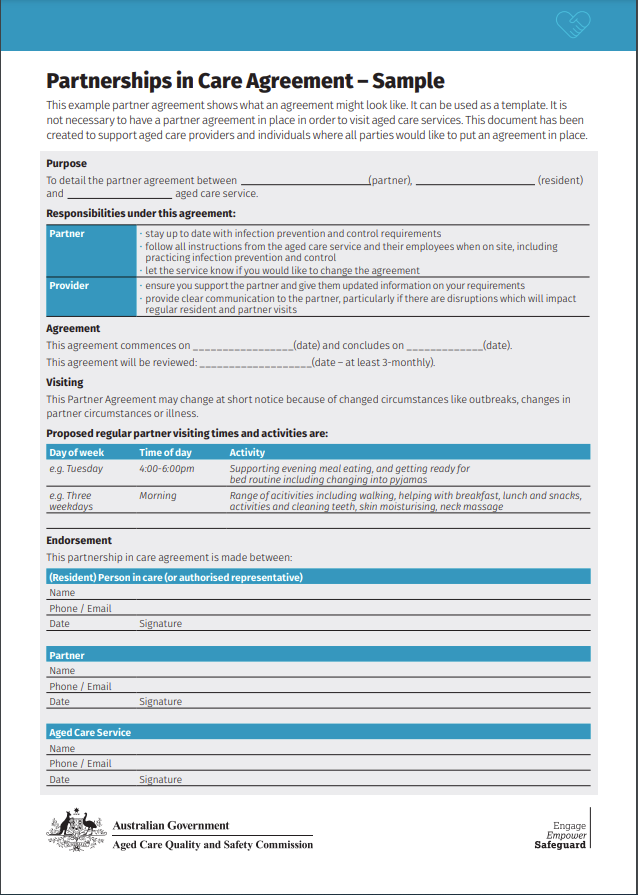
Partnerships in Care Agreement – Sample
This resource is a sample of what a partner agreement might look like. It can be used as a template. This document has been created to support aged care providers and individuals where all parties would like to put an agreement in place.
This resource may refer to information that will be updated from 1 November 2025 to align with the new Aged Care Act and Quality Standards.
Partnerships in Care Agreement – Sample (PDF 108.45 KB)
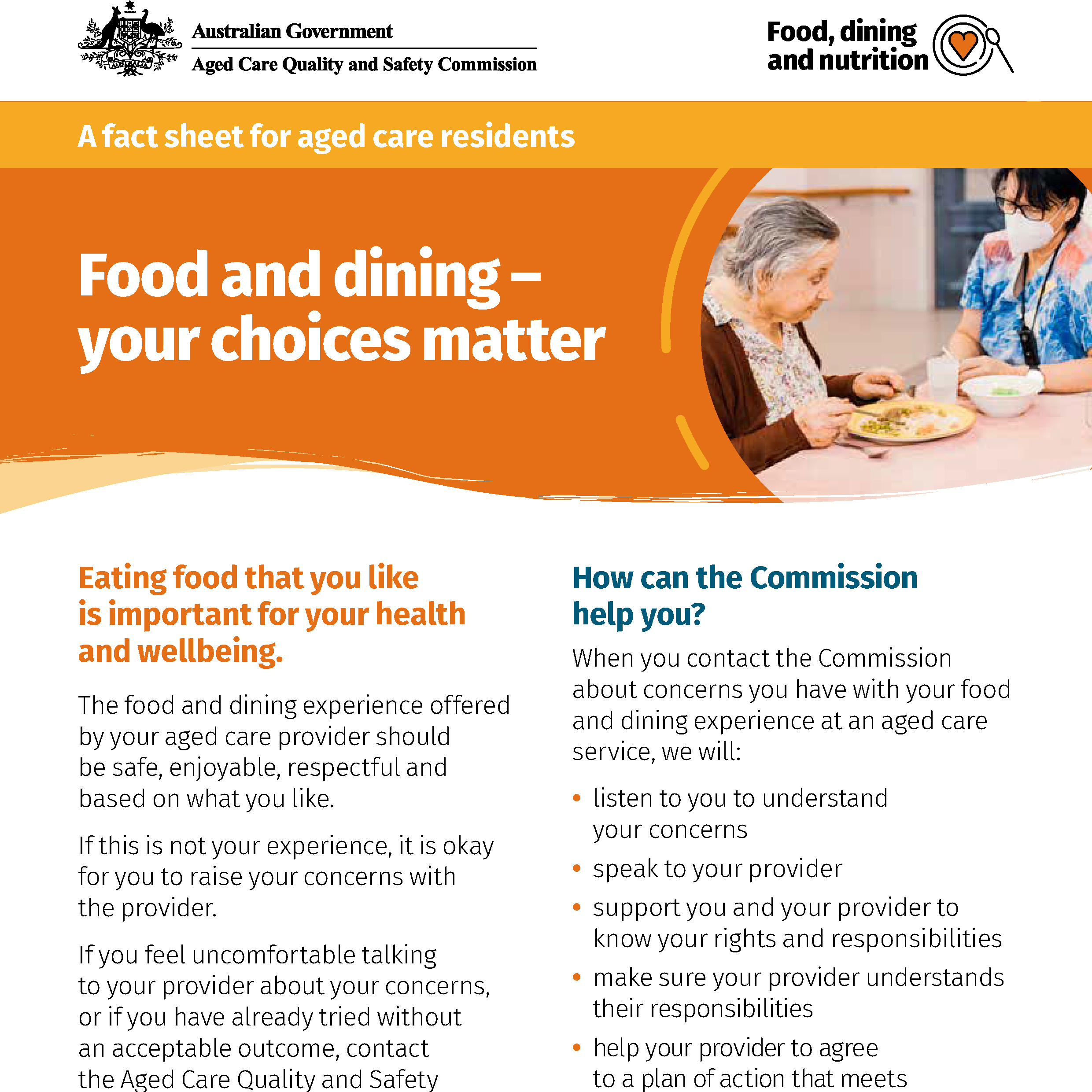
Food and dining - your choices matter
This fact sheet informs aged care residents of their rights to safe, enjoyable, and respectful dining experiences. It outlines steps for raising concerns with providers about food and dining, offers a preference form for residents to communicate their dietary needs, and provides contact information for support services if issues remain unresolved. This resource may refer to information that will be updated from 1 November 2025 to align with the new Aged Care Act and Quality Standards.
English - Food and dining – your choices matter (PDF 484.79 KB)
Arabic - تهمّّنا تفضيلاتكم في الطعام وعادات الأكل (PDF 767.17 KB)
Chinese Simplified - 食品和餐饮—— 您的选择很重要 (PDF 785.39 KB)
Chinese Traditional - 食品和餐飲—— 您的選擇很重要 (PDF 788.7 KB)
French - Alimentation et repas – vos choix sont importants (PDF 684.4 KB)
German - Essen und Speisen – Ihre Wahl zählt (PDF 686.18 KB)
Greek - Φαγητό και γεύματα – οι επιλογές σας έχουν σημασία (PDF 690.89 KB)
Hungarian - Ételek és étkezés – az Ön döntése számít (PDF 684.42 KB)
Macedonian - Храна и јадење - вашиот избор е важен (PDF 683.21 KB)
Maltese - L-ikel u l-ikliet - l-għażliet tiegħek huma importanti (PDF 685.65 KB)
Russian - Питание и прием пищи: ваш выбор имеет значение (PDF 682.53 KB)
Serbian - Храна и обедовање – ваш избор је важан (PDF 681.46 KB)
Spanish - Alimentos y comidas: sus preferencias importan (PDF 679.42 KB)
Governing for Reform in Aged Care Program
This resource outlines the Governing for Reform in Aged Care Program, designed to strengthen corporate and clinical governance capabilities for aged care leaders. It provides tools, online learning modules, webinars, and podcasts to support governance improvement and help leaders engage in reform efforts.
This resource may refer to information that will be updated from 1 November 2025 to align with the new Aged Care Act and Quality Standards.
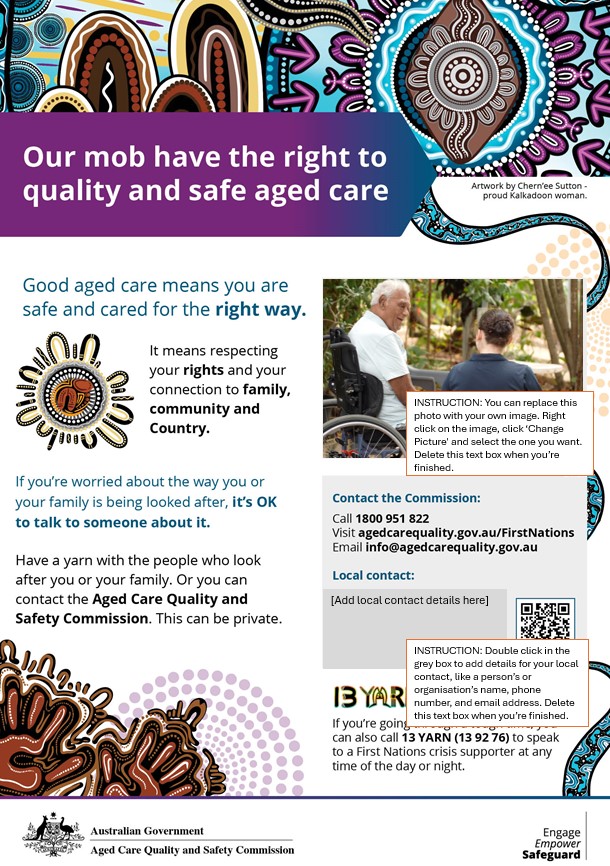
Explaining aged care and your rights – locally tailorable poster - First Nations resources
We’ve developed a tailorable poster for you to edit with your own local details, and print and display at community notice boards or waiting areas.

Complaints about aged care services report
This resource provides reports on complaints about aged care services, offering insights for providers to improve complaint handling. It includes data, case studies, and guided questions to help providers address concerns in both residential and home care settings, supporting better outcomes for people receiving care.
This resource may refer to information that will be updated from 1 November 2025 to align with the new Aged Care Act and Quality Standards.
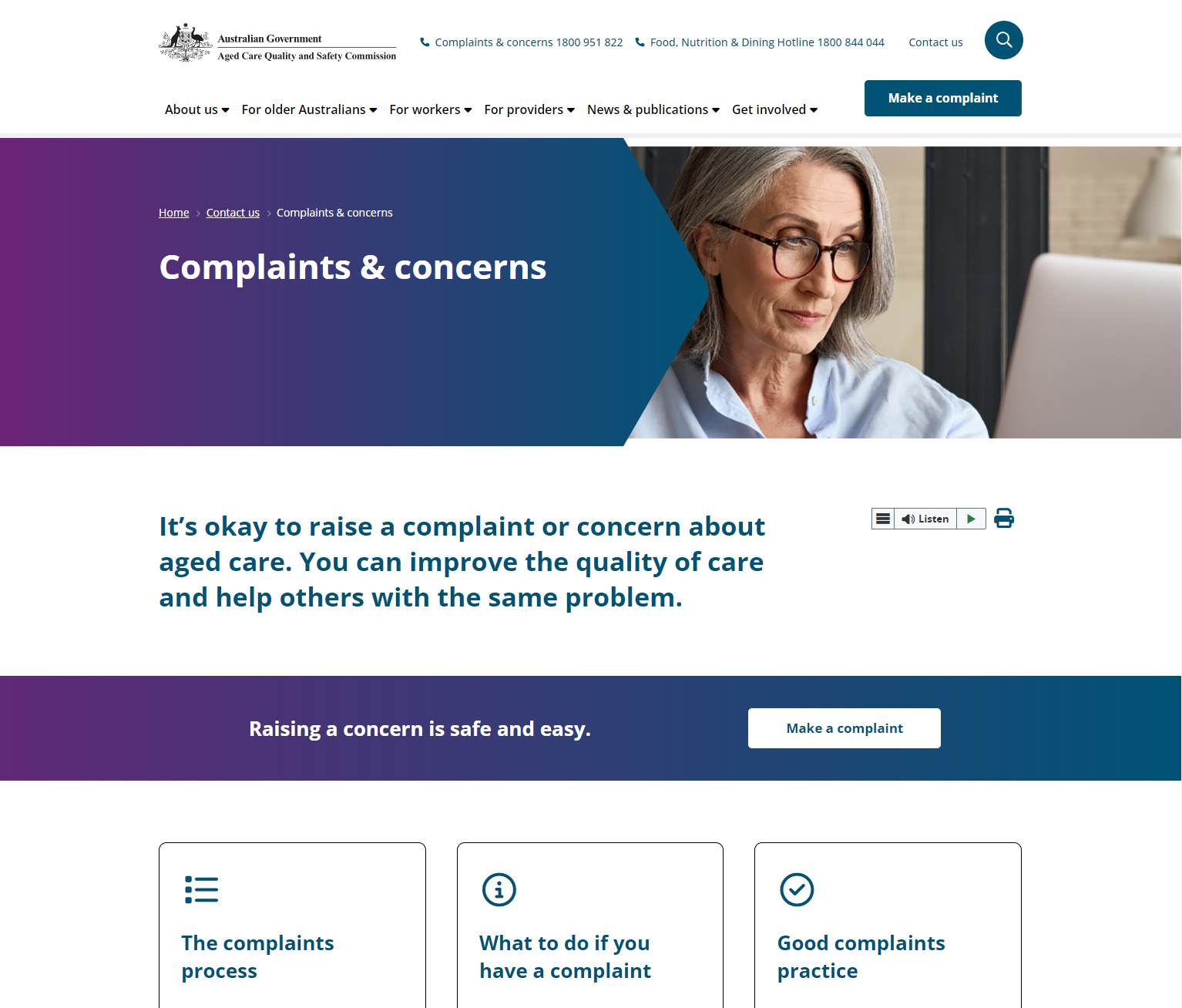
Complaints & concerns
This resource explains how to raise complaints or concerns about aged care services. It outlines the complaints process, how to submit confidential or anonymous complaints, and the importance of good complaints handling in improving care quality. Providers are required to have systems for addressing and resolving complaints.
This resource may refer to information that will be updated from 1 November 2025 to align with the new Aged Care Act and Quality Standards.
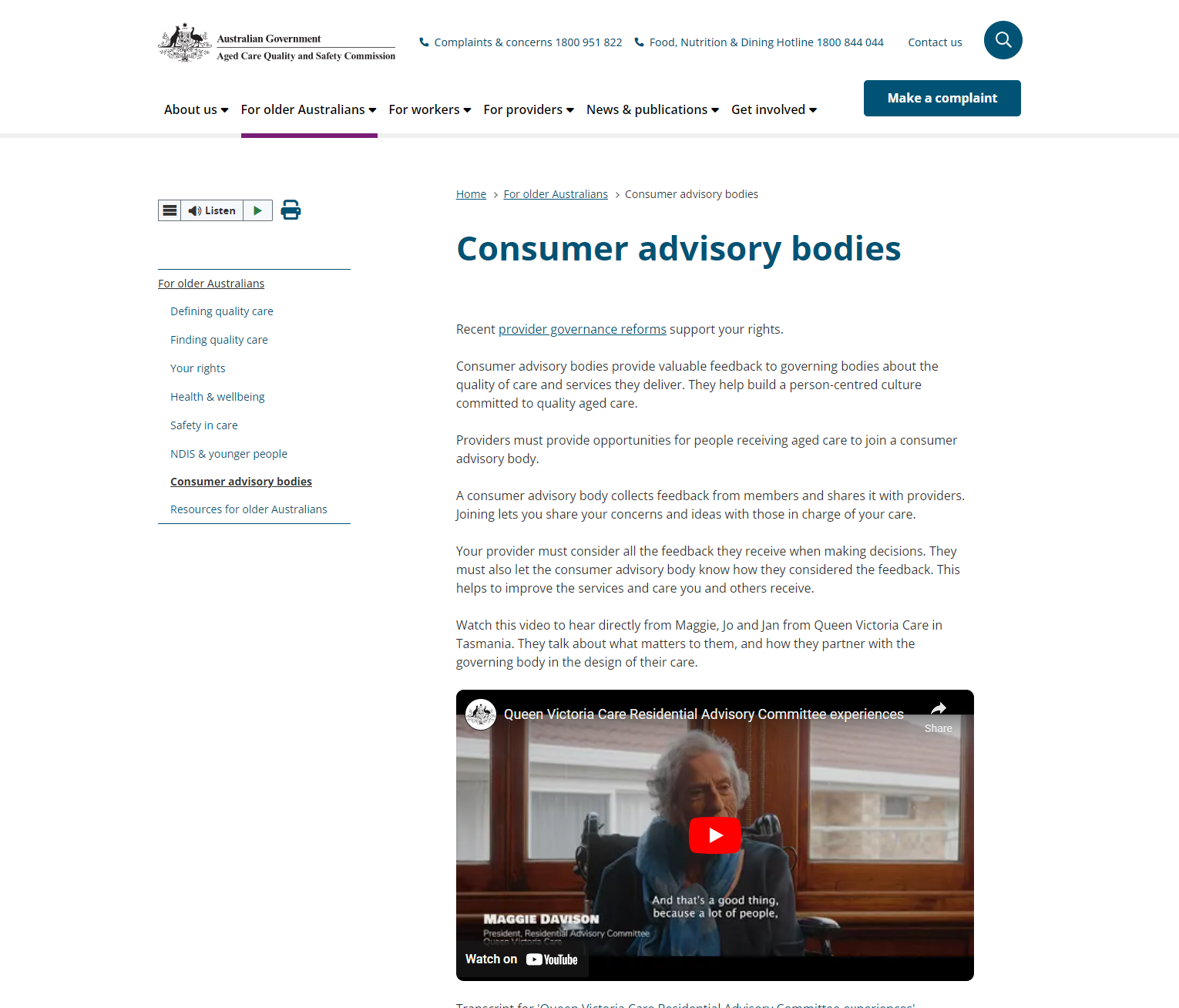
Consumer advisory bodies
This resource explains the role of consumer advisory bodies in aged care, which provide feedback to governing bodies on care and services. It outlines the process for joining, the importance of feedback in decision-making, and the responsibility of providers to offer participation opportunities annually.
This resource may refer to information that will be updated from 1 November 2025 to align with the new Aged Care Act and Quality Standards.
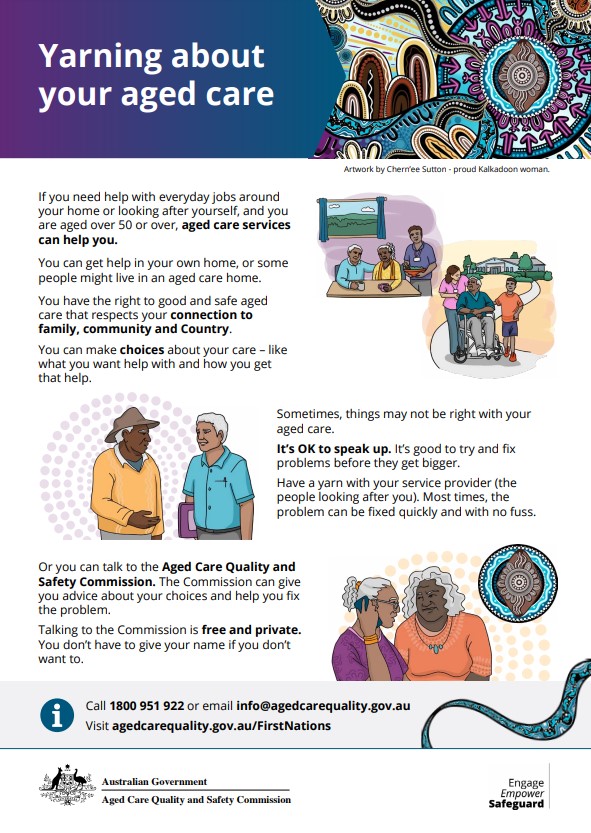
First Nations - Visual information sheet - Your rights when accessing aged care
Yarning about your aged care (PDF 645.07 KB)
What is open disclosure? - video
This video explains open disclosure and what older people can expect from their registered provider during the process. It highlights key aspects such as communication, transparency, and how concerns will be addressed.

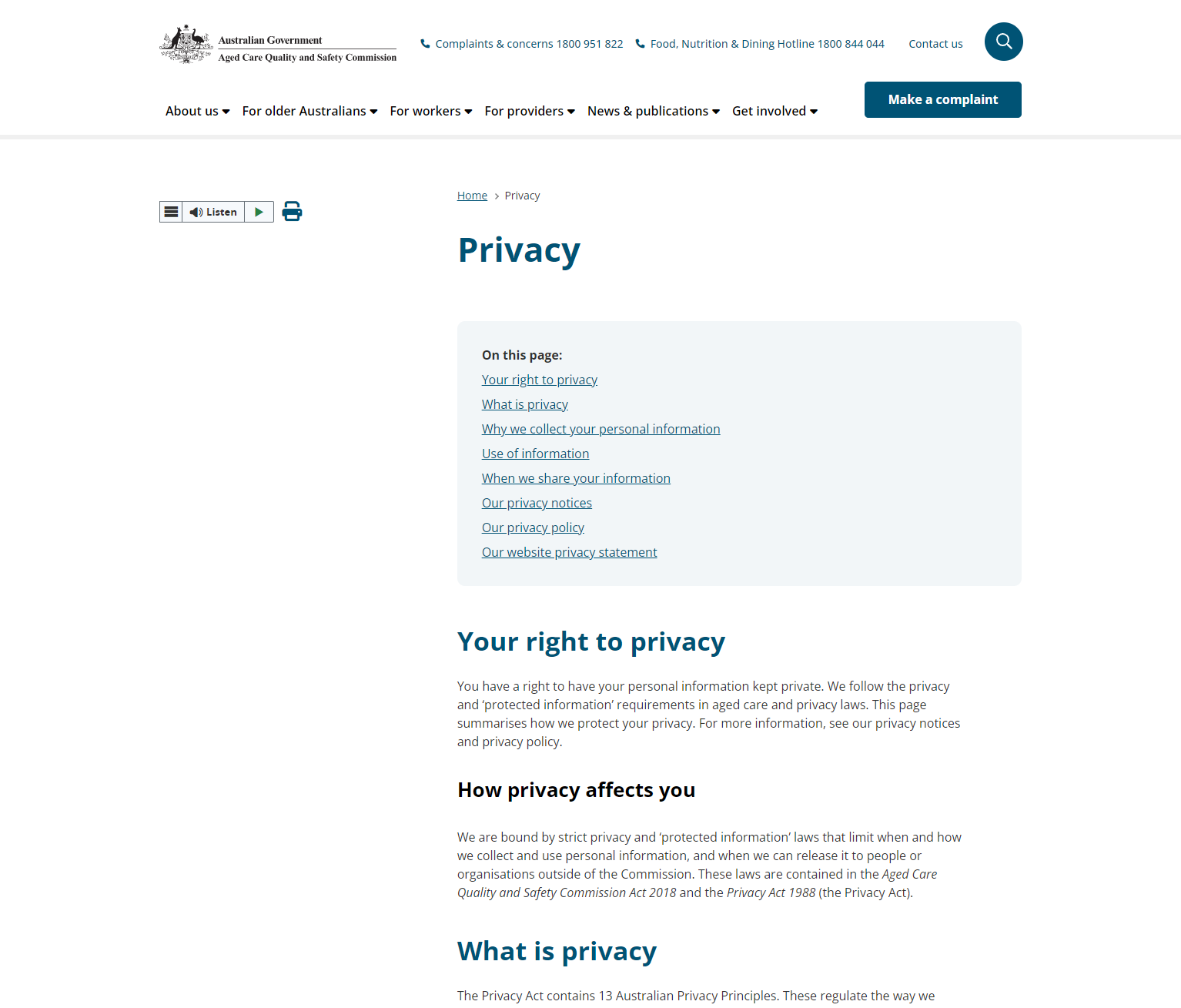
Privacy
This resource provides information about privacy rights in aged care, explaining how personal information is collected, used, and protected. It outlines privacy laws and principles governing the handling of personal data, including when information can be shared. The resource also links to privacy notices and policies for further details.
This resource may refer to information that will be updated from 1 November 2025 to align with the new Aged Care Act and Quality Standards.
First Nations - YouTube videos
This resource includes a series of YouTube videos developed by the Aged Care Quality and Safety Commission. Australian First Nations older people discuss good quality, culturally appropriate and safe aged care, including person-centred care, rights and how to speak up about care. This resource may refer to information that will be updated from 1 November 2025 to align with the new Aged Care Act and Quality Standards.

About the Food, Nutrition and Dining Hotline – provider and worker fact sheet
This resource provides information about the Food, Nutrition, and Dining Hotline, which offers advice and addresses concerns regarding food and dining in aged care. It allows aged care providers, staff, residents, families, and carers to raise issues about nutrition, menu planning, and dining experiences to improve quality and care outcomes. This resource may refer to information that will be updated from 1 November 2025 to align with the new Aged Care Act and Quality Standards.
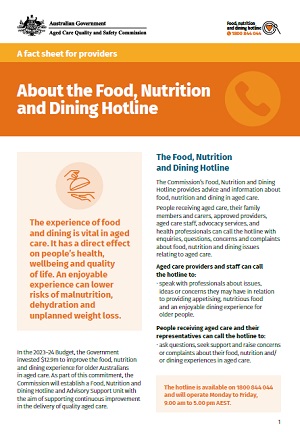
Food, Nutrition and Dining Hotline - Stakeholder Communications Kit
This resource provides a communications kit to help promote the Food, Nutrition, and Dining Hotline. It includes social media posts, fact sheets, and videos to support providers in raising awareness of the hotline, which offers advice, information, and assistance on food, nutrition, and dining-related matters in aged care.
This resource may refer to information that will be updated from 1 November 2025 to align with the new Aged Care Act and Quality Standards.
Partnering in care - Caring together
This resource outlines the Partnerships in Care (PiC) programme, which encourages family and friends to support companionship and care for people in aged care, even during outbreak situations. It provides guidance on infection control, visitation protocols, and formal engagement with care activities to enhance resident well-being in a safe, structured manner.
This resource may refer to information that will be updated from 1 November 2025 to align with the new Aged Care Act and Quality Standards.
First Nations - Digital Flipchart - Your rights in aged care
A visual guide for conversations between providers/workers and older people about aged care. It includes notes for providers/workers to help guide the conversation.

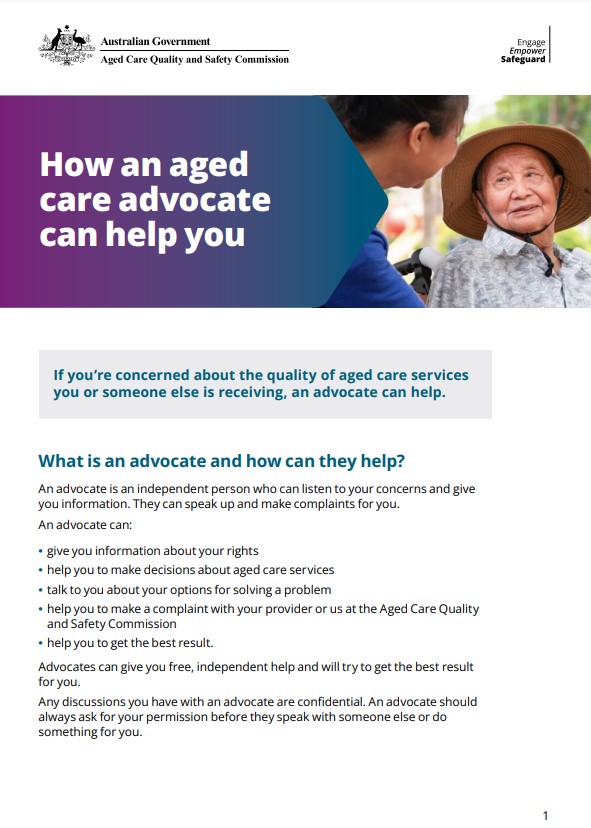
How an aged care advocate can help you
If you are concerned about the quality of the aged care service you or the person you represent is receiving, an advocacy service may be able to help.
How an aged care advocate can help you – fact sheet (PDF 267.87 KB)