
If you are an older person from a Culturally and Linguistically Diverse (CALD) background, these resources will help you to understand your rights to quality safe aged care and how it is changing for the better.
If you are an older person from a Culturally and Linguistically Diverse (CALD) background, these resources will help you to understand your rights to quality safe aged care and how it is changing for the better.
If you are an older person from a Culturally and Linguistically Diverse (CALD) background, these resources will help you to understand your rights to quality safe aged care and how it is changing for the better.
 Arabic - لك الحق في الحصول على رعاية مسنين عالية الجودة وآمنة (PDF 658.11 KB)
Chinese Simplified - 您有权获得优 质、安全的老 年照护服务 (PDF 773.25 KB)
Chinese Traditional - 您有權獲得優質、 安全的長者照護服務 (PDF 645.7 KB)
Nepali - तपाईंसँग गुणस््तरीय र सुरक्षित वृद्ध हेरचाहको अधिकार छ (PDF 732.12 KB)
Polish - Masz prawo do wysokiej jakości i bezpiecznej opieki (PDF 623.03 KB)
Arabic - لك الحق في الحصول على رعاية مسنين عالية الجودة وآمنة (PDF 658.11 KB)
Chinese Simplified - 您有权获得优 质、安全的老 年照护服务 (PDF 773.25 KB)
Chinese Traditional - 您有權獲得優質、 安全的長者照護服務 (PDF 645.7 KB)
Nepali - तपाईंसँग गुणस््तरीय र सुरक्षित वृद्ध हेरचाहको अधिकार छ (PDF 732.12 KB)
Polish - Masz prawo do wysokiej jakości i bezpiecznej opieki (PDF 623.03 KB)
If you are an older person from a Culturally and Linguistically Diverse (CALD) background, these resources will help you to understand your rights to quality safe aged care and how it is changing for the better.
English - Changing aged care for the better - poster (PDF 825.02 KB)
Arabic - تحسين رعاية المسنين من أجلك (PDF 864 KB)
Chinese Simplified - 改变老年照护服务, 让您受益更多 (PDF 988.53 KB)
Chinese Traditional - 改變長者照護服務, 讓您受益更多 (PDF 819.13 KB)
French - Améliorer les soins aux personnes âgées, pour vous (PDF 790.44 KB)
Greek - Βελτιώνοντας τη φροντίδα ηλικιωμένων για εσάς (PDF 791.88 KB)
Gujarati - તમારી સુખાકારીમાં વધારા માટે વૃદ્્ધ સંભાળને બદલવી (PDF 912.6 KB)
Italian - Cambiare l’assistenza agli anziani in meglio per voi (PDF 798.64 KB)
Macedonian - Промена на негата за постари лица за ваше добро (PDF 788.38 KB)
Polish - Zmiana opieki nad osobami starszymi na lepsze (PDF 806.18 KB)
Tamil - உங்்களுக்்ககாக முதிய�ோர் பராமரிப்்பபை மேம்்படுத்துதல (PDF 913.03 KB)
Turkish - Yaşlı bakımını sizin için iyileştiriyoruz (PDF 795.14 KB)
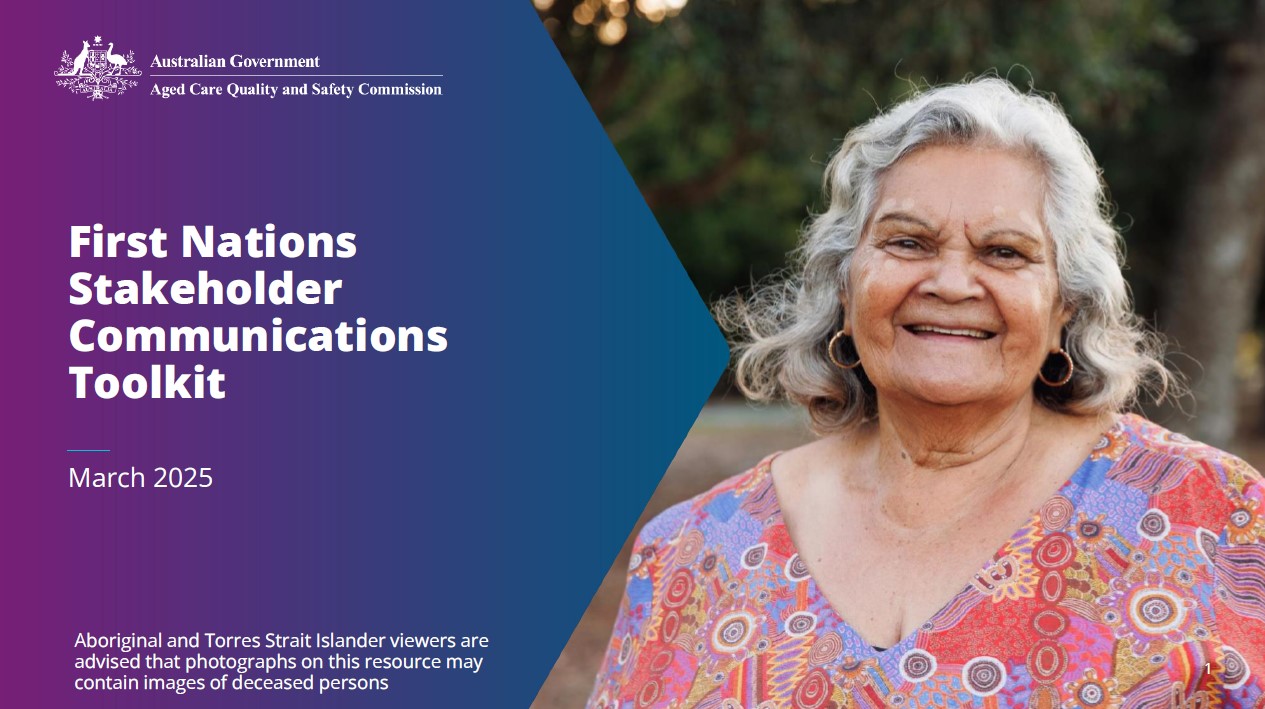
This Toolkit is designed for First Nations stakeholders including providers, workers and others involved in providing aged care services for First Nations people. We’ve developed it to make it easy for you to share relevant resources with your networks and members
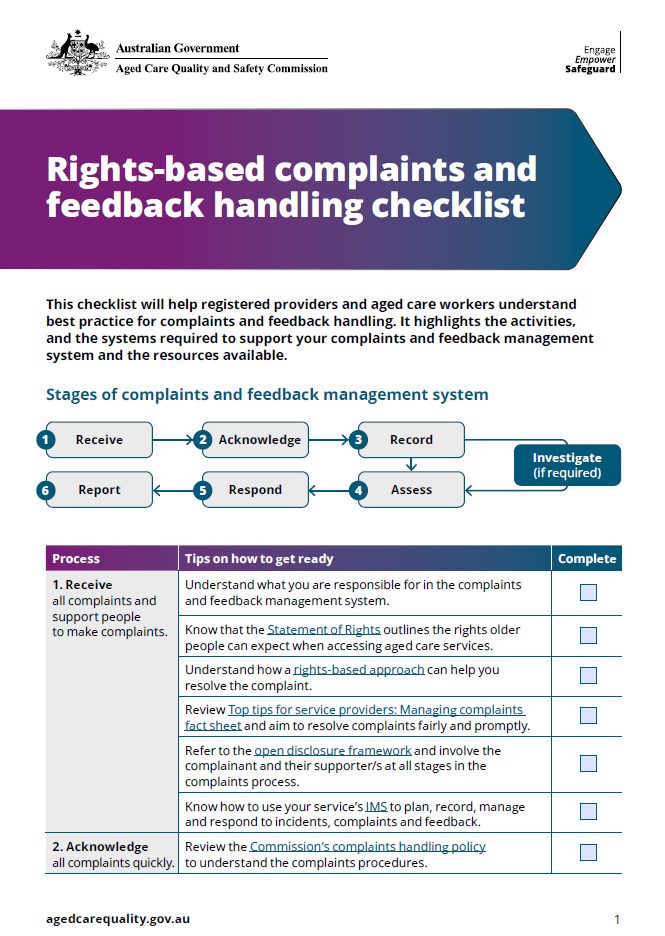
This checklist will help registered providers and aged care workers understand best practice for complaints handling. It highlights the activities and systems required to support your complaints handling process and the resources available.
Rights-based complaints and feedback handling checklist (PDF 256.99 KB)
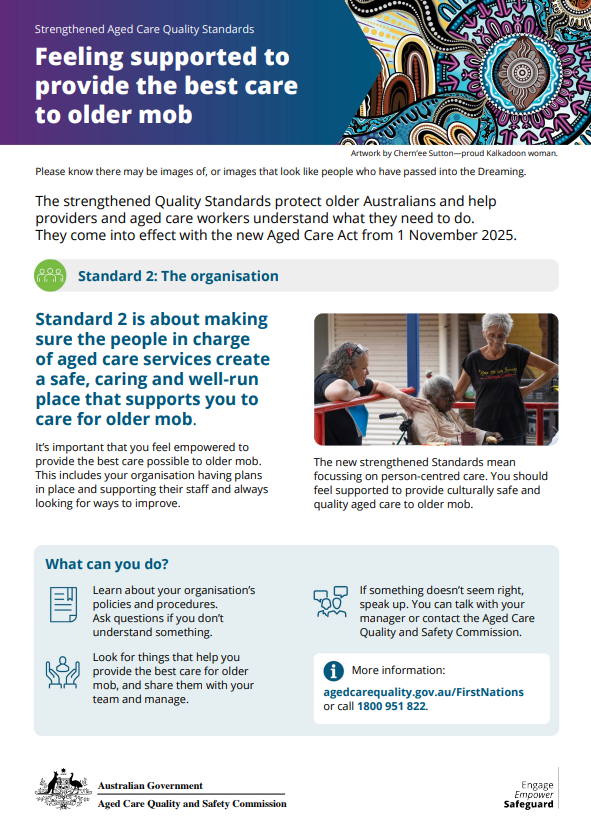
These workplace standards posters demonstrate the strengthened Standards and what they mean for aged care providers and workers. You can print these out and display them around your workplace.
First Nations – Workplace poster – Standard 2 The organisation (PDF 300.55 KB)
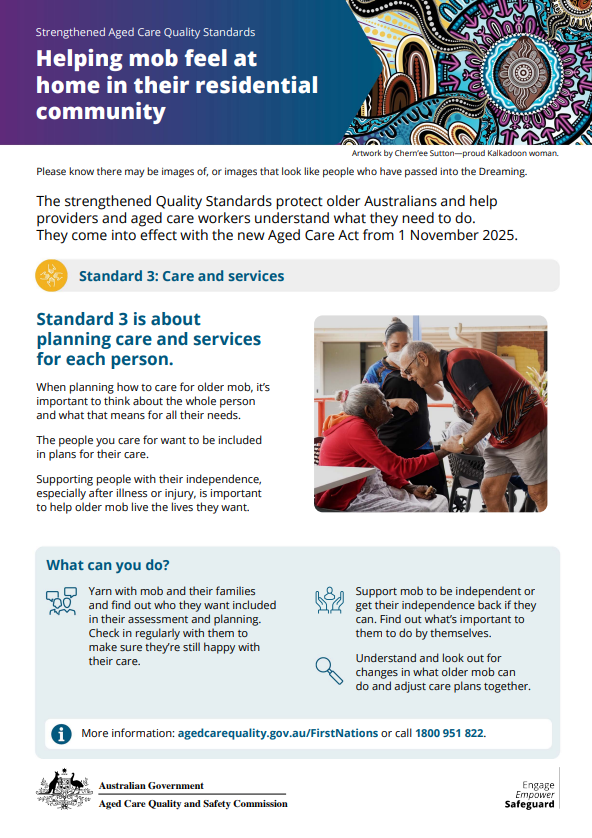
These workplace standards posters demonstrate the strengthened Standards and what they mean for aged care providers and workers. You can print these out and display them around your workplace.
First Nations – Workplace poster – Standard 3 Care and services (PDF 292.93 KB)
These workplace standards posters demonstrate the strengthened Standards and what they mean for aged care providers and workers. You can print these out and display them around your workplace.
First Nations – Workplace poster – Standard 4 The environment (PDF 297.02 KB)
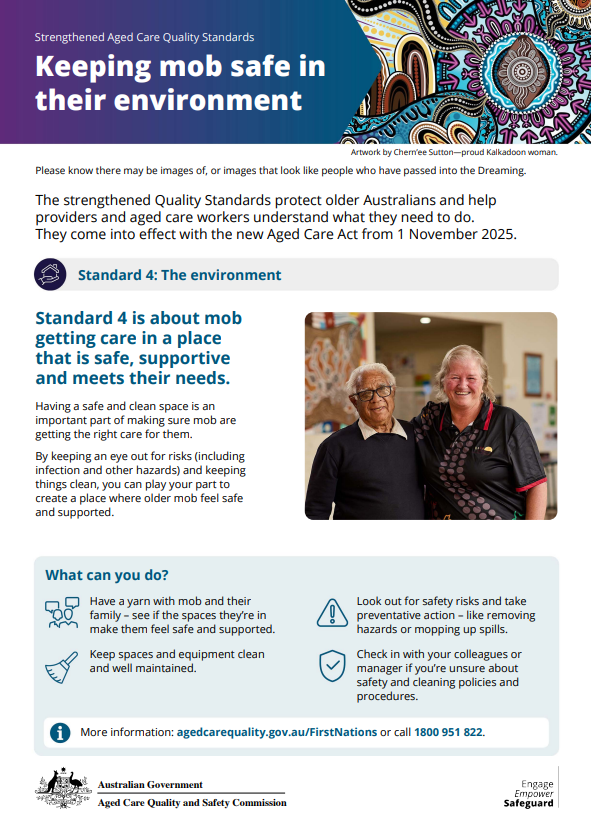
These workplace standards posters demonstrate the strengthened Standards and what they mean for aged care providers and workers. You can print these out and display them around your workplace.
First Nations – Workplace poster – Standard 5 Clinical care (PDF 302.56 KB)
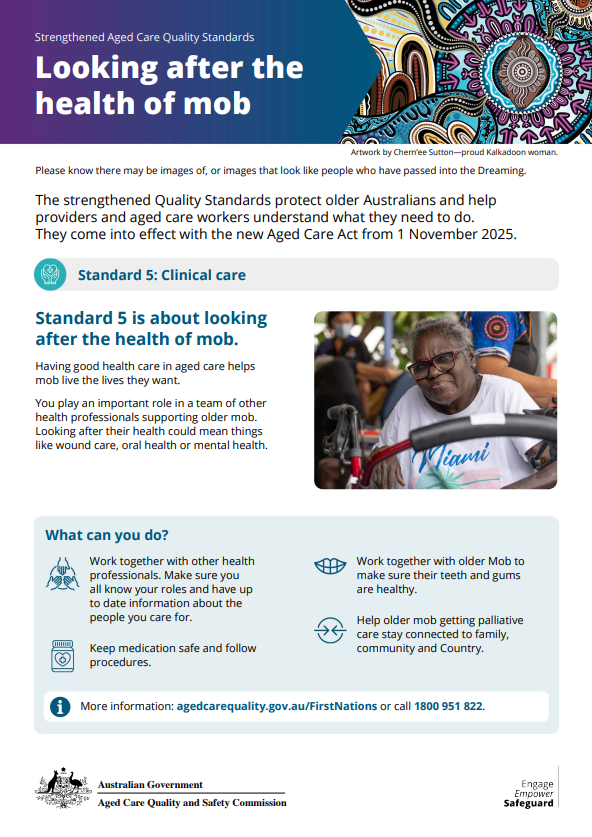
These workplace standards posters demonstrate the strengthened Standards and what they mean for aged care providers and workers. You can print these out and display them around your workplace.
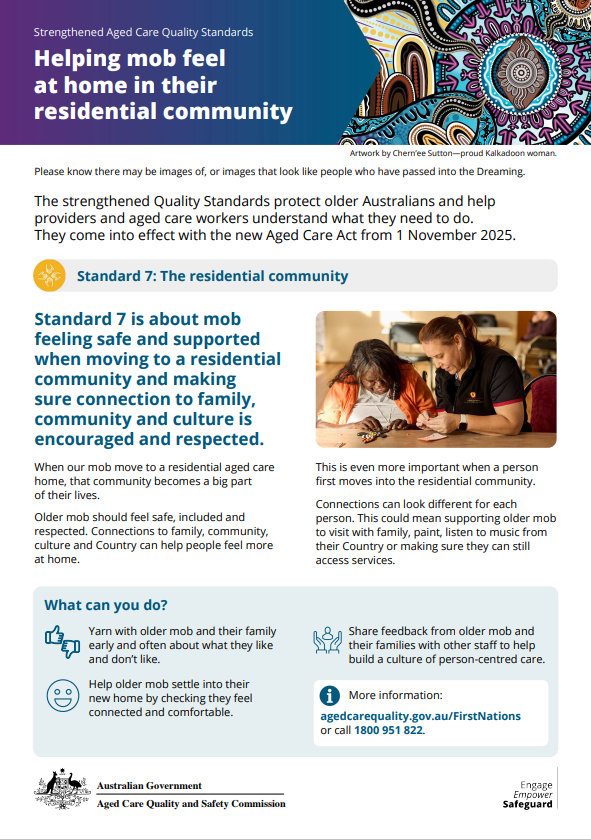
This resource is an extract from a Commission presentation to Ageing Australia about the new Liquidity Standard. It outlines the methodology and key considerations in determining the minimum liquidity amount.

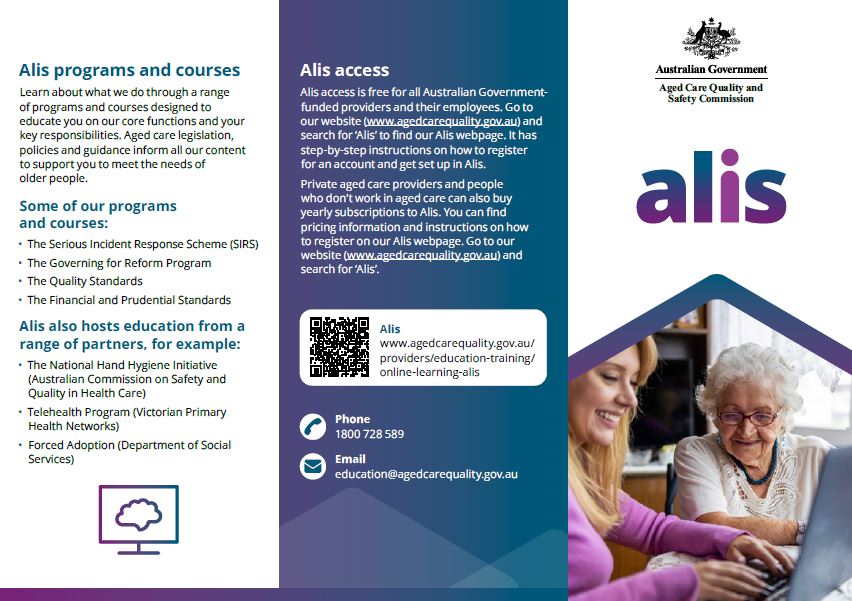
This brochure introduces the Commission’s online learning platform, Alis. It gives an overview of Alis content, its key benefits and details how providers and their staff can register for Alis.
Aged Care Learning Information Solution (Alis) brochure (PDF 297.5 KB)
These workplace standards posters demonstrate the strengthened Standards and what they mean for aged care providers and workers. You can print these out and display them around your workplace.
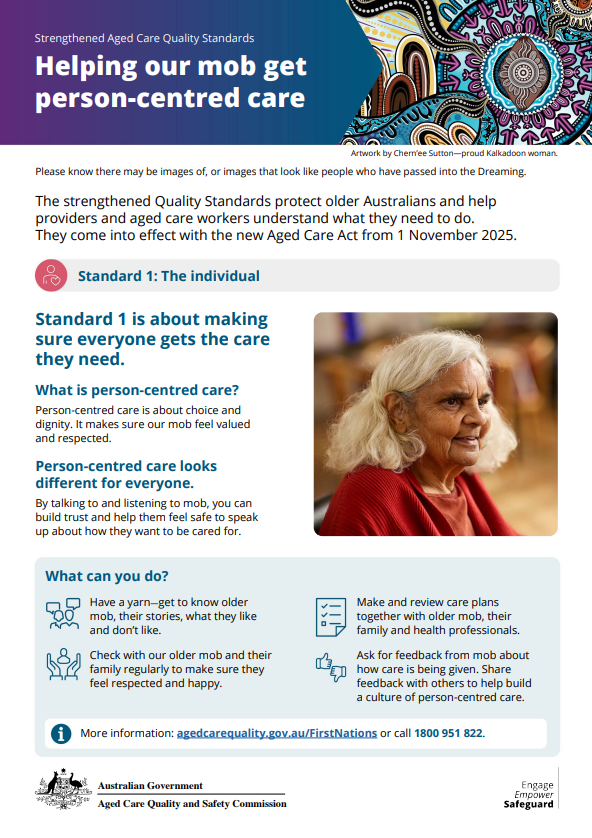
These workplace standards posters demonstrate the strengthened Standards and what they mean for workers in residential aged care. You can print these out and display them around your workplace.
First Nations - Workplace poster - Standard 6 Food and nutrition (PDF 291.22 KB)
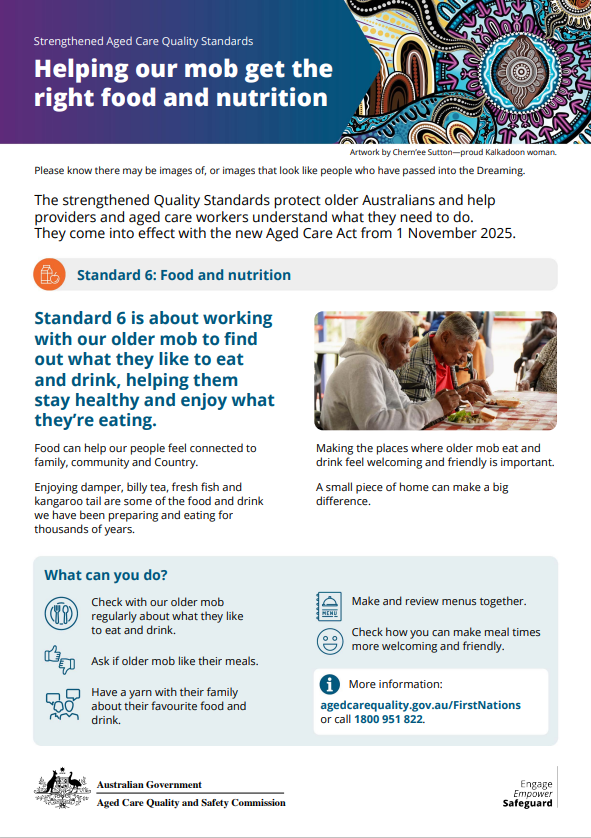 Yarning about your aged care (PDF 645.07 KB)
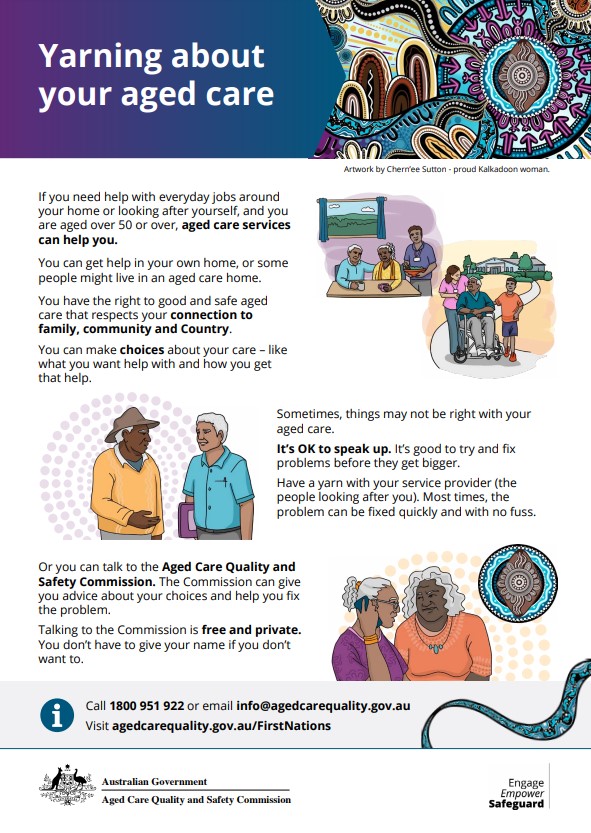
The storyboards use pictures to explain aged care, your rights and what to do if your rights aren’t being met.
How the Commission can help you – visual storyboard (PDF 797.16 KB)
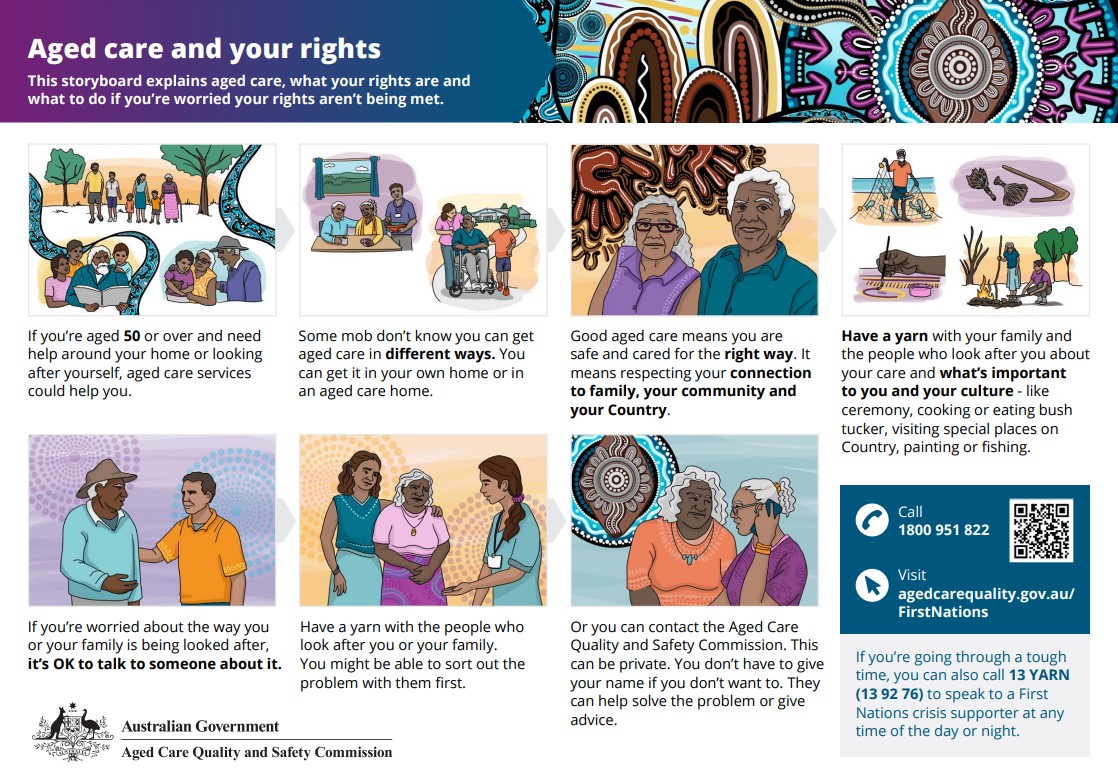
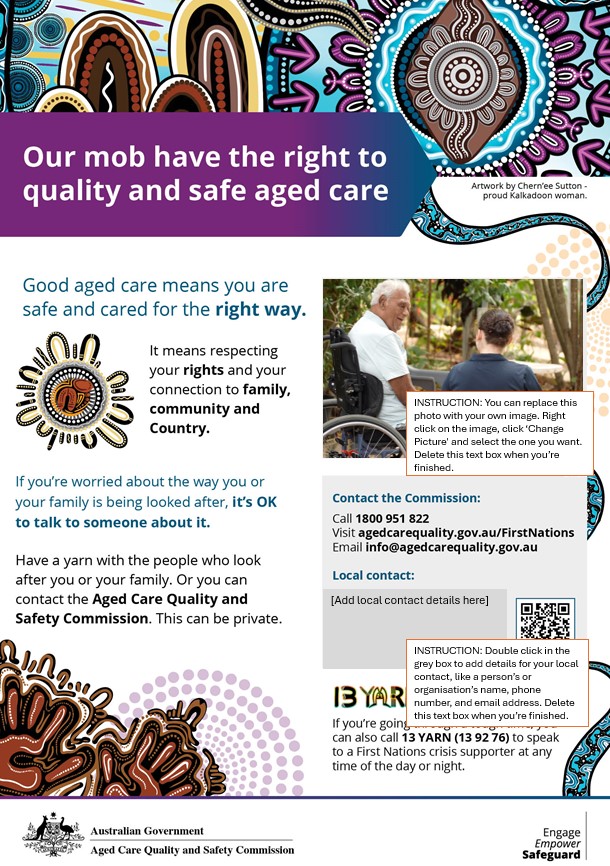
We’ve developed a tailorable poster for you to edit with your own local details, and print and display at community notice boards or waiting areas.

If you’re thinking about accessing aged care services for you or your family, this guide will help you talk to family, friends and community about aged care and your rights.
Conversation Guide – Yarning about aged care (PDF 3.12 MB)
The storyboards use pictures to explain aged care, your rights and what to do if your rights aren’t being met.
Aged care and your rights – visual storyboard (PDF 803.63 KB)