The Quality Standards Resource Centre helps extend understanding of the strengthened Aged Care Quality Standards, which took effect from 1 November 2025. You can search for resources by using keywords, or filtering by standard, outcome and audience. Before using the Resource Centre, please read the terms of use.
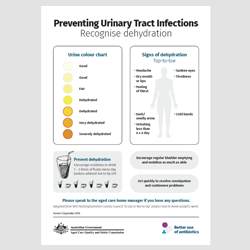
Preventing urinary tract infections: recognise dehydration poster
This provider poster is an educational tool is part of the Commission’s resource bundle to improve antibiotic use for urinary tract infections in aged care services.
 Preventing urinary tract infections (English) (PDF 268.48 KB)
Arabic - الوقاية من التهابات المسالك البولية (PDF 247.14 KB)
Chinese Simplified - 预防尿路感染 (PDF 379.59 KB)
Chinese Traditional - 預防尿路感染 (PDF 214.94 KB)
Croatian - Sprječavanje infekcija mokraćnog sustava (PDF 216.87 KB)
Dari - جلوگیری از عفونتهای مجاری ادراری (PDF 226.51 KB)
Dinka - Pɛ̈n Tuany ë lɛc (PDF 200.17 KB)
Farsi - پیشگیری از عفونت های مجاری ادرار (PDF 224.74 KB)
French - Prévention des infections urinaires (PDF 202.22 KB)
Greek - Πρόληψη Ουρολοιμώξεων (PDF 190.09 KB)
Indonesian - Mencegah Infeksi Saluran Kemih (PDF 200.34 KB)
Italian - Prevenzione delle infezioni del tratto urinario (PDF 200.45 KB)
Khmer - Preventing Urinary Tract Infections (PDF 208.03 KB)
Korean - 요로 감염 예방 (PDF 205.57 KB)
Pashto - د ادرارو د الرې د انتاناتو مخنیوی (PDF 225.71 KB)
Punjabi - ਪਿਸ਼਼ਾਬ ਨਾਲੀ ਦੀਆਂ ਲਾਗਾਂ ਦੀ ਰੋਕਥਾਮ ਕਰਨਾ (PDF 195.34 KB)
Somali - Ka hortaga Caabuqa Goobta Kaadi mareenka (PDF 211.32 KB)
Spanish - Prevención de las Infecciones del Tracto Urinario (PDF 201.38 KB)
Thai - การป้้องกัันโรคติิดเชื้้อในทางเดิินปััสสาวะ (PDF 202.81 KB)
Tamil - சிறுநீர்ப் பாதைத் தொொற்றுகளைத் தடுத்்தல (PDF 208.2 KB)
Turkish - İdrar Yolu Enfeksiyonlarının Önlenmesi (PDF 204.55 KB)
Urdu - پیشاب کے نظام میں انفیکشنوں کی روک تھام (PDF 228.26 KB)
Vietnamese - Đề phòng Nhiễm trùng đường Tiết niệu (PDF 193.49 KB)
Preventing urinary tract infections (English) (PDF 268.48 KB)
Arabic - الوقاية من التهابات المسالك البولية (PDF 247.14 KB)
Chinese Simplified - 预防尿路感染 (PDF 379.59 KB)
Chinese Traditional - 預防尿路感染 (PDF 214.94 KB)
Croatian - Sprječavanje infekcija mokraćnog sustava (PDF 216.87 KB)
Dari - جلوگیری از عفونتهای مجاری ادراری (PDF 226.51 KB)
Dinka - Pɛ̈n Tuany ë lɛc (PDF 200.17 KB)
Farsi - پیشگیری از عفونت های مجاری ادرار (PDF 224.74 KB)
French - Prévention des infections urinaires (PDF 202.22 KB)
Greek - Πρόληψη Ουρολοιμώξεων (PDF 190.09 KB)
Indonesian - Mencegah Infeksi Saluran Kemih (PDF 200.34 KB)
Italian - Prevenzione delle infezioni del tratto urinario (PDF 200.45 KB)
Khmer - Preventing Urinary Tract Infections (PDF 208.03 KB)
Korean - 요로 감염 예방 (PDF 205.57 KB)
Pashto - د ادرارو د الرې د انتاناتو مخنیوی (PDF 225.71 KB)
Punjabi - ਪਿਸ਼਼ਾਬ ਨਾਲੀ ਦੀਆਂ ਲਾਗਾਂ ਦੀ ਰੋਕਥਾਮ ਕਰਨਾ (PDF 195.34 KB)
Somali - Ka hortaga Caabuqa Goobta Kaadi mareenka (PDF 211.32 KB)
Spanish - Prevención de las Infecciones del Tracto Urinario (PDF 201.38 KB)
Thai - การป้้องกัันโรคติิดเชื้้อในทางเดิินปััสสาวะ (PDF 202.81 KB)
Tamil - சிறுநீர்ப் பாதைத் தொொற்றுகளைத் தடுத்்தல (PDF 208.2 KB)
Turkish - İdrar Yolu Enfeksiyonlarının Önlenmesi (PDF 204.55 KB)
Urdu - پیشاب کے نظام میں انفیکشنوں کی روک تھام (PDF 228.26 KB)
Vietnamese - Đề phòng Nhiễm trùng đường Tiết niệu (PDF 193.49 KB)
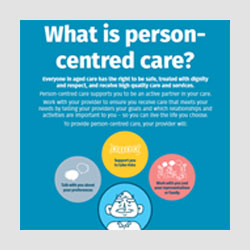
Person-centred care consumer resources
The poster and video will support you in understanding person-centred care.
A3 poster — What is person-centred care? (PDF 1.04 MB)
Consumer guide — What is person-centred care? (PDF 1.79 MB)
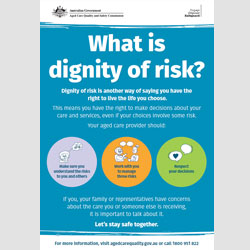
What is dignity of risk? consumer resources
The Commission has developed a number of resources to help aged care consumers understand what dignity of risk is and what actions you should expect from your provider. The dignity of risk is another way of saying you have the right to live the life you choose.
A3 poster — What is dignity of risk? (PDF 351.01 KB)
A4 guide — What is dignity of risk? (PDF 404.72 KB)
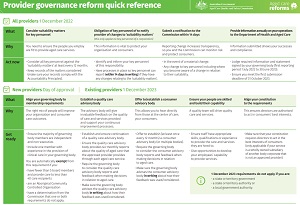
Provider governance quick reference poster
A quick reference A3 poster informing providers about their new provider governance responsibilities.
Provider Governance quick reference poster (PDF 559.11 KB)
To Dip or Not to Dip - Implementation Guide for Nurse and Pharmacist Champions
To Dip or Not to Dip (TDONTD) is a quality improvement intervention successfully implemented in UK and Australian aged care homes to improve UTI assessment and antibiotic prescribing appropriateness.
This implementation guide has been drawn from the experiences of homes and champions who have implemented TDONTD, along with feedback from aged care nurses and personal care assistants who have used TDONTD resources.

Hand Hygiene - Helping others with hand hygiene
Infection prevention and control helps to stop the spread of germs like bacteria and viruses that cause respiratory infections and gastroenteritis. Hand hygiene is a very important part of this.
In this video you will learn how to clean another person's hands.
Your role in infection prevention and control when visiting an aged care service
Infection prevention and control, also known as IPC, are the steps and processes that people can use to reduce the spread of harmful germs and bacteria.
People who visit aged care services can help support IPC processes.
Partnerships in care – Partner information package
The partner information pack presents information for all people visiting and volunteering in residential aged care services. The resource includes information on the importance of infection prevention and control (IPC), the use of personal protective equipment (PPE), and changes in what you need to do if you visit during an outbreak.
Arabic - الشراكة في الرعاية الرعاية المشتركة (PDF 4.87 MB)
Chinese Simplified - 护理合作伙伴 携手护理 (PDF 4.81 MB)
Chinese Traditional - 護理合作夥伴 攜手護理 (PDF 4.73 MB)
Dutch - Samenwerking in de zorg Samen zorgdragen (PDF 4.34 MB)
German - Pflegepartnerschaften Gemeinsam pflegen (PDF 4.38 MB)
Hungarian - Gondozási partnerség Gondozás közösen (PDF 4.38 MB)
Korean - 돌봄 파트너십 함께하는 돌봄 (PDF 4.87 MB)
Latvian - Aprūpes partnerība Kopīgas rūpes (PDF 4.33 MB)
Macedonian - Партнерства во грижа Да се грижиме заедно (PDF 4.31 MB)
Maltese - Sħubija fil-kura Nieħdu ħsieb flimkien (PDF 4.35 MB)
Polish - Partnerstwo w opiece Wspólna opieka (PDF 4.37 MB)
Portuguese - Parceiros nos cuidados Cuidando juntos (PDF 4.37 MB)
Russian - Партнеры по уходу Заботимся вместе (PDF 4.33 MB)
Spanish - Atención en colaboración Cuidamos juntos (PDF 4.35 MB)
Turkish - Bakım ortaklıkları Birlikte dikkat etmek (PDF 4.32 MB)
Ukrainian - Партнерство у сфері догляду Піклуємося разом (PDF 4.33 MB)
Vietnamese - Quan hệ đối tác chăm sóc Cùng nhau chăm sóc (PDF 4.33 MB)

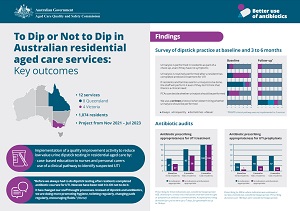
To Dip or Not to Dip in Australian residential aged care services - project findings
This visual abstract presents outcomes from a quality improvement project aimed at reducing low-value urine dipstick testing in aged care services. It included nurse education, implementing clinical pathways for UTI identification, and evaluating urinalysis practices and antibiotic prescribing. The findings demonstrate improved antibiotic prescribing appropriateness for UTIs over a 6-month follow-up period.
This resource may refer to information that will be updated from 1 November 2025 to align with the new Aged Care Act and Quality Standards.
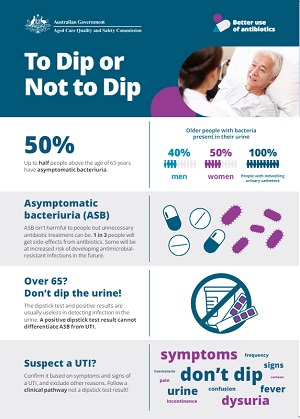
To Dip or Not to Dip - huddle tool A3 poster
This huddle tool poster provides guidance on appropriate use of urine dipstick tests in older adults. It explains that asymptomatic bacteriuria (ASB) is common and not harmful, but that unnecessary antibiotic treatment can be. It suggests confirming urinary tract infections (UTIs) through clinical symptoms rather than dipstick results.
This resource may refer to information that will be updated from 1 November 2025 to align with the new Aged Care Act and Quality Standards.
To Dip or Not to Dip - huddle tool A3 poster (PDF 393.96 KB)
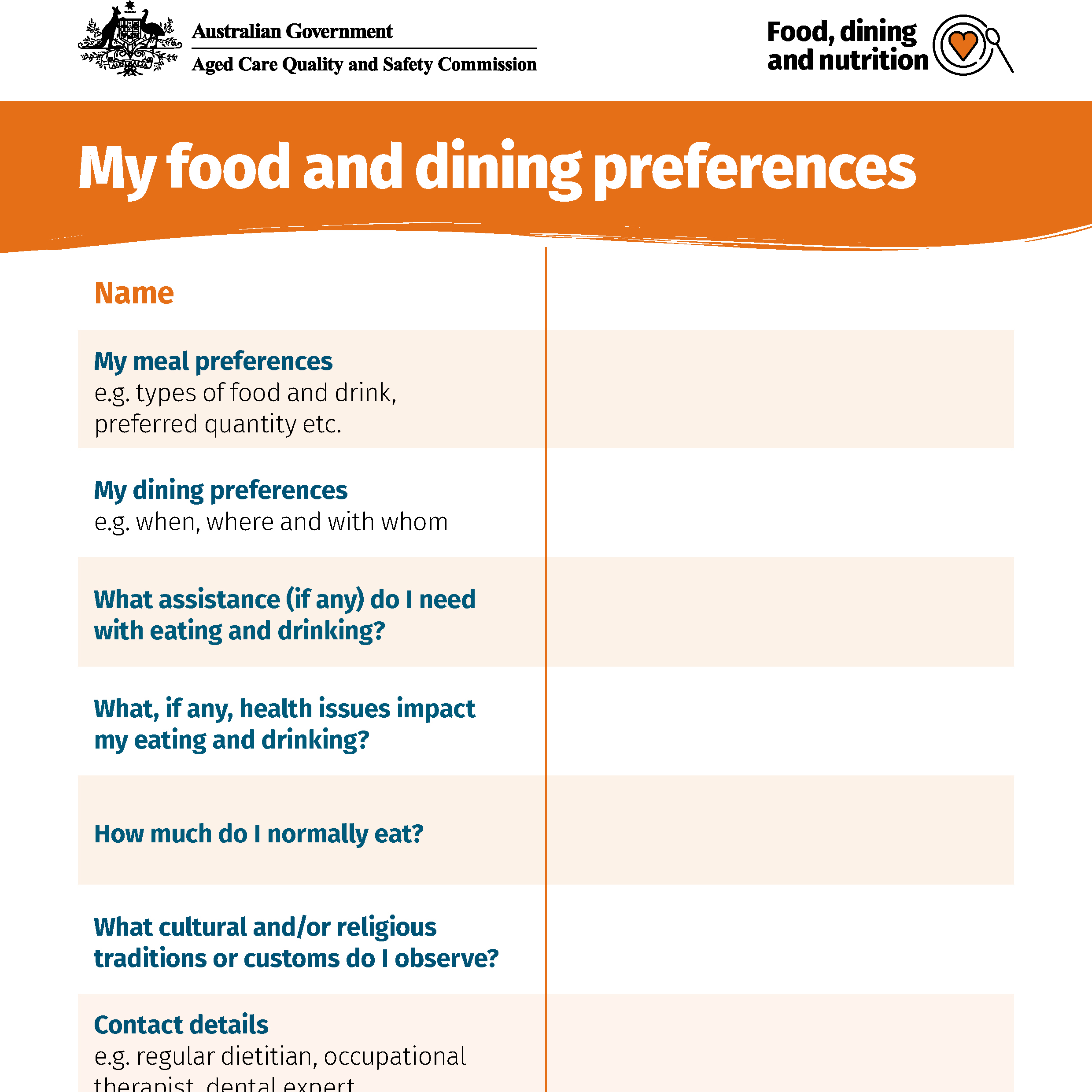
My food and dining preferences - form
This fact sheet helps aged care residents communicate their food and dining preferences. It includes sections for meal choices, dining preferences, assistance needs, health considerations, cultural or religious customs, and contact information for allied health professionals. It also advises staff to monitor changes in weight and contact a dietitian if needed.
This resource may refer to information that will be updated from 1 November 2025 to align with the new Aged Care Act and Quality Standards.
My food and dining preferences form (PDF 378.98 KB)
Arabic - تفضيلاتي في الطعام وعادات الأكل (PDF 426.01 KB)
French - Mes préférences alimentaires et de repas (PDF 365.82 KB)
German - Meine Essens- und Speisevorlieben (PDF 358.86 KB)
Greek - Οι προτιμήσεις μου για το φαγητό και τα γεύματα (PDF 359.43 KB)
Hungarian - Étel- és étkezési preferenciák (PDF 369.35 KB)
Macedonian - Моите желби во врска со храната и јадењето (PDF 358.79 KB)
Maltese - Il-preferenzi tiegħi tal-ikel u l-ikliet (PDF 364.67 KB)
Portuguese - Minhas preferências alimentares e gastronômicas (PDF 373.26 KB)
Russian - Мои предпочтения в еде и приеме пищи (PDF 353.14 KB)
Serbian - Моје жеље које се тичу хране и обедовања (PDF 353.84 KB)
Simplified Chinese - 我的饮食及用餐偏好 (PDF 420.97 KB)
Traditional Chinese - 我的飲食及用餐偏好 (PDF 422.91 KB)
Spanish - Mis preferencias de alimentos y comidas (PDF 365.1 KB)
Vietnamese - Sở thích ăn uống và thực phẩm của tôi (PDF 340.54 KB)
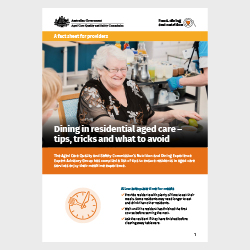
Dining in residential aged care - tips and tricks fact sheet
This fact sheet provides practical tips for enhancing dining experiences in residential aged care settings. It offers guidance on food presentation, meal assistance, creating a respectful and enjoyable atmosphere, supporting independence, and providing culturally appropriate dining options. The aim is to improve mealtime satisfaction while maintaining older peoples' dignity and people's preferences.
This resource may refer to information that will be updated from 1 November 2025 to align with the new Aged Care Act and Quality Standards.
Dining in residential aged care – tips, tricks and what to avoid (PDF 484.37 KB)
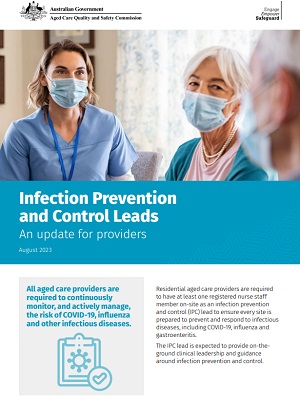
Infection Prevention and Control Leads: Updates for providers
This fact sheet provides updated information for providers of aged care on effective infection prevention and control capability. This is critical to the safe, effective delivery of personal and clinical care in aged care. This is particularly the case during the coronavirus COVID-19 pandemic.
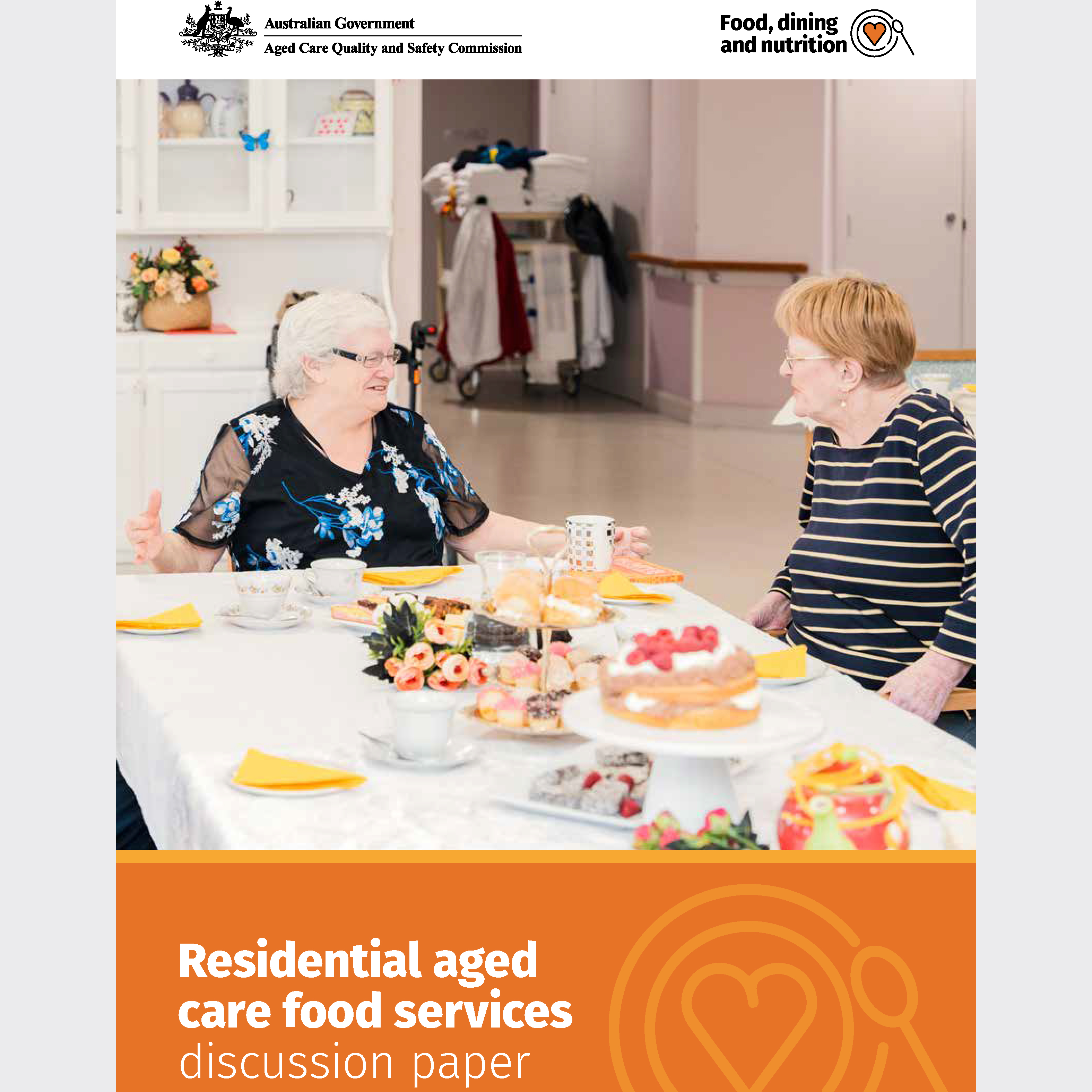
Residential aged care food services discussion paper
This paper presents a high-level overview of contemporary evidence regarding food services in residential aged care settings.
Residential aged care food services discussion paper (PDF 536.47 KB)
Benefits of effective incident management video
In this short video, we provide an overview of the benefits of effective incident management in residential aged care settings under the Serious Incident Response Scheme (SIRS), which commenced on 1 April 2021.
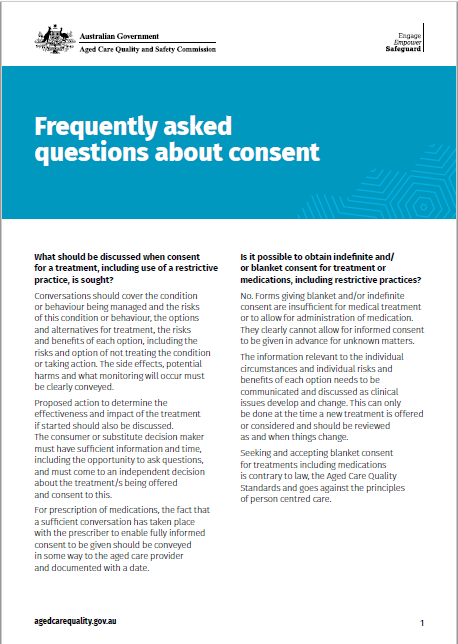
Frequently asked questions about consent
This fact sheet covers the frequently asked questions about consent in aged care.
Frequently asked questions about consent (PDF 433.26 KB)
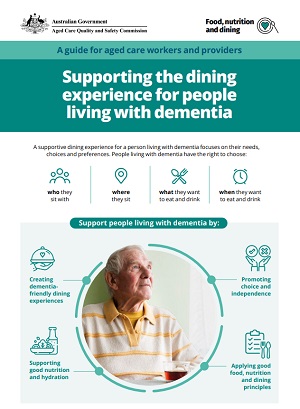
Supporting the dining experience for people living with dementia – Providers and workers guide
This guide is about how to support people living with dementia to maintain good nutrition and enjoy positive dining experiences.
This resource may refer to information that will be updated from 1 November 2025 to align with the new Aged Care Act and Quality Standards.
Regulatory Strategy 2024–25
Our Regulatory Strategy sets out how the Commission will deliver on our goals and commitments. This resource may refer to information that will be updated from 1 November 2025 to align with the new Aged Care Act and Quality Standards.
Regulatory Strategy 2024–25 (PDF 1.08 MB)
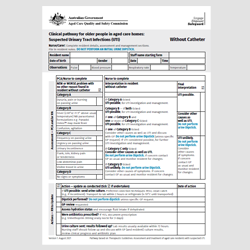
User guide to the Clinical Pathway for older people in aged care homes: suspected urinary tract infections
This user guide relates to the 'Clinical Pathway for older people in aged care homes: suspected urinary tract infections (UTIs)'.
Clinical pathways for suspected UTIs forms
These clinical forms are part of the 'Clinical Pathway for older people in aged care homes: suspected urinary tract infections (UTIs)'.